• KGS/USD = 0.01144 0%
  • KZT/USD = 0.00192 -0%
  • TJS/USD = 0.10849 0.37%
  • UZS/USD = 0.00008 0%
  • TMT/USD = 0.28490 0%
  • KGS/USD = 0.01144 0%
  • KZT/USD = 0.00192 -0%
  • TJS/USD = 0.10849 0.37%
  • UZS/USD = 0.00008 0%
  • TMT/USD = 0.28490 0%
  • KGS/USD = 0.01144 0%
  • KZT/USD = 0.00192 -0%
  • TJS/USD = 0.10849 0.37%
  • UZS/USD = 0.00008 0%
  • TMT/USD = 0.28490 0%
  • KGS/USD = 0.01144 0%
  • KZT/USD = 0.00192 -0%
  • TJS/USD = 0.10849 0.37%
  • UZS/USD = 0.00008 0%
  • TMT/USD = 0.28490 0%
  • KGS/USD = 0.01144 0%
  • KZT/USD = 0.00192 -0%
  • TJS/USD = 0.10849 0.37%
  • UZS/USD = 0.00008 0%
  • TMT/USD = 0.28490 0%
  • KGS/USD = 0.01144 0%
  • KZT/USD = 0.00192 -0%
  • TJS/USD = 0.10849 0.37%
  • UZS/USD = 0.00008 0%
  • TMT/USD = 0.28490 0%
  • KGS/USD = 0.01144 0%
  • KZT/USD = 0.00192 -0%
  • TJS/USD = 0.10849 0.37%
  • UZS/USD = 0.00008 0%
  • TMT/USD = 0.28490 0%
  • KGS/USD = 0.01144 0%
  • KZT/USD = 0.00192 -0%
  • TJS/USD = 0.10849 0.37%
  • UZS/USD = 0.00008 0%
  • TMT/USD = 0.28490 0%
11 December 2025

Kyrgyz Businessman Tashov, Accused of Plot to Seize Power, Attempts Suicide in Court

Imamidin Tashov, a Kyrgyz businessman and owner of the KG Group construction company, reportedly attempted suicide during court proceedings in his high-profile case involving allegations of plotting a violent seizure of power. According to media reports, Tashov attempted to slit his throat, prompting an immediate response from those present.

Journalists and relatives were swiftly removed from the courtroom, and emergency medical personnel were called to the scene.

Eyewitnesses reported that Tashov was carried out of the courthouse to receive medical attention. However, details about his condition and the specific circumstances of the incident remain unclear at this time.

Tashov was detained in April 2024 by SCNS officers after illegally crossing the border between Kazakhstan and Kyrgyzstan. Authorities allege that he was on his way to the town of Kara-Balta to establish a temporary headquarters and mobilize supporters for protests aimed at seizing power.

This is not the first time Tashov has engaged in self-harm. Earlier this year, he injured himself in the abdomen, reportedly sustaining two cuts. His lawyer, Samat Matsakov, claimed that these acts were deliberate attempts to attract public attention. The State Committee for National Security (SCNS) similarly described the previous incident as premeditated and aimed at garnering sympathy.

Adding to the controversy, Tashov has accused individuals claiming to be SCNS officers of kidnapping him and demanding a ransom of 100 million Kyrgyz soms ($1.15 million). These allegations have further polarized public opinion and drawn widespread attention to his case.

On November 29, Tashov’s lawyer Matsakov was arrested on charges of fraud and document forgery, as reported by The Times of Central Asia. The legal troubles surrounding Tashov and his defense team have only added to the public and media interest in the case.

The dramatic developments in Tashov’s case reflect the tensions surrounding his high-profile trial. As questions persist about his actions and the broader implications of his allegations, the case continues to attract significant attention across Kyrgyzstan.

Central Asia’s Population Surpasses 80 Million, With Rapid Growth Expected to Continue

The population of Central Asia has reached a historic milestone, exceeding 80 million people as of December 2024. Projections indicate this figure could surpass 100 million by 2050, highlighting the region’s rapid demographic growth and the challenges it brings for sustainable development.

Rapid Population Growth

According to the Eurasian Development Bank’s (EDB) macroeconomic forecast, Central Asia’s population has grown by nearly one and a half times over the past 24 years, increasing by approximately one million people annually. Tajikistan and Uzbekistan lead the region in demographic growth.

Tajikistan’s population reached 10 million at the beginning of 2024, marking an 80% increase since 1991. Uzbekistan, the region’s most populous country, has maintained an annual growth rate of 1.1–1.2%, with its population now exceeding 36.7 million. The region as a whole has a youthful demographic profile, with an average age of 26.2 years.

Diverging Population Estimates

PopulationPyramid.net estimates Central Asia’s 2024 population at over 82 million. The discrepancy with other sources likely arises from differing methodologies and data collection techniques. Despite this, all sources agree that the population has surpassed the 80 million mark.

Future Projections and Challenges

Central Asia’s population is expected to exceed 100 million by 2050. However, rapid demographic growth presents serious challenges for the region. Key concerns include:

Sustainable Economic Development: Ensuring that economic growth keeps pace with population increases.
Job Creation: Addressing the needs of a growing labor force.
Quality of Life: Improving access to education, healthcare, and essential services.

Managing these issues will be a top priority for state policies in the coming decades, as governments seek to balance population growth with sustainable development.

Central Asia Prioritizes Food Security Amid Shared Challenges

Food security remains a top priority for Central Asian nations, yet they face shared challenges that threaten regional stability. Deteriorating water resources, climate change, reliance on external food markets, and geopolitical pressures have intensified the need for regional cooperation in addressing these issues.

Bilateral and Regional Efforts

Talks between the presidents of Uzbekistan and Kazakhstan, Shavkat Mirziyoyev and Kassym-Jomart Tokayev, on August 8 underscored the importance of collaboration. The two leaders witnessed the signing of an agricultural cooperation agreement between their respective ministries. This followed Tokayev’s November 2022 visit to Tashkent, which was particularly productive in advancing food security.

Agreements included joint production of mineral fertilizers and a bilateral cooperation program worth $1.3 billion aimed at boosting mutual trade and developing agricultural projects.

Trade within Central Asia has grown significantly, with Uzbekistan’s trade volume with its neighbors nearly doubling between 2017 and 2019. Kazakhstan, the region’s leading grain supplier, plays a central role:

• Uzbekistan accounts for 60% of Kazakhstan’s grain exports.
• Tajikistan consumes 18%.
• Kyrgyzstan takes 14%.
• Turkmenistan absorbs 6%.

Despite this growth, experts highlight the untapped potential for expanding trade and cooperation in agriculture.

Common Challenges

Food security challenges are compounded by shared threats, including demographic growth and dwindling water resources. The region’s population has reached 75.5 million, while irrigated land per capita has decreased by more than 25% over the past 15 years.
Water availability in the Syr Darya and Amu Darya river basins—crucial for irrigating 10 million hectares – faces a projected 15% decline. This is exacerbated by the alarming retreat of glaciers that feed these rivers, jeopardizing long-term agricultural sustainability.

The Need for Regional Solutions

While each Central Asian country primarily relies on its resources to address food security, the interconnected nature of these challenges calls for a collective approach. Enhanced regional cooperation is essential to develop resilient agricultural systems, manage water resources effectively, and ensure sustainable growth in food production.

Harnessing Diplomacy: Qosh Tepa Canal as a Bridge to U.S. Influence in Central Asia

The Center for the National Interest, a Washington, D.C.-based think tank, has released a report titled Afghanistan’s Qosh Tepa Canal and Water Security in Central Asia. The report outlines how U.S. support for the Qosh Tepa Canal project could provide an opportunity for the incoming Trump administration to strengthen its influence in the region.

Project Overview

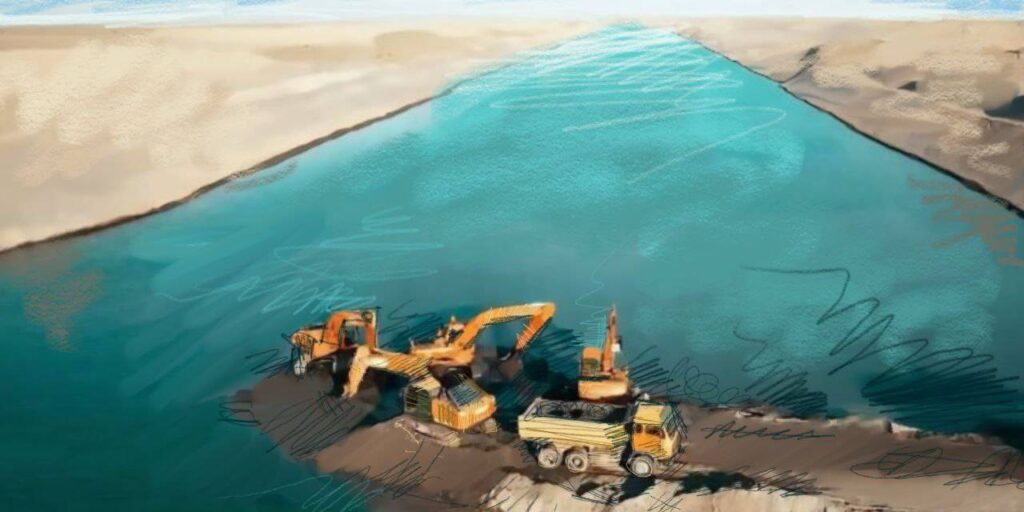
Currently under construction in northern Afghanistan, the Qosh Tepa Canal aims to divert water from the Amu Darya River to support agriculture and economic growth. The canal will stretch 287 kilometers, with a depth of 8.5 meters and an average width of 100 meters. Once completed, it will irrigate more than 1.2 million acres of farmland and generate approximately 200,000 jobs in northern Afghanistan.

While the Taliban has championed the project as a cornerstone of Afghanistan’s development, the canal poses significant challenges for downstream countries reliant on the Amu Darya, particularly Uzbekistan and Turkmenistan. Concerns include potential water scarcity, environmental degradation, and heightened regional tensions.

Implications for Central Asia

The report highlights that the canal could exacerbate existing disputes over water allocation in a region already plagued by scarcity. Unlike its Central Asian neighbors, Afghanistan is excluded from water-sharing agreements rooted in the Soviet era. The poorly designed Soviet canals along the Amu Darya continue to undermine water security in the region decades after their construction, a fate experts hope to avoid with Qosh Tepa.

Recommendations for U.S. Engagement

The report urges the United States to seize this opportunity to engage Afghanistan and the broader region diplomatically and technically:

1. Support for a Well-Engineered Canal
The United States should advocate for a well designed canal that prioritizes water-use efficiency. By offering technical assistance and backing the project in principle, the U.S. could pave the way for multilateral development banks, such as the World Bank, the European Bank for Reconstruction and Development, and the Asian Development Bank, to provide financial and technical support.

2. Promote Regional Water Diplomacy
Washington should encourage negotiations for a regional water-sharing agreement among Afghanistan, Kazakhstan, Kyrgyzstan, Tajikistan, Turkmenistan, and Uzbekistan.

3. Assist Downstream States
Additional investments in modernizing irrigation systems in Uzbekistan and Turkmenistan could mitigate the canal’s impact on downstream water availability.

Strategic Context

The report underscores the geostrategic importance of Afghanistan and Central Asia, which border three of Washington’s primary global competitors: China, Russia, and Iran. By supporting the Qosh Tepa Canal project and fostering regional water-sharing cooperation, the U.S. could counterbalance the growing influence of Beijing, Moscow, and Tehran in the region.

A Watershed Moment

As construction progresses into its second phase, involving thousands of workers and heavy machinery, the Qosh Tepa Canal stands at the nexus of development and diplomacy. The report concludes that U.S. involvement in this critical project could serve not only to address Central Asia’s pressing water security challenges but also to reinforce Washington’s strategic position in one of the world’s most complex geopolitical arenas.

China to Transport Lithium-Ion Batteries Along TITR via Kazakhstan

This month marks a significant milestone in Kazakhstan-China transport cooperation with the test shipment of lithium-ion batteries from China via the Trans-Caspian International Transport Route (TITR). This major trade corridor links China to Europe through Kazakhstan and the Caucasus. The decision was announced following a meeting between Kazakhstan’s Minister of Transport Marat Karabayev and China’s Transport Minister Liu Wei in Beijing on December 5.

Strengthening TITR Cooperation

The two ministers agreed on initiatives to further develop the TITR, including the creation of a permanent working group to facilitate the seamless flow of goods. They also highlighted advancements in the digitization of transport operations. Truckers can now receive permit forms within an hour through a newly implemented digital platform, streamlining international road transportation.

The TITR is seeing rapidly growing freight traffic. According to Kazakhstan’s Ministry of Transport, road freight volumes with China have more than doubled annually. Before 2023, Kazakh truckers made approximately 50,000 trips per year. In 2024, this figure is projected to reach 230,000 trips.

Expanding Multimodal Transport

The meeting also explored the potential for developing cargo transportation via transboundary rivers between the two nations. Both ministers noted a surge in rail and road freight volumes, as well as transit transportation through the Middle Corridor (another name for the TITR).

From January to October 2024, rail freight between Kazakhstan and China increased by 13%, reaching 26.6 million tons. Road freight volumes soared by 60% in the third quarter alone, amounting to 1.9 million tons.

Meanwhile, cargo transportation from China to Europe via the TITR has experienced explosive growth. In 2024, the volume surpassed 27,000 twenty-foot containers, a 25-fold increase compared to the same period in 2023.

Kazakhstan’s Middle Power Strategy Captures U.S. Focus in Trump-Tokayev Talks

On December 5, a telephone conversation took place between Kazakhstan’s President Kassym-Jomart Tokayev and U.S. President-elect Donald Trump. According to Akorda, the official residence of the Kazakh president, Tokayev congratulated Trump on his election and both leaders expressed a commitment to strengthening their strategic partnership in trade, investment, and nuclear non-proliferation. They also agreed to maintain regular contact to sustain the momentum of bilateral cooperation.

Kazakhstan as a Mediator

This brief but significant interaction has fueled speculation that Trump may view Kazakhstan as a potential mediator in negotiations between Russia and Ukraine. International expert Arkady Dubnov has suggested that Astana could become a platform for dialogue involving Trump, Vladimir Putin, and Volodymyr Zelensky, or other high level representatives. This aligns with Kazakhstan’s diplomatic efforts to promote mediation and its firm belief that the ongoing conflict can only be resolved at the negotiating table.

Tokayev and the Role of Middle Powers

Under Tokayev’s leadership, Kazakhstan has consolidated its status as a “Middle Power.” The term gained prominence in May during Tokayev’s Singapore Lecture, part of a prestigious series organized by the Yusof Ishak Institute (ISEAS). In his speech, “Kazakhstan and the Role of Middle Powers: Promoting Security, Stability, and Sustainable Development,” Tokayev emphasized the risks of global polarization and the need for middle powers to act against a new Cold War.

Tokayev revisited this concept in an article for the French newspaper Figaro, highlighting the growing influence of middle powers amidst the deadlock faced by global superpowers, such as the United States and China. Tokayev wrote, “The economic and political importance of these countries is growing, and their balanced and constructive position is becoming an advantage in the face of global uncertainty.”

At the Astana Think Tank Forum in October, Tokayev reiterated this idea, calling for the reform of the UN Security Council to amplify the voices of regional and middle powers. “The Security Council is in a deadlock, and we need to find a way out,” Tokayev stated.

Trump’s Strategy

Trump’s outreach to Tokayev appears to validate these concepts. Following his election, Trump has engaged with the leaders of regional and middle powers, including India, Israel, Canada, and South Korea, signaling a possible strategy to build a coalition of such nations for his proposed reforms to the global security architecture.

Kazakhstan’s balanced and constructive foreign policy, combined with its emphasis on multilateralism, positions it as an effective interlocutor in global conflicts. Tokayev’s vision of middle powers as mediators may prove instrumental in shaping a more inclusive and cooperative international order.