• KGS/USD = 0.01144 0%
  • KZT/USD = 0.00196 -0%
  • TJS/USD = 0.10899 -0%
  • UZS/USD = 0.00008 -0%
  • TMT/USD = 0.28490 0%
  • KGS/USD = 0.01144 0%
  • KZT/USD = 0.00196 -0%
  • TJS/USD = 0.10899 -0%
  • UZS/USD = 0.00008 -0%
  • TMT/USD = 0.28490 0%
  • KGS/USD = 0.01144 0%
  • KZT/USD = 0.00196 -0%
  • TJS/USD = 0.10899 -0%
  • UZS/USD = 0.00008 -0%
  • TMT/USD = 0.28490 0%
  • KGS/USD = 0.01144 0%
  • KZT/USD = 0.00196 -0%
  • TJS/USD = 0.10899 -0%
  • UZS/USD = 0.00008 -0%
  • TMT/USD = 0.28490 0%
  • KGS/USD = 0.01144 0%
  • KZT/USD = 0.00196 -0%
  • TJS/USD = 0.10899 -0%
  • UZS/USD = 0.00008 -0%
  • TMT/USD = 0.28490 0%
  • KGS/USD = 0.01144 0%
  • KZT/USD = 0.00196 -0%
  • TJS/USD = 0.10899 -0%
  • UZS/USD = 0.00008 -0%
  • TMT/USD = 0.28490 0%
  • KGS/USD = 0.01144 0%
  • KZT/USD = 0.00196 -0%
  • TJS/USD = 0.10899 -0%
  • UZS/USD = 0.00008 -0%
  • TMT/USD = 0.28490 0%
  • KGS/USD = 0.01144 0%
  • KZT/USD = 0.00196 -0%
  • TJS/USD = 0.10899 -0%
  • UZS/USD = 0.00008 -0%
  • TMT/USD = 0.28490 0%
08 December 2025

Central Asia to Develop a Unified Platform for Electricity Trade

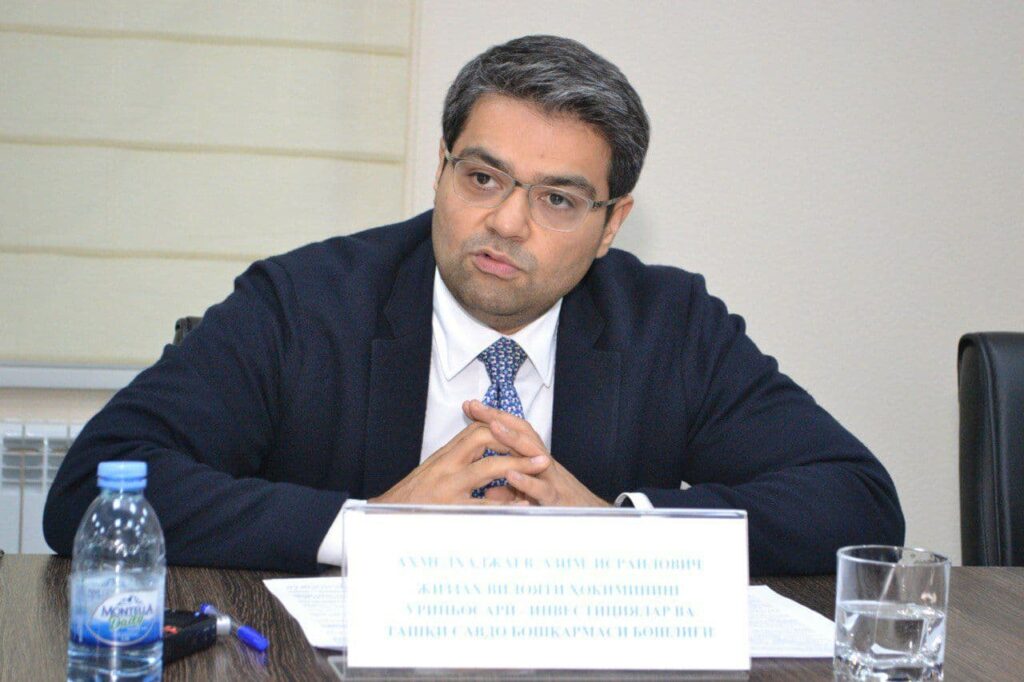
Uzbekistan’s Deputy Minister for Energy Umid Mamadaminov announced at the European Economic Days in Tashkent on November 6 that a unified platform for electricity trade is being developed in Central Asia. Mamadaminov said that Uzbekistan is developing this platform with the support of the World Bank and other partners.

“Infrastructure is very important for integrating renewable energy sources such as wind and solar, and many countries face this problem. We need at least 5,000 km of power lines, including 500 kV and 200 kV high-voltage lines and substations,” Mamadaminov said.

At least 2,000 km of power lines should be built in the next two years.

“We have already signed contracts to install more than 2,000 MW of energy storage systems with a total capacity of more than 400 MW, as each is a two-cycle network. We will have at least 4,000 MW of basic capacity in the next two years. This helps to respond to fluctuations in solar energy production quickly,” the deputy minister said.

According to Mamadaminov, automation is the main problem in integrating renewable energy sources into the electric grid because the system cannot be controlled without it.

In addition, this year, reforms to modernize and regulate energy consumption, including a new plan developed by the Cabinet of Ministers, were implemented in Uzbekistan.

Uzbekistan’s energy system, especially electricity generation, relies heavily on fossil fuels. However, the country aims to produce 25% of its electricity from renewable sources by 2030. Uzbekistan plans to focus on solar energy while using wind, biomass, and hydro sources to achieve this goal. The government is working to attract investors to build 8 GW of solar and wind power and increase hydroelectric capacity to 1.935 GW by 2030. Biogas production from biomass and organic waste will also be developed.

Military Pilot Killed, Two Injured in Chopper Crash in Kazakhstan

A military helicopter crashed in western Kazakhstan during a training flight on Saturday, killing a veteran pilot who was involved in flood control efforts earlier this year and injuring the other two servicemen who were on board.

The crash happened near the village of Saryzhar in the Aktobe Region, according to authorities. Kazakh media reports said a fire broke out on impact.

“The preliminary cause of the incident is considered to be a technical malfunction, and the details are under investigation,” Kazakhstan’s Ministry of Defense said on Telegram. “An interdepartmental emergency response team is working at the scene.”

The ministry identified the serviceman who died in what it called a “hard landing” as Maj. Batyr Kairatovich Urazymbetov, an air squadron instructor from the Military Institute of Air Defense Forces. It said Urazymbetov was born in 1988 and was an experienced airman, accumulating more than 500 flight hours on the Mi-8 helicopter.

“Throughout his service, he demonstrated high professionalism and dedication to duty, including participation in flood control efforts this spring. He was awarded anniversary medals and long service awards. He was married and had two children,” the ministry said. Urazymbetov’s family will receive financial aid and other support, it said.

Kazakhstan’s military assisted with evacuations, building barriers to prevent water flows and other measures during devastating floods this year that President Kassym-Jomart Tokayev described as Kazakhstan’s worst natural disaster in 80 years.

Air Squadron Commander Major Bibarys Ibraev and senior Lt. Rustem Nigmetov, a flight instructor at the military institute’s training aviation center, were injured in the crash on Saturday. They were transported to the regional hospital in Aktobe city and were in stable but serious condition.

Azerbaijan’s defense minister, Col. Gen. Zakir Hasanov, said on Telegram that he was “deeply saddened” to hear about the crash and expressed condolences to the families of the dead serviceman and his injured colleagues. Azerbaijan and Central Asian countries participated in joint military exercises in Kazakhstan in July.

Kazakhstan’ military has operated Soviet-designed Mi-8 helicopters since declaring independence from the Soviet Union in late 1991. Dozens of countries use the aircraft.

The helicopter that crashed received its “last major overhaul” at a military facility in Almaty last year, and maintenance requirements and pre-flight preparations were in order, according to defense officials. The crew had experience dealing with bad weather, night flying and other challenging conditions.

World Bank Report Outlines Path to Drive Tajikistan’s Green Transition and Economic Growth

On November 7, the World Bank Group published the Tajikistan Country Climate and Development Report (CCDR), highlighting the transformative potential of climate action for Tajikistan’s economy. The report suggests that addressing climate risks can drive economic renewal, create jobs, and enhance resilience against the rising frequency of extreme weather events caused by climate change.

Ozan Sevimli, World Bank Group Country Manager for Tajikistan, emphasized the urgency of a strategic shift: “Tajikistan urgently needs an economic reset to tackle its numerous development challenges and the growing impacts of climate change that threaten future progress. The CCDR provides a roadmap for accelerating the transition to a green economy, supporting long-term growth.”

A key finding of the report is the importance of mobilizing private-sector financing to supplement Tajikistan’s limited public resources. This financing will be crucial in securing the nation’s green transition and ensuring water, food, and energy security.

Despite ranking 130th globally in greenhouse gas emissions, Tajikistan is highly vulnerable to climate change impacts, notes Bahodur Sheralizoda, Chair of the Environmental Protection Committee under the Tajik government: “Although our contribution to global emissions is minimal, we are one of the most climate-vulnerable countries in the world. The CCDR advises the government to improve production efficiency, foster innovative technologies, and create green jobs to reduce our susceptibility to climate-related challenges.”

The report warns that Tajikistan already faces high risks of floods, earthquakes, and landslides, with potential infrastructure and agricultural losses that could lower GDP by 5-6% by 2050. The strategic Vakhsh River Basin, which produces 90% of the country’s electricity, underscores the dual challenges of climate and development. Annual costs of land degradation are estimated at $325 million, with further increases anticipated. Additionally, air pollution remains a major health risk, accounting for 84 deaths per 100,000 people—Central Asia’s second-highest rate.

A green transition could deliver substantial benefits. By 2050, reduced healthcare costs from lower air pollution, fewer road accidents, and improved road conditions could save over $3.5 billion. Investments in renewable energy, including hydro, solar, and geothermal, as well as in energy efficiency, promise new employment opportunities across sectors.

The report advises the Tajik government to fast-track low-carbon development to strengthen economic growth, energy security, export potential, and job creation, all while enhancing air quality. Achieving these goals will require significant investments: Tajikistan needs around $17 billion, in addition to the $79 billion required for the government’s reform agenda from 2025 to 2050. Private sector investments, particularly in energy, industry, and agriculture, will be essential.

Recognizing that the financial needs for this transformation exceed domestic resources, the report underscores the importance of external support. Tajikistan will need substantial technical and financial assistance from international bodies, climate funds, and development partners to fulfill its climate and development goals.

Turkmenistan Pushes for UNESCO World Heritage Status for its Unique Mud Volcanoes

Turkmenistan has launched an in-depth study and documentation project focusing on its extraordinary geological landmarks, especially the ancient mud volcanoes that line the western Caspian Sea coast. This effort aims to compile the necessary scientific and cultural documentation to nominate these unique mud volcanoes for inclusion in the UNESCO World Heritage list.

The recent initial expedition was attended by members of the Turkmenistan National Commission for UNESCO, along with biologists, geographers, and geologists from various scientific organizations. These specialists examined multiple mud volcanoes along the Caspian coast, primarily within the Esenguly district of the Balkan region. Over several days, the team meticulously surveyed active, dormant, and long-extinct volcanoes, documenting their findings through photography and soil sampling. They noted that though activity has decreased, this does not mean many volcanoes have stopped completely.

Among the most notable formations are the Akpatlavuk and Gokpatlavuk mud volcanoes. Akpatlavuk, located on a prominent hill along the southern part of the Caspian’s eastern coast, showcases a dome with numerous mud outcrops and deep channels carved by flowing streams. At its base lies an expansive mud lake, adding to its remarkable landscape. Gokpatlavuk, towering 70 meters above the northern plains near Ekerem, features steep, eroded slopes and gullies through which streams of carbonated mud steadily flow, creating a striking visual of natural forces at work.

The nomination process will require updated imagery and refreshed data to supplement the national atlas of mud volcanoes. As part of their preparation, researchers will review studies conducted by Azerbaijani scientists in the 1970s, given that the mud volcanoes of Turkmenistan, Azerbaijan, and Iran form an interconnected geological complex representing nearly half of the world’s mud volcanoes.

Farmers’ Support Centers Open in Kyrgyzstan

Kyrgyzstan has opened city support centers for farmers to get up-to-date information from agricultural specialists, from how to plant seeds to how to get subsidies. Experts say that Kyrgyz farmers are often unable to use modern technology, which increases production costs.

Five centers have been opened across the country. The project’s primary goal is to create an information platform for farmers. The most common questions are what products are best to produce in specific areas, what seeds are needed, and how best to market finished products. Farmers are also interested in leasing agricultural equipment and obtaining loans from state banks.

Mirkasym Alakhveranov, a long-time farmer and owner of a beet farm in Chui region, told The Times of Central Asia about the problems of Kyrgyz farmers.

“We need farmer schools or advisory centers. Not everyone is ready to grow food according to all the rules. Besides, something new is emerging daily: science is moving forward, mechanization is improving, and chemistry is improving. And the country needs specialists who would follow all this and could explain it to the peasant,” Alakhveranov said.

He said many non-professionals in Kyrgyz agriculture today need more knowledge. However, they desire to improve farming. In addition, farmers need more technical knowledge: most need to understand modern equipment.

“There is a lack of modern agricultural machinery; farmers suffer losses. They cannot pay the loan for leasing, so they go bankrupt. Most companies selling special equipment do not train buyers to work with the equipment. We need to teach young people how to use modern machines, so they learn to use them confidently,” Alakhveranov said.

Another problem plaguing Kyrgyzstan’s agricultural sector is small-scale farming. Importers from Russia and Kazakhstan, where most agricultural products go, need large volumes of goods. The new support centers could raise awareness of Alakhveranov’s beliefs on this issue and persuade farmers to join cooperatives.

Min-Kush — The Kyrgyz Time Capsule

Although Min-Kush is only about 100 miles from Bishkek, as the crow flies, the mountains make us travel 250 miles. We reached a scenic viewpoint along the road, and I stopped to take a picture. I exited the truck and approached a horse with dramatic snow-capped mountains peeking through the clouds. A man came and invited us to ride his horse around his farm. This is his farm, his 75 sheep, and his horse. The horse and I galloped around the farm, chatted with the farmer, and got back on the road. This was my first time on horseback after a year and a half in Central Asia.

Min-Kush, once a prosperous town nestled in the Kyrgyz mountains known for its bustling uranium mining industry, has hit the end of the road literally and figuratively. Coming down the A367 highway, a nondescript road sign says “Min-Kush” with an arrow pointing left. We turned, and the road seamlessly transformed from pavement to dirt. It is the last and only settlement on this road off of the highway. The only other vehicles we pass are semi-trucks carrying tons of coal destined for Kyrgyzstan and China.


@TCA H.Kuvin

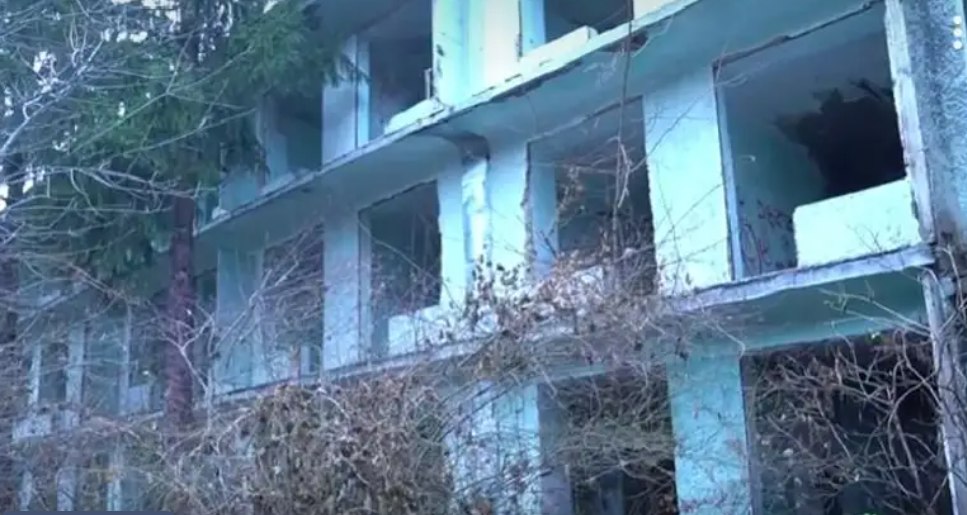
The city peaked at around 20,000 in the 1980s, but today’s number hovers around 3,500. Established in 1955, the apartments and houses are built in the Stalinist architectural style. The vibrant blue paint that once covered the wooden panels is faded, and sections of the buildings are caved in, but people still live here. The contrast in one building is stark. On the top floor, there are broken windows and unhinged shutters. On the bottom floor, there are new window frames and flowers on the windowsill. The blossoming life on the windowsill is far from what it once was.

We stopped and chatted with some locals and asked about their lives. “When Moscow supported us, we had everything: stores, schools, factories, and a hospital. Now…nothing, but we cannot dwell on things. Life is better now than it was after the fall of the USSR.” The man asks for a cigarette and a light; my French friend complies with his request.

The main draw of Min-Kush for me is an abandoned felt pen factory. I’ve seen pictures online of some incredible Soviet banners that serve as a time capsule in the mountains. We asked if anyone knew where to find it, and a man told us it was torn down and replaced by a soccer field.

As night set in, we looked for a guesthouse of sorts. I had read online that there is one, but there are no signs or information about it anywhere. We stop by a man fixing his Soviet Chaika car on the side of the road. He tells us the hotel is right up the road. We drive to an unlit building where two men are fixing another truck. We chatted, and he made a phone call. Ten minutes later, a lady shows up, unlocks the door, and shows us two rooms with three single beds. Perfect. The toilet does not work, and the water is not clean, but it was either here or an hour away in Chaek. We each handed the lady $11 for the night; she showed us the kitchen and told us there was a store where we could buy food to cook. We buy two packets of pelmeni for dinner and eight eggs for breakfast.

@TCA H.Kuvin

A friendly security guard poked his head out the window at 08:30 and asked me how I slept. I was going on a quick walk while the town was waking up. He saw I had my camera. “Take a picture of me!” he exclaimed and posed. As it turns out, this building is the city government office; there is a separate entrance for the two-room hotel. I returned from my walk, made a big batch of scrambled eggs for the group, and packed the car.

We chatted with the daytime security guard before leaving. He has lived here his entire life and previously worked in the pen factory. I tell him I like his jacket, “It’s from the Soviet Union,” he says, “when the quality was good.” He opens the gate for us, shakes my hand through the car window, and tells us to return soon.

We reach an old house of culture perched on a mountaintop and get out of the car for a picture and conversation with a few men sitting outside. We learn that the pen factory is, in fact, still standing. “It’s just up the road, a one-story building,” he shares. I grin ear to ear.
Sure enough, about three minutes up the road stands a one-story building with its windows busted. A small water flow rushing through the grass has made its path here. It must have come from the mountains above, and who knows how long it has been here.

We scan the factory’s perimeter and find an accessible entrance in a room. The enormous machines’ paint is fading, moss has covered parts of the floor, and still water is pooled in crevices.

We exit the first room and enter the main production hall: jackpot. The mural I’d seen online and thought was destroyed still stands in vibrant color. Across the hall is another banner, “Glory to work!”


@TCA H.Kuvin

In Kyrgyz, Min-Kush means “a thousand birds.” It seems all one thousand of them have visited this factory because the floors were caked with their droppings. I couldn’t care less.

There are separate rooms along the main floor; we enter and search. Two calendars, one from 1988 and one from 1990, are still hanging on the wall. One reads, “The Soviet Insurance Company.” I walk further into the room, where a Geiger counter and gas masks are on the floor. There is a sun-baked instruction sheet on how to put one of the masks on. This was a uranium mining town, after all.

@TCA H.Kuvin

In another room, a pair of boots sits on a locker; inside are pictures of idols and naked women. The sun flows into the room through the broken glass and reflects off the moss on the chair. A red banner that reads, “Work is to live and to study communism.” I see another banner in the main hall with Lenin’s face, covered in bird feces and baked by thirty-plus years of sun exposure.

In another backroom, sewing machines sit on desks under a water-dripping ceiling. Matchboxes and tubes of ointment are still in the drawers. I do not try the mystery ointment.

We make our way out of Min-Kush, passing by the children playing in the streets and elders reading on tree stumps. I can’t help but think of what the man from the day before said, “We cannot dwell on things.”

We take the other, shorter route back to Bishkek. Although shorter, the roads are in worse condition and weave between mountain ranges. The views, however, are spectacular. Going to the bathroom on the side of the road has never looked so good.

Min-Kush, a town that went from riches to rags, is still dealing with the ghosts of its past. Uranium burial sites are being dug up and transported elsewhere to limit the impact on the region’s water sources. Qatar has funded two new mosques in the city, the school has been renovated, and people remain optimistic. “We have nothing else to do besides enjoy what we do have,” the man who asked for a cigarette told us.

The city sees tourists during the summer but virtually none from September to May. The friendliness we encountered, though, was second to none. Everyone was incredibly kind and welcoming. People over 40 remember what times were like in the USSR and want the same living standards for their children. “What do we do without a hospital here?” a firefighter told us.

@TCA H.Kuvin

From prosperity to near abandonment, Min-Kush sits idle in the mountains at the end of the road, waiting for a brighter future. The city is a time capsule, tucked far away from everything else, whose residents reminisce about a more colorful life. From my conversations with its residents, it is clear that we all wish for the same things in life.