• KGS/USD = 0.01144 0%
  • KZT/USD = 0.00196 -0%
  • TJS/USD = 0.10899 -0%
  • UZS/USD = 0.00008 -0%
  • TMT/USD = 0.28490 0%
  • KGS/USD = 0.01144 0%
  • KZT/USD = 0.00196 -0%
  • TJS/USD = 0.10899 -0%
  • UZS/USD = 0.00008 -0%
  • TMT/USD = 0.28490 0%
  • KGS/USD = 0.01144 0%
  • KZT/USD = 0.00196 -0%
  • TJS/USD = 0.10899 -0%
  • UZS/USD = 0.00008 -0%
  • TMT/USD = 0.28490 0%
  • KGS/USD = 0.01144 0%
  • KZT/USD = 0.00196 -0%
  • TJS/USD = 0.10899 -0%
  • UZS/USD = 0.00008 -0%
  • TMT/USD = 0.28490 0%
  • KGS/USD = 0.01144 0%
  • KZT/USD = 0.00196 -0%
  • TJS/USD = 0.10899 -0%
  • UZS/USD = 0.00008 -0%
  • TMT/USD = 0.28490 0%
  • KGS/USD = 0.01144 0%
  • KZT/USD = 0.00196 -0%
  • TJS/USD = 0.10899 -0%
  • UZS/USD = 0.00008 -0%
  • TMT/USD = 0.28490 0%
  • KGS/USD = 0.01144 0%
  • KZT/USD = 0.00196 -0%
  • TJS/USD = 0.10899 -0%
  • UZS/USD = 0.00008 -0%
  • TMT/USD = 0.28490 0%
  • KGS/USD = 0.01144 0%
  • KZT/USD = 0.00196 -0%
  • TJS/USD = 0.10899 -0%
  • UZS/USD = 0.00008 -0%
  • TMT/USD = 0.28490 0%
08 December 2025

Uzbekistan Bans the Use of Animals in Circus Performances

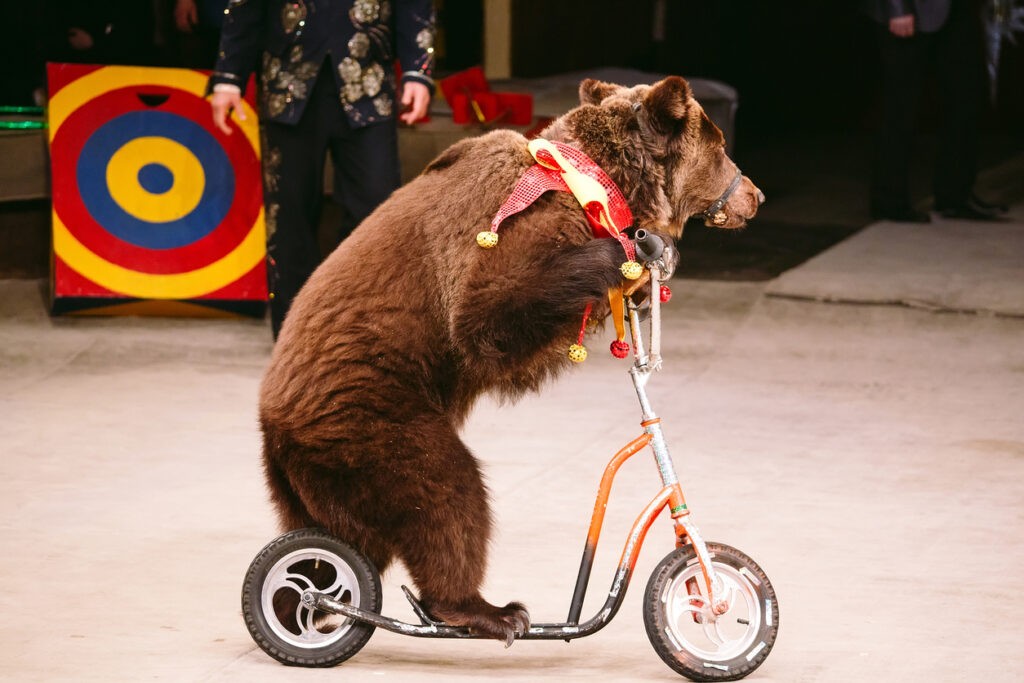
From January 1, 2025, Uzbekistan will ban the use of wild animals in circus performances.

This law will affect all circuses, including traveling ones. The ban also restricts individuals’ right to keep wild animals at home.

The list of animals who must not be allowed to perform in circuses was published on the UzA’s Telegram feed. These animals can be kept only in specialized institutions such as zoos, terrariums, and oceanariums established by legal entities with a permit from the Ministry of Ecology.

Several countries have laws prohibiting the use of wild animals in circus performances. Corresponding bans are adopted in most European countries, Cyprus, Malta, Hungary, Croatia, Germany, Estonia, Latvia, Finland, Denmark, Ireland, Greece, Croatia, Bosnia and Herzegovina, as in many states of the USA and Canada, in Israel, China, Singapore, Bolivia, Argentina, Brazil, Panama, Paraguay, Peru, Iran, Chile, El Salvador, Ecuador, Australia, India, Taiwan, and many other countries.

Kazakhstan will ban petting zoos and dolphinariums from January 1, 2025. In Russia, a bill to restrict the use of animals in circuses was discussed in 2023, but the final decision has yet to be made.
Organization of Turkic States Changes Its Flag

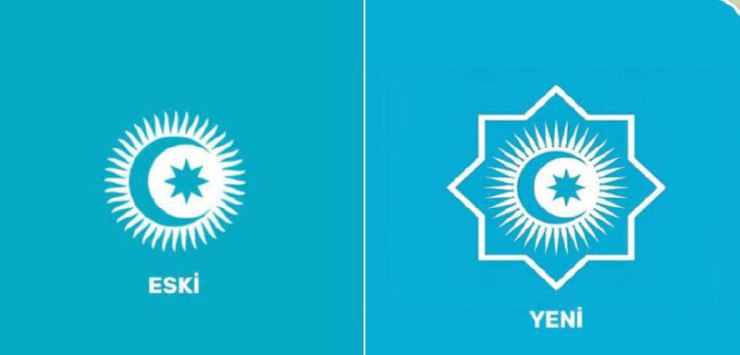
At the 11th summit of the heads of state of the Organization of Turkic States (OTS) in Bishkek, a new flag to represent the organization was adopted.

The leaders of Azerbaijan, Kazakhstan, Kyrgyzstan, Turkey, and Uzbekistan—Ilham Aliyev, Kassym-Jomart Tokayev, Sadyr Japarov, Recep Tayyip Erdogan, and Shavkat Mirziyoyev—unanimously approved it as a symbol reflecting the Turkic world’s shared values and cultural identity.

The flag is designed on a turquoise background, symbolizing a clear sky, peace, and prosperity. In the center are a crescent moon, a star, and a sun with forty equal rays. These elements represent Turkic statehood, vitality, and aspiration for the future. The octagon, symbolizing centuries-old Turkic statehood and stability, expresses the participating countries’ common cultural roots and interconnectedness. The sun’s rays symbolize light and openness, and the crescent moon and star, well-known symbols of the Turkic world, emphasize the desire for development and progress based on a rich historical heritage.

The Organization of Turkic States covers several countries in Eurasia and plays a vital role in their political and economic interaction. Its member countries are Azerbaijan, Kazakhstan, Kyrgyzstan, Turkey, and Uzbekistan, and its observer countries are Turkmenistan and Hungary. The OTS’s headquarters are in Istanbul. Adopting the new flag was also a landmark step in strengthening the organization’s international status.

The first flag of the Organization of Turkic States was adopted in 2012.

Earlier, Tokayev summarized the results of Kazakhstan’s chairmanship of the Organization of Turkic States. The countries’ leaders adopted the Charter of the Turkic World, while central banks of the OTS will create a new Council to strengthen financial cooperation.

Central Asia and South Korea Seek to Expand Cooperation

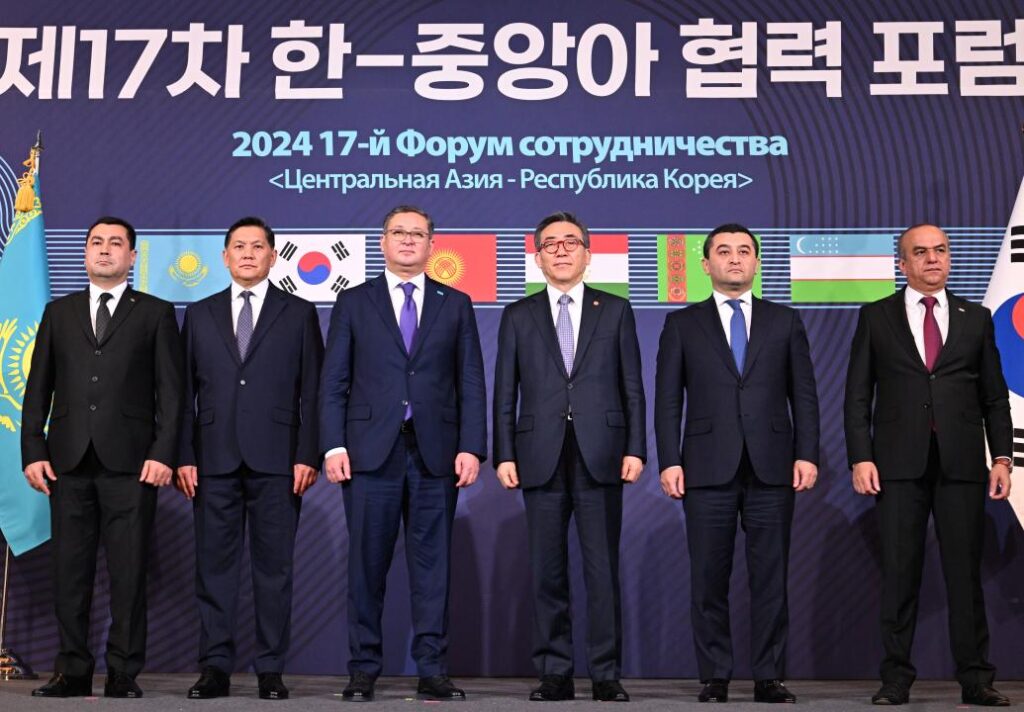
The 17th Central Asia–Republic of Korea Cooperation Forum, which took place in Seoul on November 4, addressed key areas of partnership between Central Asian countries and South Korea in sectors such as transport and logistics, energy, critical minerals, digital transformation, environmental issues, and tourism.

Speaking at the forum, Kazakhstan’s Minister of Foreign Affairs, Murat Nurtleu, emphasized the importance of transport connectivity for the region’s sustainable economic growth. Kazakhstan is developing the Trans-Caspian International Transport Route to ensure safe and efficient cargo transportation from Asia to Europe. The Kazakh minister invited Korean companies to participate in major projects to expand the route’s capacity to 10 million tons of cargo annually.

Addressing energy cooperation, Nurtleu highlighted Kazakhstan’s abundant natural resources, including rare earth metals and uranium. The Kazakh Foreign Minister expressed hope that Korean companies would join projects for resource extraction and processing and participate in a consortium to construct a nuclear power plant in Kazakhstan.

Nurtleu stated, “Central Asian countries and the Republic of Korea are natural partners connected by a shared history, Altai heritage, and traditional trade relations dating back to the Silk Road era. The Republic of Korea is increasingly vital in the economic and technological development of the entire Central Asian region.”

At the forum, Kyrgyzstan’s First Deputy Minister of Foreign Affairs, Asein Isaev, highlighted the growing role of South Korea as a high-tech nation interested in strengthening supply chains for energy resources and rare earth metals and developing transport and logistics routes with Kyrgyzstan and other Central Asian countries.

As part of the forum, South Korea’s President Yoon Suk Yeol met with the heads of Central Asian delegations and pointed out Korea’s interest in strengthening relations with Central Asian countries through the K-Silk Road initiative. This strategic program supports Korean infrastructure development in Central Asia in exchange for improved access to the region’s raw materials and critical minerals.

During his visit to Kazakhstan in June, Yoon Suk Yeol emphasized the importance of strengthening the strategic partnership between Kazakhstan and South Korea to supply critical minerals.

Kyrgyz Authorities Unhappy With The Dollar

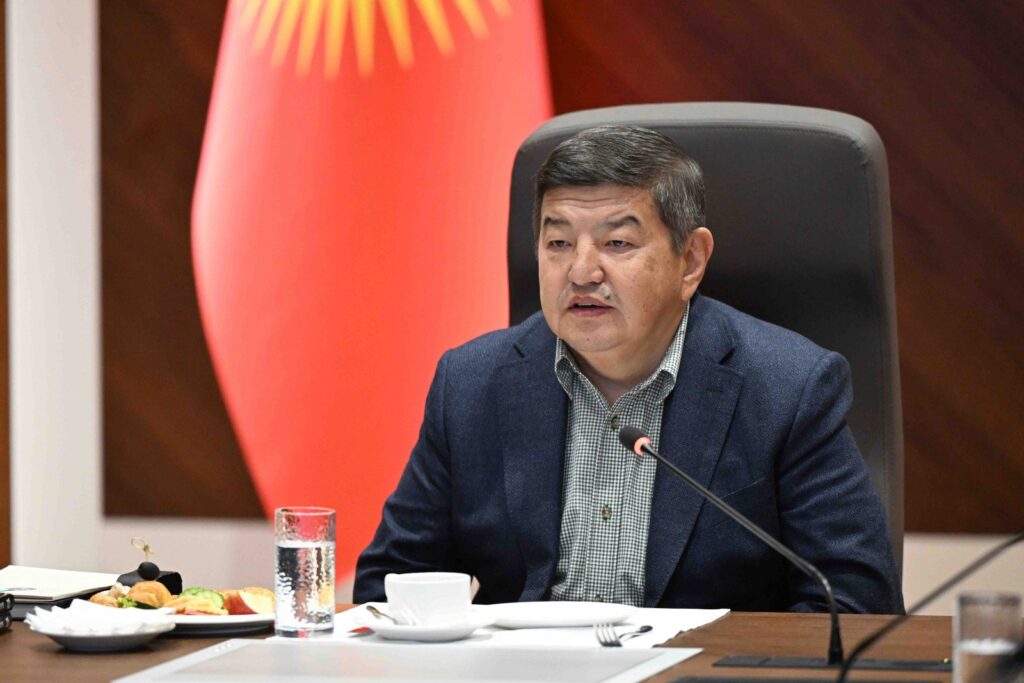
The Kyrgyz Finance Ministry plans to set aside 20 billion KGS ($230m) to issue digital bonds and treasury bills. Kyrgyz Cabinet Chief Akylbek Japarov has said at a meeting with journalists that according to him, the central bank’s monopoly on issuing money is ending.

Japarov discussed the role of the U.S. dollar in the country’s economy and emphasized that it has become a tool of political pressure.
“We send payments, but they are delayed without explanation. Sometimes, the delays last up to three months. This hurts trade. If there is no money, there is no trade. I think a new toolkit will soon appear,” he stated.

He said the BRICS organization is already working on alternative payment systems to support trade. Cryptocurrency, and any currency backed by the gold reserves of the countries that use it, can replace the dollar in international trade.

“Now everyone who has a gadget can emit cryptocurrency into various cryptocurrencies. In Kyrgyzstan, we will work on this issue and have a crypto exchange,” Japarov noted.

He noted that digital bonds and promissory notes issued by the Kyrgyz Finance Ministry will be backed by gold. Corresponding amendments to the legislation are already being submitted to Parliament for consideration.

Earlier, the National Bank of Kyrgyzstan also announced the launch of a pilot project for the national digital currency, “digital som,” and the creation of a legal framework for it. The Ministry of Economy and Commerce of Kyrgyzstan also announced the creation of crypto banks that will work with virtual assets.

“Given the rapid development of digital technologies and cryptocurrencies, creating a crypto bank represents an urgent need to integrate crypto assets into the country’s traditional financial system. Cryptobank will ensure safe, regulated, and convenient interaction of citizens and businesses with cryptocurrencies”, noted the Ministry of Economy.

Uzbekistan Aims to Develop Agriculture with Smarter Water and Energy Use

Uzbekistan’s President Shavkat Mirziyoyev recently held a meeting on the efficient use of water and energy in agriculture.

More than 1,600 pumping stations currently use 6.8 billion kilowatts of electricity to irrigate 2.5 million hectares. Through the partnership, electricity consumption can be reduced by 20% by upgrading pumps and solar panels. For example, 92 farmers installed modern pumps in the Khorezm region, saving 20% of electricity. Some sold excess solar energy to the state and received an additional monthly income of 7-8 million UZS ($548-626).

Water-saving technologies have helped Uzbekistan save 2 billion cubic meters of water in an area of more than 2 million hectares, and more than 50 local companies are producing these devices. However, some drip irrigation systems are still not working, and the 10 billion UZS ($780,000) subsidy allocated for laser leveling in Karakalpakstan hasn’t been used. Khorezm was also instructed to extend the subsidy for laser leveling to 1 million UZS ($78.00) per hectare and improve control over these technologies.

Next year, 700 billion UZS ($54 million) in subsidies and 2.5 trillion UZS ($195 million) in credit will be used for water-saving technology. Additionally, flood reservoirs will be built in 13 districts, improving the water supply for 50,000 hectares.

Mirziyoyev emphasized that real change requires digitization. About 1,700 online monitoring devices and 12,000 smart water devices are already in place, but Uzbekistan needs a system to collect and analyze this data. To address this, a Water Management Digitization Center will be set up to manage a new unified system for tracking water use.

Spanish Soccer Coach to Work in Tajikistan

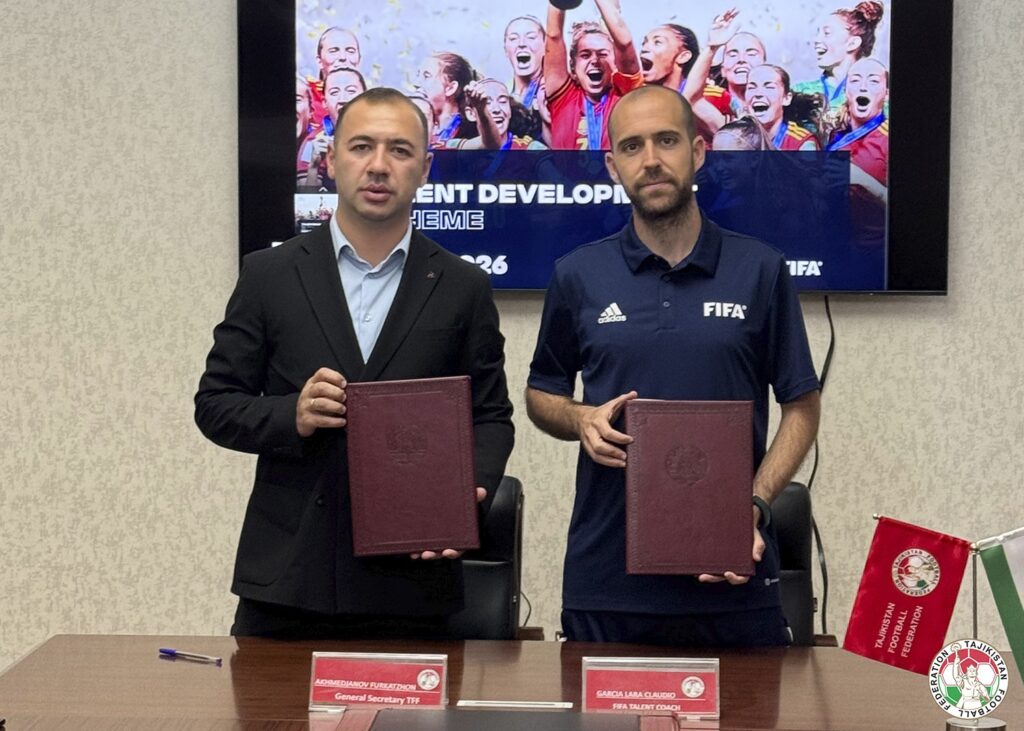
The Tajik Football Federation (TFF) has signed a contract with Spanish coach Claudio Garcia Lara, who has experience working in soccer academies in Spain, England, China, and India.

The agreement was made as part of a joint project between the Football Federation of Tajikistan and FIFA’s “FIFA Talent Development Scheme” within the “FIFA Talent Coaching” program.

UEFA Pro license holder Garcia Lara will work in Tajikistan for two years. He is now coaching the U-14 team, preparing it for tournaments under the auspices of the Asian Football Confederation and the Central Asian Football Association.

According to Uvaido Davlatbekov, technical director of the Tajik Football Federation, 27 players from different regions were invited to the U-14 team. The young players train, study, and live at the Istiklol Football Academy in the Almosi settlement of Gissar.

The “FIFA Talent Coach” program is designed to occur over two years. The Spanish specialist works with Tajik coaches, and the program’s goals are to identify and develop talents and attract the best specialists to work with gifted players. “The project also includes activities to find talented players nationwide and coaching seminars,” Davlatbekov explained.

The Tajikistan Football Federation is actively implementing FIFA’s Talent Development Scheme, a program to identify and develop young talent. In 2023, following FIFA’s recommendations, a technical development program was created, extending until 2026. This program includes identifying players aged 12 to 16 and conducting seminars for youth and women’s soccer coaches. The selected players form the core of the Tajikistan U-16 national youth team, which has won CAFA tournaments for two consecutive years.