• KGS/USD = 0.01144 0%
  • KZT/USD = 0.00211 0%
  • TJS/USD = 0.10460 0.19%
  • UZS/USD = 0.00008 0%
  • TMT/USD = 0.28490 0%
  • KGS/USD = 0.01144 0%
  • KZT/USD = 0.00211 0%
  • TJS/USD = 0.10460 0.19%
  • UZS/USD = 0.00008 0%
  • TMT/USD = 0.28490 0%
  • KGS/USD = 0.01144 0%
  • KZT/USD = 0.00211 0%
  • TJS/USD = 0.10460 0.19%
  • UZS/USD = 0.00008 0%
  • TMT/USD = 0.28490 0%
  • KGS/USD = 0.01144 0%
  • KZT/USD = 0.00211 0%
  • TJS/USD = 0.10460 0.19%
  • UZS/USD = 0.00008 0%
  • TMT/USD = 0.28490 0%
  • KGS/USD = 0.01144 0%
  • KZT/USD = 0.00211 0%
  • TJS/USD = 0.10460 0.19%
  • UZS/USD = 0.00008 0%
  • TMT/USD = 0.28490 0%
  • KGS/USD = 0.01144 0%
  • KZT/USD = 0.00211 0%
  • TJS/USD = 0.10460 0.19%
  • UZS/USD = 0.00008 0%
  • TMT/USD = 0.28490 0%
  • KGS/USD = 0.01144 0%
  • KZT/USD = 0.00211 0%
  • TJS/USD = 0.10460 0.19%
  • UZS/USD = 0.00008 0%
  • TMT/USD = 0.28490 0%
  • KGS/USD = 0.01144 0%
  • KZT/USD = 0.00211 0%
  • TJS/USD = 0.10460 0.19%
  • UZS/USD = 0.00008 0%
  • TMT/USD = 0.28490 0%

Tokayev’s U.S. Visit Advances Kazakhstan’s Economic Agenda

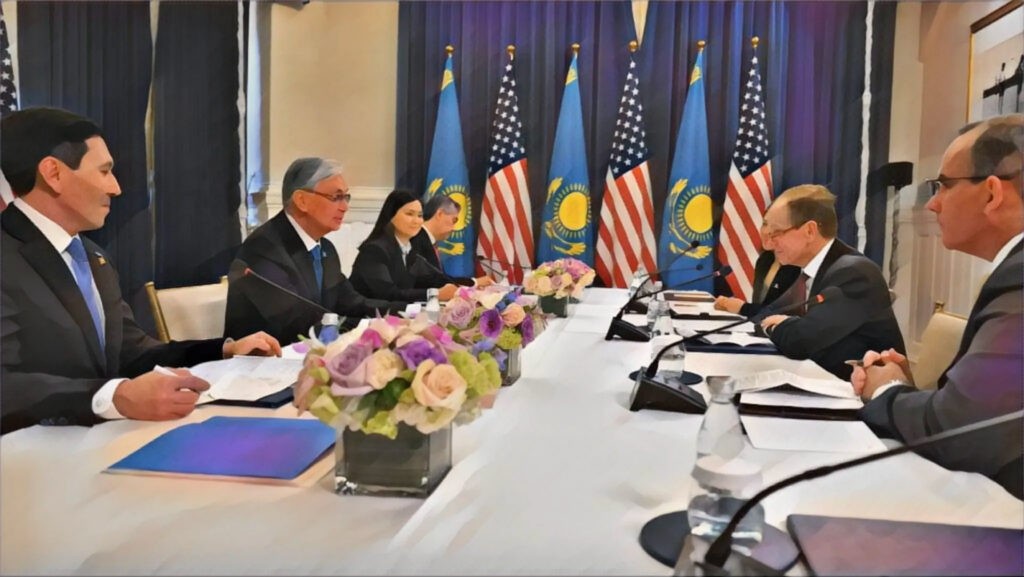
The visit of Kazakh President Kassym-Jomart Tokayev to the United States provided an opportunity for targeted negotiations with major international corporations and financial institutions, centered on long-term investment, production localization, and Kazakhstan’s integration into global value chains.

One of the key outcomes was the signing of an investment agreement worth approximately $180 million between Kazakhstan’s Ministry of Agriculture and Mars, Incorporated. The company plans to build a pet food production plant in the city of Alatau. The project will focus on the deep processing of agricultural raw materials and the production of high-value-added goods.

Mars CEO Poul Weihrauch noted that the Kazakhstan facility will serve as a base for expanding the company’s presence in Central Asia and neighboring regions.

A separate round of negotiations focused on healthcare. During talks with Ashmore Group, discussions centered on a proposal to build an international clinic in partnership with Ashmore Healthcare International and Samruk-Kazyna Invest, with the involvement of the Mount Sinai Health System as the operator.

The initiative aligns with Kazakhstan’s strategy to develop medical infrastructure and medical tourism, as well as the Open Investment Partnership program targeting high-tech sectors of the economy.

Aviation was another major component of the visit. At a meeting with Boeing executives, Tokayev confirmed the interest of Kazakh carriers Air Astana, SCAT Airlines, and VietJet Qazaqstan in expanding cooperation.

Air Astana expects to receive Boeing 787 Dreamliner aircraft in the second half of 2026, which could pave the way for the launch of direct flights between Kazakhstan and the U.S. SCAT, meanwhile, is considering both the acquisition of additional aircraft and the establishment of its first maintenance and repair center at Shymkent Airport in partnership with an American company.

The visit concluded with negotiations involving the U.S. International Development Finance Corporation (DFC). Its CEO, Ben Black, said Washington views Kazakhstan as a key partner in Eurasia. The discussions focused on projects in the mining sector and the development of transport and transit infrastructure critical for regional and interregional trade.

According to the World Investment Report 2025 (UNCTAD), Kazakhstan overwhelmingly dominates foreign direct investment (FDI) in Central Asia. In 2024, Kazakhstan’s inward FDI stock stood at about $151 billion, far exceeding Turkmenistan (about $45 billion), Uzbekistan (about $17 billion), and Kyrgyzstan and Tajikistan (around $4 billion each).

The negotiations in Washington point to Kazakhstan’s focus on building long-term institutional partnerships rather than pursuing isolated investment deals, a signal intended to reassure international investors about the stability and openness of the market.

As previously reported by The Times of Central Asia, Tokayev also took part in the inaugural meeting of the Board of Peace in Washington, where Kazakhstan signaled its willingness to contribute to Gaza’s reconstruction and broader stabilization efforts, including potential financial support and participation in peacekeeping initiatives.

Kazakhstan Doubles Honey Exports in 2025

Kazakhstan’s beekeepers nearly doubled their honey exports in 2025, with neighboring Uzbekistan emerging as the primary destination, according to the Ministry of Agriculture.

Official data show that Kazakhstan exported 1,477 tons of honey in 2025, compared to 603 tons in 2024. The majority of shipments, 1,264 tons, or 85.6% of total exports, were delivered to Uzbekistan. Kazakh honey was also exported to Canada, China, Saudi Arabia, Russia, and the United States. A trial shipment was sent to Oman for the first time.

Amid rising exports, imports declined sharply. In 2025, honey imports totaled 262.4 tons, down from 1,663 tons in 2024. The Ministry of Agriculture attributes this decrease to increased domestic production and the strengthening position of local producers.

Kazakhstan produces approximately 5,000 tons of honey annually. Nearly half of this volume, 2,300 tons, comes from private subsidiary farms, while 2,700 tons are produced by large enterprises. Beekeeping is most developed in the East Kazakhstan, Pavlodar, Almaty, and Turkestan regions, as well as in the Abai and Zhetisu regions. These regions account for around 241,000 bee colonies, more than 90,000 of which have breeding status.

State support measures include production subsidies. The Ministry of Agriculture emphasizes that the sector’s development is being pursued systematically. In 2024, a roadmap for the industry’s development for 2025-2027 was approved, and amendments to the laws “On Beekeeping” and “On Breeding Livestock” were drafted. In April 2025, the proposed amendments were submitted to parliament.

According to the ministry, the legislative changes are intended to increase transparency in the sector, strengthen breeding programs, and enhance the competitiveness of Kazakh honey in foreign markets, thereby creating a foundation for further export growth and rural development.

As previously reported by The Times of Central Asia, the Hungarian company Aranynektár Kft announced in 2024 plans to build a honey processing plant in Kazakhstan to facilitate exports to European Union countries.

Central Asia and the Global Water Crisis: A Test of Governance and Cooperation

Water scarcity is rapidly transforming from a regional environmental concern into one of the defining global security challenges of the 21st century. UN-linked assessments estimate that around four billion people experience severe water scarcity for at least one month each year, and nearly three-quarters of the global population lives in countries facing water insecurity.

Against this backdrop, Central Asia is not an exception but rather a concentrated example of global dynamics: climate pressure, population growth, and inefficient resource management. Regional initiatives, including proposals put forward by Kazakhstan, therefore have the potential to contribute not only to stability in Central Asia but to the development of a more coherent global water governance architecture.

The Water Crisis as a Global Reality

Water is increasingly regarded as a strategic resource on par with energy and food. Climate change is intensifying droughts, floods, and the degradation of aquatic ecosystems across all regions, from Africa and the Middle East to South Asia, Europe, and North America.

Recent mapping and analysis by investigative groups and international media indicate that half of the world’s 100 largest cities experience high levels of water stress, with dozens classified as facing extremely high levels. Major urban centers, including Beijing, New York, Los Angeles, Rio de Janeiro, and Delhi, are among those under acute pressure, while cities such as London, Bangkok, and Jakarta are also categorized as highly stressed.

In this context, Central Asia is not an outlier. It is confronting today what may soon become the global norm.

Central Asia: Where Global Trends Converge

A defining feature of the current environmental situation is that factors beyond natural ones drive the water crisis. Experts increasingly stress that shortages are often less about absolute physical scarcity and more about outdated management systems, infrastructure losses, and inefficient consumption patterns. In this respect, Central Asia can be seen as a testing ground for global water challenges, where multiple stress factors converge.

The region, with mountain peaks exceeding 7,000 meters, contains some of the largest ice reserves outside the polar regions. The Pamir and Hindu Kush ranges, together with the Tibetan Plateau, the Himalayas, and the Tien Shan, form part of what is sometimes referred to as the “Third Pole,” the largest concentration of ice after the Arctic and Antarctic.
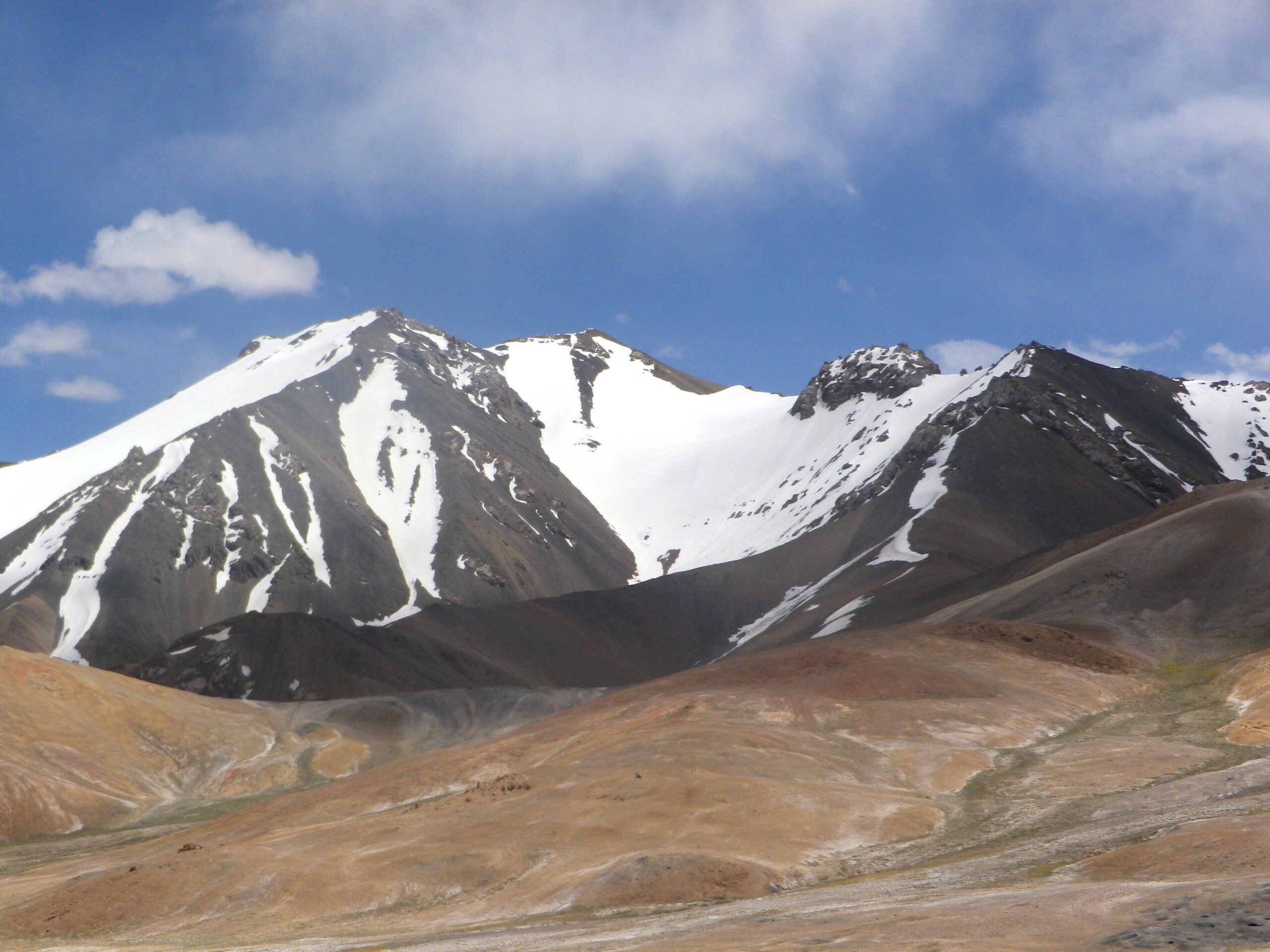
The White Horse Pass, Tajikistan; image: TCA, Stephen M. Bland

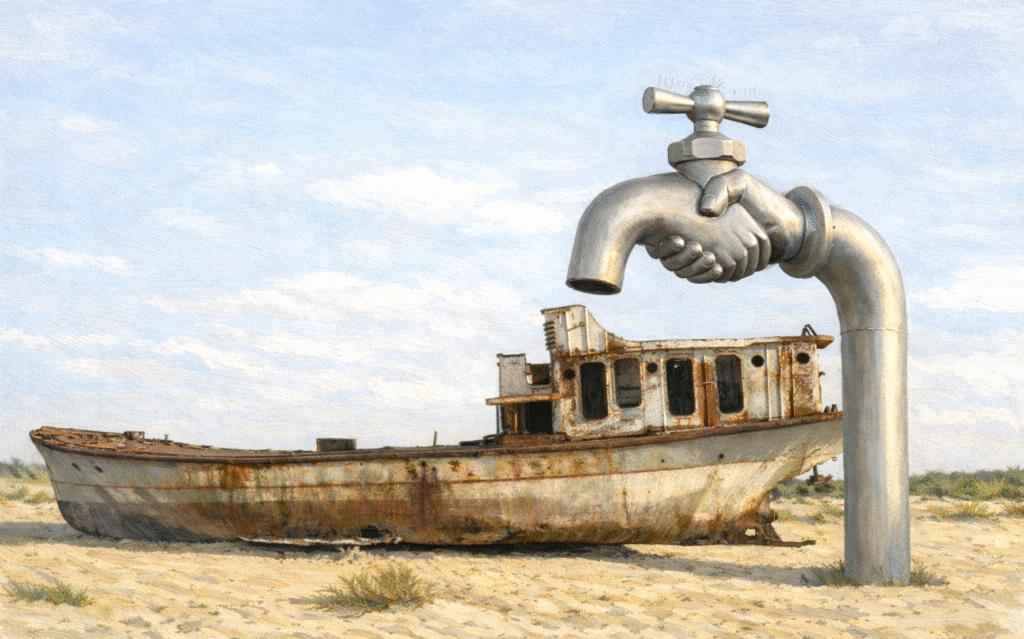
However, the pace of change is alarming. By 2030-2040, water scarcity in Central Asia risks becoming chronic. Glaciers in the Western Tien Shan, for example, have reportedly shrunk by roughly 27% over the past two decades and continue to retreat, posing a direct threat to the flow of the Amu Darya and Syr Darya rivers. These rivers increasingly fail to reach the Aral Sea in sufficient volume, while the exposed seabed has become a major source of salt and dust storms.
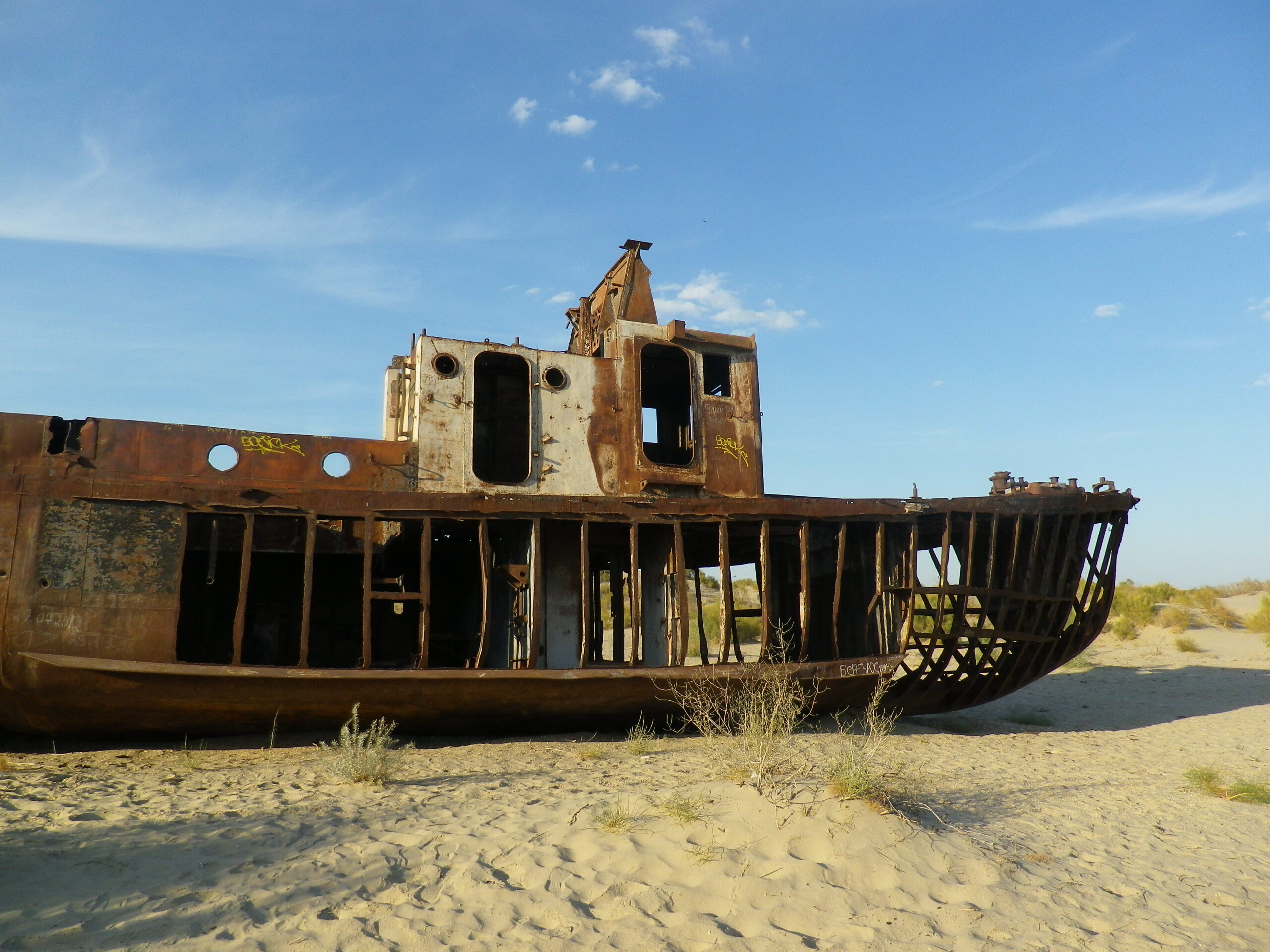
Moynaq, Karakalpakstan; image: TCA, Stephen M. Bland

Infrastructure inefficiencies compound the problem. Estimates suggest that in some systems, 40-50% of water can be lost in deteriorating canals and distribution networks before reaching end users. Agriculture accounts for approximately 80-90% of total water withdrawals, much of it directed toward water-intensive crops cultivated using outdated irrigation techniques. Meanwhile, the region’s population could grow by almost 25% by 2040 compared with current levels, placing additional pressure on drinking water supplies and public utilities.

Taken together, these factors make water scarcity not only an environmental and economic issue but also a potential source of social instability. In this context, water is gradually becoming a matter of domestic and regional security rather than solely a question of resource management.

The challenge of water security, particularly the use of transboundary rivers, lakes, and seas, as well as climate-related impacts on aquatic systems, has long transcended national borders. In Central Asia, this is reflected in asymmetries between upstream and downstream states. Globally, it manifests in growing tensions between regions with relative water abundance and those facing chronic deficits.

The United Nations has repeatedly warned that, under conditions of accelerating climate change, water could become a significant trigger of conflict in the 21st century. Developing global rules, monitoring systems, and early-warning mechanisms is therefore becoming as important as implementing national conservation programs.

Technology and Management: Unlocking Hidden Reserves

International experience demonstrates that a substantial share of water deficits can be mitigated through improved governance and technology. Properly designed and maintained drip irrigation systems can reduce water use by 30-50% compared with traditional surface irrigation while supporting higher yields and improved crop quality.

Laser land leveling can cut irrigation water use by 25-30% without reducing yields. It enhances water efficiency, reduces weed growth, and promotes more uniform crop maturation, while also lowering the volume of water required for field preparation.

Replacing open earthen canals with pipeline systems can significantly reduce conveyance losses. Digital water metering, sensors, satellite monitoring, and information technologies help transform water from an “invisible” input into a measurable and manageable asset. In urban settings, water meters, efficient plumbing fixtures, and the reuse of treated wastewater provide additional savings.

Across regions, experts reach a similar conclusion: the crisis stems less from climate conditions alone and more from outdated management models. Modernizing governance and infrastructure often delivers the most immediate and substantial gains.

Regional Cooperation as Part of the Global Response

For Central Asia, a central priority is shifting from competition to cooperation. Proposals such as the creation of an International Water and Energy Consortium for the region reflect efforts to reconcile upstream and downstream interests, integrate water and energy considerations, and reduce the risk of conflict.

In late 2025, the Interstate Commission for Water Coordination of Central Asia reached agreement on water allocations from the Amu Darya and Syr Darya rivers for the 2025–26 non-growing season — setting specific quotas for each state and ensuring a minimum flow through key hydrological points and the Aral Sea delta — underscoring that shared management is an operational reality as well as a strategic imperative

The importance of such mechanisms extends beyond the region. They illustrate how transboundary resources can be governed through shared rules, transparent data, and mutual benefit, elements that remain underdeveloped in the global water management system.

In this context, the initiative proposed by Kazakhstan’s President Kassym-Jomart Tokayev to establish an International Water Organization within the United Nations framework carries broader significance. It represents not merely a regional proposal but an attempt to strengthen institutional foundations for global water governance.

Over the long term, such an organization could serve as a platform for developing universal principles of water management, facilitating data exchange and scientific cooperation, providing early warnings of emerging crises, and preventing transboundary disputes over allocation.

As water-related risks increasingly affect countries across continents, initiatives of this kind align with wider efforts to adapt to climate change and enhance resilience.

Central Asia as an Early Indicator of a Global Shift

Central Asia is not on the periphery of the global water crisis; it is an early indicator of broader trends. Developments in the Amu Darya and Syr Darya basins may foreshadow similar challenges elsewhere.

Water scarcity represents a global governance challenge affecting Central Asia, the Middle East, Africa, and advanced economies alike. The region, therefore, has the potential to act not only as a zone of risk but also as a source of practical solutions. If water diplomacy, technological innovation, and institutional reform can succeed here, their lessons may prove applicable worldwide.

Water has become a test of the capacity of states and international institutions to act strategically. The sustainability of global development in the 21st century will depend in part on how that test is met.

Will E-Commerce Become the New Oil for Kazakhstan?

On February 26, Almaty will host Ranking Business Day, a professional Open Talk discussion titled “Will E-Commerce Become the New Oil for Kazakhstan?”

Amid ongoing structural economic transformation and the search for new growth drivers, e-commerce has emerged as one of the country’s most dynamic sectors. Online commerce is already exerting a significant impact on retail, logistics, banking, and the development of small and medium-sized enterprises. However, a central question remains: can e-commerce evolve into a strategic pillar of the economy, comparable in importance to the raw materials sector?

As part of the event, Ranking.kz will present a comprehensive industry study examining the current state and future prospects of Kazakhstan’s marketplace sector. The analysis covers market structure and dynamics, the positioning of domestic and foreign players, the economic and social impact of e-commerce, and the role of state regulation.

Participants will address the following issues:

  • the current state of e-commerce in 2025-2026;
  • the impact of cross-border trade and intensifying competition with international platforms;
  • the implications of new consumer protection legislation for the market;
  • risks and potential scenarios for the sector’s sustainable development in 2026.

Special attention will be given to balancing the interests of the state, businesses, and consumers, as well as fostering a competitive environment that supports the growth of domestic companies.

Ranking Business Day will bring together representatives of government agencies, the financial sector, industry associations, marketplaces, and logistics companies for an open professional dialogue.

The event will take place at the Mercure Almaty City Center and will begin at 9:00 a.m.

Information partners of the event include The Times of Central Asia, Kapital.kz, Kursiv.Media, Tengrinews, National Business, Bluescreen.kz, and Profit.kz.

Uzbek Janitor Saves 7-Year-Old Boy from Apartment Fall in St. Petersburg

A janitor from Uzbekistan saved a seven-year-old boy who fell from a seventh-floor window in St. Petersburg, according to the news outlet ExpressAsia.

The incident occurred on Petrozavodskaya Street, where the child was seen standing on the ledge outside an open window. Neighbors shouted, urging him to return indoors, but he did not respond. Moments later, the boy lost his balance, slipped from the partition, and fell.

At the time, a janitor identified as Khayrullo, a native of Uzbekistan, was working near the building. He was the first to notice the open window and the child playing near it. The man called out to the boy and, realizing that the child was climbing further outside and risked falling, moved closer to the building.

As the boy fell headfirst, Khayrullo managed to catch him midair. Holding the child tightly against his body, he absorbed much of the impact.

He then carried the boy into the building entrance and attempted to provide assistance while neighbors called an ambulance. The child survived and is currently in intensive care. Doctors have described his condition as stable.

Khayrullo sustained bruises but did not suffer serious injuries. The building’s management company stated that he has been employed there for only a few months.

ExpressAsia highlighted that the incident could have ended in tragedy without the janitor’s quick reaction.

The outlet has previously reported similar incidents involving Central Asian migrants in Russia. In one recent case in Moscow, a taxi driver originally from Kyrgyzstan noticed a car speeding toward a pedestrian crossing where children were present. With little time to react, he opened his car door to draw the driver’s attention and prompt him to slow down. The maneuver helped prevent a possible collision, and no injuries were reported.

Uzbekistan Joins a U.S. Critical Minerals Implementation Track

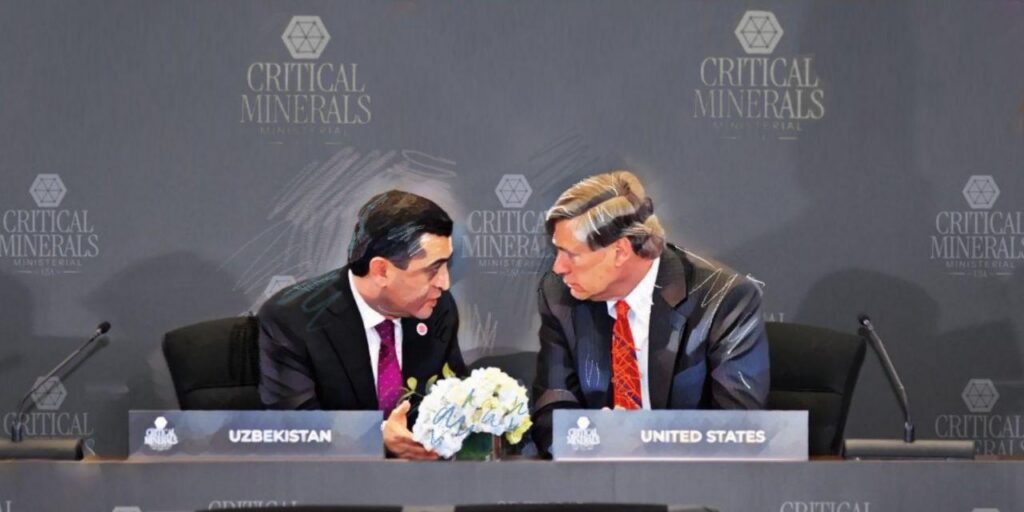
On February 4, 2026, in Washington, D.C., Uzbekistan’s Foreign Minister Bakhtiyor Saidov and U.S. Deputy Secretary of State Christopher Landau signed an intergovernmental Memorandum of Understanding (MoU) on securing supply chains for critical minerals and rare earth elements, spanning both mining and processing. A further agreement signed on February 19 brought implementation and financing to the foreground. The U.S. International Development Finance Corporation (DFC) signed “heads of terms” (i.e., commercial principles and essential terms of a proposed future agreement) for a Joint Investment Framework and outlined a proposed joint holding company. An agreement to establish an “investment platform” was exchanged in the presence of Uzbekistan’s President Shavkat Mirziyoyev.

These agreements are not a single mining deal. They combine a political instrument with a financing-and-structuring track that is intended to yield a small set of projects that can be financed and built, and they treat processing capacity and supporting infrastructure not as optional add-ons but as core deliverables. They also provide a path for early projects to full review and financing while connecting them to longer-term offtake structures that match Washington’s newer supply-shock tools, including “Project Vault.”

What the MoU Changes

The MoU’s immediate purpose is to align government priorities for critical minerals across the value chain while setting expectations that will later shape which financing and partners are feasible. The press agency of Uzbekistan’s foreign ministry emphasized “responsible partnership” and “long-term development” as part of the public framing, placing governance and reputational risk on the same plane as the geological givens. The MoU also leaves several items deliberately unresolved in public form. These include project annexes, deposit designations, and operational timelines. That document design-choice pushes the next phase of bilateral cooperation into working-level scoping and sequencing, where only a small number of candidate projects can be advanced into full review.

At the ministerial-level meeting, Washington clarified why it was framed as supply-chain security rather than commodity trade. Secretary of State Marco Rubio noted that critical minerals are inputs for infrastructure, industry, and defense, while Vice President J.D. Vance stressed the expansion of production across partner networks. As previously reported by The Times of Central Asia, this framing is part of a broader repositioning of U.S. engagement in Central Asia, where diplomatic formats are increasingly paired with mechanisms intended to generate trackable transactions and private-sector follow-through.

For Uzbekistan, what is attractive about this cooperation is the potential to convert resource endowment into a lever for industrial development, rather than treating extraction as the endpoint. President Shavkat Mirziyoyev has publicly valued the country’s underground wealth at roughly $3 trillion. He has linked rising global demand for technological minerals to the case for higher value-added activity around strategic reserves, including lithium and tungsten. The same logic supports a commercially open posture. For Tashkent’s other investors, buyers, and processing partners, Uzbekistan’s diversification toward U.S.-linked capital signals non-exclusivity.

Turning the MoU Into Projects

The next phase is practical. A candidate project will advance only if investors and public lenders can transparently evaluate its licensing and fiscal terms, audit its environmental and social baseline, and have confidence in enforceable contracts that provide a dispute-resolution pathway that counterparties treat as real. For processing facilities to be constructed and operated on time, reliable power, water supply, transport links, and disciplined procurement are decisive. Such an emphasis reflects Washington’s shift “from diplomacy to deals”.

Implementation is a division of labor. The DFC can facilitate private capital’s participation by structuring transactions and absorbing specific risks. The Export-Import Bank of the United States (EXIM) can complement those efforts through procurement-linked and exporter-linked support where the deal design fits its mandate. The bilateral investment platform is the channel that will turn candidate projects into transactions with defined terms. The proposed joint holding company is a possible co-ownership vehicle; however, capitalization, governance, and project-selection rules are not yet public.

The first tranche needs a simple selection logic. Projects with credible resource definition and studies that can be updated will be closest to feasibility. Next comes the identification of a plausible path from mined output to refined products that meet buyer specifications under auditable operating standards. Infrastructure constraints, especially power, water, and logistics, come next. Finally, projects still require long-term purchase contracts with terms that can be enforced, so locking in buyers is the last step.

A small number of clusters illustrates those criteria. They are only examples, not a project list. The Koytash–Ugat tungsten belt, including deposits such as Yakhton, Sautbay, and Ingichka, is a plausible early category and aligns with U.S. Geological Survey modeling of Uzbekistan’s tungsten export potential. Lithium is a second-wave target, conditional on delineation and a workable processing route. Rare-earth and rare-metal recovery as by-products from existing uranium and copper-molybdenum flows offers yet another pathway. In these cases, earlier volumes can be unlocked through improved separation, cleaner processing, and standards upgrades, without waiting for greenfield mine timelines.

Diversification Without Dependency

Uzbekistan is not negotiating in a vacuum. Multiple capital pools across Central Asia now compete, with different priorities in shaping where extraction ends and where processing begins. In Washington in mid-February, a new set of signed documents confirmed definitive agreements for a major tungsten development plan in Kazakhstan. This project is tied to deep processing and led by Cove Kaz Capital Group with Tau-Ken Samruk. Europe is also building its own channel through critical raw materials cooperation and financing commitments. China remains the dominant processing power and an aggressive bidder when strategic deposits come to market. Japan and South Korea are also pursuing targeted supply security through corporate offtake and project-level partnerships, as illustrated by a Mitsubishi-linked offtake arrangement tied to Kazakhstan’s rare-metals output.

In that wider context, the U.S.–Uzbekistan track is an attempt to place Uzbekistan on a non-Chinese path not just for mining but also for the midstream stages that determine where value is captured and who bears reputational risk. It is in Tashkent’s interest to use competitive pressure from other investors to raise standards and accelerate domestic capability. However, if deals become proxies for external rivalry rather than instruments of Uzbekistan’s own industrial policy, then its autonomy can be eroded. The strategic question for the Central Asian states is whether they can maintain balanced diversification while turning the new attention into durable processing capacity and the transparent, credible rules that Western capital requires for committing.