• KGS/USD = 0.01143 -0%
  • KZT/USD = 0.00192 -0%
  • TJS/USD = 0.10820 0.19%
  • UZS/USD = 0.00008 0%
  • TMT/USD = 0.28575 0%
  • KGS/USD = 0.01143 -0%
  • KZT/USD = 0.00192 -0%
  • TJS/USD = 0.10820 0.19%
  • UZS/USD = 0.00008 0%
  • TMT/USD = 0.28575 0%
  • KGS/USD = 0.01143 -0%
  • KZT/USD = 0.00192 -0%
  • TJS/USD = 0.10820 0.19%
  • UZS/USD = 0.00008 0%
  • TMT/USD = 0.28575 0%
  • KGS/USD = 0.01143 -0%
  • KZT/USD = 0.00192 -0%
  • TJS/USD = 0.10820 0.19%
  • UZS/USD = 0.00008 0%
  • TMT/USD = 0.28575 0%
  • KGS/USD = 0.01143 -0%
  • KZT/USD = 0.00192 -0%
  • TJS/USD = 0.10820 0.19%
  • UZS/USD = 0.00008 0%
  • TMT/USD = 0.28575 0%
  • KGS/USD = 0.01143 -0%
  • KZT/USD = 0.00192 -0%
  • TJS/USD = 0.10820 0.19%
  • UZS/USD = 0.00008 0%
  • TMT/USD = 0.28575 0%
  • KGS/USD = 0.01143 -0%
  • KZT/USD = 0.00192 -0%
  • TJS/USD = 0.10820 0.19%
  • UZS/USD = 0.00008 0%
  • TMT/USD = 0.28575 0%
  • KGS/USD = 0.01143 -0%
  • KZT/USD = 0.00192 -0%
  • TJS/USD = 0.10820 0.19%
  • UZS/USD = 0.00008 0%
  • TMT/USD = 0.28575 0%
13 December 2025

Updated Entrepreneurship Education Program Introduced in Turkmenistan with Assistance from USAID

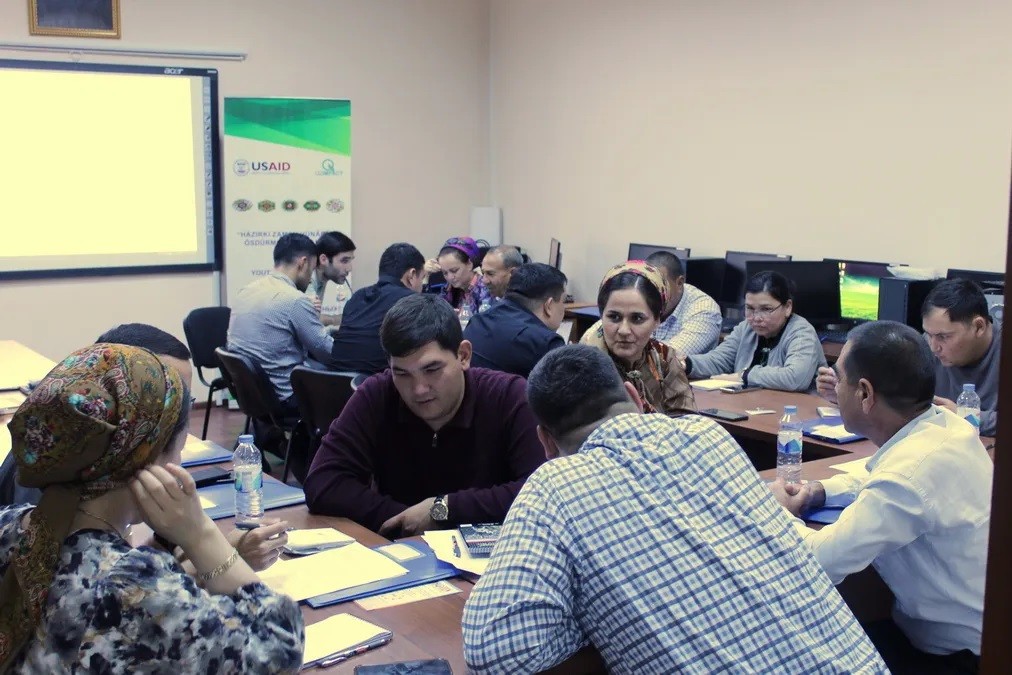
Turkmenistan has modernized its entrepreneurial education program. This was made possible through a partnership between the United States Agency for International Development’s (USAID) Modern Skills Development Project (YDA) and the School of Entrepreneurs of the Union of Industrialists and Entrepreneurs of Turkmenistan. The updated program integrates modern teaching methods for practical learning and developing creative thinking and problem-solving skills – critical competencies for future entrepreneurs.

From September 30 to October 4, 2024, the program held a training session for teachers, including representatives of regional branches. Participants learned new approaches to teaching through case studies, group work, and interactive methods. These innovations are expected to be introduced into the teaching process.

The program aims to support young people with innovative business ideas by providing an opportunity to develop projects based on the Entrepreneurs’ School branches. The final stage will be a business project competition, the winners of which will receive mentoring and access to investment to realize their ideas. This project is designed to foster a new generation of entrepreneurs and strengthen Turkmenistan’s economy.

USAID actively promotes youth development in Turkmenistan through various educational programs and initiatives. One of the main projects is the Youth Development Activity, a program to improve youth entrepreneurial competencies and professions. USAID also conducts training, seminars, and competitions for young people with promising business ideas, supporting their aspirations to become part of the country’s economy.

Chinese Company to Build FMD Vaccine Production Plant in Kyrgyzstan

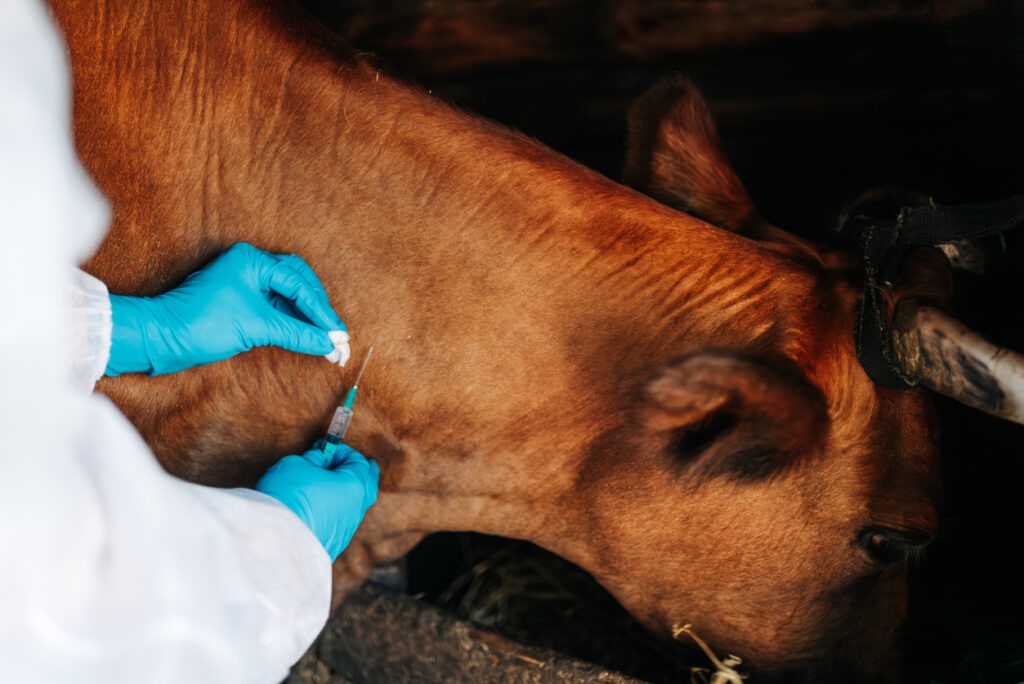
China’s Yangling Jinhai Biotechnology Co., Ltd. plans to build a plant in Kyrgyzstan to produce foot-and-mouth disease (FMD) vaccines, according to the country’s Ministry of Water Resources, Agriculture, and Processing Industry. The announcement followed a meeting between Kyrgyzstan’s Deputy Chairman of the Cabinet of Ministers and Minister of Water Resources, Agriculture, and Processing Industry, Bakyt Torobaev, and a delegation from the Chinese company.

The project includes the entire production cycle, from raising and fattening livestock to vaccination and slaughtering.

Yangling Jinhai Biotechnology Co., Ltd. is ready to invest in plant construction, transfer advanced technologies, and train local specialists.

The parties agreed to establish a working group to implement the project.

According to the World Organization for Animal Health,FMD is a severe and highly contagious viral livestock disease with a significant economic impact. It is a transboundary animal disease that profoundly affects livestock production and disrupts regional and international trade in animals and animal products.

The parties emphasized the project’s importance for strengthening Kyrgyzstan’s veterinary security, as domestically produced vaccines would significantly reduce the spread of infectious diseases among farm animals.

Kyrgyzstan is an agricultural country, and livestock farming is the country’s primary source of income for its rural population.

In September 2024, the Ministry of Water Resources, Agriculture and Processing Industry reported that Kyrgyzstan had 1,802,299 head of cattle (cows), 542,527 horses, 6,216,125 sheep and goats, 6,988,968 poultry, and 29,676 pigs.

Kyrgyzstan Reports Growing Return Migration

Kyrgyzstan’s Ministry of Labor, Social Security and Migration and the International Organization for Migration (IOM) announced the results of their assessment of the country’s migration trends on October 15. The statistics show that return migration increased from 2020 to April 2024, and the number of migrants returning to Kyrgyzstan is continuing to grow.

The number of returning migrants increased by 85% in 2023 compared to the previous year. Kyrgyzstan’s southern Osh and Batken regions and the northern Chui region lead the figures in the number of returning labor migrants. According to the report, the number of Kyrgyz citizens who plan to migrate once again to the country from which they have just returned has decreased by half.

In June, the Speaker of the Kyrgyz Parliament, Nurlanbek Shakiyev said that more Kyrgyz people are returning from abroad, and over the past two years, the numbers have reached 241,000. Shakiyev cited the opening of many new industrial enterprises in Kyrgyzstan in recent years as a reason for growing return migration, emphasizing that Kyrgyz citizens can now earn more at home.

Over the past 30 years, hundreds of thousands of Kyrgyz citizens have left their homeland as labor migrants, mainly for Russia. In the last couple of years, however, there has been a growing trend of return migration largely caused by Russia’s deteriorating economic situation, depreciation of the ruble, stricter rules and harsher attitudes toward Central Asian immigrants, and increasing attempts by the Russian authorities to recruit Central Asian immigrants (with or without Russian passports) to join Russian troops fighting in Ukraine.

According to a 2022 census by Kyrgyzstan’s National Statistics Committee, more than 876,000 Kyrgyz citizens (close to 15% of the country’s population) migrated abroad. The top five destination countries for Kyrgyz migrants were Russia (870,304), Kazakhstan (2,158), Turkey (1,828), Germany (336), and South Korea (240). The IOM report states that 328,458 Kyrgyz nationals have lived abroad since 2020. As of 2023, 79% live in Russia, 4.5% in Kazakhstan, and 4% in Turkey.

According to the report, the primary drivers of migration were dissatisfaction with wages in Kyrgyzstan (26%), lack of job opportunities (17%), financial difficulties and debts (16%), and a perceived lack of prosperity in their homeland (10%).

According to the National Bank of the Kyrgyz Republic, in 2023, remittances from Kyrgyz labor migrants totaled $2.144 billion, compared to $1.873 billion in 2022.

Uzbekistan to Fine Parents of Quadrobers

Parents in Uzbekistan have been threatened with fines for the inappropriate behavior of their children who belong to the quadrobika subculture. The Interior Ministry said failure to comply with parental duties will be punishable as parents are responsible for educating their children to respect social norms and preventing inappropriate behavior.

The quadrobika subculture, which has emerged among young people, involves using masks and accessories to imitate animals and their habits. This movement has already been noticed in Kazakhstan, Russia, and Ukraine, and recently, cases of such behavior have been registered in Tashkent. On October 10, a teenager wearing an animal mask frightened people, and the next day, a quadrober imitating a dog attacked a person and frightened children.

Specialists warn that such behavior can harm the mental health of minors, affect their social integration, and even lead to aggression. In this regard, the authorities are pressing home parents’ legal obligations to ensure their children’s upbringing and education under the Constitution and the Education Act of Uzbekistan.

Violating these duties carries a fine of up to five times the basic calculation unit (up to 1.875 million UZS ($147). The Interior Ministry has urged parents to take care of their children’s all-round development, reacting in time to the emergence of dangerous sub-cultural phenomena. If necessary, a psychological examination of children may be conducted to determine the impact of quadrobics on their emotional health.

In Russia, the issue of administrative responsibility of parents who fail to oversee the upbringing of their children who are addicted to quadrobics has also been raised. The problem has not yet been resolved, a the request to the State Duma has been submitted calling for fines and criminal liability violations. In addition, Gennady Shkil, a priest of the Russian Orthodox Church, suggested in a sermon that mothers and fathers of quadrobers should be deprived of parental rights. Shkil believes that such “tough measures” are necessary as it is “for the salvation of mankind.”

Suspects Arrested in Tashkent for Trying to Sell Ancient Coins Worth $67,000

Uzbekistan’s State Security Service, in collaboration with customs officials, hosted an event in Tashkent to investigate the attempted sale of ancient coins.

A Tashkent resident was apprehended whilst trying to sell 100 gold coins to a resident of Andijan for $67,000, and an additional 37 gold coins were seized from the seller’s car. According to the experts, the gold coins of 5 and 10 rubles, with a total net weight of 776 grams, are considered cultural numismatic treasures of significant artistic and historical value. Minted between 1897 and 1911, the coins have authenticity levels of 900 and 916 and are valued at 950 million UZS.

It was discovered that the buyer planned to sell the historical coins, known as “Nikolai”, in the Osh region of the Kyrgyz Republic. A criminal case has now been opened and investigations are underway.

Tajikistan’s Acute Hunger Issue

Tajikistan has been recognized as the hungriest country among the former Soviet republics. According to the Global Hunger Index prepared by the International Food Policy Institute, 8.7% of the country’s population faces food shortages, and ranked 65th out of 127 countries in the world, is on par with countries such as Nicaragua and Ghana. Lower index scores equal less food problems.

Assessments of hunger are based on child mortality, stunting, and wasting and in recent years, Tajikistan has consistently ranked lowest among post-Soviet countries in the Global Hunger Index.

Despite attempts to improve the situation, the country remains one of the most vulnerable in the region. Today, 18.4% of children under five are stunted due to malnutrition, 5.1% are wasted, and 3% of children do not survive to the age of five; all indicative of  serious food security problems in the country.

According to the Global Hunger Index, malnutrition varies widely across the former Soviet Union. The best results are demonstrated by Uzbekistan, which ranks first among countries with minimal hunger issues. In the republic, less than 2.5% of the population faces food shortages. Stunting affects 6.5% of children; wasting ,2.4% of children, and infant mortality does not exceed 3.1%.

Uzbekistan was the only Central Asian country to rank highly among the 22 former Soviet republics with the lowest hunger rates, including Belarus, Estonia, Latvia, Lithuania, Russia, and Georgia. Belarus and Lithuania consistently demonstrate a high level of food security, making them among the leaders of the former Soviet republics. Armenia and Kazakhstan, in contrast, rank 23rd and 25th, respectively, demonstrating moderate nutritional problems among the population. Moldova, ranked 26th, has a similar situation: malnutrition remains relatively low but requires attention. Kyrgyzstan ranks 36th and Ukraine 46th, indicating average hunger levels. Turkmenistan was ranked 50th.

The situation is particularly dire in Africa, which tops the list of countries with the most significant hunger problems. South Sudan, Burundi, Somalia, Yemen, and Chad, recognized as the hungriest countries in the world, experience extremely high rates of child mortality and malnutrition among their populations.