• KGS/USD = 0.01143 -0%
  • KZT/USD = 0.00192 -0%
  • TJS/USD = 0.10820 0.19%
  • UZS/USD = 0.00008 0%
  • TMT/USD = 0.28575 0%
  • KGS/USD = 0.01143 -0%
  • KZT/USD = 0.00192 -0%
  • TJS/USD = 0.10820 0.19%
  • UZS/USD = 0.00008 0%
  • TMT/USD = 0.28575 0%
  • KGS/USD = 0.01143 -0%
  • KZT/USD = 0.00192 -0%
  • TJS/USD = 0.10820 0.19%
  • UZS/USD = 0.00008 0%
  • TMT/USD = 0.28575 0%
  • KGS/USD = 0.01143 -0%
  • KZT/USD = 0.00192 -0%
  • TJS/USD = 0.10820 0.19%
  • UZS/USD = 0.00008 0%
  • TMT/USD = 0.28575 0%
  • KGS/USD = 0.01143 -0%
  • KZT/USD = 0.00192 -0%
  • TJS/USD = 0.10820 0.19%
  • UZS/USD = 0.00008 0%
  • TMT/USD = 0.28575 0%
  • KGS/USD = 0.01143 -0%
  • KZT/USD = 0.00192 -0%
  • TJS/USD = 0.10820 0.19%
  • UZS/USD = 0.00008 0%
  • TMT/USD = 0.28575 0%
  • KGS/USD = 0.01143 -0%
  • KZT/USD = 0.00192 -0%
  • TJS/USD = 0.10820 0.19%
  • UZS/USD = 0.00008 0%
  • TMT/USD = 0.28575 0%
  • KGS/USD = 0.01143 -0%
  • KZT/USD = 0.00192 -0%
  • TJS/USD = 0.10820 0.19%
  • UZS/USD = 0.00008 0%
  • TMT/USD = 0.28575 0%
13 December 2025

Kyrgyzstan Signs Agreement with Leading Ratings Agencies

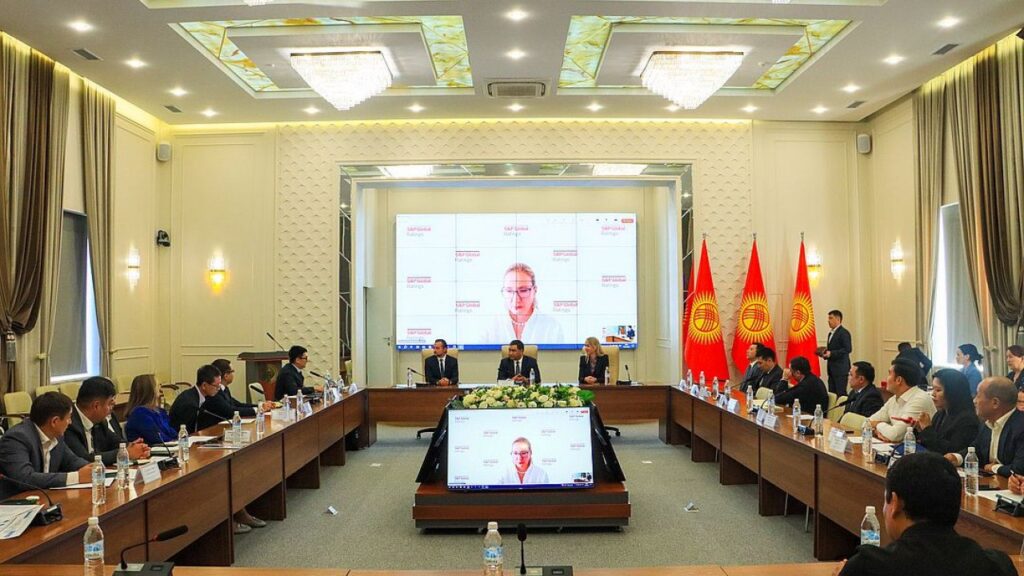
The Kyrgyz Ministry of Economy and Commerce has signed an agreement with the ratings agencies S&P (Standard and Poor’s) and Fitch.

In a statement, the ministry said: “To build the republic’s potential in the international arena and to enter international markets, it is necessary to cooperate with the three big international rating agencies: Moody’s, S&P, and Fitch.”

This week, Minister of Economy Daniyar Amangeldiev met with representatives from S&P and Fitch and Oppenheimer Europe Ltd’s investment bank. Oppenheimer Europe Ltd. will act as a consultant for work with the rating agencies. The parties discussed the prospects of strengthening cooperation and joint work in assessing credit risks and Kyrgyzstan’s investment attractiveness.

“The parties expressed readiness to work on actively assigning and improving long-term rating. This will create prerequisites for strengthening the confidence of partners and investors”, the agencies commented.

Rating agency representatives informed Kyrgyz officials about the need to assign a credit rating and the stages of entering international capital markets.

In 2015, the Ministry of Economy of Kyrgyzstan signed an agreement with rating agencies Moody’s and Standard and Poor’s, giving the country an international credit rating for the first time.

In 2016, the Kyrgyz authorities rejected the services of Standard and Poor’s, for unnamed reasons.

In May 2024, Moody’s raised Kyrgyzstan’s credit rating from negative to stable. Contrary to the agency’s forecasts, Kyrgyzstan’s economy and budget indicators have been virtually unaffected by Western sanctions imposed on Russia, the country’s largest trading partner.

Central Asia Seeks Increase in Trade with China

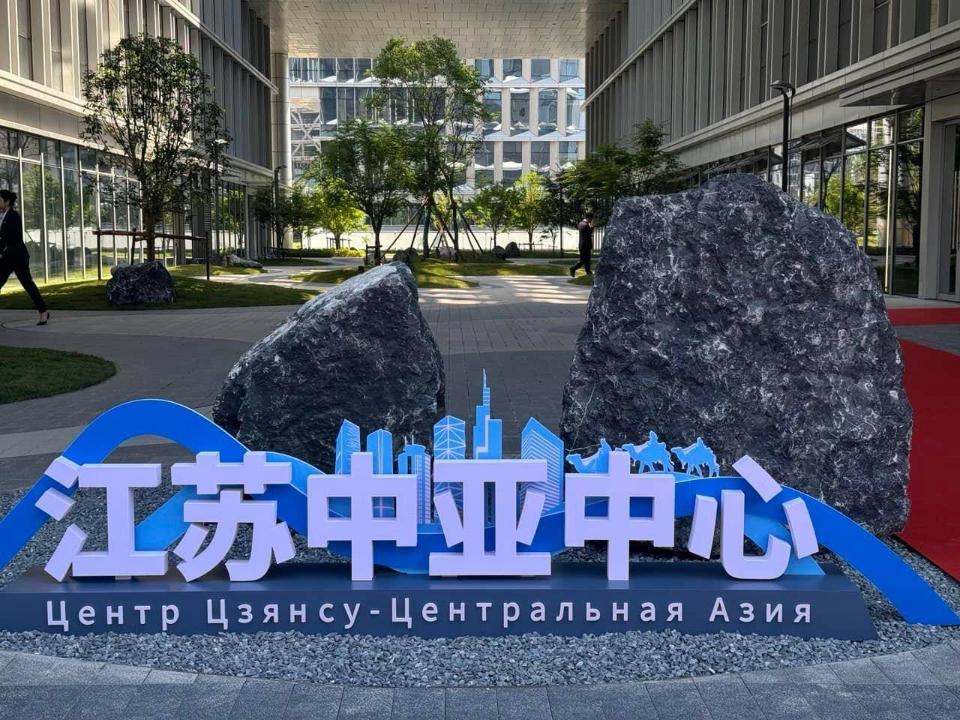
On September 12, the Central Asia-Jiangsu Trade Center, a multifunctional platform showcasing exports from Kazakhstan, Uzbekistan, Tajikistan, and Turkmenistan, opened in Nanjing, the main city of Jiangsu Province in eastern China.

According to the Kazakh Ministry of Trade and Integration, the operation of the Center in Jiangsu Province, known for its developed infrastructure, will facilitate access to the huge Chinese market for all five Central Asian countries.

Plans are now in place to launch a similar multifunctional center in Kazakhstan’s capital, Astana, to showcase Chinese and Kazakh goods.

Official statistics show continued growth of trade turnover between Kazakhstan and China. During the first seven months of this year, bilateral trade increased by 2.8% compared to the same period in 2023,  and amounted to $16.8 billion. Between January and July 2024, trade between Kazakhstan and Jiangsu Province grew by over $1 billion, from $723.3 million to $1.758 billion.

As reported by  Kazakh Minister of Trade Arman Shakkaliyev, Jiangsu Province currently imports products, mainly from the industrial and agricultural sectors, worth more than $266 billion annually.

Kara-Suu Crossing Reopens on Kyrgyz-Uzbek Border

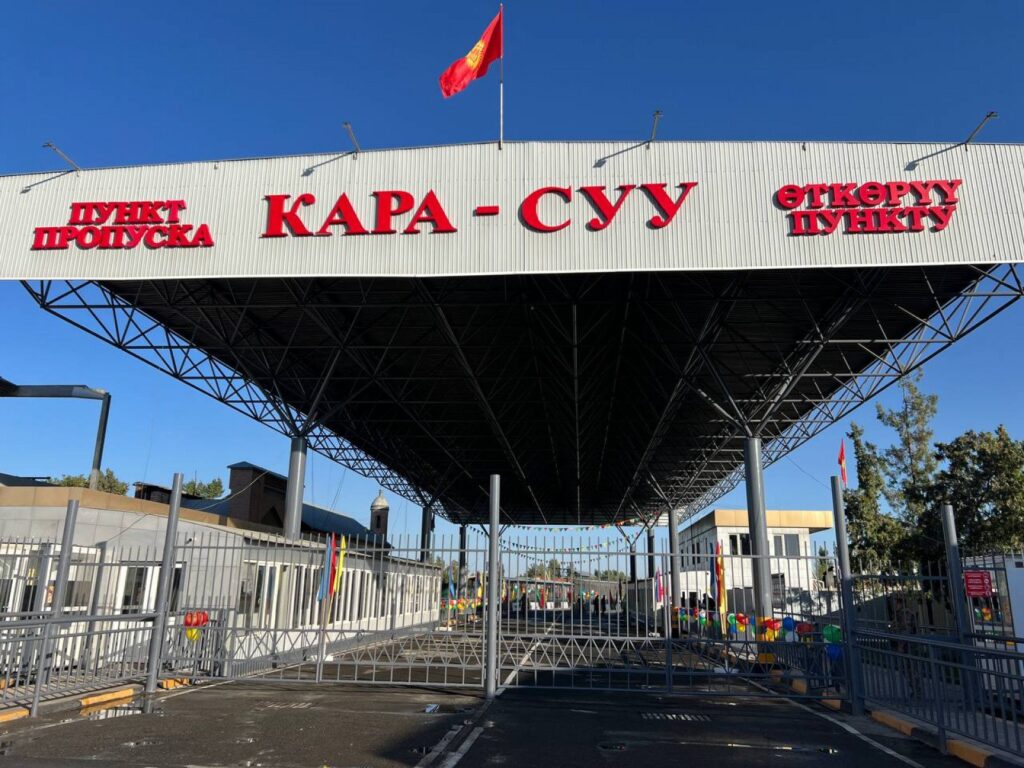
On September 12, the Kara-Suu checkpoint was reopened at the border between Kyrgyzstan and Uzbekistan.

Located near the town of Kara-Suu in Kyrgyzstan’s southern Osh region, on the border with Uzbekistan’s Andijan region, the Kara-Suu crossing was closed 14 years ago. It has reopened amid the two neighboring states’ improved political and economic relations.

Speaking at the checkpoint’s opening ceremony, Bakyt Torobaev, the Deputy Chairman of Kyrgyzstan’s Cabinet of Ministers, emphasized that its reopening will be beneficial to citizens of both countries.

“Previously, many Kyrgyz and Uzbek citizens had to stand in lines at the Dostuk checkpoint to cross the border. The opening of Kara-Suu will solve the problem of queues when crossing the border. The opening of this checkpoint is an important step towards strengthening economic, social, and cultural ties between our countries and increasing tourist flows,” Torobaev said.

On the same day, the renovated Ken-Sai and Uch-Kurgan border checkpoints were opened between the Jalal-Abad region in Kyrgyzstan and the Namangan region of Uzbekistan.

According to official statistics, more than 14 million people crossed the Kyrgyz-Uzbek border in 2023, and in the first eight months of 2024, this figure reached 11 million, 1.5 million more than in the same period last year.

In 2023, trade between Kyrgyzstan and Uzbekistan amounted to $693.6 million. In the first seven months of 2024, it reached $428 million, a 6.7% increase compared to the same period in 2023.

During a state visit to Uzbekistan back in July, Kyrgyzstan’s President Sadyr Japarov and Uzbek President Shavkat Mirziyoyev focused on measures to increase bilateral trade to $2 billion in the coming years and launch a “green-light corridor” for the transportation of agricultural produce between the two countries.

Tajikistan to Increase Defense Budget

Tajik authorities plan to increase the 2025 defense, law enforcement, and judiciary budget to 4.7 billion somoni ($446 million); a rise equivalent to $92 million compared to the $354 million spent in 2024.

As a percentage, spending on the army and security forces will rise to 2.8 percent of GDP, up 0.2 percent from the previous year.

In adherence to the State Secrets Act, data on the breakdown of the budget remains confidential. However, issues concerning the efficient spending of allocated funds have recently come to light. In August 2024, the Agency for State Financial Control and Anti-Corruption reported that over 120 million TJS ($11.3m), intended for clothing and food for servicemen,  had been embezzled  from the Defense Ministry. In response, a criminal case was opened against 52 suspects, including ministry officials.

According to documentation of increased military spending in Central Asia by the Stockholm Institute for Peace Research (SIPRI), in 2023,  Tajikistan, Kazakhstan, and Kyrgyzstan’s expenditure on defense totalled  $1.8 billion. Figures for Uzbekistan and Turkmenistan remain unknown.

The growth of the defense budget in the region is due to several factors, and in particular, border conflicts between Central Asian countries, the unstable situation in Afghanistan, and the war in Ukraine which have forced the region’s states to strengthen their defense and revise strategic priorities regarding security.

Changes in the geopolitical environment have also impacted military expenditure. Whilst Central Asian states previously relied heavily on Russia for security, the number of external partners has increased significantly. Alongside Russia, countries such as Turkey, Iran, Saudi Arabia, the United States, Germany, France, China, and Belarus, are beginning to play an essential role in the region’s security. They also supply arms and military equipment.

Experts note that increasing defense budgets, while necessary to maintain stability, cannot solve all security-related problems, and for the foreseeable future, political instability and internal factors remain severe challenges for Central Asian countries.

Video Highlights: World Nomad Games Day Five

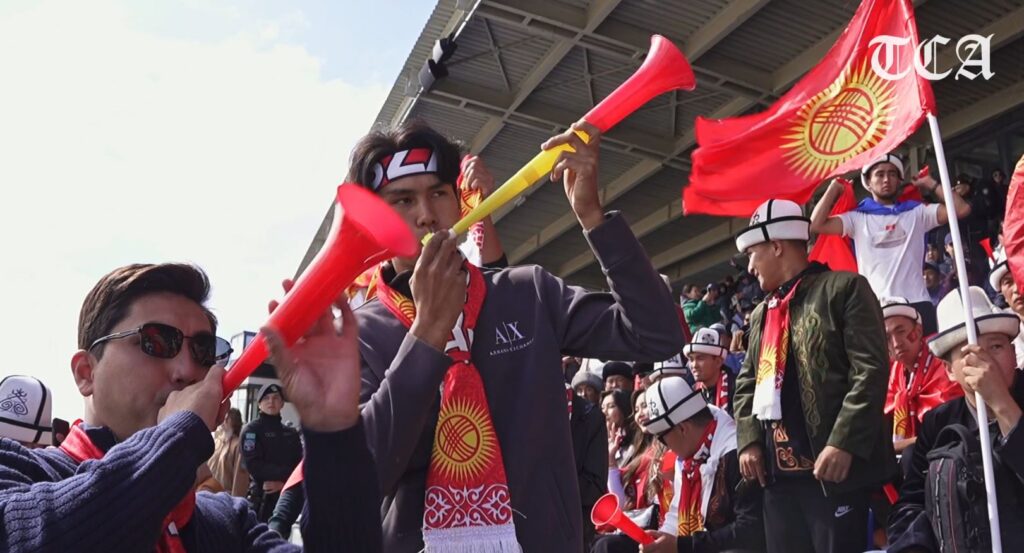
On the fifth day of the World Nomad Games, themed as the “Gathering of the Great Steppe,” TCA soaked up the raucous atmosphere and took in the finals of the equestrian events, including the ever-popular kokpar and kok boru:

A Yurt Full of Culture: Immersive Theater Meets Nomadic Traditions at the World Nomad Games

In and amongst the many yurts at the 2024 World Nomad Games Ethnoaul (Ethnic Village), the inhabitants of a specific yurt — not only delight and surprise passersby with boisterous renditions of Kazakh music, dance, and comical stage combat — but they energetically beckon people inside to experience the traditional familial rituals of a nomadic Kazakh marriage proposal. Guests are seated on the floor while segments of the ritual are played out and translated into English by the host, Ernur. The experience is immersive to the point where some of the observers from far-off regions were overheard congratulating the bride-to-be on her upcoming nuptials.
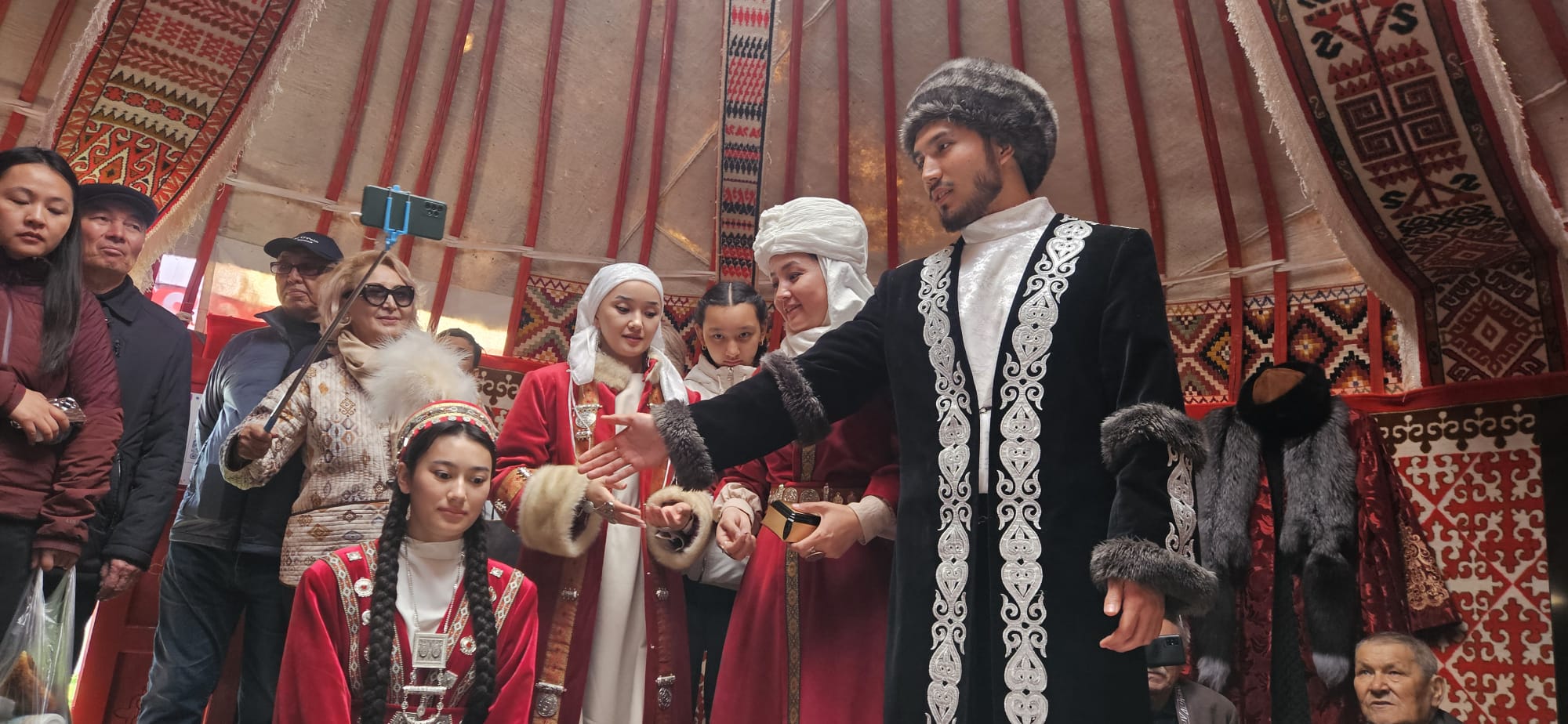
Inside the yurt, Ernur set the scene by pointing out the players, among them, the fathers of the future bride and groom, the future bride, her future mother-in-law, and a strumming dombra player. After the union was established, the mother-in-law bestowed her daughter-to-be with gifts of jewelry. As the dombra rhythm accelerated, the fathers-in-law embraced, and the two families exchanged gifts of — in this instance — fur-collared cloaks. The wedding, Ernur explained, would occur in March, the month of the traditional Central Asian New Year (Nauryz). Upward-facing palms aided declarations of goodwill and thankfulness, followed by more music, merriment, and horse-related appetizers. A sense of genuine formality and inclusive pomp was fully realized in under ten minutes.

The Mukanov Theater, named after Kazakh Soviet writer and poet Sabit Mukanov, is based in Petropavl, approximately 300 miles north of Astana near the border with Russia. Ernur, the aforementioned host and cast member, has been acting with the twenty-one-year-old Mukanov Theater for a year. Back in Petropavl, the company, which has a 200-seat theater building, performs traditional Kazakh plays, modern plays, and Shakespeare, which Ernur described as “so difficult for us!” 2024 marks the first year that they have performed at the WNG with their debut marriage proposal ceremony. Additionally, the theater company has enacted different nomadic traditions in other yurts around Kazakhstan. Ernur, who said he’d enjoyed his time in Astana, added that the Mukanov Theater was “proud that the World Nomad Games are here [in Kazakhstan].”
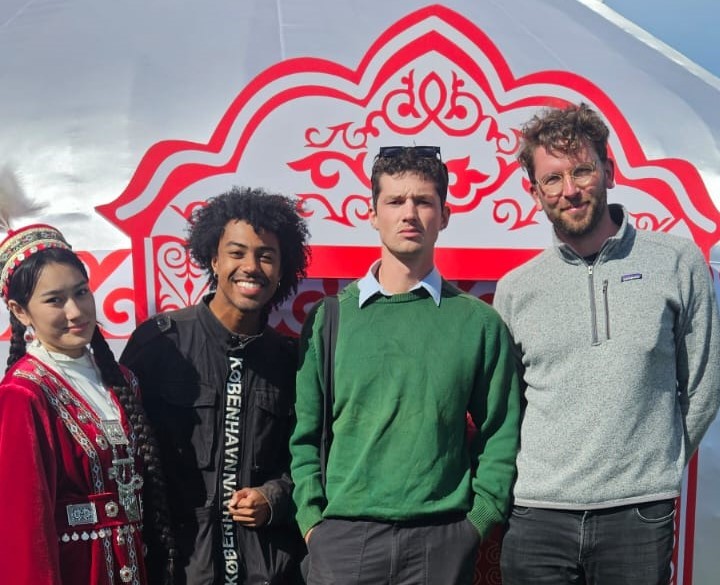
Left to right: Brandon, Albert and Jan at the World Nomad Games; image: TCA, K. Krombie

Three Western traveling companions, who met each other only recently on the backpacker trail of Central Asia, were ushered into the Mukanov Theater yurt. They each provided reviews of the immersive theater experience, and also, their individual opinions regarding the wider connotations of the performance, proportionate to Kazakhstan’s post-Soviet cultural heritage.

Brandon, an American from San Francisco, has been traveling the world for nine months and thought it would be “really funny” to come to the Stans for a couple of months. “I was in Turkey, and I was like, you know what, where’s the weirdest place I can think of to go to that’s not too far from where I am right now? Who’s ever been to Uzbekistan, right? Kazakhstan is my last stop after going to all five countries in the past two months. I was wandering around and when I got to Almaty two months ago, I heard about the World Nomad Games.”

After his extensive travels, Brandon contributed a seasoned perspective on the theater piece. “I think it’s actually very interesting. One thing I’ve learned… I went to Mongolia earlier in my travels, and obviously, with the nomadic culture, half of Mongolia still lives like this. So I was expecting this to be more true to form with how Kazakhstan actually is, but it turns out that Kazakhstan is completely industrialized. In fact, they don’t actually do this for real anymore, but it’s cool to see some of the preservation and some of the culture and history and obviously, you know, it’s good theater. The costumes are wonderful, and the vibes are good.”

Albert, from New Zealand, came to Astana specifically to visit the WNG after hearing about it from Brandon, whom he met while traveling in Uzbekistan a week ago. “ I just thought, you know, this is a now-or-never opportunity. It only happens every few years, so I just booked my ticket, and I flew out.” Having enjoyed the kokpar games and having missed the Tug of War that he wanted to see, Albert made the most of the theatrical yurt by accepting at least some of the ceremony’s edible offerings. “I’ve had quite a bit of horse meat already in Central Asia, which I actually kind of enjoyed, but the fermented horse milk was a bit sour for my palate. It was really cool seeing a bit of an insight into the whole marriage proposal and the traditions of Kazakhstan. I didn’t honestly know much about it.”

Jan, from Berlin, heard about the WNG at a friend’s wedding last week in Bishkek, Kyrgyzstan, via a guest activity recommendation on the wedding’s website. As regards the serendipitous shift from a real wedding to a marriage proposal performance, Jan commented, “I like it a lot. I’m really impressed by the costumes and how they’re trying to preserve this. Even though it might not be practiced as much anymore, I think it’s actually quite impressive and a nice way to define their identity.”

Due to enforced restrictions on herding routes under the Russian Empire, and sedentarization inflicted by the Soviet Union, an ancient nomadic culture was effectively quashed. Jan spoke of his visit to Astana’s National Museum of the Republic of Kazakhstan, regarding its attempts to restore a sense of national identity. “In the museum, it’s quite clearly depicted… the continuation of this [culture], and that they’re trying to get out of this Soviet Russian sphere of influence and find their own path.”