• KGS/USD = 0.01144 0%
  • KZT/USD = 0.00196 -0%
  • TJS/USD = 0.10899 -0%
  • UZS/USD = 0.00008 -0%
  • TMT/USD = 0.28490 0%
  • KGS/USD = 0.01144 0%
  • KZT/USD = 0.00196 -0%
  • TJS/USD = 0.10899 -0%
  • UZS/USD = 0.00008 -0%
  • TMT/USD = 0.28490 0%
  • KGS/USD = 0.01144 0%
  • KZT/USD = 0.00196 -0%
  • TJS/USD = 0.10899 -0%
  • UZS/USD = 0.00008 -0%
  • TMT/USD = 0.28490 0%
  • KGS/USD = 0.01144 0%
  • KZT/USD = 0.00196 -0%
  • TJS/USD = 0.10899 -0%
  • UZS/USD = 0.00008 -0%
  • TMT/USD = 0.28490 0%
  • KGS/USD = 0.01144 0%
  • KZT/USD = 0.00196 -0%
  • TJS/USD = 0.10899 -0%
  • UZS/USD = 0.00008 -0%
  • TMT/USD = 0.28490 0%
  • KGS/USD = 0.01144 0%
  • KZT/USD = 0.00196 -0%
  • TJS/USD = 0.10899 -0%
  • UZS/USD = 0.00008 -0%
  • TMT/USD = 0.28490 0%
  • KGS/USD = 0.01144 0%
  • KZT/USD = 0.00196 -0%
  • TJS/USD = 0.10899 -0%
  • UZS/USD = 0.00008 -0%
  • TMT/USD = 0.28490 0%
  • KGS/USD = 0.01144 0%
  • KZT/USD = 0.00196 -0%
  • TJS/USD = 0.10899 -0%
  • UZS/USD = 0.00008 -0%
  • TMT/USD = 0.28490 0%
08 December 2025

Azerbaijan and Uzbekistan Collaborate to Construct Ferries

Azerbaijan and Uzbekistan plan to cooperate on the construction of ferries. These ferries will be provided for Uzbekistan’s needs, and the project will cost $150 million.

Several measures are being suggested to expand the countries’ cooperation in the transport and transit sectors. The joint construction of warehouse infrastructure is being mooted, as well as the creation of a joint venture to further develop transportation along the Trans-Caspian route.

The Times of Central Asia previously wrote about the Uzbekistan-Azerbaijan business forum that was held in Tashkent on August 22. As a result of the forum, a portfolio of projects worth $2 billion was formed in energy, chemistry, mining, textile, agriculture, urban development, and other areas.

Also, on May 1 this year, the energy ministers of Azerbaijan, Kazakhstan, and Uzbekistan met in Tashkent and signed a memorandum of cooperation to connect their countries’ energy networks.

The initiative’s main goal is to study the means of connecting energy systems through a high-voltage cable installed in the Caspian Sea to export green energy from Azerbaijan, Kazakhstan, and Uzbekistan to countries of the European Union.

New Satellite Internet May Appear in Kazakhstan

Kazakhstan plans to agree with Amazon to use “Project Kuiper” satellite internet, a competitor to Elon Musk’s well-known Starlink.

Minister of Digital Development, Innovation, and Aerospace Industry Zhaslan Madiev said the agreement will be signed during the Asia-Pacific Conference on Digital Transformation, which will be organized by UNESCAP in Astana.

Madiev emphasized that competition between satellite providers will improve the quality of internet services for citizens at an affordable price.

Amazon began deploying the Project Kuiper network by launching the first two prototype satellites last year. More than 3,200 satellites are planned to be deployed in the future, but a full-fledged launch has been delayed until the end of 2024.

Kazakh Prime Minister Olzhas Bektenov, who participated in the conference, also said that the 5G network will cover all regional centers of Kazakhstan by the end of 2025.

A Starlink pilot project was also launched in Kazakhstan; under this project, Starlink internet will be available to 2,000 remote rural schools.

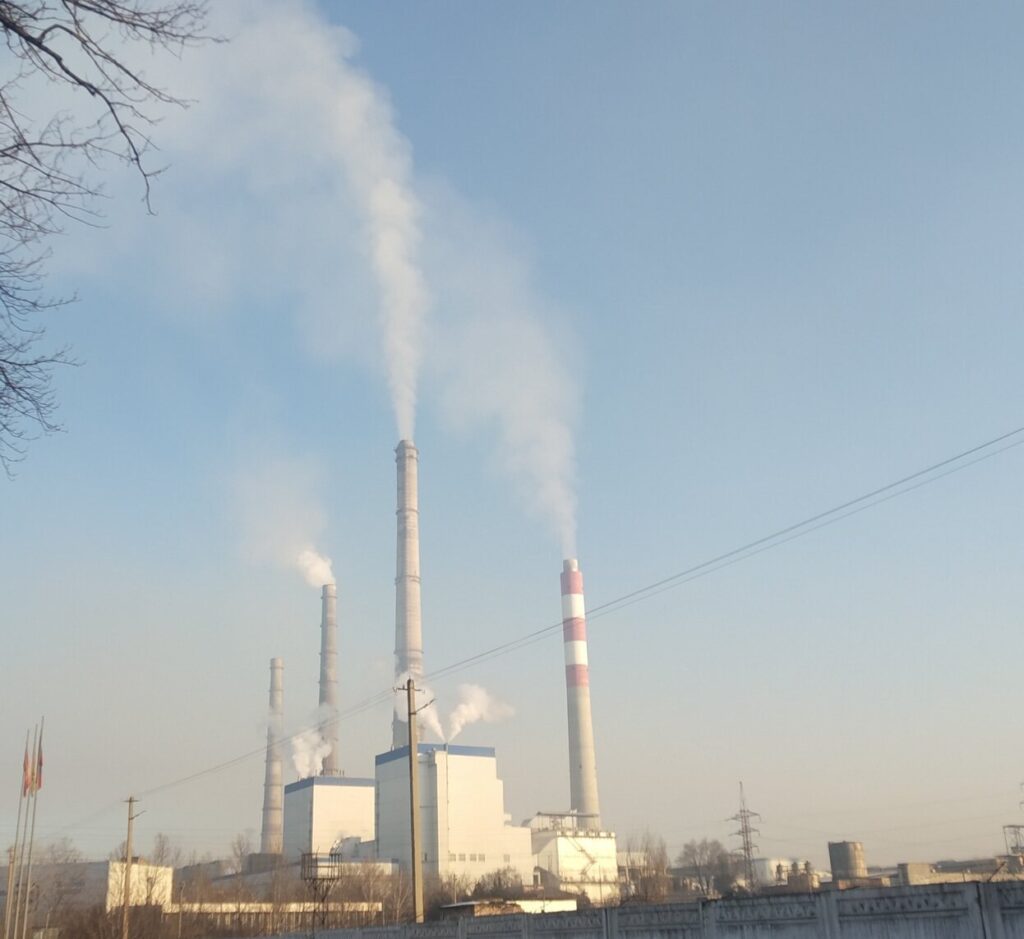
Chinese Modernizing Two Power Units at Bishkek Heating Plant

Since July, some 350 specialists from China’s Tebian Electric Apparatus Stock Co. Ltd. (TBEA) have been carrying out a full overhaul of two power generating units at the Bishkek Thermal Power Plant (TPP), Taalaibek Baigaziyev, Deputy Mayor of Bishkek for Energy Issues, told Birinchi Radio.

The Bishkek TPP generates 13% of all electricity produced in Kyrgyzstan (with the rest generated by hydropower plants) and provides heat and hot water to almost two-thirds of the capital.

TBEA built the two power units that are currently under repair as part of the Bishkek TPP modernization that commenced in 2014. Following a loan agreement between China’s Export-Import Bank and the Kyrgyz government in 2013, TBEA was granted the contract and modernized the plant for $386 million.

According to Baigaziyev, these two Chinese power units were commissioned in 2017 and were not repaired until this July. In past winters, they worked with a maximum load of 210 megawatts. This winter, their capacity is planned to increase to 300 megawatts.

The Bishkek TPP has seen two significant accidents in recent years. One accident occurred in January 2018, when the plant’s breakdown left the city without heating for three days amid freezing air temperatures.

The most recent accident happened on February 2 of this year, in the old part of the power plant that the Chinese did not modernize. An explosion at the plant seriously injured three people. It caused the plant’s breakdown, forcing authorities to declare hot water and heating restrictions in some parts of the city as the plant’s staff worked to repair the damage.

Following the accident, Kyrgyzstan’s president Sadyr Japarov ordered the complete modernization of the aging thermal power plant.

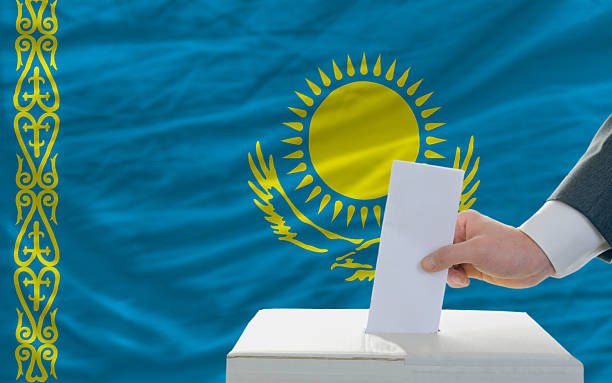
Nuclear Plant Referendum in Kazakhstan Will Cost $33 Million

Kazakhstan’s Central Election Commission (CEC) has announced that 15.5 billion tenge ($33 million) will be allocated to hold a referendum on constructing a nuclear power plant.

CEC member Sabila Mustafina said the amount includes organizational costs and holding the referendum at 78 foreign polling stations in 63 countries. The main part of the funds — 71% — will be spent on labor remuneration for more than 77,000 election commission members. The referendum will be held on October 6.

Kazakhstan’s president Kassym-Jomart Tokayev signed a decree on holding the referendum on September 2, 2024. In his address, Tokayev emphasized that constructing nuclear power plants is a strategically important issue for the country. Tokayev noted the need to use reliable and environmentally friendly energy sources in the context of the global energy deficit. He emphasized that today, about 200 nuclear power plants operate in 30 developed and developing countries. Tokayev noted that it is vital for Kazakhstan to consider long-term national interests, environmental safety, and the population’s needs, as well as the need to make thoughtful decisions on constructing nuclear power plants.

The president also emphasized the importance of public support in making important decisions for the country. He said that the population should have a say in every step related to major infrastructure projects, such as the construction of nuclear plants.

Discussions on constructing a nuclear power plant in Kazakhstan have been ongoing for many years. The need for it first emerged after the closure of the Soviet reactor in Aktau in 1999.

Empowering Central Asia: A Unified Approach to Poverty Alleviation

Many developing nations have prioritised the eradication of poverty. They employing various strategies, such as pursuing higher economic growth and more equitable income distribution. These efforts have yielded mixed results, underscoring the importance of caution and awareness of the challenges involved.

East Asian countries have made significant strides in eliminating poverty. China has made significant progress, and India has seen more moderate headway. Latin American nations have faced difficulties in reducing poverty due to sluggish economic growth, and unfortunately, poverty has risen in Africa. Extreme poverty has historically not been an issue in Central Asia, because of various support schemes provided by the former Soviet government.

Nevertheless, while Central Asia’s poverty rates continue to decline, poverty reduction is slowing in some countries. Interestingly, Uzbekistan has made notable progress in reducing poverty since 2021. The poverty headcount rate based on the national poverty line fell from 17.0 per cent in 2021 to 14.1 per cent in 2022 and further declined to 11.0 per cent in 2023. Robust real wage growth was the main driver of the recent poverty reduction. Between 2022 and 2023, increases in wage income accounted for nearly two-thirds of the total poverty reduction. However, wage growth was much higher among skilled workers, especially in urban areas, due to skills shortages in the labour market. The latest official statistics show that the average wage increased the most in the services sectors, with a higher share of high-skilled workers in telecoms, pharmaceuticals, and IT.

Consequently, income growth favored the better-off skilled population. Such wage inequality leads to income inequality, measured by the Gini index, increasing from 31.2 in 2022 to 34.5 in 2023. It is also noted that the socio-economic conditions are better in all Central Asian economies than in other developing economies.

In Central Asia, poverty reduction has been influenced by several factors, such as implementing a national welfare standard, improved access to quality education, and financial assistance for elderly individuals and households led by single mothers. For example, in Uzbekistan, introducing a national welfare standard in 2021 significantly reduced poverty. The poverty rate decreased from 17 to 11 per cent by 2023, with a more noticeable decline in rural areas (8 percentage points) compared to urban areas (4 percentage points), resulting in approximately 1.6 million individuals being lifted out of poverty. The government’s initiatives suggest it is making progress towards halving poverty between 2021 and 2026, indicating a hopeful future for poverty reduction in the region. 

Notably, the World Bank has recalculated poverty estimates in Central Asia using updated international poverty lines. For lower-middle-income countries — which globally include Kyrgyzstan, Tajikistan, and Uzbekistan — the poverty line is set at US$3.65 per day. In contrast, it is $6.85 daily for upper-middle-income countries like Kazakhstan. According to these new poverty lines, approximately five million people are considered poor using the lower-middle income country threshold, and 20 million people are considered poor using the upper-middle income country threshold. These updated poverty lines account for differences in living costs between countries.

In Central Asian economies, there are distinct categories of people in rural and urban areas. These categories include skilled and unskilled individuals. Non-farm workers comprise a significant portion of the rural population and are primarily unskilled. Skill development is essential for poverty reduction, and policies promoting skill development have shown positive outcomes, particularly in improving economic and social stability. Additionally, in Central Asia, the intersecting challenges of climate change, social vulnerability, and fragility threaten increasing human insecurity and socio-economic and political instability, directly impacting water, food, and energy security.

Theoretical considerations suggest various potential advantages to skill development and its impact on poverty levels in developing countries. Experts point to the incentives embedded within the institutional framework as pivotal in shaping the skills and knowledge that yield significant returns. Equitable education policies in East Asia have played a crucial role in fostering economic growth and reducing poverty. Furthermore, it has been argued that increased equality has bolstered political and social stability, thereby creating a more favourable environment for investment. Cognitive skills and improved literacy rates are regarded as prerequisites for economic progress.

Case studies demonstrate the apparent failure of capital to flow into capital-poor countries due to minimal returns on capital. Insufficient availability of skilled labour and other complementary factors have compounded this issue. Notably, the correlation between education quality and skills is firmly established. While education has been highly influential in transmitting knowledge and skills in some countries, it has failed to impart valuable skills to others. This underscores the multifaceted nature of the factors contributing to poverty and emphasises the need for tailored strategies to address it.

Central Asian governments could spotlight this issue and frame human resource policies in collaboration with educational institutions. Emphasising the importance of education can effectively convey the significance of investing in education as a critical strategy for poverty reduction.

Kyrgyzstan Proposes Ban on Face Coverings

The State Commission on Religious Affairs of Kyrgyzstan has proposed several important initiatives to regulate religious activity in the country and in particular, a ban on face coverings that hinder citizen identification in state institutions and public places.

The ban will not apply to protective masks, and a draft decree, carrying a proposed fine equivalent to 235 USD for violation of the law, has now been submitted for public discussion.

In addition, the State Committee of Religion also proposes banning the distribution of religious literature and other materials in public places, residential premises, state and municipal institutions, and educational organizations.

Recommendations have also been mooted to prohibit religious figures from foreign organizations from conducting ceremonies and events in nursing homes, correctional institutions, and military units without prior approval of the authorized body.

A further proposal is the implementation of a ban on religious organizations’ interference in the activities of public authorities and local self-government bodies, and on financing political parties by subjects of spiritual activity.

Administrative liability is envisaged for violation of these prohibitions, the aim of which is to strengthen state control, and prevent abuse, of religious activity.

Laws prohibiting face coverings are already in place in several countries. France and Belgium for example, have strict bans on burkas and niqabs in public places, and in Sri Lanka, similar measures have been introduced to combat religious extremism. In the Republic of Congo and Chad, such laws were imposed to improve security despite the low Muslim population.

Post-Soviet countries have adopted similar laws but on a limited scale. Azerbaijan restricts religious dress in public institutions, whilst motivated by concern for national identity and the secular nature of the state, Tajikistan has imposed a law banning the hijab in public institutions and schools since 2017.