• KGS/USD = 0.01144 0%
  • KZT/USD = 0.00192 -0%
  • TJS/USD = 0.10849 0.37%
  • UZS/USD = 0.00008 0%
  • TMT/USD = 0.28571 0.28%
  • KGS/USD = 0.01144 0%
  • KZT/USD = 0.00192 -0%
  • TJS/USD = 0.10849 0.37%
  • UZS/USD = 0.00008 0%
  • TMT/USD = 0.28571 0.28%
  • KGS/USD = 0.01144 0%
  • KZT/USD = 0.00192 -0%
  • TJS/USD = 0.10849 0.37%
  • UZS/USD = 0.00008 0%
  • TMT/USD = 0.28571 0.28%
  • KGS/USD = 0.01144 0%
  • KZT/USD = 0.00192 -0%
  • TJS/USD = 0.10849 0.37%
  • UZS/USD = 0.00008 0%
  • TMT/USD = 0.28571 0.28%
  • KGS/USD = 0.01144 0%
  • KZT/USD = 0.00192 -0%
  • TJS/USD = 0.10849 0.37%
  • UZS/USD = 0.00008 0%
  • TMT/USD = 0.28571 0.28%
  • KGS/USD = 0.01144 0%
  • KZT/USD = 0.00192 -0%
  • TJS/USD = 0.10849 0.37%
  • UZS/USD = 0.00008 0%
  • TMT/USD = 0.28571 0.28%
  • KGS/USD = 0.01144 0%
  • KZT/USD = 0.00192 -0%
  • TJS/USD = 0.10849 0.37%
  • UZS/USD = 0.00008 0%
  • TMT/USD = 0.28571 0.28%
  • KGS/USD = 0.01144 0%
  • KZT/USD = 0.00192 -0%
  • TJS/USD = 0.10849 0.37%
  • UZS/USD = 0.00008 0%
  • TMT/USD = 0.28571 0.28%
11 December 2025

Cyprus as a Mirror of Turkish Geopolitics: How Ankara Uses Northern Cyprus to Project Influence in Central Asia

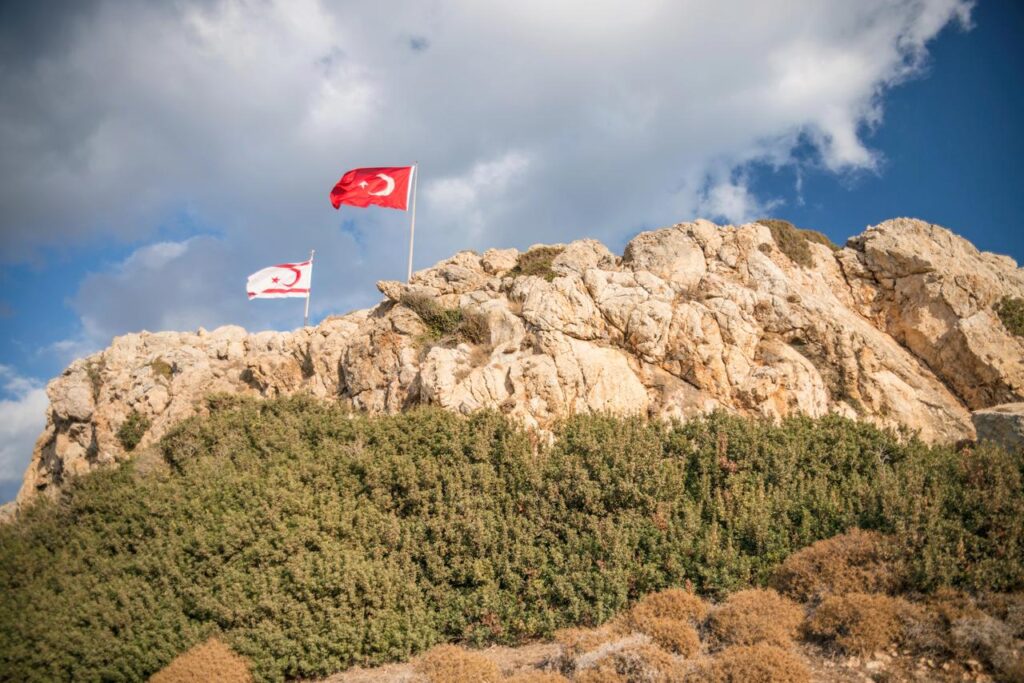
Northern Cyprus has become a microcosm of Turkish foreign policy, a space where Ankara combines military presence, the ideology of “Turkic brotherhood,” and economic leverage. For Turkey, this territory is not merely a long-standing geopolitical dispute but a laboratory for a new diplomatic model centered on the vision of a “great Turkic world.”

As noted by Stratfor, despite the decisive victory of Republican Turkish Party leader Tufan Erhürman in the October 19, 2025, presidential elections in the self-declared Turkish Republic of Northern Cyprus (TRNC), a candidate who supports renewed negotiations with the Republic of Cyprus and advocates for a federal model, Ankara has shown no intention of revising its entrenched two-state doctrine. Analysts suggest Turkey may apply economic pressure and diplomatic isolation, including suspension of subsidies and credit lines, should Erhürman attempt to implement a federal solution.

Concurrently, Turkey is lobbying for the TRNC’s recognition within the Organization of Turkic States (OTS), aiming to set a symbolic precedent: if Turkic-speaking nations will not support each other, who will? For Central Asia, this initiative reflects Ankara’s commitment to unifying the Turkic world under its political leadership, extending far beyond cultural solidarity.

Political Implications for Central Asia

Turkey’s push to incorporate the TRNC into the OTS shifts the organization from a cultural bloc to a geopolitical instrument. Should Northern Cyprus gain observer status, Ankara will likely expect symbolic support from its Turkic partners.

This poses a significant dilemma for Central Asian states. Aligning with Turkey could be perceived by Western actors as a breach of international law, while maintaining neutrality might be viewed as a rejection of Turkic unity. Kazakhstan, Uzbekistan, and Turkmenistan have so far emphasized adherence to international law and sovereignty. At the April 2025 EU-Central Asia summit in Samarkand, these states jointly reaffirmed UN Security Council resolutions from the early 1980s, which declared the TRNC’s independence and all related separatist actions legally invalid.

Kyrgyzstan may face a more delicate challenge due to its deep humanitarian and educational ties with Turkey.

Northern Cyprus thus serves as a litmus test for Turkic integration: how closely can nations align without compromising their political autonomy?

Economic and Energy Dimensions

Cyprus plays a strategic role in Turkey’s energy policy, linking the Caspian region, the Caucasus, and the Eastern Mediterranean. Turkish control over Northern Cyprus bolsters its influence over maritime logistics, offshore gas development, and export corridors.

This holds direct relevance for Central Asia. A stronger Turkish position in the Mediterranean enhances its leverage over energy transit routes from the Caspian to Europe, particularly in relation to the Trans-Caspian pipeline and the Middle Corridor.

Over time, Ankara is expected to use energy infrastructure as a tool for political engagement, promoting an “economy of Turkic solidarity”, offering mutual benefits, but often tied to strategic conditions.

Security and Military Presence

The TRNC functions as a prototype for Turkey’s military protectorate model, a way to retain control while presenting itself as a guarantor of stability. This model is echoed across the Turkic region through Turkey’s expanding military partnerships with Azerbaijan, Kazakhstan, Uzbekistan, and Kyrgyzstan.

Northern Cyprus operates as a “security showroom,” illustrating the perceived benefits of alliance with Turkey. Yet deeper military ties with Ankara may provoke unease in Moscow and Beijing, which view a consolidated Turkic defense bloc as a threat to their regional interests. As such, Turkey is emerging not just as a partner, but as an assertive strategic actor vying for regional leadership.

Ideological and Symbolic Dimensions: The “Turkic Nation”

In Turkish political discourse, Cyprus is framed not simply as a territory, but as a symbol. The refrain “Türkiye never left its friends” encapsulates Ankara’s ideological expansion, casting solidarity as a willingness to support even unrecognized entities.

In Central Asia, this message is conveyed subtly, through cultural programs, religious initiatives, and media outreach. If TRNC recognition within the OTS becomes a reality, it could set a precedent for prioritizing ethnic unity over international norms. This would be particularly problematic for Kazakhstan and other multiethnic societies, potentially undermining foundational principles of their foreign policy. In such a shift, Turkey would position itself less as an economic ally and more as an ideological coordinator.

Forecast: Navigating Between Solidarity and Sovereignty

In the medium term, Turkey is expected to continue advocating for the TRNC’s inclusion in the OTS, using both economic incentives and diplomatic persuasion. Kazakhstan will likely uphold its stance as a mediator and proponent of international law, while Ankara intensifies its influence through humanitarian and cultural engagement across the region.

Should tensions between Turkey and the EU or the US escalate, Central Asia could serve as a strategic rear base for Ankara, further enhancing Turkey’s interest in the region. However, overly assertive pressure from Turkey risks pushing some states closer to China or Russia as counterweights. Turkey will thus need to balance economic and symbolic tools with diplomatic finesse.

Final Assessment

For Ankara, Northern Cyprus represents more than a geopolitical dispute; it is a test case for constructing a new political order based on identity rather than legality. If Turkey succeeds in legitimizing the TRNC within the OTS, it will redefine Turkic integration as a geopolitical enterprise rather than a cultural one.

For Central Asia, this marks a critical juncture. The region must remain engaged in Turkic cooperation without becoming subsumed into a Turkish-led geopolitical project. Kazakhstan, in particular, bears responsibility as a stabilizing force, asserting that genuine unity can only be achieved through mutual respect for sovereignty and adherence to international norms.

Northern Cyprus is not merely a territory, it is a symbol of how far Turkey is prepared to go to assert leadership, and of how resolutely the Turkic nations will defend their own space for independent decision-making.

Tokayev Meets with U.S. Envoys Ahead of C5+1 Summit

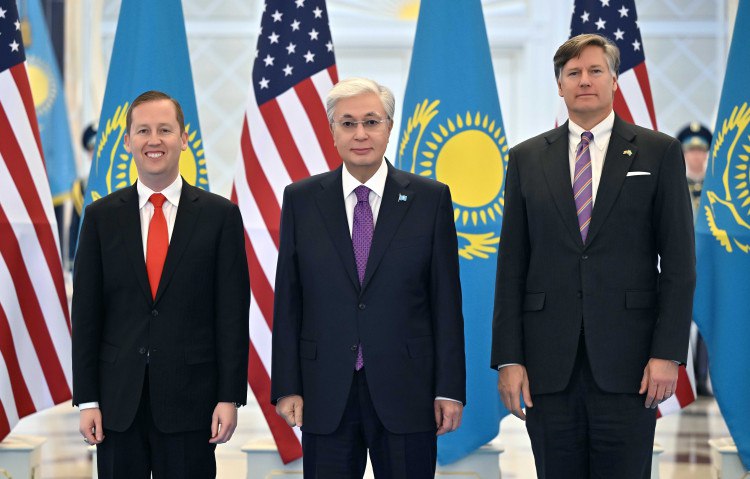
Kazakhstan’s President Kassym-Jomart Tokayev met in Astana with Sergio Gor, U.S. Special Representative for South and Central Asia, and Christopher Landau, U.S. Deputy Secretary of State, to discuss the future of the Kazakh-American expanded strategic partnership and preparations for the upcoming C5+1 summit in Washington.

Tokayev expressed confidence that the summit, scheduled for November 6, would be productive in setting priorities for long-term cooperation. He emphasized Kazakhstan’s commitment to strengthening trade, economic, and investment ties with the United States.

Tokayev also conveyed his appreciation to U.S. President Donald Trump for the invitation to the summit. He voiced Kazakhstan’s support for the domestic and foreign policies pursued by the Trump administration and praised its role in promoting global peace and security.

Sergio Gor delivered Trump’s greetings and reaffirmed the strategic importance of Central Asia in U.S. foreign policy. He noted that the upcoming summit is expected to elevate bilateral cooperation to a new level.

The leaders discussed opportunities for deepening cooperation in energy, critical minerals, digitalization, and the development of transport and logistics infrastructure.

Earlier in their visit, the U.S. delegation traveled to Almaty, where Gor and Landau met with local business leaders and executives from American companies operating in Kazakhstan.

They also toured the Museum of Modern Art, the Shymbulak ski resort, and the Medeu high-altitude ice rink.

“Almaty is Kazakhstan’s largest city and financial capital, located at the foot of the Zailiyskiy Alatau mountains. Just half an hour’s drive from the city is the world-famous Shymbulak ski resort, where we enjoyed warm Kazakh hospitality. I’m starting to feel at home here, surrounded by golden eagles and my new Kazakh friends!” Landau wrote on social media.

The date of the C5+1 summit was first reported in media outlets before being confirmed through official correspondence between Tokayev and Trump. Uzbek media later corroborated the event, citing sources close to President Shavkat Mirziyoyev’s administration, followed by confirmation from Kyrgyz President Sadyr Japarov.

The Artistic Brilliance of Central Asia Takes Center Stage at Sotheby’s

On October 29, Sotheby’s will host its Arts of the Islamic World and India sale, featuring a dazzling selection of manuscripts, ceramics, metalwork, and jewelry that together trace the creative reach of Central Asia across six centuries. The auction highlights how the region’s artists shaped Islamic visual culture from the early medieval period to the Timurid age.

Among the most important works is a rare page from the monumental Baysunghur Qur’an, produced around 1400 in Herat or Samarkand. Another piece connects to the earlier Samanid Dynasty, whose rule from Bukhara and Tashkent fostered a flourishing of calligraphic pottery in the ninth and tenth centuries. The Arab geographer al-Maqdisi once praised the “large bowls from Shash,” an early name for Tashkent, noting their reputation throughout the Islamic world.

A line from the ‘Baysunghur Qur’an’, attributed to ‘Umar al-Aqta, Herat or Samarkand, circa 1400; image: Sotheby’s

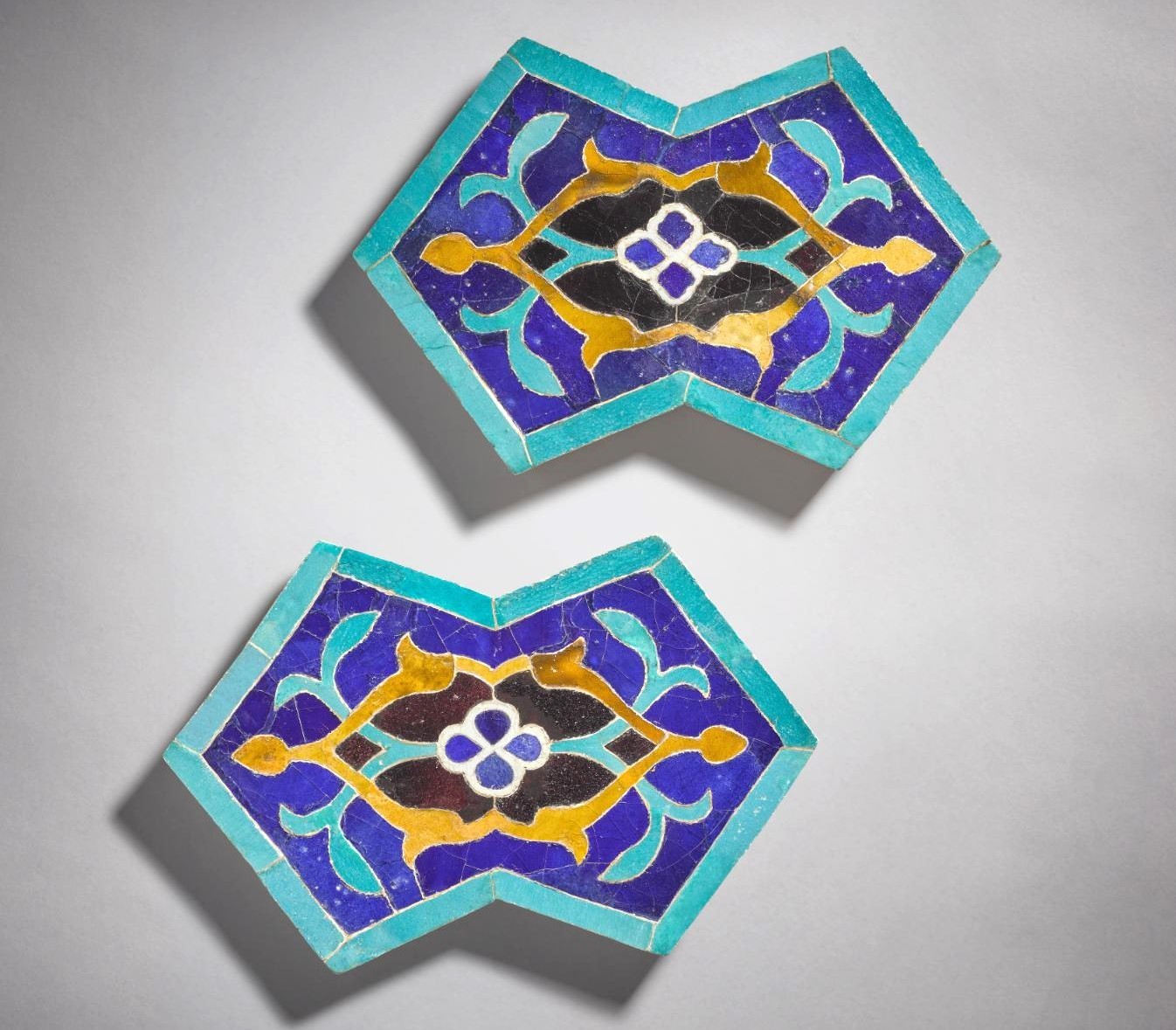
Two colorful Timurid mosaic tiles from the fourteenth or fifteenth century illustrate the architectural splendor of Samarkand and Herat. Their glazed patterns in cobalt, turquoise, and white once formed part of vast decorative panels in mosques and mausoleums. The geometric interlace and stylized foliage that define them became a visual signature of Timurid architecture, a style that spread from Central Asia to Persia and India.

A Golden Horde turquoise and pearl-set gold belt or necklace, Pontic-Caspian Steppe, 14th century; image: Sotheby’s

The Times of Central Asia spoke with Frankie Keyworth, a specialist in Islamic and Indian Art at Sotheby’s, for a closer look.

TCA: How did manuscripts like the Baysunghur Qur’an serve as symbols of power and faith in the Timurid court, and what does its immense scale – a Qur’an so vast it took two people to turn a page – reveal about the empire’s ambition, artistry, and self-image?

Keyworth: The manuscript was a hugely ambitious and challenging project, even just by the tools it would take to create, with monumental sheets of paper measuring 177 by 101cm., and a large pen whose nib would have to measure over 1cm. Displayed on a magnificent marble stand, the manuscript would be a staggering visual representation of the patron’s wealth and piety. Their subsequent use during public recitation reinforced the elite’s religious aspirations. The fact that this manuscript is unsurpassed by any other medieval Qur’an and remains so valued centuries after it was produced at the turn of the 15th century reveals the key role manuscripts played in the establishment of the Timurid dynastic image.

A Timurid brass jug (mashrabe), Herat, Afghanistan, 15th-early 16th century; image: Sotheby’s

TCA: A brass jug from Herat shaped like a Chinese vase, a ceramic bowl from Tashkent inscribed in Arabic script – these objects tell of traders, scholars, and artists linking worlds from Samarkand to Beijing long before globalization had a name. What can you tell us about how this trade transpired, and are there similarities to modern transport corridors?

Keyworth: Trade via the so-called Silk Road endured for centuries, and its role in the movement of works and the sharing of ideas has been well-documented. Diplomacy, patronage, and the movement and dispersal of artists as empires were created and fell, also resulting in artistic influence and exchange. Innovations in material and techniques allowed different centers to develop and apply their own stamp to forms derived from other regions. The Timurid jug, for example, displays a form associated with Ming pottery, but here it is transformed into a metalwork and adorned with the intricate floral ornament and calligraphy of the Timurid repertoire. It can also be related to examples in other media, such as the remarkable jade jug of Ulugh Beg, and, later, in Ottoman silverwork of the 16th century.

A parcel-gilt silver cup, Pontic-Caspian Steppe, Central Asia or Persia, 13th-14th century; image: Sotheby’s

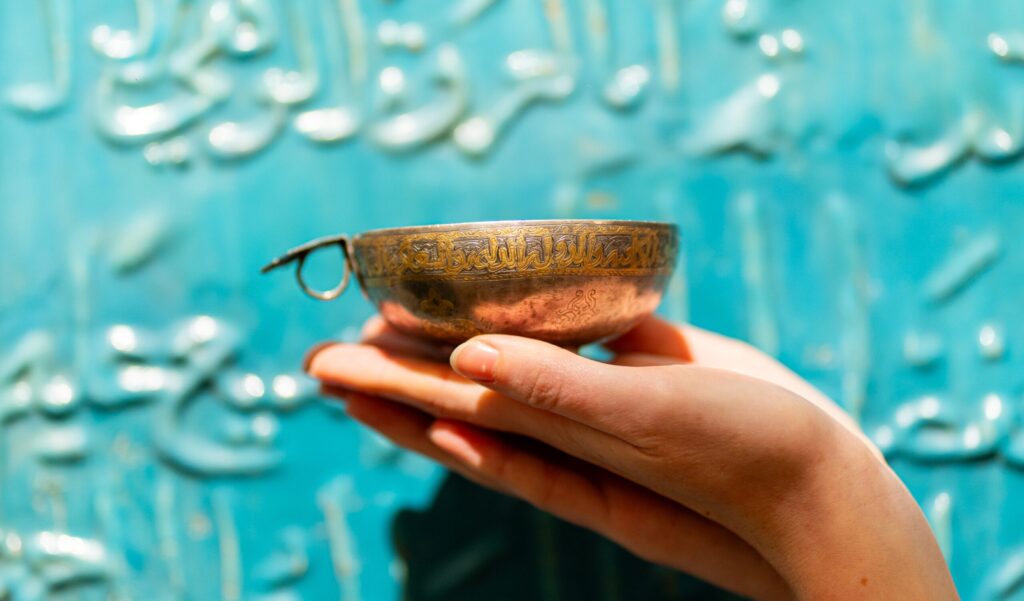
TCA: On many items in the collection, the written word becomes the art itself. Curving naskh letters bless a silver cup, while bold Kufic script circles a Samanid bowl. Each inscription transforms an everyday object into something sacred. What messages of joy, faith, or poetry were meant to be read or simply admired centuries ago?

Keyworth: The inscriptions on such wares reveal the repertoire of aphorisms and poetry that would have been widely used and familiar to users at the time, such as a quatrain signaling the virtues of generosity by Ibn Mubarak on the Samanid bowl. The inscriptions here relate to the use of the bowl, displaying a message of literary refinement and generosity fitting of a generous host who would own such a luxurious article of tableware.

The inscriptions also reveal the relationships between different craftsmen, and scholars have compared the foliate stems and calligraphic cartouches on Timurid jugs such as ours with manuscript illumination, suggesting a dialogue between the metalworkers and Kitab-khaneh. The accomplished Kufic script around the Samanid bowl also shows an artist highly skilled in calligraphy.

Each work offered at Sotheby’s reflects a meeting ground of ideas and artistry. A picture is created of Central Asia and its cities, especially Samarkand and Herat, which became centers of invention connecting the Islamic world with China, India, and Byzantium. There, poets, scholars, and craftsmen turned geometry into art and faith into design, creating works that gave ideas visible shape and devotion lasting substance.

For historians, the significance of these objects lies in what they reveal about movement. Ideas, materials, and craftsmen travelled along trade routes that carried silk, gold, and paper; the same roads that brought goods from Xi’an to Constantinople also spread architectural forms, calligraphic styles, and decorative motifs.

The sale also reflects a broader shift in how museums and collectors view Central Asian art. Once treated as peripheral to Islamic culture, the region is now recognized as a driving force in its evolution. The restoration of monuments in Samarkand and Bukhara and new research into Timurid manuscripts have deepened understanding of how Central Asia influenced later Persian and Mughal art. Institutions such as the Museum of Islamic Art in Doha and the Louvre in Paris have expanded their collections of Central Asian material, underscoring its importance in the global story of Islamic civilization.

Two Timurid cut-mosaic tiles, Central Asia or Persia, 14th-15th century; image: Sotheby’s

The auction begins at Sotheby’s New Bond Street gallery in London at 10:30GMT on October 29, with bidding available online and in person. The full catalogue and sale details are available on the Sotheby’s website.

Uncategorized

Kazakhstan’s Strong Bond Sale Anchors Regional Capital Markets

The Republic of Kazakhstan once again captured global investor attention with its highly successful sovereign bond issuance in October 2025, underscoring its status as Central Asia’s benchmark borrower. The Ministry of Finance sold a $1.5 billion five-year Eurobond at a record-low 4.412% yield, about 85 basis points above U.S. Treasuries, after attracting nearly $4.4 billion in orders from a geographically diverse investor base spanning Europe, the U.S., and Asia – almost three times oversubscribed.

Strong Market Reception and Competitive Pricing

This five-year issue achieved the lowest yield in Kazakhstan’s independent history and was one of the tightest-priced five-year sovereign bonds among investment-grade peers, pricing inside higher-rated Poland, and modestly above Qatar’s comparable five-year yield. The Finance Ministry credited the result to investors’ confidence in Kazakhstan’s macroeconomic management and fiscal credibility, strengthened by the country’s ongoing budget and tax reforms enacted in 2025. These measures have reinforced perceptions of policy discipline and institutional reliability, enabling Kazakhstan to secure funding at exceptionally low costs.

June 2025: Dual-Tranche Success

In June 2025, Kazakhstan executed a $2.5 billion dual-tranche Eurobond comprising a 7-year $1.35 billion note at 5.0% and a 12-year $1.15 billion note at 5.5%. Investor demand was exceptional, with orders roughly twice the issue size from global funds across Europe, the U.S., and Asia. The transaction priced tightly against comparable BBB sovereigns, reflecting market confidence in Kazakhstan’s low debt levels, ample reserves, and consistent reform momentum.

Together, the June and October offerings have demonstrated Kazakhstan’s ability to tap international markets repeatedly in 2025 on favorable terms, even amid global volatility.

Fiscal Strength and Ratings Support

Kazakhstan’s strong market performance rests on a robust fiscal foundation and solid credit ratings. Fitch Ratings has affirmed Kazakhstan’s long-term foreign-currency issuer default rating at ‘BBB’ with a Stable Outlook, noting the country’s low government debt – around 25% of GDP – and substantial sovereign net foreign assets supported by the National Fund and foreign-exchange reserves. Combined reserves and National Fund assets total roughly $93 billion, equal to about 31% of GDP.

S&P Global Ratings, which upgraded Kazakhstan’s outlook to Positive in August 2025, forecasts 5.5–5.6% GDP growth and has commended progress in deficit reduction and institutional reform. The agency noted that Kazakhstan’s new Budget and Tax Codes, along with tighter fiscal rules and improved oversight of quasi-fiscal activities, are expected to strengthen fiscal consolidation and institutional transparency.

These reforms, together with the country’s moderate debt burden and substantial sovereign assets, have helped sustain investor confidence. Kazakhstan’s ability to issue Eurobonds at yields tighter than some A-rated peers demonstrates that credibility in practice, and market participants now view the country as the regional benchmark sovereign in Central Asia.

Uzbekistan: Reform Progress, Higher Yields

In February 2025, Uzbekistan raised roughly $1.5 billion equivalent through a multi-currency sovereign issue — a $500 million 7-year U.S. dollar tranche at 6.95%, a €500 million 4-year euro tranche at 5.1%, and a UZS 6 trillion 3-year local-currency note at 15.5%. Total demand reached about $4.2 billion, nearly 2.8 times oversubscribed, underscoring strong interest despite global rate volatility.

Fitch upgraded Uzbekistan to ‘BB’ (Stable) in June 2025, citing accelerated structural reforms and resilient growth. International reserves exceeded $50 billion as of September 2025, buoyed by rising gold prices. While GDP growth continues at around six percent, the yields achieved by Uzbekistan remain materially wider than those of more mature issuers, reflecting its shorter track record in global capital markets.

Kyrgyzstan: A Debut Success with Frontier-Market Pricing

In May 2025, Kyrgyzstan entered the international markets with a $700 million, five-year Eurobond priced at 7.75%, marking its first sovereign issue. Demand topped $2.1 billion – about three times oversubscribed – with participation from more than 100 investors across the U.S., Europe, and Asia.

The yield reflected Kyrgyzstan’s higher-risk, frontier-market profile. Fitch rated the country ‘B’ (Stable), and Moody’s kept it at ‘B3’, raising the outlook to Positive after GDP grew 11.5% year-on-year in early 2025. Proceeds are being channeled into infrastructure and debt-management projects, a prudent strategy for a debut sovereign issuer. The Times of Central Asia previously described the debut as a “landmark Eurobond launch” on the London Stock Exchange, noting proceeds were directed to infrastructure and debt management.

Global Perspective

Kazakhstan remains Central Asia’s most established sovereign issuer, combining investment-grade strength, fiscal prudence, and steady market access at tight spreads. Its 2025 performance reaffirmed that stability and aligned it more closely with mature emerging-market peers in Eastern Europe and the Middle East.

Uzbekistan and Kyrgyzstan, while still considered frontier markets, are advancing along a constructive path toward deeper participation in global capital markets. Uzbekistan’s reform-driven issuance and Kyrgyzstan’s well-received debut both highlight rising investor confidence and the region’s expanding market footprint.

Together, these developments point to a more diversified and resilient sovereign landscape in Central Asia, reflecting steady progress in policy credibility and access to international investors.

Kazakhstan to Launch Unified Digital Platform for Energy Sector Management

Kazakhstan is moving forward with plans to establish EnergyTech, a unified national digital platform for managing its fuel and energy complex. Energy Minister Yerlan Akkenzhenov announced the initiative during a recent government meeting.

EnergyTech will consolidate all elements of the sector, including power generation, subsoil use, refining, and coal, on a single platform aligned with QazTech standards. The full development and industrial launch are scheduled for 2026-2027.

According to Akkenzhenov, two modules of the platform are already in pilot operation.

The first, a monitoring service for heating season readiness, provides real-time data on assets, equipment condition, and repair planning. It has generated digital registries of generation facilities and is expected to reduce inspection times and lower the risk of seasonal accidents by 25%.

The second module streamlines the process of submitting and reviewing tariff approval requests. By eliminating paper workflows and enhancing transparency, the system has reduced approval times, cut operating costs, and lowered the administrative burden on market participants by 56%. The pilot covers 83 combined heat and power (CHP) plants.

Akkenzhenov also highlighted the low penetration of automated electricity metering systems among consumers. To address this, the government plans to install 4 million smart meters across 27 electricity suppliers within three years. This is projected to yield an annual economic benefit of $105 million by reducing regulatory losses.

Parallel efforts are underway to implement automated heat metering. More than 30,000 smart devices are needed for 52 heat supply organizations. The minister noted that, based on international benchmarks, comprehensive metering can cut heat consumption by up to 15%.

In addition, the ministry is planning to establish a sector-specific information security center and a national operator for energy-related information and communication infrastructure.

Artificial intelligence is also central to the government’s digital transformation strategy. An AI acceleration group has been formed within the energy ministry, along with an AI alliance that includes global technology companies.

The estimated economic impact of these AI projects ranges from $4.6 million to $78 million. Both are currently undergoing regulatory approval and are being prepared for broader implementation.

As previously reported by The Times of Central Asia, Kazakhstan is also exploring the use of AI tools in the legislative process.

Tajikistan and the Taliban – Talking and Fighting

Peaceful coexistence is turning out to be complicated for Tajikistan and the Taliban government in Afghanistan.

The Tajik government has viewed the Taliban as a threat since the militant group appeared in Afghanistan in the mid-1990s. But now that modest efforts are underway to establish some sort of amicable ties, there has been an uptick of violence directly involving the two sides along the Tajik-Afghan border.

Let’s Keep This Between Us

Tajikistan is the lone government in Central Asia that remained hostile to the Taliban after the latter returned to power in Afghanistan in August 2021. In the weeks that followed, the Taliban again exerted control over Afghanistan, and the Tajik government and the Taliban sent reinforcements to their common border. Russia and Pakistan had to intervene to ease tensions.

The other Central Asian states, Kazakhstan, Kyrgyzstan, Turkmenistan, and Uzbekistan, have all established a business relationship with the Taliban government since the Taliban again seized control, but Tajikistan has remained aloof. Which is why the visit of Muhammad Yusuf Vafo, the governor of Afghanistan’s northern province of Balkh, to the Tajik capital Dushanbe on October 23 came as such a surprise.

The Tajik government did not say anything about Vafo’s trip. The independent Tajik news agency Asia-Plus cited Afghan media as reporting on the visit, during which Vafo met with the head of Tajikistan’s National Security Committee (GKNB), Saimumin Yatimov. Vafo and Yatimov reportedly discussed ways to improve ties in a variety of spheres and pledged not to let any “hostile elements” use their territory to plot or carry out attacks on the country.

An estimated several hundred Jamaat Ansarullah militants of Tajik origin continue to operate in Afghanistan. The group allied with the Taliban during the last years foreign forces were in Afghanistan, propping up the government of Ashraf Ghani, and stayed in Afghanistan after the Ghani government fell. Jamaat Ansarullah fighters were among the reinforcements the Taliban sent to the Tajik border during the weeks of tension in late 2021.

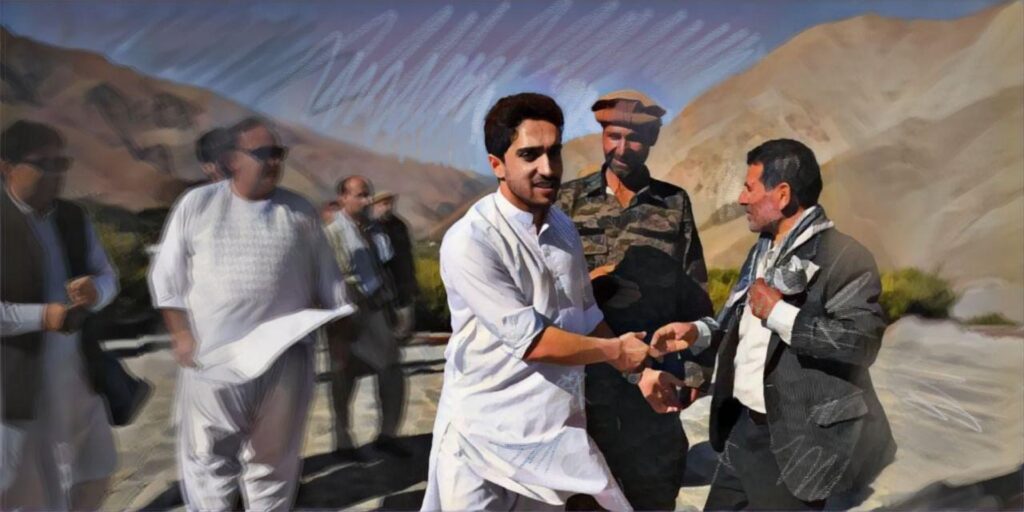
There were reports soon after the Taliban returned to power that Tajikistan was aiding the National Resistance Front (NRF), a mainly ethnic Tajik group of former government soldiers who continue to wage a guerrilla campaign against the Taliban. NRF leader Ahmad Masoud, the son of the legendary Afghan field commander and ethnic Tajik, Ahmad Shah Masoud, has been in Dushanbe several times since August 2021, and there was a report that the NRF opened an office in Dushanbe in October that year.

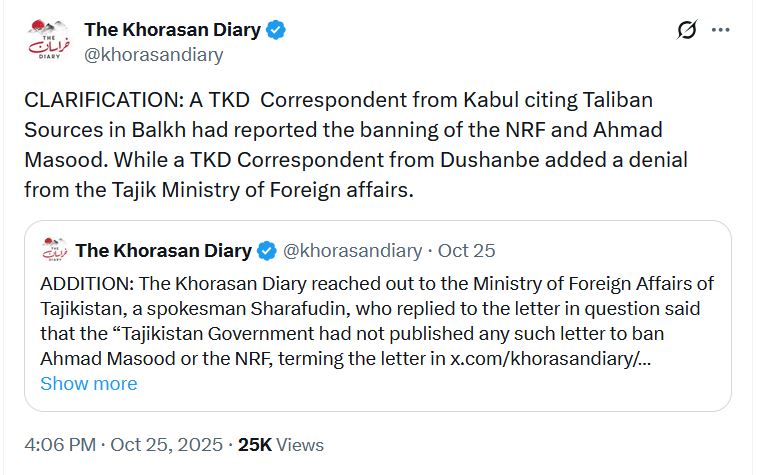
Shortly after Vafo’s visit to Dushanbe, Taliban sources in Balkh Province told the Pakistani-based Khorasan Diary website that Tajik authorities had banned the NRF, but the Tajik authorities stated that no such decision was made.

Yatimov’s meeting with Vafo was not the first time the Tajik GKNB chief had met with Taliban representatives. In September 2024, Yatimov went to Kabul to hold security talks with Taliban officials, though the Tajik authorities never confirmed that meeting.

Both parties are concerned about militants from the Islamic State of Khorasan Province (ISKP).

ISKP is based in Afghanistan and continues to carry out attacks against the Taliban. ISKP also disseminates propaganda in the Tajik language, some of which calls on Tajik citizens to overthrow their government.

In May 2022, ISKP militants fired several rockets from Afghanistan into Tajikistan. That motivated Tajikistan’s first contact with the Taliban, and the Tajik authorities sent former security officer Samariddin Chuyanzoda to Kabul, though the Tajik government never publicly mentioned Chuyanzoda’s trip to Kabul.

Vafo is not the first Taliban official to visit Tajikistan.

In May 2025, Abdul Bari Omar, the head of Afghanistan’s state power utility Da Afghanistan Breshna Sherkat, was in Dushanbe for a meeting of representatives of countries involved in the Central Asia-South Asia (CASA-1000) power transmission project.

Armed Clashes

The meetings of officials from the two countries seem to be an encouraging sign, but along one section of the Tajik-Afghan border, there have been two shoot-outs between Tajik border guards and the Taliban since late August. The most recent incident occurred on October 25, right after Vafo departed Tajikistan. Tajik and Taliban troops clashed near a gold-mining site on the Afghan side of the Pyanj River that divides Tajikistan and Afghanistan.

The reason for the fighting remains unclear. Afghanistan’s Hashti Subh newspaper said the conflict started because work at the gold mining operation on the Afghan side of the border has caused water to periodically flood areas on the Tajik side of the river. The report mentioned that there were people killed and wounded, but did not say how many or on which side of the river.

No one in the Tajik or Taliban governments has spoken about the reported incident.

On August 24, there was an exchange of fire in roughly the same area. At least one Taliban fighter was killed, and four others were wounded. What sparked that fighting is still unclear, though again, there was speculation it was due to the gold-mining operation on the Afghan side. Residents of communities on the Tajik side of the border complain that the work has increased the risk of flooding in their villages and compelled local authorities to reinforce the riverbanks.

Shortly after the shooting stopped in the August incident, the local Tajik border guard commander led a small group of border guards across the river and met with local officials on the Afghan side. Photos showed them sitting outside at a table. The talks seemed to have calmed the immediate tensions, but apparently did not resolve all the issues between the two sides.

The violence so far has affected only this part of the Tajik-Afghan border, but it still represents a significant escalation.

Even when the Taliban were in power in the late 1990s, Tajik border guards (and at that time, Russian border guards also) and Taliban fighters were careful not to shoot at each other. There have been frequent shoot-outs with drug smugglers crossing from Afghanistan into Tajikistan since shortly after Tajikistan became independent in late 1991.

In early August 2025, before the first skirmish between Tajik border guards and Taliban fighters, the director of the Tajik president’s Agency for Narcotics Control, Zafar Samad, said there had been ten clashes with armed Afghan drug smugglers since the start of the year. But there were no reports of Tajik troops and Taliban fighters exchanging fire.

The Tajik government seems to be following its Central Asian neighbors in accepting that the Taliban are now their neighbor, and there is much to be gained by cooperating with the Taliban government in trade and transit of goods through Afghanistan. It is ironic that as ties between the two parties are finally, albeit slowly, improving, they are experiencing outbreaks of armed conflict with each other.