• KGS/USD = 0.01144 0%
  • KZT/USD = 0.00192 -0%
  • TJS/USD = 0.10866 0.18%
  • UZS/USD = 0.00008 0%
  • TMT/USD = 0.28571 0%
  • KGS/USD = 0.01144 0%
  • KZT/USD = 0.00192 -0%
  • TJS/USD = 0.10866 0.18%
  • UZS/USD = 0.00008 0%
  • TMT/USD = 0.28571 0%
  • KGS/USD = 0.01144 0%
  • KZT/USD = 0.00192 -0%
  • TJS/USD = 0.10866 0.18%
  • UZS/USD = 0.00008 0%
  • TMT/USD = 0.28571 0%
  • KGS/USD = 0.01144 0%
  • KZT/USD = 0.00192 -0%
  • TJS/USD = 0.10866 0.18%
  • UZS/USD = 0.00008 0%
  • TMT/USD = 0.28571 0%
  • KGS/USD = 0.01144 0%
  • KZT/USD = 0.00192 -0%
  • TJS/USD = 0.10866 0.18%
  • UZS/USD = 0.00008 0%
  • TMT/USD = 0.28571 0%
  • KGS/USD = 0.01144 0%
  • KZT/USD = 0.00192 -0%
  • TJS/USD = 0.10866 0.18%
  • UZS/USD = 0.00008 0%
  • TMT/USD = 0.28571 0%
  • KGS/USD = 0.01144 0%
  • KZT/USD = 0.00192 -0%
  • TJS/USD = 0.10866 0.18%
  • UZS/USD = 0.00008 0%
  • TMT/USD = 0.28571 0%
  • KGS/USD = 0.01144 0%
  • KZT/USD = 0.00192 -0%
  • TJS/USD = 0.10866 0.18%
  • UZS/USD = 0.00008 0%
  • TMT/USD = 0.28571 0%
12 December 2025

World Bank Supports Community-Driven Development in Kyrgyzstan

On July 31, the World Bank’s Board of Executive Directors approved $27 million for Kyrgyzstan’s National Community Initiatives Project (NCIP). The project aims to improve access to socioeconomic infrastructure and increase economic opportunities at a local level, focusing on women and youth.

Hugh Riddell, World Bank’s Country Manager for the Kyrgyz Republic, commented, “The National Community Initiatives Project builds on more than a decade of the Government’s successful community-driven development initiatives and aims to scale up, standardize, and deepen their impact. The project will also build the capacity of local governments to work effectively with communities on development priorities, ensuring a more prosperous future for all.”

The project will be implemented through 2029 by Kyrgyzstan’s Community Development and Investment Agency.

As part of the Village Climate-Resilient Infrastructure Investments component, the project will directly benefit rural populations in 40 Aiyl Aimaks (sub-districts), one per district across the country. Each selected sub-district will receive up to $450,000 for socioeconomic infrastructure identified through a participatory village needs assessment and decision-making process. Eligible infrastructure may include kindergartens, schools, health facilities, water supply systems, and other climate-adaptive investments such as renewable energy sources, energy-efficient street lighting, drip irrigation, and disaster preparedness.

Within the Grants for Climate-Smart Local Economic Development and Livelihood Activities component, 15 competitively selected sub-districts will receive grants of $200,000 to $300,000 for local economic development. The objective is to enhance economic opportunities, enabling businesses to launch or expand while creating jobs for women, youth, and vulnerable groups. Economic sub-projects will target agricultural processing, handicrafts, eco-tourism, and green enterprises.

The project will also finance comprehensive training for local self-government and communities in participatory needs assessment and planning; selection, management, and monitoring of village investments; climate change; and economic empowerment.

The project will also look to engage women and youth in local planning and investment processes, ensuring their priorities for regional infrastructure and livelihood investments (such as medical facilities, schools, and kindergartens) are addressed, and providing tailored training to strengthen women’s leadership in social and economic spheres. Support will also be offered for women’s entrepreneurship, the establishment of private childcare facilities, and targeted youth engagement opportunities.

Uzbek-Kyrgyz Expert Council Established to Support Joint Projects

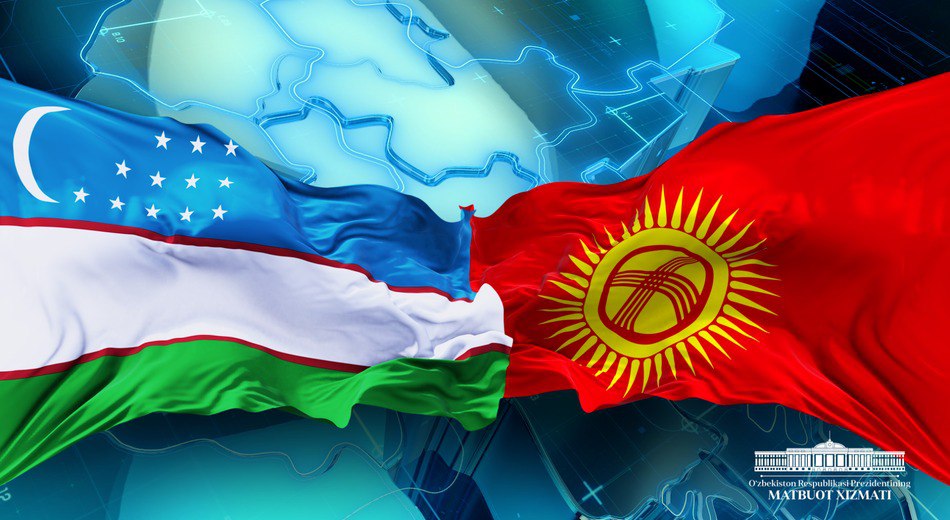
Two state bodies affiliated to the governments of Uzbekistan and Kyrgyzstan have established the Uzbek-Kyrgyz Expert Council.

The Council, an initiative between the Institute for Strategic and Interregional Studies under the President of Uzbekistan and the National Institute for Strategic Initiatives under the President of the Kyrgyz Republic, was designed to support the high-level dialogue between the two countries.

The Council will pay particular attention to developing industrial, technological, cultural, and humanitarian cooperation between Kyrgyzstan and Uzbekistan.

It will also focus on promoting the initiatives of the heads of the two states, including the planned construction of the China-Kyrgyzstan-Uzbekistan railway and water and energy cooperation in the context of joint construction of the Kambarata hydropower plant (HPP)-1 in Kyrgyzstan. These initiatives will have a multiplier effect on developing the economies of all countries in the region.

Central Asia Picks Up Golds as Olympics Near Second Week

Diyora Keldiyorova, who became Uzbekistan’s first Olympic champion in judo, says she has an even bigger goal. “To change the life of women in Uzbekistan is my mission,” Keldiyorova said, according to the International Judo Federation.

The Uzbek sensation spoke after her victory in the 52-kilogram class at the Paris Olympics on July 28. It was an extraordinary achievement for an athlete from a country without much of a tradition in women’s judo. On her way to gold, Keldiyorova defeated Uta Abe, the gold medalist at the last Olympics in Tokyo and a four-time world champion.

The Uzbek’s win over Abe “may very well be remembered as one of the biggest upsets of these Olympic Games,” olympics.com reported. Abe was distraught after the defeat.

Among those congratulating Keldiyorova was Timothy Smart, Britain’s ambassador to Uzbekistan. He said “it is a medal which shows all girls in Uzbekistan, that they can achieve anything they want!”

“Olgʻa, Oʻzbekiston!” Smart said – Let´s go, Uzbekistan.

Another gold medalist in judo from Central Asia was Kazakhstan’s Yeldos Smetov, who defeated home favorite Luka Mkheidze of France in the 60-kilogram class final.

Smetov, 31, won silver at the Olympic Games in Rio de Janeiro in 2016, and Kazakhstan put him on a postage stamp to celebrate. Then he won bronze in 2021 at the Tokyo games, which were delayed from the previous year because of the pandemic.


Yeldos Smetov; image: Post of Kazakhstan

“Nothing is impossible,” Smetov said after winning gold in Paris, according to Kazakhstan’s Olympic committee. “I achieved this goal on the third attempt.”

Smetov, who has been performing at a world-class level for many years, attributed the longevity of his career to family and knowing the limits of his body.

“After each competition, I spend all my time with my family, not thinking about sport. I am also careful with the bigger injuries; I never go back to competition until fully recovered. A lot of rest is necessary especially when a career is this long,” Smetov, who has five children, told the International Judo Federation.

“The first day of this Olympic Games brought my gold for Kazakhstan and the second brought Diyora’s gold for Uzbekistan, so this is already an incredible games for Central Asia,” Smetov said.

The Paris games were a disappointment for one of the world’s top tennis players, Alexander Bublik of Kazakhstan, though.

Russia-born Bublik lost 4-6, 4-6 to Taylor Fritz of the United States in the first round of the singles. He and his partner, Aleksandr Nedovyesov, fell by the same score in the first round of the doubles to the Brazilians, Thiago Monteiro and Thiago Seyboth Wild.

“It was an honor to represent Kazakhstan at the Olympics once again,” Bublik said on Instagram. He is currently ranked 25th in the world.

Another Kazakh tennis star, world No. 4 Elena Rybakina, had said just before the games that she was sick and would not participate.

“After the Wimbledon tournament, I fell ill with acute bronchitis, and despite my attempts to return to training, my body has not yet recovered. The doctors have strictly forbidden me to go to the court,” Rybakina said, according to the Kazakhstan Tennis Federation.

“I am very sorry that I cannot fulfill your hopes and play for our team at the Olympics in Paris. I was so close to a medal in Tokyo and carefully prepared for the Paris Games to win gold for Kazakhstan. Unfortunately, illness prevented these plans from coming true,” she said.

Russia-born Rybakina reached the semi-finals of this year’s Wimbledon, before losing to eventual champion, Barbora Krejcikova. Rybakina won Wimbledon in 2022.

It was worth the wait for Tajikistan´s Somon Makhmadbekov, who won the bronze in judo.

Makhmadbekov shared third place with Lee Joon-hwan of South Korea in the 81-kilogram class. Nagase Takanori of Japan won gold, whilst the silver went to Georgia’s Tato Grigalashvili.

“On the way to this medal there was hard work, victories and defeats, the best coaches, wise mentors, family support, the strongest competitors, the blessing of the Almighty and, of course, the enormous support of the fans! Each of you contributes to this victory!” a delighted Makhmadbekov said on Instagram.

Turkmen swimmer Musa Zhalayev made his Olympic debut in Paris, competing in the 100-meter freestyle. He finished fourth in a preliminary heat, but it wasn’t enough to advance to the next round, Turkmenportal.com reported.

Zhalayev is a student at the International Oil and Gas University in Ashgabat, Turkmenistan, and is a national record holder in several swimming categories.

Russia’s “Internet Isolation” Strikes Central Asia

According to numerous reports, including stories from emigre journalists formerly of the radio station, ECHO who now broadcast out of Lithuania, Russia’s purported throttling of YouTube is affecting swathes of the platform’s users across Central Asia. On forums and social media, users have complained that the site is not working properly. This comes as the authorities in Russia are attempting to wean its citizens off of YouTube, one of the sole remaining sources of uncensored news, and onto its replacement, RuNet, as part of a wider drive towards “internet isolation.”

In a press release to state-owned news agency, TASS, the Russian Foreign Ministry stated that “YouTube is not a neutral platform, it works out the political directives of Washington. In addition, YouTube ignores Roskomnadzor’s demands to remove over 60,000 materials with violations.” Deputy Chairman of the State Duma Committee on Industry, Construction and Science-Intensive Technologies, former journalist Aleksandr Khinshtein has also stated that the “degradation” of YouTube.  is a “forced step aimed not against Russian users, but against the administration of a foreign resource, which still believes that it can violate and oppose our legislation with impunity.” Khinshtein, an architect of legislation targeting the LGBT+ community for being an “element of hybrid warfare” against Russia, is subject to sanctions in the UK for his part in Russia’s war in Ukraine.

Despite these open admissions, however, the Kremlin has also sought to lay the blame for the disruption on Google for using “grey and semi-criminal schemes” to manage server payments, which have caused its local subsidiary to go bankrupt.

In the meantime, caught in the crosshairs of this wider battle, some users across Central Asia are continuing to have problems accessing the platform, with speeds down by as much as 70%.

Kyrgyzstan Aims to Achieve GDP of $30 Billion by 2030

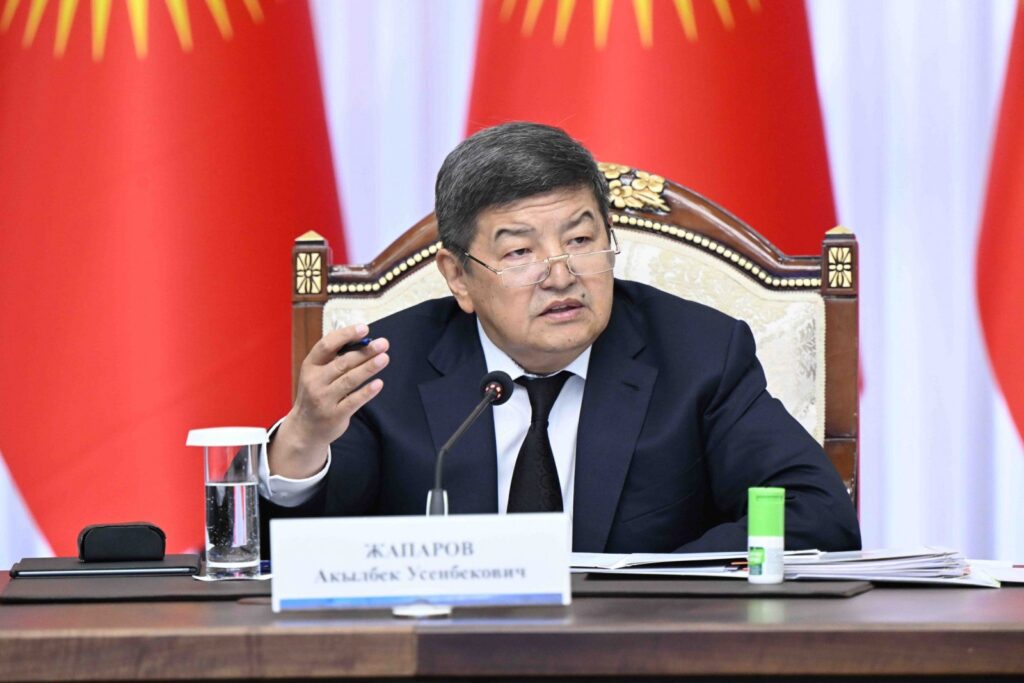
The Chairman of the Cabinet of Ministers of Kyrgyzstan, Akylbek Japarov, says that Kyrgyzstan aims to be among the world’s top 30 countries in terms of achieving the Sustainable Development Goals (SDGs) by 2030.

“The main goal is to achieve a GDP of $30 billion in the next six years,” Japarov said on July 31. “This requires maintaining annual nominal GDP growth at 10-12%. According to the World Bank classification, Kyrgyzstan can confidently increase its GDP per capita and join the ranks of upper-middle-income countries by 2030, leaving the category of lower-middle-income countries,” he added.

According to Japarov, Kyrgyzstan’s economic growth demonstrates sustainable development. The average GDP growth rate in 2023 was 7%, and according to the National Statistical Committee, while it was 8.1% in the first half of 2024.

Japarov added that in 2023, Kyrgyzstan crossed a historic milestone, with the country’s GDP reaching an all-time high of $13.9 billion.

He added that inflation in January-June 2024 was 2.4% due to a balanced monetary policy.

Uzbekistan: Nationwide Health Checks for Children Reveal Anaemia Worries

Uzbekistan’s acting minister of health, Asilbek Khudayarov, has announced that the country recently conducted medical examinations in the majority of its schools and kindergartens.

In the first half of this year, Khudayarov said, 5.7 million of Uzbekistan’s 5.9 million schoolchildren were given check-ups. It was found that 1.3 million of these children (27.9%) were suffering from an illness of some kind. Eighty-one percent could be given simple treatments.

Among kindergarten-age children, 1.3 million of 2 million pupils (63.5%) underwent a medical examination, and 26% of these were diagnosed with an illness.

Khudayarov said that the most common illnesses were blood conditions (28.4% of cases), with anaemia a particularly common ailment. These were followed by problems with the respiratory and digestive systems (6.9% and 5.4% respectively).

Almost 13 million Uzbek citizens – over a third of the population – are under the age of 18.

The acting minister also noted that in recent years, fewer young Uzbeks have been traveling abroad for treatment, because hospitals in Uzbekistan are increasingly equipped with high-tech equipment.

Khudayarov mentioned that presently, in addition to Tashkent, hospitals have high-tech diagnostic equipment in four regions of Uzbekistan: Samarkand, Andijan, Fergana, and Namangan. Citizens in these regions can receive quality treatment without coming to the capital.