• KGS/USD = 0.01144 0%
  • KZT/USD = 0.00212 0%
  • TJS/USD = 0.10432 -0.29%
  • UZS/USD = 0.00008 0%
  • TMT/USD = 0.28571 0.28%
  • KGS/USD = 0.01144 0%
  • KZT/USD = 0.00212 0%
  • TJS/USD = 0.10432 -0.29%
  • UZS/USD = 0.00008 0%
  • TMT/USD = 0.28571 0.28%
  • KGS/USD = 0.01144 0%
  • KZT/USD = 0.00212 0%
  • TJS/USD = 0.10432 -0.29%
  • UZS/USD = 0.00008 0%
  • TMT/USD = 0.28571 0.28%
  • KGS/USD = 0.01144 0%
  • KZT/USD = 0.00212 0%
  • TJS/USD = 0.10432 -0.29%
  • UZS/USD = 0.00008 0%
  • TMT/USD = 0.28571 0.28%
  • KGS/USD = 0.01144 0%
  • KZT/USD = 0.00212 0%
  • TJS/USD = 0.10432 -0.29%
  • UZS/USD = 0.00008 0%
  • TMT/USD = 0.28571 0.28%
  • KGS/USD = 0.01144 0%
  • KZT/USD = 0.00212 0%
  • TJS/USD = 0.10432 -0.29%
  • UZS/USD = 0.00008 0%
  • TMT/USD = 0.28571 0.28%
  • KGS/USD = 0.01144 0%
  • KZT/USD = 0.00212 0%
  • TJS/USD = 0.10432 -0.29%
  • UZS/USD = 0.00008 0%
  • TMT/USD = 0.28571 0.28%
  • KGS/USD = 0.01144 0%
  • KZT/USD = 0.00212 0%
  • TJS/USD = 0.10432 -0.29%
  • UZS/USD = 0.00008 0%
  • TMT/USD = 0.28571 0.28%

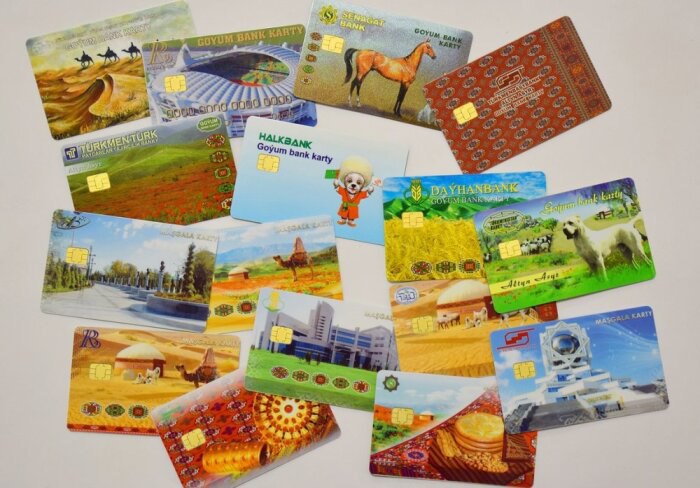
Turkmenistan Sees Increase in Number of Bank Cards

As of September 1, over 5.8 million bank cards were registered in Turkmenistan, indicating a growing interest in cashless payments in the country.

Since the beginning of 2024, the number of cards issued has increased by 4.7%, from 5.562 million in January to 5.823 million in September. There was a slight increase during August and September, with about 38,600 cards added, a 0.67% increase from the previous month.

Looking at the trend of recent years, 5.177 million cards were issued in January 2023, an 8.5% increase from 4.771 million at the beginning of 2022.

The main factor driving this growth is the availability of financial services, as more and more people can use banking products and transition to cashless payments. Government initiatives to digitalize the economy contribute to this process.

United States Supports Uzbekistan’s Methane Reduction Efforts

The U.S. Embassy in Uzbekistan reports that a joint project between GasGreen Asia LLC, a subsidiary of Maryland-based Climate Compass, and Uzbekistan’s national gas distribution company, Hududgazta’minot JSC, has been engaged in detecting and repairing natural gas leaks within the country’s national gas distribution system. This project contributes to the country’s green economy transition and commitments under the Global Methane Pledge.

Climate Compass, LLC is a world leader in providing logistical and technical services for greenhouse gas emissions reduction projects.
A Korean carbon finance company, Ecoeye Co., Ltd., is the principal investor of the project, which began in March 2023.

Since the project’s inception, over 50,000 individual methane leaks have been identified, measured, and repaired, reducing over seven million tons of carbon dioxide equivalent emissions per year. The project has created more than 200 local jobs, including engineers, data specialists, and project managers, who received intensive training from American technical experts. The repairs have generated tens of millions of dollars in savings for Hududgazta’minot by preventing gas losses and contributing to significant environmental benefits.
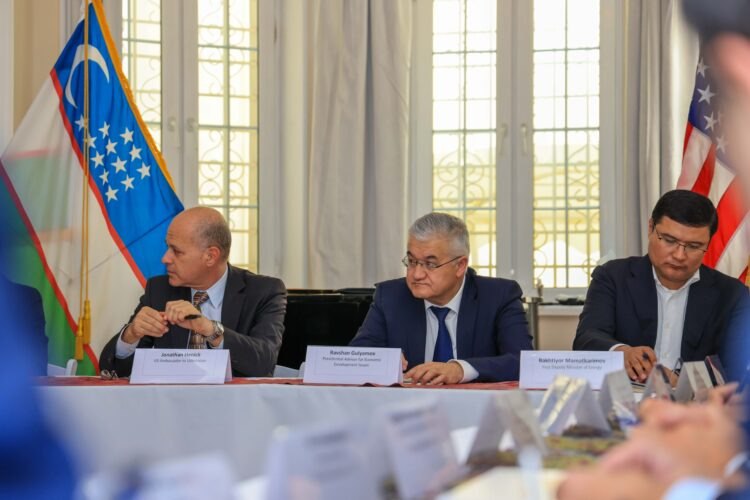
At the September 24 event highlighting the project’s significant achievements, U.S. Ambassador to Uzbekistan Jonathan Henick said: “The United States welcomes Uzbekistan’s commitment to a broad-based transition to a green economy. This project supports Uzbekistan’s efforts to attract foreign direct investment while reducing greenhouse gas emissions.”

According to Henick, the United States strongly supported Uzbekistan’s decision to join the Global Methane Pledge in 2022, an initiative to reduce methane emissions worldwide.
Methane reduction is critical to Uzbekistan’s efforts to meet its nationally determined contributions under the Paris Agreement on Climate Change. According to the United Nations Environment Program, methane emissions have accounted for approximately 30 percent of global warming and are an increasingly growing challenge.
According to the “Methane in Central Asia: Emissions, Trends, Actions” report, Uzbekistan’s annual greenhouse gas (GHG) emissions remained largely stable and declined slightly over the past 15 years, ranging between 180 and 200 million tons of CO2-equivalent or 5 tons per person.
The report says the country’s energy sector is responsible for 75–80 percent of GHG emissions, including 50 percent from fuel combustion and 25–30 percent from methane leaks in the coal, oil, and gas sectors, the equivalent of 50 million tons of CO2. Uzbekistan has successfully decoupled GHG emissions from economic growth and intends to reduce the specific GHG emissions per GDP by 35 percent by 2030 compared to the 2010 level.

Tigers Return to Kazakhstan: A New Home for Bogdana and Kuma

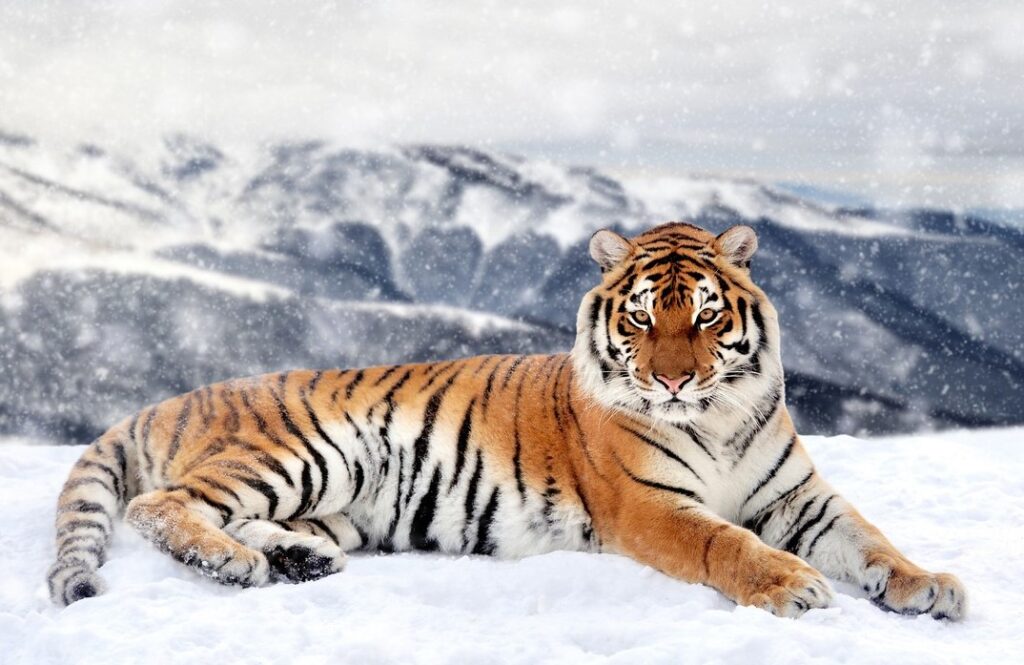
A pair of Amur tigers from the Netherlands has been brought to Kazakhstan; tigers are not the only animals that Kazakhstan is getting back.

A few days ago, a long-awaited pair of tigers, bred in a special reserve in the Netherlands, arrived in Kazakhstan. Online, some worried that the tigers would not survive in the harsh climate, or would attack livestock and people. According to WWF Netherlands wildlife expert, Geert Poleta, these fears are unfounded.

For several years now, the international NGO, the World Wildlife Fund (WWF), together with the Government of Kazakhstan, has been implementing a program to return tigers to Pribalkhashye. The Amur tiger is a relative of the extinct Turanian breed. Historically, the habitat of the Turanian tiger in the country was reed thickets and floodplain forests along the banks of the Ili and Syr Darya rivers. The extermination of the animal began during the time of the Russian Empire, and the last Kazakh tiger was killed in 1948. Decades later, wild cats are returning to Kazakhstan.

As experts point out, this event is an essential step in restoring the ecosystem and lost biodiversity. Bogdana and Kuma, the names of the Amur tigers, flew for more than a day from the Dutch Holy Lion specialized center for predators at the Landgoed Hoenderdaell Zoo to the Ile-Balkhash State Nature Reserve. Permanent caretakers accompanied them.

At the Dutch zoo, “the animals were kept in separate spacious enclosures with minimal contact with visitors,” Gert Polet, a wildlife expert at WWF Netherlands explained. “Thanks to the spacious territory of the center, the tigers had their own area to live in the most natural conditions possible. In the summer of 2024, a Memorandum was signed between the Committee of Forestry and Wildlife of the Republic of Kazakhstan and the Dutch center, which provides for the free transfer of two tigers to Kazakhstan for further breeding and the release of their offspring.”

There is no need to fear that the big cats will harm residents in their new and unfamiliar conditions, as they will be kept under strict supervision. “Zoo tigers cannot be returned to the wild. The arriving tigers will never leave the territory of their enclosure. They were brought in for breeding and raising offspring. If the tiger’s birth project is successful, the adults will be moved to another enclosure, located at a center of the reserve which will be open to visitors,” Polet stated. He believes that Bogdana and Kuma have a 60% chance of having cubs.

Tiger cubs born in the enclosure of the Ile-Balkhash reserve will be reared following international standards and protocols. At one and a half to two years old, they will be prepared for release into the wild.

In addition, the new residents of the reserve will be monitored constantly by video and cared for by a dedicated member of staff. “Over the past year, a veterinarian from the Zholbarys Association has been trained in various clinics and zoos in Russia. She also visited the zoo where our tigers were kept. The Kazakhstani specialist underwent a full course of educational training on the care and supervision of tigers. The staff of the animal rehabilitation center shared their extensive experience with her. She was the first to meet Kuma and Bogdana, studied their condition in detail, and familiarized herself with all stages of their care. The veterinarian has the best knowledge of these tigers,” said Polet.

“This is certainly a momentous and historic event – part of an ambitious program by the Government of Kazakhstan, supported by the WWF and UNDP, to restore the Ile-Balkhash River Delta ecosystem and reintroduce tigers to the region. These predators became extinct in Kazakhstan more than 70 years ago, and now the whole world is witnessing this incredible event,” he added.

The relocation of the tigers is an important step not only in terms of returning the big cats to their historical homeland, but also towards restoring a sustainable ecosystem which will benefit both people and nature. This project symbolizes global efforts to conserve biodiversity and maintain an ecological balance.

Minister of Ecology and Natural Resources Yerlan Nysanbayev also discussed plans to reintroduce tigers to Kazakhstan. According to Nysanbayev, the WWF is financing the program, and although the pair will not be released, “their resulting offspring will be adapted to the conditions already in the wild. In addition, next year, we expect to receive three or four tigers from Russia.”

In 2018, Kazakhstan created the Ile-Balkhash reserve with an area of more than 415,000 hectares, which will be home not only to wild cats, but to other rare and threatened animals. In 2022, about 50 kulans (Asiatic wild ass) were transported from the Altyn-Emel National Park to the Ile-Balkhash reserve. For their adaptation, the animals were placed in a special enclosure with an area of 22 hectares.

Five Bukhara deer have also previously been brought in. The reintroduction of deer on the reserve began back in 2018, and subsequently, for the first time, five ungulates were released onto the enclosure. Now, their number has increased to more than a hundred individuals. UNDP project expert in Kazakhstan, Aiman Omarbekova has stated that the second stage of the transportation of kulans to the reserve territory will begin this year with 35 animals being delivered.

By End of Year, Kyrgyz Authorities Want to Insure All Houses in the Country

The Chairman of the Kyrgyzstan Cabinet of Ministers, Akylbek Japarov, instructed specialized government agencies to ensure the safety of all houses in the country, especially those in mudflow-prone areas.

At the meeting devoted to natural disaster risk management, Japarov assigned specialized government agencies to ensure the safety of all houses in Kyrgyzstan. Thus, according to the head of the Cabinet of Ministers, the authorities will provide financial protection to citizens in case of natural disasters.

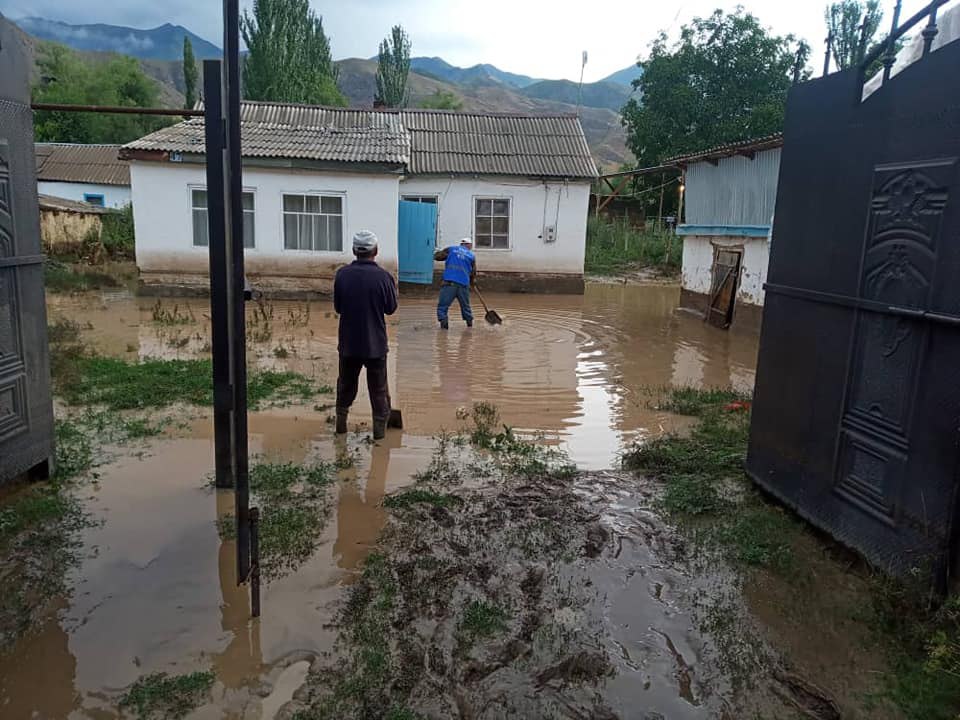
This year, powerful mudslides flooded the south of Kyrgyzstan and the Issyk-Kul region. Over 5,000 households, dozens of social facilities, and hundreds of kilometers of roads were damaged.

“Insurance will provide financial protection for citizens in such situations and minimize the consequences for families who lost their homes. Insurance will be an important tool to help people recover faster from natural disasters and reduce the burden on the state budget,” Japarov said.

The head of the Cabinet emphasized that due to global warming, the number of natural disasters will continue to grow. Compulsory home insurance will ensure protection for citizens.

It should be noted that the law on compulsory real estate insurance came into force in Kyrgyzstan on August 26, 2024. According to the law, residents must insure their real estate against fire and natural disasters.

The State Insurance Organization (SIO) explained to The Times of Central Asia that legislative changes would be implemented gradually. The law on compulsory home insurance was first adopted in 2016, but the authorities postponed its implementation. There is no system of fines for lack of such insurance, at least not yet.

“It is not profitable for private firms to engage in home insurance, as the rate is only 0.12%. That is, the cost of insurance is KGS 600 ($8), while payouts can be multi-million: KGS 500,000 ($6,000) for a village and KGS 1 mln ($12,000) for a city. Today in Kyrgyzstan, 143 thousand residences are insured,” the SIO noted.

British Museum Opens Silk Roads Show – With Help from Uzbekistan, Tajikistan

The British Museum opened Silk Roads to the public on Thursday, delivering a highly anticipated exhibition about the vast, interlocking routes that connected cultures across Asia, Africa and Europe for centuries and includes ancient chess pieces and other items on loan from Uzbekistan as well as Tajikistan.

The show, which runs until Feb. 23, 2025, aims to get beyond traditional notions of spices, camels and sand dunes, as well as the misconception that there was one “Silk Road” – a single pathway that ran across Central Asia, linking traders in the West with those in the East. While the Silk Roads network lasted for millennia, the British Museum is focusing on the period between AD 500 and 1,000, when contacts accelerated and religions and technology flourished across far-flung regions.

“Rather than a single trade route from East to West, the Silk Roads were made up of overlapping networks linking communities across Asia, Africa and Europe, from East Asia to Britain, and from Scandinavia to Madagascar,” the museum says in its introduction to the London show.

The British Museum worked with 29 national and international partners on the exhibition, which includes objects from Uzbekistan and Tajikistan that have never been on display in Britain and highlight the importance of Central Asia to the continent-sweeping saga of the Silk Roads.

Uzbekistan, home to Khiva, Bukhara and Samarkand and other sites associated with the ancient network, is a big player in the exhibition. It is lending “the oldest group of chess pieces ever found” and a six-meter-long wall painting from the ‘Hall of the Ambassadors’ in Afrasiab, an ancient spot in Samarkand, according to the Uzbekistan Art and Culture Development Foundation.

“The painting evokes the cosmopolitanism of the Sogdians from Central Asia who were great traders during this period,” the state foundation said.

Saida Mirziyoyeva, a daughter of Uzbek President Shavkat Mirziyoyev and a senior presidential aide, attended the exhibition roll-out this week.

“A must-see for anyone passionate about Silk Road history!” she said on X.

The National Museum in Tajikistan, which started working with the British Museum on plans for Silk Roads in 2022, has said it is lending items “related to the Buddhist culture of the 7th and 8th centuries, found in the monuments of Ajinateppa, Kafarnihon, and Vakhsh.”

Objects on display include a Buddha figurine found in Sweden; an Islamic-style map drawn for the Christian king of Sicily; a Chinese ceramic dish found in a shipwreck in Indonesia; a gilded silver cup whose components indicate links between Scotland and West Asia; a gold shoulder clasp with Indian garnets that was found at the Sutton Hoo ship burial in Suffolk; and a gold bowl found in Romania that was linked to the Avars, an originally nomadic group from the northeast Asian steppe.

The exhibition is not just about physical objects. There are also stories about an African king, a Chinese princess and other characters whose lives were connected to the Silk Roads, and insights into religious encounters and the spread of knowledge that occurred across the centuries.

Mirziyoyev Proposes Green Energy Development Program for Central Asia

On September 25-26, the annual meeting of the Board of Directors of the Asian Infrastructural Investment Bank (AIIB) was held in Samarkand, Uzbekistan.

The ninth meeting of the Board was devoted to the theme “Creating Sustainable Infrastructure for All.” Current issues on the agenda of the global economy were considered, and strategic programs and plans for infrastructure development in Asia and other regions of the world were discussed.

About 2,000 representatives from more than 100 countries participated in the summit.

Uzbekistan became a member of AIIB in November 2016, and in recent years, it has become one of the bank’s biggest beneficiaries.

Uzbek President Shavkat Mirziyoyev gave a speech on the first day of the meeting.

“The complex geopolitical situation, global economic instability, food and energy resources scarcity, poverty, and environmental problems are becoming increasingly acute. For instance, the average global temperature is projected to rise by 1.5 degrees Celsius by 2040; however, we are concerned that, based on current trends, this could happen as early as 2030.
A quarter of the world’s population lacks clean drinking water. As climate change accelerates, food shortages have become a global threat. As a result, about 800 million people in the world live in extreme poverty,” Mirziyoyev said.

Mirziyoyev noted that the poverty rate in Uzbekistan has been reduced from 23% to 11%. This year, the aim is to reduce this indicator to 9%, and by 2030, it will be halved.

Furthermore, in the last eight years, the enrollment of children in preschool education has increased from 27% to 74%, and higher education has increased from 9% to 38%. It plans to invest $2 billion to open 100 new schools of the most advanced standards in all cities and villages yearly.

Another issue that Mirziyoyev paid attention to is logistics, interruptions in the product supply chain, and the increase in the price of raw materials and consumer goods. The head of state noted that all this will sharply increase the load on the existing infrastructure and will be a significant obstacle to global economic development.

According to experts, by 2030, the world will need $15 trillion of investment for new infrastructure. Also, foreign investments have decreased by 10% over the past two years, and the value of financial resources globally has almost doubled.

Mirziyoyev said that projects worth $200 million for developing medium-sized cities and $130 million for improving infrastructure in rural areas are launched in cooperation with the AIIB.

To develop the “green” economy, it is aimed to reach 40% of “green” energy sources by 2030. In the coming years, another 18 gigawatts of solar and wind power, 3 gigawatts of hydropower plants, 5 gigawatts of energy storage capacity, and $5 billion worth of power grids will be implemented.

“I would like to note that neighboring countries have also started major projects on renewable energy. We are taking great steps to make Central Asia, a rich renewable energy source, a major exporter of ‘green’ energy into world energy markets in the coming years. In this regard, I would like to emphasize that the project for the construction of the Transcaspian Energy Route has great potential.” Mirziyoyev proposed implementing the “green” energy development program in Central Asia under the leadership of the AIIB.

He noted that the problems of food security and shortage of water resources are becoming particularly acute in Central Asia. Uzbekistan has started big projects to save 15 billion cubic meters of water by increasing water efficiency by 25% in the next five years. “But solving the water problem requires the countries’ cooperation from the region and international financial organizations. Therefore, I would like to promote the establishment of a regional center for the wide implementation of water-saving technologies in cooperation with the Asian Infrastructure Investment Bank. I think our neighbors will also support this initiative,” Mirziyoyev concluded.