• KGS/USD = 0.01144 0%
  • KZT/USD = 0.00212 0%
  • TJS/USD = 0.10456 0.19%
  • UZS/USD = 0.00008 0%
  • TMT/USD = 0.28490 0%
  • KGS/USD = 0.01144 0%
  • KZT/USD = 0.00212 0%
  • TJS/USD = 0.10456 0.19%
  • UZS/USD = 0.00008 0%
  • TMT/USD = 0.28490 0%
  • KGS/USD = 0.01144 0%
  • KZT/USD = 0.00212 0%
  • TJS/USD = 0.10456 0.19%
  • UZS/USD = 0.00008 0%
  • TMT/USD = 0.28490 0%
  • KGS/USD = 0.01144 0%
  • KZT/USD = 0.00212 0%
  • TJS/USD = 0.10456 0.19%
  • UZS/USD = 0.00008 0%
  • TMT/USD = 0.28490 0%
  • KGS/USD = 0.01144 0%
  • KZT/USD = 0.00212 0%
  • TJS/USD = 0.10456 0.19%
  • UZS/USD = 0.00008 0%
  • TMT/USD = 0.28490 0%
  • KGS/USD = 0.01144 0%
  • KZT/USD = 0.00212 0%
  • TJS/USD = 0.10456 0.19%
  • UZS/USD = 0.00008 0%
  • TMT/USD = 0.28490 0%
  • KGS/USD = 0.01144 0%
  • KZT/USD = 0.00212 0%
  • TJS/USD = 0.10456 0.19%
  • UZS/USD = 0.00008 0%
  • TMT/USD = 0.28490 0%
  • KGS/USD = 0.01144 0%
  • KZT/USD = 0.00212 0%
  • TJS/USD = 0.10456 0.19%
  • UZS/USD = 0.00008 0%
  • TMT/USD = 0.28490 0%

Social Researcher: Serious Effort Required for Women’s Representation in Kazakh Politics

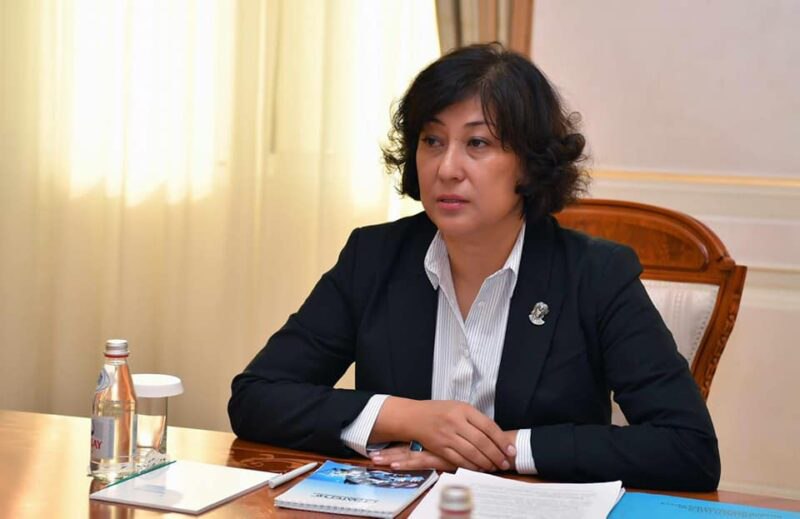
According to Gulmira Ileuova, a sociologist and the head of the Strategy Centre for Social and Political Research, gender equality in Kazakhstan has severely deteriorated. In an interview with TCA, she explains how social regression and a depletion of human resources are making it difficult for women to participate in political parties, social movements, and public services.

TCA: Sources illustrate that after the 2023 parliamentary elections, the representation of women deputies in the Mazhilis fell from 27% to 18%. In addition, Kazakhstan’s performance in the Global Gender Gap Index (GGGI) has deteriorated. This year, the country fell from 62nd to 76th place. This index, which can be used to judge the economy’s stability and legal security, has a serious impact on investors.  What, in your opinion, is the reason for this deterioration?

First of all, I would like to point out that until 2021, the Labor Code had restrictions on where women could work based on concerns about their health. Now that the restrictions have been lifted, progress is steadily being made in involving women in areas previously inaccessible to them. Some companies have already published data that women have begun operating heavy machinery, such as big trucks, which was not the case before.

As for politics and the civil service, it appears that under the spread of influence from the south, the country is reinstating traditional social relations. Independent Kazakhstan has entered a new period where traditional and non-traditional forms of Islam thrive, and hyper-masculine and patriarchal attitudes are on the rise. I emphasize the patriarchal division of life through reinforced gender roles because it is gaining strength and spreading across all regions of the country. Furthermore, this trend is moving into the sphere of politics and civil services.

Let’s take a look at what preceded these trends. In many regions, primarily in the south, there is a huge number of women who wishing to undertake the important work of reproduction, were receiving TSA (targeted social assistance). According to statistics in 2019, there were 2 million and 221 thousand recipients of TSA (about 12% of the population). Today, their number has decreased six fold to about 350 thousand. These numbers include women who thought they would bypass employment through state support systems. And now these women are in trouble. The state is revising its social policy, but the paternalistic trend has long been developing and a large number of people have abused it.

TCA: Are you saying that women, in receipt of child allowances, prefer to stay at home as opposed to actively entering economic relations or aspiring to participate in civil services or politics?

Yes, and I am afraid that this trend cannot be overcome by quick measures or be alleviated by even quotas for women. In a ‘strategy’ study conducted by the Center for Social and Political Research in the Turkestan region, an official working in gender policy said that at some point, the political representation of women fell to 5%. There were actually no women in senior positions to begin with. Women were never elected as vice Akims (heads) of the region, or with the exception of the Social Security Department, heads of departments. The representation of women was minimal, with just one woman as a district Akim and a few in Maslikhats.

In fear of being accused of discrimination, officials introduced quotas. The region then realized that over the past decades, despite constant talk about gender equality, the recruitment pool of politically active women had dried up. Literally unable to find suitable female candidates, they were forced to take on less able women.

The situation is not dissimilar sport. It’s not enough to invest huge amounts of money in high-performance sports: this is not the way to raise champions. You need to invest in mass sports, including children’s and youth sports, Only then, will you nurture strong athletes, or in our case, women politicians and officials. And they should be trained not only in politics but also in non-governmental organizations and companies. Women should be willing and able to occupy positions at all levels. Otherwise, to fulfil the quota, we will have to hire just anyone.

TCA: This is the same country where, in the past, a lot of effort was invested in the “liberation of the Eastern woman.” The term even became a slogan. Has the situation changed for the worst?

In our work with violence against women, it is clear that their rights achieved 100 years ago, must be rewritten and laid down as law. You can’t buy a woman for a kalym or bribe; you can’t kidnap her for marriage, and you can’t beat and humiliate her. Under the Soviet Union, gender equality was very closely monitored; the strict party line introduced women into politics and the civil service at all levels. In other words, gender equality once achieved, cannot be allowed to rest. We need constant, serious work to maintain the balance and bridge the gap. Unfortunately, it seems that the authorities in our country have decided that gender balance is automatic and will take care of itself.

For many years they talked about it but made no active effort to address the situation. As a result, we now we have large families with their ASP, state paternalism, and a return to the traditions which belittle the position of women. One example that can be applied to all of Central Asia, is illustrated by a Tajik woman and fellow student in “Anthropology of Gender in Tajikistan: An Insider’s View.” In her book, she highlights the resurgent view of women as quivering “biological” beings  requiring incessant management from a more socially engaged, more evolved man. This opposition between masculinity and femininity has recently become more deeply embedded in culture, repeatedly reiterated in literature and movies. There is no doubt that this “return to roots” has a very strong impact on women and determines their role in the governance of the country.

TCA: How accurate are statistics that claim over 50% of civil service employees are women?

We all know very well, that this figure in the main, reflects the educational sector – considered a women’s field-  as well as medical and social sectors. The picture in the Ministry of Finance, for example, will not however, be as rosy as that in the Ministry of Education. There are very few women in the economic, financial, and technological blocks and if we look at the statistics, the proportion of women in the civil service is 55.9%, of which only 7.2% are political civil servants.

TCA: We have almost no women in political parties, no women akims of large territorial units, and few women ministers. However, in large cities, especially in Almaty, there is a small but very vociferous band of female activists from various NGOs, including feminist organizations. Why don’t Kazakhstani women exploit this as a means of promotion?

It takes a lot of effort, among other things, to create an attractive image of working in politics, especially in high positions. Many women are discouraged by the risk of exploitation as well as a lack of time for family. Unfortunately, an image has formed that the civil service is not a good place for women. To redress the situation, we must first create a pool from which women civil servants will be recruited. We must also instil the concept that women are no worse, or even much better, than the conventional choice of the men charged with making important decisions. Right now, women are largely immersed in complexes; they perceive politics as a place “not for us.”

The erosion of charismatic women in all spheres was gradual. They do not fall from the moon and to reap the benefits of their reinstatement, a community must be formed which will push women forward to the first roles in the state.

As far as activism is concerned, we managed to launch gender policy just at the moment when radical feminism, which is closely linked to the transgender movement, reared its head. They are essentially different agendas, but today, even going to a rally for women’s rights is unacceptable to many people. You find yourself in a group of people who are not ideologically close to you. In many minds, gender equality and feminism are being substituted, and moreover, feminism, through the efforts of certain groups, is perceived only in its radical form. As cited in surveys, we women ” don’t want to be in the crowd of misfits.” As a result, women who would like to defend their rights, the rights of their daughters, will sadly think very hard before going to rallies.


Climate Crisis May Drastically Reduce Production in Central Asia

Central Asia may face serious economic losses due to climate change, which may reach a 6.5% annual decline in production by 2060. These figures were announced by Bo Li, Deputy Managing Director of the International Monetary Fund (IMF), at the “New Economic Challenges for Long-Term Development” forum.

According to Bo, the Caucasus and Central Asia region is particularly vulnerable to climate change. Soaring temperatures and increasing frequency of droughts and floods are reducing crops, destroying infrastructure, and lowering living standards.

“According to IMF estimates, if no action is taken to slow down climate change, Central Asia will lose up to 6.5% of its output annually by 2060,” Bo said.

He noted that possible losses could be reduced with joint actions such as reducing carbon emissions, transitioning to a green economy, and adapting to changing climate conditions.

As an example, Bo noted the efforts of Kyrgyzstan, that has already started to increase electricity tariffs and reduce energy subsidies, allowing the country to adapt to climate challenges and create new jobs in the “green” sector.

Many Central Asian countries are taking steps to reform the energy sector and introduce “green” technologies. For example, Kazakhstan is actively cooperating with several countries to develop renewable energy and reform the energy sector. One key example is the partnership with the United States under the USAID Power Central Asia program. This initiative supports Kazakhstan and other Central Asian countries in modernizing energy markets, introducing clean energy, and encouraging private investment in renewable energy.

Uzbekistan is undergoing a major reform of its energy system to reduce subsidies and promote renewable energy. The country plans to increase the share of renewable energy to 25% by 2030, which includes solar and wind energy projects. These measures will help Uzbekistan improve energy efficiency and reduce carbon dioxide emissions.

In Tajikistan, USAID is implementing the Power Central Asia program, which supports energy cooperation in the region and encourages using renewable energy to help reduce dependence on fossil fuels and modernize energy systems.

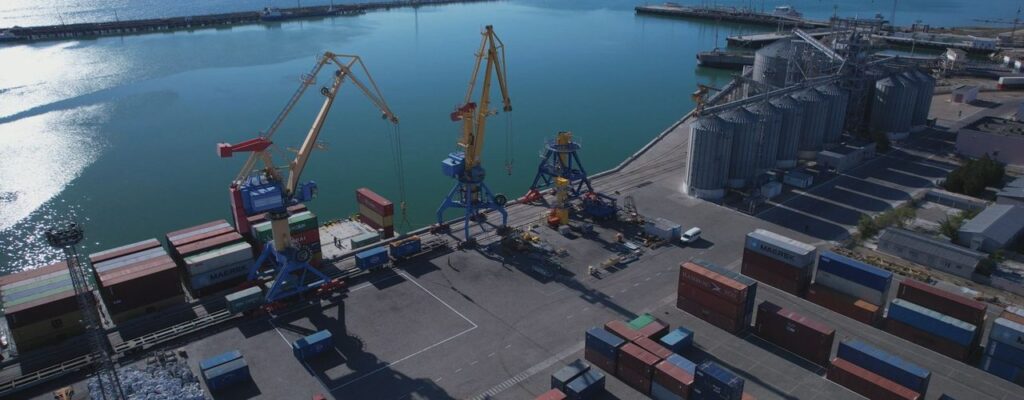
200th Container Train from China Arrives in Kazakhstan’s Aktau Port on Middle Corridor

A container train from China arrived last week in the port of Aktau on Kazakhstan’s Caspian coast. Kazakhstan’s national railway company, Kazakhstan Temir Zholy, announced that it was the 200th container train since the beginning of 2024. Last year, 11 container trains went through Aktau Port along the Trans-Caspian International Transport Route (TITR), known as the Middle Corridor.

The Middle Corridor is an 11,000-kilometer international multimodal transport corridor that runs from China to Europe via Kazakhstan, the Caspian Sea, Azerbaijan, Georgia, the Black Sea, and Turkey.

The container train originally departed from the Kazakhstan terminal in Xi’an (China). From Aktau, it will depart for Azerbaijan on a barge across the Caspian Sea.

The Kazakh terminal in Xi’an is an important logistics hub that consolidates cargo from various provinces of China. It has given a new impetus to the development of the TITR.

In November 2023, Kazakhstan and China signed a number of agreements to develop the TITR, including a route for China-Europe container trains.

Middle Corridor Multimodal Ltd. is a joint venture that was established at the Astana International Financial Center, bringing together the railway administrations of Kazakhstan, Azerbaijan, and Georgia to manage the route on a parity basis.

The Kazakhstani terminal in the dry port of Xi’an opened in February 2024. It consolidates 40% of all container trains heading towards Kazakhstan, which has contributed to a significant increase in transit traffic along the TITR.

Transportation along the TITR is growing steadily. In 2023, 2.8 million tons of cargo were transported along the route, compared to about 1.7 million tons in 2022. In the first seven months of 2024, the traffic totaled 2.56 million tons. By 2027, the capacity of the TITR is planned to increase to 10 million tons.

Uzbekistan and China to Increase Flights Between Their Cities

Uzbekistan’s Ministry of Transport has agreed with China Southern Airlines to increase the frequency of flights on the Beijing-Tashkent route from four to seven per week, and on the Urumqi (Xinjiang)-Tashkent route from three to four per week. They also agreed to launch three weekly flights on the Guangzhou-Urumqi-Tashkent route in 2025.

At the last C5+1 China-Central Asia Civil Aviation Conference, held in Xi’an in June, Uzbekistan and China agreed to increase the number of flights between the two countries and open new air corridors.

Four airlines from Uzbekistan were assigned 58 regular flights per week to transport passengers from the international airports of Tashkent and Samarkand to 12 Chinese cities.

Currently, the Uzbek airlines Qanot Sharq, Centrum Air, and Air Samarkand are working to meet the certification requirements of the Chinese aviation administration so that they can begin regular flights to China.

At the moment, nine Uzbek and Chinese airlines operate 63 regular flights per week to 16 destinations in both countries, including 21 flights for passengers and 42 for cargo.

American Educators to Teach English in Uzbekistan

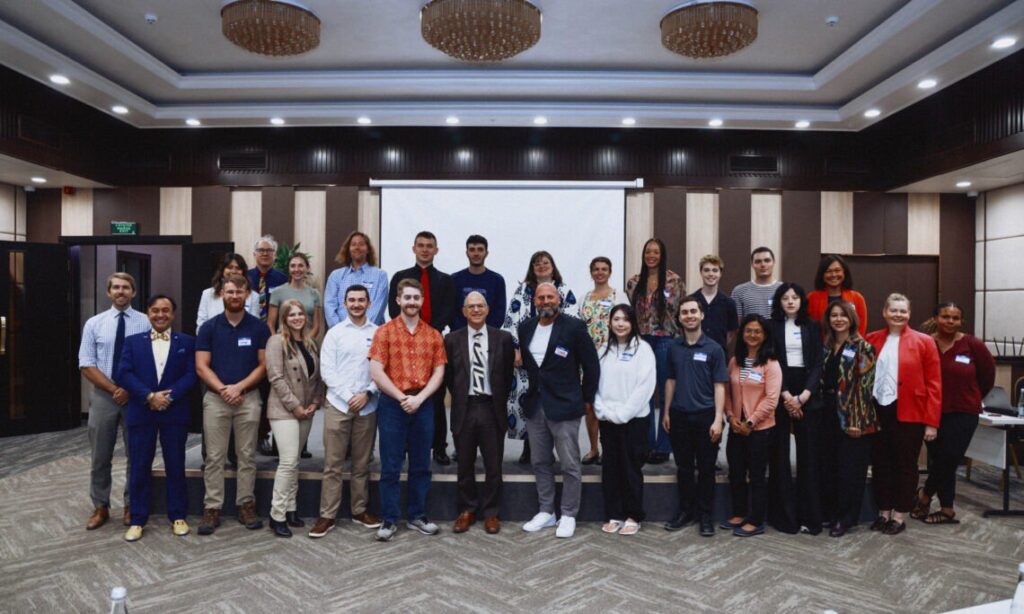
Twenty English language teachers from the United States have arrived in Uzbekistan to begin teaching and professional development programs across the country. The U.S. Embassy in Tashkent reported that they will join local teachers to provide direct classroom instruction to students.

The twenty American teachers will support English language teaching within ten different regions of Uzbekistan for the 2024-2025 academic year.

According to the Embassy, these teachers are just part of the U.S. Government’s vast commitment to strengthening English language education in Uzbekistan, which includes training more than 18,000 English teachers nationwide. Since 2018, the U.S. Government has invested over $31.2 million in English language teaching and learning in Uzbekistan.

The U.S. Embassy has partnered with the Ministry of Preschool and School Education and the Ministry of Higher Education, Science, and Innovations to support Uzbekistan’s education reforms and to ensure that graduates are equipped with the linguistic and professional skills needed to support Uzbekistan’s economy.

Since 2019, 98 American English teachers have worked at 21 public schools and more than 30 universities across Uzbekistan.

A Closer Look: Scholz Trip Shows Europe’s Interest in Central Asia

Energy, trade, climate change, geopolitical conflict. These are some of the big themes surrounding a trip by German Chancellor Olaf Scholz to Central Asia, whose countries seek to expand their range of international partners while securing their autonomy from outside, sometimes competing influences.

Joined by German business leaders, Scholz was scheduled to arrive in Uzbekistan on Sunday and also visit Kazakhstan prior to a Central Asia-Germany summit there on Tuesday, the last day of his tour. It is Scholz’s first trip to Central Asia, signaling how important the region has become for Europe as it seeks new energy alternatives to reduce dependence on supplies from Russia since Moscow’s full-scale invasion of Western-backed Ukraine in February 2022.

The relationship goes beyond the stopgap purchase of energy and minerals, even though Russian officials has accused Western countries of trying to use Central Asia as a tool in their conflict with Russia. At an inaugural summit last year in Berlin, Germany along with Kazakhstan, Kyr­gyzstan, Tajikistan, Turkmenistan and Uzbekistan agreed to a “strategic regional partnership.”

European countries recognize that the Central Asia is deeply bound to Russia and China, the regional powers, and that European and Central Asian goals and priorities won’t always align, according to Western analysts. However, Central Asian countries also recognize that engaging with Europe, the United States and other more distant partners is in their interests because it helps them to maintain strategic autonomy and leverage.

“If the Central Asian states want to gain weight and be heard in the emerging multipolar world order, they must strength­en their technological, industrial and geopolitical independence,” analysts said in a commentary posted by the German Institute for International and Security Affairs, which advises the German government and parliament. “This does not necessarily imply decoupling from Russia and China, but rather spreading risk through the addition (not substitution) of partners.”

The analysts said Germany should bolster Central Asian autonomy by helping to strengthen the region’s “crisis resilience” via support on issues such as transport routes, electricity infrastructure and water management. They also said European efforts to “win the support of regional states for Western sanctions against Russia must be measured against the realities on the ground” – an apparent reference to the trade with Russia that Central Asia considers vital to its economies.

Kazakhstan, which shares a long land border with Russia, has in particular faced a difficult balancing act on sanctions. At a press briefing with Scholz in Berlin in September 2023, Kazakh President Kassym-Jomart Tokayev said his country would comply with Western sanctions against Russia over the Ukraine war while still cooperating with its neighbor. However, Serik Zhumangarin, Kazakhstan’s deputy prime minister and trade minister, told the Bloomberg news agency last month that Kazakhstan won’t always “blindly follow the sanctions” and will be looking out for its own economic interests.

Human rights groups want Scholz to bring up freedoms and the rule of law during his trip to Central Asia. They argue that avoiding the topic will only hinder efforts to bring German investment and projects into the region.

“Serious human rights concerns across the region include suppression of the rights to protest and express opinions, including online, jailing of activists, torture in detention, crackdowns on civil society, violence against women, impunity for abusive security forces, and a lack of free and fair elections,” Hugh Williamson, director of the Europe and Central Asia division of Human Rights Watch, said in a statement.

At last year’s Berlin meeting, Scholz and the Central Asian leaders “reaffirmed their commitment to work together for peace, security, democracy, the rule of law and sustainable development in full respect of international law,” according to their joint statement.

In a regional step forward, Kazakhstan this year approved a law that strengthens protections for women and children against domestic violence. A country of particular concern for free expression advocates is Kyrgyzstan, where some media groups have faced prosecution and closure. At the far end of the spectrum is Turkmenistan, an isolated country where it is especially difficult to get independent information.

Scholz will absorb some of the region’s storied culture, meeting Uzbek President Shavkat Mirziyoyev in the historical city of Samarkand to talk about matters including labor migration, education, health and tourism, according to the Uzbek presidency.

The German chancellor may have a little downtime ahead of his heavy schedule in Central Asia. Asked on Instagram what goes through his mind on long flights, the German chancellor said such trips are a chance to work and talk to colleagues traveling with him.

“But because these are long flights, you also have to rest, sleep, eat something,” Scholz said. “That is a moment when I sometimes think about completely different things that have nothing to do with work.”