• KGS/USD = 0.01144 0%
  • KZT/USD = 0.00216 0%
  • TJS/USD = 0.10456 0%
  • UZS/USD = 0.00008 0%
  • TMT/USD = 0.28490 0%
  • KGS/USD = 0.01144 0%
  • KZT/USD = 0.00216 0%
  • TJS/USD = 0.10456 0%
  • UZS/USD = 0.00008 0%
  • TMT/USD = 0.28490 0%
  • KGS/USD = 0.01144 0%
  • KZT/USD = 0.00216 0%
  • TJS/USD = 0.10456 0%
  • UZS/USD = 0.00008 0%
  • TMT/USD = 0.28490 0%
  • KGS/USD = 0.01144 0%
  • KZT/USD = 0.00216 0%
  • TJS/USD = 0.10456 0%
  • UZS/USD = 0.00008 0%
  • TMT/USD = 0.28490 0%
  • KGS/USD = 0.01144 0%
  • KZT/USD = 0.00216 0%
  • TJS/USD = 0.10456 0%
  • UZS/USD = 0.00008 0%
  • TMT/USD = 0.28490 0%
  • KGS/USD = 0.01144 0%
  • KZT/USD = 0.00216 0%
  • TJS/USD = 0.10456 0%
  • UZS/USD = 0.00008 0%
  • TMT/USD = 0.28490 0%
  • KGS/USD = 0.01144 0%
  • KZT/USD = 0.00216 0%
  • TJS/USD = 0.10456 0%
  • UZS/USD = 0.00008 0%
  • TMT/USD = 0.28490 0%
  • KGS/USD = 0.01144 0%
  • KZT/USD = 0.00216 0%
  • TJS/USD = 0.10456 0%
  • UZS/USD = 0.00008 0%
  • TMT/USD = 0.28490 0%

Uzbekistan and Kazakhstan Sign $5 Billion in Agreements at Business Forum

On August 7, a joint business forum was held in Astana with more than 300 representatives from business circles of Uzbekistan and Kazakhstan in attendance. At the forum, joint projects involving automotive engineering, electrical engineering, pharmaceuticals, the chemical and logistics industries were discussed, and a set of agreements with a total value of $5 billion were adopted, according to the Agency for the Development of the Pharmaceutical Network.

A memorandum of understanding was signed between Kazakhstan’s JV KAZ AMT and Uzbekistan’s Estess Atraumatic Sterile Surgical Threads LLC, Kazakhstan’s Dolche LLC and Uzbekistan’s Medproject Technology LLC.

The President of the Republic of Uzbekistan, Shavkat Mirziyoyev, arrived in Astana on August 7 at the invitation of the President of Kazakhstan. Within the framework of the visit, Mirziyoyev will participate in the consultative meeting of the leaders of the Central Asian countries and the dialogue in the format Central Asia + Japan.

President Mirziyoyev signed the decision to establish a free economic zone of the Central Asia International Industrial Cooperation Center on August 6. The zone will be organized in the Syr Darya region. Industrial cooperation will be expanded by involving enterprises in the production process in the center’s territory and establishing the production of import-substituting products. Only products manufactured in Uzbekistan and Kazakhstan are sold in the center’s territory under the control of a production certificate.

According to the decision, Kazakhstani and foreign citizens can enter the center’s territory without a visa through a special checkpoint with an identity document, and stay in the territory for 15 days.

Caspian Sea Swim by Travelers Carl Bushby and Angela Maxwell

British traveler Carl Bushby and American traveler Angela Maxwell, accompanied by accompanied by 15-time Azerbaijani swimming champions Anastasia Boborkina and Abdurrahman Rustamov, plan to become the first people ever to swim across the world’s largest closed inland body of water, the Caspian Sea.

The expedition covering approximately 300 kilometers, from Aktau, Kazakhstan, to Baku, Azerbaijan, will begin mid-August and take about a month to complete.

Crossing the Caspian Sea is a significant part of the unique and ambitious ‘Goliath’ project instigated by Carl Bushby to circumnavigate the globe without using any form of transport. Having set off in 1998, the paratrooper-turned writer has now covered over two-thirds of the 58,000-kilometre journey.

Angela Maxwell is an experienced American traveler, renowned for her extreme expeditions. In 2014, she sold all her belongings and set off on foot to explore the world.  Since then, she has covered thousands of kilometers, often alone, through different countries, encountering diverse cultures and overcoming numerous challenges. Maxwell’s participation in the Caspian Sea swim adds a new dimension to the Goliath expedition whilst emphasizing both adventurers’ daring spirit and courage.

The Caspian Sea swim is a physically challenging and strategically important part of  journey, given the current climate which prohibits crossing Russia and Iran by foot. Bushby admits to having limited swimming experience and to preserve their energy and safely attain their goal, the pair plan to swim around 10 kilometers a day, escorted by a boat to assist in any emergencies.

The Fall and Fall of Salim Abduvaliev – Kyrgyz Authorities Place Uzbek “Kingpin” on Wanted List

The State Committee for National Security of Kyrgyzstan (GKNB) has issued an arrest warrant for the already imprisoned 73-year-old Salim Abduvaliev, who for decades was one of Uzbekistan’s most prominent individuals. As part of the investigation, evidence was obtained that Abduvaliev had financed the activities of an organized criminal group led by Kamchybek Asanbekovich Kolbaev, an individual linked to heroin trafficking who was wanted by the U.S. Department of State and was a member of the international criminal group, the “Brothers’ Circle,” or “Bratva”. Kolbaev was killed in Bishkek in a security operation in October 2023 at the age of 49.

In a dramatic fall from grace, in March of this year, Abduvaliev was sentenced to six years in prison in Uzbekistan for “arms trafficking”. Initially a fan of President Mirziyoyev, even being photographed wearing a t-shirt proclaiming “My President” emblazoned with Mirziyoyev’s image, Abduvaliev eventually fell afoul of reforms and a crackdown on corruption. “Whether it is criminal groups… or officials mired in corruption, if someone flouts the law and causes harm to the state and society, we will never be able to stand by and watch it,” Mirziyoyev said in December 2023. “In ‘New Uzbekistan,’ the law must prevail, and punishment for crimes must be inevitable”.

Having been hugely influential in CIS countries for decades, Abduvaliev now also stands accused in Kyrgyzstan of establishing illegal channels for transporting narcotics to Europe. According to the GKNB, Abduvaliev regularly provided material support to Kolbaev and helped him to become the leader of the Kyrgyz criminal world and rank among the most influential criminal figures in the region.

In their indictment, the GKNB stated that Kolbaev and Abduvaliev had a close relationship; pictures showing Kolbaev’s visits to “celebrations and other events” organized by Abduvaliev in Uzbekistan number among the evidence. Based on the collected materials, Abduvaliev was placed on the interstate and Interpol databases by the Oktyabr District Court of Bishkek.

Widely-known as “Salimboy-Boyvaccha” (which can be used to mean “grandfather”, “rich man”, or “dandy”), Abduvaliev previously held the position of Vice President of the National Olympic Committee and President of the Wrestling Association of Uzbekistan. He was also an associate of the mob boss, Gafur Rakhimov, considered to be one of the most prominent drug lords in the CIS.

Image: GKNB of the Kyrgyz Republic

A mainstay of Central Asian crime circles, Abduvaliev was in the aluminum business with the notorious Michael Cherney – declared by the FBI to be an “organized crime figure” – sponsored the participation of Anatoly Bykov – since jailed for murder – in elections in Krasnoyarsk Krai in Russia. A 2012 article in Argumenty I fakty cites an “FBI Organized Crime” report as stating that in 1987, when Mikhail Cherney came to “conquer Moscow,” he came with “recommendation letters [from] respected” Tashkent businessmen known by their nicknames, Gafur and Salim.”

A well-connected source who wishes to remain anonymous for their safety told TCA that “in Uzbekistan there was no single business – especially in the late eighties and early nineties – which was not controlled, contracted or involved with Salim or Gafur. They were the two main figures in what I would call the shadow government.

“They were the people who were helping or protecting businesses, because at this time you couldn’t operate with a krysha (literally, “roof”), especially when transporting goods. Salim, at that time and still now, controls major transport companies, and he was taking bribes from HGV drivers to put them under his protection; he was famous as a krysha. In case of any conflict, you needed someone to be on your side. Especially during that time, you couldn’t count on the courts or the judicial system. If you get into a dispute, people like [them] become your arbitrators.

“So, Salim and Gafur were the godfathers, and they still are, though they’re not as active now. They used aggressive tactics at the time, ‘disappearing’ guys all over the [former] Soviet Union. They were at the heart of what happened with the Flower Mafia War (a series of stabbing which took place in the markets of Tashkent in which several racketeers who controlled the flower trade in the region – a cover for smuggling – were killed.) If you didn’t agree with them or got greedy, you were killed.”

Turkmen Students To Be Able to Apply for British Scholarships

The British Embassy in Turkmenistan has announced the opening of applications for the Chevening Scholarship program for the 2025-2026 academic year. The scholarship, funded by the UK government, gives Turkmen students a unique opportunity to earn a Master’s degree at leading British universities within one year.

The Chevening program covers many specialties, and the scholarship covers all tuition, accommodation, and transportation costs, allowing students to focus fully on their studies. Candidates wishing to participate in the program must be at the beginning or middle stage of their professional career, and have an excellent command of English. Chevening provides young professionals in Turkmenistan with an opportunity to enhance their qualifications, gain invaluable learning experience at one of the world’s leading universities, and broaden their professional horizons.

Live Long and Prosper: Kazakhstan’s Population Ageing

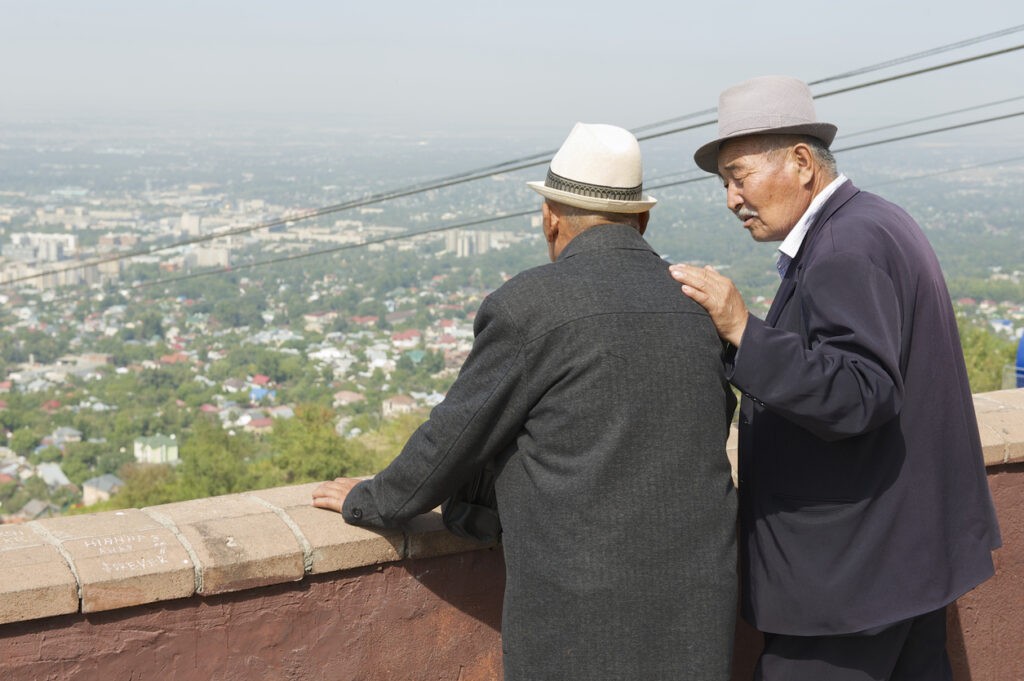
In 2023, life expectancy in Kazakhstan reached a record high of 75.09 years. As stated in a study from Ranking.kz, at the beginning of 2024, the number of adults over the age of 60 in the country exceeded 2.7 million, an increase of 4.2% year-on-year.

Life expectancy in Kazakhstan has steadily increased for many years, except in 2020 and 2021, when it declined due to the COVID-19 pandemic. From 2022, this indicator began to rise again. The highest life expectancy was recorded in Almaty (78.28 years), Astana (78.09 years), Shymkent (76.32 years), and the Mangistau (75.84 years) and Atyrau (75.29 years) regions.

By the beginning of 2024, the number of older people in the total population had reached 13.6%, up from 12% in 2020, and 9.8% in 2010. International and Kazakhstani experts predict that the population’s demographic aging will intensify by 2050; the share of people over 60 will reach 16.7%, which means that every sixth resident of the country will be over 60 years old.

Population aging has led to a decrease in the potential support ratio of the working-age population (25 to 64 years old) to the number of people over 65 years old. This ratio fell from 7.7 in 2012 to 5.49 in 2023. The ratio will drop to 4 by 2050, significantly increasing the working-age population’s burden.

Inland Water Transportation in Kazakhstan

Kazakhstan’s inland waterways run to 4,302 km with an infrastructure that includes inland ports in Atyrau and Pavlodar, along with small cargo wharves and docks with access roads and ferry lines. Inland navigation is concentrated in the Ural-Caspian, Ili-Balkhash, and Irtysh river basins, and the Irtysh River is navigated via three locks at Bukhtarma, Ust-Kamenogorsk, and Shulbinsk.

As such, Kazakhstan’s inland waterways have great potential. Transporting cargo and passengers by ship is cheaper and more environmentally friendly than overland alternatives and has a significant multiplier effect on the development of  recreation and tourism in surrounding areas. However, there are a number of challenges to realizing this potential, including the unsatisfactory condition of navigable routes, an insufficient amount and high wear of coastal infrastructure, the state of the inland fleet and waterway locks, and a shortage of specialists.

Over time, the Kazakh government’s lack of proper attention to developing inland waterways has translated into falling transportation volumes along the country’s main navigable rivers. In turn, the lower handling volumes have led to a dearth of funds to update and repair port facilities, along with a deterioration of coastal infrastructure on navigable waterways, industrial ships, and waterway locks. In the last five years, Kazakhstan’s inland waterway fleet has decreased from 171 to 150 vessels. Meanwhile, 70% of those in operation are past their service life, while the existing coastal infrastructure is unable to process modern types of cargo at the pace required by the market.

As reported by  Kazakhstan’s statistics agency, in the first half of 2024, 156,300 tons of cargo and 74,200 passengers travelled  on inland waterways, down 40.8% and 40.1%, respectively, from the same period last year. A key problem lies in the lack of a comprehensive analysis of the classification and volume of cargo carried through inland waterways.

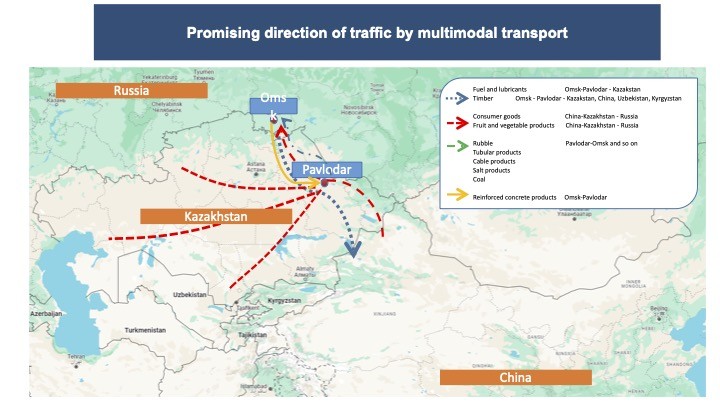
Current developments in shipping are focused around the Irtysh, home to the inland fleet and the main cargo base from which crushed stone is exported to Russia. On the Russian side, plans are in place to further increase shipped imports of both stone and other inert materials, alongside a proposal to import timber to Kazakhstan from Khanty-Mansiysk. The shipment of petroleum products to Chinese refineries from Kazakh and Russian plants is also being explored in tandem with the Chinese side sending back construction materials and consumer goods. At the initial stage, the volume of cargo transportation along the Irtysh is estimated at 350,000-400,000 tons a year, which could be ramped up to 1.5 million tons in the future.

Experts note the important role of a strategic task set by the government to develop the transit logistics of integrating inland waterways into the multimodal logistics chain. This is especially relevant amid congestion on Kazakhstan’s railways and roads, the gravitation of export-import cargo to the transport system, and energetic discussions on developing the Russia-Kazakhstan-China transit corridor using the Irtysh. The project entails shipping cargo via the river to Lake Zaysan where reloaded onto trains, it continues its journey through a new Maykapshagay–Jeminay border crossing. In addition to creating an alternative to traditional rail and road transportation, it could also increase trade between the countries by 3.6 million tons a year.

According to Kazakhstan’s Ministry of Transport, the project involving the transboundary Irtysh River should be realized before 2026. Alongside the opening of the above Maykapshagay–Jeminay border crossing, it includes a Tugyl– Maykapshagay railway, the construction of an additional hydraulic structure for navigation on the Pavlodar–Semey section, and a port near Tugyl in East Kazakhstan .

In addition to plans for the Irtysh, proposals are being considered to develop boating excursions for tourists on the Kapchagay Reservoir and a regular passenger route from Pavlodar to Lake Zaisan, and given the problems of roads in the region, incorporate the Ural-Caspian basin in the transportation of cargo between the port of Atyrau and the Volga ports of Astrakhan and Volgograd, via inland waterways.

Promising routes such as Atyrau–Baku and Atyrau–Astrakhan through the Zhaiyk–Caspian Canal are currently being dredged with plans to transport 2 million tons of cargo per year.

Kazakhstan’s inland water transportation can offer the country an efficient, cost-effective, and environmentally- friendly way to move cargo. However, to advance its development, the state must first implement  systematic and comprehensive measures including expanding and updating the inland fleet and coastal infrastructure; creating a ship repair and shipbuilding base; ensuring safe navigation through dredging, training professional personnel, introducing modern technology, and cooperating with partners that share transboundary rivers.

On an encouraging note, a Concept for the Development of Kazakhstan’s Transport and Logistics to 2030 comprises plans to build a cargo fleet and coastal infrastructure for inland water transport, as well a number of other measures, including the digitalization of operations in the country’s waterways.