• KGS/USD = 0.01144 0%
  • KZT/USD = 0.00210 0%
  • TJS/USD = 0.10454 -0.1%
  • UZS/USD = 0.00008 0%
  • TMT/USD = 0.28571 0.28%
  • KGS/USD = 0.01144 0%
  • KZT/USD = 0.00210 0%
  • TJS/USD = 0.10454 -0.1%
  • UZS/USD = 0.00008 0%
  • TMT/USD = 0.28571 0.28%
  • KGS/USD = 0.01144 0%
  • KZT/USD = 0.00210 0%
  • TJS/USD = 0.10454 -0.1%
  • UZS/USD = 0.00008 0%
  • TMT/USD = 0.28571 0.28%
  • KGS/USD = 0.01144 0%
  • KZT/USD = 0.00210 0%
  • TJS/USD = 0.10454 -0.1%
  • UZS/USD = 0.00008 0%
  • TMT/USD = 0.28571 0.28%
  • KGS/USD = 0.01144 0%
  • KZT/USD = 0.00210 0%
  • TJS/USD = 0.10454 -0.1%
  • UZS/USD = 0.00008 0%
  • TMT/USD = 0.28571 0.28%
  • KGS/USD = 0.01144 0%
  • KZT/USD = 0.00210 0%
  • TJS/USD = 0.10454 -0.1%
  • UZS/USD = 0.00008 0%
  • TMT/USD = 0.28571 0.28%
  • KGS/USD = 0.01144 0%
  • KZT/USD = 0.00210 0%
  • TJS/USD = 0.10454 -0.1%
  • UZS/USD = 0.00008 0%
  • TMT/USD = 0.28571 0.28%
  • KGS/USD = 0.01144 0%
  • KZT/USD = 0.00210 0%
  • TJS/USD = 0.10454 -0.1%
  • UZS/USD = 0.00008 0%
  • TMT/USD = 0.28571 0.28%

Kazakhstan to Launch Drone Production at Correctional Facility in Akmola Region

A correctional facility in Kazakhstan’s Akmola Region is preparing to launch full-cycle production of unmanned aerial vehicles (UAVs), according to Yermek Shurmanov, director of Enbek, a state-owned enterprise operating under the country’s penal system. A renovated hangar in the settlement of Arshaly, the administrative center of Arshaly District in Kazakhstan’s Akmola Region, has already been equipped with machinery needed to manufacture drone airframes, circuit boards, and develop onboard software.

Enbek oversees employment programs for inmates housed in penal institutions under the Ministry of Internal Affairs. Kazakhstan has 78 such facilities, holding around 23,000 able-bodied convicts. Of these, more than 18,000 are already engaged in various forms of industrial labor.

Shurmanov stated that the initiative involves not just drone assembly, but full-scale production taking place within the correctional facility. The project is being implemented in partnership with Kazakhstani businesses, which are placing production orders directly with the institutions.

Currently, correctional facilities in Kazakhstan manufacture furniture, construction materials, clothing, playground equipment, and small architectural forms, and operate greenhouse farming. Inmates also receive vocational training and work under formal labor contracts, in accordance with the national Labor Code.

As previously reported by The Times of Central Asia, drone production is already underway within Kazakhstan’s military sector. In Almaty, UAVs are being tested for commercial delivery services.

In East Kazakhstan, drones equipped with artificial intelligence are being used to monitor soil and crop conditions, and in Karaganda, engineers have unveiled prototypes for drones designed for public safety operations.

Opinion: Tokayev’s National Kurultai Address: A Moral Message, Not a Political One

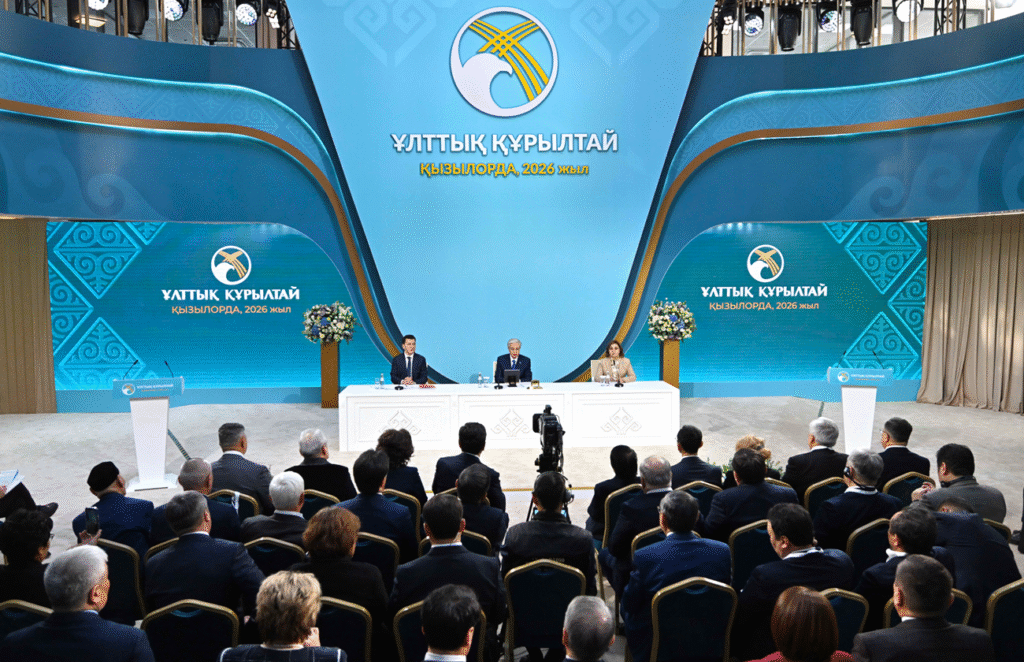
On January 20, 2026, Kassym-Jomart Tokayev, the President of Kazakhstan, addressed the nation at a session of the National Kurultai, an age-old platform for public dialogue, akin to a wise men’s council – at any rate, that’s how it’s often billed. To no one’s surprise, Tokayev pressed ahead with his stated agenda of political reform, highlighting foreign, economic, and development policies and goals. While not devoid of interest, those parts of the speech felt like little more than window dressing that tended to obscure the address’s underlying fire and true import.

Tokayev’s oration seemed at points to echo Alexis de Tocqueville’s ideas in Democracy in America: nations endure only when citizens pair civic participation with moral virtue and personal responsibility, because unchecked individualism ultimately weakens free societies and institutions, regardless of the presence of law and order. On closer examination, Tokayev’s thinking reflects Tocqueville’s view that building democracy is hard but doable. As Tocqueville wrote: “nothing is more wonderful than the art of being free, but nothing is harder to learn how to use than freedom,” pointing towards the belief that nation-building depends on freedom bound to virtue.

Tokayev’s Kurultai message went far beyond a list of technical fixes, platitudes about the economy, and empty cheerleading. Nor did it read as a sleight of hand or bait-and-switch tactic to preserve power in the face of a failing democracy. Those familiar with Tokayev know he has called for Tocquevillian-like responsible citizenship for years, which, to be sure, requires at times tough love.

Tokayev drove home a familiar theme, that the nation’s fate rests on the character and outlook of its people—not just on its economy, wealth, and politics. He maintained that traditional values present the vital adhesive of society, without which, every effort at statecraft withers—or worse, becomes easy prey to unsavory ambitions or certain secular ideologies which have taken on religious force in modern culture.

At the heart of Kazakhstan’s future, Tokayev thinks, there must lie a commitment to enduring human principles and timeless truths: unity, selflessness, sharing, mutual understanding, patience, compromise, and common sense. These values are not solely theoretical constructs but qualities evident for successful outcomes. They positively shape family formation, social relations, conflict resolution, and citizens’ engagement with the state and outsiders.

What’s more, economic and institutional strength is only possible when built upon a society united by common values, clarity of purpose, and a spirit of service.

Transforming Public Consciousness

President Tokayev stressed that changing minds matters more than changing laws and hollow pep talks. Without a common moral compass, nation-building is fragile. Strong cultural and spiritual roots foster social cohesion, building trust, identity, and civic duty.

Towards this end, he urged the older generation “to promote the values of work and enterprise, and wean young people from verbosity, glorification, laziness, indifference, and idleness.”

Tokayev’s strategy for consolidating national consciousness focuses on two core investments: on advancing cultural infrastructure (museums, theatres, libraries) and creative capital, thereby recharging towns and schools as sites of learning, dialogue, and shared identity. He says that celebrations of the country’s national heritage, which should be ideologically neutral, would strengthen self-confidence, facilitate cultural exchange, and promote interstate cooperation.

How does Tokayev want to accomplish this? Paraphrasing the Kazakh philosopher al-Farabi: “Knowledge without proper education is the enemy of humanity. Parenting is primarily the responsibility of parents. However, parents frequently set a poor example for their children. Some are indifferent to the issues concerning child upbringing, shifting all the responsibility to schools and teachers.

“The main source of wealth for the state is people, its citizens. This is obvious. In any case, parents are the ones who open the door to this world for their children. They do this for themselves, not for the state or for society. As a result, every parent should prioritize the development of a responsible generation.”

In other words, starting at the family level, citizens require a proper upbringing, rejecting selfish individualism for common good patriotism.

Tokayev also signaled that foreign actors are obstructing Kazakhstan’s nation-building—not to deflect blame from internal problems, but to caution against destabilizing external interference. “Today, we are witnessing an unprecedented rise in international tensions. Some large countries are trying to literally dictate their agenda, to impose their standards. Moreover, the clash of various ideas and approaches, often diametrically opposed, is now taking place not only in the sphere of geopolitics or economics, but even within culture and spiritual values, in other words, ideology. This is fraught with the most serious negative consequences for the secure coexistence of several states and peoples. The international situation is far from encouraging; therefore, the Republic of Kazakhstan should be united like never before.”

Tokayev’s National Kurultai address was more spiritual than political. It was anchored more in common sense than in power dynamics. It was more about the need for magnanimity – shaped by enduring values, shared purpose, and responsible liberty – than about small-mindedness, narrow thinking, pettiness, and a nihilistic outlook.

Whether Tokayev borrowed ideas from Tocqueville is unclear, but they seem to be on the same page; Tokayev could just as well have quoted Tocqueville in his National Kurultai address. As the French political thinker wrote: “There is no country in the world in which everything can be provided for by laws, or in which political institutions can prove a substitute for common sense and public morality.” Amid unfinished reforms, is Tokayev nudging the nation toward a Tocquevillian worldview, albeit one dressed in a Central Asian chapkan – the traditional long quilted coat of the region?

Time will tell if he succeeds.


The views expressed in this article are those of the author and do not necessarily reflect the official policy or position of the publication, its affiliates, or any other organizations mentioned.

Tajik Border Troops Kill Three Afghans Suspected of Opium Smuggling

An armed clash occurred on the evening of January 29 along the Tajik-Afghan border, in Tajikistan’s Shamsiddin Shokhin district, as local border forces intercepted an attempted drug smuggling operation.

According to the Border Troops of the State Committee for National Security (GKNB), the incident occurred around 7:30 p.m. in the area overseen by the Bahorak border post of military unit 0341.

The GKNB reported that five Afghan nationals illegally crossed into Tajikistan. Once the group was located, border guards attempted to apprehend them.

The intruders resisted arrest and opened fire in an attempt to retreat across the border. In the ensuing exchange, three were killed on the spot.

The GKNB identified the deceased as Jovid Valadi Davlatmand and Rashid Valadi Davlatmand, residents of Kariai Vorich, and Sobir Valadi Zohir from Kariai Andjir, Takhar province.

Two others managed to flee under the cover of darkness, retreating toward Afghan territory.

The Tajik-Afghan border has seen a steady rise in armed incidents over the past year, driven largely by drug trafficking and the movement of armed groups across remote mountain crossings. Tajik authorities have repeatedly warned that narcotics smuggling networks operating out of northern Afghanistan remain a persistent security threat despite stepped-up patrols and surveillance.

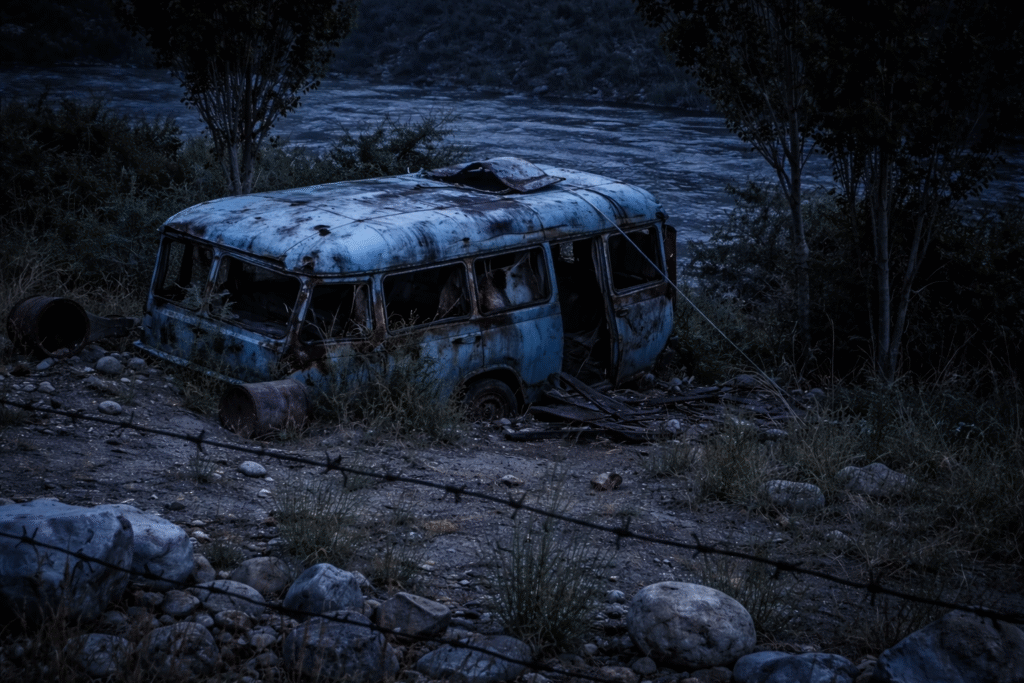
At the scene, border guards recovered three Kalashnikov rifles with four magazines, approximately 150 rounds of mixed-caliber ammunition, a large number of spent cartridges, and four bags containing 73 packages of narcotics, identified as hashish and opium. A boat, likely used for crossing the border, was also discovered.

Officials say drug trafficking remains the primary driver of cross-border violence in the region. Afghanistan remains the world’s largest producer of opiates, and Tajikistan is a key transit route for narcotics moving north toward Central Asia and Russia, making the border a frequent flashpoint for armed encounters.

The January 29 clash adds to a series of escalating incidents along the Tajik-Afghan border.

Two weeks ago, on the night of January 18, Tajik security forces killed four armed individuals, whom they identified as members of a terrorist organization, in the same border zone.

Border violence has intensified since last November. In two separate incidents, five Chinese citizens were killed in attacks originating from Afghan territory. In December, two Tajik border guards were killed during a confrontation with armed intruders in the Sarchashma border detachment’s area of responsibility.

Tajik security forces maintain that full control over the national border is being upheld, and have vowed to respond to all threats with force and immediacy.

Household Debt Persists Despite Lending Slowdown in Kazakhstan

At the start of 2026, Kazakhstan’s financial indicators appear promising: the population is borrowing less, and banks are increasing financing to businesses. Yet behind this macroeconomic optimism lies a more complex picture. The debt burden on citizens has not disappeared; it has simply changed form. While less visible in financial reports, household debt is becoming increasingly evident in everyday family budgets.

Two Realities, One Economy

Madina Abylkasymova, chair of the Agency for Regulation and Development of the Financial Market, reported to President Kassym-Jomart Tokayev that consumer lending has slowed, while business lending has begun to grow steadily for the first time in three years.

Data from the National Bank confirm this trend. In 2024, lending to individuals increased by 23.5%. By the end of 2025, growth had slowed to 17.7%. Business lending, meanwhile, accelerated from 17.9% to 19%.

From a macroeconomic perspective, the regulator has met its interim objective: banks are channeling more resources into the productive economy. However, an analysis of second-tier banks’ portfolios suggests that a fundamental imbalance persists.

Excluding development institutions and the quasi-public sector, end-of-year data show household debt to commercial banks at $55.1 billion, compared with business debt of 15.4 trillion tenge, or approximately $34.2 billion. The resulting $22.2 billion gap points to a structural issue: individuals remain the primary source of income for major private banks, including Halyk Bank, Kaspi Bank, and Bank CenterCredit (BCC), while the real sector continues to be underfinanced by market-based institutions.

Shift to Installment Plans

In 2025, under pressure from regulators, banks tightened lending standards for consumer loans. Traditional cash loan issuance slowed significantly.

Despite this, total household debt continued to grow. According to the National Bank, the consumer loan portfolio expanded by KZT 2 trillion in the first half of 2025, reaching $55.1 billion by year’s end.

This growth was driven not by large loans but by installment plans and Buy Now, Pay Later (BNPL) services. The number of loan contracts is rising much faster than the number of borrowers, a classic sign of demand fragmentation. Instead of a single large loan, citizens are taking out multiple small loans for food, clothing, and everyday necessities.

This reflects declining purchasing power. Inflation reached 12.3% by the end of the year, with food prices rising 13.5%. At the same time, official data shows real incomes fell by 2%.

Installment plans, once used primarily to purchase durable goods, are increasingly being used to “make ends meet.” Statistically, this appears as a reduction in average loan size and risk exposure. In reality, it points to growing debt dependency among households.

Why the Bankruptcy Law Has Fallen Short

The 2023 law on restoring personal solvency and bankruptcy was designed to address over-indebtedness structurally. But by early 2026, it was clear the system was functioning unevenly.

Data from 2025 reveals the scale of rejections. Of more than 270,000 submitted applications, only about 34,000, just 12%, were approved. Approximately 87% of applicants received official denials.

The main reason lies in strict eligibility criteria. For out-of-court bankruptcy, an applicant must have made no loan payments for 12 months. Even minimal payments reset this period. A second barrier is ownership of any property, such as a share in a privatized apartment or a small land plot.

Until mid-2025, applicants were also required to submit a bank-issued confirmation of debt settlement, a document that was often difficult to obtain. That requirement was removed later in the year, and the list of eligible creditors was expanded to include microfinance institutions and debt collectors. Still, approval rates did not improve significantly.

As a result, many citizens now find themselves in a legal limbo. They are functionally insolvent but unable to clear their debts through formal bankruptcy. With no access to legal credit and continued pressure from collectors, they remain trapped in a “gray zone” of the economy.

A Fragile Financial Recovery

The 19% increase in corporate lending at the end of 2025 is, on paper, a positive development. In theory, it should drive investment, employment, and GDP growth. In practice, however, a disconnect persists between business expansion and household financial well-being.

Kazakhstan’s banking sector remains heavily retail-focused. The gap between household and corporate debt underscores the sector’s continued dependence on consumer lending.

The main risk for 2026 is the deteriorating quality of retail loan portfolios. Analysts at Halyk Finance estimate that non-performing loans (NPLs 90+ days overdue) reached $3.5 billion by the end of 2025, a 44.8% increase since the start of the year. Their share of the total loan portfolio rose to 3.7%.

At the same time, banks’ capacity to absorb these risks is shrinking, as provisioning ratios fell from 141.7% to 132.2%.

While regulators have restricted large cash loans, the deeper issue remains unresolved. Hundreds of thousands of citizens, denied bankruptcy and burdened with trillions of tenge in debt, now form a growing segment that is effectively excluded from the legal financial system.

Turkmen Football Fans Moved to Worse Seats for Match with Cristiano Ronaldo’s Al-Nassr

Fans who have bought tickets to the upcoming Asian Champions League match between Turkmenistan’s Arkadag and Saudi Arabia’s Al-Nassr on February 11 have been informed, sometimes repeatedly, that their seats are being changed to make room for “organized support” groups.

According to a source in Ashgabat, notifications are being sent via users’ personal accounts on ticketing platforms. The vacated sections, the source said, are being allocated to students who are reportedly being trained in advance to provide choreographed support for the home team.

Affected spectators are often offered seats with worse visibility, and in many cases, fans, especially families and groups, are being split across different sectors of the stadium, making it nearly impossible to watch the match together.

Public frustration has grown as a result.

“A 45,000-seat stadium was specifically allocated for this match. If officials had plans for some sections, they could have decided in advance and sold tickets accordingly. If they can’t even organize one match properly, how can we expect them to handle more serious events?” the source said.

Some fans have opted not to attend the match at all, despite having already paid for tickets. Others are seeking to resell their tickets, though doing so is complicated. Ticket purchases required passport details, and it is believed that ID checks may be enforced at the gates, making resale risky.

Adding to the discontent is the asymmetry in ticketing policy: the Ashgabat city administration’s ticket regulations prohibit buyers from exchanging or returning tickets, while allowing organizers to unilaterally reassign seats.

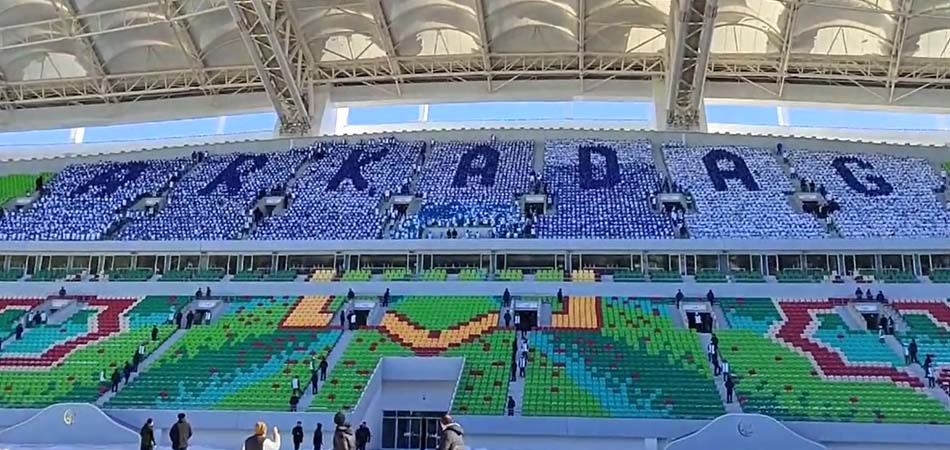
According to reports, the most prominent seating sections will not be occupied by club supporters, but by students compelled to rehearse chants and routines for the game.

Arkadag will host Al-Nassr in the last 32 round of the AFC Champions League. The Saudi club’s lineup includes global football star Cristiano Ronaldo. The return leg is scheduled to take place in Saudi Arabia on February 17 or 18.

Uzbekistan Fires Counter-Narcotics Chief as Drug Trade Surges

In late January, Uzbek President Shavkat Mirziyoyev sacked a series of high-ranking officials in the Interior Ministry, National Guard, and the Emergency Situations Ministry.

Their dismissals for corruption overshadowed the firing of the director of the Agency for Control of Narcotics and Illegal Firearms, who was let go for failing badly to combat illegal trafficking and use of drugs.

Poor Results

Ravshan Mamatov was appointed director of the National Center for Narcotics Control in August 2024. In July 2025, a presidential decree transformed the center into the Agency for Control of Narcotics and Illegal Firearms.

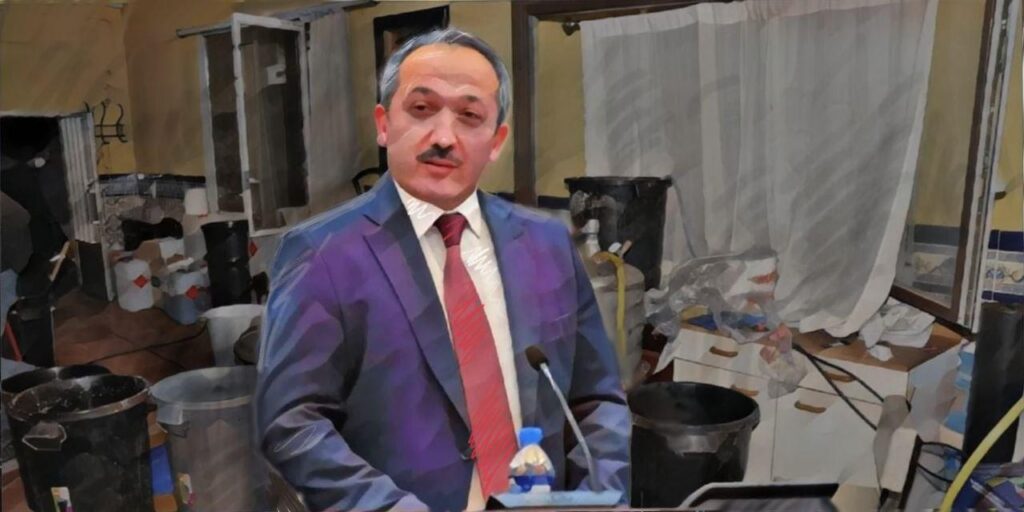
On January 27, President Mirziyoyev criticized the work of the Narcotics Control Agency and warned Mamatov to engage in more than simply “analytical work and international cooperation.” Mirziyoyev dismissed Mamatov the next day, and it was not a surprise.

Exactly two weeks earlier, Bahodir Kurbanov, the head of Uzbekistan’s State Security Service (SGB), spoke at a session of the country’s Security Council, chaired by President Mirziyoyev.

Kurbanov detailed security measures along Uzbekistan’s borders, including the use of military surveillance drones.

The security chief also spoke about illegal narcotics, noting the amount of drugs seized in 2024 was some 1,700 kilograms and that figure more than doubled to 3,600 kilograms in 2025. Kurbanov noted the 2025 figure included more than 180 kilograms of synthetic drugs and more than one million doses of psychotropic drugs.

Additionally, the number of people arrested for illegal narcotics went from some 2,600 in 2024 to some 4,500 in 2025.

In his January 27 comments, President Mirziyoyev said that during the last three months, the authorities in the capital Tashkent, had detained members from approximately 50 major narcotics trafficking groups and seized some 500 kilograms of illegal drugs.

“Last year, more than 1,500 drug users were officially registered in the capital,” Mirziyoyev said, noting, “The saddest part is that the number of drug addicts living in the shadows is even higher.” The Uzbek president added that most were young people and that “in their quest to raise money, drug addicts naturally resort to crime.”

Mirziyoyev also criticized the penal system, remarking that a significant number of people convicted for illegal narcotics were released from jail before serving even half their sentences. Mirziyoyev said that this has led to a 25% increase in the number of repeat offenders.

Mamatov addressed Uzbekistan’s parliament on December 17, admitting the amount of synthetic drugs being seized had increased phenomenally during the last five years and that the number of crimes involving illegal narcotics had doubled during that time. Mamatov claimed that in a number of cases, “drug trafficking was being facilitated by officials,” though he did not name any specific officials.

A Regional Problem

The other Central Asian countries are facing the same problems as Uzbekistan.

The amounts of drugs seized and people arrested have been growing in the last few years and continue to increase.

Part of the problem is that the region’s counter-narcotics agencies are facing a new situation in combating the illegal drug trade. Synthetic drugs are usually in pill form or contained in small packets, making it easy to transport these substances without attracting attention.

The same day Mirziyoyev criticized Mamatov, the Uzbek president also announced that a new department for battling cybercrime was being created in the Justice Ministry.

Mirziyoyev said that “95% of the cases involving the selling of synthetic drugs are done through the internet and paid for using cryptocurrency.”

The percentage might differ from country-to-country in Central Asia, but the use of the internet, particularly Telegram, to sell narcotics and make payments in cryptocurrency is growing. Many of the illegal narcotics are produced at laboratories inside these countries for domestic sales, thus eliminating the chances that the drugs will be caught during searches by border guards.

Mamatov spoke at Uzbekistan’s parliament the same day deputies were debating increasing punishments for involvement in illegal narcotics. Traffickers and sellers of drugs could face up to 20 years in prison under a new draft law.

Similar discussions about how to counter the growing illegal narcotics trade are taking place in other Central Asian states. While neighboring countries face comparable challenges, it remains too early to say whether Uzbekistan’s decision to remove Mamatov will be replicated elsewhere in the region.