• KGS/USD = 0.01144 0%
  • KZT/USD = 0.00211 0%
  • TJS/USD = 0.10460 0.19%
  • UZS/USD = 0.00008 0%
  • TMT/USD = 0.28490 0%
  • KGS/USD = 0.01144 0%
  • KZT/USD = 0.00211 0%
  • TJS/USD = 0.10460 0.19%
  • UZS/USD = 0.00008 0%
  • TMT/USD = 0.28490 0%
  • KGS/USD = 0.01144 0%
  • KZT/USD = 0.00211 0%
  • TJS/USD = 0.10460 0.19%
  • UZS/USD = 0.00008 0%
  • TMT/USD = 0.28490 0%
  • KGS/USD = 0.01144 0%
  • KZT/USD = 0.00211 0%
  • TJS/USD = 0.10460 0.19%
  • UZS/USD = 0.00008 0%
  • TMT/USD = 0.28490 0%
  • KGS/USD = 0.01144 0%
  • KZT/USD = 0.00211 0%
  • TJS/USD = 0.10460 0.19%
  • UZS/USD = 0.00008 0%
  • TMT/USD = 0.28490 0%
  • KGS/USD = 0.01144 0%
  • KZT/USD = 0.00211 0%
  • TJS/USD = 0.10460 0.19%
  • UZS/USD = 0.00008 0%
  • TMT/USD = 0.28490 0%
  • KGS/USD = 0.01144 0%
  • KZT/USD = 0.00211 0%
  • TJS/USD = 0.10460 0.19%
  • UZS/USD = 0.00008 0%
  • TMT/USD = 0.28490 0%
  • KGS/USD = 0.01144 0%
  • KZT/USD = 0.00211 0%
  • TJS/USD = 0.10460 0.19%
  • UZS/USD = 0.00008 0%
  • TMT/USD = 0.28490 0%

Canadian Silvercorp to Develop Major Gold Deposits in Kyrgyzstan

A Canadian mining company is set to develop two of the largest undeveloped gold deposits in western Kyrgyzstan’s Tien Shan gold belt. Silvercorp Metals Inc., a diversified producer of silver, gold, lead, and zinc, announced it has signed a Share Purchase Agreement with Chaarat Gold Holdings Limited, along with a Cooperation Agreement with the National Investment Agency under the President of the Kyrgyz Republic.

Under the agreements, Silvercorp will acquire a 70% stake in Chaarat ZAAV CJSC for $162 million. Chaarat ZAAV holds the mining license for the fully permitted Tulkubash and Kyzyltash gold deposits, covering approximately 7 square kilometers, as well as exploration licenses spanning an additional 27.42 square kilometers, which include the Karator and Ishakuld gold zones.

Silvercorp has also signed a Share Purchase and Shareholders Agreement with Kyrgyzaltyn, the state-owned gold company. Upon completion, ZAAV will become a joint venture between Silvercorp and Kyrgyzaltyn, with the Canadian firm maintaining a 70% stake and serving as the operator.

As part of the deal, the Kyrgyz government will waive its pre-emptive rights and extend the mining license through June 25, 2062, enhancing long-term investment stability.

Located about 490 kilometers southwest of Bishkek, the Tulkubash and Kyzyltash projects will be developed in two phases.

Phase One (2026-2028) will focus on the Tulkubash deposit. Silvercorp plans to invest around $150 million to construct an open-pit mine with a processing capacity of 4 million tons of ore annually. Commercial production is expected between 2027 and 2028, with annual output estimated at 110,000 ounces of gold over an initial mine life of three to four years. If the Karator exploration license is converted to a mining license in 2026, this phase could be extended by at least two more years.

Phase Two (2028-2031) will develop the Kyzyltash sulfide deposit. This stage is expected to require about $400 million in investment and will include both open-pit and underground operations with a capacity of 3-4 million tons per year. Once fully operational from 2031, Kyzyltash is projected to produce between 190,000 and 230,000 ounces of gold annually for more than 18 years.

The antimony-gold mineralization at the site was first discovered by Soviet geologists in the 1970s. Since 2002, Chaarat Gold has invested approximately $174 million in exploration, technical studies, and infrastructure, including roads, camps, and support facilities.

Silvercorp becomes the second Canadian mining firm to operate in Kyrgyzstan, following Centerra Gold’s development of the Kumtor mine in the Issyk-Kul region. Kumtor was nationalized in 2021, and in August 2022, Kumtor Gold Company was designated a 100% state-owned enterprise.

At a ceremony marking the launch of underground mining at Kumtor in August 2025, President Sadyr Japarov stated that Kyrgyzstan had received only $100 million in dividends during 28 years of foreign management, compared to $441 million paid to the state in the three years following nationalization.

The Silvercorp transaction marks one of the largest foreign mining investments in Kyrgyzstan since the Kumtor nationalization and is seen as a key test of the country’s ability to attract long-term capital under its revised state-private partnership framework.

Former Head of Turkmen Railways on Trial in Russia Over Alleged Drug Smuggling

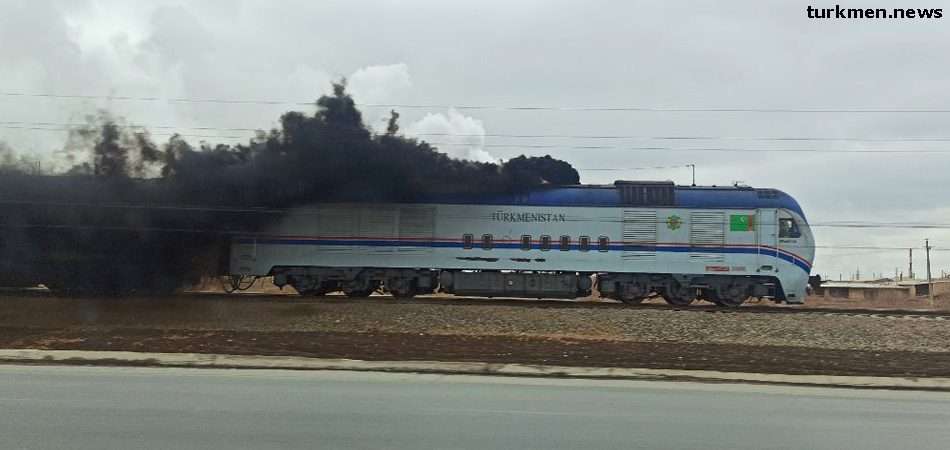
The former head of Turkmenistan’s state rail company is facing trial in Russia on charges of large-scale drug smuggling, as reports emerge of a covert, high-level campaign to secure his release.

Khydyr Rakhmanov, who led Demiryollary JSC (Turkmen Railways), was detained on October 4, 2025, at Moscow’s Domodedovo airport while allegedly attempting to import LSD. Russian authorities subsequently opened a criminal case under Article 229.1 of the Criminal Code, “Smuggling of narcotic drugs and psychotropic substances.” He has been held in custody since October 6, and on December 4, the Domodedovo court extended his pretrial detention by another two months.

Sources cited by turkmen.news allege Rakhmanov is charged under the most severe subsection of the statute, which covers large-scale smuggling and carries a sentence of 10 to 20 years in prison and a fine of up to $13,000. The law does not allow for a suspended sentence.

Despite this, efforts appear to be underway to negotiate Rakhmanov’s return to Turkmenistan. According to turkmen.news, the Ministry of Foreign Affairs of Turkmenistan, led by Rashid Meredov, is personally involved in an unofficial campaign to secure his release. Sources further claim that $3 million was transferred from Ashgabat via diplomatic mail as part of a backchannel attempt to reach a settlement with Russian authorities.

Roman Kuchin, a Russian lawyer with prior experience in the prosecutor’s office and close ties to legal and political networks, has reportedly been retained to advocate for a suspended sentence and eventual deportation of Rakhmanov.

Notably, there is no public information about the case on the Russian court’s official website. Earlier reports suggested that Turkmen special service operatives traveled to Russia to conduct direct negotiations with law enforcement officials.

The situation underscores Turkmenistan’s behind-the-scenes influence campaign and raises questions about transparency and diplomatic maneuvering in high-stakes criminal cases involving state officials.

Disability Inclusion Is Emerging as Central Asia’s Next Social Frontier

More than 1.3 billion people worldwide live with some form of disability, yet disability remains one of the least visible dimensions of social and economic life. In Central Asia, that invisibility is especially pronounced. As governments focus on infrastructure, growth, and modernization, far less attention is paid to whether people with disabilities are becoming more present in schools, workplaces, and public life, or whether they remain largely confined to families and institutions beyond the reach of public discussion.

Across the region, cities are expanding, labor mobility is increasing, and younger generations are more connected to global ideas through study and migration. These shifts are often treated as shorthand for progress. At the same time, people with disabilities consistently face lower educational attainment and weaker labor market outcomes, making inclusion a practical test of whether development reaches beyond headline indicators into everyday life.

Disability policy across much of Central Asia has long centered on legal classification, benefit eligibility, and institutional care. Long-term institutionalization is associated with reduced autonomy and poorer social outcomes, yet institutions remain a common default, reinforcing the idea that disability is primarily an administrative or medical issue rather than a social one shaped by access and expectations.

In practice, families remain the primary providers of care throughout the region. In Kyrgyzstan, around 200,000 people are officially registered as living with disabilities, and outside major cities, most daily support is provided by family members due to limited community-based services. In Turkmenistan, public disability data remain sparse, and undercounting is widely acknowledged, leaving extended families as the central source of long-term care. In Tajikistan, official estimates place the number of people living with disabilities between 150,000 and 200,000, with caregiving overwhelmingly home-based due to constrained public resources.

Family-based care provides continuity and belonging, but it also carries an economic cost. Caregivers are more likely to reduce paid employment and experience long-term income loss, a burden that falls disproportionately on women and shapes household economic outcomes.

This reliance on family support is often contrasted unfavorably with wealthier countries, but the comparison is more complicated. In the United States, more than one in four adults lives with a disability, and people with disabilities report significantly higher rates of loneliness and depression despite extensive legal protections and formal services. By contrast, strong family networks are associated with lower levels of severe social isolation, even in settings with fewer public resources.

In recent years, small but notable shifts have begun to appear. Local organizations across the region are experimenting with community-based rehabilitation, inclusive education, and supported employment models that move beyond institutional care. These efforts remain fragmented and under-resourced, but they reflect a growing recognition that disability policy is about protection and participation. As Central Asian governments seek to retain talent, expand their labor force, and project social modernization, inclusion is increasingly intersecting with economic and demographic realities rather than remaining a niche social issue.

Institutional care remains common across Central Asia, yet community-based rehabilitation is consistently linked to better social participation and quality of life. Families are increasingly questioning whether institutions should be the default response when local support could preserve relationships and autonomy.

Disability inclusion will not define Central Asia’s future on its own. It does, however, offer a clear measure of whether modernization is reflected not only in infrastructure and growth, but in who is visible, connected, and able to participate in everyday life.

Kyrgyzstan to Continue Electricity Imports in 2026 to Cover Power Deficit

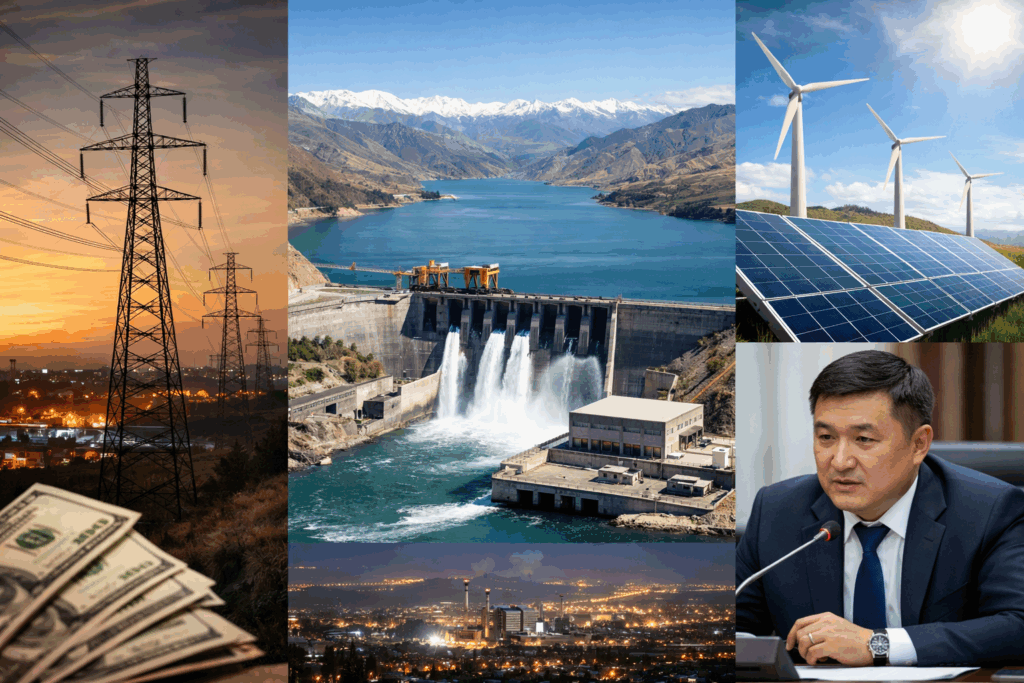
Kyrgyzstan’s Cabinet of Ministers has confirmed that the country will continue importing electricity in 2026 to compensate for a persistent shortfall in domestic power generation, Deputy Energy Minister Altynbek Rysbekov said during a meeting of a parliamentary committee.

According to Rysbekov, Kyrgyzstan currently produces around 14.5 billion kilowatt-hours of electricity per year, while overall demand exceeds domestic supply by approximately 4.5 billion kilowatt-hours. To bridge the gap, the country imported about 4.3 billion kilowatt-hours of electricity in 2025, and officials expect similar volumes will be required next year.

Rysbekov said electricity imports remain necessary to meet consumption needs, particularly during periods of peak demand. Electricity is sold to households at a socially regulated tariff that does not fully reflect production and import costs, with the difference absorbed by the national power company, NENK, placing a continued strain on the utility’s finances.

The deputy minister acknowledged that reliance on imported electricity reflects deeper structural challenges in Kyrgyzstan’s energy sector. The country remains heavily dependent on hydropower, with the Toktogul Hydroelectric Power Station alone supplying about 40% of the country’s electricity, leaving generation vulnerable to fluctuating water levels at major reservoirs. Reduced inflows and steadily rising domestic consumption have contributed to recurring electricity shortages in recent years.

Officials said the government’s medium- and long-term strategy is aimed at reducing dependence on electricity imports by expanding domestic generation capacity and diversifying energy sources. Rysbekov noted that efforts are underway to attract investment into renewable energy projects, including wind and solar power, alongside upgrades to existing infrastructure.

The Energy Ministry has previously said that increasing non-hydropower generation is essential to improving energy security and reducing seasonal risks, particularly during dry years. However, officials have cautioned that new capacity will take time to come online, making electricity imports unavoidable in the near term.

Kyrgyzstan has relied on electricity imports from neighboring countries during periods of deficit for much of the past decade, a pattern authorities say will continue until long-standing imbalances between supply and demand in the energy sector are addressed.

Uzbekistan Agrees to Join U.S.-Proposed Board of Peace

Uzbekistan has received and accepted an official invitation from U.S. President Donald Trump to join a new international initiative aimed at promoting peace and resolving conflicts in the Middle East, according to the press secretary of the President of Uzbekistan.

The invitation, addressed to President Shavkat Mirziyoyev, proposes Uzbekistan’s participation as a founding member of a newly established Peace Council. The initiative is anchored in a comprehensive plan to end the conflict in Gaza, which was announced on September 29, 2025, supported by several global leaders, and endorsed by United Nations Security Council Resolution 2803, adopted on November 17, 2025, the presidential press service stated.

According to the letter from the White House, the initiative seeks to unite countries willing to take responsibility for fostering long-term peace, stability, and security in the Middle East. The Peace Council is envisioned as an international body that would initially focus on Gaza, with a broader mandate to address other conflicts over time.

In his response, President Mirziyoyev affirmed Uzbekistan’s readiness to join the Peace Council as a founding member. He called the initiative a significant step toward resolving enduring conflicts in the Middle East and promoting peace and stability across the wider region. In recent years, Tashkent has sought to expand its international role through dialogue-oriented diplomacy while avoiding formal military or bloc alignments.

As previously reported by The Times of Central Asia, Kazakhstan has also accepted an invitation to join the Peace Council. The offer, addressed to President Kassym-Jomart Tokayev, was confirmed by Ruslan Zheldibay, assistant to the Kazakh president’s press secretary. Zheldibay stated that Tokayev was among the first world leaders to receive an official invitation from President Trump.

“Yes, President Kassym-Jomart Tokayev received an official invitation to join the Peace Council, and Kazakhstan was invited to become one of its founding states,” Zheldibay said. He added that Tokayev responded with gratitude, confirmed Kazakhstan’s participation, and reaffirmed the country’s intention to contribute to a lasting peace in the Middle East and broader global stability.

According to a report by Reuters, international reactions to Trump’s proposal have been cautious. The initiative, sent to approximately 60 countries, has raised concerns among some diplomats who worry it could undermine the role of the United Nations.

Reuters also reported that the Peace Council would be chaired for life by President Trump and would initially focus on Gaza before expanding its scope to other global conflicts. Member states would serve three-year terms, unless they contribute $1 billion each to gain permanent membership. The White House stated that permanent membership would be reserved for countries demonstrating a sustained commitment to peace, security, and prosperity.

Public Hearing Set for Sea Breeze Uzbekistan Project Near Charvak Lake

A public hearing on the environmental impact assessment of the Sea Breeze Uzbekistan tourist complex is scheduled for January 23 in the Bostanlyk district of Tashkent region, according to the State Center for Environmental Expertise.

The hearing will take place at the Bostanlyk district administration building in the town of Gazalkent. Officials stated that the event aims to review the potential environmental effects of the proposed development and to gather feedback from residents, environmental specialists, and other stakeholders.

The Sea Breeze Uzbekistan project is planned for the eastern shore of the Charvak reservoir in Bostanlyk. It envisions a large-scale, modern tourism infrastructure in one of Uzbekistan’s most frequented recreational zones. During the hearing, participants will assess land use and construction proposals, as well as potential impacts on air quality, water resources, and soil conditions.

Additional topics for discussion include waste management, the preservation of green zones and water bodies, and environmental safety measures, including continuous ecological monitoring. The State Center confirmed that all project documentation complies with Uzbekistan’s environmental legislation.

Residents and interested parties are invited to submit comments or proposals either during the hearing or in writing. Authorities emphasized that public involvement is a critical component of the environmental review process.

As previously reported by The Times of Central Asia, businessman Emin Agalarov plans to develop Sea Breeze Uzbekistan as a $5 billion, all-season tourism complex spanning between 500 and 700 hectares along Charvak Lake. The development is set to include hotels, villas, swimming pools, sports and leisure facilities, retail areas, restaurants, and a bridge connecting both sides of the reservoir. Cultural events, festivals, and concerts are also planned throughout the year.

Despite mounting public scrutiny and opposition from environmental activists, the Uzbek government has endorsed the project. In August 2025, Prime Minister Abdulla Aripov signed Cabinet Resolution No. 490, granting Sea Breeze Uzbekistan LLC a 25-year direct lease on 577 hectares of land for development.