• KGS/USD = 0.01144 0%
  • KZT/USD = 0.00210 0%
  • TJS/USD = 0.10454 -0.1%
  • UZS/USD = 0.00008 0%
  • TMT/USD = 0.28571 0.28%
  • KGS/USD = 0.01144 0%
  • KZT/USD = 0.00210 0%
  • TJS/USD = 0.10454 -0.1%
  • UZS/USD = 0.00008 0%
  • TMT/USD = 0.28571 0.28%
  • KGS/USD = 0.01144 0%
  • KZT/USD = 0.00210 0%
  • TJS/USD = 0.10454 -0.1%
  • UZS/USD = 0.00008 0%
  • TMT/USD = 0.28571 0.28%
  • KGS/USD = 0.01144 0%
  • KZT/USD = 0.00210 0%
  • TJS/USD = 0.10454 -0.1%
  • UZS/USD = 0.00008 0%
  • TMT/USD = 0.28571 0.28%
  • KGS/USD = 0.01144 0%
  • KZT/USD = 0.00210 0%
  • TJS/USD = 0.10454 -0.1%
  • UZS/USD = 0.00008 0%
  • TMT/USD = 0.28571 0.28%
  • KGS/USD = 0.01144 0%
  • KZT/USD = 0.00210 0%
  • TJS/USD = 0.10454 -0.1%
  • UZS/USD = 0.00008 0%
  • TMT/USD = 0.28571 0.28%
  • KGS/USD = 0.01144 0%
  • KZT/USD = 0.00210 0%
  • TJS/USD = 0.10454 -0.1%
  • UZS/USD = 0.00008 0%
  • TMT/USD = 0.28571 0.28%
  • KGS/USD = 0.01144 0%
  • KZT/USD = 0.00210 0%
  • TJS/USD = 0.10454 -0.1%
  • UZS/USD = 0.00008 0%
  • TMT/USD = 0.28571 0.28%

Disability Inclusion Is Emerging as Central Asia’s Next Social Frontier

More than 1.3 billion people worldwide live with some form of disability, yet disability remains one of the least visible dimensions of social and economic life. In Central Asia, that invisibility is especially pronounced. As governments focus on infrastructure, growth, and modernization, far less attention is paid to whether people with disabilities are becoming more present in schools, workplaces, and public life, or whether they remain largely confined to families and institutions beyond the reach of public discussion.

Across the region, cities are expanding, labor mobility is increasing, and younger generations are more connected to global ideas through study and migration. These shifts are often treated as shorthand for progress. At the same time, people with disabilities consistently face lower educational attainment and weaker labor market outcomes, making inclusion a practical test of whether development reaches beyond headline indicators into everyday life.

Disability policy across much of Central Asia has long centered on legal classification, benefit eligibility, and institutional care. Long-term institutionalization is associated with reduced autonomy and poorer social outcomes, yet institutions remain a common default, reinforcing the idea that disability is primarily an administrative or medical issue rather than a social one shaped by access and expectations.

In practice, families remain the primary providers of care throughout the region. In Kyrgyzstan, around 200,000 people are officially registered as living with disabilities, and outside major cities, most daily support is provided by family members due to limited community-based services. In Turkmenistan, public disability data remain sparse, and undercounting is widely acknowledged, leaving extended families as the central source of long-term care. In Tajikistan, official estimates place the number of people living with disabilities between 150,000 and 200,000, with caregiving overwhelmingly home-based due to constrained public resources.

Family-based care provides continuity and belonging, but it also carries an economic cost. Caregivers are more likely to reduce paid employment and experience long-term income loss, a burden that falls disproportionately on women and shapes household economic outcomes.

This reliance on family support is often contrasted unfavorably with wealthier countries, but the comparison is more complicated. In the United States, more than one in four adults lives with a disability, and people with disabilities report significantly higher rates of loneliness and depression despite extensive legal protections and formal services. By contrast, strong family networks are associated with lower levels of severe social isolation, even in settings with fewer public resources.

In recent years, small but notable shifts have begun to appear. Local organizations across the region are experimenting with community-based rehabilitation, inclusive education, and supported employment models that move beyond institutional care. These efforts remain fragmented and under-resourced, but they reflect a growing recognition that disability policy is about protection and participation. As Central Asian governments seek to retain talent, expand their labor force, and project social modernization, inclusion is increasingly intersecting with economic and demographic realities rather than remaining a niche social issue.

Institutional care remains common across Central Asia, yet community-based rehabilitation is consistently linked to better social participation and quality of life. Families are increasingly questioning whether institutions should be the default response when local support could preserve relationships and autonomy.

Disability inclusion will not define Central Asia’s future on its own. It does, however, offer a clear measure of whether modernization is reflected not only in infrastructure and growth, but in who is visible, connected, and able to participate in everyday life.

Kyrgyzstan to Continue Electricity Imports in 2026 to Cover Power Deficit

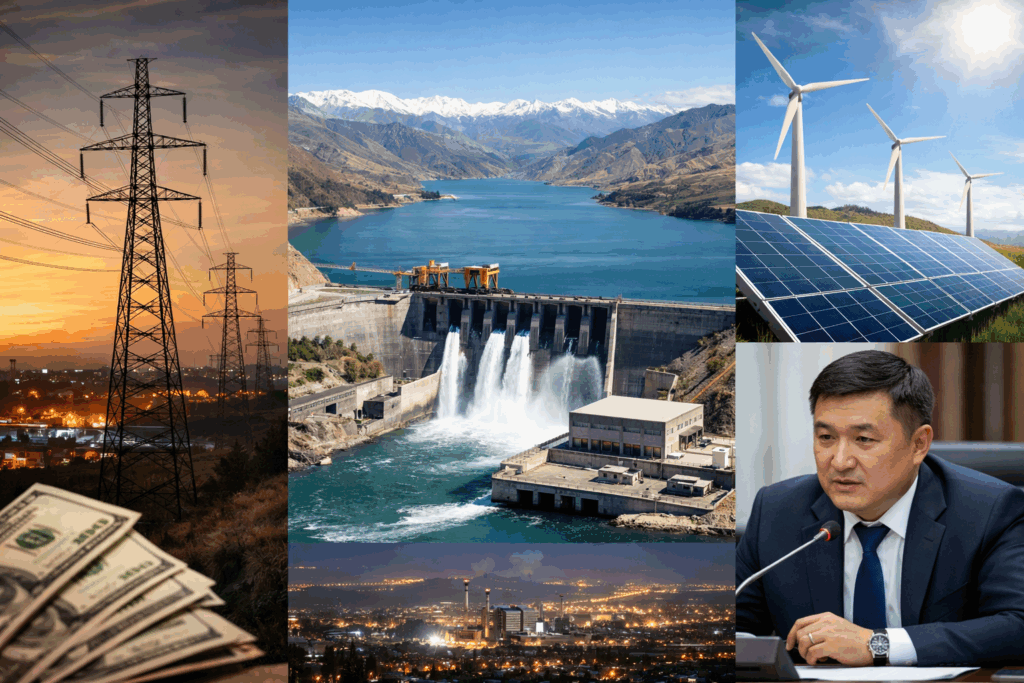
Kyrgyzstan’s Cabinet of Ministers has confirmed that the country will continue importing electricity in 2026 to compensate for a persistent shortfall in domestic power generation, Deputy Energy Minister Altynbek Rysbekov said during a meeting of a parliamentary committee.

According to Rysbekov, Kyrgyzstan currently produces around 14.5 billion kilowatt-hours of electricity per year, while overall demand exceeds domestic supply by approximately 4.5 billion kilowatt-hours. To bridge the gap, the country imported about 4.3 billion kilowatt-hours of electricity in 2025, and officials expect similar volumes will be required next year.

Rysbekov said electricity imports remain necessary to meet consumption needs, particularly during periods of peak demand. Electricity is sold to households at a socially regulated tariff that does not fully reflect production and import costs, with the difference absorbed by the national power company, NENK, placing a continued strain on the utility’s finances.

The deputy minister acknowledged that reliance on imported electricity reflects deeper structural challenges in Kyrgyzstan’s energy sector. The country remains heavily dependent on hydropower, with the Toktogul Hydroelectric Power Station alone supplying about 40% of the country’s electricity, leaving generation vulnerable to fluctuating water levels at major reservoirs. Reduced inflows and steadily rising domestic consumption have contributed to recurring electricity shortages in recent years.

Officials said the government’s medium- and long-term strategy is aimed at reducing dependence on electricity imports by expanding domestic generation capacity and diversifying energy sources. Rysbekov noted that efforts are underway to attract investment into renewable energy projects, including wind and solar power, alongside upgrades to existing infrastructure.

The Energy Ministry has previously said that increasing non-hydropower generation is essential to improving energy security and reducing seasonal risks, particularly during dry years. However, officials have cautioned that new capacity will take time to come online, making electricity imports unavoidable in the near term.

Kyrgyzstan has relied on electricity imports from neighboring countries during periods of deficit for much of the past decade, a pattern authorities say will continue until long-standing imbalances between supply and demand in the energy sector are addressed.

Uzbekistan Agrees to Join U.S.-Proposed Board of Peace

Uzbekistan has received and accepted an official invitation from U.S. President Donald Trump to join a new international initiative aimed at promoting peace and resolving conflicts in the Middle East, according to the press secretary of the President of Uzbekistan.

The invitation, addressed to President Shavkat Mirziyoyev, proposes Uzbekistan’s participation as a founding member of a newly established Peace Council. The initiative is anchored in a comprehensive plan to end the conflict in Gaza, which was announced on September 29, 2025, supported by several global leaders, and endorsed by United Nations Security Council Resolution 2803, adopted on November 17, 2025, the presidential press service stated.

According to the letter from the White House, the initiative seeks to unite countries willing to take responsibility for fostering long-term peace, stability, and security in the Middle East. The Peace Council is envisioned as an international body that would initially focus on Gaza, with a broader mandate to address other conflicts over time.

In his response, President Mirziyoyev affirmed Uzbekistan’s readiness to join the Peace Council as a founding member. He called the initiative a significant step toward resolving enduring conflicts in the Middle East and promoting peace and stability across the wider region. In recent years, Tashkent has sought to expand its international role through dialogue-oriented diplomacy while avoiding formal military or bloc alignments.

As previously reported by The Times of Central Asia, Kazakhstan has also accepted an invitation to join the Peace Council. The offer, addressed to President Kassym-Jomart Tokayev, was confirmed by Ruslan Zheldibay, assistant to the Kazakh president’s press secretary. Zheldibay stated that Tokayev was among the first world leaders to receive an official invitation from President Trump.

“Yes, President Kassym-Jomart Tokayev received an official invitation to join the Peace Council, and Kazakhstan was invited to become one of its founding states,” Zheldibay said. He added that Tokayev responded with gratitude, confirmed Kazakhstan’s participation, and reaffirmed the country’s intention to contribute to a lasting peace in the Middle East and broader global stability.

According to a report by Reuters, international reactions to Trump’s proposal have been cautious. The initiative, sent to approximately 60 countries, has raised concerns among some diplomats who worry it could undermine the role of the United Nations.

Reuters also reported that the Peace Council would be chaired for life by President Trump and would initially focus on Gaza before expanding its scope to other global conflicts. Member states would serve three-year terms, unless they contribute $1 billion each to gain permanent membership. The White House stated that permanent membership would be reserved for countries demonstrating a sustained commitment to peace, security, and prosperity.

Public Hearing Set for Sea Breeze Uzbekistan Project Near Charvak Lake

A public hearing on the environmental impact assessment of the Sea Breeze Uzbekistan tourist complex is scheduled for January 23 in the Bostanlyk district of Tashkent region, according to the State Center for Environmental Expertise.

The hearing will take place at the Bostanlyk district administration building in the town of Gazalkent. Officials stated that the event aims to review the potential environmental effects of the proposed development and to gather feedback from residents, environmental specialists, and other stakeholders.

The Sea Breeze Uzbekistan project is planned for the eastern shore of the Charvak reservoir in Bostanlyk. It envisions a large-scale, modern tourism infrastructure in one of Uzbekistan’s most frequented recreational zones. During the hearing, participants will assess land use and construction proposals, as well as potential impacts on air quality, water resources, and soil conditions.

Additional topics for discussion include waste management, the preservation of green zones and water bodies, and environmental safety measures, including continuous ecological monitoring. The State Center confirmed that all project documentation complies with Uzbekistan’s environmental legislation.

Residents and interested parties are invited to submit comments or proposals either during the hearing or in writing. Authorities emphasized that public involvement is a critical component of the environmental review process.

As previously reported by The Times of Central Asia, businessman Emin Agalarov plans to develop Sea Breeze Uzbekistan as a $5 billion, all-season tourism complex spanning between 500 and 700 hectares along Charvak Lake. The development is set to include hotels, villas, swimming pools, sports and leisure facilities, retail areas, restaurants, and a bridge connecting both sides of the reservoir. Cultural events, festivals, and concerts are also planned throughout the year.

Despite mounting public scrutiny and opposition from environmental activists, the Uzbek government has endorsed the project. In August 2025, Prime Minister Abdulla Aripov signed Cabinet Resolution No. 490, granting Sea Breeze Uzbekistan LLC a 25-year direct lease on 577 hectares of land for development.

More Valuable Than Oil: Why Kazakhstan Is Overhauling Its Water Code

For Kazakhstan, a country with vast territory and high dependence on transboundary rivers, water is becoming an increasingly critical constraint on economic development. Amid climate change, industrial expansion, and deteriorating infrastructure, water scarcity is emerging as a strategic risk, on par with fluctuations in global commodity markets.

Recognition of the issue has been growing for over three decades, but water resource management remained fragmented across environmental, agricultural, and municipal departments, with no unified decision-making center.

A turning point came in 2023, when President Kassym-Jomart Tokayev signed a decree establishing the Ministry of Water Resources and Irrigation. This marked institutional recognition of the water crisis and an admission that the existing governance model no longer matched the country’s needs.

The subsequent step was the drafting of a new Water Code, introducing a fundamental shift in the approach to managing water as a resource.

From Natural Resource to Economic Asset

The previous legislation was hampered by weak enforcement mechanisms. Fines for pollution or exceeding water usage limits were negligible for large industrial enterprises. In many cases, investing in treatment facilities or water-saving technologies was more costly than repeatedly paying fines.

A further constraint was a lack of personnel: only about 70 inspectors were responsible for monitoring water use nationwide, rendering comprehensive oversight unfeasible.

The new Water Code redefines the regulatory philosophy. Water is no longer treated as a near-free natural resource but is now recognized as a strategic economic asset, comparable to hydrocarbons or mineral resources.

The most significant innovation is the shift from punitive measures to economic deterrents. Companies that fail to adopt water-saving technologies risk losing their special water use permits. Continued unauthorized withdrawal is then subject to a fivefold tariff increase.

A Multi-Level Control System

The new enforcement model introduces a tiered response to violations. The first stage includes preventive oversight, during which companies receive instructions and deadlines to address issues. Penalties follow only in cases of non-compliance. Persistent violations may result in full restriction of water access.

The Ministry of Water Resources and Irrigation stresses that the primary aim is not to punish, but to incentivize water conservation and technological modernization. For many industrial enterprises, water is a vital input, making this regulatory shift especially impactful.

Sector-Specific Regulatory Models

The Water Code adopts differentiated approaches based on industry.

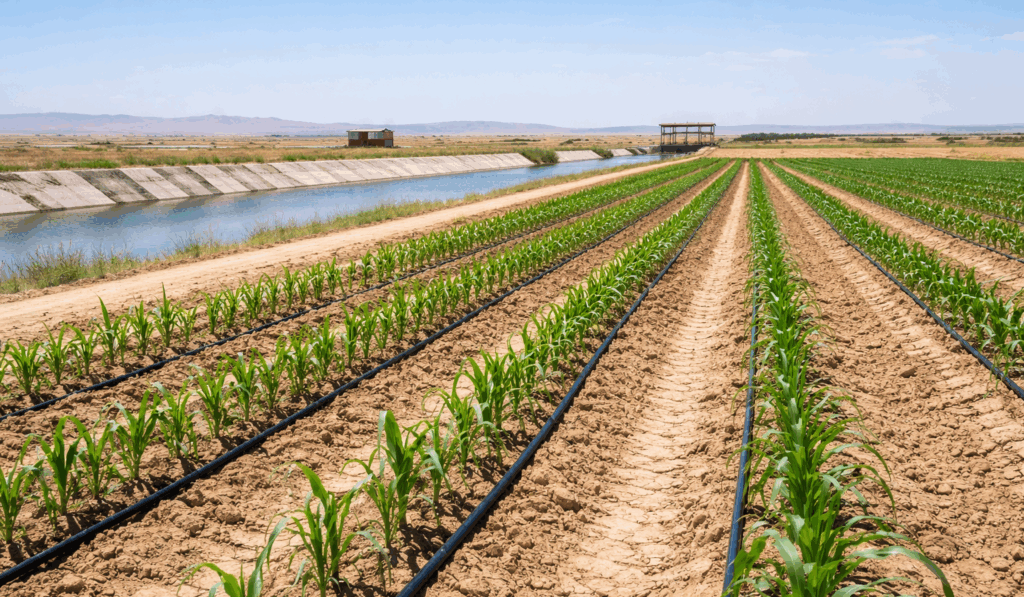
Agriculture, which accounts for 60-70% of total water withdrawals, remains the largest consumer. Most of this use is non-recoverable due to outdated irrigation techniques.

Farmers are offered an incentive-based framework. The state subsidizes up to 80% of the cost for adopting drip irrigation, installing metering devices, and upgrading irrigation infrastructure. Beginning in 2024, projects to repair canals and hydraulic structures, where water losses are critical, are being rolled out.

Small businesses, including car washes, bathhouses, restaurants, and service providers, account for approximately 15% of consumption. These entities fall under the purview of municipal water utilities.

Here, an indirect pressure mechanism is introduced: as water intake quotas are reduced, municipal utilities will be held financially accountable for excess consumption, encouraging them to adopt water-saving solutions for end users.

Digital Oversight Over Manual Inspection

Although the number of inspectors has nearly tripled, and basin inspection units have been established nationwide, the primary emphasis is on digital monitoring tools.

The ministry already deploys drones to create 3D terrain models and detect illegal dams, pumps, and unauthorized canal connections.

By the end of 2026, a unified information system for water monitoring is expected to launch. Modeled on tax control systems, this platform will use algorithms to review enterprise reports and flag anomalies automatically. On-site inspections will be reserved for high-risk cases.

The system will also verify the actual implementation of water-saving technologies, moving beyond mere formal compliance.

Authorities acknowledge that an immediate overhaul is unrealistic. A sudden tightening of regulations could shutter enterprises and trigger social disruption.

Accordingly, the Water Code allows for phased implementation. Core regulations will take effect in 2027, with a transition period extending to 2032. Businesses will have five years to adapt and invest.

Crucially, the ministry underscores that this transition is not a regulatory hiatus; real-time monitoring will continue throughout.

Kazakhstan is entering a phase where sustained economic growth can no longer depend on the unrestrained consumption of natural resources. As water reserves dwindle, the state is compelled to adopt a framework of strict but transparent regulation.

Approximately 200 Million Tons of Radioactive Waste Accumulated in Kazakhstan

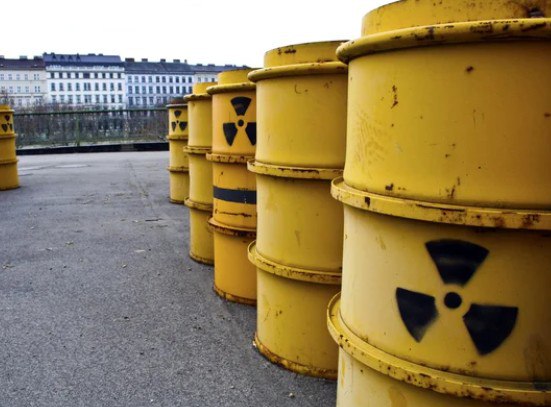
Kazakhstan’s soil is contaminated with radioactive waste, heavy metals, oil, and petroleum products, according to the Central Asia Climate Change and Green Energy Project Office (CACF). The total volume of radioactive materials is estimated at approximately 200 million tons.

These findings are based on the 2024 National Report on the State of the Environment and Natural Resource Use. The document identifies widespread zones of excessive contamination with radionuclides, toxic substances, and heavy metals across the country.

A Radioactive Legacy

Radiation exposure to soil is considered the most hazardous form of contamination. Kazakhstan is home to six major uranium provinces, along with dozens of smaller deposits and ore occurrences, contributing to naturally elevated levels of radioactivity.

Over the full operational period of the country’s uranium mining industry, an estimated 200 million tons of radioactive waste have been generated.

Military infrastructure further compounds the environmental burden. Kazakhstan has four military test sites and the Baikonur rocket and space complex. The zones where rocket booster stages fall span vast areas of Karaganda, Ulytau, Akmola, Pavlodar, and East Kazakhstan regions. According to scientific data, approximately 9.5 million hectares of land are contaminated with the byproducts of rocket fuel combustion and debris.

Elevated levels of radionuclides, heavy metals, and toxic compounds have been recorded in areas surrounding these facilities.

Heavy Metals Intensify the Pressure

Soil contamination is also acute near major cities and industrial centers, exacerbated by the growing number of motor vehicles.

Additional pollution originates from metallurgical and mining operations. In areas around the towns of Ust-Kamenogorsk, Ridder, Zhezkazgan, Shymkent, and Karaganda, the concentrations of lead, copper, zinc, and cadmium significantly exceed permissible limits.

In the Syr Darya River plains of the Kyzylorda region, lead concentrations are double the legal threshold, while nickel levels exceed standards by roughly 1.5 times. Soil degradation is further aggravated by salinization caused by the discharge of highly mineralized drainage water.

Billions of Tons of Industrial Waste

All of Kazakhstan’s industrial regions now contain ecologically hazardous zones, including slag heaps, tailings ponds, mining dumps, and quarries. These collectively cover more than 60,000 hectares.

Enterprises in the non-ferrous metallurgy sector alone have generated over 22 billion tons of industrial waste, including around 4 billion tons of mining byproducts. Of this, more than 1 billion tons consist of toxic enrichment waste, and over 100 million tons are metallurgical waste.

According to the Ministry of Ecology and Natural Resources, Kazakhstan’s total industrial waste volume has reached 31.5 billion tons. More than 1 billion tons of new waste are produced each year, with roughly 70% consisting of man-made mineral formations such as overburden and ash.

Oil Pollution: A Persistent Challenge

Oil contamination is another major environmental threat. In western Kazakhstan, nearly 200,000 hectares of land are affected by oil and petroleum products. The total volume of oil spills exceeds 5 million tons.

The highest levels of pollution have been recorded in the Atyrau region near the Makat field, where petroleum concentrations in soil surpass regulatory limits by more than 1,000 times. Severe pollution has also been reported near the Dossor, Komsomolskoye, Tanatar, Tentexor, and Iskene fields, with exceedances ranging from tens to hundreds of times over permissible levels.

Future Risks Amid Nuclear Expansion

Environmental concerns are gaining urgency in light of Kazakhstan’s nuclear energy plans. The country aims to build at least three nuclear power plants, with construction already underway on the first facility.

In this context, the government is considering the former Semipalatinsk nuclear test site as a potential location for radioactive waste storage.

The accumulation of radioactive and industrial waste over decades now constitutes a critical long-term risk to Kazakhstan’s sustainable development.