• KGS/USD = 0.01144 0%
  • KZT/USD = 0.00215 0%
  • TJS/USD = 0.10456 0%
  • UZS/USD = 0.00008 0%
  • TMT/USD = 0.28490 0%
  • KGS/USD = 0.01144 0%
  • KZT/USD = 0.00215 0%
  • TJS/USD = 0.10456 0%
  • UZS/USD = 0.00008 0%
  • TMT/USD = 0.28490 0%
  • KGS/USD = 0.01144 0%
  • KZT/USD = 0.00215 0%
  • TJS/USD = 0.10456 0%
  • UZS/USD = 0.00008 0%
  • TMT/USD = 0.28490 0%
  • KGS/USD = 0.01144 0%
  • KZT/USD = 0.00215 0%
  • TJS/USD = 0.10456 0%
  • UZS/USD = 0.00008 0%
  • TMT/USD = 0.28490 0%
  • KGS/USD = 0.01144 0%
  • KZT/USD = 0.00215 0%
  • TJS/USD = 0.10456 0%
  • UZS/USD = 0.00008 0%
  • TMT/USD = 0.28490 0%
  • KGS/USD = 0.01144 0%
  • KZT/USD = 0.00215 0%
  • TJS/USD = 0.10456 0%
  • UZS/USD = 0.00008 0%
  • TMT/USD = 0.28490 0%
  • KGS/USD = 0.01144 0%
  • KZT/USD = 0.00215 0%
  • TJS/USD = 0.10456 0%
  • UZS/USD = 0.00008 0%
  • TMT/USD = 0.28490 0%
  • KGS/USD = 0.01144 0%
  • KZT/USD = 0.00215 0%
  • TJS/USD = 0.10456 0%
  • UZS/USD = 0.00008 0%
  • TMT/USD = 0.28490 0%

Kyrgyzstan Weighs Nuclear Power as Rosatom Talks Advance

Kyrgyzstan is still in talks with Russia’s state-owned nuclear power company Rosatom about building a nuclear power plant (NPP) in Kyrgyzstan. But on March 3, Kyrgyz Deputy Chairman of the Cabinet of Ministers, Daniyar Amangeldiyev, was already speaking about conducting a national referendum on the construction of a nuclear power plant.

It is clear why Rosatom is anxious to build the NPP, but it is less clear why Kyrgyzstan needs it.

Kyrgyzstan’s Road to Nuclear Power

Rosatom is active in Central Asia, receiving the contract to build Kazakhstan’s first NPP in June 2025.

Uzbekistan had already signed a contract with Rosatom in May 2024, and in late March 2026, the first concrete was poured for the NPP that Rosatom is constructing in Uzbekistan.

At first glance, Central Asia might not seem like an ideal market for nuclear power. But after Russia’s full-scale invasion of Ukraine in February 2022, Finland canceled its contract for Rosatom to build the Hanhikivi-1 NPP, and while several  European countries are building or considering building NPPs, Hungary is the only country committed to partnering with Rosatom.

With limited prospects for new contracts in Europe, Rosatom is likely to focus on securing additional deals in non-European markets to expand its already extensive portfolio.

Kyrgyzstan’s Energy Ministry and Rosatom signed a Memorandum of Understanding for a small NPP in January 2022. The initial plan for Kyrgyzstan’s NPP was to build a small RITM-200N with a 55-megawatt (MW) capacity.

In May 2025, Director General of Rosatom, Alexey Likhachev, said his company was offering Kyrgyzstan a modular NPP project that could generate anywhere from 110 MW to 440 MW using RITM-200N reactors, equivalent to two to eight units. In late March 2026, Likhachev said current talks with Kyrgyzstan were not only focused on the construction of a small NPP but also a medium-sized NPP.

Kyrgyz Deputy Chairman of the Cabinet of Ministers Amangeldiyev said in June 2025 that Kyrgyz officials and Rosatom representatives were already looking at potential sites for the NPP. Reports about the planned NPP in Kyrgyzstan don’t mention the cost of construction, and it remains unclear how many and what size reactors will be installed.

According to Uzbek officials, the six 55-MW units that Rosatom was initially contracted to build (the project has since changed) would have cost “less than $2 billion.”

An Agreement or Not

In March 2024, Kyrgyzstan’s Deputy Energy Minister Taalaybek Baygaziyev signed an agreement with Rosatom on the development and implementation of the NPP investment project.

In September 2025, Altynbek Rysbekov was appointed Kyrgyzstan’s Deputy Energy Minister, and he said, “There is a possibility of building a (nuclear power) station, but no fundamental decision has been made yet.” However, Rysbekov’s further comments indicated he supported the idea of building an NPP in Kyrgyzstan, and he reconfirmed that the search for an appropriate site for the NPP continued.

On April 3, 2026, Amangeldiyev said negotiations with Rosatom are continuing.

“We are collaborating with Rosatom on infrastructure development and personnel training,” Amangeldiyev stated. “Only after that can we consider construction.”

That was when Amangeldiyev added that Kyrgyzstan would hold a national referendum on the construction of the NPP before any final agreement was signed, thus following the same route as Kazakhstan.

Does Kyrgyzstan Need Nuclear Power?

Kyrgyzstan has suffered from electricity shortages since the country became independent in late 1991.

In 2023, at the urging of Energy Minister Taalaybek Ibrayev, Kyrgyz authorities imposed a state of emergency in the country’s energy sector that would last until the end of 2026. That was later extended to last until 2028.

Kyrgyzstan has huge hydropower potential, with most of the country’s domestically produced power coming from hydropower plants (HPP). Several years ago, Kyrgyzstan launched a program to build new HPPs.

President Sadyr Japarov said in an interview in November 2025 that 41 small- and medium-HPPs would start operation in 2026 and 2027, and in 2028 another 1200-MW unit would be launched at the Kambar-Ata-2 HPP. He also mentioned other projects, such as the 1200-MW thermal power plant being built in northeastern Kyrgyzstan at Kara-Keche.

“Once construction is completed, by 2028–2029, we will supply electricity without any restrictions. We will no longer import electricity,” Japarov said, adding that soon after this, Kyrgyzstan would be exporting electricity.

Kazakhstan and Uzbekistan are helping Kyrgyzstan build the massive Kambar-Ata-1 HPP that will generate some 1860 MW. Officials are optimistic that the first unit at the HPP could be launched before the end of 2028.

However, depending on hydropower as the effects of climate change become more pronounced in Central Asia might not be a long-term sustainable solution to power problems. The region is already recording reduced rainfall and melting glaciers.

But Kyrgyzstan is also building wind farms and solar power plants. Energy Minister Ibrayev said in February 2026 that solar and wind projects were moving forward that would add 650 MW in the near future.

Why Kyrgyzstan needs to have an NPP that adds, seemingly, at most 440 MW is not clear. And it will take some ten years before the NPP would start operation.

Much of Central Asia lies in seismically active zones, and reports on the search for a suitable site for Kyrgyzstan’s NPP note that earthquake risk is a major consideration.

Amangeldiyev’s remark about a national referendum seems to indicate a final agreement with Rosatom is near. But it is difficult to see why Kyrgyzstan needs this NPP with so many other environmentally-friendly options available.


Pannier and Hillard’s Spotlight on Central Asia: New Episode Out Now

As Managing Editor of The Times of Central Asia, I’m delighted that, in partnership with the Oxus Society for Central Asian Affairs, from October 19, we are the home of the Spotlight on Central Asia podcast. Chaired by seasoned broadcasters Bruce Pannier of RFE/RL’s long-running Majlis podcast and Michael Hillard of The Red Line, each fortnightly instalment will take you on a deep dive into the latest news, developments, security issues, and social trends across an increasingly pivotal region.

This week, we examine a series of significant developments across Central Asia, from the deepening fallout of Kyrgyzstan’s political power struggle, with fresh arrests, widening investigations, and reports of military build-ups in one of the country’s key districts, to a meeting of the Organisation of Turkic States carrying implications that could reverberate well into the rest of the year. We also look at Kazakhstan’s announcement of a new oil discovery so substantial it comes close to rivalling Kashagan, alongside the decision by four of Central Asia’s five states to dispatch aid convoys in support of the humanitarian response in Iran, as well as a notable diplomatic development where two neighbouring states are finally moving to establish formal relations for the first time since 2021. Before finally turning to the escalating conflict between Afghanistan and Pakistan, where some of the heaviest fighting in months is raising fresh questions about border stability, regional security, and the risk of wider spillover.

Special guest on the show this week:

– C. Christine Fair, professor in the Security Studies Program within the Edmund A. Walsh School of Foreign Service at Georgetown University, and an expert in the Pakistani military and Afghan relations.

Beyond the Magnus Selfie: Kazakhstan’s Alua Nurman Climbs the Chess Ranks

Kazakhstani chess player Alua Nurman attracted attention on social media after taking a selfie with top-ranked Magnus Carlsen at a tournament. However, some chess analysts suggest that greater attention should be paid to her recent success on the board.

This year, 18-year-old Nurman was awarded the International Master (IM) title by FIDE, the international governing body of chess. She previously held the lower-ranking Woman Grandmaster title.

Nurman delivered strong performances at the Prague International Chess Festival in late February and early March, and again at the Agzamov Memorial tournament in Tashkent, Uzbekistan, where she defeated American grandmaster Brandon Jacobson, whose classical chess rating is about 2,590. Her rating has increased by around 65 points to more than 2,440 as a result of her recent results. The International Master title requires a rating of at least 2,400.

“Alua didn’t just take a selfie w/ Magnus, she also earned the IM title, had the best tournament performance of her career, got her highest-rated win ever, & became No. 1 in the girls’ junior rankings!” Women’s Chess Coverage, a social media account focused on women’s chess, said on X.

FIDE defines juniors as players under 20.

Nurman is Kazakhstan’s second-ranked female chess player after Bibisara Asaubayeva, who is currently competing in the FIDE Women’s Candidates Tournament in Cyprus.

The selfie was taken on April 2, just before Nurman and Carlsen played at the Grenke Freestyle Chess Open in Karlsruhe, Germany. Nurman asked for a selfie, and Carlsen obliged. The Kazakhstani player then put her phone in her bag. After a moment, Carlsen got up and told a tournament official that Nurman had a phone, and it was confiscated for the duration of the game. FIDE generally prohibits players from having electronic communication devices during matches because of concerns about cheating.

The selfie incident occurred before the start of the match, which the Norwegian won.

Nurman was delighted with the experience of playing Carlsen, who is widely considered one of the best chess players of all time.

“Dream come true!!” she said on Instagram. It was, Nurman added, a “truly enjoyable game.”

Uzbekistan’s Sindarov Beats American Nakamura, Stays in Lead at FIDE Candidates 

Playing with the black pieces, Javokhir Sindarov defeated Hikaru Nakamura at the FIDE Candidates Tournament on Friday and maintained his lead at the elite chess event underway on the shores of the Mediterranean.

The 20-year-old Uzbekistani grandmaster has won four games after five rounds at the tournament near Paphos, Cyprus, in what some commentators have described as the best start seen at the tournament in many years. Sindarov now has 4.5 points, one point ahead of Fabiano Caruana in second place. The winner of the eight-player, 14-round tournament will challenge the current world champion, India’s Gukesh Dommaraju, later this year.

Sindarov’s win over Nakamura of the United States came after he defeated Caruana, who is also American, on Wednesday. Nakamura spent about one hour considering one move, and Caruana had also got into time trouble against Sindarov.

“Interesting opening choice from Sindarov,” American grandmaster Hans Niemann, who is not playing in the candidates tournament, tweeted during the Sindarov-Nakamura game. “Slight surprise and betting that Hikaru won’t have a dangerous counter-surprise prepared. If Sindarov remembers the line, it seems like it will end in a perpetual. Sindarov continues to impress.”

In chess, a perpetual is a situation where one player can endlessly check the other player’s king, leading to a draw. Sindarov, however, turned expectations of a perpetual into a victory.

Sindarov won the 2025 World Cup in Goa, India, but his wins over Nakamura, ranked second in the world, and third-ranked Caruana indicate that the Uzbekistani is a consistent contender at the very top of men’s chess. After defeating Nakamura, he signed autographs for children at the Cap St Georges Hotel & Resort, where the candidates tournament is being held.

While Sindarov is ranked just outside the top ten in classical chess, his performance in Cyprus is expected to boost his ranking.

Another player from Uzbekistan, Nodirbek Abdusattorov, has moved up to fourth place in the classical ratings list. Abdusattorov is currently playing in the Freestyle Chess Open in Karlsruhe, Germany. Top-ranked Magnus Carlsen is also playing there.

Russia Ready to Transfer Over 3,000 Uzbek Prisoners

Russia is prepared to facilitate the transfer of more than 3,000 Uzbek citizens convicted on its territory to serve their sentences in Uzbekistan, but the process remains stalled due to legal obstacles, Kommersant reported, citing Russia’s Human Rights Commissioner Tatyana Moskalkova.

Speaking at a meeting of the Commonwealth of Independent States (CIS) Human Rights Commission, Moskalkova said Russia is willing to support the transfer mechanism. However, she noted that Uzbekistan cannot currently accept the prisoners because it has not ratified the 1998 Convention on the Transfer of Sentenced Persons.

“Russia is ready to assist, but the country of citizenship cannot accept them due to the lack of ratification of the convention,” she said, according to RIA Novosti.

The agreement allows individuals convicted in one participating country to serve their sentences in their home country. It is intended to support rehabilitation and improve humanitarian conditions by allowing individuals to remain closer to their families and social environment.

Russia ratified the convention in 1998, and it is also in force in several countries in the region, including Belarus, Kazakhstan, Kyrgyzstan, Tajikistan, and Armenia. For Uzbek nationals, however, Uzbekistan’s absence from the treaty has prevented similar transfers.

As previously reported by The Times of Central Asia, in 2025, 191 Uzbek citizens applied for asylum in Russia, highlighting shifting migration patterns and increasing pressure on legal and humanitarian systems in the region.

Major Hydrocarbon Field Discovered in Kazakhstan

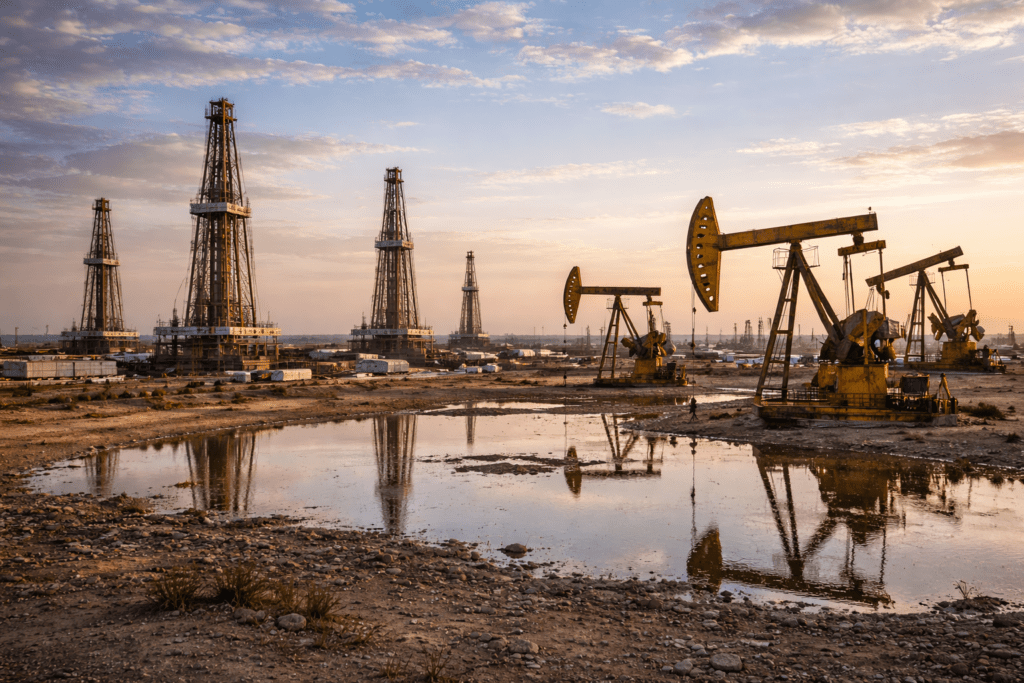
A major hydrocarbon field has been discovered in Kazakhstan’s Atyrau Region, with reserves potentially comparable to those of the Kashagan oil field, the country’s largest oil source, according to Kurmangazy Iskaziyev, First Deputy Chairman of the Management Board of KazMunayGas.

The site is located on the Zhylyoi Platform near the Caspian Sea coast. Its onshore location could significantly reduce development costs, although the deposits are believed to lie at considerable depths.

Kashagan has long stood as the symbol of both Kazakhstan’s oil wealth and the technical difficulty of extracting it. The offshore field cemented the country’s position as a major crude producer, but also became known for cost overruns, delays, and the engineering challenges of operating in the northern Caspian. Any onshore discovery mentioned in the same breath immediately raises expectations that it could avoid some of those constraints while delivering comparable scale.

Kashagan, discovered in the northern Caspian Sea, remains one of the largest oil fields found globally in recent decades. Its recoverable reserves are estimated at 9–13 billion barrels of oil, with gas reserves exceeding 1 trillion cubic meters. Development is carried out by the North Caspian Operating Company consortium, which includes Shell, TotalEnergies, ExxonMobil, Eni, China National Petroleum Corporation, Inpex, and KazMunayGas.

Speaking at the Geoscience & Exploration Central Asia forum, Iskaziyev said the resource potential of the Zhylyoi Block, including Karaton, Kazhygali, and Zhylyoi, is estimated at 4.7 billion tons, with total geological potential reaching up to 20 billion tons of oil equivalent.

At this stage, such figures reflect geological potential rather than proven, recoverable reserves. In Kazakhstan, as elsewhere, moving from estimate to production depends on depth, pressure, sulfur content, and the cost of drilling and processing. Large discoveries can take years to confirm commercially, particularly in high-pressure or technically complex formations.

KazMunayGas has already begun exploration work. A well 5,750 meters deep has been drilled at the Karaton site, and five promising targets have been identified as part of a joint project with Tatneft. During testing at one of these sites, a gas flow containing hydrogen sulfide was recorded.

The main challenge remains the depth of the deposits, which may reach up to 9 km. According to Iskaziyev, these conditions are comparable to projects undertaken by KazMunayGas’s Chinese partners, including Sinopec and China National Petroleum Corporation, where drilling depths can reach up to 11 km.

The company plans to expand geological exploration into neighboring areas, including Kazhygali, and is negotiating subsoil use contracts.

The timing is significant. Kazakhstan is under growing pressure to demonstrate that its oil sector can still deliver major new projects as existing fields mature. A large onshore discovery in Atyrau would reinforce the region’s role as the core of the country’s energy system and support efforts to sustain export volumes and investor interest.

At the forum, a memorandum of understanding was also signed between KazMunayGas and BP on cooperation in geological exploration and the development of the Ustyurt Block in the Mangistau Region.

The Times of Central Asia previously reported that Kazakhstan is involved in an international arbitration dispute with the North Caspian Operating Company consortium over environmental issues related to the Kashagan project.

That dispute reflects a broader pattern. Kazakhstan’s experience with Kashagan shows that giant oil projects rarely develop smoothly. The field brought vast reserves but also years of delays, technical setbacks, and regulatory friction. That legacy is likely to shape how officials and investors approach any new discovery presented as a potential peer to the country’s largest oil asset.