International financial institutions and development partners have committed $172 million to a major irrigation modernization project in Kyrgyzstan, aimed at improving water security and farm productivity as climate pressures grow.
The World Bank approved $95.75 million in financing on June 12 for the Kyrgyz Republic National Irrigation Investment Program, which seeks to improve irrigation services in selected areas across the country.
The financing package also includes $50 million from the Asian Infrastructure Investment Bank, $20 million from the OPEC Fund for International Development, and a $6.25 million grant from the Swiss Agency for Development and Cooperation.
The project is also expected to mobilize an additional $11 million in private capital.
“The Kyrgyz Republic has set out a clear vision to modernize irrigation services and make water access more reliable for farmers and rural communities,” said Hugh Riddell, World Bank Group Country Manager for the Kyrgyz Republic. “By bringing together public and private financing, this program helps turn that vision into a long-term investment platform.”
Agriculture remains one of Kyrgyzstan’s main economic sectors and a major source of employment, but outdated irrigation systems and high water losses continue to limit productivity. Climate change has added to these pressures, with rising temperatures, more frequent droughts, floods, and sedimentation putting greater strain on water resources.
The new investment program aims to address these risks through infrastructure upgrades, institutional reforms, and better irrigation management.
Authorities say the project will benefit more than 450,000 people, improve irrigation services across about 82,000 hectares of farmland, and raise water conveyance efficiency from 35% to at least 70%.
Improved irrigation services are also expected to support around 85,000 additional jobs across agricultural value chains.
The project will modernize irrigation and drainage infrastructure, improve water regulation and storage, and increase dam safety through smart water monitoring systems.
It will also improve irrigation service delivery by upgrading operations and maintenance and raising the capacity of national and local institutions. Technical assistance and environmental oversight will support the preparation of future investments.
The project will run through 2032 under the Water Resources Service of Kyrgyzstan’s Ministry of Water Resources, Agriculture and Processing Industry. It forms part of a multi-phase government program expected to mobilize $540 million over the next decade. That wider initiative aims to modernize irrigation services on more than 200,000 hectares and benefit nearly one million people.
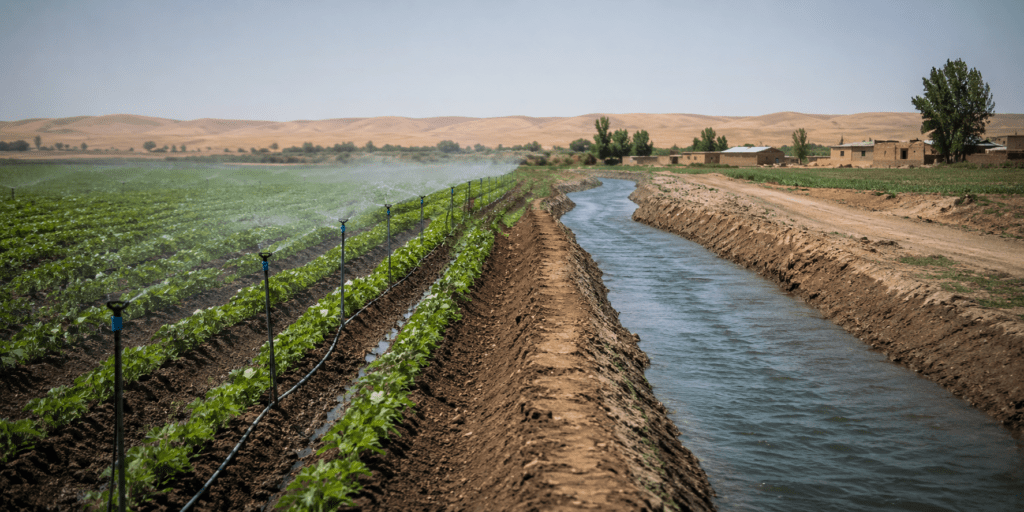
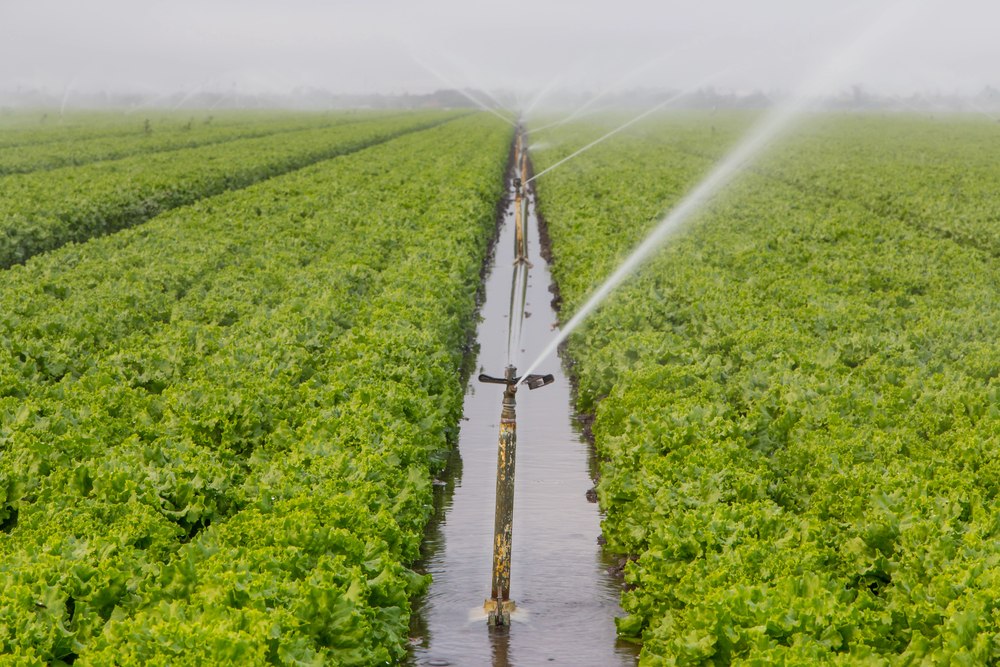
Water-saving technologies remain central to Kyrgyzstan’s irrigation strategy. Earlier this year, the Cabinet of Ministers amended the country’s Medium-Term Electricity Tariff Policy for 2025-2030, freezing electricity tariffs for farmers using drip and sprinkler irrigation systems under state water conservation programs until May 2030.
To encourage adoption, the government is also offering concessional loans at a 2% interest rate for farmers investing in water-saving irrigation methods.
Although adoption remains relatively limited, it is accelerating. According to the ministry, modern irrigation technologies currently cover around 16,000 hectares, with plans to expand coverage by 30,000-40,000 hectares annually and reach 200,000 hectares under water-saving irrigation by 2030.