Uzbekistan and the United States announced a new package of trade commitments on June 25. Moody’s raised Uzbekistan’s sovereign rating by one notch the same day. The two decisions strengthen Tashkent’s case that economic reforms are producing practical gains.
Under the “early harvest” announced in Tashkent, Uzbekistan will eliminate or reduce tariffs on a wide range of U.S. industrial and agricultural goods. Washington offered favorable consideration for Uzbek products in future tariff actions, where U.S. law allows, though that language does not guarantee automatic tariff cuts for Uzbek exports.
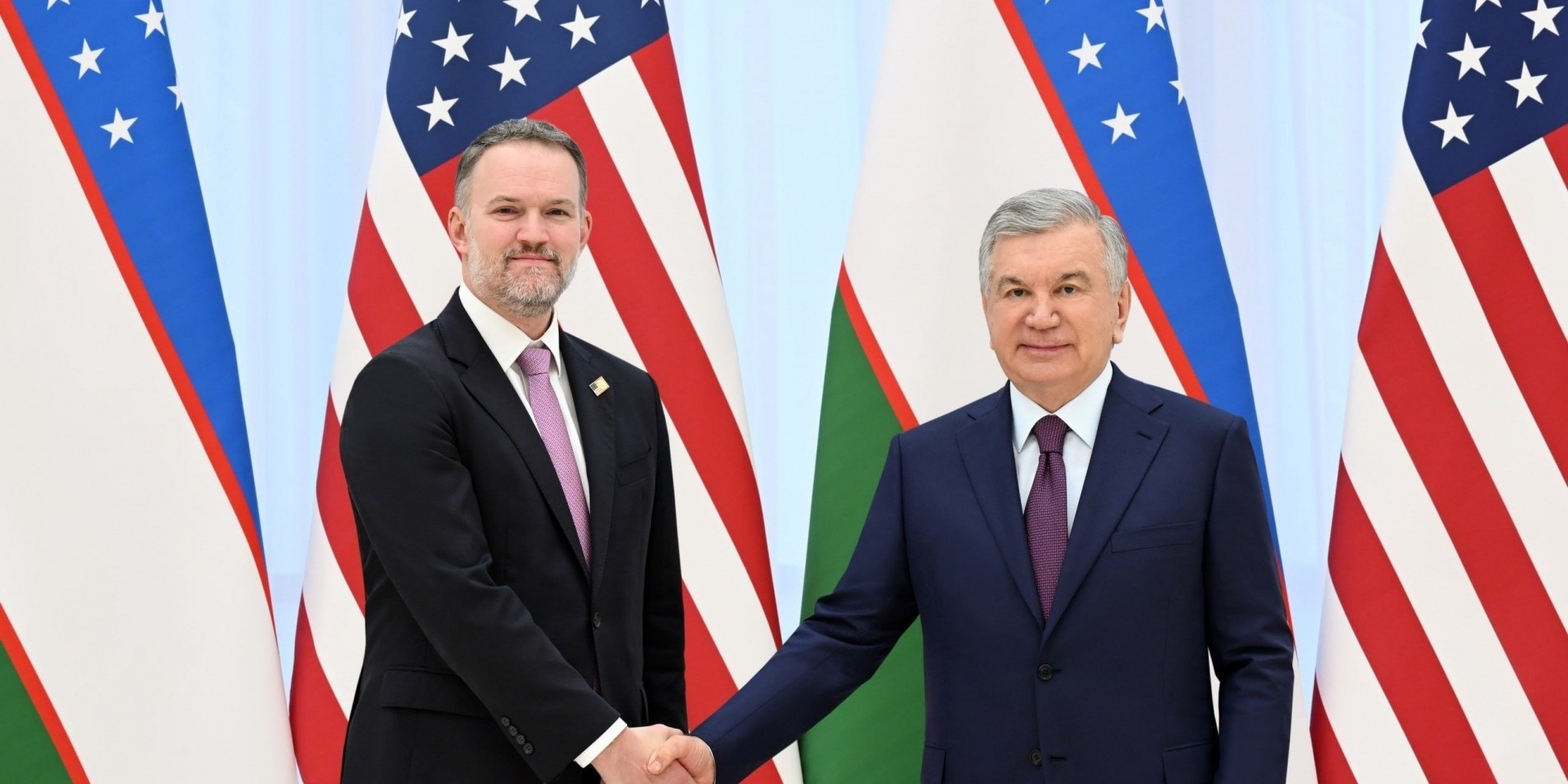
The two governments will put the commitments in writing in the coming weeks. They also agreed to speed up negotiations on an Agreement on Reciprocal Trade and Investment. President Shavkat Mirziyoyev discussed the package with U.S. Trade Representative Jamieson Greer during talks in Tashkent.
The announcement gives a political lift to a relationship which is still small in terms of trade. U.S. goods trade with Uzbekistan reached over $1 billion in 2025. American exports rose 24.5% to $473.9 million, while imports from Uzbekistan climbed to $574.4 million, turning a $338.3 million U.S. surplus in 2024 into a $100.5 million deficit.
The latest agreement builds on $32 billion in commercial deals announced in 2025. That figure includes an $8.5 billion Boeing agreement and planned activity in mining, energy, finance, and technology.
Tashkent has also built new channels to move projects toward financing. A U.S.-Uzbekistan Business and Investment Council began work in April. A joint investment platform followed in June, with energy, infrastructure, critical minerals, and manufacturing among its target sectors. The Tashkent business forum drew 193 U.S. company representatives.
Saida Mirziyoyeva, head of Uzbekistan’s presidential administration, set a clear standard at the council’s launch. “We are no longer at the stage where we speak about potential,” she said. “We are at the stage where we must deliver.”
That goal extends to Uzbekistan’s long WTO accession process. The country applied to join in 1994, but negotiations stalled for years. Tashkent resumed active work in 2020 and completed bilateral market-access negotiations with the United States in December 2024.
The U.S. agreement settled terms for trade in goods and services between the two countries. It did not complete Uzbekistan’s accession. Tashkent still needs an agreed multilateral package and approval from WTO members.
Uzbek officials now aim to secure full membership by the end of 2026. The timetable has already moved beyond an earlier target linked to the WTO ministerial conference in March. Negotiations cover tariffs and market access, but also reach domestic rules on subsidies, state-owned companies, product standards, and intellectual property.
Some industries may receive time to adjust. Chief WTO negotiator Azizbek Urunov said that transition periods of three to eight years had been discussed for some sectors. “Overall, tariffs will be reduced,” he said. “However, there are sectors that are sensitive for us.”
WTO membership would place Uzbekistan’s trade policy under a common set of rules and give exporters access to the organization’s dispute system. It would also limit some forms of state support and require more predictable regulation. Those changes connect the accession process directly to the concerns of investors and credit-rating agencies.
Moody’s upgraded Uzbekistan from Ba3 with a positive outlook to Ba2 with a stable outlook on June 25. The new rating remains below investment grade. Moody’s had raised the outlook on the Ba3 rating from stable to positive in June 2025, signaling that an upgrade could follow if reforms held.
The ratings path began to improve long before this week. Moody’s lifted Uzbekistan from B1 to Ba3 in January 2023 after the economy remained resilient through the pandemic and the shocks from Russia’s invasion of Ukraine. The agency still pointed to a large state role and policy uncertainty, and warned that public debt could come under pressure. The 2026 upgrade shows progress on those risks.
The agency linked its latest decision to stronger institutions and firmer fiscal policy. It also cited more diverse growth and better control of liabilities that can move onto the state balance sheet. Energy reforms reduced subsidies, while electricity and gas tariffs moved closer to full cost recovery.
The economic figures support that view. Uzbekistan’s economy grew 7.7% in 2025. The International Monetary Fund expects growth of 6.8% in 2026 and 6% in 2027. The consolidated budget deficit narrowed to 2.1% of GDP last year, from 4.6% in 2023. Public debt stood at 28.6% of GDP in 2025.
Inflation is easing, but price pressures remain. The IMF put end-2025 inflation at 7.3% and projected 6.8% for 2026. Price reform in utilities can improve public finances, but it can also keep pressure on household budgets.
Strong growth, however, does not remove the main credit risks. State-owned banks and companies still hold a large role in the economy. Privatization requires clearer governance, and public-private projects can create future obligations for the budget. Energy tariff increases also raise household costs, so targeted social support remains important.
The trade package and rating upgrade reinforce the same economic direction. Lower Uzbek tariffs could help U.S. suppliers, while a wider agreement could give Uzbek exporters clearer access to the American market. WTO membership would lock more of those changes into international commitments.
The immediate gains are narrower. Washington has promised consideration, rather than fixed tariff relief. The “early harvest” still needs a written text, and the reciprocal trade agreement remains under negotiation. The $32 billion deal figure will carry more weight when signed projects produce real investment and jobs.
Uzbekistan enters those talks with fast growth and a better credit rating. It also faces a clear measure of progress. The government must turn tariff pledges into enforceable terms and finish the WTO package. It must also reduce the state’s commercial footprint. Saida Mirziyoyeva’s April line now applies to the wider reform program: delivery will define the result.