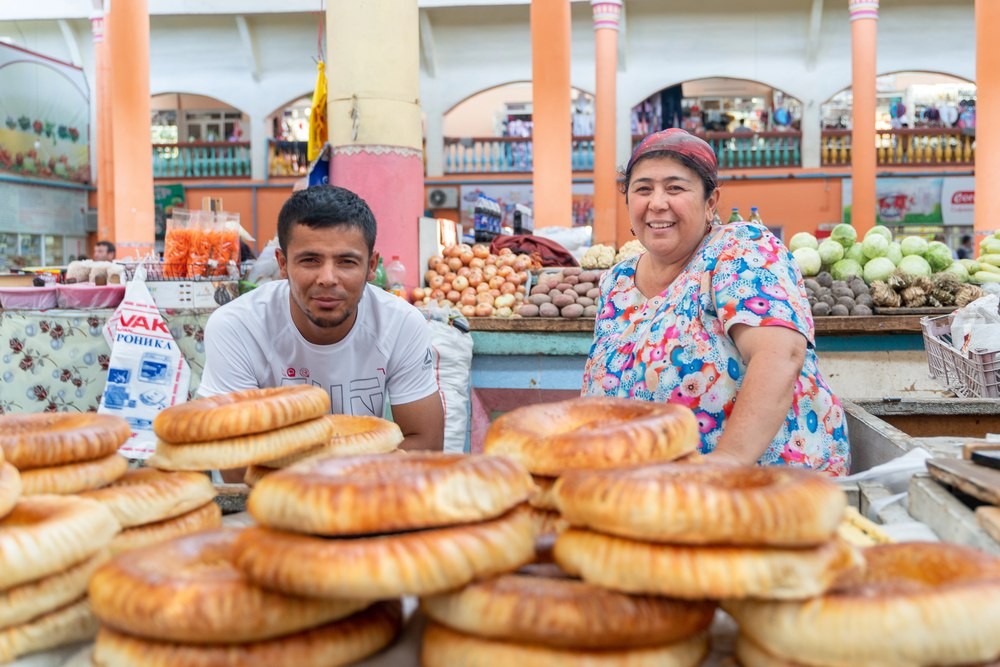
Until recently, Tirgon was remembered mainly through medieval poetry and scholarly references. In 2023, an apricot festival and dried-fruit exhibition were held in its honor in Dushanbe. Now, the ancient agricultural holiday is listed in Tajikistan’s official calendar of festive dates. In 2026, it was celebrated for the first time under its new official status.
A Holiday Rooted in Antiquity
Tirgon belongs to the ancient seasonal traditions of Iranian peoples and is mentioned in sources including Ferdowsi’s epic poem Shahnameh. Tajik sources trace these seasonal holidays back several millennia. Tirgon was traditionally associated with the 13th day of the month of Tir in the ancient Iranian calendar, with celebrations lasting several days.
At its core, the holiday is connected with water and the fertility of the land. In ancient practice, people prayed to ancestral spirits for protection from drought before the new harvest was gathered.
From Custom to Law
Tirgon received official status only recently. An amendment to Tajikistan’s Law “On Holidays” added the festival to the country’s calendar of official holiday dates in 2025.
The change was presented as part of Tajikistan’s effort to preserve national cultural heritage and revive ancient folk traditions. The country’s holiday calendar already contained dozens of dates, though not all official holidays are non-working days.
Tirgon’s new status shows its place in the country’s cultural life and in the state-backed revival of ancient seasonal traditions.
The First Official Tirgon
In 2026, Tirgon was marked for the first time after being added to the official holiday calendar. The date is observed on July 1, but the 2026 production calendar did not make it an additional non-working day.
To mark the holiday, the president addressed the nation with a message connecting the ancient reverence for water with Tajikistan’s modern water diplomacy. The message referred to the International Decade for Action “Water for Sustainable Development” and Tajikistan’s glacier-protection initiatives. Through that framing, the old ritual was tied to one of Tajikistan’s main foreign-policy themes: water.
Part of a Seasonal Cycle
Tirgon is part of Tajikistan’s revived cycle of ancient seasonal holidays. In that cycle, Sada is associated with fire and purification. Nowruz marks renewal, and Mehrgon is linked to the harvest. Tirgon occupies the place of water and rain, without which farming is impossible.
Each holiday is tied to a time of year and a natural element revered in ancient tradition.
Its return to the official calendar gives an old ritual a new public role. For many years, knowledge of Tirgon survived mainly in old manuscripts and scholarly descriptions. Its modern revival moved quickly. Public celebrations resumed in 2023. Official recognition followed in 2025, and the first observance under the new status came in 2026.
Tajikistan has made water diplomacy a major part of its international agenda, including glacier protection. In that context, an ancient holiday dedicated to rain and the fertility of the land has taken on contemporary political meaning. Tirgon is a reminder that water in the region is a condition for agriculture and survival.