Preliminary results have been announced in Kazakhstan’s election to its new unicameral parliament, the Kurultai. Notably, they differ little from the first exit poll released the previous day. The outcome itself was largely predictable: the newly created ruling Adilet party won by a wide margin, while two parties failed to clear the threshold for representation in the Kurultai.
In recent years, Kazakhstan has gone through a series of major electoral campaigns that have, quite literally, revived voters’ interest in exercising their basic civic rights. Along the way, the campaigns have developed a tradition of sorts, combining Soviet-era methods of drawing people to polling stations with elements of the political spectacle more characteristic of Western countries, particularly the United States.
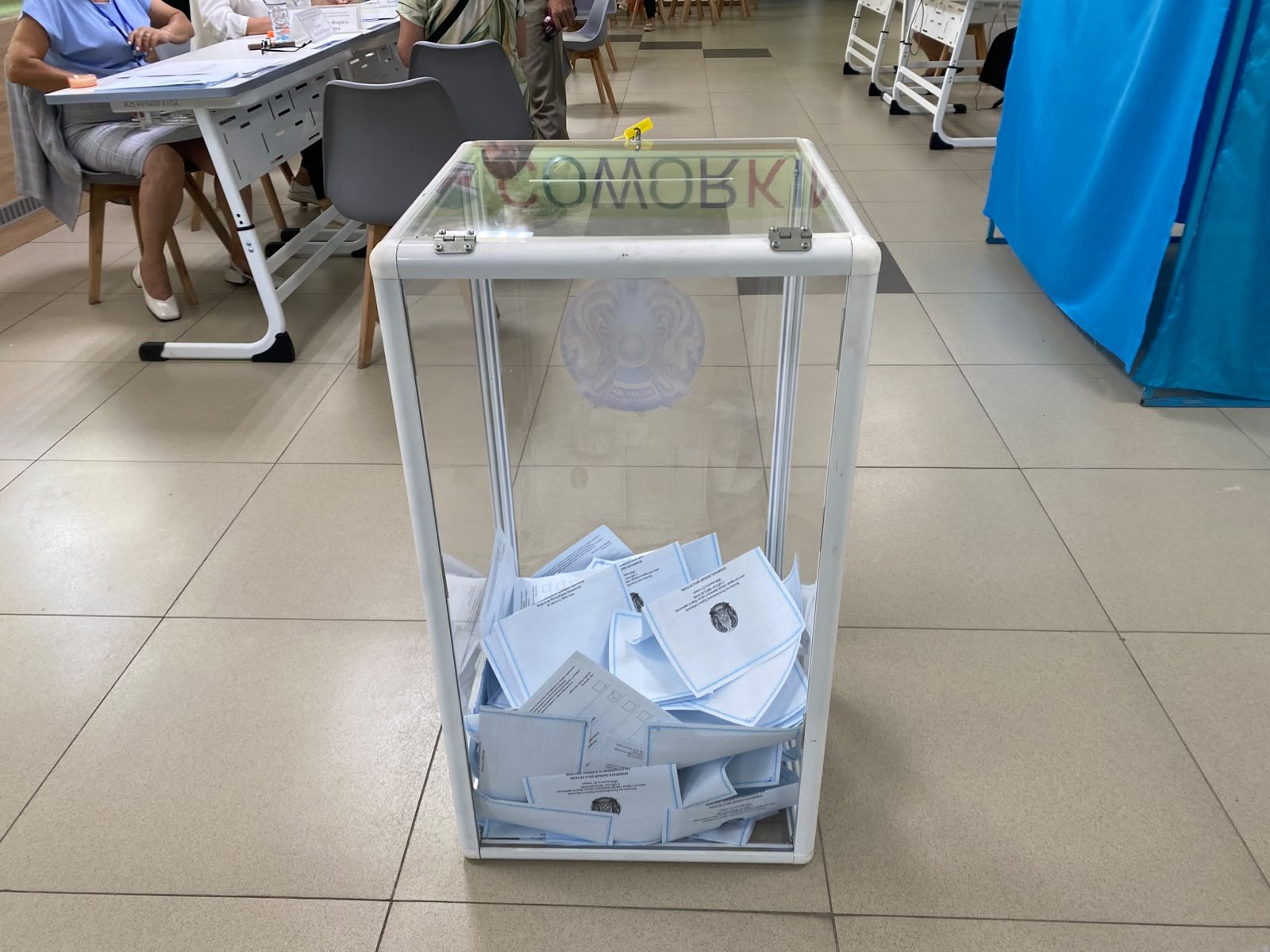
Image: TCA
In Soviet times, voters were enticed to polling stations with scarce goods, from candy to sausage. On election day, food fairs appeared near polling stations in Almaty: people could cast their ballots and then eat traditional Kazakh dishes, drink hot tea with milk, and listen to music. Since elections in Kazakhstan are increasingly promoted as family occasions, where parents can pass an important civic experience on to the younger generation, activities were also organized for children near polling stations. Among other things, they could play asyq, a traditional game familiar to generations of Kazakhstanis.
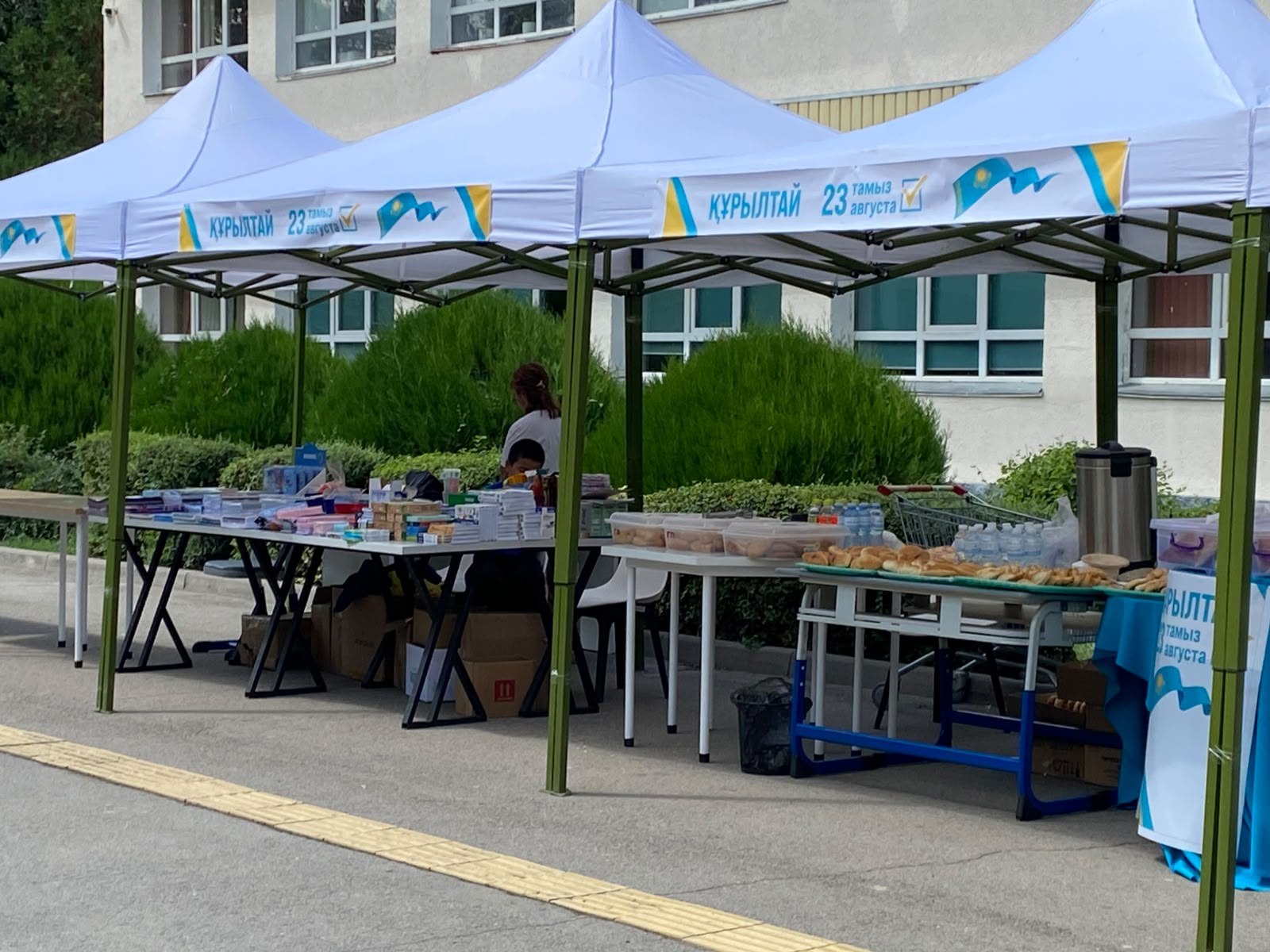
Image: TCA
As for the show-like elements, some voters arrived dressed as various characters, from Kazakh batyrs, or traditional warriors, to the American superhero Spider-Man.


Public transportation was free for city residents that day, and during the first half of the day it was easy to tell which passengers had already voted and which had not: the latter persistently tried to pay their fares, while the former stopped them from doing so.
All of this coincided with an unusually high turnout in Almaty – more than 43%. According to preliminary regional figures announced after polling stations closed, turnout in the city reached 43.23%, the lowest among Kazakhstan’s regions and cities of national significance but unusually high by Almaty standards.
Political analyst Andrey Chebotarev noted that turnout at this level had not been recorded in Almaty since 2012, when Kazakhstan was still reeling from the bloody events in Zhanaozen. Chebotarev said the factors behind the current level of voter participation in Almaty would require further study.
“Most likely, Almaty residents who are loyal to the authorities were primarily encouraged to vote by the political changes that began with the adoption of Kazakhstan’s new Constitution. Protest-minded residents apparently did not stay away either, expressing their dissatisfaction by voting ‘against all.’ But both groups were united by strong interest in the election campaign that has just ended,” the political analyst suggested.
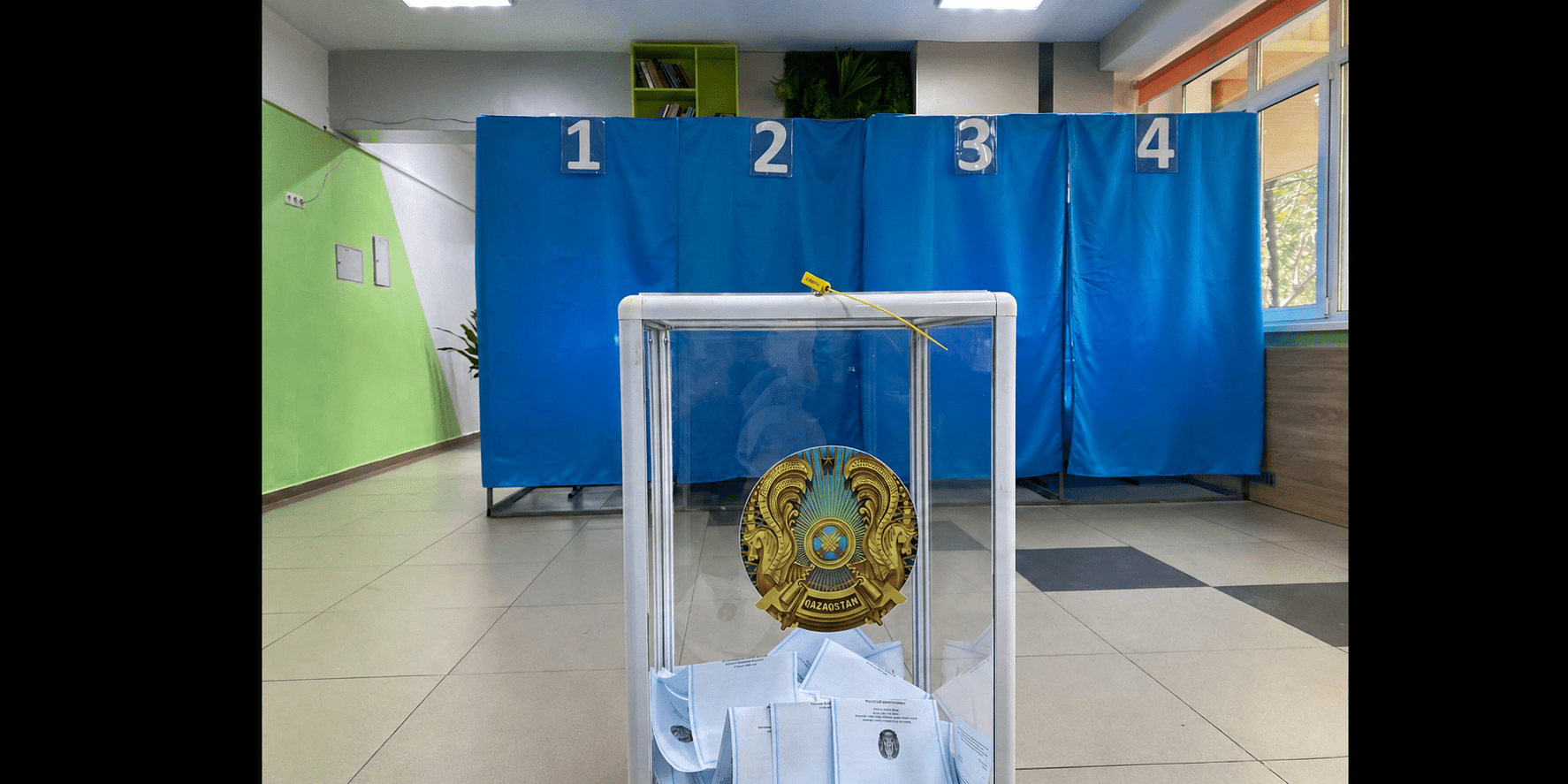
The author of this article exercised his civic right at 11 a.m., when the ballot box at his polling station was already almost one-third full. Election commission members were using an innovation that drew praise from Ella Pamfilova, chair of Russia’s Central Election Commission. She traveled to Astana on election day and visited several polling stations.
“I have already noticed several very useful things. I really liked the templates that make it possible to fully protect the confidentiality of personal data. When voters sign for their ballots, they can see only their own information. It is a very good solution. I think we will use it as well,” Pamfilova said.
The templates served another purpose as well: they prevented voters from seeing how many people had already visited the polling station and received ballots. That made it difficult for individual voters to judge overall turnout simply by looking at the registration lists.
On August 24, Kazakhstan’s Central Election Commission announced preliminary results showing turnout at 74.08%. Adilet won 71.17%, far ahead of the Auyl party, which finished second with 6.26%. Respublica received 5.56%, Ak Zhol 5.21%, and the Nationwide Social Democratic Party (OSDP) 5.11%. The People’s Party of Kazakhstan finished with 3.11%, while the green Baytaq party received 1.07%. Another 2.51% voted “against all.”
Political analyst Gaziz Abishev calculated how the 145 seats could be distributed among the parties that cleared the 5% threshold. According to his calculation, Adilet would take 110 seats, Auyl 10, Respublica nine, and Ak Zhol and OSDP eight each.
“Kazakh voters traditionally support political centrism, a combination of reforms and moderate conservatism. There is no appetite for radicalism or marginal figures and views,” political analyst Daniyar Ashimbayev said in his assessment of the result. He noted that turnout had risen by about 20 percentage points compared with the previous parliamentary election, while electoral support for the ruling party had increased by roughly the same amount.
During what has become his traditional briefing at a polling station in Astana, where he had gone to cast his ballot, President Kassym-Jomart Tokayev said he would present a candidate for vice president to the Kurultai within ten days. Contemporary reporting also put the timeframe at seven to ten days.
Gaziz Abishev explained how the process would work. According to him, the political parties that entered the Kurultai will first allocate seats among candidates on their party lists and submit the names to the Central Election Commission, which will verify and register the deputies. The CEC chair will then swear in the new lawmakers, present the president’s nominee for speaker, and hold a vote on the candidacy.
“After that, the speaker does everything else: the election of three deputy speakers, determining the names of the committees, electing committee chairs, and assigning deputies to the committees. That’s it – the Kurultai is ready. Tentatively, on September 2 – exactly ten days later – the president will deliver his annual Address to the Kurultai. There, or during the same week, he will nominate candidates for vice president and prime minister,” Abishev said.
Tokayev also said at the briefing that the country would need to launch the work of a new state body, the Qazaqstan Halyq Kenesi, or People’s Council of Kazakhstan, and turn the entire country into “one big construction site.” As for the composition of the next government, the president hinted at targeted personnel changes, saying that “some young officials appointed as ministers and working in the government have failed to cope with the tasks entrusted to them.”
Kazakhstan has now completed another stage of its institutional transition. The composition of the new Kurultai and the next round of senior appointments should become clearer within the next ten days.