President Kassym-Jomart Tokayev has approved targeted amendments to the document that sets the principles and priorities for Kazakhstan’s dealings with the outside world. The changes align the doctrine with Kazakhstan’s new constitutional order, remove its remaining provisions tied to Nazarbayev’s formal role, and come at a time when multi-vector diplomacy has become far more demanding than it was in 2020.
The amendments to the Foreign Policy Concept for 2020–2030, signed on August 14, attracted attention after KazTAG reported on them. Kazinform subsequently highlighted changes concerning the protection of citizens abroad, public understanding of foreign policy and the new Kurultai.
A Foreign Policy Concept is Kazakhstan’s overarching diplomatic doctrine. It sets the principles, priorities and responsibilities intended to guide state policy through 2030.
The August changes are limited in length. They remove its remaining references to Nursultan Nazarbayev’s formal role, bring the document into the Kurultai era, and give the Astana International Forum formal recognition in the doctrine.
Other language now attracting attention is older. Sovereignty, protection of citizens, and resilience to negative external influence were already in the 2020 document. The difference is the world in which Kazakhstan now has to apply them.
From Personal Legacy to Institutional Continuity
The first principle in the 2020 concept referred to continuity with the foreign policy course of the First President and Elbasy, Nursultan Nazarbayev. The new wording promises “continuity of the foreign policy course at a new stage of the country’s development.” The revised text no longer names Nazarbayev or uses the Elbasy title.
The amendments also remove a provision that gave the First President a lifelong right to address the public and state bodies on major foreign policy questions. The Constitutional Law on the First President was repealed in 2023, and the concept no longer lists it among its legal foundations.
This follows a process that began years ago. The special legal provisions associated with the Elbasy framework have been repealed, while Tokayev has continued to acknowledge Nazarbayev’s place in the history of independent Kazakhstan.
Tokayev was also closely involved in the foreign policy he inherited. He served twice as foreign minister, as prime minister, and later as director-general of the United Nations Office at Geneva. The revised concept places foreign policy continuity on an institutional rather than personal basis.
Adapting the Foreign Policy Concept to the New Constitution
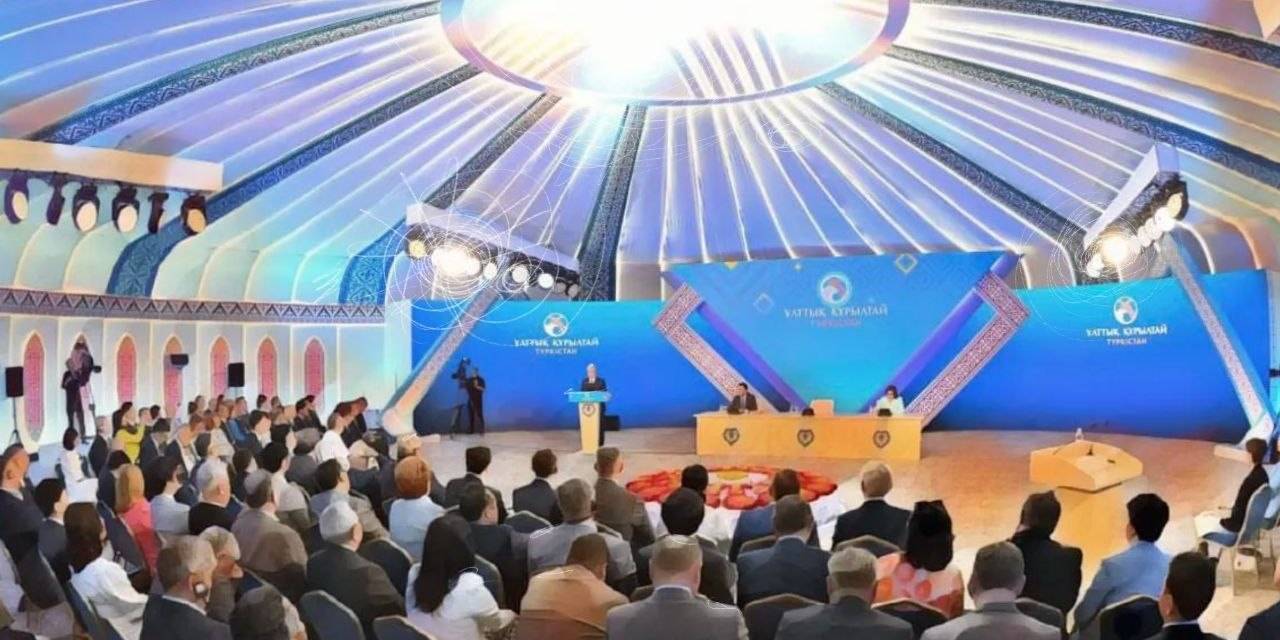
Kazakhstan’s new Constitution came into force on July 1, replacing the Senate and Mazhilis with a unicameral Kurultai. The first election to the 145-seat body is scheduled for August 23.
The old concept described the foreign policy functions of the bicameral parliament. The amended version now identifies the Kurultai as Kazakhstan’s highest representative body exercising legislative power.
Signed nine days before the election, the change places the foreign policy doctrine inside the wider constitutional transition and removes references to institutions that no longer exist.
The revision also fits Tokayev’s broader effort to move Kazakhstan beyond a political system shaped by the formal privileges of its first president and towards one intended to be more institutional and rules-based. The new constitutional order is intended to strengthen the responsibility of state institutions, legal accountability, and the protection of citizens’ rights. Tokayev has repeatedly linked the rule of law to investor confidence, economic development, and higher living standards. Whether those ambitions are realized will depend less on the wording of the concept than on how the new institutions operate in practice.
Protecting Citizens and the Information Space
Some of the most interesting provisions are not new.
The concept places the practical interests of Kazakh citizens and national businesses at the forefront of foreign policy. It covers the protection of Kazakhstanis abroad, including Kazakh children adopted by foreign citizens, and requires the government to explain foreign policy priorities and benefits to the public while strengthening resilience to “negative external influence.”
Those provisions were already present in 2020.
Kazakhstan has since created a Center for Countering Disinformation. Kazakh officials have also pushed back against false claims linked to the war in Ukraine and commentary in parts of the Russian media challenging Kazakhstan’s borders, history, and foreign policy choices.
Kazakhstan has a legitimate interest in countering foreign manipulation, while transparent criteria can help distinguish demonstrably false content from legitimate criticism.
The document also calls for explaining the concrete results and benefits of foreign policy to citizens, an idea consistent with Tokayev’s earlier “Listening State” concept.
Multi-vectorism in a More Dangerous World
When Tokayev approved the concept in March 2020, independence, sovereignty, territorial integrity, and preservation of an autonomous foreign policy course were already its first strategic objective. Multi-vectorism, pragmatism and proactivity were established principles.
Since then, the unrest of January 2022, Russia’s invasion of Ukraine, sanctions, heightened Western scrutiny of sanctions compliance, and disruptions to Kazakhstan’s traditional trade and export routes have all occurred.
Kazakhstan has maintained close relations with Russia and China, while expanding cooperation with the United States, Europe, Turkey, Gulf states, and its Central Asian neighbors. A recent Belfer Center study described Kazakhstan as an “aspiring middle power” pursuing an increasingly complex balancing strategy to preserve room for maneuver.
The risks of reliance on a limited number of routes have become tangible.
In July, attacks around the Caspian Pipeline Consortium’s Black Sea terminal disrupted exports and forced cuts in Kazakh oil production. The CPC pipeline runs from western Kazakhstan through Russia to a marine terminal near Novorossiysk and, under normal conditions, carries about 80% of Kazakhstan’s crude exports.
Kazakhstan is investing in route diversification. In February, the World Bank approved support expected to mobilize $1.41 billion for rail improvements on the Kazakh section of the Trans-Caspian Middle Corridor.
This is what multi-vectorism increasingly looks like in practice. It means preserving established routes through Russia while expanding additional capacity and routes across the Caspian, deepening cooperation with China while maintaining diversified economic and diplomatic options, attracting Western investment while maintaining sanctions compliance, and widening ties with Turkey, the Gulf, and neighboring countries.
Kazakhstan cannot change its geography, but it can reduce its reliance on any one export route.
From Balancing Power to Middle-Power
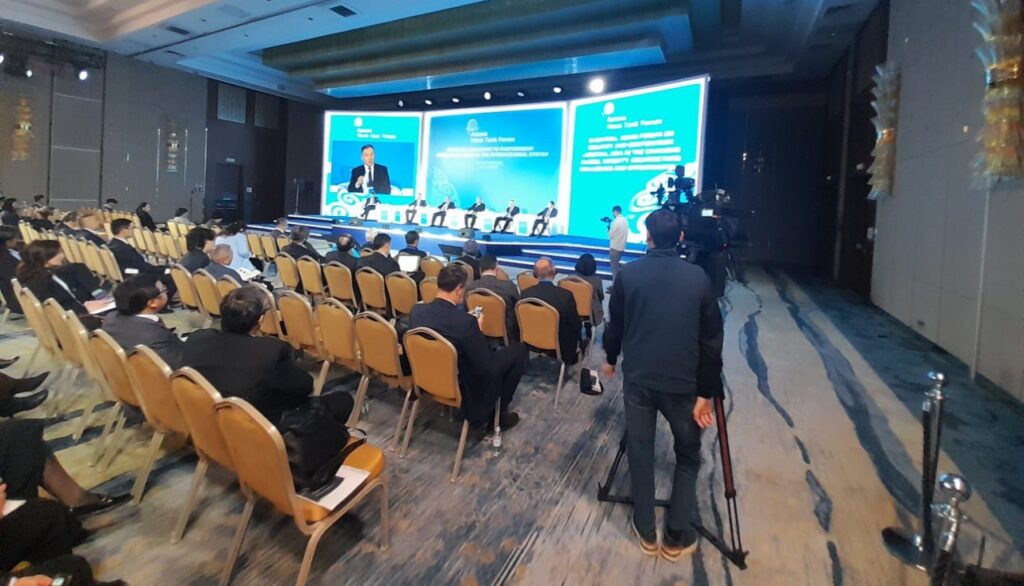
One of the clearest additions to the amended concept is the Astana International Forum. Launched by Tokayev in 2023 as the successor to the Astana Economic Forum, the AIF brings together governments, international organizations, businesses, and experts for discussions that extend well beyond economics into foreign policy and global security.
The 2020 document listed the Astana Economic Forum, Eurasian Media Forum, and Astana Club among platforms for presenting Kazakhstan’s views internationally. The new version names the Astana International Forum instead.
That fits Tokayev’s increasing emphasis on the role of middle powers. The claim rests in part on Central Asia’s largest economy, major oil and uranium resources, growing importance in critical minerals, a strategic position between China and Europe, and a record of maintaining relations with competing powers.
The Belfer Center study also notes the constraints. Kazakhstan remains modest in demographic and military terms, depends on a limited number of export routes, and sits beside Russia and China.
Tokayev has nevertheless been broadening Kazakhstan’s diplomatic engagement beyond its traditional Eurasian role. Kazakhstan has joined the Abraham Accords, and in January Tokayev signed the charter of President Donald Trump’s Board of Peace.
Neither move displaced Kazakhstan’s established relationships. They widened the range of forums in which Astana is trying to operate.
That points to the broader trajectory surrounding the revised concept. Kazakhstan’s multi-vector foreign policy developed during the country’s first decades of independence, when Tokayev served for many years in senior foreign policy roles. It was designed to protect the independence of a newly sovereign state positioned between larger powers. As president, Tokayev is seeking to build on that inheritance while adapting it to a more complex international environment and preserving Kazakhstan’s room to act.
The August amendments do not announce a new foreign policy. They adapt the existing concept to Kazakhstan’s changed political institutions. The effectiveness of that strategy will depend on whether broader relationships, alternative trade routes, and wider diplomatic access translate into greater resilience and freedom of action for Kazakhstan.