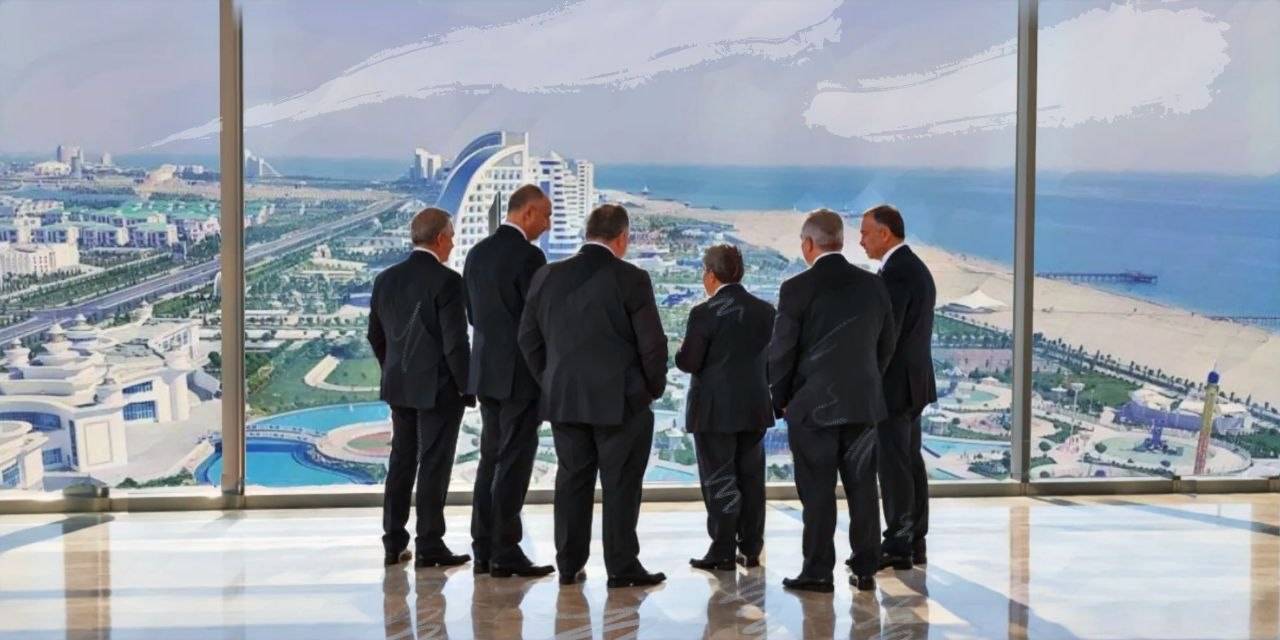
On Thursday, Turkmen President Serdar Berdimuhamedov is due to receive Kassym-Jomart Tokayev, Sadyr Japarov, Emomali Rahmon, Shavkat Mirziyoyev, and Ilham Aliyev in a place built to impress visitors.
Thursday’s meeting will be the first formal consultative summit since Azerbaijan joined the format as a full participant in November 2025. The six presidents have already met once in the new configuration, at an informal gathering in Cholpon Ata on July 31, where they signed a declaration covering closer cooperation on transport, energy, trade, and security.
Construction of Avaza began in late 2007, as Turkmenistan sought to create a national showcase on its Caspian coast. The resort’s hotels and sanatoria sit among parks and entertainment complexes, while eleven road and foot bridges span a seven-kilometer artificial canal. According to official figures, its hotels and recreation facilities can accommodate more than 10,000 vacationers. State institutions send employees there for summer holidays, echoing the Soviet tradition of workplace-organized vacations. These holidays help fill a resort where the seasonal rhythms differ sharply from everyday life in neighboring Turkmenbashi.
Officially, Avaza is a district of Turkmenbashi, a city of around 90,000 residents located 580 kilometers west of Ashgabat across the Karakum Desert. The working city’s economy is built around oil refining, the port, and transport. The Turkmenbashi International Seaport traces its history to 1896 and was rebuilt on a large scale before reopening in its current form in 2018. The Turkmenbashi refinery complex was founded in 1943 and remains one of the country’s main oil-processing centers. The city itself was known as Krasnovodsk until 1993, when it was renamed Turkmenbashi after the title used by then-President Saparmurat Niyazov.
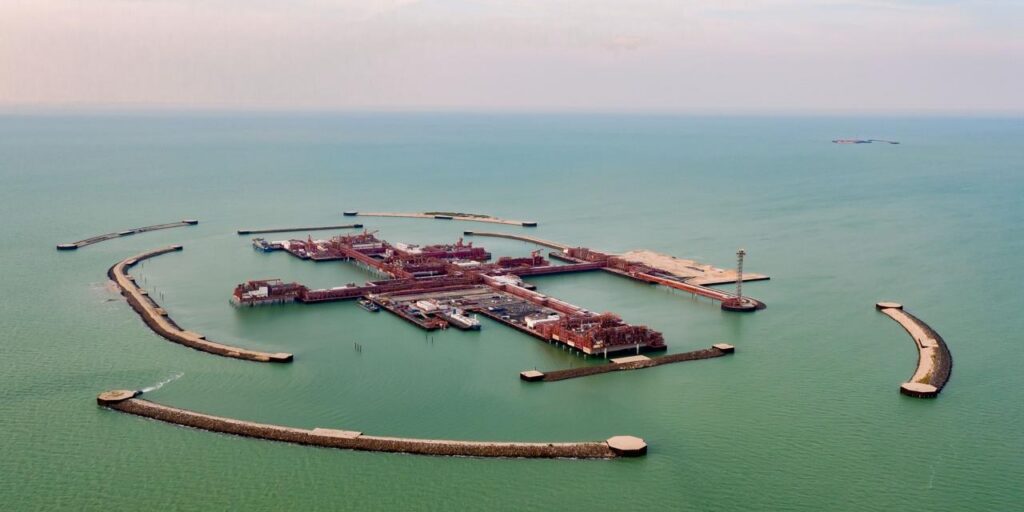
The sea that was supposed to be Avaza’s main attraction is now retreating from it. In 2024, one visitor told RFE/RL that the shoreline was 25-30 meters farther away than when his family had swum there three years earlier. A correspondent found hotels creating new beach areas farther out, while dredging was underway near the port. By September 2026, shallower water was forcing some ferries to carry lighter loads and pushing ports around the sea into costly dredging and berth work. The effects are already visible along the coast where the leaders will meet.
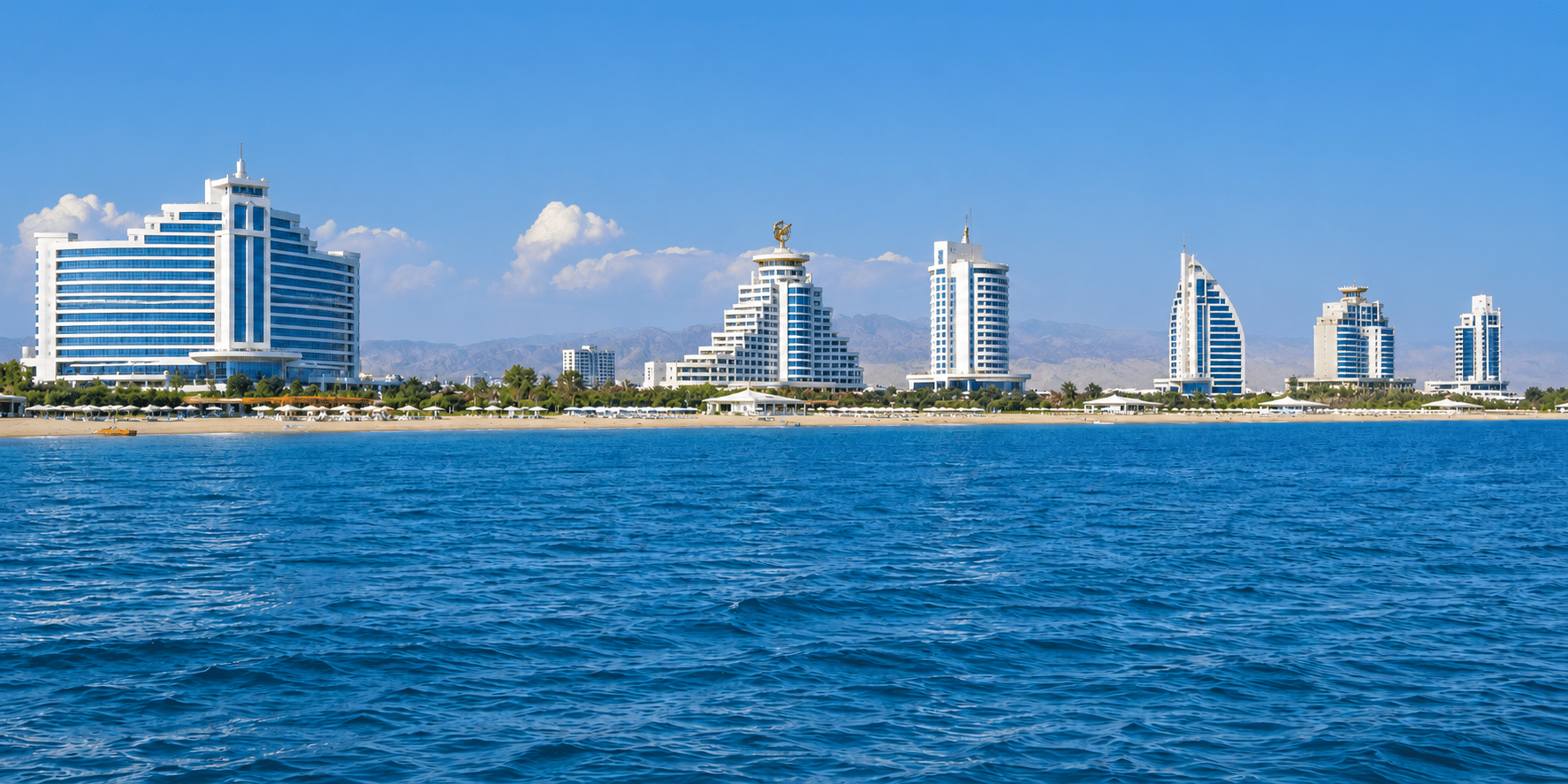
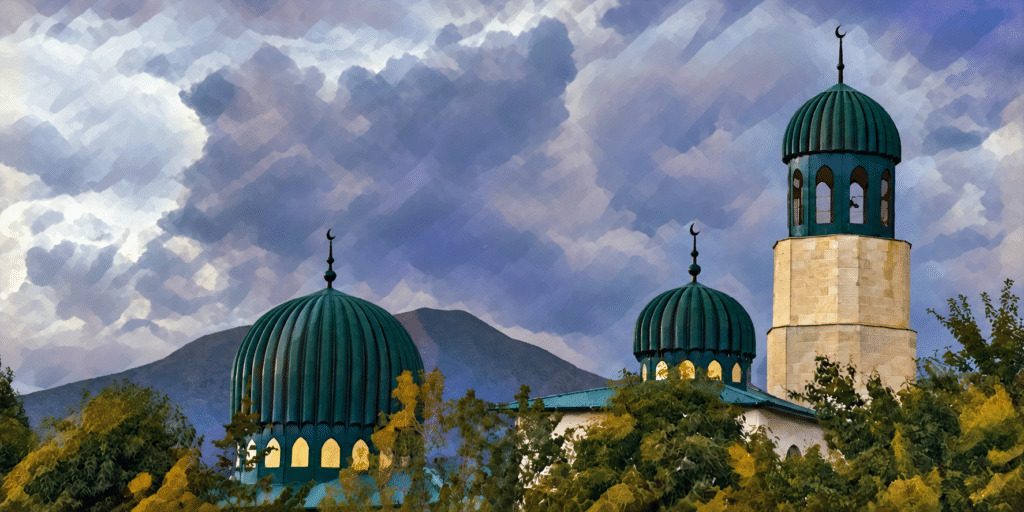
The Avaza resort on Turkmenistan’s Caspian coast, where the five Central Asian presidents and Azerbaijan’s Ilham Aliyev are due to meet on October 8.
Turkmenistan is also hosting Caspian-focused meetings around the leaders’ gathering, while the October 8 agenda includes climate, water, trade, energy, transport, and regional security.
At the November 2025 summit in Tashkent, the five Central Asian presidents unanimously approved Azerbaijan’s admission as a full participant, extending the grouping across the Caspian into the South Caucasus. Aliyev has been careful to mark the change. At the informal meeting in Cholpon Ata on July 31, he said: “I previously participated as a guest of honor, but today I am taking part as a full member of the team.”
The format dates to 2018 and was deliberately light on bureaucracy. The presidents met regularly, but without building a powerful permanent intraregional institution. That may now be changing. In Tashkent last November, Mirziyoyev proposed turning the meetings into a “Community of Central Asia”, supported by a rotating secretariat and stronger national coordinators.
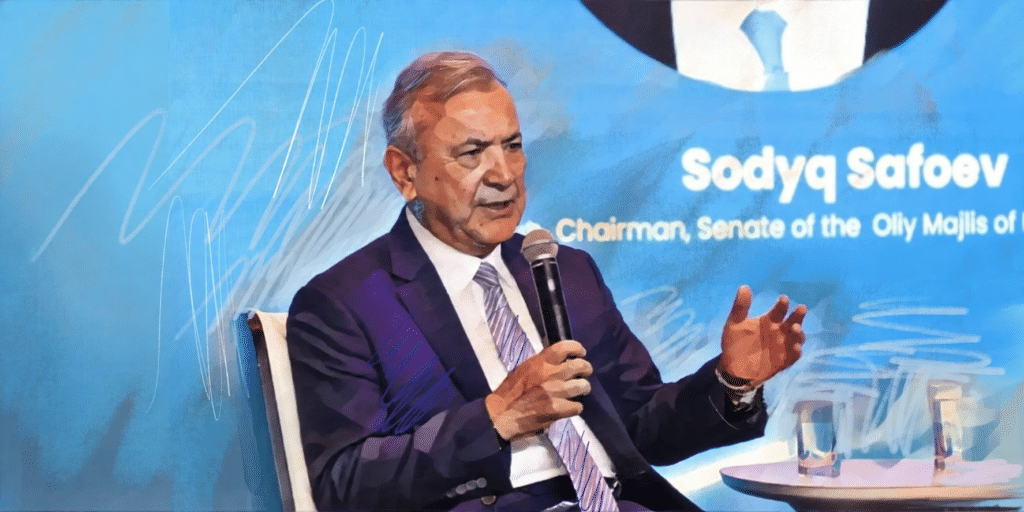
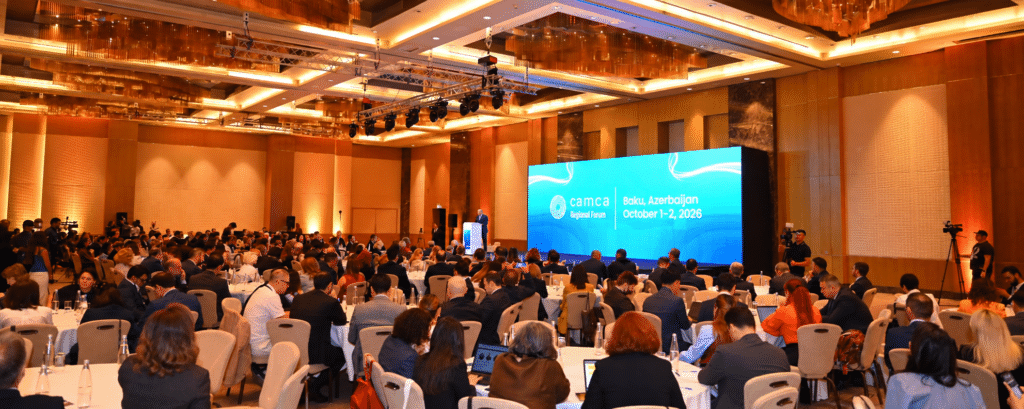
The argument was raised again in Baku last week at the CAMCA Regional Forum, where Sodiq Safoev, first deputy chairman of Uzbekistan’s Senate, said the time had come for something “more” than a consultative meeting. Avaza will be the first formal leaders’ meeting since that call was renewed.
Azerbaijan’s inclusion brings both shores of the Caspian into the same regional forum. From Turkmenbashi, freight crosses to Azerbaijan before continuing through the South Caucasus toward Türkiye and Europe. Along this section of the Middle Corridor, unreliable sailing schedules and customs delays can hold up cargo even where port and rail capacity are available.
Turkmenistan has begun expanding its cargo fleet. The domestically built Gadamly, which can carry 240 standard containers, arrived at Baku port in May. A second vessel, Manzil, is scheduled to enter service before the end of 2026.
On September 28, a World Bank report said targeted investment and better integration could more than triple trade volumes along the Trans-Caspian route and halve transit times by 2040. It estimated that at least $25 billion in physical infrastructure and about $30 billion in supporting investments will be needed. The bank also called for a single digital corridor system and closer coordination between rail and shipping operators. Cutting transit times is a priority for the corridor’s operators. Nurgul Zhakupova, secretary general of the TITR association, told The Times of Central Asia that this requires “the consistent modernization of all key links along the route.”
Life in nearby Turkmenbashi has not always matched the resort’s polished image. In August 2023, hundreds of people protested outside city hall over shortages of subsidized flour and cooking oil, a rare public protest in tightly controlled Turkmenistan. Later that autumn, residents told RFE/RL that state shops were stocked more generously during the summer resort season, with basic foods becoming scarce again after holidaymakers left.
In 2024, Turkmenbashi’s markets were artificially stocked before a visit by the U.S. ambassador, according to Radio Azatlyk, with residents told not to discuss shortages with outsiders. A Human Rights Watch assessment for 2025 said high prices and shortages of some staples remained a national problem.
Avaza has previously operated as a controlled space. During the 2021 holiday season, the authorities required vaccination and COVID testing for visitors and staffed a round-the-clock checkpoint at Avaza’s entrance, even as Turkmenistan maintained it had recorded no coronavirus cases. When Avaza hosted the UN conference on landlocked developing countries in 2025, security and transport control were explicit priorities. No detailed security plan for this week’s meetings has been published.
The diplomatic traffic will not stop after Thursday. Avaza will host the CIS Council of Heads of State on October 9. Russian President Vladimir Putin reaffirmed his participation in a September 22 telephone call with Berdimuhamedov, and is also due to attend a Caspian environmental summit. Iranian President Masoud Pezeshkian is also expected to attend the CIS summit as a special guest, according to Iranian Foreign Ministry spokesman Esmaeil Baghaei, with further meetings planned during his visit.
The back-to-back meetings will bring an overlapping cast of leaders to Avaza under two different regional formats. On Thursday, Aliyev will sit with them as a full participant in a grouping that did not formally include Azerbaijan before last November. On Friday, Putin will join them for the older CIS framework. By bringing Azerbaijan into their own regional forum, Central Asian governments are taking a greater role in shaping relationships beyond the region.