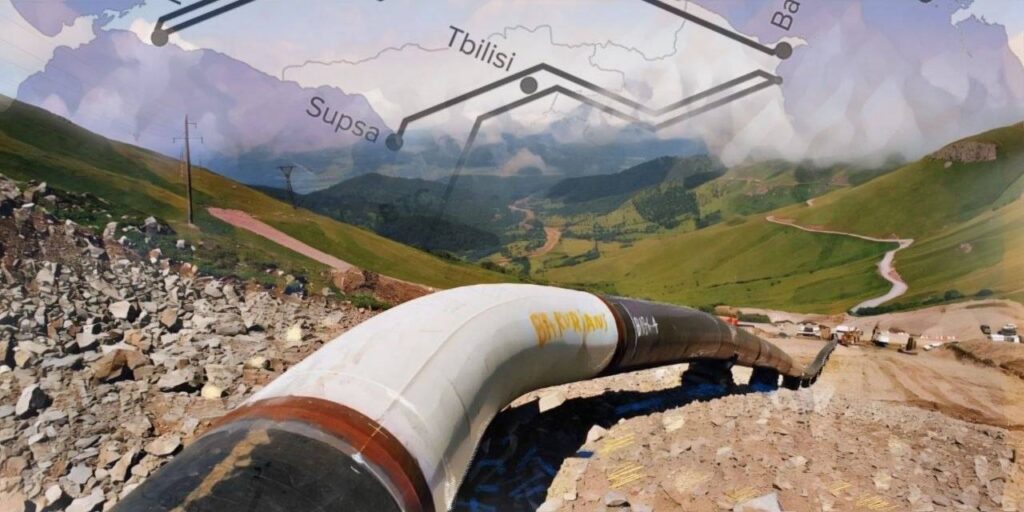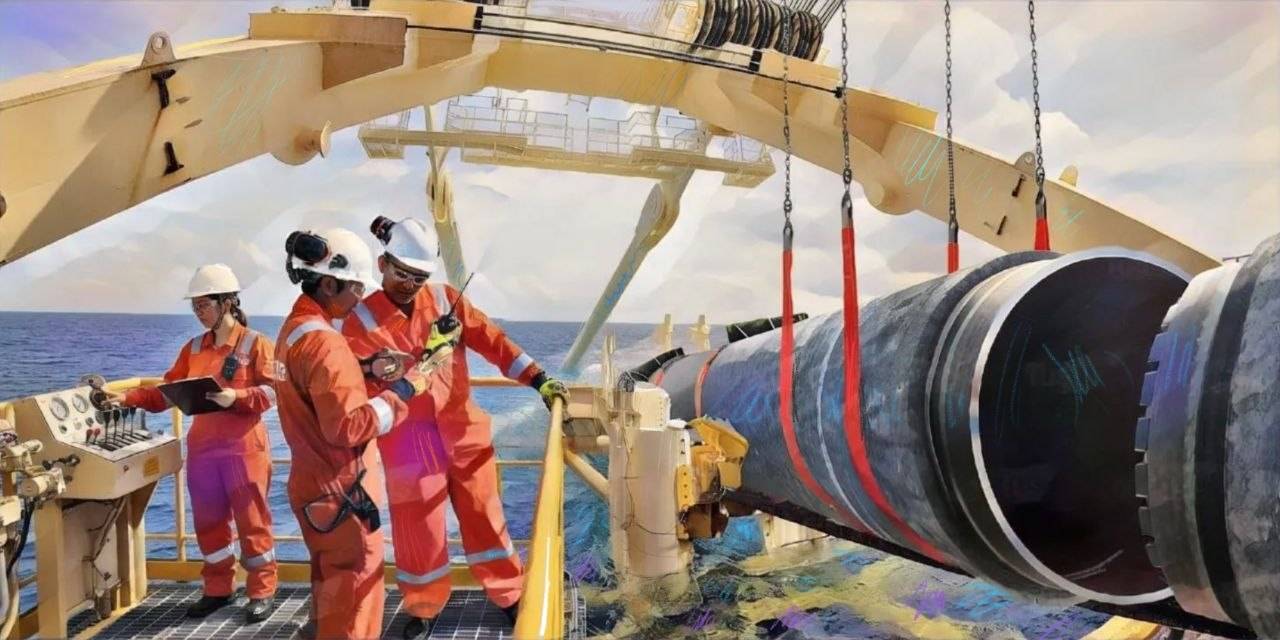
Following repeated disruptions to the Caspian Pipeline Consortium (CPC) system, Kazakhstan’s leading oil producers are examining a much larger Trans-Caspian export route. A working group representing eight shareholders responsible for production in the Tengiz and Kashagan fields has commissioned a feasibility study for moving crude from the Atyrau area to Aktau, across the Caspian to Baku, and onward through the Baku–Tbilisi–Ceyhan (BTC) pipeline. The study is expected to go to shareholders in November.
The current proposal follows a policy line set out in July 2022, when President Kassym-Jomart Tokayev identified the Trans-Caspian route as a priority and instructed KazMunayGas to examine options, including possible participation by Tengiz investors. The present study puts a much larger export channel under commercial examination.
CPC remains indispensable, carrying more than four-fifths of Kazakhstan’s oil exports. Of the 78.7 million tons of oil that Kazakhstan exported in 2025, 64.8 million went through CPC. Existing alternatives are small by comparison. Even the eastbound flow to China and the Schwedt route through Russia together absorb only a fraction of CPC volumes, while current Trans-Caspian shipments are smaller still. What has changed is the cost of concentrating so much of Kazakhstan’s oil exports on CPC, not its underlying commercial importance.
The producers are in fact studying two alternatives, a subsea pipeline or a much larger tanker fleet. The Trans-Caspian pipeline idea itself is not new. Variants surfaced in 2009 and appeared again in 2016. What is new is the present combination of shareholder sponsorship, operational urgency, and contemplated scale. Each option is intended to support volumes of up to 35 million metric tons a year. KazMunayGas (KMG) moved 1.3 million tons from Aktau toward BTC in 2025, while its agreement with SOCAR provides for a phased increase to 2.2 million tons annually. The shareholder proposal would expand the existing Trans-Caspian route into a second major export channel.
Why Redundancy Now
Repeated interruptions in CPC flows have converted the risks of route concentration into lost oil production and a lower national production target. In July, for example, attacks struck tankers loading or approaching the CPC marine terminal, repeatedly suspending operations. Energy Minister Yerlan Akkenzhenov later put production lost to January, June, and July disruptions at about 3.5 million tons and reduced the 2026 production target from 98 million to 96 million tons. Even temporary interruptions reduce revenues and force urgent production decisions upstream.
A Trans-Caspian route capable of carrying 35 million tons a year would not replace CPC, but it would materially reduce Kazakhstan’s exposure to a prolonged interruption. The reported figure equals more than half the 64.8 million tons exported through CPC in 2025 and is almost sixteen times the 2.2-million-ton level contemplated under the existing KMG–SOCAR expansion agreement. It would allow Kazakhstan to divert a substantially larger share of production during disruptions. Kazakhstan can now reroute one or two million tons relatively quickly, but not the tens of millions carried through CPC.
The first constraint is inside Kazakhstan. Tengiz and Kashagan lack a high-volume pipeline connection to Aktau. Oil from the two fields for Trans-Caspian export now reaches Aktau by rail before tanker shipment to Baku. Today, capacity for short-notice diversion by rail or through ports reportedly amounts to only about 100,000 tons a month, less than a day of Tengiz output. Scaling that system from roughly one or two million tons toward tens of millions would require a substantial expansion of inland transport infrastructure as well as throughput at Aktau.
Building the Alternative
If the tanker option rather than a subsea pipeline is chosen, flows on the scale now under study would require a substantially larger tanker fleet, as well as greater loading, unloading, storage, and terminal throughput on both sides of the Caspian. Current flows are sensitive to technical issues. According to KMG, Aktau–Baku shipments in 2025 fell 7% to 1.3 million tons after oil contamination led to restrictions in the BTC system, which has a transmission capacity of 1.2 million barrels per day. The tanker alternative could be expanded in stages, whereas a subsea pipeline would take years to develop.
Yet the cost of route concentration has only increased as Tengiz has added production faster than Kazakhstan has added alternative export capacity. The Future Growth Project undertaken by Tengizchevroil (TCO) was expected to add about 12 million tons of annual crude capacity, and TCO produced 39 million tons in 2025. TCO also reported $10.6 billion in direct payments to Kazakhstan for the year, including government payments, purchases of domestic goods and services, and local employees’ salaries. The expansion has enlarged both the physical volume exposed to route disruption and the fiscal value attached to keeping that production moving.
Oil remains central to Kazakhstan’s export earnings and fiscal revenues. A recent IMF report attributed part of Kazakhstan’s strong 2025 growth to higher oil output, putting 2025 oil exports at about $41.3 billion out of $81.3 billion in goods exports, while identifying disruption through CPC among the principal external risks. High oil prices bring limited benefit if barrels cannot reliably reach buyers.
The Longer Diversification Clock
Large critical minerals investments are moving into implementation, with plans to expand domestic processing as well as extraction. The Northern Katpar and Upper Kairakty tungsten project, with U.S.-based Cove Kaz Capital holding 70% and Tau-Ken Samruk 30%, brings $1.1 billion of planned investment. Preparatory work began in 2026, but the definitive feasibility study is not due until the end of 2027. Northern Katpar is expected to create around 2,000 jobs and produce ammonium paratungstate rather than simply export untreated ore, with mining scheduled for 2030. Such projects therefore cannot substitute quickly for existing oil income.
Kazakhstan is also attracting large data center commitments. The deal with Firebird and NVIDIA for a $10 billion Data Center Valley includes a design allowing expansion toward 1 GW. Kazakhstan has also moved ahead with a separate NVIDIA-linked advanced computing package centered on a national supercomputer and a sovereign-AI-hub concept. A different SuperX proposal envisages deployment from 2026 through 2029. These investments could expand technology exports and support modernization across existing industries. Their contribution to export earnings and public revenues will develop over time.
Kazakhstan’s immediate challenge, therefore, is to protect the oil income that remains central to exports and public revenues while new sectors mature. The Trans-Caspian study commissioned by the shareholder group seeks to reduce exposure to a single route, while critical minerals and digital investment seek over time to broaden the economy’s sources of income beyond oil. Export route redundancy can reduce Kazakhstan’s exposure while broader economic diversification gradually takes hold, reducing the importance of that exposure itself.