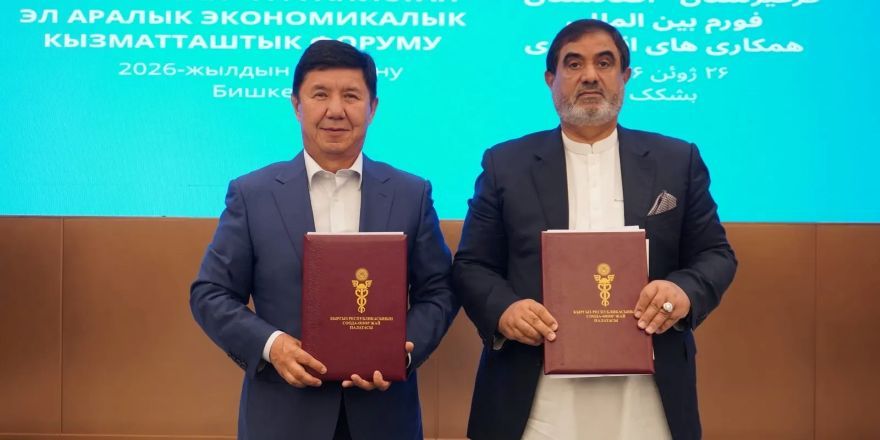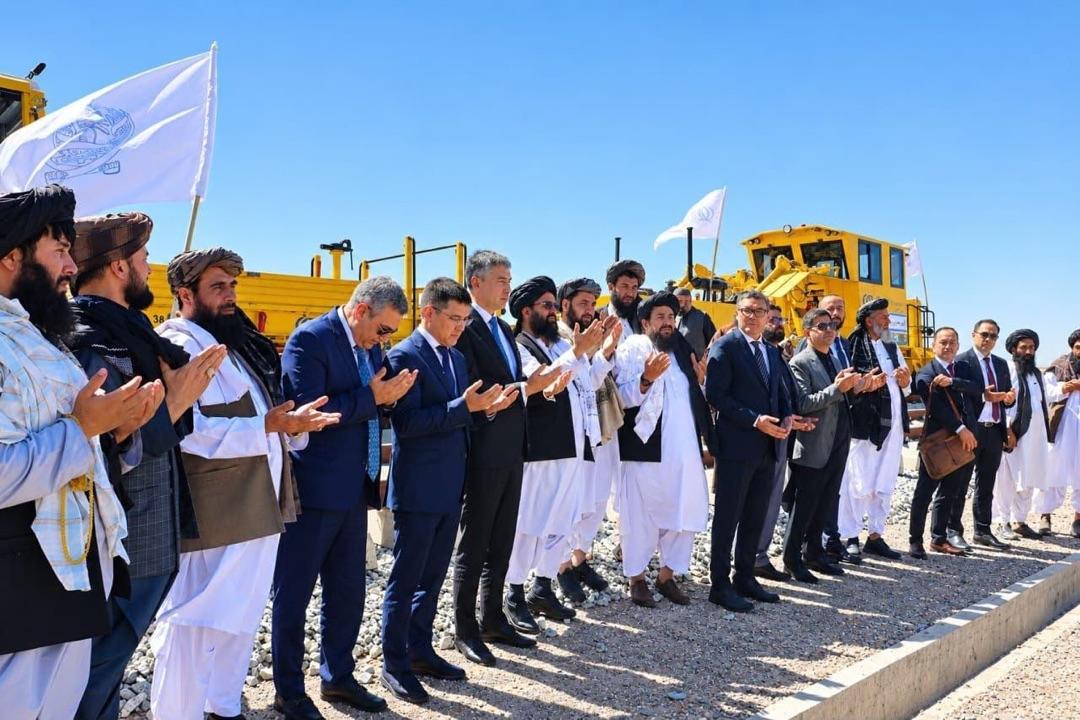
In late September, a Kazakhstani official and business delegation led by Yerkin Tukumov, the Special Representative of the President of Kazakhstan for Afghanistan, visited Herat. The delegation included trade officials, representatives of the Mangystau and West Kazakhstan regions, and businesses.
Officials called the new approach West2West, meaning cooperation between Kazakhstan’s western regions and western Afghanistan.
Kazakhstan and Afghanistan have held several business forums and exhibitions in recent years. However, the choice of Herat and the attempt to shift some cooperation from the intergovernmental to the interregional level make this initiative different.
Since 2021, Kazakhstan’s economic dialogue with Afghanistan has developed mainly from the top down. The two governments set ambitious trade targets and sought to turn political engagement into commercial deals.
The results looked impressive on paper. In October 2024, the two countries adopted a road map to raise mutual trade to $3 billion. In April 2025, documents worth $140 million were signed in Kabul, followed by 15 documents worth $303 million in Shymkent that October.
Actual trade, however, grew much more slowly. In 2024, it totaled $545.2 million, while in 2025 it slipped slightly to $541.6 million. The $3 billion target remains more of a strategic benchmark than a near-term goal.
According to official data from Kazakhstan, trade reached $581.1 million in January-July 2026, exceeding the total for the entire previous year. Kazakhstan’s exports accounted for $572.9 million, while imports from Afghanistan were just $8.2 million.
Trade is therefore growing rapidly, but remains overwhelmingly one-sided. West2West is partly an attempt to broaden that relationship.
Herat’s Strategic Location
Herat is one of Afghanistan’s main industrial and commercial centers, situated near several important transport routes.
To the north is Torghundi, a rail border crossing with Turkmenistan. To the west runs the Khaf-Herat railway, which connects Afghanistan to Iran’s railway system. Herat could eventually become part of longer routes toward Kandahar and Pakistan, although much of the necessary infrastructure remains at the planning stage.
During the September visit, officials opened a 43-kilometer section of the Khaf-Herat railway. Afghan sources estimate its cost at approximately $58 million. The section was built with the involvement of Kazakhstani company Integra Construction KZ.
In August 2026, freight transported along the Khaf-Herat line totaled approximately 137,700 metric tons. Discussions have also focused on increasing its monthly capacity to 150,000 metric tons.
Together with Uzbekistan and the United Arab Emirates, Kazakhstan has begun working on the Central Asia–South Asia railway project, which envisages a trans-Afghan connection to Pakistan’s ports. So far, the parties have agreed to conduct technical and economic studies, and no final route has been approved.
The route through Turkmenistan is developing separately. Ashgabat views Torghundi-Herat as a joint project with Afghanistan linked to the expansion of the Serhetabat-Torghundi crossing and other infrastructure in western Afghanistan.
Kazakhstan’s interest in Herat predates West2West. In 2023, Astana announced plans to establish a Kazakhstan Trade House in Afghanistan, with its main office in Herat. It opened in May 2024.
Arman Yessentayev, its head, described Herat in 2023 as a distribution center for western and southern Afghanistan, citing its connections with neighboring countries. He effectively outlined an approach similar to West2West: western Kazakhstan could develop direct commercial ties with western Afghanistan.
What Is Being Traded
For now, trade remains dominated by food products. Of Kazakhstan’s exports to Afghanistan in January-July, flour accounted for $215.6 million, wheat for $122 million, and vegetable oil for $51.1 million.
Afghanistan is already one of Kazakhstan’s major grain and flour markets. From September 2025 through July 2026, shipments of grain and flour to Afghanistan, measured in grain equivalent, reached 2.4 million metric tons.
During the Herat talks, Kazakhstani companies WayStar Group and Kim Rail International signed two contracts with Afghanistan’s Osman Khalid for wheat worth $11 million in total.
Another area of negotiations was sunflower oil from Kazakhstan. With the assistance of the Trade House, pricing terms were agreed between Afghanistan’s Aimal Ghyasi Trading, Construction & Petroleum Company and Kazakhstan’s Qazaq-Astyq Group plant in Semey. The proposed supplies were worth approximately $10 million, although they had not yet reached the contract stage.
Yessentayev told The Times of Central Asia that other potential deals had emerged during the meetings but still require commercial negotiations.
According to him, the talks covered opportunities to process Afghan agricultural products, establish cold-storage facilities, supply equipment, and develop industrial cooperation.
In talks with the Herat administration, the two sides considered cooperation in mining and metals production, as well as developing logistics infrastructure. The Afghan side also suggested exploring Kazakhstan’s participation in turning the newly completed Khaf-Herat railway section into a transport and logistics hub.
A separate pharmaceutical initiative is emerging, with Afghan companies invited to participate in Kazakhstani-Afghan industry events in Almaty following visits to pharmaceutical enterprises in Herat.
These remain potential projects rather than an established investment program.
Kazakhstan is seeking to move from dealing with Afghanistan primarily at the national level to building direct relationships with specific regions and businesses. If the approach succeeds, Herat could become the first example of this model.