After several years of slow progress, the road connecting Afghanistan to China is finally ready. On October 4, Taliban officials inaugurated the 121-kilometer road through Afghanistan’s remote and arid northeastern Wakhan Corridor.
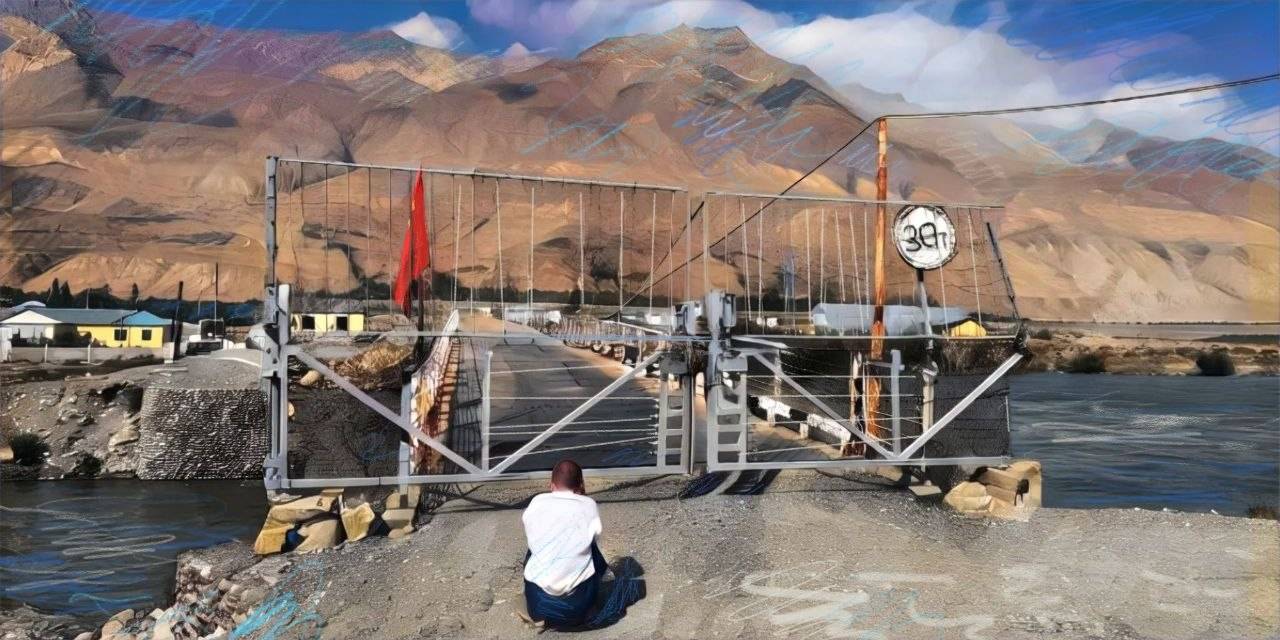
China, however, has not been too keen on the project, and, according to one report, when the Taliban reached the Chinese border, the way was barred, with Chinese border guards ordering the Taliban to leave the area.
The Hard Road
The Wakhan Corridor was part of ancient trade routes through Asia, but was clearly only used by hardy merchants. The area is one of the most isolated regions on the planet. Nearly all of it is 4,000 meters or more above sea level, mostly bare stone mountains with some grass and a few trees and bushes growing on hillsides and in the valleys.
The Wakhan Corridor officially appeared on maps as part of Afghanistan at the end of the 19th century. It was a buffer zone agreed to by representatives of the British and Russian empires.
Today, the far eastern section of the Wakhan Corridor is the only place where Afghanistan directly borders China. That 74-kilometer border was easy to ignore due to the remoteness of the area, but not long after the Chinese revolution in 1949, officials in Beijing still ordered it closed.
The harsh climate and rugged mountains make most of the corridor virtually unhabitable, but that did not stop some from believing a modern trade route could be opened through Wakhan that would connect Afghanistan to China.
Dirt roads reached a few of the larger settlements in the western part of the corridor, villages of, at most, several hundred people.
The Taliban just finished building a gravel road and four bridges that finally make it all the way to the Chinese border. By itself, this is far from sufficient to qualify as a legitimate trade route. There is no infrastructure to serve traffic through the region, no petrol stations, no accommodation, no places to buy food or drink, and temperatures are well below freezing for at least half the year.
China’s Big Objection
The bigger obstacle is that China has no strong interest in opening this route, and in fact, would prefer the Afghan border to remain closed.
The East Turkestan Islamic Movement (ETIM) is still present in Afghanistan. ETIM is comprised mainly of ethnic Uyghurs from China’s western Xinjiang Uyghur Autonomous Region, the same Chinese region that borders Afghanistan.
ETIM’s goal is to topple Chinese rule in Xinjiang.
ETIM fighters have been in Afghanistan for at least 25 years, and were allies of the Taliban during the years foreign troops were in Afghanistan.
The Islamic State of Khorasan Province is active in northern Afghanistan, and that group has also made specific threats against the Chinese government.
The Taliban have promised that they will not allow any group to use Afghan territory to plot or carry out attacks on neighboring countries. However, the Wakhan Corridor is part of Afghanistan’s Badakhshan Province, and the Taliban have been battling several groups there this year. None of those groups are connected with ETIM, but the current unstable situation in Badakhshan probably raises concerns in China about security along its Afghan border.
These security concerns extend to Tajikistan, which borders the Wakhan Corridor to the north. Elsewhere along the Tajik-Afghan frontier, two attacks from Afghan territory killed five Chinese nationals in November 2025. Chinese workers later returned under armed protection to work on a highway project in eastern Tajikistan. The violence has shown that threats from Afghanistan can also affect Chinese projects in neighboring Central Asia.
The Chinese Response
China has never shown much public support for the road through the Wakhan Corridor.
China started construction of a road to its border with Afghanistan in 2009 or 2010 in order to be able to reinforce its border guards there, but it is unclear whether that road ever reached the border.
The proposed crossing point at the Afghan-Chinese border is the Wakhjir Pass, with an elevation of about 4,920 meters.
One indication of China’s views on the project was the absence of any Chinese official at the Afghan inauguration ceremony for the road on October 4, despite the Taliban having extended an invitation. Then, a video was posted on October 20 that purports to show the Afghan-Chinese border, where there is a long strip of two barbed fences running up a hillside with a guard tower in the distance. The video also shows monitoring equipment placed along the border.
Most interesting is the claim in the video, subsequently picked up by the Afghanistan International media outlet, that when Taliban fighters recently approached the border, Chinese border guards warned them to leave the area immediately.
It is not clear when the video was recorded, and neither government has mentioned the alleged encounter.
If this incident did occur, it would not be surprising.
The South China Morning Post reported nearly three years ago that if the Afghan road was built through the Wakhan Corridor, it was likely “Beijing [would] be cautious about giving its war-torn neighbor full access to its land border because of security concerns over terrorists and separatist militants.”
So, a gravel road is completed on the Afghan side of the border, leading to a mountain pass at an elevation of nearly 5,000 meters, where two fences still bar passage to the Chinese side, where there is no connecting road.