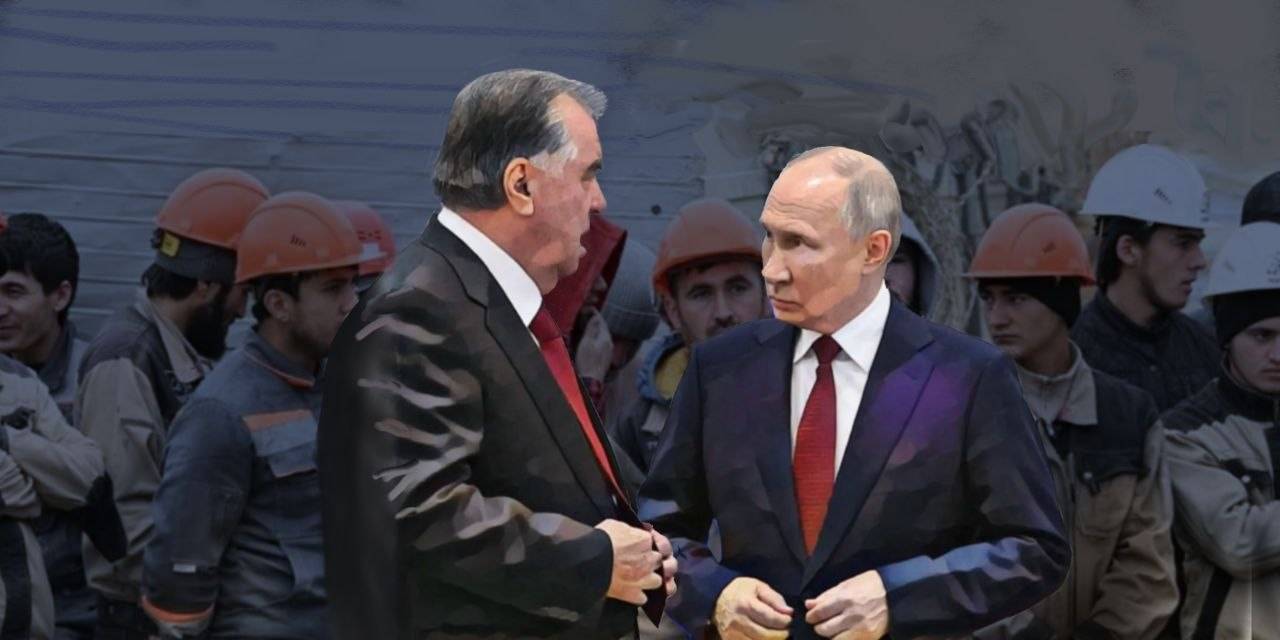
Tajikistan is preparing to receive Vladimir Putin days after the European Union sanctioned Unistream, a Russian bank used by Tajik migrants to send money home.
Putin’s November 19–20 visit, at President Emomali Rahmon’s invitation, comes after the EU sanctioned Unistream on November 16. Tajikistan is the world’s most remittance-dependent economy, with personal remittances received equivalent to 57.7% of GDP in 2025, according to the World Bank. In a country of 10.8 million, more than 702,000 people left to work abroad in 2025, most heading to Russia, according to official figures from Dushanbe.
Putin’s visit coincides with a regional tour by U.S. Deputy Secretary of State Christopher Landau, including talks in Dushanbe. Such contacts could bring new investment, but replacing the income Tajik workers earn in Russia would require employment opportunities on a far greater scale.
Putin’s visit follows a meeting between the two presidents in Moscow earlier this month. Kremlin aide Yuri Ushakov said they had “an interest in discussing in greater detail” many aspects of Russian-Tajik relations. The Kremlin said the talks would cover their “strategic partnership and alliance,” alongside regional and international issues.
A Transfer Channel Under Sanctions
The EU’s official designation named Unistream among the Russian financial institutions added to its restrictions. The Council says the bank offers loan-repayment grace periods to Russian military personnel, including those fighting in Ukraine. It cites this support and the banking sector’s contribution to Russian government revenue as grounds for the listing.
Unistream told RBC on November 18 that it does not provide personal loans or repayment holidays, disputing the EU’s explanation. The bank said it expected no significant operational changes because it holds no European assets and settles transfers in rubles and CIS currencies.
The measures freeze assets within EU jurisdiction and prohibit making funds or economic resources available to the listed entities. They form part of a wider package covering 12 individuals and 101 entities, including nearly 50 banks and financial institutions.
Unistream remains listed in the National Bank of Tajikistan’s published register of payment operators. Its recorded license runs until February 22, 2027. As of November 17, Asia-Plus reported no announced suspension of the service in Tajikistan following the EU decision.
However, there is a precedent for sanctions changing how customers use the system. The U.S. Treasury designated Unistream in July 2023. The following month, the company stopped dollar and euro transfers between Russia and Tajikistan, while ruble transfers continued.
Other transfer channels have also faced disruption. In July 2026, Uzbekistan’s Aloqabank suspended Zolotaya Korona transfers after the EU sanctioned the system’s operator and settlement center.
Russian Earnings Support the Economy
The World Bank’s latest country assessment says remittances support household consumption and finance imports in an economy with a limited domestic production base. It attributes much of Tajikistan’s 8.2% growth in the first half of 2026 to those inflows. The World Bank expects a weaker Russian economy and tighter migration rules to reduce the money Tajik workers send home, slowing Tajikistan’s economic growth over the medium term.
Access to employment in Russia is already a source of uncertainty. In July, Tajik Deputy Labor Minister Sharif Norzoda said approximately 160,000 Tajik citizens, including about 25,000 minors, appeared on Russia’s register of controlled persons. The register covers foreigners without legal grounds to remain in the country.
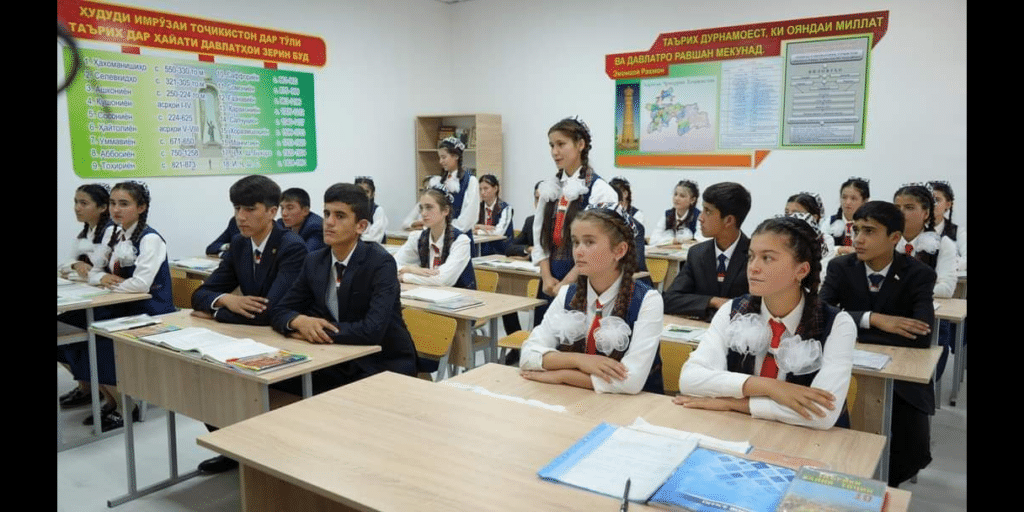
Around 9,000 Tajik children returned from Russia in 2025 after difficulties continuing their education there, Tajikistan’s education minister said. Russia now requires foreign children entering state schools to prove legal residence and pass a Russian-language test. Enrollment among children from Tajikistan, Uzbekistan, and Kyrgyzstan fell by 27% in the 2025–26 school year.
The March 2024 Crocus City Hall massacre triggered a wave of attacks and threats against Tajik migrants. In Kaluga, attackers beat three Tajik citizens, leaving one hospitalized. Employees at a barbershop where a suspect had previously worked received threatening calls and messages.
Tajik Foreign Minister Sirojiddin Mukhriddin criticized the response in April 2024, saying “an ill-conceived information campaign” in Russia was creating “a negative perception” of Tajiks.
Human Rights Watch has documented recruitment pressure on Central Asian migrants, including arbitrary detention and threats of deportation to force them into Russia’s military. In October, Tajik prisoners in Volgograd appealed for transfer home, saying they were being pressured to fight in Ukraine. “We want to go home. We are ready to serve our sentences there,” one said. The regional prison authorities denied coercing them.
Finding Work Elsewhere
Tajikistan’s new migration law, signed on October 21, is an attempt to improve recruitment abroad and assistance for returning workers. It provides ratings of foreign employers based on wages and working conditions, alongside channels for migrant complaints.
The authorities are also pursuing employment opportunities beyond Russia, including in the Gulf states, South Korea, Japan, and the UK, but organized recruitment remains heavily concentrated in Russia. Of 35,747 Tajik citizens placed abroad through licensed organizations in 2025, more than 31,000 went there.
The World Bank identifies weak private-sector development as an obstacle to creating jobs at home. Its June assessment said a quarter of the labor force leaves to work abroad because there are too few jobs at home. Much private investment goes into mining, which requires substantial capital without necessarily employing large numbers of workers.
In July, the World Bank approved a $100 million grant to support economic reforms and employment. Measures include improving air and digital connectivity and making it easier for foreign investors to operate.
Rahmon met U.S. Deputy Secretary of State Landau in Dushanbe on November 18, with long-term mining cooperation among the main subjects. They also discussed cooperation with American technology companies and coordination on security.