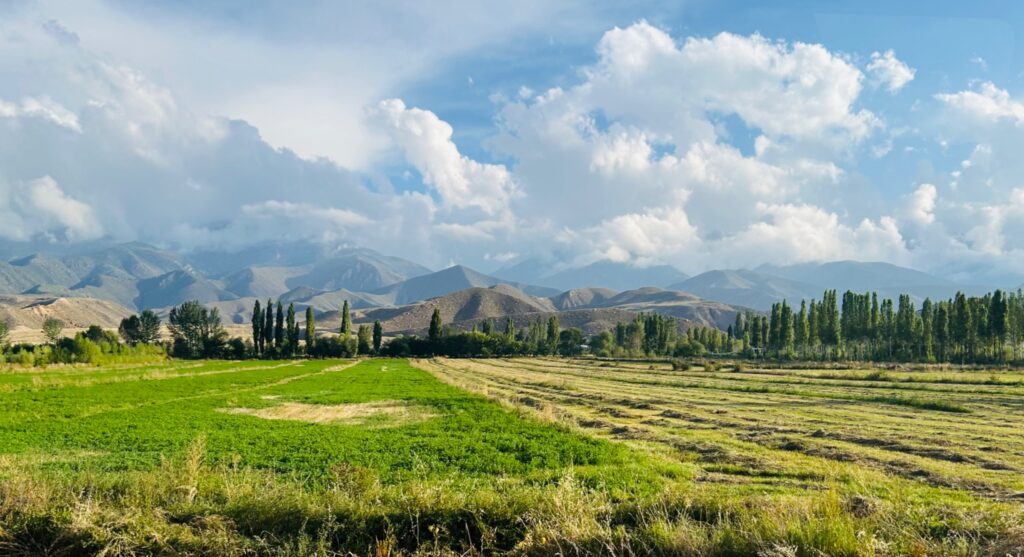
Kazakhstan’s apple orchards now span nearly 29,000 hectares, primarily in the southern regions of Almaty, Turkestan, Zhambyl, and Zhetisu. In the Almaty and Zhetisu regions alone, orchards cover more than 2,400 hectares, hosting over 416,000 apple trees. Deputy Minister of Agriculture Yerbol Taszhurekov shared these figures during the Apple Festival held in Astana on October 4. The event also marked the 80th anniversary of the Food and Agriculture Organization (FAO) and World Food Day 2025.
“Horticulture is becoming a key sector in the agro-industrial complex. Since 2014, government support measures, including investment subsidies for orchard planting and intensive cultivation technologies, have led to a 43% increase in gross apple harvests and a 27% rise in yield,” Taszhurekov said.
The festival placed special emphasis on Kazakhstan’s iconic apple variety, the aport. Widely recognized as the birthplace of the apple, Kazakhstan and specifically the Almaty region, is home to the legendary aport variety.
Aport apples are known for their large size, fragrance, and juiciness, but they require very specific growing conditions. High-quality fruit can be cultivated only at altitudes between 850 and 1,250 meters above sea level, primarily in the Almaty foothills. Unlike other varieties that bear fruit within four to six years, aport trees take eight to nine years to produce their first harvest. Despite the longer wait, the fruit’s quality and heritage value make it highly prized.
To revive aport cultivation, the Ministry of Agriculture, in partnership with the National Agrarian Scientific and Educational Center, has launched a program for 2024-2028 involving private investors and specialized nurseries. The initiative aims to produce certified saplings for full-scale commercial cultivation. In 2024, seeds from the Sievers apple tree, considered the ancestor of all domestic apples, were collected, and national standards for aport cultivation were established. In 2025, seedlings were planted on ten hectares to serve as a mother garden for nurseries. Over the next two years, the program plans to grow enough saplings to plant 100 hectares of orchards, eventually making aport saplings available to private gardeners for commercial use.
Historically, Kazakhstan had 3.8 million aport trees in 1970. By 1984, that number had declined to just 1.4 million.
Taszhurekov underscored that aport is not just a fruit, but a symbol of national identity. “We are taking specific measures to revive it as a national brand. Plans include expanding orchards, improving agricultural practices, and promoting this variety internationally. By 2027, we aim to establish 110 hectares of aport orchards,” he said.