• KGS/USD = 0.01144 0%
  • KZT/USD = 0.00213 0%
  • TJS/USD = 0.10456 0.19%
  • UZS/USD = 0.00008 0%
  • TMT/USD = 0.28490 0%
  • KGS/USD = 0.01144 0%
  • KZT/USD = 0.00213 0%
  • TJS/USD = 0.10456 0.19%
  • UZS/USD = 0.00008 0%
  • TMT/USD = 0.28490 0%
  • KGS/USD = 0.01144 0%
  • KZT/USD = 0.00213 0%
  • TJS/USD = 0.10456 0.19%
  • UZS/USD = 0.00008 0%
  • TMT/USD = 0.28490 0%
  • KGS/USD = 0.01144 0%
  • KZT/USD = 0.00213 0%
  • TJS/USD = 0.10456 0.19%
  • UZS/USD = 0.00008 0%
  • TMT/USD = 0.28490 0%
  • KGS/USD = 0.01144 0%
  • KZT/USD = 0.00213 0%
  • TJS/USD = 0.10456 0.19%
  • UZS/USD = 0.00008 0%
  • TMT/USD = 0.28490 0%
  • KGS/USD = 0.01144 0%
  • KZT/USD = 0.00213 0%
  • TJS/USD = 0.10456 0.19%
  • UZS/USD = 0.00008 0%
  • TMT/USD = 0.28490 0%
  • KGS/USD = 0.01144 0%
  • KZT/USD = 0.00213 0%
  • TJS/USD = 0.10456 0.19%
  • UZS/USD = 0.00008 0%
  • TMT/USD = 0.28490 0%
  • KGS/USD = 0.01144 0%
  • KZT/USD = 0.00213 0%
  • TJS/USD = 0.10456 0.19%
  • UZS/USD = 0.00008 0%
  • TMT/USD = 0.28490 0%

Kazakhstan to Export Earth Observation Satellites, Expand Digital Infrastructure

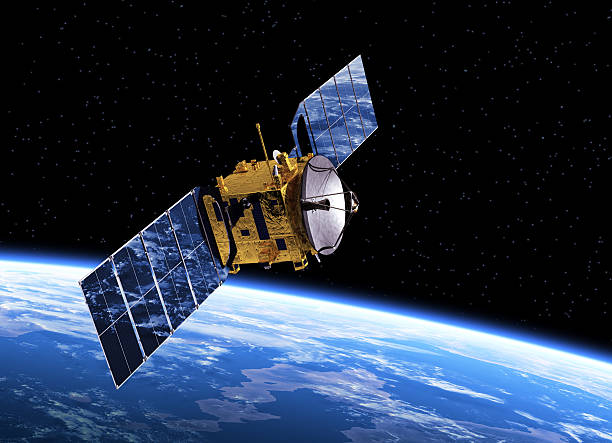
Kazakhstan plans to manufacture at least five to six remote sensing satellites in the coming years, with some slated for export, Deputy Prime Minister and Minister of Artificial Intelligence and Digital Development Zhaslan Madiev announced at a recent government meeting.

Satellite production is managed by Kazkosmos JSC (National Space Center) and Ghalam LLP, while the Republican Space Communications Center JSC oversees satellite operations in orbit. According to Madiev, the ministry supervises these entities, and their production capacities are currently being fully utilized.

“In the coming years, it is planned to launch at least five or six Earth remote sensing satellites at this complex, and part of the production will be focused on export. The expected volume of exports will be about $75 million. The implementation of the project will be the first such experience in the history of Kazakhstan and will allow the formation of high-tech exports,” Madiev said.

He also announced that, starting in 2026, satellite internet will be available on trains operated by Kazakhstan Temir Zholy and aboard Air Astana flights. Currently, three satellite internet providers operate in the country, and two foreign companies are expected to enter the market soon. Pilot tests for train and aircraft connectivity are scheduled for this year.

In parallel, local authorities are mandated to provide satellite internet access in tourist areas and hard-to-reach regions, funding the efforts independently. Simultaneously, a nationwide initiative is underway to deliver mobile coverage to 40,000 kilometers of national and regional highways, with completion expected within two years.

The government is also expanding 5G infrastructure, with networks already active in 20 cities and plans to reach up to 75% of urban areas. More than half of the country’s rural settlements are set to gain high-speed internet access via fiber-optic lines over the next two years. As part of the “Last Mile” project, fiber optics will be extended to hundreds of thousands of households.

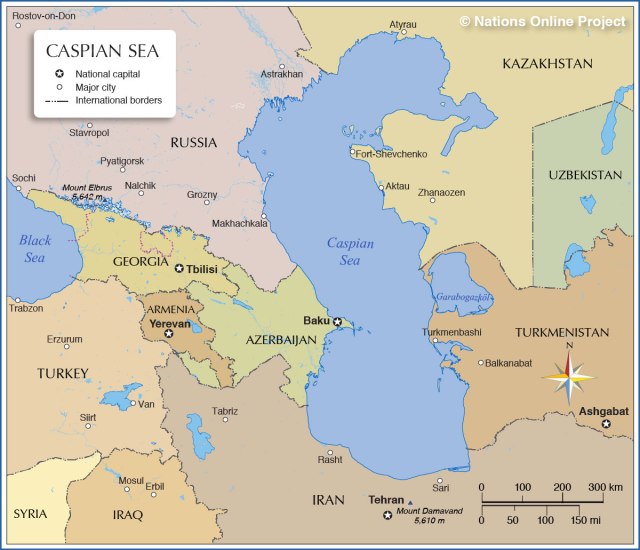
Additionally, a major international project is underway: the construction of a fiber-optic communication line along the seabed of the Caspian Sea, connecting Kazakhstan to Azerbaijan.

“The project will strengthen Kazakhstan’s position as a digital bridge between East and West and increase the stability of international data transmission channels,” Madiev said.

This initiative is set for completion by year’s end. As previously reported by The Times of Central Asia, Azerbaijan and Kazakhstan are jointly investing over $50 million into the project.

Kyrgyzstan Urged to Shift from Rural Focus to Urban Development

Kyrgyzstan must develop modern urban infrastructure and gradually move away from its predominantly rural development model, according to Nurdan Oruntayev, Director of the State Agency for Architecture, Construction, and Housing and Utilities.

Speaking to local media, Oruntayev emphasized the need for a strategic transition toward urbanization to drive economic growth and job creation.

Master plans for the development of the towns of Karakol, Manas, and Osh have already been approved. These include the construction of high-rise residential buildings, signaling a broader shift toward urban expansion.

“We must develop cities and move toward an urban infrastructure system. We must have megacities. The construction industry makes a significant contribution to the economy and provides jobs for many citizens,” Oruntayev said.

He noted that the average annual growth in real estate prices in Kyrgyzstan ranges between 20-30 percent, reflecting strong demand and rising investor interest. According to official data, construction has been a primary driver of economic growth in recent years, with GDP growth consistently exceeding 10 percent.

However, this rapid development has raised concerns among local communities. In an interview with the Times of Central Asia, Albina Alimova, a tour guide from Karakol, criticized the city’s master plan for ignoring input from the tourism sector, despite tourism being a key regional revenue source. She warned that unchecked construction was compromising the city’s historical character.

“New buildings are blocking historic sites and views. Karakol has streets with late 19th-century stonework, old merchant houses, and a museum. We take tourists there, in part for the mountain views. But all of this is gradually being built up, and the city’s former appearance may be lost,” she said.

Similar concerns have emerged in Bishkek, where city authorities are preparing a renovation program that would replace older buildings with high-rise developments. Residents say the city’s growing density has disrupted natural wind patterns and worsened environmental conditions. The capital’s master plan, developed with input from St. Petersburg-based urban planners, also flagged excessive building density in some districts as a key issue.

Central Asia Can Depend on Azerbaijan for Path to West, Aliyev Says

Azerbaijan is the only “reliable country” that can geographically link Central Asia to the West because alternative routes face geopolitical turbulence, according to Azerbaijani President Ilham Aliyev.

Aliyev spoke about Azerbaijan’s prospects as a key conduit for commerce across borders as well as its deepening relationship with Central Asia during a wide-ranging interview with local television channels in Baku on Monday. He acknowledged that there is still work to be done before Azerbaijan can approach its full potential as what he called a “living bridge” for international trade.

The remarks followed a summit in Uzbekistan in November in which Central Asian leaders supported Azerbaijan’s accession to the region’s Consultative Meeting format as a full participant, even though Azerbaijan is in the South Caucasus. The Consultative Meeting format is a vehicle for high-level collaboration on trade, security, and other issues among Central Asian countries, which have taken steps to resolve border disputes and other sources of tension over the years.

“So many projects have been implemented in recent years that these countries have unanimously elected us as a full member. We can also consider this a great political and diplomatic success,” Aliyev said during the interview. His remarks were published by the state Azerbaijani Press Agency, or APA.

Referring to international connectivity, transport, and logistics, the president said, “Azerbaijan is the only reliable country that can geographically connect Central Asia with the West today,” and, without going into specifics, he alluded to the difficulties that some other trade channels face. Paths through Russia and Iran to the West, for example, are affected by sanctions and long-running political tensions.

“Of course, from a geographical point of view, other routes can also be used. However, taking into account the current geopolitical situation, we can say with complete certainty that alternative routes for the West cannot be considered acceptable,” Aliyev said.

He mentioned developing projects such as a November 2024 agreement involving Azerbaijan, Kazakhstan, and Uzbekistan to lay a fiber-optic cable along the Caspian seabed, as well as China’s large-scale funding for the construction of another railway to the Caspian Sea via Kyrgyzstan and Uzbekistan.

“Freight traffic to the Caspian Sea, and therefore to Azerbaijan, will increase,” the Azerbaijani president said. “Along with Central Asian countries, additional freight from China will naturally increase the demand for the East–West route, the Middle Corridor.”

A September analysis by the Washington-based Jamestown research group suggested that prospects are bright for Azerbaijan, which has actively positioned itself as a trade hub since Russia’s full-scale invasion of Ukraine in February 2022.

“Amid disruptions in both the northern and southern corridors, Azerbaijan has emerged as a critical logistics hub, offering a sanction-free, resilient, and stable environment to facilitate overland trade between the PRC (China) and Europe through the Middle Corridor,” analyst Yunis Sharifli wrote.

In addition, Azerbaijan expects cargo from China and Central Asia to travel along a proposed route that would link the main part of Azerbaijan to the separate Azerbaijani area of Nakhchivan, passing through Armenia and then joining with Türkiye and European markets beyond. Such a link would make land trade between East Asia and Europe more efficient, though Armenia is concerned that the plan threatens its sovereignty.

In August, Aliyev and Armenian Prime Minister Nikol Pashinyan met in Washington with U.S. President Donald Trump acting as a mediator in the peace initiative between the former battlefield foes.

Tokayev Calls Nuclear Power a Correction of Kazakhstan’s “Historical Absurdity”

President Kassym-Jomart Tokayev has described Kazakhstan’s push to build nuclear power plants as a correction of a “historical absurdity”, namely, that a nation which ranks among the world’s top producers and exporters of uranium has yet to harness this resource for domestic electricity generation.

In October 2024, a nationwide referendum showed broad public support for the development of nuclear energy. Following the vote, Tokayev announced plans to construct at least two nuclear power plants, with a third to follow.

In June 2025, Russian state corporation Rosatom was selected to build the country’s first nuclear power plant near the village of Ulken, on the western shore of Lake Balkhash, about 400 kilometers northwest of Almaty. Contracts for the second and third plants were later signed with the China National Nuclear Corporation (CNNC).

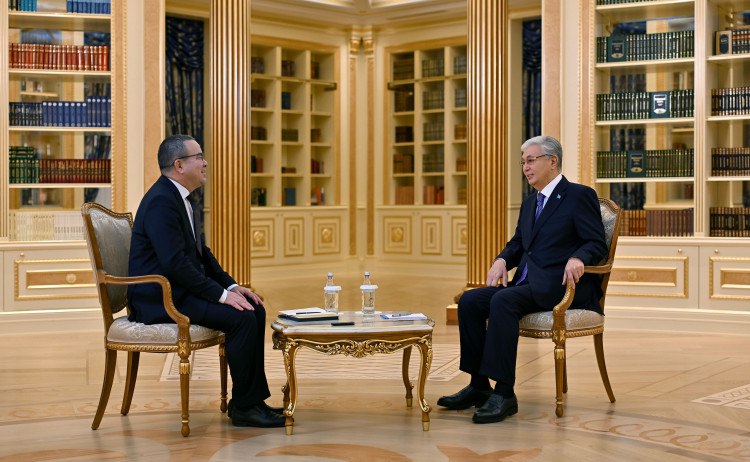
“The construction of several nuclear power plants is, on the one hand, a correction of the historical absurdity – to be a world leader in the production of uranium and not to build any nuclear power plants, on the other, it is the prestige of Kazakhstan,” Tokayev said in an interview with Turkistan newspaper, published on the official Akorda website.

According to Tokayev, reliable electricity generation is essential for Kazakhstan’s transition to a new technological model of the economy. He emphasized that the development of supercomputers, data centers, and automated industrial systems requires substantial energy resources.

“This is the reality of the new global technological order,” he stated.

Tokayev has consistently argued that Kazakhstan must become a digital power, framing digitalization as a matter of national survival. He believes society is mentally prepared for innovation, citing the success of fintech companies and the expansion of digital government services.

“We have good starting conditions and have made progress in the digitalization of public services, fintech, and several sectors of the economy. The ecosystem supporting IT startups is functioning effectively,” the president noted. He added that for continued progress, Kazakhstan requires stable, environmentally friendly, and high-capacity energy sources, needs best met by nuclear power.

Tokayev also highlighted the importance of personnel in building a nuclear energy sector. He said the development of nuclear power will contribute to the emergence of a new class of technical intelligentsia, which could ultimately influence state policy.

“Qualified specialists are needed to create modern energy sources. The head of NVIDIA, the world’s largest company by market capitalization, predicts that in the near future, multimillionaires will include representatives of technical professions, the so-called ‘blue-collar workers’,” Tokayev said.

As previously reported by The Times of Central Asia, Kazakhstan plans to train nuclear energy specialists abroad through the Bolashak state program.

Tokayev Sets Agenda for Kazakhstan’s 2026 EAEU Chairmanship

Kazakhstan has assumed the rotating chairmanship of the Eurasian Economic Union (EAEU) for 2026, pledging to focus on digital transformation, logistics integration, and the removal of internal trade barriers across the bloc.

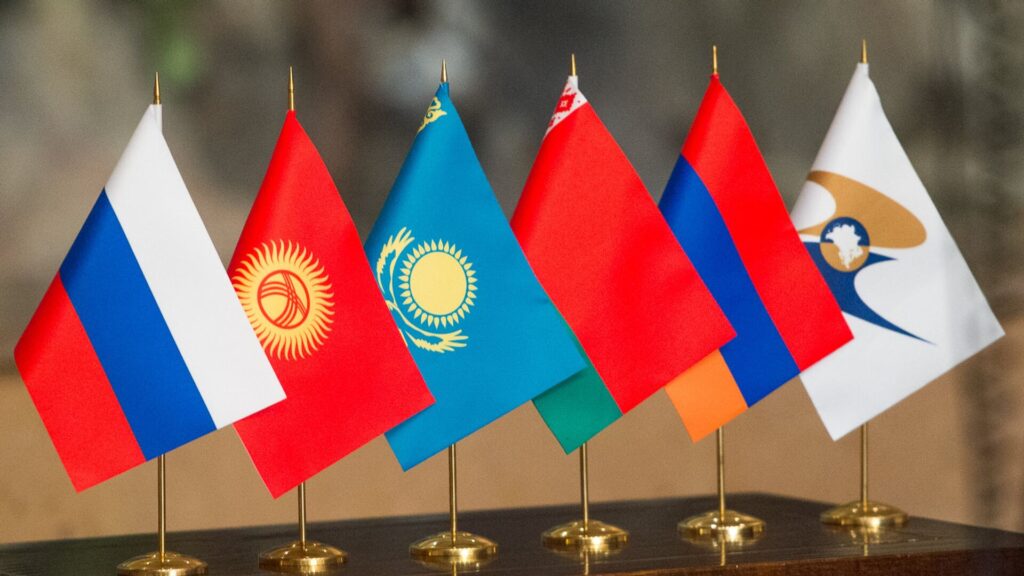
In a statement published on December 31, 2025, President Kassym-Jomart Tokayev outlined five key priorities for Kazakhstan’s EAEU presidency. The EAEU includes Armenia, Belarus, Kazakhstan, Kyrgyzstan, and Russia, and facilitates the free movement of goods, services, capital, and labor among its members.

Artificial Intelligence and Economic Integration

Tokayev identified artificial intelligence (AI) as a vital tool for deepening integration within the bloc. AI technologies, he said, are already being used to forecast trade flows and assess the impact of tariffs and trade agreements on member economies.

Kazakhstan, which has set a national goal of becoming a digital nation, expressed readiness to share its expertise with other EAEU members in areas such as AI, digital regulation, and economic transformation. Tokayev proposed the adoption of a Joint Statement on the Responsible Development of Artificial Intelligence at the 2026 Eurasian Economic Forum in Astana. The document would define a new framework for digital cooperation within the bloc.

Positioning the EAEU as a Eurasian Logistics Hub

Highlighting the EAEU’s geographic position as a natural bridge between East and West, Tokayev called for transforming the bloc into a leading logistics hub for the Eurasian continent. He emphasized the need to modernize transport, customs, and logistics infrastructure, and to develop international transport corridors and multimodal transport solutions.

He also proposed an integrated, AI-based cargo flow management system across the EAEU to reduce delivery times, cut costs, and enhance the bloc’s global competitiveness in logistics.

Digitalizing Industry and Agriculture

Calling industry and agriculture the economic foundation of the EAEU, Tokayev urged deeper cooperation to produce globally competitive products. While financial mechanisms for joint projects already exist, he argued that more emphasis should be placed on innovation-led initiatives.

He proposed launching demonstration centers, automation startups, and competence hubs to drive digitalization at both enterprise and farm levels.

Barrier-Free Trade as a Core Principle

Tokayev stressed the elimination of administrative and regulatory barriers within the bloc as a central priority. He criticized artificial restrictions on trade, constraints on the movement of citizens, and long freight queues at borders.

He also warned against the use of customs procedures and regulatory controls, including sanitary, veterinary, and phytosanitary measures, as tools of political or economic leverage. To address this, he proposed deploying AI to monitor legislative initiatives across the EAEU and flag potential internal trade barriers at an early stage.

Expanding External Economic Ties

Kazakhstan’s chairmanship will also focus on expanding the EAEU’s external partnerships. In 2025, the bloc signed Free Trade Area agreements with Mongolia and Indonesia and concluded an Economic Partnership Agreement with the United Arab Emirates. Tokayev said greater attention will be paid to building economic ties with countries in the Global South, the Arab world, Southeast Asia, Africa, and regional economic organizations.

Macroeconomic Context

Tokayev’s agenda is being launched against a backdrop of solid macroeconomic performance across the EAEU. According to Alexey Vedev, Director of the Macroeconomic Policy Department at the Eurasian Economic Commission, the bloc’s GDP grew by 17.8%, nearly $1 trillion in absolute terms between 2015 and 2024. The EAEU’s share of the global economy rose from 3.7% to 4.1%, with member state growth rates surpassing the global average in recent years.

Summing up Kazakhstan’s vision, Tokayev said the country would work to strengthen the effectiveness, relevance, and long-term viability of Eurasian economic integration during its 2026 chairmanship.

Uzbek Migrants Face Growing Risks in Russia as Tashkent Seeks Probe Into Alleged Abuse

Russian security forces reportedly carried out a raid on a café in Khabarovsk in mid-December 2025, during which several Central Asian migrants were allegedly beaten. According to information circulated on social media, two Uzbek citizens fell into a coma following the incident, and one of them subsequently died.

On January 2, Uzbekistan’s Ministry of Foreign Affairs announced it had sent a diplomatic note to Russia requesting an impartial and lawful investigation. The ministry also said steps were being taken to repatriate the deceased’s body. However, it noted that the cause of death has not been officially confirmed, and reports of a second Uzbek in a coma remain unverified.

In response to the incident, Alisher Qodirov, member of parliament and leader of the Milliy Tiklanish (National Revival) Democratic Party, issued a stark warning to Uzbek migrants in Russia.

“Believe me, the situation will only get worse month by month,” Qodirov wrote on Telegram. “Russian security services see Central Asians as potential participants in future unrest, and they have already given up on any benefit migrants may bring… Use your common sense and leave Russia as soon as possible,” he added. “No income is worth the tears of your parents and children.”

As Russia’s war against Ukraine enters its fourth year, labor migrants remain among the most vulnerable and least protected groups affected by the conflict. Central Asian nationals,  particularly Uzbeks, face increasing risks of coercion, legal jeopardy, and systemic abuse.

By July 2025, at least 902 Uzbek citizens were reported to have been recruited by Russia to fight in Ukraine. Independent monitors believe the true figure is considerably higher. In October 2025, the ‘I want to live’ project identified 2,715 Uzbek nationals who had participated in the conflict, including those recruited illegally, those who signed contracts, and ethnic Uzbeks already serving in the Russian military.

Despite this, Russia remains heavily reliant on migrant labor. As of September 1, 2024, nearly four million citizens from Central Asia were living in Russia. Of these, 1.79 million were from Uzbekistan, followed by significant numbers from Tajikistan, Kazakhstan, Kyrgyzstan, and Turkmenistan.

For Uzbekistan, the economic implications of growing pressure on migrants are profound. Remittances remain a cornerstone of the national economy. In the first half of 2025 alone, Uzbekistan received $8.2 billion in cross-border transfers, with 78% originating from Russia. Amid rising xenophobia and labor restrictions, economists warn that this dependence could have severe long-term consequences.

Economist Abdulla Abdukadirov, Doctor of Economic Sciences, said total remittances by year-end are expected to approach $20 billion.

“This is an extremely large sum,” Abdukadirov said at an offline session of the Fikrat analytical program, responding to a question from The Times of Central Asia. “If the state budget is around $28 billion, then nearly $20 billion in remittances reveals how dependent our economy is becoming on external sources.”

Abdukadirov warned that Uzbekistan is developing a dangerous structural dependency. “First, we’re becoming more reliant on external investments and borrowing,” he said. “Second, our dependence on cross-border remittances is deepening.”

According to Abdukadirov, roughly one-third of remittances, about $7-8 billion, is spent on current consumption. An additional $5-6 billion goes to goods purchases and supporting small businesses. The remainder is generally saved in banks and continues to circulate domestically.

“These transfers play a key role in sustaining overall demand,” he said. “They help maintain consumption levels.”

However, Abdukadirov cautioned that this model carries a high long-term cost. “We are gradually turning into a country that survives by exporting unskilled labor,” he told TCA.

Abdukadirov outlined three critical risks: growing exposure to external shocks, declining competitiveness of the domestic economy, and an entrenched dependency on exporting cheap labor. “This is a very serious threat,” he said, warning that while the inflow of money appears beneficial in the short term, the broader consequences are alarming.

Analysts and rights groups argue that migrants are increasingly treated as a potential military reserve. Some are enticed with financial incentives; others are coerced under threat of imprisonment. Despite repeated warnings from Uzbekistan’s Foreign Ministry that participation in the war could lead to criminal charges at home, many migrants feel compelled to go, driven by debt, poverty, and a lack of alternatives.

Political analyst Hamid Sodiq said the root of the problem predates the war. “This is not a new problem,” he told The Times of Central Asia. “Constructive preparation should have happened before the crisis began. Diversification should have started years ago. Once the problem starts, you can only deal with the consequences.”

Sodiq highlighted the vulnerability of migrants due to low education, poor language skills, and limited legal awareness. “They do not speak the language well. They don’t understand the political system. They can’t go to democratic countries because they lack the skills,” he said. “In this situation, the only thing we can realistically do is strengthen the information space and reach every migrant.”

He noted that interest in learning English has grown significantly since 2016. “You can see this in IELTS scores. Change takes time.”

Sodiq added that the government’s support for English education is driven more by economics than social goals. “It’s not promoting English because people love it. It’s doing so because migrants who know English earn more.”

Such migrants, he added, often work in safer conditions and return home healthier. “Otherwise, we’re talking about billions of dollars that look good today, but in ten years we’ll be facing a public health crisis with back injuries, hernias, or trauma.”

Individual cases reflect this systemic vulnerability. In December, Ukrainian blogger Dmytro Karpenko published an Instagram interview with a man claiming to be an Uzbek citizen. The man said he was falsely accused of drug trafficking in Russia, detained for six days, and tortured. He was allegedly offered a choice: fight in Ukraine for one year or serve at least 12.5 years in prison.

Commenting on the speed of the case, Karpenko noted that, “I’ve never heard of a verdict in six days. It seems this only applies to Uzbek citizens.”

Neither the Russian nor Uzbek authorities have commented, though similar stories have surfaced repeatedly.

Another case highlights the longer-term consequences migrants face. According to Uzdiplomat, a 38-year-old Uzbek man who traveled to Novosibirsk in April 2025 without proper documents was detained and forcibly recruited into the Russian military. After participating in combat in Luhansk and Donetsk, he deliberately injured himself with a grenade to avoid further deployment, then fled Russia. Upon his return to Uzbekistan, he was sentenced to three years under Article 154 of the Criminal Code for mercenarism.

“These cases show that migrants are trapped on all sides,” said Sodiq. “They are used as soldiers, as laborers, and as scapegoats. Historically, the weakest group is always exploited first.”

Sodiq argues that governments now have limited tools. “We can no longer influence their income. But we can influence their awareness. That is the only realistic option.”

This message is gaining in urgency as Russia prepares to tighten labor regulations again in 2026. Migrants will be banned from working in alcohol and tobacco sales, pharmacies, markets, and mobile retail. Their share in construction will be reduced from 80% to 50%, with similar cuts in agriculture, forestry, and transport.

“In the current situation, reaching people’s minds is the only option left,” said Sodiq. “That is precisely the purpose of the Fikrat analytical program.”