• KGS/USD = 0.01144 0%
  • KZT/USD = 0.00196 -0%
  • TJS/USD = 0.10899 -0%
  • UZS/USD = 0.00008 -0%
  • TMT/USD = 0.28490 0%
  • KGS/USD = 0.01144 0%
  • KZT/USD = 0.00196 -0%
  • TJS/USD = 0.10899 -0%
  • UZS/USD = 0.00008 -0%
  • TMT/USD = 0.28490 0%
  • KGS/USD = 0.01144 0%
  • KZT/USD = 0.00196 -0%
  • TJS/USD = 0.10899 -0%
  • UZS/USD = 0.00008 -0%
  • TMT/USD = 0.28490 0%
  • KGS/USD = 0.01144 0%
  • KZT/USD = 0.00196 -0%
  • TJS/USD = 0.10899 -0%
  • UZS/USD = 0.00008 -0%
  • TMT/USD = 0.28490 0%
  • KGS/USD = 0.01144 0%
  • KZT/USD = 0.00196 -0%
  • TJS/USD = 0.10899 -0%
  • UZS/USD = 0.00008 -0%
  • TMT/USD = 0.28490 0%
  • KGS/USD = 0.01144 0%
  • KZT/USD = 0.00196 -0%
  • TJS/USD = 0.10899 -0%
  • UZS/USD = 0.00008 -0%
  • TMT/USD = 0.28490 0%
  • KGS/USD = 0.01144 0%
  • KZT/USD = 0.00196 -0%
  • TJS/USD = 0.10899 -0%
  • UZS/USD = 0.00008 -0%
  • TMT/USD = 0.28490 0%
  • KGS/USD = 0.01144 0%
  • KZT/USD = 0.00196 -0%
  • TJS/USD = 0.10899 -0%
  • UZS/USD = 0.00008 -0%
  • TMT/USD = 0.28490 0%
08 December 2025

Kazakhstan Aims to Double Output of Existing Medium-Sized Enterprises

Kazakhstan’s Ministry of National Economy, in partnership with the European Bank for Reconstruction and Development (EBRD), is developing a strategy to help existing medium-sized enterprises increase their production capacity two to threefold. The initiative is part of the “Improving the Investment Attractiveness of Medium-Sized Businesses” program.

Deputy Minister of National Economy Yerlan Sagnaev announced the initiative at a press conference hosted by the Central Communications Service. According to Sagnaev, companies will receive state-backed support in the form of diagnostic assessments and customized development plans.

“Today, medium-sized businesses are primarily concentrated in the manufacturing sector, which currently accounts for about 12% of total SME output. Yet there remains significant untapped potential for growth, as much as two to three times the current level,” he said.

Sagnaev noted that the most active sectors include metallurgy, light industry, construction materials, mechanical engineering, and chemicals. The state plans to prioritize these industries, including through joint programs with the EBRD.

According to ministry data, small and medium-sized enterprises (SMEs) now contribute 39.8% to Kazakhstan’s GDP. In the first half of 2025, the sector’s total output reached $82.6 billion, representing a 25% increase. Employment in the SME segment rose by 3.9% to 4.4 million people, with trade, industry, construction, transport, and agriculture driving the highest growth.

However, challenges persist. A recent Business Climate rating by the “Atameken” National Chamber of Entrepreneurs  shows that while 35.4% of small businesses plan to expand, only 10.1% are interested in launching new projects. Requests for government support remain modest at 18.8%, and 6.2% of respondents are considering staff cuts or closures.

Timur Zharkenov, Deputy Chairman of the Atameken Board, highlighted the most pressing concerns for medium-sized businesses: a high tax burden (28.1%), labor shortages (16.2%), and inconsistent support from local authorities for investment initiatives.

In autumn 2025, domestic manufacturers reported a decline in orders and a rise in production costs, reinforcing the urgency of state support and the need to improve operational efficiency.

UN Meeting on Wildlife Trade Rules on Saiga, Striped Hyena

Delegates to a United Nations meeting on global wildlife commerce have approved a proposal by Kazakhstan to loosen trade restrictions on the saiga antelope, while rejecting a move by Tajikistan to tighten protections for the striped hyena.

The decisions came in Samarkand, Uzbekistan, where several thousand representatives from around the world have gathered for a meeting of the Convention on International Trade in Endangered Species of Wild Fauna and Flora, or CITES. The conference, which runs from November 24 to December 5, was last held in Panama in 2022.

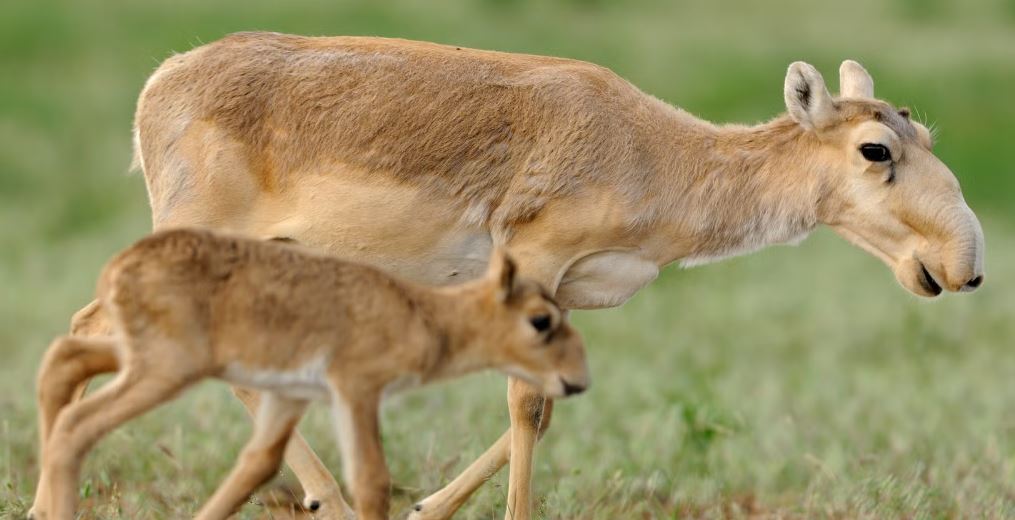
The decision to relax trade in saigas, whose horns are used in traditional medicine, is a response to the spectacular recovery of the species after it was close to extinction. Kazakhstan presided over this conservation success story, and the CITES decision amends a “zero export quota” to exclude saigas only from populations Kazakhstan.

A CITES committee adopted the proposal by a vote of 111 in favor, 7 against, and 14 abstentions, reported the Earth Negotiations Bulletin, which covers U.N. environment and development negotiations. A proposal needs a two-thirds majority vote to be approved.

More saiga safeguards were added in an amendment backed by Britain, the European Union and the United States, and the situation will be reviewed at the next CITES meeting in a few years.

Mongolia, which has a smaller, more vulnerable population of saigas, had opposed Kazakhstan’s initiative. Some groups, including the New York-based Wildlife Conservation Society, said the reopening of commercial trade in Kazakhstan’s saigas could increase consumer demand, promote poaching and put pressure on enforcement mechanisms.

In the case of the striped hyena, Tajikistan unsuccessfully sought to persuade delegates to the wildlife trade meeting to place the species on Appendix I, a CITES designation that would effectively bar trade aside from with a few exemptions. The species, labeled “near threatened” by the global IUCN Red List of Threatened Species, is currently on the much less restrictive Appendix III.

Algeria, Iran and Kazakhstan were among countries that backed Tajikistan’s proposal, while Britain, the European Union, Zambia and Tanzania said the proposal doesn’t meet Appendix I criteria, according to the Earth Negotiations Bulletin.

A CITES committee rejected Tajikistan’s proposal in “a secret ballot of 75 for, 47 against and 13 abstentions,” the bulletin said, indicating that proponents did not pass the two-thirds threshold.

The striped hyena has a vast range that includes Africa, the Middle East, and Central Asia, but there is difficulty in obtaining data on the solitary, noctural species.

Additionally, while habitat degradation and human-wildlife conflict are factors in the population’s decline, uncertainty over how much the illegal trade in the striped hyena is affecting its numbers may have raised questions about whether Tajikistan’s proposal was justified.


Kyrgyzstan Election Delivers Wins for Women and the President’s Allies

Kyrgyzstan held snap parliamentary elections on November 30 that seem not to have elicited widespread enthusiasm among the electorate.

Not long ago, Kyrgyzstan had the most vibrant political culture in Central Asia. Campaigning for parliamentary elections was a lively period that was impossible not to notice. Parties and candidates were in the news constantly in the weeks before the elections. There were campaign posters and signs, and public events with concerts organized by parties or candidates all around the country.

The rapid pace of these latest elections, in which candidates had only 20 days to campaign, might have contributed to voter confusion and apathy on election day, but the elections do seem to have come off without any major controversy.

In a country that has had three revolutions in the last 20 years, two of them directly connected to parliamentary elections, a quiet election day is a victory of sorts.

Election Day

Polls opened at 8:00 local time, and several hours after they closed at 20:00, Kyrgyzstan’s Central Election Commission reported that 36.9% of eligible voters had cast ballots. The last few elections in Kyrgyzstan have seen turnouts of less than 40%. This time, the Kyrgyz authorities were hoping for a significant increase in participation to validate the new system for parliamentary elections approved earlier this year.

However, the turnout of 36.9% was only slightly better than the 34.61% of voters who took part in the November 2021 parliamentary elections. As many as 500,000 Kyrgyz citizens are working or living outside Kyrgyzstan, and only just over 26,000 showed up at any of the 100 polling stations in 34 countries.

Five of Kyrgyzstan’s last six parliamentary elections were decided based on party lists. The last parliamentary elections were conducted under a split system, whereby 54 of the 90 seats in parliament were selected via party lists, and the other 36 seats in single-mandate districts.

This time, all 90 seats were chosen under a majoritarian system, with a twist. The country was divided up into 30 electoral districts, each of which selected three deputies. Kyrgyzstan had a requirement that at least 30% of the seats in parliament should go to women, but that quota has not been observed in recent elections. In the November 30 elections, at least one woman had to be among the three candidates who secured seats in parliament, though up to two women could win in a district (at least one of the winners was required to be a man).

Election results confirmed that one woman won a seat in every district, but only one. There were no instances where two women took seats in a district.

Also, according to the preliminary election results, all the women who won came in third place in their districts, with one exception. In District 23, veteran MP Elvira Surabaldiyeva took the most votes. Results posted by AKI Press showed that without the requirement of one female deputy per district, only seven women would have become deputies.

Name recognition was bound to play a huge role in these elections, and it did.

The person who won the biggest percentage of votes in their district was Shairbek Tashiyev, the brother of the head of Kyrgyzstan’s State Committee for National Security, Kamchybek Tashiyev, one of the best-known figures in Kyrgyzstan.

Shairbek ran in District 11, where he received 56.63% of the vote (22,387). Shairbek is also a member of the outgoing parliament, as were five others who were among the top ten candidates receiving the largest voting percentages in their districts. Preliminary results showed that more than half of the deputies elected on November 30 are members of the outgoing parliament.

As is usually true, Bishkek had the lowest voter turnout with 24-25% of eligible voters participating. District 13, the Suzak district, in central-western Kyrgyzstan, registered the largest turnout with 47.5% of the electorate casting ballots.

Efficient but Restrictive

The OSCE’s Office for Democratic Institutions and Human Rights (ODIHR) released its preliminary assessment of Kyrgyzstan’s parliamentary elections on December 1. ODIHR wrote that the elections “were administered efficiently, but the restrictive campaign environment stifled candidate and voter engagement.”

Kyrgyz election officials noted there were some violations on election day that resulted in at least nine people being detained for trying to buy votes, at least three of whom were candidates who were immediately excluded.

The ODIHR assessment also noted “numerous allegations of vote-buying… throughout the campaign.” ODIHR also pointed out that “significant financial disparities between candidates affected their ability to compete on a level playing field,” and that “Media refrained from covering candidates in their news coverage or editorial programmes… limiting voters’ ability to make an informed choice.”

Regular observers of Kyrgyzstan’s politics say the majority of people elected on November 30 are supporters of President Sadyr Japarov, who is up for re-election in early 2027.

The official reason for holding early parliamentary elections was that the elections were originally scheduled to take place in late November 2026, less than two months before the presidential election.

The final, official results of the parliamentary elections will be announced sometime before December 14.

Tokayev Signals End of Presidential Appointments in Unicameral Parliament Plan

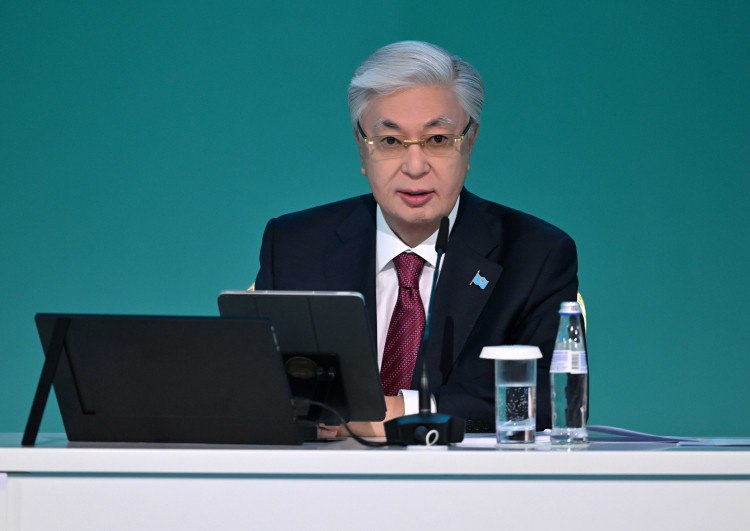
President Kassym-Jomart Tokayev has announced that Kazakhstan’s planned transition to a unicameral parliament will eliminate the presidential quota for appointing members of the legislature. The reform, Tokayev has said, is part of a broader effort to streamline the structure of parliament and enhance its professional capacity.

The proposal to move to a single-chamber legislature was first introduced in Tokayev’s September address to the nation. At present, Kazakhstan’s parliament consists of two chambers: the Mazhilis, with 98 deputies elected through a mixed electoral system, and the Senate, which comprises 50 members, some elected by regional maslikhats (local representative bodies) and others appointed by the president. Under the current system, the head of state appoints 10 senators, half of whom are nominated by the Assembly of the People of Kazakhstan.

Speaking at a forum of rural akims (governors), Tokayev confirmed his intention to relinquish this presidential privilege.

“An excessive increase in the number of deputies is inappropriate. On the contrary, the work of parliament should be optimized and improved. In the new unicameral parliament, there will be no presidential quota, all deputies must be elected in a unified manner,” he said.

Tokayev emphasized that the transition to a unicameral model necessitates the formation of a “truly professional parliament” composed of qualified legislators capable of addressing the country’s pressing issues. Among the structural reforms proposed are the creation of new committees, including those focused on digitalization and regional development. These institutional changes will be included in a comprehensive package of constitutional amendments.

The president also stated that the forthcoming referendum will serve as a vote on an updated version of the Constitution.

As previously reported by The Times of Central Asia, Tokayev’s call to abolish the Senate has already sparked debate among political analysts and lawmakers regarding the implications of a unicameral future for Kazakhstan.

U.S. Waiver of Sanctions on Iran’s Chabahar Port is Good News for Central Asia

U.S. sanctions on Iran’s Chabahar Port on the Gulf of Oman have been on again/off again since 2013, when the U.S. Congress passed the Iran Freedom and Counter-Proliferation Act (IFCA) to curb Iran’s regional influence and strategic capabilities through targeted economic pressure, aka sanctions.

In the decade following IFCA’s passage, Washington’s sanctions on Chabahar had a negative impact on Central Asia, largely by complicating its efforts to deepen economic ties with South Asia and the Gulf. But geopolitics are shifting. Washington is increasing its involvement in Central Asia and India, and is doing the same in Afghanistan. These factors may well induce the U.S. Department of State to keep the waiver in place.

Washington first waived its sanctions on Chabahar in 2018—a strategic move to support India’s role in Afghanistan’s post-war development and to provide a crucial trade route for that landlocked country. Six years later, India’s Indian Ports Global Limited secured a 10-year deal with Iran to manage Chabahar port, in part, to offset Pakistan’s Gwadar port at the end of the China-Pakistan Economic Corridor, a mere 100 miles from Chabahar. For all the fanfare, Central Asia held little real priority in Washington in those years.

Seven years later, the U.S. changed course. It announced on September 16, 2025, much to Central Asia’s surprise and concern, that “the State Department has revoked the sanctions exception issued in 2018 under the IFCA”, making individuals involved in Iran’s Chabahar port operations subject to penalties, resulting in another snag in Central Asia’s desire for a southern breakout route.

And then, in a swift reversal, the U.S. restored India’s sanctions waiver some six weeks later, on October 30.

Whatever might explain the sudden change, Central Asia breathed a sigh of relief, and, by all accounts, now feels confident that the waiver will be evergreened. Time will tell if this confidence is justified.

The U.S. waiver enables India to work to enhance Chabahar’s infrastructure and functionality, offering Central Asian exporters a more direct and profitable trade route than those via China, Russia, or the Middle Corridor, which stretches from East Asia to Europe via Kazakhstan, the Caspian Sea, Azerbaijan, Georgia, and Türkiye. As a result, goods like minerals, cotton, and energy products can reach regional and global markets faster.

Central Asian capitals are quietly reveling in Washington’s flexible realpolitik in the face of convulsive U.S.-Iranian relations and heated Indo-Pakistan tensions. Without fear of punitive measures, India can now continue its work at Chabahar.  To be sure, the waiver affirms India’s rising global presence and accelerates New Delhi’s drive into Central Asia, including Afghanistan.

Washington’s decision signaled to traders, investors, and think tankers that it has no intention of spoiling India’s export ambitions and Central Asia’s desire for north-south economic integration. The waiver shows Washington’s pragmatism—and is welcomed by those who have little or no use for Washington’s penchant for foreign policy moralism.

Chabahar Port complements not only the Trans-Caspian corridor—a multimodal trade route connecting Asia and Europe by linking China to Europe through Central Asia, the Caspian Sea, and the Caucasus—but also existing trade routes with Russia, China, and Pakistan.

Eldor Aripov, Director of the Institute for Strategic and Regional Studies under the President of Uzbekistan, told The Times of Central Asia that “the waiver removes a major bottleneck to reliable access to the Indian Ocean, giving Uzbekistan and our neighbors one more route for our exports and imports. Diversification—which does not mean exclusivity—strengthens Central Asia’s strategic autonomy.”

Afghanistan and Central Asia

The waiver comes at a time when Central Asian nations are looking for new trade opportunities with regional partners across South Asia. As trade between Afghanistan and Pakistan sputters, Kabul is looking for alternative routes for its commerce via Iran and India. Central Asia welcomes this.

On November 20, 2025, Afghan minister Alhaj Nooruddin Azizi and India’s External Affairs Minister Jaishankar met in New Delhi to deepen commercial cooperation and explore Chabahar’s potential to lessen Kabul’s dependence on Pakistan. In Doha, Ambassador Yerkin Tokumov, Kazakhstan’s Special Representative for Afghanistan, met with Ambassador Faisal bin Abdullah Al Hanzab of Qatar to discuss shared political, security, and humanitarian issues, including trade issues and further economic connectivity.

The U.S. sanctions waiver also invigorates the development of various other transport corridors, including the much-ballyhooed Lapis Lazuli transport route (Afghanistan-Turkmenistan-Azerbaijan-Georgia-Turkey) and the Five Nations Railway Corridor (China-Afghanistan-Tajikistan-Kyrgyzstan-Iran).

The waiver has also given impetus to the 2016 Ashgabat Agreement, a multimodal transport pact between Kazakhstan, Uzbekistan, Turkmenistan, Iran, India, Pakistan, and Oman to develop transit connectivity, despite geopolitical challenges, and link Central Asia, via Chabahar, to the Persian Gulf. As noted by India’s Embassy in Ashgabat in its “Unclassified Brief on India-Turkmenistan Relations” (Nov. 26), trade dominates the agenda of the agreement’s signatories— and Chabahar plays a role in broader connectivity efforts, though the brief does not describe it as the agreement’s central element.

The opening of a direct maritime gateway via Chabahar for landlocked Central Asian nations makes them less reliant on Pakistan and enhances their strategic room for maneuver. It lowers political exposure while expanding their economic autonomy. In doing so, it strengthens a cooperative geoeconomic vision built on mutual benefit and shared opportunity.

It would seem that the Chabahar sanctions waiver is a fresh tailwind for Central Asia’s future economic development and Eurasian integration. That is good news for Central Asia.

Kyrgyzstan Early Parliamentary Elections See 36.9% Voter Turnout

Kyrgyzstan held early parliamentary elections on November 30, with voter turnout reaching 36.9%, according to the Central Election Commission (CEC). Of the 4,294,000 registered voters, more than 1.5 million cast their ballots.

Polling stations across the country and abroad closed at 8:00 p.m. local time. While an automated accounting system (AAS) was used during the voting process, Kyrgyz electoral law requires that electronic results be verified against manual counts. Members of precinct commissions conducted manual ballot counts after the polls closed.

The CEC reported receiving 269 complaints regarding potential violations of electoral law during the campaign. These included 124 reports of campaign violations, 37 of the dissemination of defamatory information about candidates, eight related to the alleged use of administrative resources, 46 concerning possible vote buying, and 54 involving other types of violations.

There were also reports of equipment malfunctions at several polling stations. Nevertheless, the CEC declared the elections valid. Elected candidates began receiving congratulations on December 1.

The 2025 early elections marked a significant change in Kyrgyzstan’s electoral process. Party-list voting was fully abolished, and all candidates ran in single-mandate constituencies.

President Sadyr Japarov cast his vote in Bishkek. He noted that the fully automated voting process this year significantly reduced opportunities for human interference in election outcomes. Japarov emphasized that citizens could vote using digital passports via the Tunduk app, and biometric registration took only a few minutes.

While acknowledging that vote buying remains a challenge, Japarov stated that relevant authorities are responding quickly to any such incidents. He also noted that efforts to ensure the participation of Kyrgyz citizens abroad included doubling the number of overseas polling stations. A total of 100 polling sites were opened internationally, including in Russia, the United States, Kazakhstan, and several European countries.