• KGS/USD = 0.01144 0%
  • KZT/USD = 0.00192 -0%
  • TJS/USD = 0.10849 0%
  • UZS/USD = 0.00008 0%
  • TMT/USD = 0.28571 0%
  • KGS/USD = 0.01144 0%
  • KZT/USD = 0.00192 -0%
  • TJS/USD = 0.10849 0%
  • UZS/USD = 0.00008 0%
  • TMT/USD = 0.28571 0%
  • KGS/USD = 0.01144 0%
  • KZT/USD = 0.00192 -0%
  • TJS/USD = 0.10849 0%
  • UZS/USD = 0.00008 0%
  • TMT/USD = 0.28571 0%
  • KGS/USD = 0.01144 0%
  • KZT/USD = 0.00192 -0%
  • TJS/USD = 0.10849 0%
  • UZS/USD = 0.00008 0%
  • TMT/USD = 0.28571 0%
  • KGS/USD = 0.01144 0%
  • KZT/USD = 0.00192 -0%
  • TJS/USD = 0.10849 0%
  • UZS/USD = 0.00008 0%
  • TMT/USD = 0.28571 0%
  • KGS/USD = 0.01144 0%
  • KZT/USD = 0.00192 -0%
  • TJS/USD = 0.10849 0%
  • UZS/USD = 0.00008 0%
  • TMT/USD = 0.28571 0%
  • KGS/USD = 0.01144 0%
  • KZT/USD = 0.00192 -0%
  • TJS/USD = 0.10849 0%
  • UZS/USD = 0.00008 0%
  • TMT/USD = 0.28571 0%
  • KGS/USD = 0.01144 0%
  • KZT/USD = 0.00192 -0%
  • TJS/USD = 0.10849 0%
  • UZS/USD = 0.00008 0%
  • TMT/USD = 0.28571 0%
12 December 2025

Kazakhstan to Launch Nuclear Power Plant Training Program

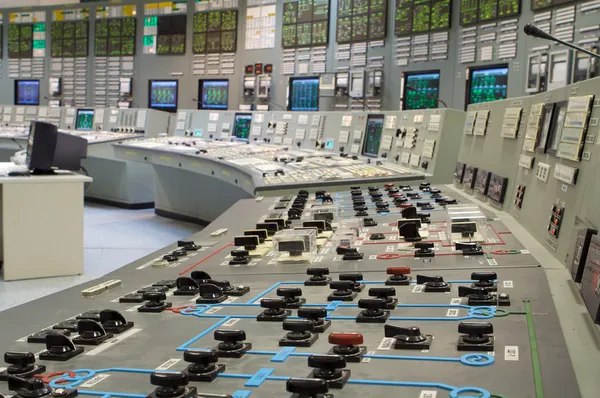
From the 2025/26 academic year, Serikbayev East Kazakhstan Technical University will offer a new “Nuclear Power Plant Operation” program, developed in collaboration with experts from the International Atomic Energy Agency (IAEA). The initiative aims to prepare highly qualified personnel for Kazakhstan’s first nuclear power plant, scheduled to come online in about a decade.

Internationally Supported Program

The curriculum was created under two projects, “Expert Mission to Strengthen National Capacity in Education and Training to Support the Nuclear Power Plant Construction Program” and “KAZ2010: Support for Infrastructure Development for the Implementation of the Nuclear Energy Program (Phase 3).”

Courses will cover nuclear reactor physics, radiation safety, the nuclear fuel cycle, and equipment modernization. Practical training will take place at the National Nuclear Center in Kurchatov and at a metallurgical plant in Ust-Kamenogorsk, where heat-releasing assemblies are produced from Kazakh raw materials.

In April 2025, the university hosted an international forum with participation from the IAEA and Russia’s National Research Nuclear University MEPhI. In June, lecturers Aizhan Baidildina and Nadezhda Prokhorenkova trained at a nuclear power plant in Hungary. In October, Dean Aibek Akayev will attend an IAEA StarNet network meeting in Vienna.

Training Specialists Nationwide

According to the Atomic Energy Agency, Kazakhstan currently has 18 educational programs related to the nuclear industry, offered at six universities including L.N. Gumilyov Eurasian National University, Al-Farabi Kazakh National University, Almaty University of Energy and Communications, East Kazakhstan University named after Amanzholov, and Shakhimety State University.

Plans include training at foreign universities and awarding double degrees in nuclear physics and engineering. More than 5,000 grants have been allocated for the 2024/2025 academic year, compared with approximately 250 students enrolled in the previous year. Between 2011 and 2023, more than 1,600 specialists graduated from nuclear-related programs.

Over 5,000 workers for the nuclear sector have already been trained at research institutions such as the National Nuclear Center and the Institute of Nuclear Physics. The government also plans to expand international internships, with future placements in France, Russia, and Hungary.

Nuclear Power Plant Construction

Kazakhstan has considered nuclear power a strategic priority since the 1990s, aiming to reduce electricity shortages, cut reliance on imports, and stabilize prices, while also contributing to the goal of carbon neutrality by 2060.

In October 2024, more than 5.5 million Kazakhstani citizens voted in a referendum to support construction of the first plant. In January 2025, President Kassym-Jomart Tokayev approved the concept for a second plant. A month later, the site for the first plant was approved in the Zhambyl district of the Almaty region.

French engineering firm Assystem conducted the technical evaluation of proposals. Russia’s Rosatom won the tender with its reactor design, followed by a Chinese company in second place, and French and South Korean firms in third and fourth.


Archaeologists in Tajikistan Uncover 7th-Century Sewer System

Archaeologists in Istaravshan, in Tajikistan’s northwestern Sughd region, have unearthed a remarkably well preserved sewer system dating back to the 7th century AD. The discovery was announced by architect and excavation participant Amindjon Khomid. The system was first uncovered in 2023 in the Kala-i-Mugh area during work conducted jointly with Professor Rakhim Nabiev, Doctor of Historical Sciences from Khujand.

Ancient Engineering in Istaravshan

Preliminary estimates place the sewer system’s age at around 1,300 years. Geological studies suggest even older cultural layers may lie beneath, potentially dating to the 1st century AD and as far back as five millennia.

During excavations, archaeologists also found ceramic jugs from the 3rd and 6th centuries, as well as earlier eras. One 6th-century jug was made of concrete and lined with clay on the inside, an unusually advanced technology for its time. Khomid noted that the design and condition of the artifacts point to a high level of ancient engineering skill.

Unique Jug from Khalkajjar

As reported by The Times of Central Asia, earlier this year, archaeologists from the National Museum of Tajikistan uncovered another significant artifact at the Khalkajjar monument near the village of Sarband. In May 2025, they discovered a clay vessel bearing a complete inscription in the Bactrian language, dating to the Kushan Empire (1st-3rd centuries).

The inscription, written in a distinctive broken script, was translated by Professor Nicholas Sims-Williams and numismatist Joe Cribb. It reads: “This water jug belongs to the woman Sagkina.” Researchers say such inscriptions are rare and provide valuable insights into literacy, property ownership, and social life in the Kushan Empire.

The Kushan Empire was one of the largest states in ancient Central Asia, encompassing parts of modern Afghanistan, Pakistan, India, southern Uzbekistan, and Tajikistan. The Bactrian language, widely used in administration and trade at the time, remains a key tool for understanding the region’s history.

Traces of Ancient Life in the Zeravshan Valley

In November 2024, an international archaeological team reported the discovery of the multi-layered Soi Khavzak site in the Zeravshan Valley, containing evidence of human activity dating back 150,000 years.

Led by Professor Yossi Zeidner of the Hebrew University, excavations revealed stone tools, animal bones, and plant remains from periods spanning the late to middle Paleolithic. Scientists believe the region may have served as a migration corridor for both Homo sapiens and Neanderthals, providing a place where they could meet and interact.

The site’s excellent preservation of organic matter, including bones and wood, offers the possibility of discovering human remains, a find that could help identify the species of ancient inhabitants in Central Asia.

Experts say these recent discoveries not only expand understanding of Tajikistan’s engineering and cultural history, but also highlight the region’s role as a hub of human innovation and migration over thousands of years.

Kyrgyzstan, Uzbekistan to Supply 600 Million Cubic Meters of Water to Kazakhstan

Kyrgyzstan and Uzbekistan will send about 600 million cubic meters of water to Kazakhstan over the next two weeks to help offset shortages in the country’s southern regions, Deputy Prime Minister Kanat Bozumbayev announced at a government briefing.

Bozumbayev said Central Asia is experiencing a low-water year, with inflows into the Syr Darya River, which supplies Kazakhstan’s Turkestan and Kyzylorda regions, at only 30-40% of normal levels. Prolonged high temperatures have further increased irrigation demand, deepening the shortfall.

He noted that Prime Minister Olzhas Bektenov raised the issue with his Kyrgyz and Uzbek counterparts during the International Environmental Conference in Altai, after which consultations were held.

“Last week, they were behind schedule by more than one billion cubic meters of water. We agreed that starting this week, they will send about 600 million cubic meters to us within two weeks,” Bozumbayev said.

Despite the challenges, Bozumbayev expressed confidence that the agricultural season, which ends in August, could be completed without major losses. “I have personally visited the Turkestan region, many districts, reservoirs, and met with farmers. I also toured irrigated areas in Kyzylorda region. The situation is tense, but we have seen worse years,” he said, adding that daily monitoring and urgent measures have helped stabilize conditions.

This agreement follows a broader water-sharing deal reached in February, under which Uzbekistan will supply Kazakhstan with 16 billion cubic meters of water by October 1, 2025. The arrangement, agreed during the 12th meeting of the Joint Working Group on Bilateral Water Cooperation, increases Kazakhstan’s allocation by 1 billion cubic meters compared with the previous period.

Water management remains a critical issue in Central Asia, where agriculture depends heavily on transboundary rivers such as the Syr Darya and Amu Darya, and seasonal shortages can severely threaten crop yields and rural livelihoods.

China-Central Asia Trade Nearly Triples Since 2020

Trade between China and the countries of Central Asia reached $66.2 billion in 2024, nearly triple the 2020 level, according to the Eurasian Development Bank (EDB). Imports from China accounted for about 60% of total trade turnover.

China’s largest trading partner in the region is Kazakhstan, with bilateral trade valued at $30.1 billion (46% of total China-Central Asia trade), followed by Uzbekistan at $18 billion (27%) and Turkmenistan at $10.6 billion (16%).

China’s share in Central Asia’s overall trade turnover has risen sharply, from 17.7% in 2020 to 24.1% in 2024. However, the level of dependence on Chinese trade varies by country:

  • Turkmenistan – 55% of its total trade is with China.
  • Kyrgyzstan – around 35%.
  • Kazakhstan, Uzbekistan, and Tajikistan – between 20-22%.

The EDB estimates significant untapped trade potential of $39.3 billion, about 60% of the current turnover. This includes $32 billion in potential Chinese exports to Central Asia (such as automobiles, electronics, and consumer goods) and $7.3 billion in potential Central Asian exports to China (including copper products, gold, and uranium).

With deepening economic ties and major infrastructure links through the Belt and Road Initiative, analysts expect China-Central Asia trade to continue expanding in the coming years.

World Bank Approves $50 Million Grant for Tajikistan’s Economic Reforms

The World Bank’s Board of Executive Directors has approved a $50 million grant to support Tajikistan’s reform agenda, aimed at fostering competition, improving market conditions for the private sector, and strengthening public sector service delivery. The financing, announced by the Bank’s press service, comes from the International Development Association (IDA), its fund for low-income countries.

The First Competitive and Inclusive Tajikistan Development Policy Operation (DPO) aligns with the country’s National Development Strategy 2030. Its primary goal is to help implement key government policies for building a more competitive and equitable economy.

“We are proud to support these ambitious reforms designed to unlock the country’s economic potential and deliver tangible benefits to Tajik citizens,” said Wei Winnie Wang, Acting Country Manager for the World Bank Group in Tajikistan. “Fostering a more competitive and open market environment helps create new opportunities for businesses and consumers alike.”

The DPO targets several priority areas:

  • Increasing competition and improving governance in telecommunications and the digital sector.
  • Expanding air transport connectivity.
  • Strengthening the legal framework for foreign investment.
  • Enhancing transparency in subsidies and power sector financing.

By making energy sector funding more transparent, the reforms aim to encourage greater private investment in renewable energy.

Another focus is improving the policy, legal, and financial frameworks for the Benefit Sharing Program (BSP) under the Rogun Hydropower Plant (HPP) Project. The BSP will channel part of Rogun’s electricity sales revenue to support poor and vulnerable households, complementing existing social safety nets.

Development Policy Operations are one of the World Bank’s key tools for supporting policy and institutional reforms that drive sustainable growth and poverty reduction. The Bank last approved a similar operation for Tajikistan in 2023.

Currently, the World Bank finances 26 projects in the country totaling $1.9 billion, combining IDA grants and highly concessional credits.

As previously reported by The Times of Central Asia, poverty reduction in Tajikistan remains gradual. According to the World Bank’s Poverty, Prosperity, and Planet Report 2024, more than 25% of the population lives on less than $3.65 per day, even after the extreme poverty threshold was revised from $2.15 to $3.00.

Astana’s Delicate Role in Ukraine Peace Efforts

Despite its close economic, historical, and cultural ties with Russia, Kazakhstan has maintained constructive relations with Ukraine since Russia’s full-scale invasion in 2022. That diplomatic balance was on display again on August 10, when President Volodymyr Zelenskyy called President Kassym-Jomart Tokayev to discuss prospects for a peace agreement.

According to official sources, Ukraine initiated the call, and Tokayev reaffirmed Kazakhstan’s “unconditional interest in establishing a lasting peace in Ukraine based on the principles of international law.” Astana supports a “joint search for a peaceful solution on a fair basis” and consistently advocates compliance with the UN Charter, the inviolability of borders, and the territorial integrity of sovereign states.

Kazakh political analyst Marat Shibutov has suggested that Zelenskyy is seeking support ahead of a potential shift in the confrontation with Russia.

“On the eve of the meeting between Donald Trump and Vladimir Putin in Alaska, Zelenskyy is calling the leaders of other countries. He is seeking not only to secure better conditions for Ukraine, but also to understand what his personal political future holds. Yesterday, he spoke with Macron, Meloni, Tusk, Stubb, von der Leyen, Sánchez, and Starmer. Today, he spoke with Swedish Prime Minister Kristersson, Ilham Aliyev, and President Tokayev,” Shibutov wrote.

According to Shibutov, Zelenskyy emphasized European support for Ukraine’s participation in negotiations. However, Tokayev, an experienced diplomat, may have cautioned that the outcome of the U.S.-Russia talks is unpredictable. “They depend on domestic politics,” Shibutov noted. “In the U.S., Trump’s electorate wants an end to the war and military aid to Ukraine halted, while many in Russia want Ukraine’s complete defeat and elimination as a state. In such conditions, Ukraine will have to make concessions. Territorial integrity is good, but not at the cost of the state’s very existence.”

The official statement from Tokayev’s office cited the old proverb: “A bad peace is better than a good war.”

Support During the War

On March 6, 2022, shortly after Russia’s full-scale invasion, an anti-war rally was held in Almaty. Participants carried Ukrainian flags, blue-and-yellow balloons, and anti-war posters. That same month, Kazakhstan sent humanitarian aid worth more than $2 million, including 25 types of medical supplies weighing 82 tons. Volunteers also collected food, hygiene products, medicines, and animal feed worth 150 million tenge.

Kazakh entrepreneurs delivered aid and generators to Ukrainian hospitals. In the summer of 2023, a Kazakh company helped repair a medical facility in Mykolaiv damaged by Russian shelling. The installation of “yurts of indestructibility” in war-affected Ukrainian cities also gained wide recognition. In Kyiv alone, more than 100,000 people visited such a yurt to charge phones, warm up, and enjoy free Kazakh national dishes.

Only According to the UN Charter

Kazakhstan’s deep economic ties with Russia include oil and gas transit, gasoline supplies, and imports of food and medicine. The two countries share the world’s second-longest land border, spanning 4,750 miles. Cooperation on transboundary rivers is also critical.

In contrast, Kazakhstan’s links with Ukraine are modest, consisting largely of historical ties and family connections. Pre-war trade was minimal, involving small quantities of textiles and confectioneries.

Nevertheless, Kazakhstan has refused to side with Russia. In June 2022 at the St. Petersburg International Economic Forum, Tokayev stated that Kazakhstan does not recognize “quasi-state territories” such as the Donetsk and Luhansk People’s Republics (DPR, LPR). He stressed that international law rests on the UN Charter and that the principles of self-determination and territorial integrity are in conflict in the war in Ukraine.

“If the right of nations to self-determination were applied universally, instead of the 193 UN member states, there would be more than 500 or 600 states. This would be chaos,” Tokayev said.

Russia recognized the DPR and LPR on February 21, 2022. Hours later, it launched what it called a “special military operation,” but which the majority of Western nations view as the invasion of a sovereign state.

Kazakhstan has repeatedly offered to mediate. In March 2022, its Foreign Ministry publicly supported a peaceful resolution between Russia and Ukraine.

Ukrainian Ambassador Controversy

Relations were strained in August 2022 when Ukraine’s then-ambassador to Kazakhstan, Petr Vrublevsky, told a Kazakh blogger that Ukrainians should “kill as many Russians as possible.” The comment sparked outrage in Kazakhstan, home to several million ethnic Russians.

Public organizations and the Assembly of the People of Kazakhstan condemned the remarks, accusing Vrublevsky of inciting interethnic hatred. He was summoned to the Foreign Ministry, and Ukraine later recalled him.

Another point of tension arose in 2025 when Ukraine struck the Caspian Pipeline Consortium’s Kropotkinskaya oil pumping station in Russia’s Krasnodar Territory. The CPC is vital for Kazakh oil exports, carrying crude from the Tengiz field to the Black Sea. In 2024, Kazakhstan exported 68.6 million tons of oil, including 54.9 million tons via the CPC pipeline, 80% of the total. The Kazakh Foreign Ministry said it had conveyed its concerns to Kyiv.

As the war continues with no clear end in sight, Kazakhstan’s ability to maintain open channels with both Moscow and Kyiv remains a rare diplomatic asset in the region. Whether through humanitarian aid, mediation offers, or participation in international dialogue, Astana’s careful positioning may yet secure it a role in shaping future efforts towards peace.