• KGS/USD = 0.01144 0%
  • KZT/USD = 0.00213 0%
  • TJS/USD = 0.10456 0.19%
  • UZS/USD = 0.00008 0%
  • TMT/USD = 0.28490 0%
  • KGS/USD = 0.01144 0%
  • KZT/USD = 0.00213 0%
  • TJS/USD = 0.10456 0.19%
  • UZS/USD = 0.00008 0%
  • TMT/USD = 0.28490 0%
  • KGS/USD = 0.01144 0%
  • KZT/USD = 0.00213 0%
  • TJS/USD = 0.10456 0.19%
  • UZS/USD = 0.00008 0%
  • TMT/USD = 0.28490 0%
  • KGS/USD = 0.01144 0%
  • KZT/USD = 0.00213 0%
  • TJS/USD = 0.10456 0.19%
  • UZS/USD = 0.00008 0%
  • TMT/USD = 0.28490 0%
  • KGS/USD = 0.01144 0%
  • KZT/USD = 0.00213 0%
  • TJS/USD = 0.10456 0.19%
  • UZS/USD = 0.00008 0%
  • TMT/USD = 0.28490 0%
  • KGS/USD = 0.01144 0%
  • KZT/USD = 0.00213 0%
  • TJS/USD = 0.10456 0.19%
  • UZS/USD = 0.00008 0%
  • TMT/USD = 0.28490 0%
  • KGS/USD = 0.01144 0%
  • KZT/USD = 0.00213 0%
  • TJS/USD = 0.10456 0.19%
  • UZS/USD = 0.00008 0%
  • TMT/USD = 0.28490 0%
  • KGS/USD = 0.01144 0%
  • KZT/USD = 0.00213 0%
  • TJS/USD = 0.10456 0.19%
  • UZS/USD = 0.00008 0%
  • TMT/USD = 0.28490 0%

Paul Kapur: “The United States’ Commitment to Central Asia Is Strong and Enduring”

WASHINGTON (TCA) — Assistant Secretary of State for South and Central Asian Affairs Paul Kapur reaffirmed Washington’s long-term commitment to Central Asia during remarks marking the 10th anniversary of the C5+1 partnership at the Kennedy Center hosted by the United States Department of State on November 6.

Addressing an audience of officials, diplomats, and business leaders, Kapur said he was “honored to join an esteemed group” for the occasion. “I recently started my tenure as Assistant Secretary, and I’m particularly glad that I started as we celebrate the decade of C5+1 partnership,” he noted.

Kapur, who oversees U.S. policy toward the region and serves as Secretary Marco Rubio’s chief advisor on Central Asia, is a veteran academic who has taught at the Naval Postgraduate School and Claremont McKenna College, and previously served on the State Department’s Policy Planning Staff during the first Trump administration.

He opened his remarks by thanking the Kennedy Center and Ambassador Rick Vernell for hosting the event, as well as Special Envoy and Ambassador Sir Jim Gore and Deputy Secretary of State Chris Landau “for everything that they did, which included lots of diplomacy, many days and hours on the road.” He also recognized Senator Steve Daines “who’s done so much to support and promote ties” between Central Asia and the United States, and expressed appreciation to Central Asian delegations who “traveled a long way to be here.”

“As we mark this anniversary, I want to reiterate that the United States is committed to this region, and that commitment is strong and enduring,” Kapur said. “Under President Trump’s and Secretary Rubio’s leadership, we’re elevating the C5+1 partnership as a priority — a strategic priority and an economic priority.”

He said the partnership is already producing results in trade, investment, and innovation. “We’re making tangible progress toward increased trade and investment in areas ranging from aviation to cybersecurity to agriculture, and we’re ensuring a secure energy future for each of our countries,” he said.

Kapur emphasized that economic ties are only part of the picture. “As we advance prosperity, we also promote peace,” he stated. “The United States remains committed to supporting each C5 country’s independence, sovereignty, and territorial integrity, protecting borders and strengthening security cooperation, both bilaterally and through the C5+1.”

Reflecting on the partnership’s first decade, Kapur cited initiatives such as the C5+1 Critical Minerals Dialogue, the B5+1 Business Dialogue, training networks for regional law enforcement and border security, and English-language programs for young professionals. He also highlighted efforts to protect the region’s cultural heritage through historical preservation and law enforcement cooperation to combat antiquities trafficking. “Although we’re celebrating the future today, it’s important to remember that our new initiatives are built on a deep foundation of cooperation over the past decade,” he said. “As we elevate and modernize our collective efforts, C5+1 countries and the United States are increasingly prepared to deliver innovative regional solutions to our most pressing global problems.”

He concluded with a personal message to Central Asian partners. “To my Central Asian friends, I have not been to Central Asia. I look forward to joining you there,” he said. “I’ve received many invitations. I really look forward to that and experiencing firsthand the beauty and the hospitality of your countries.”

“Thank you again for your important role in today’s events,” Kapur said in closing.


Sen. Daines: Central Asia Key to U.S. Strategic and Economic Future

Washington, D.C., November 6, 2025 — At the 10th-anniversary forum of the C5+1 platform — which brings together the United States and the five Central Asian nations (Kazakhstan, Kyrgyzstan, Tajikistan, Turkmenistan, and Uzbekistan) — ministers from the C5 countries and leading business figures from the region and the United States gathered to mark a decade of cooperation. The event was co-hosted by the U.S. Department of State and the U.S. Department of Commerce, underscoring Washington’s growing focus on regional economic and strategic engagement.

U.S. officials played key roles throughout the program. Senator Steve Daines chaired a high-level panel discussion alongside Sergio Gor, U.S. Special Envoy for South and Central Asian Affairs; S. Paul Kapur, Assistant Secretary of State for South and Central Asian Affairs; Howard Lutnick, Secretary of Commerce; Christopher Landau, Deputy Secretary of State; William Nitt, Under Secretary of Commerce; and Richard Grenell, Special Presidential Envoy.

During the forum’s investment-focused “Deal Zone,” Daines underscored what he described as Central Asia’s growing role in U.S. foreign policy, energy security, and technology supply chains — calling the region “one of the world’s great opportunities for the future.” His remarks reflected both optimism and a sense of urgency about expanding ties. “There are few parts of the world that offer the opportunity that Central Asia does,” he said. “Closer ties between our nations can bring greater economic opportunity to millions of people and secure some of the West’s most vulnerable supply chains.”

According to Daines, the United States has already made significant progress through initiatives such as the C5+1 platform, the appointment of a Special Envoy for Central Asia, and the Critical Minerals Dialogue, alongside expanded trade missions and commercial partnerships. Together, he said, these efforts “provide the necessary forums through which the United States and Central Asia can build the capacity and trust necessary for long-term cooperation.”

The tenth anniversary also served as a platform for outlining the economic and strategic priorities that will define the next phase of U.S.–Central Asia engagement.

Central Asia’s Resource Potential

Daines highlighted what he described as the region’s abundant resources — saying the five Central Asian nations “represent over 31 billion barrels of oil reserves, 250 trillion cubic feet of gas reserves, and over 40 percent of global uranium production.”

“As we look to a new day for Europe, one wherein the continent is not dependent on a bellicose adversary for energy supplies,” he said, “Central Asian nations can be the partners of the future — providing consistent flows of resources necessary for baseload power without the concern that those energy imports will be weaponized.”

He added that, even years after Russia’s invasion of Ukraine, the U.S. continues to import uranium from Russia, which he called a practice with “profound national security implications.” Central Asia, by contrast, “could provide a more reliable source of the element necessary to the development of artificial intelligence, data-centers, and other energy-intensive industries.”

Critical Minerals and the Tech Economy

Daines also emphasized the region’s strategic role in the global technology supply chain. “In addition to energy resources,” he said, “Central Asia holds impressive deposits of almost every critical mineral necessary for technological innovation. From antimony, gold, cobalt, copper, lithium, aluminum, and zinc, to one of the world’s largest rare-earth deposits, the region contains enough primary building-blocks for advanced technology to offset many of the United States’ current supply-chain vulnerabilities and ensure our technological development is free of foreign coercion.”

Connectivity and Trade Routes

Daines noted recent diplomatic progress in the South Caucasus, observing that following the peace deal between Azerbaijan and Armenia, the long-envisioned “Middle Corridor” — a trade route connecting Central Asia with Western markets — is more feasible. He described that development as part of the larger opportunity for investment and connectivity.

Bipartisan Commitment and U.S. Leadership

He highlighted bipartisan cooperation in Washington on Central Asia policy, noting that the Senate unanimously passed his resolution commemorating the C5+1’s 10th anniversary.

Daines also cited his work with Democratic colleagues, including Chris Murphy, to repeal outdated trade restrictions (such as those rooted in the Jackson‑Vanik Amendment). “It is long past time we relegate these outdated restrictions to the ash-heap of history and bring our relationships into the 21st century,” he asserted.

A Foundation of Trust

Contrasting U.S. engagement with that of other powers, Daines said America’s greatest advantage abroad is credibility. “Other nations offer attractive investment to Central Asia but are missing the cornerstone of U.S. investment,” he said. “The United States’ most valuable asset is trust. … As Secretary Colin Powell once noted, in all the wars it has fought, the only land the United States has ever asked for is land to bury our dead.”

Looking Ahead

Daines concluded that the United States’ “pivot toward the region is well underway,” and that future cooperation will be centered on technology, artificial intelligence, the digital economy, and bilateral investment. He praised the “Deal Zone” and the workshops organised by the U.S. International Development Finance Corporation (DFC) alongside the governments of the five Central Asian states.

“This year’s tenth iteration of the C5+1 will hopefully facilitate further joint-development of natural resources, increased foreign direct investment, and greater high-level contact between our countries,” he said. “A region submerged between Russia, China, and Iran has chosen to forge an independent path dominated by none of their neighbors but instead defined by regional consensus and multilateral diplomacy.”

Senator Daines’ prepared remarks are posted on his Senate website.


The Deal Zone: U.S. Secretary of Commerce Howard Lutnick Unveils Economic Agreements with Central Asia at C5+1 Summit

WASHINGTON, D.C. — November 2025 — The United States and Central Asian nations announced a record series of trade and investment agreements at the 10th-anniversary C5+1 Summit, signaling a new phase of cooperation in energy, infrastructure, technology, and artificial intelligence.

The high-profile event at the Department of Commerce brought together ministers, ambassadors, and business leaders from across the region. Secretary of Commerce Howard Lutnick said the initiatives reflect Washington’s renewed commitment to long-term regional growth and partnership.

“We’re advancing a clear strategy, which is reciprocal trade and strategic investment … the Department of Commerce is helping America and Central Asian firms connect, invest and grow together.”

On digital investment, Lutnick said: “If you want to invest in digital, you know, America is going to be open for business. We are open for our great allies to be able to buy our best chips and have them in country, which is a complete change from the prior Biden administration. So if the country has the proper set of digital laws, we will then encourage our great companies to invest digitally in the C5+1 and grow digitally there.”

He also described the C5+1 as central to U.S. engagement: “The C5+1 platform is a cornerstone of that strategy” and “We’re proud to see your new initiatives taking shape for energy diversification, logistics modernization, [and] emerging partnerships across the trans Caspian corridor.”

The event then moved into the “Deal Zone,” where close to twenty agreements across the region were announced. The Times of Central Asia attended the ceremony and reports below the deals as they were introduced on stage.

“These are not abstract projects. They are real investments, creating real jobs, extending connectivity and strengthening resilience from the Caspian all the way to California.”

The deals, as announced in sequence during the session, are listed below.


Kazakhstan:

  • Boeing with Air Astana Airlines — Purchase of up to 15 Boeing 787 Dreamliners, opening new North American routes representing Air Astana’s historical largest order.
  • Cove Capital with the Government of Kazkhstan — $1 billion investment to develop the largest known untapped tungsten deposit in the world valued at more than $80 billion.
  • Leidos with KazAero — Modernization of national air-traffic-control systems using Skyline X ATMS technology as well as to facilitate the deployment, testing and training of staff of all their air traffic control centers.
  • John Deere and the Government of Kazakhstan — $3–5 billion agricultural-equipment agreement. 60% involves tractors and seeding equipment manufactured in Iowa, Illinois, and North Dakota.
  • Citigroup with KTZ Locomotives + U.S. EXIM Bank — $1.6 billion export-credit financing for locomotive procurement. This was a follow up to the agreement signed at the recent United National General Assembly meeting, the largest ever locomotive deal in the history of the world.
  • Colorado School of Mines, Education Testing Service, Arizona State University with the Kazakhstan Ministry of Science and Higher Education — Supporting the establishment of a university. The project will substantially contribute to the development of professional engineers and geoscientists with critical minerals expertise in both the United States and Kazakhstan.
  • Beeline Kazakhstan with Starlink — The world’s first national direct-to-cell connectivity program, extending satellite coverage to remote regions not covered by terrestrial networks.
  • Nvidia, OpenAI, and Freedom Holding Corp and Ministry of Digital Development — An MOU $2 billion advanced AI-chip procurement agreement.
  • National Investment Corporation of Kazakhstan with Brookfield Asset Management, Cerberus Capital Management , and Ashmore Investment Advisors— Formation of three cooperation agreements for private-equity partnerships.


Kyrgyzstan

  • All American Rail Group (Texas) with the Kyrgyz Republic — Rail construction and engineering, operation, maintenance and eventually transfer national and regional railway infrastructure linking Kyrgyzstan to the Trans-Caspian corridor.
  • Citigroup with Aiyl Bank — MOU cooperation agreement.
  • Oppenheimer & Co. with Aiyl Bank — Underwriting of a $300 million five-year senior unsecured bond, following its earlier $700 million sovereign bond issuance.


Tajikistan:

  • Somon Air with Boeing — Commitment for order for its largest ever order of up to 4 Boeing 787s and 10 737 MAX jets, the airline’s first wide-body purchase to launch new intercontinental routes from Tajikstan.
  • Transparent Earth LLC with Tajik company Avesto Group— $30 million MOU to jointly develop, build and operate a national digital-governance platform.
  • Sixth Grain Inc. with Marmari Tajikistan — Preliminary agreement for development and implementation of a $2.43 million digital platform for Marmari’s agricultural lands.
  • Perplexity AI — Joining the Central Asia AI Consortium, based in Tajikistan’s planned the world’s first AI Free Zone to expand its service across all of Central Asia and derive multimillion annual recurring revenue from the region.
  • Super Micro (California) with The Ministry of Industry and New Technologies of Tajikistan (MINTECH) — MOU for the deployment of a sovereign green AI computing infrastructure powered by 1 GW of hydropower by 2030.
  • Oppenheimer & Co. with Ministry of Industry — An MOU (details not discussed)


Uzbekistan:

  • Uzbekistan Airways with Boeing — ill sign the final order of eight additional 787 Dreamliners, bringing their total book to 22 wide body jets which will help build Uzbekistan Airways growth as they expand into more international markets.
  • John Deere × Government of Uzbekistan — $300 million agricultural-machinery agreement, half produced in the U.S.


Turkmenistan

Although no new deals were signed, Turkmenistan was recognized as an active C5 partner, with future collaboration expected in energy and infrastructure.


A New Phase for the C5+1 Partnership

In his closing remarks, Under Secretary of Commerce William Kimmitt said the day’s announcements were “a clear demonstration of the United States commitment to deepening economic ties with our Central Asian partners, in a preview of the even stronger cooperation that lies ahead in trade, investment and innovation.”

He commented on the developments of the day, noting that “the Department of Commerce is at the front line in advancing U.S. commercial interests and supporting American businesses in global markets” and that success would depend on “close coordination across the U.S. government, including with the State Department, the U.S. Trade Representative, the U.S. Export-Import Bank, the U.S. International Development Finance Corporation and many other critical agencies.” He emphasized that this coordination is key to expanding opportunities for American companies, underscoring the importance of “connecting them with committed partners across the globe who share our belief in innovation, transparency and long term growth.”

Kimmitt added that, through the C5+1 platform, the United States will “continue to deepen technical collaboration, advance energy diversification and expand digital transformation, all supporting greater regional stability and prosperity.” He emphasized that “the United States looks forward to remaining the partner of choice for the C5 nations and supporting innovation driven growth that strengthens Central Asia’s prosperity, connectivity and global competitiveness.”

Kazakhstan’s Rybakina Defeats World No. 1 Sabalenka for WTA Finals Title

Elena Rybakina of Kazakhstan didn’t make it past the round-robin stage in two previous appearances at the WTA Finals. On Saturday, she defeated world No. 1 Aryna Sabalenka 6-3, 7-6 (0) to win the elite competition for the first time, collecting a record $5.23 million in prize money and 1,500 ranking points.

Russia-born Rybakina, 26, was unbeaten in the eight-player tournament in Riyadh, Saudi Arabia that the WTA describes as the “crown jewel” of women’s tennis, winning matches against Amanda Anisimova, 2023 WTA Finals champion Iga Swiatek, alternate Ekaterina Alexandrova and Jessica Pegula. Rybakina improved to 6-8 in her head-to-head against Belarusian Sabalenka, who was also undefeated in her path to the final.

“Because the singles finalists are coming into this match undefeated, the champion will take home $5.23 million, the largest payout in women’s sports history,” the WTA said ahead of the final. It also said: “An undefeated tournament results in 1,500 ranking points.”

Sabalenka won this year’s U.S. Open and reached the Australian Open and Roland Garros finals.

Rybakina, the 2022 Wimbledon champion, had won two WTA 500 titles but did not advance past the fourth round at any of the majors this year. She picked up momentum on faster surfaces in the late-year Asian swing with her big serve, and hammered 15 aces in a three-set victory over American Pegula in the semifinals in Riyadh. The WTA Finals were played on indoor hard courts at the King Saud University Indoor Arena.

As champion, Rybakina joins Martina Navratilova, Steffi Graf, and Serena Williams and other luminaries who have won the season-ending event.


C5+1: Diplomats and Executives Define Investment Path

Before the historic White House meetings on November 6 between President Trump and the five Central Asian presidents, U.S. and regional diplomats and business leaders met at the Kennedy Center on the occasion of the C5+1 Business Forum, hosted by the U.S. Department of State, to launch a new chapter of cooperation, with a focus on strengthening commercial and investment ties in energy, finance, and manufacturing.

Deputy Secretary of State Christopher Landau, who moderated the panel discussion, said economic engagement is returning to the center of U.S. foreign policy. “The purpose of foreign policy is to increase the prosperity of the American people by finding opportunities for mutually beneficial economic and commercial interchange,” he said.

Executives from Chevron, Citi, Freedom Holding, and Uzbekistan’s UzAvtosanoat described how decades of partnership  had demonstrated the wisdom of making strategic investments in the region. These partnerships continue to reshape  the economic and financial landscape for the better.  Participants highlighted Central Asia’s economic stability, solid reserves, and consistent policies, and were confident in faster growth to be driven by increased capital flows and by regional projects like Kazakhstan’s Tengiz oil expansion. Both sides promised to translate diplomacy into dealmaking.

Landau further noted that under President Trump and Secretary of State Marco Rubio, the State Department has elevated commercial diplomacy to a core mission. He stressed that mutual respect, win-win agreements, and consistent engagement are key to driving results. Central Asians have waited decades for this: action, not talk. Two-way trade and investment are now front and center.

Chevron Points to Long-Term Energy Investment

Chevron Corp. Chief Executive Mike Wirth said the company’s 30-year presence in Kazakhstan remains one of its largest international operations. Chevron was the first major U.S. investor to enter the country after independence and is now the biggest foreign investor. The US$ 48 billion Future Growth Project at Kazakhstan’s Tengiz oilfield, co-managed by Chevron and 50%-partner Tengizchevroil LLP, is up and running with expansion underway.

“Our history is really founded on relationships and trust,” Wirth said. “The most enduring aspect of it (our work) is the respect and love that our American employees have for the culture and people of Kazakhstan.” He said more than 500 Kazakh employees have trained in Chevron operations worldwide, many of whom now hold senior roles in government and industry.

Citi Expands Access to Global Capital

Citi’s Managing Director Stephanie von Friedeburg outlined the bank’s activities in Central Asia, where it began operations more than three decades ago. Citi now serves about 800 corporate clients across the region, supporting private companies, governments and state-owned enterprises with strategic planning, capital issuance, and risk management services.

The bank has arranged Eurobond sales for the Kyrgyz Republic and Tajikistan and handled more than US$40 billion in fundraising for Kazakhstan since 2014. In Uzbekistan, Citi has supported 19 capital-market transactions and advised the government on improving its credit rating. “We help countries understand how rating agencies look at them (and) how to improve their ratings,” von Friedeburg said. “That allows them to borrow at longer tenors and better rates.”

She added that investor interest is increasing as regional governments coordinate policies on trade and infrastructure. “For the first time since 1991 these countries have the agency and the desire to work together to change their economic destiny,” she said.

Freedom Holding Targets Technology and Finance Links

Kazakhstan-based Freedom Holding Corp. Chief Executive Timur Turlov said his company is the only Central Asian financial group listed on Nasdaq and operating under U.S. regulation. The firm runs brokerage, banking, insurance, and consumer-services businesses in twenty-two countries, serving more than eleven million clients.

Turlov said Freedom Holding’s expansion has been supported by “progressive economic policies being implemented by the President of Kazakhstan” and by a government which focuses on smart and tangible private-sector development in Kazakhstan and overseas. Turlov aims to deepen ties with U.S. tech and financial firms through various initiatives including a California innovation lab, media partnerships for its Freedom Media streaming service, and equipment purchases from American chipmakers for data-center expansion.

“The United States is a country of future opportunities — a country you can trust,” Turlov said. “But to keep that trust and confidence, [partners] have to pay close attention to integrity and compliance.”

Uzbekistan’s Auto Industry Shows Manufacturing Growth

Bahodirjon Rahmonov, Senior Vice Chairman of Uzbekistan’s automotive group UzAvtosanoat JSC, cited the company’s joint venture with General Motors as one of the region’s longest-running U.S. industrial partnerships. The collaboration has produced more than 4.5 million Chevrolet vehicles for markets across Central Asia, the Caucasus, and the wider Eurasia.

Rahmonov said the venture demonstrates how local manufacturing and supply-chain development are compatible and produce long-term development, including stable employment. “We don’t look for quick growth, but focus on sustainable growth,” Rahmonov said. “This has allowed our partnership to create an ecosystem that not only manufactures and delivers Chevrolet vehicles, but also supports long-term growth through localization and resilient supply chains.” He also pointed to regulatory reforms under President Shavkat Mirziyoyev that have improved repatriation of profits and opened Uzbekistan to greater foreign partnerships.

Uzautosanoat is a three-tier, vertically integrated company representing over sixty entities—including manufacturers, localization firms, and dealer organizations—covering all sectors of the automotive industry.

Infrastructure and Digital Priorities

Panelists identified infrastructure, energy, and digital technology as the sectors most likely to attract new investment. Von Friedeburg said transport corridors and renewable-energy projects offer “huge opportunities,” while Turlov highlighted digital finance and telecom development as areas where U.S. expertise can accelerate growth.

Landau emphasized that the State Department seeks to support U.S. and Central Asian companies in business development and expanding trade opportunities – a nod to pragmatic engagement and American ingenuity. “These are largely untapped markets,” he said. “Our goal is to turn shared interest into shared prosperity.” The State Department champions U.S. foreign policy while shaping international strategies on economic growth, fair and reciprocal trade, energy, agriculture, and tech. The U.S. will keep building ties with Central Asia, deepening commerce and cooperation, despite risks, market volatility and intense geoeconomic competition.

A Market Beyond Diplomacy

The discussion emphasized investment and practical cooperation as the main drivers of regional growth, with less focus on creating new policy frameworks. A common underlying theme was to drive growth by investing in not only strategic enterprises but in foundational assets —like skills and infrastructure—and pair them with policies that circulate prosperity on a win-win basis, especially to small businesses. Both the United States and Central Asia are open for business.

Economic engagement between the U.S. and Central Asia is maturing toward practical, two-way commercial partnerships. The focus is now on tangible investments that align regional priorities with the strategic interests of all nations involved. The five Central Asian republics — Kazakhstan, Kyrgyz Republic, Tajikistan, Turkmenistan, and Uzbekistan — have a combined GDP of about $500 billion and a population of more than 80 million. Regional growth is projected to average 5 percent in 2025, supported by higher oil output, investment, and remittance inflows.


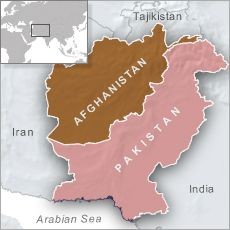
Tensions Simmer Between Pakistan and Afghanistan, in Setback for Central Asian Trade Hopes

A round of peace talks between Pakistan and Afghanistan in Istanbul came under strain after another clash between the two countries along their border. A resolution to the conflict is important to Central Asian countries that want to trade south through Afghanistan and onward to Pakistani seaports that open the way to the Indian Ocean.

Pakistan’s government and the ruling Taliban in Afghanistan accused each other of instigating the latest confrontation on Thursday, though they still expressed commitment to a delicate ceasefire that was agreed to last month. Dozens of people were killed and cross-border trade was suspended during the fighting in October.  

According to the Taliban’s account, Pakistani forces fired on the Afghan border town of Spin Boldak as the talks in Turkey began on Thursday.  

Afghan forces, “out of respect for the negotiation team and to prevent civilian casualties, have so far shown no reaction. It is worth noting that in the previous round of negotiations, both sides had agreed to extend the ceasefire and prevent any acts of aggression,” Taliban spokesman Zabihullah Mujahid said on X. 

Pakistan’s Ministry of Information and Broadcasting, however, said firing started from the Afghan side and that Pakistan forces responded. 

“The situation was brought under control due to responsible action by Pakistani forces and the ceasefire remains intact. Pakistan remains committed to ongoing dialogue and expects reciprocity from Afghan authorities,” the ministry said.

Turkey, which along with Qatar is mediating, said ahead of the talks this week that the two sides had agreed to continue the ceasefire and establish “a monitoring and verification mechanism” to ensure peace and impose penalties for any violations. But Pakistani Information Minister Attaullah Tarar, while thanking the mediators, said late Friday that Afghanistan had failed to control terrorism, indicating that the talks in Istanbul had not overcome major sticking points.  

A key dispute is over Pakistani allegations that militants have used Afghan territory as a sanctuary while carrying out attacks against targets in Pakistan. The Taliban in Afghanistan denies those allegations. Additionally, Afghanistan doesn’t recognize its porous, 2,600-kilometer border with Pakistan, saying it’s a British colonial-era construct that divided the ethnic Pashtun populations that have traditionally dominated Afghanistan. 

These complexities pose a challenge for landlocked countries in Central Asia that are looking to diversity their trade routes. Several Central Asia-South Asia projects in the works – the Trans-Afghan Railway, the TAPI natural gas pipeline and the CASA-1000 electricity project – have a long way to go before completion. 

Meanwhile, the post-Soviet states of Kazakhstan, Kyrgyzstan, Uzbekistan, Turkmenistan and Tajikistan are working on other trade and investment opportunities. Their leaders held a summit with U.S. President Donald Trump in Washington on Thursday, building ties with the West even as they nurture more established contacts with Russia and China.