• KGS/USD = 0.01144 0%
  • KZT/USD = 0.00213 0%
  • TJS/USD = 0.10562 0%
  • UZS/USD = 0.00008 0%
  • TMT/USD = 0.28530 0%
  • KGS/USD = 0.01144 0%
  • KZT/USD = 0.00213 0%
  • TJS/USD = 0.10562 0%
  • UZS/USD = 0.00008 0%
  • TMT/USD = 0.28530 0%
  • KGS/USD = 0.01144 0%
  • KZT/USD = 0.00213 0%
  • TJS/USD = 0.10562 0%
  • UZS/USD = 0.00008 0%
  • TMT/USD = 0.28530 0%
  • KGS/USD = 0.01144 0%
  • KZT/USD = 0.00213 0%
  • TJS/USD = 0.10562 0%
  • UZS/USD = 0.00008 0%
  • TMT/USD = 0.28530 0%
  • KGS/USD = 0.01144 0%
  • KZT/USD = 0.00213 0%
  • TJS/USD = 0.10562 0%
  • UZS/USD = 0.00008 0%
  • TMT/USD = 0.28530 0%
  • KGS/USD = 0.01144 0%
  • KZT/USD = 0.00213 0%
  • TJS/USD = 0.10562 0%
  • UZS/USD = 0.00008 0%
  • TMT/USD = 0.28530 0%
  • KGS/USD = 0.01144 0%
  • KZT/USD = 0.00213 0%
  • TJS/USD = 0.10562 0%
  • UZS/USD = 0.00008 0%
  • TMT/USD = 0.28530 0%
  • KGS/USD = 0.01144 0%
  • KZT/USD = 0.00213 0%
  • TJS/USD = 0.10562 0%
  • UZS/USD = 0.00008 0%
  • TMT/USD = 0.28530 0%

At Antalya Forum, Tokayev Delivers a Stark Warning on Iran and the UN

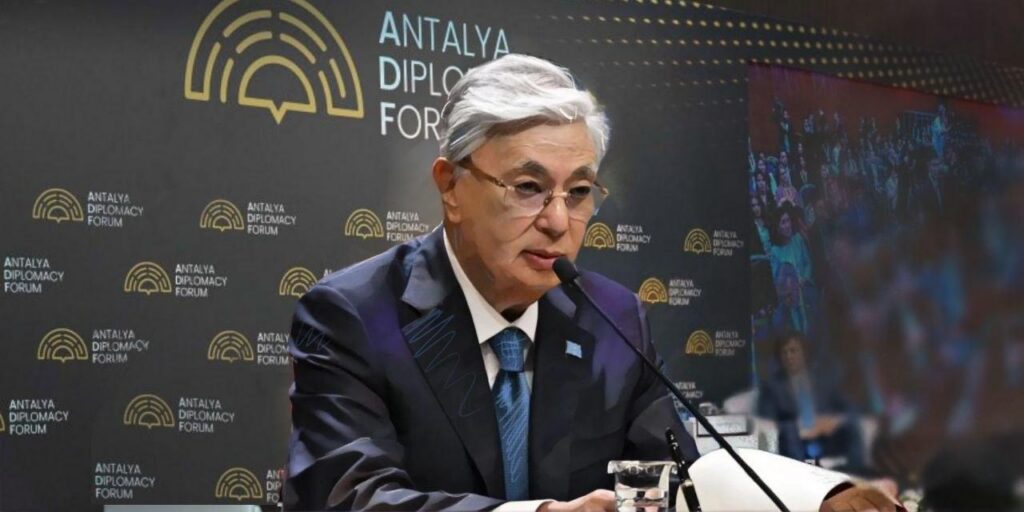
Last week, the Turkish resort city of Antalya hosted the fifth annual Antalya Diplomacy Forum. Particular attention was drawn to the speech by Kazakhstan’s president, Kassym-Jomart Tokayev, who once again raised the issue of reforming the United Nations.

Held since 2021 at the initiative of Turkish President Recep Tayyip Erdoğan, the forum brings together political leaders, diplomats, experts, business representatives, media, and civil society. It serves as a platform for bilateral and multilateral contacts, political consultations, and informal diplomacy.

This year, alongside Turkey and Kazakhstan, the forum was attended by delegations from Azerbaijan, Qatar, Pakistan, Syria, Georgia, North Macedonia, Moldova, Bosnia and Herzegovina, Slovenia, Burundi, and the Democratic Republic of Congo, all led by their respective heads of state.

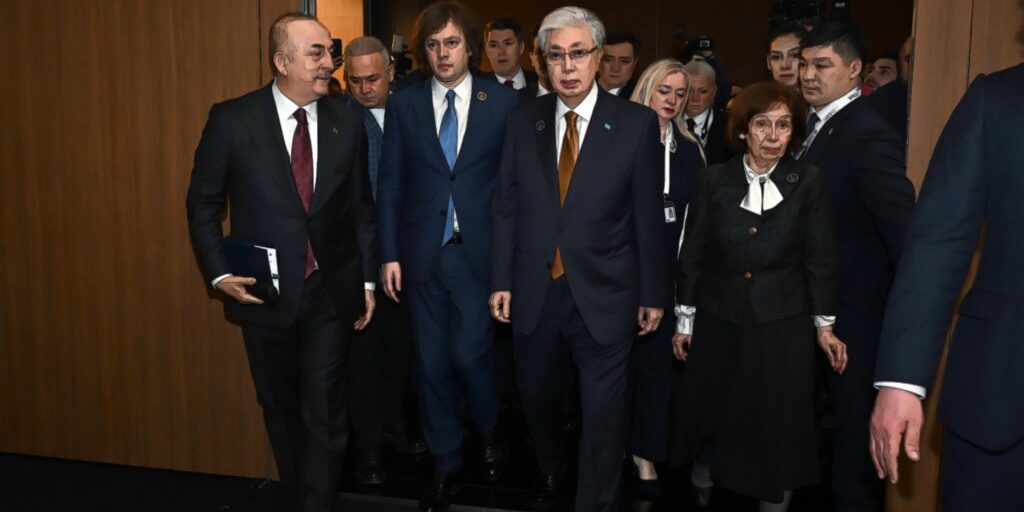
A widely circulated photograph from the opening ceremony, showing Erdoğan and Tokayev in conversation, was interpreted by some observers as reflecting the Kazakh president’s standing and the level of engagement between the two leaders.

Political analyst Daniyar Ashimbayev pointed to what he described as a convergence in messaging between the two presidents.

“Opening the forum, President Erdoğan stated that ‘the world is experiencing a crisis of direction alongside a crisis of order.’ He noted that ‘mechanisms designed to protect human rights and international security remain ineffective and often inactive in the face of serious violations.’ Kassym-Jomart Tokayev, judging by his speech, sought, drawing on his experience and position, to respond to the concerns expressed by the Turkish and other leaders,” Ashimbayev said.

Another Kazakh political analyst, Andrey Chebotarev, highlighted the broader diplomatic context, noting that Erdoğan is expected to pay a state visit to Kazakhstan on May 14.

“In addition to bilateral cooperation, this visit is linked to the upcoming informal summit of the Organization of Turkic States in the city of Turkestan. It is worth recalling that following the previous informal OTS summit, held online on March 31, 2021, Turkestan was officially recognized as the spiritual capital of the Turkic world. Holding a similar summit in person is intended to underscore both the city’s significance and Kazakhstan’s role within the Turkic community,” Chebotarev said.

Analyzing Tokayev’s remarks, Chebotarev also pointed to what he described as a consolidation of Kazakhstan’s position on the situation in the Middle East, particularly in the context of tensions involving the United States, Israel, and Iran.

“Astana had previously signaled its distancing from all parties to the conflict, while expressing solidarity with the Arab states of the Persian Gulf, which, despite not being direct participants, were affected by strikes linked to the broader confrontation. In this context, the Kazakh president’s call for restraint and a cessation of hostilities is not merely an expression of neutrality but reflects the position of an active international actor seeking a diplomatic resolution,” he said.

One of the central elements of Tokayev’s speech was his assessment of developments surrounding Iran. He called for greater awareness of global dynamics and emphasized the need to address root causes.

“The core issue is the proliferation of nuclear technologies and nuclear weapons. This must be the central topic of negotiations when discussing the conflict around Iran,” Tokayev said.

Nuclear non-proliferation remains a cornerstone of Kazakhstan’s foreign policy. The country is one of the few in the world to have voluntarily renounced nuclear weapons, despite inheriting the world’s fourth-largest arsenal following the collapse of the Soviet Union. At that time, Kazakhstan possessed more than 100 missiles, 1,040 nuclear warheads, 40 strategic bombers, and 370 nuclear-armed cruise missiles.

Kazakhstan was also the only Muslim-majority country to possess such a nuclear capability, ranking fourth globally at the time.

In the documentary Kazakh: History of the Golden Man by Oliver Stone, Kazakhstan’s first president, Nursultan Nazarbayev, recalled that period. According to him, figures such as former UK Prime Minister Margaret Thatcher and U.S. Secretary of State James Baker visited Kazakhstan to discuss the fate of its nuclear arsenal.

“They all came and asked: What will you do with the missiles?” Nazarbayev said.

He added that Kazakhstan’s Foreign Ministry, then headed by Tokayev, received a letter from several Islamic countries suggesting that Kazakhstan should retain its nuclear capability. Later, Palestinian leader Yasser Arafat visited Kazakhstan on behalf of Muammar Gaddafi to inquire about the issue.

“He said he had come on behalf of our friends. Of course, I never considered selling those missiles. I simply said: ‘Maintaining them is very expensive; Kazakhstan cannot afford it.’ He asked how much it would cost. I jokingly said $20 billion. But he took it seriously and said he would pass the message along,” Nazarbayev said.

In Antalya, Tokayev also addressed the issue of UN reform, calling for a more candid assessment of its prospects.

“Everyone talks about the need to support the UN. That is a fact. But everyone also says the organization must not only be supported, but reformed. Yes, that is true. But let us be completely frank. No one believes this will happen very soon, because we have been talking for a long time about reforms, changes, and restructuring of the UN, but this is not happening. We must honestly acknowledge that the Security Council is the main element for reforming the UN,” he said.

According to Tokayev, so-called middle powers often demonstrate a higher degree of responsibility in international affairs than major powers.

“Of course, I am not claiming we are the best in the world. But we demonstrate a high level of responsibility in global affairs, both in practice and diplomacy. It would not be an exaggeration to say that today, middle powers often show greater responsibility than major powers represented in the Security Council, which unfortunately frequently block solutions to key global problems,” he said.

Political analyst Marat Shibutov described the tone of Tokayev’s speech as notably direct.

“He delivered a sober and candid diagnosis of what is happening in the world,” Shibutov said.

Tokayev did not come to Antalya with a detailed blueprint for remaking the international system. But he did offer a clear message: the old mechanisms are failing, the risks are growing, and states such as Kazakhstan intend to argue more forcefully for restraint, negotiation, and institutional reform. Whether that message will shape events is another matter. But in Antalya, Tokayev made clear that Astana wants to be heard not only as a regional actor, but as a country with something broader to say about how an increasingly unstable world should be managed.
Water in Central Asia: Between Reality and Alarmism

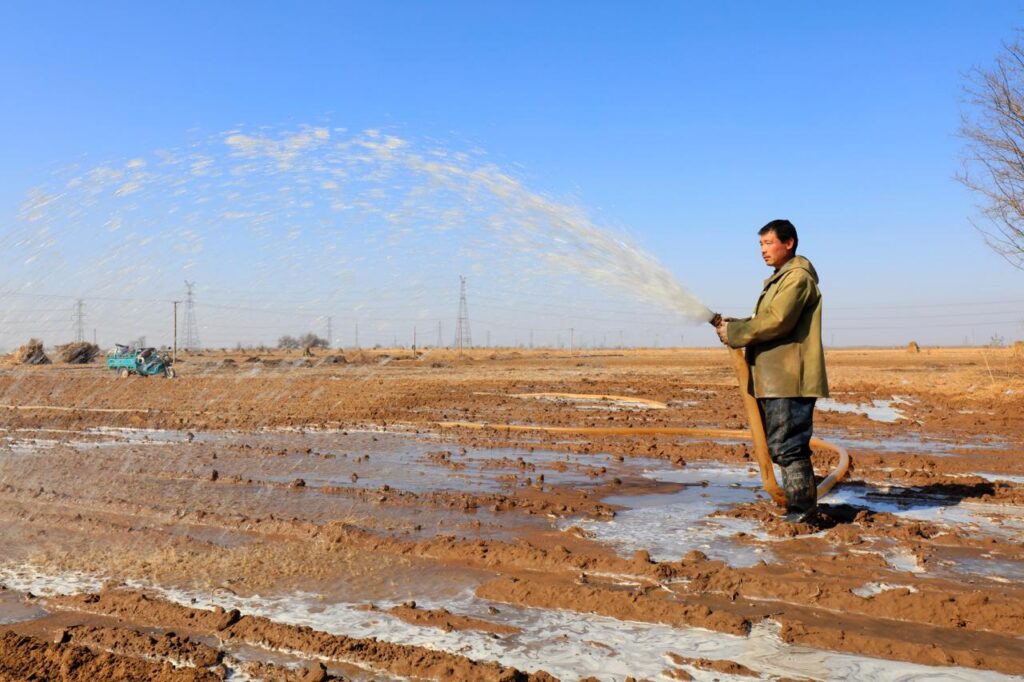
The Regional Ecological Summit 2026 will take place in Astana on April 22-24. The event is intended to elevate Central Asia’s water and environmental agenda to the level of systemic solutions.

Alongside preparations for the summit, however, an increasingly alarmist narrative is gaining traction among some experts. In this framing, water resources in Central Asia are presented as being in crisis, with predictions of shortages, threats to food security, and even potential conflict. Phrases such as “there is not enough water,” “the harvest is at risk,” and “the region is on the brink” are used with growing frequency.

Such assessments are typically based on generalized and dramatized claims that fail to differentiate between countries or specific river basins. This creates the impression of a single, simultaneous crisis, whereas in reality the situation is far more complex.

Yes, there is a problem, but it is not sudden or one-dimensional. Water scarcity in Central Asia is real. However, it must be interpreted accurately and objectively.

According to expert estimates, up to 40% of water in the region is lost through deteriorating irrigation infrastructure, while more than 80% of water consumption is accounted for by agriculture.

Current practice supports these figures.

In southern Kazakhstan, seasonal water supply restrictions are regularly imposed. This year, for example, the government approved consumption limits for southern regions due to an expected shortage during the growing season.

Uzbekistan has said, in joining the World Bank’s Water Forward initiative, that it aims to introduce water-saving technologies across its 4.1 million hectares of irrigated land and reduce irrigation losses by 25%.

Equally important are developments in upstream countries, Kyrgyzstan and Tajikistan. According to a study by the Organisation for Economic Co-operation and Development, the region exhibits a structural interdependence between water and energy. More than 80% of electricity in these countries is generated by hydropower, meaning water resources are used simultaneously for energy production and irrigation. This creates systemic interdependencies. At the same time, coordination of water releases and electricity generation remains suboptimal, and the absence of long-term regulatory mechanisms has already led to water shortages during certain summer periods.

This is a key point: the issue is not so much an absolute lack of water, but the complexity of coordination between upstream and downstream countries, as well as between sectors within individual states.

In other words, water shortages in Central Asia are often driven less by natural conditions than by how water is distributed and managed.

Particular attention in alarmist narratives is given to Afghanistan and the Kushtepa Canal.

Estimates commonly suggest that the Qosh Tepa Canal could eventually divert around 6-10 km³ of water per year from the Amu Darya, although projections vary and depend on how fully the canal is completed and operated.

While the canal is not yet fully operational, regional officials already treat it as a serious medium-term risk, with the precise scale of future withdrawals still under discussion.

Countries in the region, especially Uzbekistan, have been pursuing dialogue with Afghanistan over the canal and its future water withdrawals.

In this context, portraying Afghanistan as a “source of crisis” reflects a combination of politicization and premature alarmism.

In a similar vein, some analyses increasingly link water issues in Central Asia to developments surrounding Iran. The logic typically presented is as follows: instability around Iran leads to disruption of transport routes, which drives up food prices, increases pressure on domestic resources, and ultimately worsens water shortages.

While superficially plausible, this reasoning oversimplifies the situation.

First, Central Asian countries have limited dependence on food imports via Iranian routes. A substantial share of trade is conducted through intra-regional exchanges, northern corridors, and alternative logistics channels.

Second, even when prices rise, the impact is generally indirect, affecting the cost of goods rather than the physical availability of water.

Overall, this line of reasoning illustrates how external factors are layered onto an existing issue, water scarcity, to amplify its perceived severity.

At the same time, institutional mechanisms in the region are evolving. The Central Asian Interstate Commission for Water Coordination remains active, infrastructure modernization projects are ongoing, and policy coordination is gradually strengthening. The Regional Ecological Summit 2026 is part of this broader process.

The initiative, proposed by Kassym-Jomart Tokayev, was conceived not as a one-off event but as a long-term platform. Its purpose is not only to identify problems, but to develop coordinated approaches and practical mechanisms for cooperation.

Discussions are also underway regarding a potential meeting of the heads of state of the founding members of the International Fund for Saving the Aral Sea alongside the summit, which could further strengthen the regional agenda.

Another Kazakhstani initiative, the proposal to establish an International Water Organization under UN auspices, also reflects this thinking. While still conceptual, it underscores an important principle: when the consequences of water projects extend beyond national borders, regulatory mechanisms must also be international.

Ultimately, the water issue in Central Asia is not a sudden crisis, but a long-term governance challenge. The evidence shows that much of the deficit is linked to inefficiency and losses, while the impact of new factors, including Afghanistan, is gradual. At the same time, the C5 countries already possess coordination mechanisms and are working to improve them.

It is this process, not alarmism, that will shape the region’s water dynamics in the years ahead.

Kyrgyz Banks Hold $1.3 Billion in Liquidity, but Businesses Lack Long-Term Financing

Kyrgyzstan’s banking sector holds a substantial volume of liquidity, yet small and medium-sized enterprises (SMEs) continue to face a shortage of development financing, according to a report by the Asian Development Bank.

The ADB estimates that the system has accumulated around $1.3 billion in excess liquidity. At the same time, more than 45% of bank loans, and a similar share of microloans, are directed toward consumer needs, while lending to industry has steadily declined.

Representatives of the banking sector say they are familiar with the report’s findings but consider them only partially accurate.

“Commercial banks in Kyrgyzstan do indeed have sufficient funds, but the bulk of these deposits are short-term. The figures mentioned in the report mainly refer to balances on corporate accounts that are not time-bound, they are demand deposits and can be withdrawn at any moment. As for long-term funding for large-scale projects in industry and agriculture, banks lack such resources,” Anvar Abdraev, President of the Union of Banks of Kyrgyzstan, told The Times of Central Asia.

According to Abdraev, this helps explain the perception that banks are reluctant to lend to industry and SMEs.

He added that large businesses generally do not face financing constraints, as they tend to secure funding from international financial institutions and intergovernmental funds on concessional terms, often bypassing commercial banks.

Banking sector representatives also point to structural challenges on the borrowers’ side, including underdeveloped business plans, which increase credit risk.

In addition, a significant share of applications comes from startups, which banks classify as high-risk projects. Another limiting factor is the lack of sufficient liquid collateral among entrepreneurs.

Banks also emphasize that non-performing loans in their portfolios are maintained at around 5-6%, prompting stricter borrower assessment criteria. As a result, the loan approval process for businesses can be lengthy, and rejection rates remain high.

“The growth rate of consumer lending does indeed exceed the volume of loans directed toward business development. This is primarily because consumer loans are much easier to obtain today. This has largely been made possible by new banking technologies. Consumer loans can be issued online using remote identity verification. Moreover, the average size of such loans is significantly smaller than that of business loans,” Abdraev added.

Thus, despite the high level of liquidity in the banking system, the shortage of long-term funding, combined with borrower-related risks, continues to constrain lending to Kyrgyzstan’s real sector.

Tokayev Flags Nuclear Proliferation Risk in the Iran Conflict

On April 17 at the Antalya Diplomacy Forum, Kazakhstan President Kassym-Jomart Tokayev said that in the Iran conflict, the deeper issue is not freedom of navigation through the Strait of Hormuz but the spread of nuclear technologies and arms. That, he said, is the issue that should stand at the center of negotiations over the crisis

Astana has long treated its anti-nuclear stance as a core state principle. Tokayev has said explicitly in the past that a nuclear-weapon-free world is a policy priority of his government. That aspiration has become part of Kazakhstan’s national identity. At Antalya, he did not produce a new line. He applied an established one to a new crisis.

Kazakhstan’s sensitivity on the issue lies at Semey, formerly Semipalatinsk, in eastern Kazakhstan, where the Soviet Union built one of its principal nuclear test grounds, a site covering about 18,500 square kilometers. Between 1949 and 1989, the USSR conducted 456 nuclear tests there, including 116 atmospheric tests and 340 underground ones. The first Soviet atomic bomb was detonated there on August 29, 1949. For Kazakhstan, Semey is not only a chapter in Soviet strategic history; it is a prolonged experience of severe human and environmental exposure, environmental damage, and official secrecy borne on Kazakh territory.

That record helps explain why Tokayev’s public language has, on two recent occasions, echoed Donald Trump’s. On April 8, Tokayev said that the Middle East ceasefire “was made possible through the goodwill and wisdom of U.S. President Donald Trump, Iran’s leadership, and other countries involved in the conflict,” explicitly crediting Trump’s role in making de-escalation possible. At Antalya on April 17, Tokayev said Trump had raised the UN’s dysfunction “very eloquently” at the previous September’s UN General Assembly session, adding, “I fully agree with him.” The convergence is notable. Tokayev’s emphasis on non-proliferation, restraint, and negotiated crisis management aligns with Trump’s support for the truce and his criticism of a UN-centered system that Tokayev likewise sees as increasingly unable to resolve major crises.

At independence, Kazakhstan inherited 1,410 nuclear warheads deployed on Soviet strategic systems, including intercontinental missiles and heavy bombers. It acceded to the Nuclear Non-Proliferation Treaty in 1994 and transferred its last nuclear warhead to Russia in April 1995. This history gives Kazakhstan a place in non-proliferation diplomacy that few states can claim. It absorbed the consequences of nuclear testing and then renounced a major inherited nuclear arsenal.

This history has never receded into symbolism; its human consequences endure. Populations near the test site and in downwind settlements were exposed to fallout over decades, and the medical afterlife remains an active field of research. The International Agency for Research on Cancer, part of the World Health Organization, established a prospective cohort study near the Semipalatinsk test site, known as the SEMI-NUC project, to track long-term outcomes among residents exposed to chronic low and moderate doses of radiation.

Registry-based research has found that exposed populations are subject to elevated cardiovascular mortality risks, while other studies have examined thyroid disease, cancer, reproductive effects, and other lasting health consequences. According to some estimates, low-dose radiation from the Semipalatinsk program affected more than a million people over time. Entire communities lived with repeated exposure under Soviet secrecy before the scale of contamination was finally publicly acknowledged. For Kazakhstan, this is not a single closed historical episode but a dispersed health burden carried across decades.

These events and phenomena entered politics through public mobilization as well as state action. In 1989, the Nevada-Semipalatinsk movement emerged as a mass mobilization against continued testing. It linked Kazakhstani and American anti-nuclear activists, drawing in writers, scientists, workers, and ordinary citizens. Tied by name to the better-known Nevada test site in the United States, it became a major force in the campaign to shut the site down. What had long been regarded in Moscow as a remote regional burden turned into a nationwide political question. The permanent closure of the test ground on August 29, 1991, was not only an act of republican authority but also a turning point for society at large. Anti-nuclear politics in Kazakhstan were never only official doctrine; they were also a broad social cause.

It is therefore not surprising that nuclear questions still carry unusual moral and political weight in the country. A survey conducted by the Kazakhstan Institute for Strategic Studies in August 2024 found that 53.1% of respondents supported building nuclear power plants, 32.5% opposed the idea, and 14.4% were undecided. Among opponents, the main concerns were the risk of accidents and environmental damage. The survey covered 1,200 respondents across Kazakhstan’s 17 regions and the three largest cities, so the results were not merely a local reflex around the former test site. In Kazakhstan, nuclear policy still passes through memories of bodily risk, contamination, and distrust carried forward from Semey.

The October 2024 referendum clarified the distinction. Official results showed that 71.12% of participating voters supported the construction of a nuclear power plant, with turnout above 63%. The legacy of Semipalatinsk no longer operates as a simple veto on civilian nuclear development. But that is precisely why Tokayev’s Antalya remarks carry weight. Civilian nuclear power, domestic energy policy, and the spread of nuclear arms are different questions, and public debate in Kazakhstan increasingly distinguishes among them. The referendum did not erase Semey’s historical weight. It made clearer the distinction between peaceful nuclear use under safeguards and the older fear attached to uncontrolled nuclear danger.

There is also a practical diplomatic continuity behind Tokayev’s words on Iran. Kazakhstan welcomed the 2015 Joint Comprehensive Plan of Action, said that its implementation would strengthen non-proliferation and regional security, and pointed to its own contribution through two rounds of talks in Almaty. It also agreed to host the IAEA Low Enriched Uranium Bank at the Ulba Metallurgical Plant in Oskemen, giving Kazakhstan an operational place inside the institutions of non-proliferation. The Almaty negotiations made Kazakhstan a venue for negotiation rather than a distant observer, while the LEU Bank placed part of the non-proliferation system on Kazakh territory. Tokayev’s remarks in Antalya are deeply embedded both in Kazakhstan’s historical experience and in its diplomatic practice.

Tokayev’s intervention was more than a comment on a passing crisis. It came from a state on whose territory the Soviet Union detonated its first atomic bomb and whose citizens lived with the fallout: a state whose post-Soviet identity was shaped by closing the test site and voluntarily renouncing inherited warheads, and whose diplomacy has consistently sought to transform that history into international norms and institutions. In Antalya, Tokayev drew on Kazakhstan’s own historical experience of the strategically more consequential danger of nuclear proliferation to argue that the Iran crisis should not be reduced to maritime throughput or commercial disruption in the Gulf.

Animal Euthanasia in Kazakhstan: Cruelty or Necessity?

In early April 2026, Kazakhstan’s lower house of parliament, the Mazhilis, approved in the first reading amendments to the law “On Responsible Treatment of Animals.” The key proposed change is a shift away from the policy of returning vaccinated and sterilized dogs to their habitats, toward the legalization of euthanasia.

The decision has triggered a sharp public divide: supporters cite safety concerns, particularly for children, while critics view the amendments as a rollback of the humane principles enshrined in the 2021 law and an attempt to compensate for institutional shortcomings through the mass culling of stray animals.

Background: From Reform to Reversal

In 2021, Kazakhstan sought to overhaul its approach to managing stray animal populations, aligning it with international practices. This led to the adoption of a dedicated law, which formalized a transition from culling to the CNVR model (capture, neuter, vaccinate, and return). The reform was presented as a compromise between humane treatment and public safety.

The shift was driven by both civic activism and political momentum. In 2020, President Kassym-Jomart Tokayev described attitudes toward animals as a benchmark of societal development, acknowledging systemic shortcomings in the country. He later emphasized that state protection should extend to both people and animals.

The initiative received support both domestically and internationally. Authorities pledged a systemic approach, including the creation of a national animal registry, mandatory microchipping, expansion of shelters, and tighter regulation of pet ownership. The expectation was that these measures would gradually reduce the stray population in a humane and sustainable manner.

The Case for the Amendments: Safety and Cost

The amendments, introduced in 2024, propose a transition to a no-return capture model. Despite criticism from animal welfare groups, the bill passed its first reading on April 8, 2026, and was forwarded to the Senate eight days later.

Lawmakers, including Mazhilis committee chairman Yedil Zhanbyrshin, argue that the CNVR model has failed to deliver results under Kazakhstan’s conditions. They cite an increase in the stray dog population from 207,000 in 2022 to 247,000 in 2023.

Another factor highlighted is the unintended consequence of mandatory microchipping introduced in 2023. According to lawmakers, the cost of registration and sterilization, averaging around 27,000 KZT (approximately $54), led some owners to abandon their pets. This, they argue, is reflected in the sharp decline in registered dogs, from 28,000 in 2022 to just 961 in 2024.

Public safety remains the central argument. According to the Ministry of Health, Kazakhstan records an average of 105 animal attacks per day.

Fiscal considerations are also significant. A full CNVR program is estimated to require annual spending of 14-15 billion KZT (approximately $28-30 million). Against the backdrop of competing budget priorities, including education and healthcare, lawmakers consider such expenditures excessive. They also point to practices in countries such as the United States and Japan, where euthanasia is used as a population control measure.

Under the proposed model, captured animals would be held for a limited period, 15 days for unchipped dogs and 60 days for those with identified owners. If no owner or adopter is found within that timeframe, the animal would be put down.

The Case Against: Implementation Failure, Not Model Failure

Animal welfare organizations, including the KARE Foundation and the INUCOBO Association, challenge these conclusions, presenting alternative data. Their central argument is that the issue lies not in the CNVR model itself, but in its poor implementation.

At a press conference in Almaty, opponents presented an audit of the 2021 law’s enforcement. Their conclusion was clear: the law did not fail, it was never properly implemented.

International experience suggests that CNVR becomes effective only when at least 70% of the stray population is covered. In Kazakhstan, coverage has fallen far short of that threshold. In 2022, only 58 dogs were sterilized nationwide, while more than 80,000 animals were culled. In 2024, 85.3% of the 268,000 captured animals were killed. In 2025, of 276,000 captured dogs, only 12.6% were sterilized, while nearly 85% were euthanized.

Critics argue that under such conditions, it is impossible to assess the effectiveness of a humane approach. In practice, large-scale culling continued, while the promised shelter infrastructure was not developed.

INUCOBO also cites recommendations from the World Organization for Animal Health, which do not recognize euthanasia as an effective method of population control. Experts emphasize that CNVR is a long-term strategy: it reduces reproduction in the early stages, with measurable population decline occurring only over time.

According to animal welfare advocates, current policy addresses symptoms rather than root causes, primarily irresponsible pet ownership.

They also dispute the narrative surrounding public safety risks. In Almaty, of more than 6,100 recorded bite incidents in 2025, only around 10% involved stray dogs. The majority were caused by owned animals allowed to roam freely or kept without proper containment.

A similar pattern is observed in fatal incidents. According to the Bureau of National Statistics, dog attacks result in roughly one death per year. Many high-profile cases have occurred in regions where CNVR programs were not implemented.

What Comes Next: Senate Review

The bill is now under consideration in the Senate. Senate Speaker Maulen Ashimbayev has said lawmakers will conduct a detailed review aimed at balancing public safety with principles of humane treatment.

At the same time, the government’s position appears to be less than unified. According to local media reports, representatives of the Presidential Administration have expressed reservations about several of the proposed amendments, suggesting that the debate extends beyond parliament.

The final decision could shape not only animal control policy, but also the broader direction of governance between short-term administrative solutions and long-term institutional reform.

Kazakhstan Aims to Boost IT Services Exports to $5 Billion by 2030

Kazakhstan plans to increase its IT services exports nearly fivefold, to $5 billion by 2030, officials and industry participants said at a roundtable focused on positioning the country as a regional hub for international tech talent and digital nomads.

According to official data, Kazakhstan exported IT services worth $471 million to 95 countries in the first nine months of 2025. In the final quarter of the year, that figure more than doubled, reaching $1.142 billion as of January 1, 2026.

Export revenues also exceeded spending on imported digital solutions by more than 2.6 times, with imports totaling $429 million.

The new export target is expected to be supported by workforce expansion and talent attraction initiatives. Representatives of Astana Hub said the country plans to train 10,000 specialists in AI by 2030. At the same time, Kazakhstan is promoting its Digital Nomad Residency program, launched in January 2025, aimed at attracting foreign IT professionals.

To date, more than 700 applications from 30 countries have been submitted under the program, with over 120 specialists granted residency status.

“Human capital development is the foundation on which Kazakhstan’s growth as a digital hub is built,” said Deputy Prime Minister and Minister for Artificial Intelligence and Digital Development Zhaslan Madiyev. “We aim to make the Digital Nomad process fully digital, transparent, fast, and convenient. The arrival of highly qualified professionals is not just a statistic, it brings international experience, new competencies, and links to global markets. Our goal is to create conditions where talented IT professionals can realize their potential here and contribute to Kazakhstan’s economy.”

Participants at the roundtable, including engineers and analysts from international companies, also shared their relocation experiences and proposed improvements to digital services.

Following the meeting, stakeholders agreed to continue work through a permanent working group to better adapt the program to the needs of the IT community.

As previously reported by The Times of Central Asia, President Kassym-Jomart Tokayev proposed establishing a regional center for cooperation with Japan in digital transformation and artificial intelligence in Astana.