
• KGS/USD = 0.01144 0%
  • KZT/USD = 0.00209 0%
  • TJS/USD = 0.10523 0%
  • UZS/USD = 0.00008 0%
  • TMT/USD = 0.28530 0%
  • KGS/USD = 0.01144 0%
  • KZT/USD = 0.00209 0%
  • TJS/USD = 0.10523 0%
  • UZS/USD = 0.00008 0%
  • TMT/USD = 0.28530 0%
  • KGS/USD = 0.01144 0%
  • KZT/USD = 0.00209 0%
  • TJS/USD = 0.10523 0%
  • UZS/USD = 0.00008 0%
  • TMT/USD = 0.28530 0%
  • KGS/USD = 0.01144 0%
  • KZT/USD = 0.00209 0%
  • TJS/USD = 0.10523 0%
  • UZS/USD = 0.00008 0%
  • TMT/USD = 0.28530 0%
  • KGS/USD = 0.01144 0%
  • KZT/USD = 0.00209 0%
  • TJS/USD = 0.10523 0%
  • UZS/USD = 0.00008 0%
  • TMT/USD = 0.28530 0%
  • KGS/USD = 0.01144 0%
  • KZT/USD = 0.00209 0%
  • TJS/USD = 0.10523 0%
  • UZS/USD = 0.00008 0%
  • TMT/USD = 0.28530 0%
  • KGS/USD = 0.01144 0%
  • KZT/USD = 0.00209 0%
  • TJS/USD = 0.10523 0%
  • UZS/USD = 0.00008 0%
  • TMT/USD = 0.28530 0%
  • KGS/USD = 0.01144 0%
  • KZT/USD = 0.00209 0%
  • TJS/USD = 0.10523 0%
  • UZS/USD = 0.00008 0%
  • TMT/USD = 0.28530 0%

Uzbekistan Emerges as One of Europe and Central Asia’s Fastest-Growing Economies

Uzbekistan is on track to be one of the five fastest-growing economies in the broader Europe and Central Asia region next year, according to the World Bank’s Europe and Central Asia Economic Update, Fall 2025. The report projects Uzbekistan’s gross domestic product will expand by about 6.2% in 2025 – well above the regional average amid an overall slowdown across emerging European and Central Asian markets. Overall regional GDP growth is expected to ease to roughly 2.4% in 2025, down from 3.7% in 2024, as weaker output in Russia drags on the aggregate.

Central Asia as a whole continues to stand out. The World Bank notes that countries in the region are collectively growing around 5.9% – making it the fastest-growing part of Europe and Central Asia for the third straight year. Within that group, Tajikistan is also forecast to grow by 7%, Kyrgyzstan by 6.8%, and Kazakhstan by 5.5%. That performance keeps much of Central Asia well ahead of Europe’s advanced economies, which are expected to grow by just over 1% on average. Turkmenistan is excluded from the World Bank’s regional calculations because it does not publish internationally comparable economic data.

For Uzbekistan, in particular, inclusion among the region’s top performers marks a sharp turnaround for a country that, less than a decade ago, was largely closed to global markets. By way of comparison, according to the World Bank, Uzbekistan’s economy is about eight times larger than Kyrgyzstan’s and roughly seven times larger than Tajikistan’s. In 2024, Uzbekistan’s gross domestic product was roughly $105 billion, compared with approximately $14 billion for Kyrgyzstan and $15 billion for Tajikistan.

Remittances and Investment Fuel Expansion

Rising income from abroad and expanding investment at home due to an increasingly investor-friendly climate are the twin engines of Uzbekistan’s boom. The World Bank attributes its upgraded forecast partly to stronger-than-expected remittances and higher capital spending. In the first half of 2025, remittances sent home by Uzbek workers – mainly from Russia, Turkey, and South Korea – jumped 27% year-on-year to reach around $8.2 billion, providing a surge in household consumption. At the same time, both public and private investment are climbing.

Government spending on infrastructure and industrial projects remains high, and foreign capital is flowing in at record levels. According to Uzbekistan’s Ministry of Investment, Industry and Trade, foreign direct investment reached about $10 billion in 2024, the highest on record. Projects span energy, agriculture, and information technology, with investors from South Korea, China, the Gulf states, and Europe among the most active. The International Monetary Fund’s 2024 Article IV Consultation observed that “robust investment and resilient consumption” have kept growth well above the overall regional average.

Reforms Since 2016 Have Laid the Groundwork

This acceleration did not happen by chance. Since President Shavkat Mirziyoyev came to power in 2016, Uzbekistan has pursued a series of market-oriented reforms to dismantle decades of economic isolation and stagnation. The government unified the exchange rate, lifted currency restrictions, and simplified customs and tax rules. It began privatizing state enterprises, liberalizing trade, and reducing barriers to foreign business.

A decade ago, exchanging even a few hundred dollars meant walking away with stacks of Uzbek som, and often doing so on the black market. Before Mirziyoyev’s presidency, strict currency controls kept the official exchange rate far below the market rate, so many visitors and locals turned to street exchangers to get a realistic rate. The largest note at the time was 5,000 som, worth less than $2 even at the market rate. That changed after the 2017 currency reform, when the government lifted restrictions, unified the official and black-market rates, and stabilized the currency at around 8,100 som to the dollar. Higher-denomination notes soon followed, and digital payments through HUMO, Uzcard, Visa, and MasterCard have become common in major cities, underscoring how far Uzbekistan’s financial system has come.

The IMF credits these reforms with setting in motion a “virtuous cycle of higher investment, growth, and poverty reduction.” Annual GDP growth has averaged between 5 and 6% since the reform drive began, and the national poverty rate has fallen to 8.9%, with Mirziyoyev stating that, “By the end of this year, we aim to reduce it further to 6%”.

Uzbekistan is now in the final stages of its World Trade Organization (WTO) accession process, with a goal of joining by 2026, a move that could further open its economy and deepen global ties. Once relatively closed, the country now presents one of the most open investment regimes in Central Asia, underscoring how policy changes over less than a decade have transformed the business climate.

Structural Hurdles Remain

Sustaining such rapid growth will not be easy, however. State-owned enterprises continue to dominate banking, energy, and transport, and limit competition. The IMF has warned that the “state’s extensive role in the economy hinders the development of a vibrant private sector.” Continued expansion will require further privatization and regulatory reform.

External headwinds also loom. Slower growth in Russia – a major trade partner and source of remittances – could weigh on Uzbekistan’s outlook. Global inflation or disruptions to energy markets could also tighten fiscal space. The World Bank stresses that to preserve momentum, Tashkent must keep pushing on structural reforms: modernizing utilities, improving education, expanding broadband access, and ensuring transparent public investment. These efforts will determine whether the current boom can evolve into long-term, sustainable prosperity.

A New Role, Both Regionally and Beyond

Uzbekistan’s growth carries weight beyond its borders. As the most populous nation in Central Asia, with approximately 37 million people, its success also supports regional stability and development. A dynamic Uzbek economy strengthens trade routes that link China, South Asia, and Europe through the Middle Corridor, an increasingly important strategic alternative to routes passing through Russia, where Uzbekistan is working to become a central hub connecting East and West.

Western, Middle Eastern, and Asian investors are paying attention. Saudi Arabia’s energy giant ACWA Power has committed around $13.7 billion to renewable and gas projects in Uzbekistan, making it the company’s largest market outside the Kingdom. In banking, Hungary’s OTP Group became the first foreign bank to purchase an Uzbek lender, marking a milestone for the country’s financial sector. The European Bank for Reconstruction and Development now lists Uzbekistan among its top five investment destinations, with over €2 billion committed across 90 projects.

For Western governments and investors, Uzbekistan’s rise broadens access to energy and mineral resources at a time of global volatility, offering reserves of natural gas, uranium, and other materials vital for clean-energy technologies. It also opens a growing consumer market and potential manufacturing base in a region that bridges Europe and Asia. Just as importantly, Uzbekistan’s steady growth provides a measure of political and economic stability along the corridor stretching from the Caspian Sea to western China.

The United States and the European Union have both stepped up their engagement. Washington’s C5+1 platform links the five Central Asian states with the U.S. on trade and energy cooperation. The EU, meanwhile, launched its Global Gateway initiative in the region to finance sustainable infrastructure, with Brussels and Tashkent signing an Enhanced Partnership and Cooperation Agreement in 2022 to strengthen trade and governance ties. In October 2025, the EU introduced the Team Europe Initiative on Digital Connectivity in Central Asia to expand satellite-based internet access and close the region’s digital divide through new investments in infrastructure, technology, and skills. Together, these measures signal a broader Western recognition that Central Asia is gaining in strategic importance.

Outlook

Uzbekistan is entering a new phase of development, with growth no longer driven solely by commodity exports but increasingly by manufacturing, services, and information technology. The World Bank’s 2025 update notes that structural shifts “toward higher-value sectors” are already visible. Uzbekistan’s trajectory over the next few years will matter not only to its citizens but also to investors and policymakers beyond its borders. A stable, reform-minded, and growing Uzbekistan could help shape a more connected, diversified, and resilient Eurasian economy.
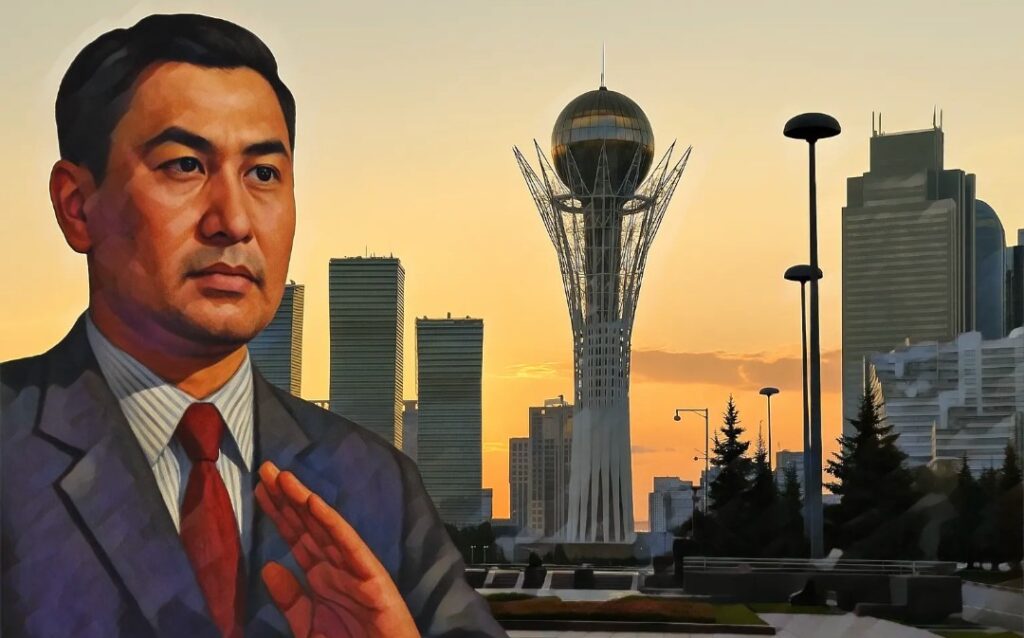

Experts Warn of Risks as Kazakhstan Considers Alcohol Sales Restrictions

On October 13, Kazakhstan’s Ministry of Internal Affairs shocked citizens by proposing a ban on the sale of alcohol in regular grocery stores, retail chains, and online platforms. The announcement overshadowed global headlines and quickly sparked widespread debate. While the number of alcohol-free settlements in Kazakhstan is rising, overall consumption remains high, prompting concerns among experts about the potential consequences of such a sweeping ban.

A Push for Specialized Alcohol Stores

The ministry justified the proposed restrictions as a public safety measure. According to Minister of Internal Affairs Yerzhan Sadenov, alcohol is a major contributor to crime, with up to 10,000 crimes committed annually under the influence. Violations of age and time restrictions on alcohol sales are reportedly common. “They sell around the clock under the guise of cafes and bars. Online delivery is widely used. The measure of revoking a license is ineffective, it can be obtained the next day by other persons,” said Sadenov.

The ministry is advocating for alcohol to be sold only in specialized stores, so-called alcohol markets. It also proposes tightening the licensing process and limiting the number of licenses issued. Additionally, it recommends restricting alcohol sales in entertainment venues, where more than 1,400 alcohol-related crimes, including three murders, have occurred.

A New Front in the Fight Against Alcohol Abuse

Many Kazakhstani citizens observe that alcohol consumption has declined since Soviet times, a trend attributed to increasing religiosity in the predominantly Muslim country and the popularity of healthy lifestyles. Still, the issue remains pressing.

Over the years, Kazakhstan has introduced stricter regulations. In 2014, restrictions were imposed on sales hours. High-alcohol-content beverages were banned in stores from 9 p.m. to 12 p.m., and low-alcohol beverages from 11 p.m. to 8 a.m. In 2020, the minimum legal age for purchasing alcohol and tobacco was raised from 18 to 21.

As of 2025, 429 villages have officially renounced alcohol. In the Aktobe region, 33 villages adopted alcohol-free policies, while 18 in the Kyzylorda region and 53 in the Atyrau region followed suit. According to officials, no offenses have been recorded in some of these areas over the past two years.

Kazakhstan Still Drinks

Despite these measures, alcohol consumption remains substantial. According to the World Health Organization (WHO), the average per capita alcohol consumption in Kazakhstan among those aged 15 and older stood at 5.4 liters of pure ethanol in 2022. The global average that year was 6.2 liters, with consumption in Europe ranging from 9 to 11 liters. In predominantly Muslim countries, the average is below 3 liters. WHO considers levels above 5 liters a significant health risk.

A June 2025 survey found the highest consumption in northern regions, Pavlodar, Kostanay, and North Kazakhstan, as well as in Astana and Almaty. In contrast, Shymkent, Atyrau, and Turkestan reported the lowest levels. Interestingly, young adults aged 18 to 24 were found to drink less frequently, a trend attributed to stronger family oversight and cultural values.

Economic and Social Risks of a Ban

Experts urge caution in pursuing aggressive restrictions. Kazakhstan’s experience with Soviet-era prohibition offers a cautionary tale. While crime and mortality declined, organized crime flourished, and black-market alcohol production surged.

Political analyst Gaziz Abishev criticized the proposed ban as an attempt to shift responsibility onto small and medium-sized businesses. “Let those who pay taxes to keep the police running pay twice as much through the weakening of their businesses,” he said. According to Abishev, the move could worsen inflation. “Stores make a good profit on alcohol, which accounts for a significant portion of their revenue. If alcohol sales are banned, they will either have to close or increase the markup on other goods,” he warned. Consumers would face higher food prices.

Abishev also highlighted the risk of corruption. “Store owners will sell alcohol ‘under the counter’ to survive, while regulators may benefit from bribes,” he stated. He added that specialized alcohol shops will inevitably appear in every neighborhood, concentrating profits in fewer hands while harming local retailers.

Business Leaders Voice Opposition

Industry representatives echo these concerns. Gulnara Zhakupova, head of the KazAlkoTabak Association, warned that limiting alcohol sales would drive illegal trade and monopolize the market. “There are more than 65,000 neighborhood stores in the country, and alcohol sales are a significant part of their revenue,” she noted. She warned that closures and job losses are likely outcomes.

Restricting legal alcohol outlets could create shortages and push consumers toward illegal sources, including counterfeit and unsafe products. “In developed countries, up to 80% of alcohol is consumed in restaurants and bars. In Kazakhstan, more than 80% is bought in retail stores. This discrepancy must be considered,” said Zhakupova. She stressed that the proposed restrictions could introduce unjustified social tension.

EU Launches Major Initiative to Boost Digital Connectivity in Central Asia

The European Union has unveiled a major initiative to expand digital connectivity across Central Asia, aiming to bridge the region’s digital divide and promote inclusive socio-economic development, according to the EU Delegation to Kazakhstan.

The initiative, part of the EU’s Global Gateway strategy, was formally introduced during the political launch of the Team Europe Initiative (TEI) on Digital Connectivity in Central Asia. It seeks to deepen cooperation with Central Asian governments and accelerate digital transformation through investments in infrastructure, satellite technologies, and human capital.

“The Global Gateway and the Team Europe Initiative on Digital Connectivity in Central Asia are opening a new chapter,” said Aleska Simkic, EU Ambassador to Kazakhstan. “Through them, the European Union is connecting remote regions and villages in Central Asia to the internet via satellite connections. Today’s event marks an important milestone in advancing sustainable connectivity and strengthening EU-Central Asia cooperation for the years ahead.”

The TEI will be implemented through two core components. The Soft Pillar, known as the C4CA Project, will be carried out by a consortium of EU cooperation agencies led by Expertise France. It will focus on promoting safe and inclusive satellite connectivity, especially for women, youth, and marginalized groups, while supporting broader socio-economic inclusion through improved digital access.

The Hard Pillar, titled “Satellite Connectivity for Underserved Populations of Central Asia,” will be coordinated by the European Investment Bank and implemented by satellite operator SES. This component will finance and deploy satellite constellations and ground infrastructure to deliver high-speed internet to remote and underserved areas, boosting access to education, healthcare, and business opportunities.

“Connectivity, in all its forms, whether digital, infrastructural, or economic, lies at the heart of today’s global challenges,” said Sylvain Guiaugue, France’s Ambassador to Kazakhstan. “Working hand in hand with our partners in Central Asia, the consortium led by Expertise France will help develop the policies, skills, and technologies needed to ensure equal access to digital services and innovation.”

EU officials emphasized that the initiative aligns with the national digital strategies of Central Asian countries and represents a pivotal step in fostering long-term regional cooperation. Governments across the region voiced strong support for the program, highlighting its strategic importance for Central Asia’s sustainable and connected future.

500 Meters of Illegal Fishing Nets Seized in Lake Issyk-Kul

Inspectors from the Issyk-Kul Department of the Environmental and Technical Supervision Service have confiscated approximately 500 meters of synthetic fishing nets during a recent raid on Lake Issyk-Kul.

Large-scale efforts to clean and protect the lake have been underway since 2023. Ahead of this year’s tourist season, Kyrgyz President Sadyr Japarov issued a decree banning the import and use of synthetic fishing nets nationwide. He later participated in a raid on the lake himself, publicly criticizing officials for failing to fully implement the ban.

Despite the government’s strict measures, poaching continues to pose a threat. According to inspectors from the Ministry of Natural Resources, although the latest seizure is not the largest on record, it is still substantial enough to harm the lake’s delicate ecosystem. Raids have been conducted almost continuously throughout the summer.

Just days earlier, divers from the Kyrgyz Ministry of Emergency Situations retrieved 1,500 meters of nets from the lake and rescued 114 fish caught in them. Since the beginning of the year, authorities have removed a total of 80,900 meters of illegal fishing nets from Issyk-Kul.

The State Customs Service also reported intercepting a large shipment of synthetic nets at the border with China. During a routine inspection of freight trucks, 750 kilograms of fishing nets were discovered and subsequently destroyed.

Authorities warn that synthetic fishing nets are especially hazardous because they often contain lead, which can release toxic substances into the water. These toxins poison fish and destabilize the lake’s aquatic ecosystem.

Uzbekistan-Turkey Trade Reaches $2.6 Billion as Customs Cooperation Deepens

Uzbekistan and Turkey have significantly expanded their trade partnership, with bilateral trade turnover reaching $2.6 billion, according to the State Customs Committee of Uzbekistan. The milestone was announced during the fifth meeting of the Uzbekistan-Turkey Joint Customs Council, held in the historic city of Khiva.

Friendly ties between the leaders of the two countries have laid the foundation for enhanced cooperation across a broad range of sectors, including politics, trade, investment, culture, and humanitarian initiatives.

Since the inaugural Joint Customs Council meeting in 2018, trade turnover between the two countries has grown by 35%, rising from $1.9 billion to $2.6 billion by the end of 2024. Officials called this an impressive achievement in the context of ongoing global economic challenges and noted that there is still considerable room for further growth through deeper customs collaboration.

One of the most impactful developments has been the 2022 agreement on the exchange of advance information on goods and vehicles. The agreement is currently undergoing preparations for full-scale implementation. Additionally, the two countries have improved mechanisms for foreign trade data exchange and made progress in addressing statistical discrepancies during a bilateral meeting in Samarkand in September. The next round of talks on this issue is scheduled to take place in Turkey.

Another key topic at the Khiva meeting was the mutual recognition of authorized economic operators (AEOs), a proposal first introduced at the 11th meeting of customs authorities from Turkic states, held in Kazakhstan. A draft agreement on mutual recognition is currently under review by the Turkish side.

Over the past five years, Uzbekistan’s trade volume managed by AEOs has more than doubled, increasing from $1.3 billion in 2020 to $2.7 billion in 2024. Council members also reviewed a joint cooperation plan for 2025-2026, which aims to further strengthen economic relations and streamline customs procedures.

Stanford University Names Two Tajik Scientists Among World’s Top Researchers

Professors Mahsud Saimdinov and Farukh Sharopov are the only scientists from Tajikistan included in Stanford University’s prestigious “World’s Top 2% Scientists – 2025” list.

The ranking, compiled under the guidance of renowned Stanford epidemiologist Professor John Ioannidis, assesses the scientific productivity and impact of researchers worldwide. Conducted annually since 2019, it analyzes data from more than 100,000 scientists across disciplines using the Scopus (Elsevier) database.

In 2025, just two researchers from Tajikistan, Farukh Sharopov and Mahsud Saimdinov, were included in the top 2% of global scientists based on their citation impact and publication record.

Researchers in the 98th percentile or above in their field qualify for inclusion.

Farukh Sharopov: Pioneer in Pharmaceutical Chemistry

Born in 1976, Farukh Safolbekovich Sharopov is among Tajikistan’s leading chemists. A graduate of the Chemistry Department at the Tajik State University (1998), he defended his doctoral dissertation at the V. I. Nikitin Institute of Chemistry of the Academy of Sciences of Tajikistan in 2002.

Sharopov has held positions as a senior and leading researcher at the Institute of Chemistry and has taught at the Abu Ali ibn Sina Medical University. Since 2019, he has served as a senior researcher at the China-Tajikistan Innovation Center for Natural Products.

In October 2025, he successfully defended a doctoral dissertation titled “Chemical Study of Secondary Metabolites of Essential Oil Plants Using Gas Chromatography and Mass Spectrometry.”

According to Scopus data as of October 14, 2025, Sharopov has authored 105 publications, which have been cited 6,881 times. He holds an h-index of 40 and ranks 692nd globally in the pharmaceutical and biomolecular chemistry field.

Mahsud Saimdinov: Global Leader in Nanotechnology

Mahsud Ismatboevich Saimdinov, born in 1988 in Isfara, is recognized internationally for his contributions to nanotechnology. A graduate and postgraduate of Lomonosov Moscow State University, he completed a postdoctoral fellowship at the King Abdullah University of Science and Technology (KAUST) in Saudi Arabia, served as a visiting researcher at MIT, and taught at the University of Toronto.

Currently, he holds a Tier II Canada Research Chair in Advanced Functional Materials and is a faculty member in the Department of Chemistry at the University of Victoria in Canada.

According to Scopus, Saimdinov has published 170 scientific papers, which have received 24,886 citations. His h-index stands at 69. In the category of nano and nanotechnologies, he ranks 630th globally, placing him among the field’s top-tier scientists.