• KGS/USD = 0.01144 0%
  • KZT/USD = 0.00196 -0%
  • TJS/USD = 0.10899 -0%
  • UZS/USD = 0.00008 -0%
  • TMT/USD = 0.28490 0%
  • KGS/USD = 0.01144 0%
  • KZT/USD = 0.00196 -0%
  • TJS/USD = 0.10899 -0%
  • UZS/USD = 0.00008 -0%
  • TMT/USD = 0.28490 0%
  • KGS/USD = 0.01144 0%
  • KZT/USD = 0.00196 -0%
  • TJS/USD = 0.10899 -0%
  • UZS/USD = 0.00008 -0%
  • TMT/USD = 0.28490 0%
  • KGS/USD = 0.01144 0%
  • KZT/USD = 0.00196 -0%
  • TJS/USD = 0.10899 -0%
  • UZS/USD = 0.00008 -0%
  • TMT/USD = 0.28490 0%
  • KGS/USD = 0.01144 0%
  • KZT/USD = 0.00196 -0%
  • TJS/USD = 0.10899 -0%
  • UZS/USD = 0.00008 -0%
  • TMT/USD = 0.28490 0%
  • KGS/USD = 0.01144 0%
  • KZT/USD = 0.00196 -0%
  • TJS/USD = 0.10899 -0%
  • UZS/USD = 0.00008 -0%
  • TMT/USD = 0.28490 0%
  • KGS/USD = 0.01144 0%
  • KZT/USD = 0.00196 -0%
  • TJS/USD = 0.10899 -0%
  • UZS/USD = 0.00008 -0%
  • TMT/USD = 0.28490 0%
  • KGS/USD = 0.01144 0%
  • KZT/USD = 0.00196 -0%
  • TJS/USD = 0.10899 -0%
  • UZS/USD = 0.00008 -0%
  • TMT/USD = 0.28490 0%
08 December 2025

Kyrgyzstan Sees Notable Drop in Poverty Rate

Kyrgyzstan’s national poverty rate dropped to 25.7% in 2024, marking a 4.1% decrease from the previous year, according to new data released by the National Statistical Committee of the Kyrgyz Republic.

In 2023, approximately 1.871 million people in the country lived below the poverty line, with nearly 62% residing in rural areas. For 2024, the poverty threshold was set at 65,417 Kyrgyz soms (around USD 748) per capita annually. The extreme poverty line was defined at 41,349 soms (approximately USD 472).

As of January 2025, Kyrgyzstan’s population stood at 7.3 million.

Many Kyrgyz households, particularly in rural communities, depend on remittances from family members working abroad, primarily in Russia. According to The Times of Central Asia, around 600,000 Kyrgyz nationals currently live outside the country, with Russia remaining the primary destination. By the end of 2024, over 379,000 Kyrgyz citizens were registered with Russia’s migration authorities.

A recent World Bank report on migration trends in Europe and Central Asia highlighted the significant economic impact of these remittances. In 2024, remittances accounted for approximately 24% of Kyrgyzstan’s GDP. The report also found that the poverty rate among households with a family member working abroad was under 10% but would exceed 50% without these external income flows.

In a related development, China pledged USD 3.7 billion in assistance to Central Asian countries, including Kyrgyzstan, to support poverty alleviation initiatives. The commitment was announced by Chinese President Xi Jinping at the inaugural China-Central Asia Summit, held in May 2023 in the city of Xi’an.

Xi stated that China would develop a plan for scientific and technological cooperation with Central Asia in the area of poverty reduction and encourage Chinese companies operating in the region to generate more employment opportunities.

Tashkent Turns to Beijing: Uzbekistan’s Military Realignment Reflects Regional Shifts

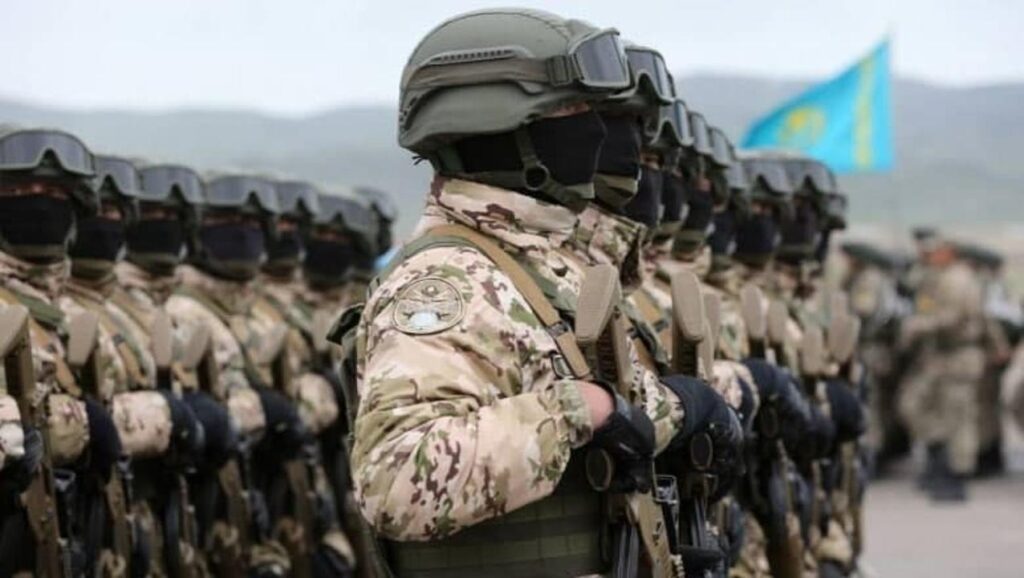
Uzbekistan is reportedly preparing to acquire fifth-generation fighter jets from China, a move that signals a significant shift in the country’s military strategy, according to the Tashkent Times. Historically dependent on Russian arms, Tashkent is now actively diversifying its defense partnerships, prompting analysts to see this as part of a broader regional realignment in Central Asia’s security architecture.

Experts from Uzbekistan and Kazakhstan told Exclusive.kz that the transition has been years in the making. Zakir Usmanov, a defense analyst at Uzbekistan’s National Scientific Research Center “Bilim Karvoni,” noted that dissatisfaction with Russia’s performance in the Collective Security Treaty Organization (CSTO) was a turning point. “It became clear that Russia was no longer fulfilling its obligations under the CSTO,” he said. In response, Uzbekistan withdrew from the bloc and began upgrading its military with Chinese-made systems, affordable, functional, and supported by flexible financial and logistical arrangements.

“The example of Turkey shows that military modernization can be achieved relatively quickly,” Usmanov explained. “Uzbekistan’s decision to acquire Chinese aircraft is deliberate, they’re cost-effective and come with training and maintenance packages.”

Kazakhstan, by contrast, is taking a more cautious approach. Military expert Daulet Zhumabekov acknowledged similarities in both countries’ efforts to diversify military procurement but emphasized Kazakhstan’s deeper institutional ties to Russia through the CSTO, open borders, and economic integration within the Eurasian Economic Union (EAEU).

“For Kazakhstan, strategic balance is essential,” said Zhumabekov. “Turning completely away from Russia would be impractical, but relying solely on Moscow is also a strategic liability.”

Nevertheless, Kazakhstan has made incremental moves toward diversification, including the purchase of Turkish drones and Airbus transport aircraft, mainly for logistics and peacekeeping rather than combat roles. Zhumabekov pointed out that around 80% of Kazakhstan’s arms and ammunition still come from Russia, which he views as a significant vulnerability.

Kuat Dombay, director of the C5+ Central Asia Studies Center in Kazakhstan, noted that Uzbekistan has moved more decisively. “China’s willingness to share military technology makes it an attractive partner,” he said. He cited Pakistan’s jointly developed JF-17 fighter jet as evidence of Beijing’s growing capabilities. Uzbekistan has already begun pilot training on Chinese platforms, indicating that this is more than a procurement deal, it represents strategic integration.

Dombay also emphasized that defense cooperation with China and Turkey tends to be less politically provocative than with Western nations. “Deals with the U.S. or Europe can provoke backlash from Moscow,” he said. “But agreements with Beijing or Ankara are seen as more neutral.”

China’s ambitions in Central Asia are expanding. A recently released White Paper from Beijing positions China as a potential guarantor of regional security, a role long associated with Russia. With relations with the West under strain, China seeks stability along its borders, particularly in regions critical to its energy and infrastructure initiatives.

Dombay highlighted symbolic diplomacy, such as President Xi Jinping’s first post-pandemic state visits to Kazakhstan and Uzbekistan, during which he explicitly affirmed support for Kazakhstan’s sovereignty, an unusual gesture widely interpreted as a message to Moscow.

“Central Asia can benefit from balancing competing powers,” Dombay suggested. “It’s like Nepal maintaining autonomy between India and China, we can do the same.”

Looking forward, experts believe that real security will require more than diversified procurement. Regional cooperation, including joint defense production and potentially a regional military alliance, is seen as a long-term goal. While both Kazakhstan and Uzbekistan manufacture armored vehicles, production remains duplicative. Dombay argues that a more rational division of labor, modeled on European defense coordination, would benefit all.

Still, political constraints remain. Zhumabekov expressed skepticism that Kazakhstan could lead such an initiative while it remains politically tethered to Moscow. “We’re not yet a fully independent strategic actor,” he said. “Until we can make autonomous decisions, true regional defense cooperation will remain out of reach.”

Nonetheless, the trajectory is clear. With Russia increasingly isolated due to its war in Ukraine and mounting international sanctions, Central Asian countries are quietly seeking alternatives. For now, China appears ready to fill the vacuum.

Bishkek’s Tender to Convert Trolleybuses into Electric Buses Fails, Again

For the second time, a municipal tender in Bishkek aimed at converting trolleybuses into electric buses has ended in failure. According to the Kyrgyz public procurement portal, no bids were submitted for the project, which offered 4.5 million KGS (approximately USD 51,500) per unit.

Following the unsuccessful tender, local media reported that city authorities approached an unnamed Chinese company directly to initiate a pilot conversion of one trolleybus. However, transport industry experts are skeptical, noting that retrofitting Belarusian models designed for overhead power may prove technically complex and economically unjustifiable.

The initiative stems from a controversial municipal decision to transition trolleybuses to battery power rather than restoring the city’s overhead network, which was dismantled between 2023 and 2024 under the “Clean Sky” program. The plan has been heavily criticized by both residents and experts since its inception.

Environmental group #BishkekSmog argued that the cost of converting the city’s remaining 50 trolleybuses could exceed USD 2.5 million.

“Why invest additional millions when the existing trolleybuses are already capable of operating on the overhead contact network?” the group stated. “Moreover, the name of the supposed contractor, a private Chinese company, has not been disclosed, raising concerns about transparency and the quality of any potential work.”

Meanwhile, legal proceedings continue over the municipality’s decision to decommission the trolleybus network. The next hearing is scheduled for June 25 at the Bishkek Administrative Court. Activists and legal advocates argue that the dismantling violated international loan agreements and undermined the long-term sustainability of the city’s public transport system.

The Asian Development Bank has distanced itself from the city’s current strategy, stating that it does not support the conversion initiative and had no involvement in the project.

Kazakhstan’s Automotive Industry to Produce Nearly 150,000 Vehicles in 2025

Kazakhstan’s automotive industry is projected to manufacture approximately 149,000 vehicles in 2025, according to government forecasts. This figure represents a 5% increase over 2024, when the country produced 134,000 vehicles.

“This year, the automotive industry is expected to increase domestic car production to 149,000 units, or 5% more than in 2024,” the government stated. The growth is being driven by several new car assembly projects initiated in 2025, including the construction of the Astana Motors Manufacturing Kazakhstan multi-brand plant in Almaty.

Located in Kazakhstan’s largest city, the Almaty facility will begin assembling Chinese automotive brands such as Chery, Haval, and Changan. The project has attracted investments totaling KZT 202 billion (approximately USD 397.3 million) and is expected to produce up to 120,000 cars annually while creating more than 3,600 jobs. The development is also expected to stimulate related industries, particularly in auto parts manufacturing.

Meanwhile, in Kostanay, the construction of a new KIA Kazakhstan plant is underway. With a projected capacity of 70,000 vehicles per year, the project has received KZT 90 billion (USD 177 million) in investment and will employ around 1,500 workers.

According to the Kazakhstan Automobile Union, 33,100 new vehicles were produced nationwide in the first quarter of 2025. Of these, 18,000 were assembled in Kostanay, 12,900 in Almaty, and the remainder in Semey, the Karaganda Region, Kokshetau, and other locations.

In a sign of the sector’s vertical development, the Almaty Autoparts Production enterprise has commenced operations in the city’s industrial zone. It will manufacture up to 100,000 car seat sets annually for Hyundai vehicles.

The government’s report underscores the role of state policy in advancing Kazakhstan’s machine-building industry, particularly through the formation of investment clusters. “Of the 17 major projects that form the industrial backbone of the economy, nine are overseen by the Ministry of Industry and Construction,” the report noted.

The government’s focus on investment and localization is bearing fruit. In 2023, KZT 115 billion (USD 226 million) was invested in machine building, a figure that more than doubled in 2024 to KZT 282 billion (USD 554 million).

Currently, over 4,000 enterprises are active in Kazakhstan’s machine-building sector. These include 66 large companies, 105 medium-sized firms, and 3,998 small businesses. As previously reported by The Times of Central Asia, the country set a new record for new car sales in 2024.

Central Asia Unites: Evacuations Amid Middle East Turmoil

As hostilities between Israel and Iran escalate in the Middle East, Kazakhstan, Kyrgyzstan,  and Uzbekistan have initiated a comprehensive evacuation of their citizens from high-risk areas, drawing on regional cooperation and humanitarian assistance to ensure their safe return.

Regional Support in Evacuation Efforts

Azerbaijan and Turkmenistan have stepped in to aid the Central Asian nations’ evacuation operations, providing transit routes and logistical support. At the Astara border checkpoint, six Kazakh citizens crossed from Iran into Azerbaijan, where they were offered medical assistance and meals before continuing their journeys. Turkmenistan has also facilitated the safe passage of approximately 120 evacuees, including citizens of Kazakhstan, Kyrgyzstan, Uzbekistan, Tajikistan, and Romania, through its border checkpoints with Iran.

Turkmenistan’s Ministry of Foreign Affairs confirmed that foreign diplomats and their families were recently evacuated from Iran through Turkmenistan. The country provided comprehensive humanitarian assistance to the evacuees, offering transportation, food, accommodation, and essential supplies. Turkmenistan’s authorities highlighted that the operation was carried out in close cooperation with foreign embassies and international organizations, reflecting its commitment to humanitarian values, international cooperation, and good neighborly relations, particularly during the “Year of Peace and Trust,” as declared by the United Nations General Assembly at Turkmenistan’s initiative.

Uzbekistan has evacuated over 30 citizens of its citizens from Iran via Turkmenistan and Azerbaijan, according to the Ministry of Foreign Affairs. “All necessary measures are being taken to ensure the safety of our citizens. The embassies of Uzbekistan in Iran and Israel are operating around the clock,” the ministry stated.

Kyrgyzstan has also successfully evacuated 28 of its citizens from Iran via Azerbaijan. “Currently, the necessary assistance is being provided to facilitate the swift return of the evacuees from Azerbaijan to Kyrgyzstan,” a Foreign Ministry official stated.

Flight Bans and Alternative Routes

Kazakhstan’s Civil Aviation Committee has meanwhile implemented a full ban on flights over or near the airspace of Iran, Iraq, Israel, Jordan, Lebanon, and Syria following intensified airstrikes in the region. This decision disrupted flights for hundreds of Kazakh travelers, particularly those in the United Arab Emirates and other Middle Eastern nations.

To address the situation, alternative evacuation routes were established. On June 15, two FlyDubai flights arrived in Almaty, carrying a total of 332 Kazakh citizens. These flights included passengers initially stranded after the airspace ban and others who had been scheduled to depart after the interruption. Following rerouting operations, airlines such as Air Astana and FlyArystan have warned of disruptions to flights to and from the Gulf and North Africa. Passengers have been advised to check schedules in advance and to expect delays.

Mirziyoyev Addresses the Conflict’s Impact

The conflict between Israel and Iran has raised serious concerns across Central Asia. Speaking during a government meeting held via videoconference, Uzbekistan’s President Mirziyoyev warned that the hostilities could negatively impact newly developing trade and transport routes in the region.

The growing conflict will “have an impact not only on the Middle East, but also on our region. If the escalation continues, trade relations and logistics routes that are only just being restored after the pandemic will become more difficult,” Mirziyoyev’s press secretary stated. The President urged regional governors and ministers to act proactively, assessing risks in their areas, and stressed the importance of clear communication with the public and business community to resolve challenges promptly.

Security Advisories Issued

Following Israeli airstrikes on Iranian territory on the night of June 13, which targeted suspected uranium enrichment sites, missile bases, and high-ranking members of Iran’s Islamic Revolutionary Guard Corps, Central Asian countries have taken precautionary measures. Uzbekistan’s Ministry of Foreign Affairs advised citizens in both Iran and Israel to stay alert, follow local safety guidelines, and be prepared to shelter if necessary. Citizens were also urged to carry identification and maintain close contact with their respective embassies.

Kazakhstan’s embassy in Tel Aviv similarly issued guidelines for its citizens, encouraging vigilance, staying informed through official sources, and staying in touch with the embassy. Emergency hotlines were established to provide immediate support.

The Ministry of Foreign Affairs has also urged Kyrgyz nationals residing in affected areas to avoid high-risk zones, comply with local safety advisories, and maintain close contact with its diplomatic missions. Emergency hotlines have been established for citizens needing immediate assistance.

Broader Context of the Conflict

The evacuation effort comes amid an escalating tit-for-tat of military strikes between Israel and Iran. Recent airstrikes have resulted in significant casualties, including over 224 deaths in Iran and 24 in Israel, with dozens more injured.

The authorities in Kazakhstan, Kyrgyzstan, and Uzbekistan have confirmed that evacuation efforts are ongoing and will adapt to changing circumstances to ensure the protection of all of its nationals in conflict zones.

Flash Floods Severely Damage Irrigation Infrastructure and Crops in Tajikistan

Heavy rains and ensuing flash floods have inflicted significant damage on agriculture and infrastructure near the city of Penjikent in northwestern Tajikistan. The rural community of Kosatarosh was particularly hard-hit, with key irrigation canals damaged and dozens of hectares of farmland inundated.

Key Canals and Farmland Affected

According to the emergency response headquarters under the Penjikent city administration, flooding and mudslides disrupted the flow of two major irrigation canals, Khalifa Hassan and Farmetan.

Around 20 meters of the bank of the Khalifa Hassan Canal was washed away, with sediment and debris accumulating in the channel. The Farmetan Canal was partially blocked, endangering the water supply for local farms.

The disruption poses a serious threat to agricultural output, as the Khalifa Hassan Canal supplies water to over 3,500 hectares of cropland and orchards. Local authorities estimate that at least 80 hectares of rice, potatoes, corn, and other crops, cultivated by both collective farms and private households, were affected.

On the morning of June 16, Penjikent Mayor Abduholik Kholikzoda visited the affected area and held an emergency meeting with representatives of the Committee for Emergency Situations and other relevant agencies. Authorities agreed to initiate a rapid damage assessment and commence restoration work.

The State Administration for Land Reclamation and Irrigation of the Zarafshon River Basin has been tasked with clearing debris from the canals and repairing damaged sections. Specialists from the Zarafshon joint venture have already deployed equipment and begun initial repair operations.

Authorities Had Issued Warnings

The Tajikistan Hydrometeorological Agency had issued a warning on June 12-13 about the heightened risk of mudslides in mountainous and foothill regions, including areas in Sughd region, such as Ayni, Penjikent, and Iskanderkul, as well as regions under direct republican jurisdiction and parts of the Gorno-Badakhshan Autonomous Region.

“Precipitation expected in mountainous and foothill areas could lead to mudslides,” the agency warned.

The Emergency Committee advised residents to avoid rivers and reservoirs, suspend fishing and hunting, and temporarily cease grazing livestock in vulnerable mountainous areas.

Volatile Summer Weather Increases Risk

Forecasters predict that June 2025 will be unusually hot across Tajikistan, with temperatures expected to exceed seasonal averages by more than two degrees. The southern and lowland regions are expected to experience particularly high temperatures. Despite the heat, meteorologists warn of possible short-term rainfall, thunderstorms, dust storms, and squalls.

Authorities have urged citizens to remain vigilant, particularly in flood-prone mountainous areas, where weather volatility continues to pose a risk. The situation in Penjikent underscores the increasing vulnerability of such regions to climate-induced disasters.