• KGS/USD = 0.01144 0%
  • KZT/USD = 0.00196 -0%
  • TJS/USD = 0.10899 -0%
  • UZS/USD = 0.00008 -0%
  • TMT/USD = 0.28490 0%
  • KGS/USD = 0.01144 0%
  • KZT/USD = 0.00196 -0%
  • TJS/USD = 0.10899 -0%
  • UZS/USD = 0.00008 -0%
  • TMT/USD = 0.28490 0%
  • KGS/USD = 0.01144 0%
  • KZT/USD = 0.00196 -0%
  • TJS/USD = 0.10899 -0%
  • UZS/USD = 0.00008 -0%
  • TMT/USD = 0.28490 0%
  • KGS/USD = 0.01144 0%
  • KZT/USD = 0.00196 -0%
  • TJS/USD = 0.10899 -0%
  • UZS/USD = 0.00008 -0%
  • TMT/USD = 0.28490 0%
  • KGS/USD = 0.01144 0%
  • KZT/USD = 0.00196 -0%
  • TJS/USD = 0.10899 -0%
  • UZS/USD = 0.00008 -0%
  • TMT/USD = 0.28490 0%
  • KGS/USD = 0.01144 0%
  • KZT/USD = 0.00196 -0%
  • TJS/USD = 0.10899 -0%
  • UZS/USD = 0.00008 -0%
  • TMT/USD = 0.28490 0%
  • KGS/USD = 0.01144 0%
  • KZT/USD = 0.00196 -0%
  • TJS/USD = 0.10899 -0%
  • UZS/USD = 0.00008 -0%
  • TMT/USD = 0.28490 0%
  • KGS/USD = 0.01144 0%
  • KZT/USD = 0.00196 -0%
  • TJS/USD = 0.10899 -0%
  • UZS/USD = 0.00008 -0%
  • TMT/USD = 0.28490 0%
08 December 2025

Gold and Copper Exploration in Kazakhstan Gets Boost from Australian Joint Venture

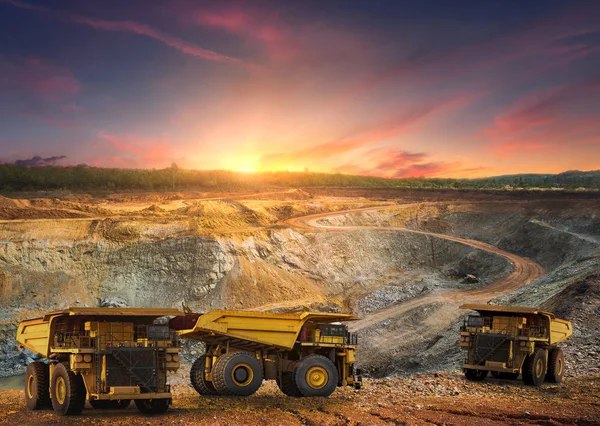
Australian mining firm C29 Metals Limited has entered into a joint venture agreement with Bask International Group Ltd, a company registered in Astana. The newly established joint venture (JV) aims to explore promising copper and gold deposits across Kazakhstan.

C29 Metals is not a newcomer to Kazakhstan’s mineral sector. In the spring of 2024, the company obtained a geological exploration license for its Ulytau project, which includes several solid mineral deposits, notably uranium. It has since submitted two additional applications for uranium exploration. However, according to a recent company announcement, the new JV will focus exclusively on copper and gold and will not be involved in C29 Metals’ uranium interests in the country.

The joint venture, registered at the Astana International Financial Center (AIFC), will concentrate on identifying and acquiring exploration projects with significant geological potential. According to the agreement, C29 Metals will hold a 75% stake in the venture, with Bask International Group retaining 25%. C29 will fully finance the geological exploration, thereby relieving its Kazakh partner of any financial burden. The board of directors will comprise two representatives from the Australian company and one from the Kazakh side.

“The conclusion of this joint venture agreement marks another important milestone in our strategic growth plans,” said Shannon Green, Managing Director of C29 Metals. “The partnership with Bask International Group in Kazakhstan will give us access to opportunities beyond our typical reach. Bask’s network and capabilities will enable us to move at an unprecedented pace as we scale operations.”

Yerlan Issekeshev, head of Bask International Group Ltd, emphasized Kazakhstan’s untapped mining potential: “Kazakhstan is on the cusp of a new era in resource development. While exploration slowed during the post-Soviet period, the country’s mineral wealth remains vast and underexplored.”

As previously reported by The Times of Central Asia, Kazakhstan is set to auction off 50 gold and rare metal deposits in June 2025, offering electronic tenders for exploration and development rights.

Almaty University Criticized After Female Students Told to Bow to Men

A controversy has erupted at the Kazakh National Pedagogical University (KazNPU) in Almaty after first-year female students were instructed to bow to men during an orientation session. The incident, which triggered widespread criticism, has drawn sharp condemnation on social media and reignited debates about gender roles in Kazakhstani society.

According to social media posts, female students were gathered in an auditorium where they were shown a video containing behavioral “recommendations.” In the footage, men of varying ages advised young women on how to conduct themselves in public, including avoiding revealing clothing, refraining from loud speech, and bowing to men as a sign of respect.

The online response was overwhelmingly critical:

“I am for modesty, but bowing? I’m a guy myself, and I don’t support this.”

“At this rate, it won’t just be North Korea waiting for us, but Afghanistan too. What’s next, banning women from education?”

“Instead of teaching girls about their rights, financial literacy, or where to seek help, they’re being taught useless things, like how to be patient and accommodating.”

“Disobedient girls are Kazakhstan’s main problem, aren’t they?”

“And when will men be taught not to beat women and to respect their mothers?”

The KazNPU administration released a statement in response, promising stricter oversight of educational materials used in student events:

“On May 5, an educational session was held at the university to promote national values and enhance the cultural and moral awareness of students, aligned with the ethical philosophy of Abai Kunanbayev. Although similar content has not previously drawn criticism, the video shown during this session sparked a mixed reaction and significant debate. The administration acknowledges the concerns and will exercise heightened caution in selecting materials for such events going forward.”

The university also stated that KazNPU is a secular institution committed to upholding students’ rights to personal choice and freedom of expression.

The controversy continues to fuel discussions online, highlighting broader tensions between traditional values and contemporary views on gender and education in Kazakhstan.

This is not the first time Kazakhstani universities have come under scrutiny. In February 2025, a second-year student at Nazarbayev University in Astana was detained by law enforcement after being caught secretly recording female students in a restroom. The university launched an internal investigation following a public outcry.

In another incident, a guest business coach at a university in Almaty, later identified as Aika Aleami, prompted complaints after asking students to close their eyes and sing along to what appeared to be religious music. Aleami later clarified that the exercise was intended as a mindfulness technique, not a religious practice, citing its popularity in Western wellness programs.

Kazakhstan’s Astana Forum Offers Global South a New Multi-Vector Platform

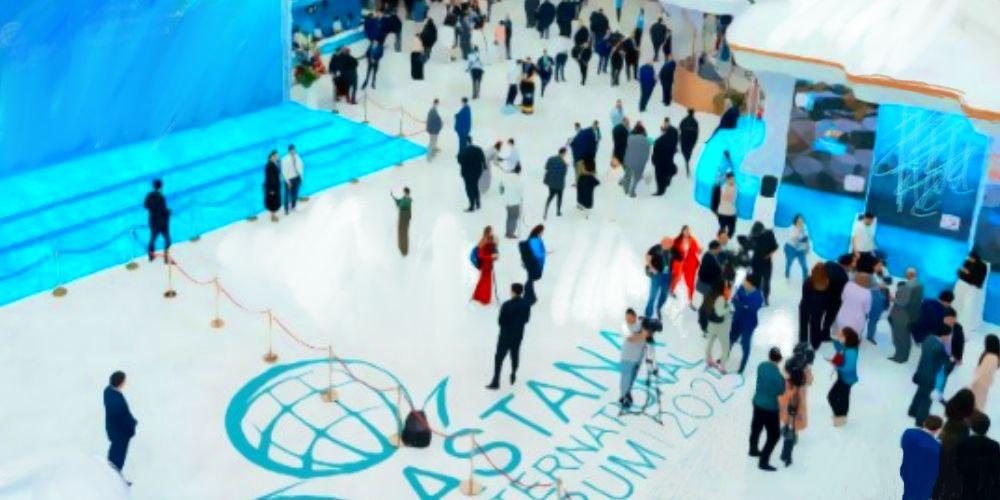
Kazakhstan will convene the Astana International Forum (AIF) later this month, on May 29–30, emphasizing its profile as an active mediator in the evolving architecture of global diplomacy. The AIF began in 2008 as the Astana Economic Forum, originally conceived as a technocratic venue focused on macroeconomic development, fiscal strategy, and public-sector reform. In its early iterations, it drew regional economists, central bankers, and international development agencies together to discuss Kazakhstan’s integration into global financial institutions.

While modest in its geopolitical profile, the Forum reflected Astana’s broader ambitions to participate in the global rules-based order without overt alignment. In 2023, the AIF was reconstituted with its new, broader mandate in response to international demands for such forums, given the evident erosion of consensus in multilateral governance structures.

President Kassym-Jomart Tokayev has invoked Kazakhstan’s unique geopolitical position to advocate for the AIF as a new platform of balanced engagement, to serve as a “bridge between East and West,” reflecting Astana’s accumulated experience in dialogue facilitation and its ambition to ameliorate the deepening fragmentation of the international system.

The rebranding of the Forum was more than cosmetic. It marked a deliberate effort by Kazakhstan to reach out beyond its customary Eurasian frame of reference. The Forum aspires to be a diplomatic innovation, seeking to complement existing institutions like the UN or OSCE without replacing them: a more flexible platform that would be more responsive to emergent global dynamics.

This aspiration is of a piece with Kazakhstan’s growing participation in multilateral forums, serving different geopolitical functions, such as the Conference on Interaction and Confidence Building Measures in Asia (CICA) and its engagements within the Shanghai Cooperation Organisation (SCO) and Organization of Turkic States (OTS). The AIF is envisioned as a complementary structure that transcends bloc affiliations, facilitating fluid dialogue among ideologically diverse actors.

The 2024 edition of the Forum was intended to be larger-scale than the 2023 version, but it was abruptly canceled after catastrophic flooding struck several regions, an event President Tokayev described as the most devastating natural disaster in the country in eight decades. The state redirected its attention and resources toward recovery, and the Forum was deferred. The 2025 iteration, now reactivated, has adopted the banner message, “Connecting Minds, Shaping the Future.”

This reflects an underlying logic in Kazakhstan’s foreign policy that privileges “multi-vectorialism” as a structure for autonomy. Within that structure, the AIF is seeking to create space for engagement among actors that often find themselves excluded from the inner circles of traditional diplomacy: the so-called “Global South,” mid-sized Western powers, and immediate regional stakeholders.

The agenda of the 2025 AIF consolidates four previous thematic streams into three: Foreign Policy and International Security, Energy and Climate Change, and Economy and Finance. This thematic restructuring signals an intention to deepen the Forum’s analytical focus while retaining general breadth across domains characterizing Kazakhstan’s long-term strategic interests.

These interests are conditioned by the continuing development of Kazakhstan’s economy. Domestic economic growth is projected to reach 4.5 to 5.0% in 2025, driven by sectoral diversification efforts and continued investment in transport and energy. The country’s international commercial profile also continued to evolve in 2024, with total trade volume increasing by 9.1% and the foreign trade balance improving accordingly.

China has emerged as Kazakhstan’s principal economic partner and largest source of foreign direct investment, with bilateral trade figures exceeding all past levels. Such economic shifts will underpin discussions at the AIF on supply-chain resilience, the reconfiguration of regional trade blocs, and the strategic implications of growing asymmetries in economic dependence.

As trade dynamics are inseparable from logistics, Kazakhstan’s participation in the Trans-Caspian International Transport Route (TITR, Middle Corridor) has intensified. This participation now encompasses soft infrastructure, such as digitalization of customs protocols and cross-border regulatory streamlining, as well as the hard infrastructure of rail upgrades, port expansions, and logistics hubs. These efforts aim to decrease transit times between China and Europe by bypassing Russia and to reduce systemic exposure to external geopolitical shocks.

Infrastructure investments have targeted throughput expansion and customs harmonization. Astana is increasingly positioned as a geoeconomic hinge, as Beijing emphasizes overland connectivity through Central Asia. The AIF’s Energy and Finance tracks are expected to emphasize this development, offering bilateral and multilateral actors opportunities to explore infrastructure finance, digital corridors, and alternative Eurasian integration in formats unconstrained by either Russian-led or Western-led institutions.

The Astana International Forum 2025 thus emerges as a controlled experiment in state-curated soft power projection. It will not be dominated by fixed alliances or crisis-response mandates. Rather, it offers Kazakhstan a sovereign venue to test ideas, build coalitions, and advance a policy profile that is neither reactive nor peripheral. The AIF integrates issue-areas of economic diversification, energy transformation, and regional diplomacy all into a single platform.

Astana is seeking to formulate a new grammar of regional agency. Whether the AIF becomes a durable institution or remains a performative gesture will depend not only on Kazakhstan’s voice but on whether the international system evolves in such a manner as to provide the space for it to echo.

If successful, the AIF may serve as a prototype for small and mid-sized powers seeking to assert constructive agency in global governance. Its effectiveness will ultimately hinge on whether institutional memory is built and whether its dialogues translate into policy traction across diplomatic cycles.

Central Asian Perspectives Take Center Stage in Milan

A pale Milanese dawn draped the city in shifting greys, as visitors crossed the threshold into the space of Fondazione Elpis, a foundation created to promote dialogue with emerging geographies and young artists.

This time, it was Central Asian artists who were in the spotlight, claiming a shared history fractured by Soviet rule and global currents. The show YOU ARE HERE: Central Asia redraws a regional map, allowing artists to redraw the borders of their belonging beyond nation-states. At the same time, it invites each visitor to relate to the works by locating its place within these stitched, erased, and reconfigured narratives.

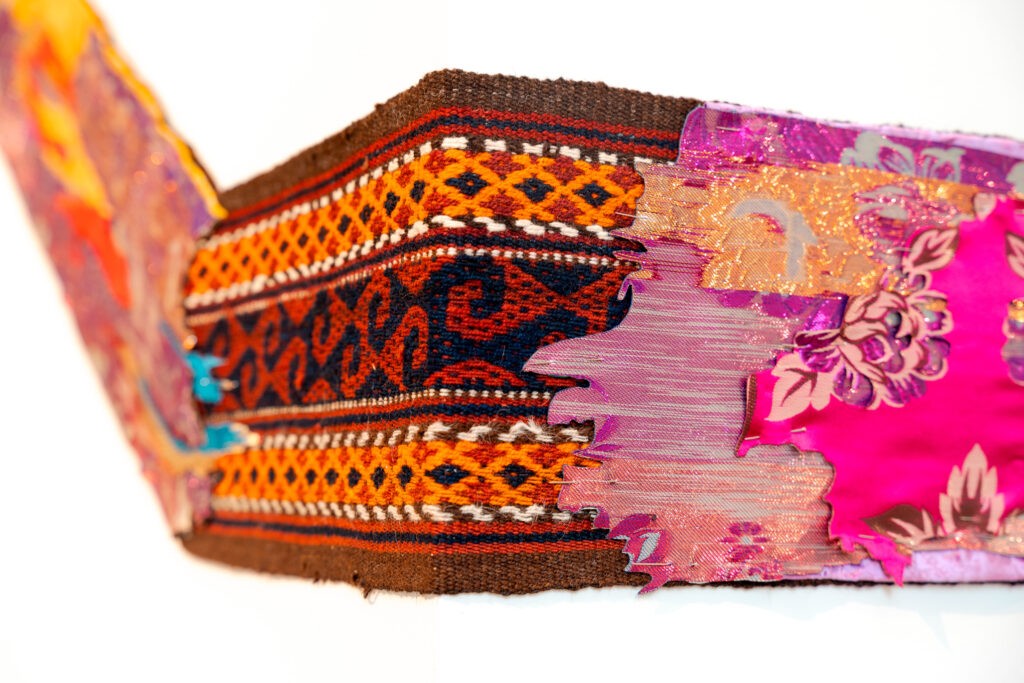
Curators Dilda Ramazan and Aida Sulova orchestrated twenty-seven artists into a living constellation: from Munara Abdukakharova’s rolled patchwork, its golden hammer-and-sickle motifs softened by the hand-stitched curves of Kyrgyz kurak korpe, to Vyacheslav Akhunov’s furious erasures of scraped notes, the show reassembled in unexpected patterns stories of resilience, resistance, and reimagined belonging.

YOU ARE HERE not only reframed Central Asia for a European audience but asserted that the region’s histories are neither static nor singular, they are stitched, erased, reconfigured, and claimed anew by the very people who live them.

The Times of Central Asia spoke with Kazakh curator, Dilda Ramazan.

“YOU ARE HERE. Central Asia”, installation view, primo piano, Fondazione Elpis, Milano © Fabrizio Vatieri Studio

TCA: Can you tell us about the genesis of the show?

The show emerged after the invitation of the Fondazione Elpis, whose founder, Marina Nissim, became interested in the region and its artists after seeing one of the Central Asian pavilions at the Venice Biennale.

By presenting the complex Central Asian landscape to a European public who might not know it very well, we wanted to give artists the platform for free expression without framing the region from the stereotypical perspective, as is often the case in the Western context. We wanted the artists to reflect on the idea of space and belonging through the idea of locating oneself.

TCA: Do you feel there is a growing awareness of Central Asia in Europe?

Yes, I can feel and see it, but it is a natural process one should expect within the logic of globalization. The exhibition addressed the impact of Soviet and post-Soviet transitions on the cultural identities of Central Asian nations by showcasing artists of several generations. Some of them had a direct experience of living under the Soviet regime, so again the artists spoke for themselves and the region’s past through their works.

Emil Tilekov, Traces and Shadows, 2024 © Fabrizio Vatieri Studio

TCA: How is the theme of migration explored in the exhibition, particularly concerning its economic and emotional implications for Central Asian communities?

Migration was one of the key aspects evoked in the show because it is still an experience lived by the artists and/or their relatives and families. Two Kyrgyz artists, for example, raised this issue in their projects.

This was the case in the video by Chingiz Aidarov, who worked as a migrant in Moscow, and a performative piece by Jazgul Madazimova, who produced a new artwork specifically for the show at Fondazione Elpis, reminiscing about her mother’s labor migration to Russia.

Alexei Rumyantsev, a Tajik artist, presented his installation in the shape of a brick wall with ikat, traditional Central Asian fabrics, which also evoked rather poetically the representation of Central Asian migrant labor as a basis for some foundations of other places.

Alexey Rumyantsev, The Wall, 2024 © Fabrizio Vatieri Studio

TCA: How did the exhibition challenge Western-centric perspectives in art by presenting alternative narratives from Central Asia?

I think the exhibition tried to do so by highlighting artist’s experiences without expecting anything from them. All of the selected participants were given carte blanche so that they could talk about whatever they decided was important to share. We, as curators, didn’t have any specific agenda to keep up with; we just followed and trusted the artists.

TCA: How did you choose the artists for the show?

We proceeded via a semi-open call. This means that we addressed a call to a restricted number of artists, not publicly. After, we made our selection from what we received from them as proposals.

TCA: Let’s talk about specific artworks; how does Vyacheslav Akhunov’s technique of erasing texts and images, and Ester Sheynfeld’s collection of the resulting dust in Petri dishes, serve as a metaphor for the deconstruction and preservation of memory?

Vyacheslav Akhunov’s and Ester Sheynfeld’s projects [have a] dialogue with each other. As assistant and teacher, it was important for them to preserve this complementary character of their practices. Akhunov comes to erase his notes, directly and violently, alluding to the process of rewriting history in the region, whereas Sheynfeld is here to preserve and inherit from previous generations. So, despite the loss, which was fabricated and created rather artificially, knowledge could still be saved in Central Asia.

Vyacheslav Akhunov and Ester Sheynfeld, The Disappearance, 2024 / Dust, 2024 © Fabrizio Vatieri Studio

TCA: What is the significance of the materials used in Aika Akhmetova’s Rage Fantasies, and how do they reflect on consumer culture and personal identity?

Aika Akhmetova’s installation was made from materials found in the region. The key element is the Soviet-era blue mailbox, which can still be seen in many of the cities in Central Asia. Part of the architecture of the entrance in any residential building, those mailboxes are rarely in use today since the systems were modernized in Central Asia after the USSR collapsed. But still, they remain, offering the possibility of a different appropriation as a space of communication for teenagers in love or neighbors’ chit-chat. Thus, they become territories of one’s free expression, not really private nor fully public.

Aika Akhmetova, Rage Fantasies (dettaglio), 2023, Installazione site specific © Fabrizio Vatieri Studio

TCA: How does Saodat Ismailova’s Her Five Lives explore the multifaceted experiences of women in Central Asia through its narrative and visual elements?

Saodat Ismailova’s piece centers on female experiences by hijacking the perspective from the male gaze of directors to that of the presence of women who starred in the films. It shows the evolution of heroines, how they were portrayed in the cinema, and how that portrayal evolved under different historical periods.

TCA: What is the conceptual significance of Yerbossyn Meldibekov’s use of aluminum basins in his installation NKVD, and how does it relate to Soviet-era surveillance?

The idea behind using aluminum basins was related to the material’s pliability and plasticity — it easily changes shape under pressure. This was important to provide the installation with a specific visual effect, that of the Central Asian mountain peak that got renamed multiple times under the influence of different political regimes that were present in the region during the last century. Another meaning of using a basin was important for Meldibekov to highlight the object’s initial function. As a washing basin, it showed that history itself could be washed away by those in power.

Yerbossyn Meldibekov, NKVD, 2020-2021, installazione, 4 bacinelle di alluminio, dimensioni variabili © Fabrizio Vatieri Studio

TCA: How does the Qizlar collective’s use of Telegram for video performances challenge traditional notions of artistic space and audience engagement?

Qizlar installation’s idea was to demonstrate that physical location is no longer important in our highly digitalized world of social networks and applications. The artists wanted to make everyone see how they always manage to keep their presence together as a collective even if they are far away from each other. Artistic space, as they show us, is any space produced by artistic gesture. Very much the same applies to Central Asia: it can be anywhere Central Asians are.

Qizlar, In the Circle of My Heart, 2024 © Fabrizio Vatieri Studio

TCA: Finally, can you please tell me about the reception to the show, and how do you hope the show has impacted the knowledge of Central Asia and its contemporary art scene internationally?

I’m happy with how the show went because it was greatly supported by our diaspora in Europe and Central Asians who traveled abroad to see it. I also want to believe that it managed to bring Central Asia closer to Europeans, showing them that we’re not different from them, only that we went through some other experiences in the past. On a very personal level, I learned a lot by doing this project, and I could not be happier to have worked with the amazing team at the Fondazione Elpis.

Underground Tunnel Proposed to Channel Water from Black Sea to Caspian Sea

Azerbaijan’s ADOG company, in partnership with Zira Sea Port, has proposed an ambitious plan to construct an underground tunnel linking the Black Sea to the Caspian Sea. The goal is to counteract the rapid decline in the Caspian’s water level, which presents mounting environmental, economic, and infrastructural risks for the five littoral states.

According to the analytical portal Minval Politika, the project envisions a 10-meter diameter tunnel connecting the Black Sea, either from the Georgian or Russian coastline, to the Caspian Sea. Engineers propose using the natural elevation difference between the two bodies of water to enable gravity-fed flow from the Black Sea into the Caspian, eliminating the need for pumps.

ADOG has stated that the proposed project would undergo comprehensive environmental monitoring and include measures to preserve biodiversity in both marine ecosystems. The company has expressed readiness to begin a feasibility study and initiate the mobilization of necessary resources.

Project proponents have submitted a request for the initiative to be considered at the state level and are calling for the launch of preliminary intergovernmental consultations.

The urgency behind the proposal is grounded in alarming recent data. As previously reported by The Times of Central Asia, the Caspian Sea has been shrinking at a faster-than-expected rate. Environmental group Save The Caspian Sea reports that the sea level has dropped by two meters in the past 18 years, with projections warning of a further decline of up to 18 meters by 2100 if current trends continue.

Such a drop could have catastrophic consequences for regional biodiversity, fisheries, port infrastructure, and climate stability, evoking fears of an ecological disaster akin to the desiccation of the Aral Sea.

While the proposed tunnel remains at a conceptual stage, its geopolitical and environmental implications will likely generate serious debate among the Caspian littoral states: Azerbaijan, Iran, Kazakhstan, Russia, and Turkmenistan.

Kazakhstan Signals Early Review of Oil Production Sharing Agreements

The question of revisiting Kazakhstan’s production-sharing agreements (PSAs) with foreign oil companies is once again gaining prominence both within the country and internationally. While the Ministry of Energy is formally responsible for managing these contracts, growing pressure is coming not only from civil society but also directly from President Kassym-Jomart Tokayev, who has publicly questioned the long-standing terms of these deals since 2022.

Confidential Terms, Public Scrutiny

Recent revelations have further fueled this debate. The International Consortium of Investigative Journalists (ICIJ) recently detailed the ongoing arbitration dispute between Kazakhstan and the North Caspian Operating Company (NCOC), which manages the Kashagan field. The stakes are high: $160 billion is under contention. Yet what shocked the Kazakh public most was not the litigation itself, but that the state receives just 2% of the field’s profits, with a staggering 98% flowing to foreign stakeholders.

Such findings offer context for why the Ministry of Energy is reluctant to release details of these 1990s-era agreements, originally negotiated with significant involvement from Kazakhstan’s first president, Nursultan Nazarbayev. In a recent court case, the ministry successfully blocked a lawsuit by Vadim Ni, founder of the Save the Caspian Sea movement, who demanded public disclosure of PSA terms affecting environmental interests in the Caspian.

The ministry argued that Kazakhstan’s adherence to international confidentiality clauses is essential to avoid multibillion-dollar lawsuits and maintain its reputation as a stable investment destination. However, the ministry also emphasized that confidentiality does not shield violators from environmental penalties.

Calls for transparency and revision have come from various quarters. Members of the Ak Zhol party and the Parasat Business Alliance have joined the chorus, urging the government to review the PSAs. In this context, President Tokayev’s consistent remarks suggest a coordinated state policy shift.

A Change in Presidential Tone

Tokayev first broached the subject in a 2022 interview with Russia 24, reflecting on the constraints Kazakhstan faced during the early years of independence. At the time, the country had no legal framework for foreign investment and had to rely on companies like Chevron to develop its energy sector. The president acknowledged the success of some ventures but also suggested the need for a “correction” to reflect current realities.

Fast forward to 2023, and the government launched a $5 billion lawsuit against NCOC over alleged environmental violations. Although Kazakhstan has been temporarily barred from collecting the fines pending arbitration, the case marks a significant escalation.

In April 2024, the Parasat Business Alliance held a public briefing demanding more local participation in procurement contracts tied to oil fields such as Karachaganak, Kashagan, and Tengiz. Kazakh companies reportedly receive less than 5% of $12 billion in annual procurements, a figure viewed as unacceptable by domestic businesses.

By January 2025, Tokayev’s rhetoric had hardened. Speaking at an expanded government meeting, he instructed his cabinet to actively renegotiate PSA terms before their expiration. “The implementation of these agreements has helped Kazakhstan become a reliable global energy supplier,” he said, “but large investments require updated terms that benefit our nation.”

The Government’s Calculated Approach

In February, then-Energy Minister Almasadam Satkaliev clarified the government’s strategy: renegotiation would occur during specific competitive periods when contracts approach their expiration window. These negotiations would cover potential extensions, increased local stakes, or even changes to participating companies. Satkaliev stressed that while confidentiality would be maintained, following international norms, internal preparations were underway.

Yet, only a month later, Satkaliev was reassigned to lead the newly created Agency for Atomic Energy, reporting directly to the president. While the move was officially presented as a promotion, the timing raised eyebrows. Many saw it as a signal that Tokayev was dissatisfied with the pace, or tone, of Satkaliev’s handling of the PSA issue.

Looking Ahead

The timeline matters. Kazakhstan’s stabilized contract for the Tengiz field with Tengizchevroil expires in 2033. Karachaganak’s PSA ends in 2037, and Kashagan’s in 2041. Tokayev’s term runs until 2029. The message is clear: the president does not intend to wait until the eleventh hour to address what he sees as legacy imbalances in Kazakhstan’s oil contracts.

In the coming years, the push to revise PSAs will likely test Kazakhstan’s balancing act between honoring investor commitments and asserting greater control over its strategic resources. What remains to be seen is whether the government can strike a new equilibrium, one that satisfies domestic expectations without undermining international confidence.