• KGS/USD = 0.01144 0%
  • KZT/USD = 0.00194 -0%
  • TJS/USD = 0.10844 -0.46%
  • UZS/USD = 0.00008 0%
  • TMT/USD = 0.28571 0.28%
  • KGS/USD = 0.01144 0%
  • KZT/USD = 0.00194 -0%
  • TJS/USD = 0.10844 -0.46%
  • UZS/USD = 0.00008 0%
  • TMT/USD = 0.28571 0.28%
  • KGS/USD = 0.01144 0%
  • KZT/USD = 0.00194 -0%
  • TJS/USD = 0.10844 -0.46%
  • UZS/USD = 0.00008 0%
  • TMT/USD = 0.28571 0.28%
  • KGS/USD = 0.01144 0%
  • KZT/USD = 0.00194 -0%
  • TJS/USD = 0.10844 -0.46%
  • UZS/USD = 0.00008 0%
  • TMT/USD = 0.28571 0.28%
  • KGS/USD = 0.01144 0%
  • KZT/USD = 0.00194 -0%
  • TJS/USD = 0.10844 -0.46%
  • UZS/USD = 0.00008 0%
  • TMT/USD = 0.28571 0.28%
  • KGS/USD = 0.01144 0%
  • KZT/USD = 0.00194 -0%
  • TJS/USD = 0.10844 -0.46%
  • UZS/USD = 0.00008 0%
  • TMT/USD = 0.28571 0.28%
  • KGS/USD = 0.01144 0%
  • KZT/USD = 0.00194 -0%
  • TJS/USD = 0.10844 -0.46%
  • UZS/USD = 0.00008 0%
  • TMT/USD = 0.28571 0.28%
  • KGS/USD = 0.01144 0%
  • KZT/USD = 0.00194 -0%
  • TJS/USD = 0.10844 -0.46%
  • UZS/USD = 0.00008 0%
  • TMT/USD = 0.28571 0.28%
09 December 2025

Metro Expansion Key to Almaty Infrastructure Plans

Next year, Almaty plans another incremental step in the development of its public transport infrastructure with the opening of a new station at Kalkaman. This should see the tentacles of the transport system shift towards the west of the city. In the future, there are also plans to extend the metro north to Alatau, where the government’s “smart city” is being developed.

Investment in public transport is welcome, particularly with vocal complaints from residents about ever-increasing traffic problems and their contribution to the city’s winter smog.

“The expansion of the metro is considered one of the key tools for improving the environmental situation in Almaty,” a spokesperson for the Almaty mayor’s office (or Akimat), told The Times of Central Asia. “Increasing the share of passenger transportation via the subway reduces the use of cars, decreases traffic congestion, lowers emissions, and contributes to improved air quality.”

The ambitious new metro project is in addition to over 600 new buses expected to be added to the Almaty Bus fleet this year.

But despite these schemes, the traffic problem shows little sign of abating. It begs the question: has the city got public transport priorities right?

New-look trolleybuses and electro-buses can be seen as part of Almaty’s modern fleet; image: TCA, Joe Luc Barnes

The rise of the automobile

“Traffic jams in Almaty began in the early 2000s, when the economic situation improved and people started buying cars,” Dauren Alimbekov, a high-profile blogger on Almaty transport, told The Times of Central Asia.

He adds that the privatisation of other forms of public transport exacerbated this problem.

The tram network was suspended in 2015 after two high-profile accidents, with the tracks being dismantled in 2017. Its disappearance coincided almost exactly with the arrival of ride-hailing services such as Yandex Go! in July 2016. By 2023, over 200,000 residents were moonlighting as Yandex Go! drivers to earn extra money.

“In recent decades, the city has been planned with cars in mind, with major thoroughfares such as Al-Farabi almost totally lacking in convenient pedestrian crossings,” said Alimbekov.

This influx of drivers has created problems. Private cars are a major contributor to air pollution in the city. On some days earlier this year, Almaty recorded the worst pollution in the world.

A lack of dedicated bus lanes slows journey times and prevents more people from using public transport; image: TCA, Joe Luc Barnes

Public transport

That is not to say that there is no public transport in the city. Indeed, the Almaty Metro is the only metro system in Central Asia to have opened since the collapse of communism. Trains began running in 2011, but they only travelled between an initial five stations. Two more opened in 2015, which saw a spike in passenger numbers. Today, there are eleven stations, although most of these remain along Abay Avenue, giving it little practical value to most residents.

The metro system does not connect to either of the city’s main train stations – Almaty-1 and Almaty-2 – nor with its major bus terminal at Sairan.

The metro stations in the center of the city are also inordinately far underground – Abay station is 78 meters deep, adding at least five minutes to journey times.

But despite these difficulties, passenger numbers have steadily grown. On September 2, the metro hit a new record ridership with 117,000 daily users, with daily averages hovering around 100,000.

While noting that some of the record-breaking ridership was due to the start of the academic year, the Akimat spokesperson believes that other factors are at play. “We have improved service quality in the metro – including reduced train intervals thanks to additional trains being put into operation. There is also a general trend of residents switching from private cars to public transport due to traffic congestion and rising costs of car ownership.”

The city also has a growing network of buses.

“If anything, there are now too many buses!” says Alimbekov. “The average age of the fleet is just 2-3 years old.”

He argues that the city’s leadership would be better off building, or expanding, dedicated bus lanes to speed up the journeys of these buses around the city. Journeys in the city cost a mere 120 tenge ($0.23), and the Onay! payment system is quick and easy to use, even for foreign visitors equipped with Apple Pay.

Controversial e-scooters have proliferated across the city; image: TCA, Joe Luc Barnes

There is a similar issue with scooters – there has been an enormous proliferation of e-scooters, which are quick, convenient, and popular, and could help serve to bring cars off the road.

However, these too are only served by a limited number of dedicated lanes, leading to many simply riding them on pedestrian sidewalks at dangerously high speeds.

E-scooter etiquette has ignited a furious debate among residents, especially as the police do not enforce legal restrictions to protect pedestrians. The problem has caused such public anger that even the president called on the police to be stricter in his State of the Union address in September.

The Metro Masterplan

Abay Station, Almaty Metro; image: TCA, Joe Luc Barnes

The Akimat plans to incrementally expand the scale of the metro. Right now, 3.1 kilometers worth of tunnels have been dug, which will take trains westward beyond the current terminus at Bauyrjan Momyshuly to a new station called Kalkaman, located where Abay Avenue meets Ashimova Street.

“Work on the station and tunnels is progressing at an accelerated pace: tunnel excavation is close to completion, and construction of the station is nearing its final stage,” said the Akimat spokesperson, adding that Kalkaman is scheduled for completion in “the first half of 2026”.

In the longer term, the extension plans are more ambitious, with new lines going towards Alatau Smart City via Mizam Market.

“A feasibility study is also being prepared for a new branch from Zhibek Zholy station to the airport,” said the Akimat spokesperson.

But Alimbekov believes that these growth plans are misguided. He says that the priority should be to develop the metro inside the city, rather than stretching it out towards the suburbs.

“The main source of traffic problems is cars owned by city residents, not people from the outskirts,” he said. “These people who arrive by metro from the suburbs in the morning, how will they travel within the city afterwards? There is no continuation of the metro network inside the city, only along Abay Avenue. This will create a huge passenger surge exiting at just two or three stations.”

He’s also sceptical as to whether any of these expansion projects can be completed on schedule. The extension to Bauyrjan Momyshuly station, originally planned for 2018, did not open until 2022.

“I don’t know why it always takes so long to build the metro here. Not once has a project been completed on time. So, my prediction is that this one, too, will be delayed.”

In the meantime, Alimbekov suggests simply making the city more pedestrian-friendly, given that metro and bus users are also pedestrians. He adds that better bike lanes would also help, with the added benefit of saving the city from problems with e-scooters. But in the main, he thinks that bus infrastructure would be the simplest and most cost-effective solution. “It doesn’t need to be anything flashy like the BRT [bus-rapid-transit] system they are proposing. For buses to run faster and on schedule instead of being stuck in traffic, they just need dedicated lanes throughout the city.”

The city is certainly willing to invest in infrastructure, but whether it will be effective or not remains to be seen.

Kyrgyzstan and Tajikistan Brace for Winter Power Shortages

As winter approaches, Kyrgyzstan is warning of potential electricity shortfalls due to critically low water levels in its hydro-reservoirs, and authorities are rolling out emergency measures. These include urging electricity conservation, shutting down all cryptocurrency mining farms to relieve grid pressure, increasing electricity imports, and accelerating repairs and upgrades to aging power-generation infrastructure.

Officials with the Ministry of Energy and Industry of the Kyrgyz Republic say the reserves in key hydropower reservoirs are at their lowest level in more than a decade. At the same time, demand for electricity in homes and businesses is forecast to increase significantly this winter because of colder temperatures. The gap between supply and demand has forced the government to ask households to reduce electricity use during peak hours.

Historically, Kyrgyzstan has relied heavily on hydropower. The country’s flagship facility, the Toktogul Hydroelectric Power Station, supplies roughly 40% of the nation’s electricity. But its reservoirs are fed primarily by spring and summer snowmelt. In recent years, melting snow has arrived earlier and run-off has fallen, shrinking water levels. According to the International Renewable Energy Agency (IRENA), Kyrgyzstan’s hydroelectric system faces serious seasonal variability in its generational capacity.

This winter’s challenge is compounded by weak output from thermal plants and delayed maintenance. The government reports that the ageing coal-fired and gas-fired plants in the north and south of the country require urgent repairs, with rehabilitating the plant in Bishkek alone set to cost around $150 million. With limited funds, several units will remain offline during the cold months.

The immediate consequences for households are already appearing. Residents in Bishkek and surrounding regions have reported recurrent evening outages sometimes lasting a few hours. Landlord-run apartment blocks plan to brief residents about schedules for rotating cuts. In smaller towns and villages, citizens fear longer blackouts if the cold deepens.

Businesses are also feeling the shock. Small-scale manufacturers report that they have had to halt production during scheduled cuts, eroding profits and increasing costs. Schools and hospitals say they are depending on standby generators.

Energy stability plays a central role in Kyrgyzstan’s economy and social well-being. Without reliable power, business productivity falls, heating systems malfunction, and social discontent can spike. In recent years, protests over energy prices and outages have forced the government to scramble for solutions. The current measures are aimed not only at keeping the lights on but maintaining public confidence ahead of looming parliamentary elections.

Regionally, Kyrgyzstan’s electricity system interacts with its neighbors. The country imports power from Kazakhstan and exchanges electricity with Uzbekistan, with cross-border feeds from Kazakhstan helping to cover shortages. This winter, Kazakhstan’s own constraints may limit exports, leaving Kyrgyzstan more exposed. Meanwhile, China has offered investment in hydropower expansion as part of regional cooperation. That deal may eventually increase supply, but it will not help in the short term.

Meanwhile, neighboring Tajikistan is grappling with comparable winter electricity pressures. The country sources about 95% of its electricity from hydropower and enters the cold season with low reservoir and river flows that sharply reduce generation capacity. While major refurbishment of the Nurek Dam’s turbines is underway to boost capacity and reliability for the winter months, many rural areas already face scheduled power cuts from late September through April.

The reservoir connected to Tajikistan’s Nurek power plant has dropped by 2.47 metres over the last year, with the Ministry of Energy and Water Resources characterizing the situation as “alarming”. As early as September, electricity in rural areas has often been restricted to eight to ten hours a day. Tajikistan exports power in the summer, but curtails those exports in winter when its domestic supply is under strain.

The shared predicament underscores how central Asia’s hydropower-dependent countries are vulnerable to seasonal and climate-linked water variations, reinforcing the importance of regional cooperation in energy trade, reservoir management, and infrastructure investment.

In Bishkek, the government’s new winter plan includes measures such as temporary power limits during peak hours, increased hydropower output when possible, and incentives for households to reduce consumption between 6 pm and 10 pm. Officials hope that by managing demand and stretching supply, the country avoids lengthy blackouts. They also plan to accelerate repairs and fast-track small solar-generator installations in villages.

But risks remain. If unusually cold days arrive or snowmelt falls short, reservoirs could drop further, forcing longer outages than expected. Weather data suggest that this winter may bring colder-than-average nights in parts of Central Asia. Moreover, Kyrgyzstan’s ability to fund urgent repairs and imports depends on its foreign-exchange reserves, which remain volatile due to loans and fluctuating metal-export revenues.

On the eve of significant elections, Kyrgyzstan enters the winter season under pressure. The country’s heavy reliance on hydropower, ageing thermal infrastructure, and external dependencies mean the authorities have few easy options. The new emergency plan may hold for now, but any unexpected failure in supply or spike in demand could test social patience and economic resilience. For households, businesses, and public services alike, the cold months ahead may bring more than just a chill in the air.

NYC Mayor Adams Heads to Uzbekistan in Final Weeks in Office

New York City Mayor Eric Adams, who suspended his re-election campaign this year and leaves office on January 1, is traveling to Uzbekistan and will return to New York on Sunday.

The New York Post and other media outlets said Adams, who met Prime Minister Benjamin Netanyahu in Israel on Monday, will visit Tashkent and Samarkand during the taxpayer-funded trip. The mayor’s office said late Monday that Adams will meet “government, business, tech, sports, and religious leaders to discuss how New York City can partner with Uzbekistan” to generate jobs and innovation in the city and will also visit “religious sites of importance to the Muslim community,” according to media reports.

Mayor-elect Zohran Mamdani will succeed Adams, a former New York City police officer and Brooklyn borough president. As mayor, Adams has been credited with some accomplishments on housing, steering New York out of the pandemic and other issues, but his tenure was tarnished by ethics concerns and investigations.

Last year, federal prosecutors charged Adams with conspiracy, fraud and other crimes for an alleged scheme involving Turkish officials. Adams pleaded not guilty. This year, the U.S. Department of Justice ordered that the case be dropped.

The federal investigation of Adams included an angle involving Uzbekistan. In a 2024 affidavit, investigators alleged that Adams solicited illegal foreign donations, via a so-called “straw” donor scheme designed to conceal the identity of the real contributor of the funds. It said that one such donor “is connected to the Government of Uzbekistan and works to influence Adams on behalf of Uzbek and Central Asian causes.”

Uzbekistan’s government has not commented publicly on the case.

Hosting an Uzbekistan heritage reception last month, Adams said “New York is the Tashkent of America,” a reference to the large Uzbek community in the city.

“I love all of my stans, Kazakhstan and the others, but Uzbekistan is growing, your country is becoming stronger and stronger every day,” Adams said.


Kazakhstan vs. Eni: Who Is the Key Figure in the Swiss Lawsuit?

Kazakhstan’s $166 billion legal campaign against the oil majors, Shell, ExxonMobil, TotalEnergies, and Eni has expanded to Switzerland. According to Bloomberg, PSA LLP, representing Kazakhstan’s Ministry of Energy, has launched proceedings aimed at strengthening the country’s position in ongoing international arbitration.

Astana is seeking roughly $15 million plus interest from several companies and individuals accused of corruption in projects managed by subsidiaries of Italy’s Eni. The Swiss case centers on evidence already presented in courts in the U.S. and Italy, which Kazakhstan aims to use to prove allegations of bribery in arbitration hearings.

Documents submitted by Kazakhstan to a U.S. court claim that contractors providing services to Eni implemented an “illegal scheme” to secure inflated contracts. One such contract was allegedly amended eleven times, with its value rising from $88 million to more than $490 million. While several contractors were convicted by an Italian court in 2017, no Eni employees were found guilty.

Kazakh journalist Oleg Chervinsky, known for his coverage of the oil and gas sector, has highlighted that Kazakhstan is requesting the Swiss court to look into Maksat Idenov, a former first vice president of KazMunayGas, who led negotiations with Kashagan project partners between 2007 and 2008.

Chervinsky recalls a dramatic episode in 2010, when Idenov resigned from KazMunayGas via a letter sent from abroad using DHL. He subsequently took a senior role at Eni. A U.S. court has approved his questioning for use in the Swiss proceedings, and his representative says he has already testified.

“New revelations await us!” Chervinsky asserted.

That confidence may be justified. A glance at Idenov’s career reveals his central role in Kazakhstan’s energy sector since 1992, when he began as chief legal counsel at the state holding MunaiGas. In 1993, he became assistant to the Minister of Oil and Gas Industry, and by 1995, he was serving as deputy head of the Energy Department for Europe and Central Asia at the International Bank for Reconstruction in Washington, D.C.

He returned to Kazakhstan in 1999 as an advisor to then-President Nursultan Nazarbayev on Caspian energy and oil and gas export pipelines. In that role, he worked on the legal status of the Caspian Sea and other strategic projects.

Idenov joined Shell in 2004 as regional vice president for strategic and commercial development in the Middle East, South Asia, and the Caspian region. In 2007, he became the first vice president of KazMunayGas. Three years later, in July 2010, he was appointed senior vice president for strategic planning at Eni.

During his time at KazMunayGas, Idenov appeared in U.S. embassy cables later released by WikiLeaks. In one, he reportedly told the U.S. ambassador during a private dinner that the four most influential figures around President Nazarbayev were the Presidential Chief of Staff, Sarybay Kalmurzaev, Head of the Presidential Administration, Aslan Musin, State Secretary and Foreign Minister, Kanat Saudabayev, and the tandem of Prime Minister Karim Massimov and Nazarbayev’s son-in-law, billionaire Timur Kulibayev.

Another cable described the rationale for Idenov’s appointment as lead negotiator on the Kashagan project. Following Kulibayev’s dismissal from the Samruk holding in 2007, Chevron Eurasia President Guy Hollingsworth relayed to the U.S. embassy that Kulibayev, during a golf outing, said the move was intended to “protect him from liability if the Kashagan negotiations were not successful.”

Idenov’s testimony may prove even more consequential than the infamous “Kazakhgate” case involving banker James Giffen. It could influence not only the current corruption claims linked to Eni – allegations of a $20 million Kazakhstan-related bribe were previously examined by Milan prosecutors – but also Kazakhstan’s broader push to renegotiate production sharing agreements. Revisions to the contracts for Kashagan, Tengiz, and Karachaganak are central to Astana’s legal efforts.

“Idenov is effusive, even theatrical… When he trusts, he spills his heart,” one U.S. diplomatic cable noted.

Was the Swiss lawsuit a calculated move to bring Idenov into play?

Mirziyoyev and Berdymuhamedov Agree on New Projects as Trade Tops $1 Billion

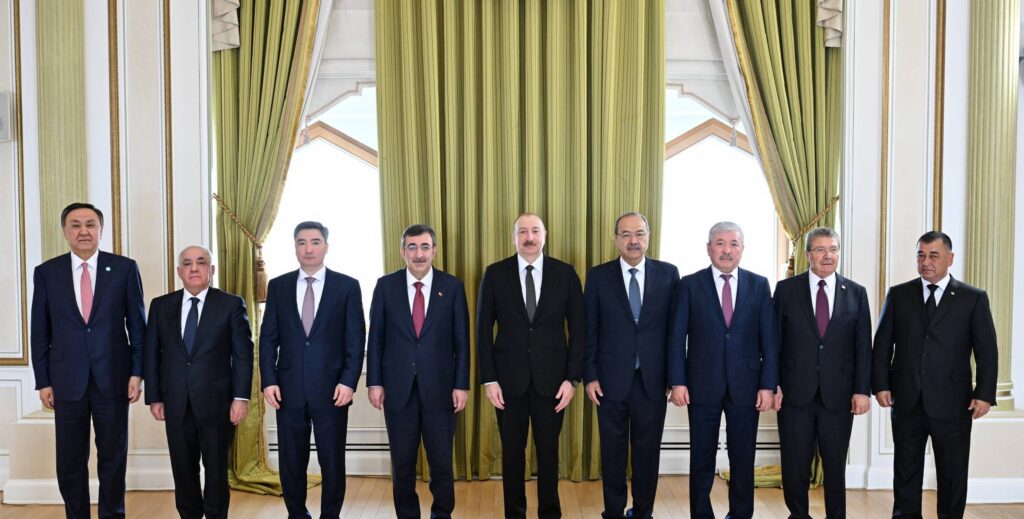
Uzbekistan and Turkmenistan have agreed to deepen political, economic, and humanitarian cooperation following President Serdar Berdymuhamedov’s state visit to Tashkent, where he held talks with President Shavkat Mirziyoyev on November 17.

The summit began in a narrow format at the Kuksaroy Residence, where both leaders emphasized the significance of the visit in strengthening the growing strategic partnership. They noted the increasing dialogue across various sectors and highlighted recent cultural initiatives, including the Days of Turkmen Culture and Cinema held in Urgench and Tashkent.

Bilateral trade continues to grow, having surpassed $1 billion last year, supported by rising freight flows through the Turkmenbashi port. The presidents explored new opportunities to boost mutual trade and deepen cooperation in industry, energy, transport, mechanical engineering, agriculture, and water management. They also agreed to expand interregional collaboration and to convene the next Forum of Regions in Khiva.

Talks then continued in an expanded format with the participation of both delegations. Mirziyoyev stated that the visit reflects the “centuries-old ties of friendship and good neighborliness,” and he praised Turkmenistan’s progress under the leadership of Gurbanguly Berdymuhamedov, Chairman of the Halk Maslahaty.

The two sides agreed to work toward increasing trade to $2 billion by expanding the range of goods and more effectively utilizing the free trade regime. They noted that the newly launched Shavat-Dashoguz cross-border trade zone would play a key role in achieving this target and agreed to replicate the model in other regions, starting with the Alat-Farab corridor.

Industrial cooperation is set to expand, with both sides encouraging businesses to launch joint projects in sectors such as building materials, pharmaceuticals, and food production. In the energy sector, the two countries plan to embark on larger-scale cooperative projects, including the development of promising natural resource deposits. Transport cooperation will also deepen through joint development of the Turkmenbashi port and the resumption of direct flights between Tashkent and Ashgabat.

The presidents instructed their governments to ensure timely implementation of all agreements by holding regular meetings of the Intergovernmental Commission and the Business Council. They also committed to intensifying collaboration in culture, education, youth exchanges, filmmaking, healthcare, and medical science.

Following the talks, the leaders jointly inaugurated the Shavat-Dashoguz trade zone, which includes customs, quarantine, and veterinary services, as well as warehouse facilities, a trade pavilion, and public services operating under a single-window system. The zone is expected to significantly boost economic ties between Uzbekistan’s Khorezm region and Turkmenistan’s Dashoguz region, which together are home to more than 3.5 million people.

At a ceremony held at Kuksaroy, Berdymuhamedov was awarded the “Oliy Darajali Dustlik” Order, Uzbekistan’s highest state honor. Mirziyoyev said the award reflects Turkmenistan’s contributions to strengthening friendship, trust, and strategic partnership. Berdymuhamedov expressed his gratitude and reaffirmed his commitment to enhancing bilateral relations.

The two sides signed a Joint Statement and oversaw the exchange of intergovernmental and interagency agreements covering trade, healthcare, agriculture, transport, biological safety, justice, forestry, and regional cooperation.

The Uzbekistan-Turkmenistan summit concluded the same day. As part of his visit, Berdymuhamedov also participated in the Seventh Consultative Meeting of the Heads of State of Central Asia.

Uzbekistan Revises 2024 GDP to $121.4 Billion

Uzbekistan’s gross domestic product (GDP) for 2024 has been revised upward to $121.4 billion, according to Behzod Hamroyev, Chair of the National Statistics Committee. The new figure was announced on November 17 during an international conference in Tashkent, as reported by the Statistika channel.

Hamroyev explained that the revision reflects newly identified value added across key sectors of the economy. According to the final calculations, Uzbekistan’s nominal GDP for 2024 rose from 1,454.6 trillion soums to 1,535.4 trillion soums, an increase of 80.9 trillion soums, or 5.6%. In dollar terms, this marks an upward revision from the previously reported $115.0 billion to $121.4 billion.

Following the recalculation, GDP per capita in 2024 reached 41.3 million soums.

Hamroyev highlighted that full coverage of state budget execution led to the identification of 36.4 trillion soums in additional newly created value. Sector-specific revisions also contributed significantly: added value in industry rose by 12.7 trillion soums, agriculture by 5.6 trillion soums, construction by 10.3 trillion soums, and services by 16.3 trillion soums.

Earlier this year, presidential spokesperson Sherzod Asadov reported that Uzbekistan’s GDP grew by 6.5% in 2024, reaching $115 billion before the revision. He also noted that foreign investment increased by 1.6 times to $34.9 billion, with 242 large and medium-sized projects worth $10 billion launched. National exports reached a record $27 billion.