Central Asia Avoids Fuel Shock as Global Pressures Build

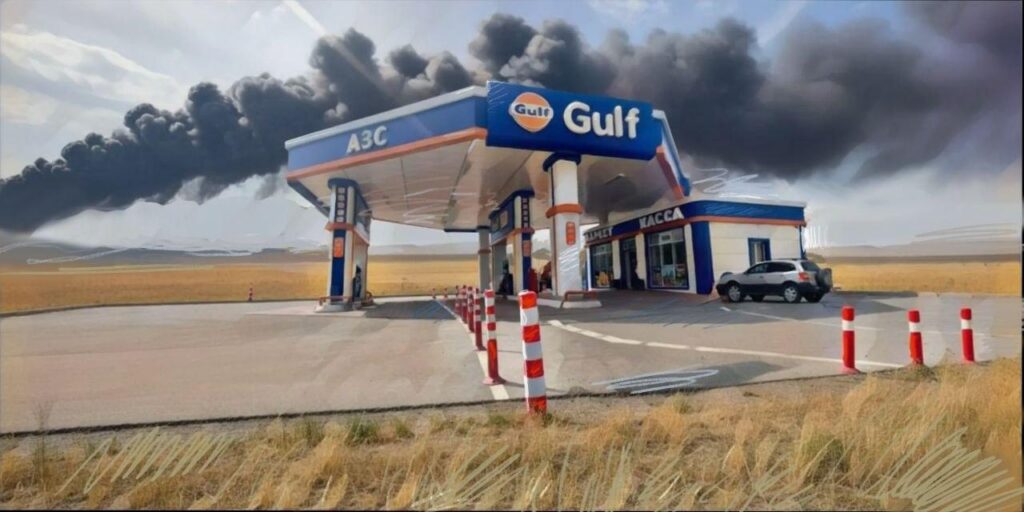
Central Asia has so far avoided the immediate fuel shocks spreading across much of the world following the U.S. and Israel’s war with Iran. There are no lines at gas stations, no visible shortages, and no signs of panic buying. But that stability sits within a rapidly tightening global market, where disruptions in Asia and policy responses in Europe are reshaping fuel flows in ways the region will struggle to avoid.
Across Southeast Asia, governments are already taking precautionary steps. Some state agencies and private firms are shifting parts of their workforce to remote work to reduce fuel consumption and prepare for potential price spikes and logistics disruptions, while Thailand is preparing contingency measures, including possible fuel rationing.
China, one of Asia’s largest suppliers of refined fuels, has moved to restrict exports of gasoline, diesel, and jet fuel in an effort to prevent domestic shortages linked to the war. The move is expected to tighten supplies across Asia, especially for countries that rely on Chinese fuel imports. China supplied about one-third of Australia’s jet fuel last year, highlighting the wider regional impact, and roughly half of the Philippines’ and Bangladesh’s in 2024. Vietnam has already warned airlines to prepare for flight reductions in April due to the risk of shortages caused by these export restrictions. Indonesia is also imposing limits on fuel sales.
Fuel-related pressures have begun to emerge in Europe as well. Poland has introduced tax measures aimed at reducing fuel prices, with the government saying this will lower prices for consumers. Slovenia, meanwhile, has introduced significant restrictions on fuel consumption. Under new rules, private motorists are limited to purchasing a maximum of 50 liters per day, while businesses and farmers may purchase up to 200 liters daily.
The combined effect of war-driven energy shocks and renewed tariff barriers is raising global costs and adding pressure across trade, transport, and inflation.
Against this backdrop, Central Asia’s apparent stability is misleading. It is highly unlikely that import-dependent states such as Kyrgyzstan and Uzbekistan will be as well protected as Kazakhstan, which may benefit in the short term from higher crude prices.
Starting April 1, Russia is banning gasoline exports in an effort to stabilize its own domestic market. Russia is a key fuel supplier to Central Asia. However, according to assurances from the Ministry of Energy of the Russian Federation, the temporary export ban will not affect supplies to Uzbekistan. Deliveries under intergovernmental agreements are expected to continue, ensuring that at least part of the region’s supply remains uninterrupted.
In Kyrgyzstan, despite recent developments, fuel prices and supplies remain relatively stable. The government is considering lowering taxes or temporarily waiving excise duties for fuel importers should the crisis continue.
Information from Turkmenistan is difficult to verify independently. Despite reports of fuel shortages at gas stations last year, official media are now indicating a significant increase in domestic gasoline production. The production plan for January-February 2026 was reportedly fulfilled at 122.7%, according to Deputy Chairman of the Cabinet of Ministers Guvancha Agajanov, speaking at a recent government meeting.
Kazakhstan occupies a special position due to its substantial reserves of key mineral resources. Currently, there appear to be no major supply issues, even amid emerging global pressures. However, underlying challenges are becoming more apparent.
As of March 23, 2026, data from GlobalPetrolPrices places Kazakhstan among the countries with some of the lowest gasoline prices. This group includes Libya, Iran, Venezuela, Angola, Kuwait, Algeria, Turkmenistan, Egypt, Qatar, Saudi Arabia, Bahrain, and Oman. In these countries, fuel prices, ranging from $0.34 to $0.70 per liter, are shaped either by abundant natural resources or strong state intervention. Kazakhstan follows a similar model, combining domestic resource availability with government regulation. The country maintains a moratorium on price increases for the most in-demand fuel grades.
However, according to Kazakhstani expert Olzhas Baideldinov, wholesale prices for petroleum products have risen by 17%. Rail transport costs have increased significantly (+72%), along with other expenses. As a result, gas stations are reportedly operating at a loss when selling gasoline and diesel. This suggests that Kazakhstan’s domestic fuel market requires substantial adjustment.
For comparison, gasoline prices (per liter), according to GlobalPetrolPrices, currently stand at: U.S. – $1.133; Azerbaijan – $0.676; Kazakhstan – $0.507; Kyrgyzstan – $0.917; Turkmenistan – $0.428; and Uzbekistan – $1.077. Tajikistan stands apart, with gasoline prices above $1.10 per liter, the highest in Central Asia, reflecting its heavy dependence on imported fuel.
These figures reflect a mix of domestic resources and state controls that continue to shield local markets from global price pressures.
The region’s exposure is not immediate, but it is structural.
Central Asia’s energy security is not just about supply, but also about routes. The region remains heavily dependent on external refining systems and transport corridors that are now under pressure, whether through Russia, the Caspian, or southern routes linked to the Persian Gulf. Disruptions far beyond the region are therefore quickly transmitted into local markets.
For now, Central Asia looks insulated. But in a tightening system, insulation is often temporary.