• KGS/USD = 0.01144 0%
  • KZT/USD = 0.00212 0%
  • TJS/USD = 0.10454 -0.1%
  • UZS/USD = 0.00008 0%
  • TMT/USD = 0.28571 0.28%
  • KGS/USD = 0.01144 0%
  • KZT/USD = 0.00212 0%
  • TJS/USD = 0.10454 -0.1%
  • UZS/USD = 0.00008 0%
  • TMT/USD = 0.28571 0.28%
  • KGS/USD = 0.01144 0%
  • KZT/USD = 0.00212 0%
  • TJS/USD = 0.10454 -0.1%
  • UZS/USD = 0.00008 0%
  • TMT/USD = 0.28571 0.28%
  • KGS/USD = 0.01144 0%
  • KZT/USD = 0.00212 0%
  • TJS/USD = 0.10454 -0.1%
  • UZS/USD = 0.00008 0%
  • TMT/USD = 0.28571 0.28%
  • KGS/USD = 0.01144 0%
  • KZT/USD = 0.00212 0%
  • TJS/USD = 0.10454 -0.1%
  • UZS/USD = 0.00008 0%
  • TMT/USD = 0.28571 0.28%
  • KGS/USD = 0.01144 0%
  • KZT/USD = 0.00212 0%
  • TJS/USD = 0.10454 -0.1%
  • UZS/USD = 0.00008 0%
  • TMT/USD = 0.28571 0.28%
  • KGS/USD = 0.01144 0%
  • KZT/USD = 0.00212 0%
  • TJS/USD = 0.10454 -0.1%
  • UZS/USD = 0.00008 0%
  • TMT/USD = 0.28571 0.28%
  • KGS/USD = 0.01144 0%
  • KZT/USD = 0.00212 0%
  • TJS/USD = 0.10454 -0.1%
  • UZS/USD = 0.00008 0%
  • TMT/USD = 0.28571 0.28%

Central Asia and Britain Launch CA5+UK Ministerial Track

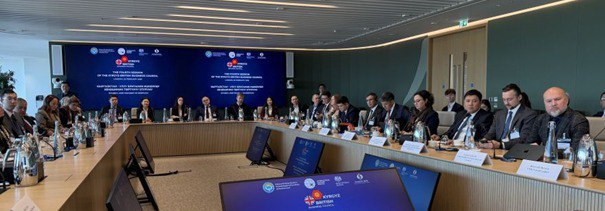
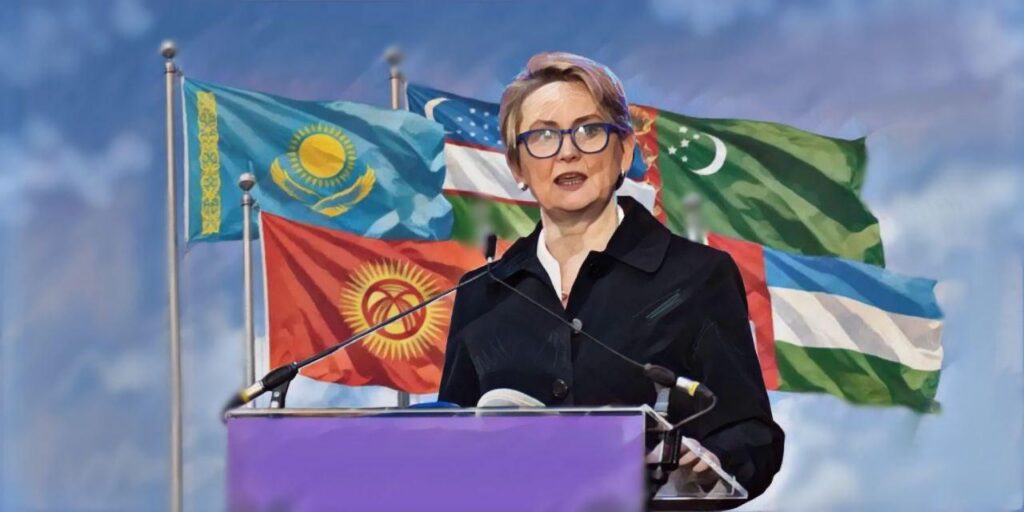
On February 26, 2026, the foreign ministers of Kazakhstan, Kyrgyzstan, Tajikistan, Turkmenistan, and Uzbekistan met in London with United Kingdom Foreign Secretary Yvette Cooper at Lancaster House for the inaugural “Central Asia–UK” (CA5+UK) ministerial. Official statements described it as the first time since independence that all five Central Asian foreign ministers have met jointly with a UK foreign secretary in a single forum. They also presented the meeting as the start of a structured ministerial channel, intended to convene regularly, that can carry regional priorities while leaving bilateral agendas in place.

The United Kingdom is framing the new CA5+UK channel as a replacement for scattered bilateral visits: a single ministerial venue can set shared priorities and route them into investment and services work. For the five Central Asian states, it adds another external track, widening options without forcing institutional choices. Public statements point to a practical agenda focused on trade and investment, transport connectivity, energy transition, and critical minerals, with security present chiefly as background context. The enabling layer of finance, standards, education, and professional services is also included.

How the London Program Unrolled

On February 25, meetings took place at the British Parliament as part of the London schedule. The five ministers met with House of Commons Speaker Sir Lindsay Hoyle and held a session with the All-Party Parliamentary Group for Central Asia, chaired by Pam Cox.  The meetings in Parliament complemented the ministerial session at Lancaster House by widening contact beyond foreign ministries. The discussion emphasized committee-to-committee contacts, visits, and exchange of legislative practice as a complement to intergovernmental diplomacy. Parliamentary relationships and staff channels can carry attention between ministerial sessions, assisting with follow-up after cooperative contacts have been publicly established. They represent a second continuity layer: implementation often turns on routine access and working familiarity rather than on formal statements alone.

Between the parliamentary program and the ministerial delegations, they also met with the United Kingdom business community at a reception in London. This was a practical companion to the new format, aiming at the conversion of diplomatic intent into projects that can be financed and executed. Kazakhstan’s Foreign Minister Yermek Kosherbayev cogently highlighted the Astana International Financial Centre (AIFC), which operates under English common law with an independent court and arbitration system and British judges in the AIFC Court. Beyond the plenary session, a ministerial working lunch provided a venue to follow up on such initiatives.

Early deliverables were not multilateral but bilateral. Kazakhstan and the United Kingdom signed a strategic roadmap on critical minerals through 2027 and paired it with education moves, including a licensed Coventry University campus in Almaty and plans involving British secondary and higher education institutions. Uzbekistan reported a Memorandum of Understanding on healthcare services that it presented as a platform for building pharmaceutical manufacturing capacity, alongside separate discussions with investment and finance counterparts in London. Turkmenistan cited a 2026–2027 cooperation program between foreign ministries, and Tajikistan continued to emphasize investment and cooperation in science and education.

CA5+UK Launches with Bilateral Packages

The CA5+UK forum launches another “plus-one” mechanism in a region where major partners are now structuring their engagement through repeatable formats. In line with that engagement, the UK initiative concerns not so much building a new institution as attaching deal-enabling capacity to already existing projects. Kazakhstan’s foreign ministry underscored the breadth of the bilateral agenda and noted that ratification of the 2024 Strategic Partnership and Cooperation Agreement would widen the platform for cooperation. At the CA5+UK, Foreign Minister Yermek Kosherbayev confidently presented Kazakhstan as the region’s connectivity hub, noting that 13 major transit corridors cross Kazakhstan and that about 85% of overland cargo between Europe and Asia moves through its territory.

For the five delegations, the practical payoff is direct access to counterparties that can price risk, mobilize capital, and sustain follow-up between ministerial sessions, without narrowing external options. The schedule described by Uzbekistan’s foreign ministry paired political meetings with implementation-oriented discussions, including the healthcare MoU mentioned above, and separate talks with Standard Chartered Bank on financing large industrial projects as well as with Benoy on urban and transport planning, including New Tashkent and regional master plans. Kyrgyzstan used the Kyrgyz-British Business Council meeting to widen the investor pipeline around critical minerals and banking cooperation, with the emphasis on market access and capital-raising, rather than on a single signed headline document.

Even in a UK-facing commercially oriented format, once banks, insurers, and logistics providers are involved, projects are shaped by compliance screening, sanctions exposure, and risk pricing. Kyrgyz Foreign Minister Jeenbek Kulubaev warned that unilateral restrictive measures could affect trade, economic, and financial cooperation with the United Kingdom and called for dialogue to keep commercial ties from being pulled into political disputes. The practical effect is a tilt toward projects with clearly identified counterparties, documented compliance pathways, and predictable dispute-resolution procedures acceptable to financiers. Transactions that raise screening burdens close more slowly or at higher cost; taking these conditions into account, Kosherbayev described the new track as results-oriented and stressed “tangible results.”

CA5+UK in the “Plus-One” Field

The CA5+UK joins several other “plus-one” formats that Central Asian governments can sequence against one another. Germany’s Z5+1 has been presented as a tool-driven work channel that can move through German instruments while remaining compatible with European Union programming. The United States–led C5+1 is framed as a standing diplomatic platform for regional solutions and joint work across multiple agencies. China has relied on leader-level summitry and formal political upgrading, including a treaty-based umbrella for long-horizon cooperation. The UK format is different: it can succeed without a heavy institutional superstructure if it repeatedly converts priority sectors into financeable transactions under UK documentation and risk standards. It will look viable if it becomes a routine mechanism rather than an annual event.

What is needed for that is an early decision on the next ministerial date, accompanied by the naming of contacts to carry the work between meetings. A small but visible pipeline of projects that reach financing and implementation steps would be another indicator, even if no project is a big headline. For the Central Asian five, the CA5+UK is useful if it increases execution capacity without narrowing external options or forcing institutional lock-in. The format can give them access to instruments that make projects financeable, particularly where counterparties depend on legal predictability and transaction support. The potential cost is that a larger number of channels increases the premium on intraregional coordination, because different timetables and financing terms can complicate the coordination of project selection and messaging.

South Korea Supports Kyrgyzstan’s Transition to Electric Transport

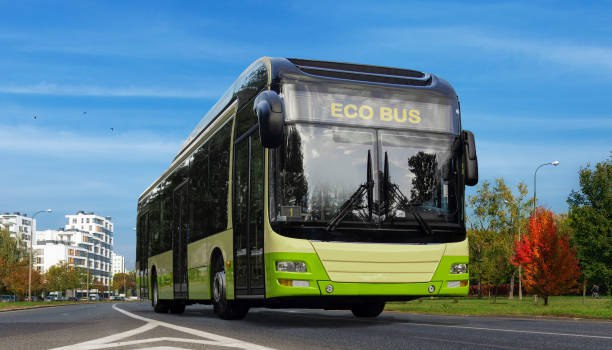
South Korea is expanding support for Kyrgyzstan’s transition to electric mobility through new investments in charging infrastructure and the electrification of government vehicles.

Blue Networks Co., Ltd., a South Korean company specializing in electric vehicle (EV) charging infrastructure that has installed more than 3,500 charging stations in South Korea, plans to install 300 EV charging stations across Kyrgyzstan by July 2026.

The initiative was discussed during a March 3 meeting between Kyrgyz Energy Minister Taalaibek Ibraev and representatives of Blue Networks.

Cooperation between Kyrgyzstan and Blue Networks began in 2024, when the state-owned energy company Chakan HPP and the South Korean firm signed a memorandum on the joint development and operation of EV charging stations.

In 2025, the partners signed a framework agreement to establish a manufacturing facility in Kyrgyzstan to assemble EV charging stations. As part of the agreement, a joint venture has already been established, and the launch of the assembly plant is scheduled for April 2026.

Digitalization was also a key topic during the meeting. Blue Networks said it is developing software to manage EV charging infrastructure and agreed to provide Kyrgyzstan’s Ministry of Energy with access to the system to ensure transparency, monitoring, and efficient management of the future charging network.

The initiative forms part of broader support from South Korea for Kyrgyzstan’s transition to electric mobility.

On March 3, the Korea International Cooperation Agency (KOICA) handed over electric vehicles under the project “Electric Vehicle Transition Project for Public Service Fleet to Realize Green Mobility in the Kyrgyz Republic.”

The ceremony was attended by Kyrgyz Deputy Minister of Economy and Commerce Mederbek Tumanov, South Korean Ambassador to Kyrgyzstan Kim Kwangjae, KOICA Country Director Lim Soyeon, and representatives of participating government institutions.

According to the KOICA Kyrgyzstan office, ten electric SUVs will be distributed among key government institutions during the first phase of the project.

The initiative, which runs from 2024 to 2027 with a budget of about $11 million, aims to reduce greenhouse gas emissions and support the adoption of electric vehicles in the public sector through the provision of vehicles, charging infrastructure, and training programs.

These initiatives align with the Kyrgyz government’s strategy to promote environmentally friendly transport and reduce air pollution in Bishkek and other major cities.

The number of electric vehicles in Kyrgyzstan has been steadily increasing. According to First Deputy Prime Minister Daniyar Amangeldiev, more than 200 electric vehicles are imported into the country daily under a VAT exemption scheme.

As a member of the Eurasian Economic Union (EAEU), Kyrgyzstan also benefits from an annual quota allowing the duty-free import of up to 15,000 electric vehicles.

Despite this rapid growth, electric vehicles still represent a small share of the national vehicle fleet.

According to the Ministry of Natural Resources, Ecology, and Technical Supervision, Kyrgyzstan had more than 1.9 million registered vehicles as of early 2026, a 13% increase compared with 2024.

Of these vehicles, 972,000 run on gasoline, 339,000 on diesel, 56,900 on gas, and 37,000 are hybrids. Electric vehicles account for about 0.8% of the national fleet, or approximately 15,200 vehicles.

Kazakh Startup Defect AI Accepted into StartX Accelerator at Stanford University

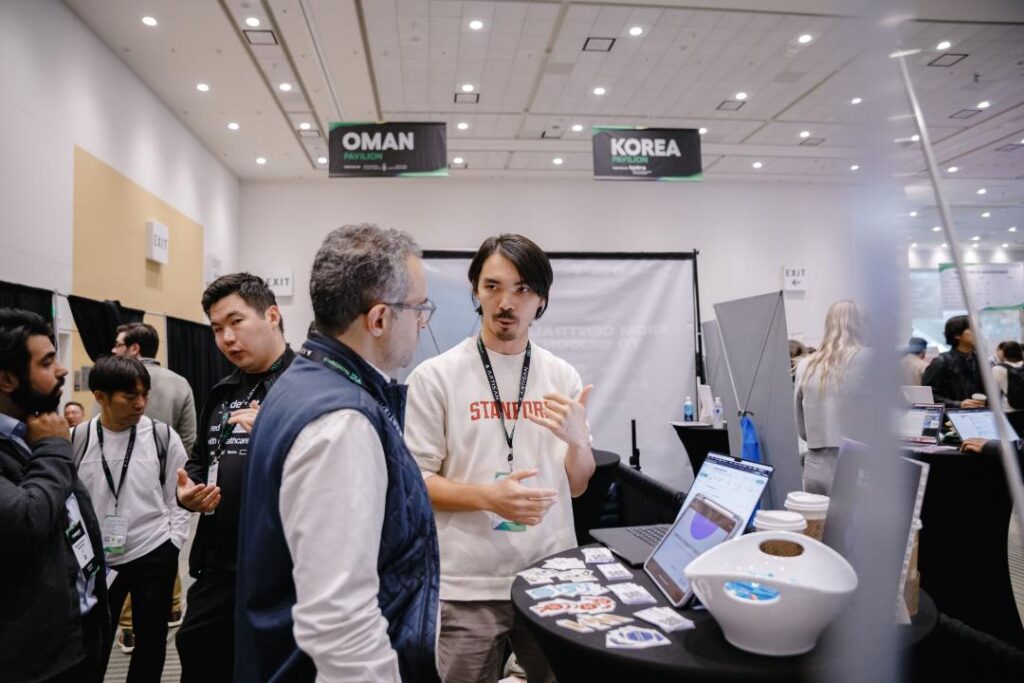
Kazakhstan-based startup Defect AI, part of the Astana Hub ecosystem, has been selected for the spring 2026 cohort of the StartX accelerator at Stanford University. The program is considered one of the most competitive in Silicon Valley and brings together promising technology projects from around the world.

The platform developed by the startup uses artificial intelligence to analyze medical documentation. According to the developers, the algorithm can reduce the time spent on manual document verification by up to 95%.

The service is designed to help medical organizations comply with regulatory requirements and standards while reducing the administrative burden on doctors. The product is positioned as an AI assistant that structures documentation and processes large volumes of medical data without requiring additional staff.

The startup operates internationally under the brand name Rette, derived from the Kazakh word “retteu,” meaning “to put in order.”

Experience gained from implementing the technology in Kazakhstan allowed the team to test the product in a real healthcare system. However, the company’s main strategic focus is now shifting to the U.S. market.

The Defect AI team operates globally, with key employees based in Kazakhstan, the U.S., Japan, the United Kingdom, and Germany. The team includes specialists with experience at Meta, Google, and Microsoft.

Through its participation in the StartX program, the startup has formed an advisory board that includes practicing doctors and medical technology investors.

Co-founder Sanzhar Myrzagalym said the road to the accelerator was a long one. The team applied four times before being accepted into the program.

Dushanbe and London Agree on Cooperation on Critical Minerals

The Tajik government has approved a draft memorandum of understanding with the United Kingdom on cooperation in the field of critical minerals.

The agreement is expected to be concluded between Tajikistan’s Ministry of Industry and New Technologies and the UK government.

The draft memorandum emphasizes the strategic importance of critical minerals for the global economy. These resources are essential for industrial development, advanced technologies, and the transition to low-carbon energy systems.

The document notes that sustainable and transparent supply chains for such minerals are crucial for economic security. The market for these resources remains vulnerable due to the high concentration of production in a limited number of countries and the risk of supply disruptions.

Cooperation between Tajikistan and the UK aims to diversify supply sources and promote the development of more sustainable international supply chains for the extraction and processing of raw materials.

The parties also intend to implement high sustainable development standards throughout project lifecycles, including environmental, social, and governance (ESG) principles.

The memorandum also includes the possibility of export credit and project insurance, subject to certain conditions.

In addition to business cooperation, the agreement provides for the development of scientific and educational initiatives.

In particular, the following measures are planned:

  • the creation of academic partnerships;
  • the exchange of experience between research institutes;
  • strengthening the institutional capacity of the mining sector.

A joint working group on critical minerals will be established to coordinate cooperation, with meetings planned twice a year. The memorandum will be valid for five years, with the possibility of automatic renewal.

Tajikistan has significant reserves of several strategic resources.

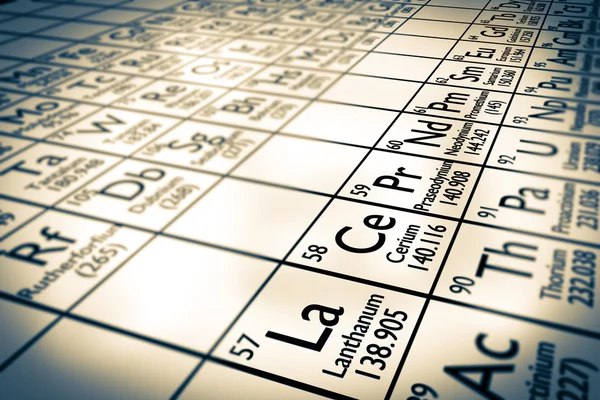
According to geologists, there are indications of lithium deposits in the country, a key metal used in the production of electric vehicle batteries and electronics. Rare earth elements have also been identified, including potential deposits of cerium and praseodymium, which are used in electronics and renewable energy technologies.

In addition, the country has reserves of niobium and tantalum.

UK and Kyrgyzstan Expand Financial Cooperation

The Kyrgyz Republic Capital Markets Day was held in London, where representatives of the UK financial and investment community met with Kyrgyz officials to discuss prospects for expanding banking and investment cooperation.

The Kyrgyz delegation was led by Deputy Minister of Economy and Commerce Mederbek Tumanov.

During his working visit to London, Tumanov held meetings with representatives of the investment banks Oppenheimer and Citi, presenting Kyrgyzstan’s macroeconomic indicators for recent years and outlining the country’s fiscal policy and structural reforms.

According to the Ministry of Economy and Commerce, Kyrgyzstan aims to improve its sovereign credit rating, which would facilitate the country’s access to international capital markets. During the discussions, particular attention was given to creating a predictable regulatory environment for investors.

The Kyrgyz government also seeks to reduce the cost of external borrowing and strengthen the confidence of international investors.

During the visit, the Kyrgyz delegation met with business representatives, including DG and Bankinvest, to discuss opportunities for attracting British private capital to key sectors of the Kyrgyz economy.

According to the Kyrgyz Ministry of Economy, the British delegates expressed interest in expanding investment cooperation.

Tumanov also participated in a meeting of the Kyrgyz-British Business Council, where participants discussed prospects for bilateral investment and the promotion of Kyrgyzstan’s economic priorities in the British market.

During the event, the Kyrgyz representatives presented a number of potential investment projects to British investors, including initiatives related to the development of critical minerals, financial market development, and closer banking cooperation.

According to Kyrgyz authorities, the interest shown by British businesses reflects growing international investor attention to Kyrgyzstan and the wider Central Asian region.

Middle East Conflict Tests Central Asia’s Trade Routes and Energy Security

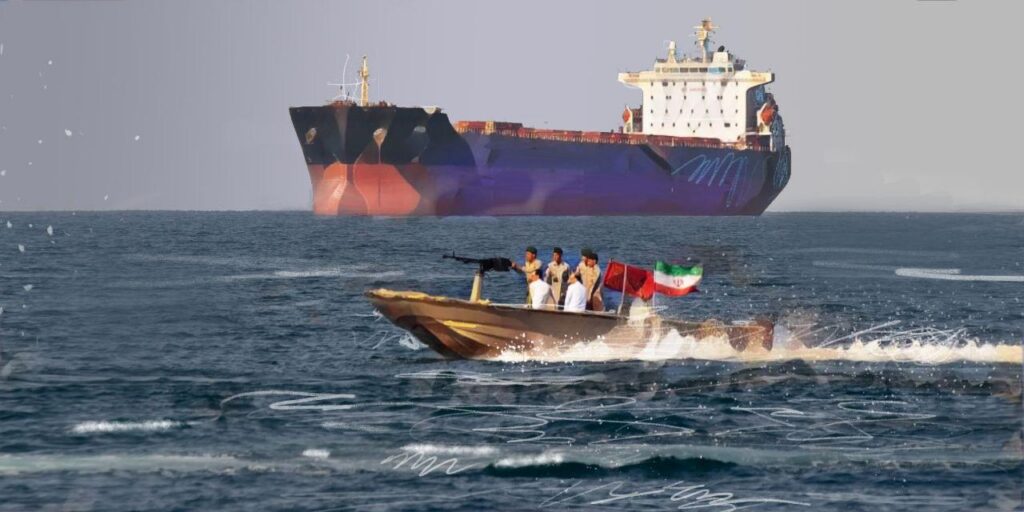
The escalating conflict between Iran, the United States, and their regional partners is raising economic concerns across Central Asia. Turkmenistan shares a long border with Iran, while other Central Asian economies depend on energy markets and trade routes that pass through or around the Persian Gulf. A wider conflict there could ripple across Central Asia through higher fuel prices, disrupted logistics, and pressure on key transport corridors.

For countries such as Kyrgyzstan and Tajikistan, the most immediate risk is rising fuel prices. Both depend heavily on imported fuel. Kyrgyz security expert Taalaibek Jumadylov has warned that Kyrgyzstan could face rising prices for food, clothing, and other essential goods.

For Tajikistan, the closure of the Strait of Hormuz would significantly increase import costs. Tajik media reports that trade between Tajikistan and Iran has grown rapidly over the past five years. Tajik-Iranian trade turnover increased from $377.7 million in 2024 to approximately $484 million in 2025, a rise of around 28%. Tajikistan’s exports totaled about $113 million, while imports from Iran exceeded $371 million, giving Iran a 4.5% share of Tajikistan’s total foreign trade turnover.

If global oil prices rise significantly, Tajikistan could also face additional pressure on its budget. There are indirect risks as well: a slowdown in the economies of Russia, China, or other major partners could affect Tajikistan through trade, investment flows, and remittances.

In Uzbekistan, analysts note that in recent years Iran has actively pursued transport diplomacy with Central Asia, seeking to strengthen its position as a regional logistics hub. Uzbek analyst Nargiza Umarova says this trend aligns with China’s Belt and Road Initiative. Iran and China signed a 25-year cooperation agreement in March 2021, a deal widely described as deepening Iran’s role in Belt and Road-linked connectivity.

Kazakh economist Almas Chukin highlighted the logistical advantages of transport routes through Iran.

“If we take the point where the Turkmenistan railway connects with Iran and the route to the Persian Gulf, it is about 1,200-1,500 kilometers. This is comparable to the distance from Astana to Almaty. Once you cover this distance, you reach the Persian Gulf and its major ports, where you can handle anything from oil transshipment to grain shipments. From there, sea transport to Rotterdam takes about three to four weeks,” he stated.

Chukin added that such routes could simplify exports compared with transporting oil through Russia to Novorossiysk and then via the Black Sea, the Bosphorus Strait, and the Mediterranean. According to his estimates, a rail route to Europe through Iran would be about 3,500 kilometers from the Turkmen border.

The economist suggested that if Iran’s political system changes and sanctions are lifted, Central Asia could benefit significantly. “This would be a huge shift for Central Asia: a region with a population of 80 million, abundant resources, and a young workforce, but constrained by geography, suddenly gaining direct access to global markets,” Chukin argued.

Some analysts also point to emerging competition among regional transport corridors. In the South Caucasus, a proposed Zangezur corridor has been promoted as an alternative logistics route linking the Caspian region to Turkey and Europe.

Kazakh officials, however, currently see limited direct risks from the escalation in the Middle East beyond possible volatility in global oil markets.

Deputy Prime Minister and Minister of National Economy Serik Zhumangarin said Kazakhstan has historically used logistics routes to the Persian Gulf sparingly.

“The conflict between Russia and Ukraine has been ongoing for some time, and logistics have already adapted to it. As for the Persian Gulf, this direction has not been widely used. We have very rarely relied on ports in the Persian Gulf, for example, Bandar Abbas. There were shipments, but not enough to significantly affect us now, as access there has always been quite complicated,” he said.

According to Zhumangarin, the main risk for Kazakhstan is volatility in the tenge exchange rate driven by changes in global oil prices.

“Oil price fluctuations will naturally affect the exchange rate, and exchange-rate volatility is not good,” he said.

Swedish Pracademic and International Business Strategist Alex Matrsson believes that Central Asia, historically a bridge between East and West, is once again gaining strategic importance. During periods of geopolitical turbulence, land transport corridors become increasingly valuable, and Kazakhstan, the region’s largest economy and a key transit hub, plays a central role.

Matrsson noted that President Kassym-Jomart Tokayev’s recent contacts with Emir Tamim bin Hamad Al Thani of Qatar and other Gulf leaders demonstrate a strategy of diversifying partnerships and expanding trade corridors.

“By diversifying trade ties, investing in infrastructure, and strengthening diplomatic relations, Kazakhstan is protecting its economic future and securing Central Asia’s place in a fragile global economy,” Matrsson said.

Bauryzhan Iskakov, an economist and associate professor, shares this view. He believes Kazakhstan could strengthen its position as a regional transit hub, particularly through the Trans-Caspian route.

“This route runs through the Caspian Sea, Azerbaijan, Georgia, Turkey, and Europe. Given instability in maritime shipping in the Persian Gulf region and potential risks to northern routes, Central Asia, including Kazakhstan, could play an important role in shaping alternative export and logistics flows,” he said.

However, Iskakov noted that the Trans-Caspian International Transport Route still requires further development.

“The Trans-Caspian infrastructure does not yet have the scale or capacity of major sea routes or key oil pipelines, so its development must be supported by investment, technical solutions, and new logistics projects,” he said.

Taken together, these factors highlight how closely Central Asia’s economic outlook is tied to developments beyond its borders. Even without direct involvement in the conflict, the region could feel its effects through higher energy prices, disrupted supply chains, and shifting trade routes.

At the same time, the crisis may accelerate efforts across Central Asia to diversify transport corridors. As geopolitical tensions reshape trade flows between Asia, Europe, and the Middle East, the region’s position at the crossroads of Eurasia may become both a vulnerability and an opportunity.