• KGS/USD = 0.01144 0%
  • KZT/USD = 0.00217 0%
  • TJS/USD = 0.10456 0%
  • UZS/USD = 0.00008 0%
  • TMT/USD = 0.28490 0%
  • KGS/USD = 0.01144 0%
  • KZT/USD = 0.00217 0%
  • TJS/USD = 0.10456 0%
  • UZS/USD = 0.00008 0%
  • TMT/USD = 0.28490 0%
  • KGS/USD = 0.01144 0%
  • KZT/USD = 0.00217 0%
  • TJS/USD = 0.10456 0%
  • UZS/USD = 0.00008 0%
  • TMT/USD = 0.28490 0%
  • KGS/USD = 0.01144 0%
  • KZT/USD = 0.00217 0%
  • TJS/USD = 0.10456 0%
  • UZS/USD = 0.00008 0%
  • TMT/USD = 0.28490 0%
  • KGS/USD = 0.01144 0%
  • KZT/USD = 0.00217 0%
  • TJS/USD = 0.10456 0%
  • UZS/USD = 0.00008 0%
  • TMT/USD = 0.28490 0%
  • KGS/USD = 0.01144 0%
  • KZT/USD = 0.00217 0%
  • TJS/USD = 0.10456 0%
  • UZS/USD = 0.00008 0%
  • TMT/USD = 0.28490 0%
  • KGS/USD = 0.01144 0%
  • KZT/USD = 0.00217 0%
  • TJS/USD = 0.10456 0%
  • UZS/USD = 0.00008 0%
  • TMT/USD = 0.28490 0%
  • KGS/USD = 0.01144 0%
  • KZT/USD = 0.00217 0%
  • TJS/USD = 0.10456 0%
  • UZS/USD = 0.00008 0%
  • TMT/USD = 0.28490 0%

Lenin Falls in Osh: Central Asia Redefines Its Soviet Legacy

The recent removal of a towering 23-meter-tall monument to Vladimir Lenin in Osh, Kyrgyzstan, has ignited heated debate both domestically and abroad. While many are surprised the monument remained in place for more than three decades after the fall of the Soviet Union, its dismantling is part of a broader regional trend of de-Sovietization, a complex process involving the renaming of cities, removal of Soviet-era symbols, and the reassertion of national identity across Central Asia.

A Symbol Removed, A Debate Ignited

Lenin Monument in Osh, October 2024; image: TCA, Jonathan Campion

On June 7, Osh authorities dismantled what was once the tallest Lenin statue in Central Asia. Originally installed in 1975, the monument is to be relocated to a city park, according to the local government. Officials stressed the move was intended to improve the city’s architectural landscape, not to make a political statement, and have warned against “politicizing” the issue.

Despite official reassurances, the move has sparked sharp reactions on social media and in the press, with Russian media outlets characterizing the relocation as an anti-Russian gesture. Generational divides have become apparent: younger residents tend to support the removal, while older citizens have expressed dismay over what they see as the erasure of history.

“It’s a shame. It was more than a monument, it was part of our lives,” Elena, a local schoolteacher told The Times of Central Asia. “We joke that Lenin crossed the ‘red line’ and got demolished.”

Irina Bayramukova, a 68-year-old public figure, called the decision a mistake.

“The Lenin monument by Nikolai Tomsky was not only artistically significant, it represented an era. Removing it is like declaring war on those who identify with that past,” she told TCA.

Kyrgyzstan, like other Central Asian republics, has been distancing itself from its Soviet legacy since gaining independence in 1991. One of the earliest symbolic moves was the renaming of the capital, once called Frunze after a Bolshevik military leader, back to Bishkek, a modified version of its pre-Soviet name.

A Museum to Mikhail Frunze still stands in Bishkek, where the thatched-roof hut of his boyhood was purportedly transported brick by brick. A supporter of Stalin’s rival Zinoviev, when forced to undergo routine surgery by Uncle Joe in 1925, Frunze “mysteriously” died of chloroform anesthetic poisoning.

Redefining History

Lenin Monument in Bishkek; image: TCA, Stephen M. Bland

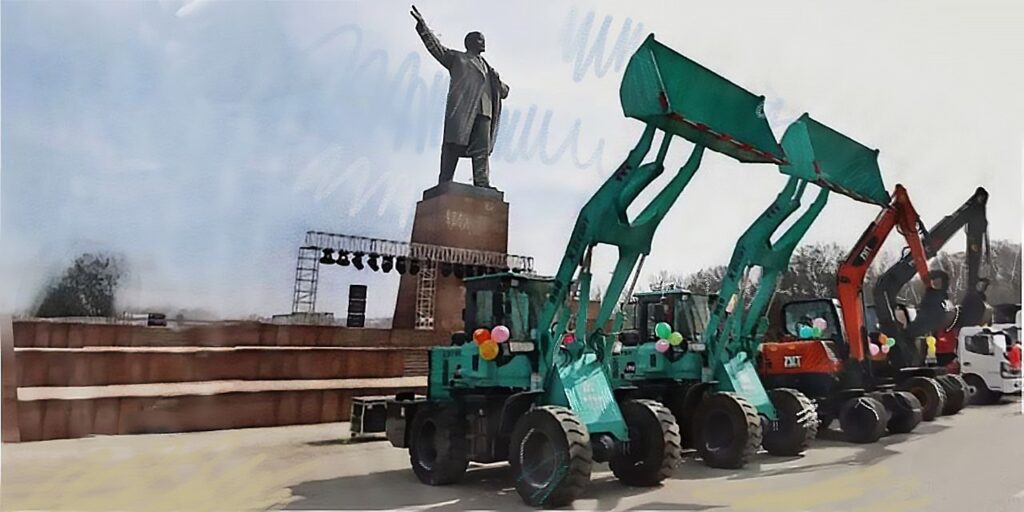
Originally erected in 1984 in the Central Square of Bishkek, a Lenin statue was relocated behind the State Historical Museum in 2003. As previously reported by TCA, earlier this year a debate on removing the monument altogether flared up.

In 2022, the National Historical Museum of the Kyrgyz Republic in Bishkek finally reopened its doors after being closed in 2016 for renovations which were planned to take less than a year but ended up taking six years. Several government officials were charged with misappropriating funds designated for the renovations, with former Prime Minister Sapar Isakov sentenced to 18 years in prison. Reportedly, over 307 million Som ($3.8 million) were stolen from the project.

The reopened museum, however, has seen most of the Soviet-era displays removed, including the section dedicated to the history of the Bolshevik Revolution, and statues of Lenin and Marx. The murals on the roof, which included an image of an American skeleton wearing a cowboy hat while riding a nuclear bomb are also gone, with the museum now focusing on Kyrgyz traditional pre-Soviet culture.
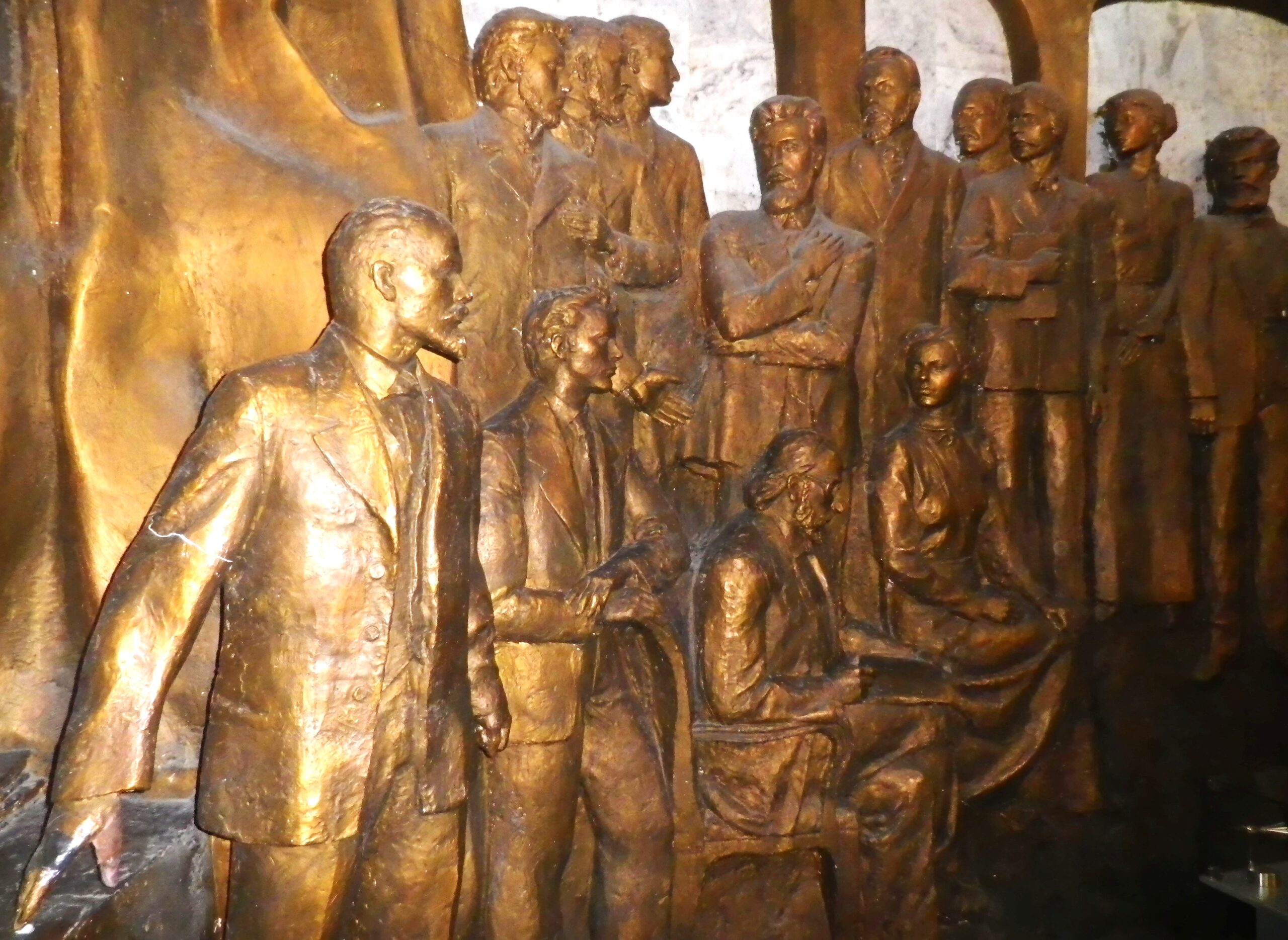
Bishkek National Historical Museum, 2015 – Lenin with arm glued and fingers masking taped back on; image: TCA, Stephen M. Bland

Parallels and Precedents

Supporters of the relocation of the Lenin statue in Osh point to similar developments within Russia itself, where numerous monuments to Soviet leaders have been removed from public squares and relocated to parks or peripheral areas. Major Russian cities have also shed their Soviet names, with Leningrad reverting to St. Petersburg, Sverdlovsk to Yekaterinburg, Gorky to Nizhny Novgorod, and Kuibyshev to Samara.

Kazakhstan was among the first in the region to systematically relocate Soviet monuments to designated parks and squares. Cities like Almaty, Astana, and Atyrau host clusters of statues depicting Lenin, Kirov, Kalinin, and Maxim Gorky, often near playgrounds and amusement areas. While the statues may appear somber and out of place, they have become fixtures for public interaction and informal education. 

Kazakhstan has also been a frontrunner in renaming cities. Since the 1990s, dozens of towns have reverted to their pre-Soviet or Kazakh names: Shevchenko became Aktau, Guryev became Atyrau, and Semipalatinsk became Semey. Even the Ural River is now often referred to as the Zhayik within Kazakhstan’s borders.

The country’s capital, meanwhile, has changed its name six times, earning it a spot in the Guinness Book of Records. From Akmolinsk to Tselinograd, Akmola, Astana, Nur-Sultan, and back again to Astana, the city’s evolving identity mirrors Kazakhstan’s shifting national narrative. 

Proposals to rename cities such as Petropavlovsk and Pavlodar have provoked strong public debate, underscoring the tensions that can accompany such symbolic changes.

Remembering History or Rewriting It?

Uzbekistan has seen its own controversies over the treatment of Soviet-era monuments. Russian media outlets have been particularly vocal in criticizing the demolition of monuments honoring World War II heroes. Nevertheless, President Shavkat Mirziyoyev has overseen the restoration of several key memorials, including those commemorating Sabir Rakhimov, a Soviet war hero, and the Shammahmudov family, known for sheltering evacuated children during the war. 

One reason cities in Uzbekistan have retained their historical names is their antiquity. Cities such as Tashkent, Samarkand, Bukhara, Khiva, and Kokand, many of which are over 1,500 years old, were left with their original monikers, even by the Soviets.

Tajikistan, meanwhile, has taken a more definitive approach. The last major Lenin monument was removed in 2016 in the south of the country. In the capital, Dushanbe, Lenin’s statue was replaced in 1999 by one of Ismail Samani, the 10th-century founder of the first Tajik state. 
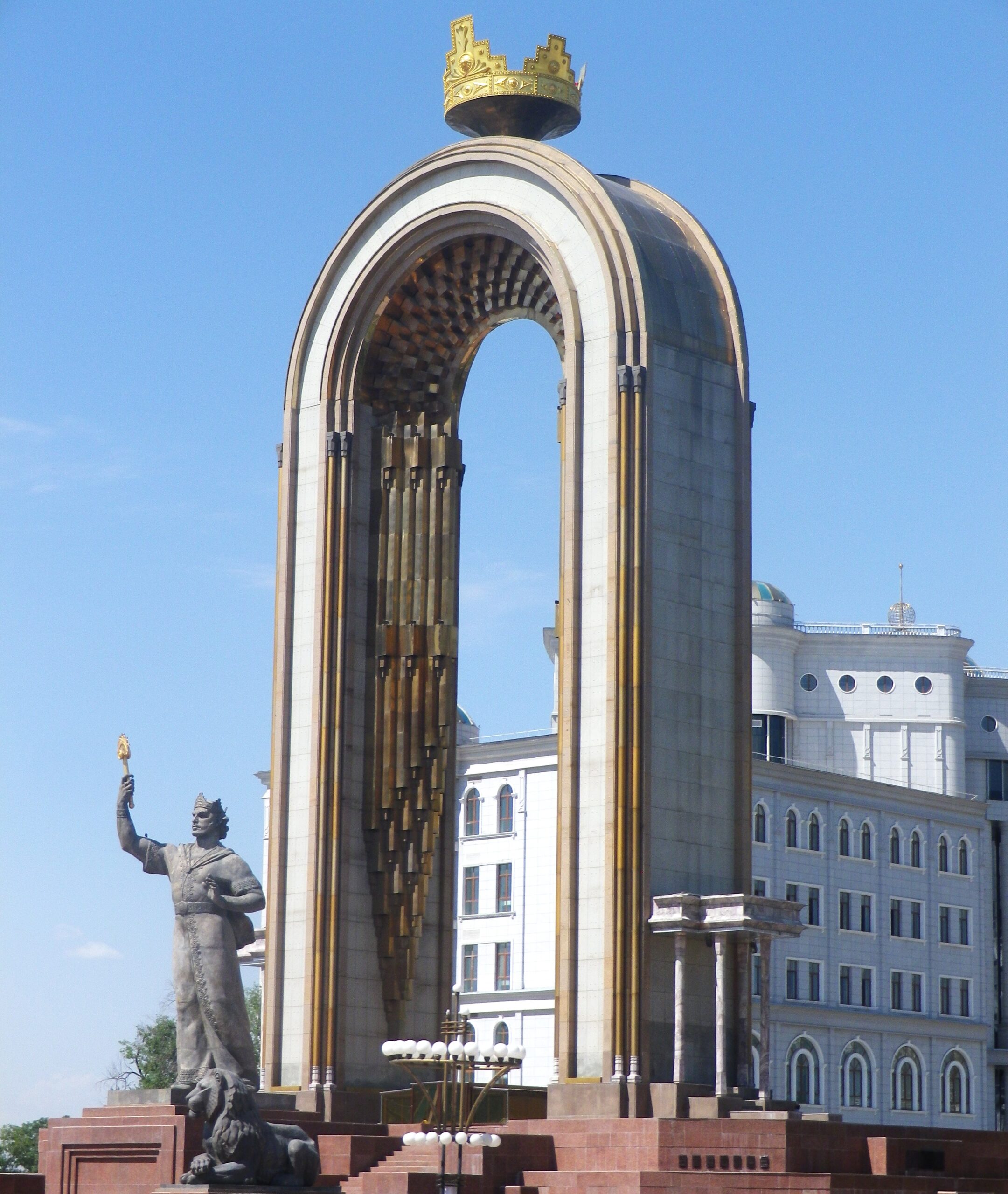
The Samani Monument in Dushanbe, Tajikistan, replaced a statue of Lenin in 1999; image: TCA, Stephen M. Bland

Several city names have changed since independence. Kalininabad became Sarband and then Levakand, whilst Chkalovsk was renamed Buston in 2016. Perhaps most notably, Leninabad reverted to its ancient name, Khujand, a city believed by some historians to be the site of Alexandria Eschata, founded by Alexander the Great. 

In Turkmenistan, a Lenin monument in Ashgabat once stood atop a pedestal styled after traditional Turkmen carpets. Though it remained in place until relatively recently, it too has since been removed. 

The “Breadwinner”

Soviet sculptors once called Lenin the “breadwinner,” because designing such monuments was well paid, though only those deemed the most “worthy” – members of the Union of Artists who had won state awards – were commissioned.  There are approximately 7,000 Lenin statues still standing globally, compared to 15,000 in 1991. At the dawn of its independence in 1991, Ukraine was home to 5,500. Three-hundred and fifty are said to remain, largely in occupied Crimea, Donetsk, Luhansk, and the Chornobyl Exclusion Zone.

Lenin monument in Chornobyl; image: TCA, Stephen M. Bland

As of 2021, 341 Lenin statues had been demolished in Kazakhstan since independence. It is unknown how many still stand in Central Asia.

What Comes Next?

The dismantling of Soviet monuments and renaming of cities across Central Asia reflects a broader effort to redefine national identities in the post-Soviet era. While many view these changes as long overdue, others see them as cultural erasure or politically charged acts that risk alienating segments of society.

Whether these efforts lead to cultural rejuvenation or social division remains to be seen. What is clear is that the legacy of the Soviet Union continues to cast a long shadow, and in Central Asia, history is not easily consigned to the past.


Central Asian Glaciers Shrinking Irreversibly, Expert Warns

Glaciers in Central Asia are melting at an alarming rate with no signs of recovery, according to Tohir Majitov, head of the Uzbek public organization “Suvchi,” in an interview with Kazinform.

Majitov highlighted the escalating pressure on water supplies due to population growth and agricultural expansion across the region. “In 1991, Central Asia had nearly 6 million hectares of irrigated land. By 2024, this figure has grown to over 10 million hectares. The population has also increased from around 45 million to more than 80 million. Water supply for this growing population is now a serious issue,” he explained.

He noted that Uzbekistan and Kazakhstan heavily depend on the Syr Darya and Amu Darya rivers, which originate in the mountainous regions of Kyrgyzstan and Tajikistan. A critical challenge arises from the differing water needs: upstream countries store water during summer for hydropower generation in autumn and winter, while downstream nations like Kazakhstan and Uzbekistan require substantial water primarily during the summer growing season.

Majitov issued a stark warning about the region’s largest glacier, Tajikistan’s Fedchenko Glacier, which has reportedly lost over 40% of its mass. “Between 1990 and 2005, the glacier shrank by 50 meters,” he stated. “Its length is 77 kilometers, width 2.4 kilometers, and depth reaches one kilometer. Glaciers in Kyrgyzstan have also lost over 30% of their mass.”

To tackle these pressing water challenges, Majitov proposed the formation of a regional body. “We suggest creating an Aral Sea Committee to improve water management and ensure food security. It may take several years, but all Central Asian countries should take part,” he urged. He believes that efficient water use could enable the region to expand irrigated land by 2-3 million hectares, potentially feeding up to 100 million people.

Previously, The Times of Central Asia reported concerns from other experts on the region’s water crisis. A fundamental conflict exists between upstream countries, like Kyrgyzstan and Tajikistan, which have water but need to release it in winter for electricity generation, and downstream countries, such as Uzbekistan and Turkmenistan, that require that water in summer for agricultural purposes.

What was once primarily a technical concern has now evolved into a complex regional problem, exacerbated by climate change. Nations are increasingly constructing dams, engaging in disputes over water allocation, and experiencing a decline in mutual trust. The future stability of Central Asia may hinge on its capacity to effectively manage this escalating water crisis.

Kazakhstan Inaugurates Major Container Hub at Aktau Port

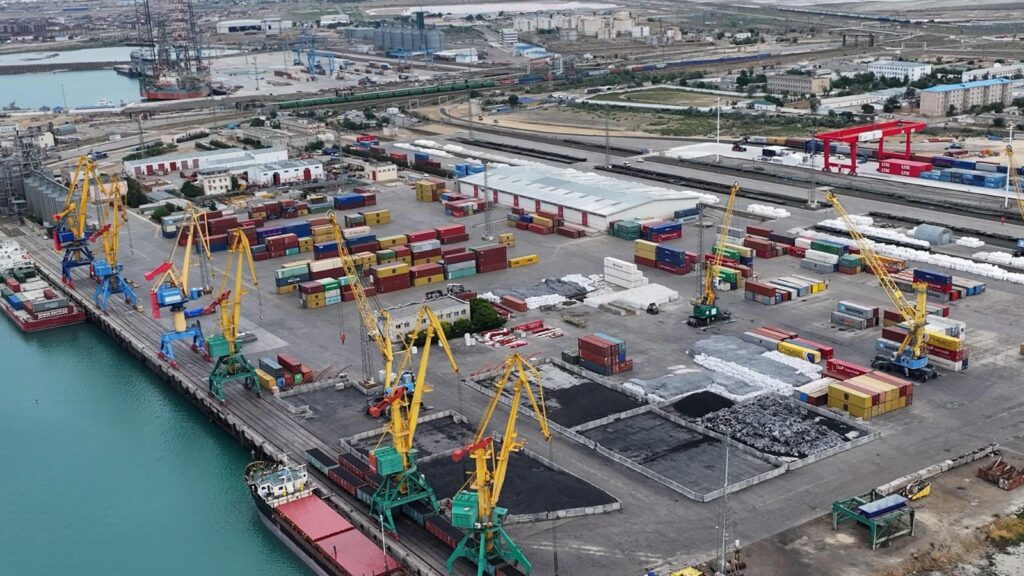
On June 9, Kazakhstan officially launched the largest container hub on the Caspian Sea, situated within its Aktau port. 

The project, spearheaded by Kazakhstan’s national railway company, Kazakhstan Temir Zholy (KTZ), was implemented in collaboration with China’s Lianyungang port and the Aktau International Sea Trade Port. China Communications Construction Company, a prominent Chinese state corporation specializing in transport infrastructure, served as the general contractor.

During the opening ceremony, Nurlan Zhakupov, Chairman of the Board of the National Welfare Fund Samruk-Kazyna, highlighted the joint efforts of Samruk-Kazyna and KTZ in advancing Kazakhstan’s transit and transport potential, a key strategic objective for the nation. “Over the 10 years of KTZ’s partnership with the port of Lianyungang, the Kazakh-Chinese terminal in Lianyungang, the Khorgos Gateway Dry Port, and now the container hub in Aktau have been opened. This project is an important step in the development of transport and logistics in Kazakhstan,” he stated.

The newly inaugurated hub is expected to significantly accelerate the processing of containerized cargo, enhance transit capabilities, and reinforce Kazakhstan’s pivotal role as a strategic link on both the East-West and North-South transport routes.

The operational launch of the hub was marked by the arrival of the 100,000th container from China, transported via the Trans-Caspian International Transport Route (TITR), a rapidly expanding trade corridor connecting China and Europe through Kazakhstan.

Kyrgyz Government Urges Foreign Citizens to Legalize Their Status Ahead of Deadline

Over 12,000 foreign citizens are currently employed in Kyrgyzstan, according to Jumabek Myrzabayev, head of the Migration Department at the Ministry of Labor, Social Security and Migration, who shared this information with Birinchi Radio. 

Foreign nationals are primarily engaged in the construction, light industry, manufacturing, trade, and services sectors. The majority of work permits have been issued to citizens from China, Bangladesh, India, Pakistan, Turkey, and Uzbekistan.

For 2025, Kyrgyzstan has set a foreign labor force quota of 25,000 individuals.

The Kyrgyz government has provided a short window for foreign citizens who have violated the country’s migration laws to legalize their stay. This amnesty, which concludes today, June 10, 2025, applies to individuals with expired visas or residence permits, those without valid documents confirming legal stay, and those who have breached their purpose of entry or transit rules. 

Authorities have warned that after today’s deadline, foreign citizens remaining in Kyrgyzstan illegally will face deportation.

Myrzabayev reported that more than 3,000 applications have been submitted by foreigners seeking to regularize their status in Kyrgyzstan.

Dushanbe Proposed as Regional Glaciology Hub Amid Accelerating Glacier Melt

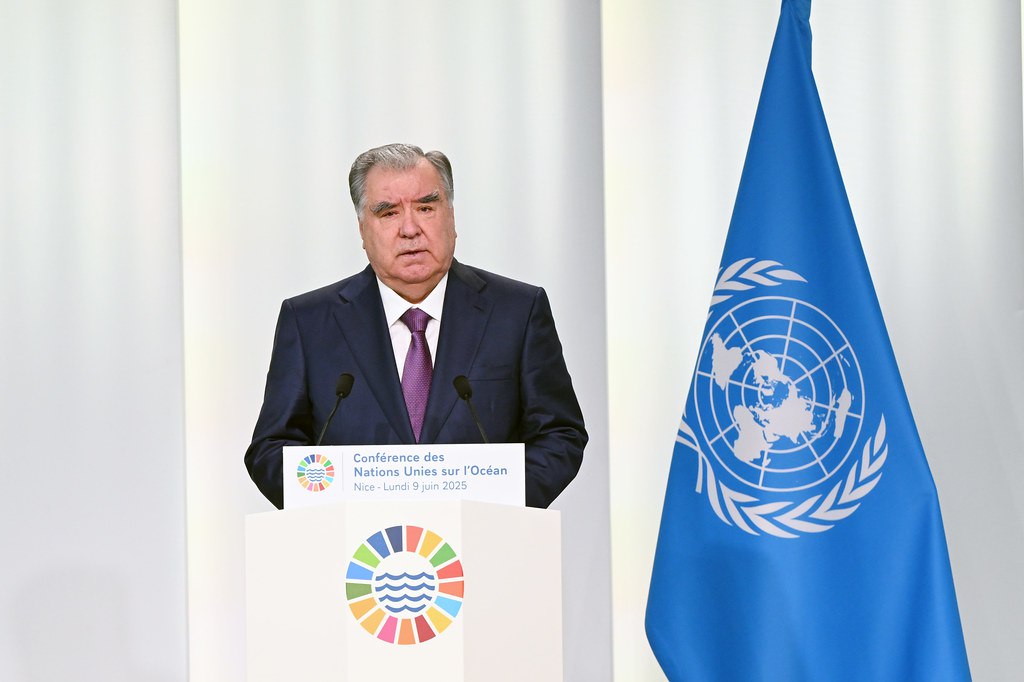
Tajikistan’s President Emomali Rahmon, speaking in France on June 8 at the launch of the International Decade of Cryosphere Sciences (2025-2034), has proposed establishing a Regional Coordination Center for Glaciology in Dushanbe. The event was held as part of the Third UN Ocean Conference in Nice, which convened heads of state and government from 65 countries, UN Secretary-General António Guterres, and leaders of international organizations.

Glaciology Center in the Heart of the Pamir Mountains

Addressing the international community, Rahmon underscored Tajikistan’s commitment to creating a glaciology center. “Given the importance of glaciers and in order to study the impact of climate change on them more accurately, we have decided, with the assistance of international partners, to establish a Regional Coordination Center for Glaciology in Dushanbe,” he stated.

He highlighted that Tajikistan is home to up to 60% of all glaciers in Central Asia, playing a pivotal role in the region’s sustainable development. However, their rapid shrinkage poses a threat not only locally but globally. Rahmon warned that if current melting trends persist, up to a billion people could face negative consequences by 2050, particularly in coastal areas and on islands.

Tajikistan: Initiator of the Climate Agenda

Rahmon emphasised that Tajikistan had been a proactive advocate for water and climate issues on the global stage for two decades. He emphasized the broad international support for the joint initiative by Tajikistan and France to designate 2025-2034 as the “Decade of Action for Cryosphere Sciences.”

“Our initiatives in the field of water and climate issues have received the support of the international community and are being implemented through 14 resolutions of the UN General Assembly,” Rahmon noted. He concluded by urging the international community to expand cooperation for cryosphere preservation and the development of scientific potential in this critical area.

From Declarations to Coalitions

Rahmon’s speech followed the first International High-Level Conference on Glacier Protection held in late May. This forum attracted over 2,500 delegates from 80 countries, including scientists, heads of delegations, international organizations, and donor agencies.

The conference’s primary outcome was the signing of the Dushanbe Declaration, a document advocating for urgent action to protect glaciers and synchronize international efforts. Participants called for significant reductions in greenhouse gas emissions, a transition to sustainable production models, and the implementation of robust climate monitoring systems.

An international coalition was also announced, poised to unite states, scientific institutions, environmental movements, and international organizations. Its mandate will include monitoring the declaration’s implementation, facilitating the exchange of best practices, attracting investment, and developing climate change adaptation technologies.

Central Asian Nations Boost Joint Fight Against Locusts

Kazakhstan, Uzbekistan, and Kyrgyzstan have committed to strengthening their cooperative efforts in combating locust infestations. The agreement emerged during the 55th meeting of the European and Mediterranean Plant Protection Organization (EPPO) working group, where officials from the three nations convened to enhance collaboration, adhere to international plant health standards, and expedite information exchange.

According to Kazinform, Saken Kanybekov, acting head of Kazakhstan’s State Inspection Committee, engaged in discussions with his counterparts from Uzbekistan and Kyrgyzstan, sharing insights and experiences on managing seasonal locust outbreaks.

A key innovation introduced at the meeting was Locust.uz, an online platform developed by Uzbekistan. This system maps locust egg-laying sites and pesticide spraying operations, utilizing GPS tracking to monitor equipment movement. This functionality enables experts to rapidly assess situations and respond swiftly, aiming to prevent the widespread dissemination of locusts.

The three countries pledged increased focus on border areas, which are common pathways for pest migration. They plan to regularly exchange updates on locust conditions, research findings, and ongoing control measures. A further objective is to integrate their digital systems to facilitate more effective data sharing, including plant health certificates.

The Times of Central Asia previously reported on Kazakhstan’s broader efforts to bolster cooperation with neighboring countries, including Kyrgyzstan, Uzbekistan, Russia, and China, to curb locust outbreaks. Joint inspections along the Kazakh-Uzbek border have, to date, found no signs of infestation. Kazakhstan is also closely monitoring its northern border with Russia and has scheduled additional inspections in other regions for June.

As of June 2, Kazakhstan had surveyed over 6.1 million hectares of farmland, representing 35.6% of its target, and treated nearly 1 million hectares with pesticides. The country has deployed a significant arsenal of 443 spraying units, including 55 ultralight aircraft and 49 agricultural drones, to manage the pest.

Locust-damaged land in Kazakhstan has seen a notable increase, rising from 514,000 hectares in 2020 to 1.6 million hectares in 2023, with projections indicating a further rise in 2024. The UN Food and Agriculture Organization (FAO) warns that over 25 million hectares of farmland and 20 million people across Central Asia and the South Caucasus are at risk from locust threats.