• KGS/USD = 0.01144 0%
  • KZT/USD = 0.00216 0%
  • TJS/USD = 0.10456 0%
  • UZS/USD = 0.00008 0%
  • TMT/USD = 0.28490 0%
  • KGS/USD = 0.01144 0%
  • KZT/USD = 0.00216 0%
  • TJS/USD = 0.10456 0%
  • UZS/USD = 0.00008 0%
  • TMT/USD = 0.28490 0%
  • KGS/USD = 0.01144 0%
  • KZT/USD = 0.00216 0%
  • TJS/USD = 0.10456 0%
  • UZS/USD = 0.00008 0%
  • TMT/USD = 0.28490 0%
  • KGS/USD = 0.01144 0%
  • KZT/USD = 0.00216 0%
  • TJS/USD = 0.10456 0%
  • UZS/USD = 0.00008 0%
  • TMT/USD = 0.28490 0%
  • KGS/USD = 0.01144 0%
  • KZT/USD = 0.00216 0%
  • TJS/USD = 0.10456 0%
  • UZS/USD = 0.00008 0%
  • TMT/USD = 0.28490 0%
  • KGS/USD = 0.01144 0%
  • KZT/USD = 0.00216 0%
  • TJS/USD = 0.10456 0%
  • UZS/USD = 0.00008 0%
  • TMT/USD = 0.28490 0%
  • KGS/USD = 0.01144 0%
  • KZT/USD = 0.00216 0%
  • TJS/USD = 0.10456 0%
  • UZS/USD = 0.00008 0%
  • TMT/USD = 0.28490 0%
  • KGS/USD = 0.01144 0%
  • KZT/USD = 0.00216 0%
  • TJS/USD = 0.10456 0%
  • UZS/USD = 0.00008 0%
  • TMT/USD = 0.28490 0%

Russian-Kyrgyz Development Fund Approves New Projects for 2025

The Russian-Kyrgyz Development Fund (RKDF) has approved a $150 million budget to support Kyrgyzstan’s economy in 2025, with six new projects already greenlit for more than $95 million in financing.

According to Artem Novikov, Chairman of the RKDF Board, the newly approved initiatives include industrial cooperation with the national railway company, Kyrgyz Temir Jolu, support for the domestic sugar industry, and the implementation of new trade financing mechanisms to enhance trade turnover between Kyrgyzstan and Russia.

Kyrgyzstan’s Minister of Economy and Commerce, Bakyt Sydykov, underscored the strategic role of the RKDF, calling it a key tool in the country’s economic development. “The RKDF remains Kyrgyzstan’s key partner in financing strategically important projects,” he said.

Sydykov also highlighted Kyrgyzstan’s recent industrial growth. In 2024, the country opened 102 new industrial enterprises, with plans to launch an additional 128 facilities this year.

The RKDF was established in 2014 by the governments of Kyrgyzstan and Russia to promote bilateral economic cooperation, modernize Kyrgyzstan’s economy, and capitalize on opportunities offered by regional integration within the Eurasian Economic Union (EAEU), which includes Armenia, Belarus, Kazakhstan, Kyrgyzstan, and Russia.

In a related development, the Azerbaijan-Kyrgyz Development Fund (AKDF) recently approved financing for two projects in Kyrgyzstan: the construction of a 9 MW small hydroelectric power plant and a modern sewing factory expected to create 300 jobs.

Uzbekistan Deploys Space Technology to Combat Environmental Violations

Uzbekistan’s Prosecutor General’s Office and the national space agency, Uzbekkosmos, have signed a memorandum of cooperation aimed at strengthening environmental protection through the use of space-based technologies.

According to Uzbekkosmos, the agreement facilitates the exchange of information and the use of satellite tools to monitor environmental conditions and investigate violations. The initiative will integrate aerospace technologies into environmental inspections, preliminary investigations, and monitoring activities, leveraging the State Space Monitoring System to provide more accurate and transparent data.

The partnership outlines joint actions to detect and prevent a range of ecological infractions, including the reduction of green spaces, illegal tree felling, unauthorized use of forest lands, and illicit construction activities.

The agreement also targets illegal excavation, particularly in riverbeds and protected water zones. The authorities will monitor compliance with regulations on riverbed cleaning and bank reinforcement, identifying any unauthorized digging operations.

Satellite data will further be used to assess the volume of materials extracted from mines, monitor compliance with waste storage regulations, and detect illegal dumping sites. The initiative also addresses post-harvest practices, such as the burning of crop residue, which negatively affects air quality and soil health.

Officials believe the partnership will enhance environmental oversight, promote public awareness, and improve the efficiency of ecological inspections. It is also expected to foster a stronger culture of environmental responsibility across the country.

This initiative follows President Shavkat Mirziyoyev’s 2024 ratification of Uzbekistan’s accession to the Outer Space Treaty, which governs the peaceful exploration and use of outer space, including the Moon and other celestial bodies. Originally signed in 1967 by the United Kingdom, Russia, and the United States, the treaty now includes 115 ratifying countries, with 22 additional signatories yet to ratify.

Rysgul Akimjanova Becomes Second Female Kyrgyz Mountaineer To Climb Everest

Rysgul Akimjanova has become the second woman from Kyrgyzstan to reach the summit of Mount Everest, the world’s highest peak at 8,848 meters.

Akimjanova reached the summit at 4:40 a.m. Nepal time on May 27 and has since begun her descent to a lower camp. Her success follows an earlier attempt just days prior, which was aborted at 8,400 meters due to a shortage of oxygen.

Earlier this month, The Times of Central Asia reported that Asel Baibagysheva became the first Kyrgyz woman to summit Everest, accomplishing the feat on May 11.

Baibagysheva is an experienced mountaineer, having previously summited Lenin Peak (7,134 m), Khan Tengri (7,010 m), and Pobeda Peak (7,439 m) in Kyrgyzstan, as well as Mount Elbrus (5,642 m) in Russia’s Caucasus region. She was also the first Kyrgyz woman to climb Manaslu in Nepal, the world’s eighth-highest mountain at 8,163 meters.

Dmitry Grekov was the first Kyrgyz man to summit Everest in 1997, followed by Eduard Kubatov in May 2021.

OpenAI Registers as a Taxpayer in Kazakhstan

OpenAI, the U.S.-based developer of the ChatGPT chatbot, has officially registered as a taxpayer in Kazakhstan and will now pay value-added tax (VAT), according to the State Revenue Committee (SRC) of the Ministry of Finance. The announcement comes as part of the government’s ongoing efforts to ensure equitable taxation of foreign digital service providers operating in the country’s market.

Kazakhstan introduced its digital services tax, commonly referred to as the “Google tax”, in 2022, becoming one of the first countries in Central Asia to do so. The policy aims to bring major international tech firms into the national tax framework.

“As part of improving interaction with global digital platforms, in May 2025, OpenAI, L.L.C., a leading American organization in the field of artificial intelligence and widely known as the developer of the ChatGPT intelligent system, was conditionally registered. Now, for providing services to individuals in Kazakhstan, the chatbot will pay VAT in accordance with tax legislation,” the SRC said in a statement.

ChatGPT is based on the GPT (Generative Pre-trained Transformer) language model. It can understand and respond to user queries, assist with translations, compose letters, generate code, and support learning and research tasks.

The digital services tax has become a significant revenue stream for Kazakhstan. In 2022, it contributed 16.4 billion KZT (approximately $32.1 million) to the state budget. Revenues increased to 26.3 billion KZT ($51.4 million) in 2023 and reached 26.4 billion KZT ($51.6 million) in 2024.

To date, around 100 international companies, including Google, Apple, Netflix, and Amazon, are registered as VAT payers under the digital services tax regime. The registration process for foreign companies has been streamlined to facilitate compliance.

As previously reported by The Times of Central Asia, OpenAI also registered as a taxpayer in Uzbekistan in April.

Tajikistan Slips in Global Peace Index But Maintains Upper-Half Ranking

Tajikistan ranked 72nd out of 163 countries in the 2024 edition of the Global Peace Index (GPI), published by the Institute for Economics and Peace. While the country dropped two places compared to the previous year, it remains in the upper half of the ranking, reflecting a decade of gradual improvement.

Understanding the Peace Index

The GPI is based on 23 qualitative and quantitative indicators assessing internal and external conflicts, levels of crime, political stability, military expenditure, and the degree of militarization. Scores range from 1 to 5, with lower scores indicating higher levels of peace and security. In 2024, Tajikistan received a score of 2.035.

Among its regional neighbors, Kazakhstan achieved the highest ranking in Central Asia at 59th, followed by Uzbekistan (60th), Kyrgyzstan (78th), and Turkmenistan (83rd).

Global Rankings and Regional Comparisons

According to the GPI, Ukraine (159th) and Russia (156th) remain among the least peaceful countries due to the ongoing war. Yemen once again ranked last at 163rd, reflecting its protracted civil war, humanitarian crisis, and political instability.

The top five most peaceful countries are Iceland, Ireland, Austria, New Zealand, and Singapore, all known for political stability, low crime rates, and an absence of armed conflict.

Global Trends and Tajikistan’s Decade of Progress

The 2024 GPI notes a global decline in peacefulness by 0.56% compared to 2023. Nearly 60% of the countries assessed, 97 in total, saw a deterioration in their scores. Contributing factors include rising geopolitical tensions, advances in military technology, economic hardship, and internal instability.

Despite these global trends, Tajikistan has made notable progress over the past decade. In 2015, the country ranked 108th. It fell further to 122nd in 2016 and stood at 114th in both 2017 and 2018. However, since 2019, the country has steadily climbed: 105th in 2019, 107th in 2020, 97th in 2021, 92nd in 2022, and 70th in 2023.

Astana Gathers the World: Forum Elevates Kazakhstan’s Diplomatic Stature

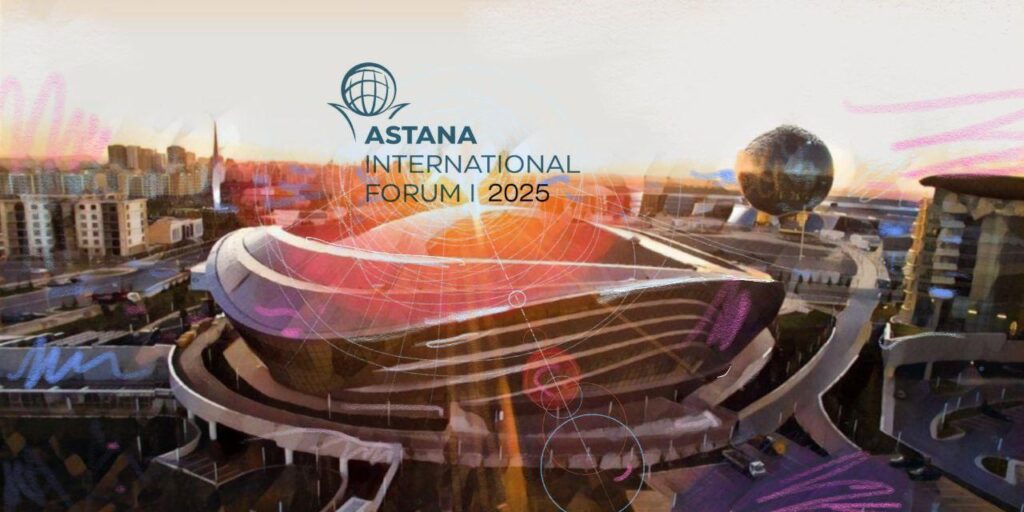
The Astana International Forum 2025 (AIF2025), themed “Connecting Minds, Shaping the Future,” will take place in Kazakhstan’s capital on May 29-30. World leaders, business executives, investors, and experts will convene to address pressing global challenges and explore avenues for mutually beneficial agreements.

Who is Expected in Astana?

The AIF2025 aims to serve as a platform for open dialogue and to attract foreign capital. Participants will also seek to forge strategic partnerships and promote economic development initiatives. Approximately 600 international guests are expected, including prominent political figures, heads of international organizations, business leaders, investors, and members of the academic community.

Confirmed attendees include Paul Kagame, President of Rwanda; Edi Rama, Prime Minister of Albania; Andrej Plenković, Prime Minister of Croatia, Gordana Siljanovska Davkova, President of the Republic of North Macedonia; and Sheikh Mohammed bin Abdulrahman Al Thani, Prime Minister and Minister of Foreign Affairs of Qatar. Ban Ki-moon, former UN Secretary-General and Chair of the Global Green Growth Institute and the Boao Forum for Asia, will also participate.

Other distinguished guests include Alain Berset, Secretary General of the Council of Europe; Qu Dongyu, Director-General of the UN Food and Agriculture Organization (FAO); Amy Pope, Director General of the International Organization for Migration (IOM); Mathias Cormann, Secretary General of the OECD; and Daren Tang, Director General of the World Intellectual Property Organization. Also expected are Antonella Bassani, World Bank Vice President for Europe and Central Asia; Haoliang Xu, UNDP Deputy Secretary-General and Deputy Administrator; Jin Liqun, President of the Asian Infrastructure Investment Bank (AIIB); Jürgen Rigterink, First Vice President of the EBRD; Kubanychbek Omuraliev, Secretary General of the Organization of Turkic States; and Sebastian Kurz, former Federal Chancellor of Austria.

This year, the forum will focus on three global themes: politics and international security, energy and climate change, and economics and finance. According to the Kazakh government, AIF2025 takes place amid intensifying global competition for investment and showcases Kazakhstan’s openness to international collaboration. The country continues to solidify its global presence through comprehensive reforms, legal modernization, and a strengthened investment climate.

On May 28, two bilateral business forums, Kazakhstan-France and Kazakhstan-Italy will precede the main event. Italian Prime Minister Giorgia Meloni will also attend a Central Asia-Italy summit. As previously reported by The Times of Central Asia, in recent years Italy has emerged as one of the European countries most keen to maintain close relations with the countries of Central Asia.

President Kassym-Jomart Tokayev is scheduled to open the forum.

Global Anticipation Builds

In the run-up to the event, several participants have already shared their expectations, with Maha Al-Kuwari, General Manager of the Doha Forum, saying that it was a privilege to be involved.

“Together with the Qatar Development Fund, the Doha Forum will host a session focused on innovative approaches to enhancing global sustainability. Given geopolitical fragmentation, post-pandemic recovery, and disrupted supply chains, this discussion is vital, especially for developing and least developed countries,” she stated.

The session will highlight new investment models and successful partnership frameworks spanning from Astana to Doha. Interviews with high-profile attendees are being arranged by major international media outlets. Organizers have announced 39 panel sessions, including 10 exclusive one-on-one interviews with world leaders and dignitaries.

The previous Astana International Forum, held in June 2023, welcomed over 1,000 delegates from 70 countries. It succeeded the Astana Economic Forum, which ran annually from 2008 to 2019. That event featured speakers such as Kyrgyz President Sadyr Japarov, Bosnia and Herzegovina’s Zeljka Cvijanović, Uzbek Prime Minister Abdulla Aripov, UNESCO Director-General Audrey Azoulay, and IMF Managing Director Kristalina Georgieva.

In his 2023 opening remarks, President Tokayev outlined the forum’s goals:

“First, to conduct an open review of the global situation. Second, to identify the main challenges and crises we face. Third, to find solutions through dialogue and mutual cooperation. Fourth, to revive the culture of multilateral relations. Fifth, to strengthen calls for peace, progress, and solidarity. The forum encourages engagement at a time of heightened geopolitical tension. To be effective, the global system must serve everyone, not just a privileged few,” Tokayev emphasized.

Further information on AIF2025 and participation details can be found here. 

Follow our special coverage here.