• KGS/USD = 0.01144 0%
  • KZT/USD = 0.00196 -0%
  • TJS/USD = 0.10899 0%
  • UZS/USD = 0.00008 0%
  • TMT/USD = 0.28571 0.28%
  • KGS/USD = 0.01144 0%
  • KZT/USD = 0.00196 -0%
  • TJS/USD = 0.10899 0%
  • UZS/USD = 0.00008 0%
  • TMT/USD = 0.28571 0.28%
  • KGS/USD = 0.01144 0%
  • KZT/USD = 0.00196 -0%
  • TJS/USD = 0.10899 0%
  • UZS/USD = 0.00008 0%
  • TMT/USD = 0.28571 0.28%
  • KGS/USD = 0.01144 0%
  • KZT/USD = 0.00196 -0%
  • TJS/USD = 0.10899 0%
  • UZS/USD = 0.00008 0%
  • TMT/USD = 0.28571 0.28%
  • KGS/USD = 0.01144 0%
  • KZT/USD = 0.00196 -0%
  • TJS/USD = 0.10899 0%
  • UZS/USD = 0.00008 0%
  • TMT/USD = 0.28571 0.28%
  • KGS/USD = 0.01144 0%
  • KZT/USD = 0.00196 -0%
  • TJS/USD = 0.10899 0%
  • UZS/USD = 0.00008 0%
  • TMT/USD = 0.28571 0.28%
  • KGS/USD = 0.01144 0%
  • KZT/USD = 0.00196 -0%
  • TJS/USD = 0.10899 0%
  • UZS/USD = 0.00008 0%
  • TMT/USD = 0.28571 0.28%
  • KGS/USD = 0.01144 0%
  • KZT/USD = 0.00196 -0%
  • TJS/USD = 0.10899 0%
  • UZS/USD = 0.00008 0%
  • TMT/USD = 0.28571 0.28%
09 December 2025

Deportations of Central Asians from the U.S. Increased in 2024

U.S. Immigration and Customs Enforcement (ICE) has released its Fiscal Year 2024 Annual Report, detailing the agency’s accomplishments over the past year. The report highlights how ICE’s directorates and program offices met their mission objectives. Established in the aftermath of the 9/11 attacks, ICE is tasked with protecting the American public, ensuring public safety, and promoting national security.

According to the report, ICE’s Enforcement and Removal Operations (ERO) deported 271,484 non-citizens with final orders of removal to 192 countries. This total includes 88,763 individuals charged with or convicted of criminal offenses, 3,706 known or suspected gang members, 237 known or suspected terrorists, and eight human rights violators. More than 30% of those deported had criminal histories, with an average of 5.63 convictions or charges per individual. ERO also assisted in identifying and arresting individuals wanted in their home countries for serious crimes, including terrorism and torture.

The Times of Central Asia examined the report with a focus on Central Asian countries.

In 2024, the US deported 572 Uzbek nationals – a dramatic increase compared to 88 in 2013, 21 in 2021, and 55 in 2022.

Deportations of Tajik citizens also surged, reaching 77 in 2024 compared to only four annually in 2019, 2020, 2022, and 2023.

Kazakhstan saw the deportation of 23 of its citizens this year, up from 14 in 2023.

Deportations to Kyrgyzstan also spiked, with 69 individuals removed in 2024. By comparison, only three Kyrgyz citizens were deported in 2020, eight in 2021, one in 2022, and 14 in 2023.

Meanwhile, deportations of Turkmen nationals remained low, but still showed an upward trend. In 2024, five Turkmen citizens were deported, compared to four in 2019, one in 2022, and three in 2023.

Dozens Survive Azerbaijan Airlines Plane Crash in Kazakhstan

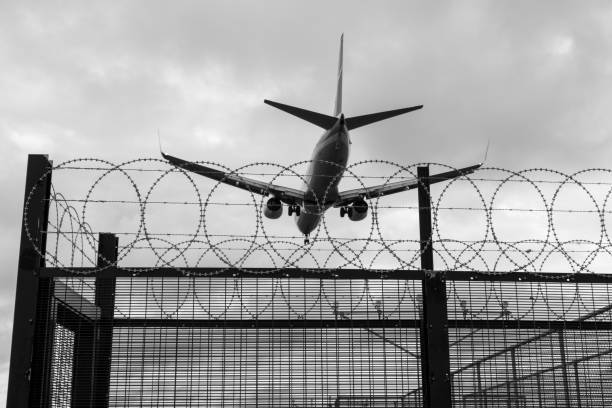
A passenger plane from Azerbaijan Airlines has crashed near Aktau, Kazakhstan, while en route from Baku to Grozny in Chechnya. Authorities and locals were left shaken but relieved as more than 30 people survived the incident. The aircraft was carrying 62 passengers and five crew members.

The accident occurred during an emergency landing attempt after the plane experienced difficulties mid-flight. Initial investigations point to potential mechanical failure as the cause. Emergency response teams were quickly dispatched to the scene, providing medical aid to the injured. Survivors suffered injuries ranging from minor cuts to more serious trauma, with ongoing efforts to transfer them to nearby hospitals for further treatment.

Eyewitnesses described the crash site as alarming, with significant damage to the plane’s fuselage and debris strewn across the area. “It’s incredible that so many made it out alive,” shared a local who assisted in the rescue efforts.

Kazakhstan’s Ministry of Emergency Situations praised the actions of first responders for minimizing casualties. Rescue and recovery operations continue, with the crash site cordoned off to aid the investigation. Azerbaijan Airlines, meanwhile, has activated its crisis management plan, collaborating with Kazakh authorities to assist passengers and their families. “We are deeply relieved that lives were spared, and we fully support ongoing inquiries into this tragedy,” said a spokesperson for the airline.

The Civil Aviation Committee in Kazakhstan announced plans for a detailed investigation, beginning with the retrieval and analysis of the plane’s black box. Azerbaijan Airlines has also temporarily grounded similar aircraft as a precautionary measure.

The accident has led to renewed attention on air safety protocols in the region, underscoring the critical need for stringent maintenance and monitoring. At the same time, the survival of so many passengers has been regarded as extraordinary, with their accounts serving as a reminder of resilience and the importance of emergency readiness.

Image: VK Tula News Feed

Online footage from the Azerbaijani airline AZAL crash site reveals damage to the fuselage which certain reports have stated appears consistent with the impact patterns of air defense missile shrapnel. The veracity of these reports have yet to be verified.

The authorities are expected to provide further updates on the investigation and the conditions of the injured in the coming days.

Uzbekistan’s Foreign Trade Turnover Reaches $59.4 Billion in 2024

From January to November 2024, Uzbekistan’s foreign trade turnover (FTT) reached $59.4 billion, marking an increase of $2.1 billion or 3.6% compared to the same period in 2023, according to the Uzbek Statistical Agency.

The volume of exports rose to $24.2 billion, a 4.4% increase compared to January-November 2023. Imports totaled $35.1 billion, growing by 3.0% over the same period.

Kazakhstan emerged as one of Uzbekistan’s largest economic partners, following China and Russia. Factors contributing to this include a shared border, trade liberalization, and economic collaboration within the CIS free trade zone.

Uzbekistan currently conducts trade with 195 countries, with significant FTT shares attributed to:

  • China: 19.0%
  • Russia: 18.0%
  • Kazakhstan: 6.5%
  • Turkey: 4.4%
  • South Korea: 3.0%

The Commonwealth of Independent States (CIS) countries accounted for 35.4% of Uzbekistan’s FTT during this period, reflecting a 3.0% increase from 2023. The growing economies of Uzbekistan’s trading partners in the CIS suggest a potential for increased demand for Uzbek exports.

However, trade with non-CIS countries saw a decline. Uzbekistan’s trade share with other foreign nations dropped by 3.0% compared to the same period in 2023, comprising 64.6% of the total FTT.

Uzbekistan to Build New Solar Plant with World Bank Support

The World Bank has approved a $3.5 million payment guarantee to support Uzbekistan’s renewable energy development. The guarantee covers the National Electric Grid of Uzbekistan JSC’s obligation to purchase electricity from a 100-megawatt solar power plant to be built and operated by the French company Voltalia in the Khorezm region.

Details of the Solar Plant Project

The solar plant, set to be commissioned in November 2025, will span 177 hectares and generate more than 240 gigawatt-hours of renewable energy annually. It is projected to reduce CO₂ emissions by over 230,000 metric tons each year and produce enough clean energy to power approximately 60,000 households.

This initiative aligns with Uzbekistan’s commitment to increasing clean energy production and advancing its transition to a green economy.

Broader World Bank Support

In addition to this project, the World Bank has allocated $800 million to accelerate Uzbekistan’s transformation into an inclusive and stable market economy. This financing supports reforms to:

  • Improve the business environment.
  • Enhance agriculture, railways, and energy efficiency.
  • Strengthen public finance management.
  • Expand social services.
  • Increase preparedness for environmental risks.

Favorable Financing Terms

The World Bank’s financial support employs highly concessional loans, offering low-cost, long-term repayment options that are more favorable than standard international financial market rates.

Uzbekistan’s collaboration with the World Bank underscores its strategic focus on sustainable development and clean energy to meet environmental and economic goals.

German Firms Urged to Address Human Rights Risks in Uzbek Cotton

German companies, supported by the Federal Ministry for Economic Cooperation and Development and the German textile sector, are increasingly exploring Uzbekistan as a potential market. A report titled Relevant Human Rights Expertise: Risk Assessment for German Companies in the Textile Industry of Uzbekistan evaluates how these firms comply with supply chain laws and fulfill their human rights obligations.

The report underscores ongoing challenges in Uzbekistan’s cotton industry, despite recent reforms. Key issues include risks of forced labor, government interference in cotton production, and poor working conditions. Farmers face coercive contracts, insecure land tenure, and restricted union rights. These problems persist even after Uzbekistan privatized its cotton industry and adopted the ‘cluster’ model, which integrates farming, processing, and manufacturing.

Umida Niyazova, founder of the Uzbekistan Human Rights Forum, highlighted widespread violations, including illegal land seizures and forced production quotas. She emphasized the lack of protections for cotton workers. Additionally, the report warns that some Uzbek cotton may be entering German markets indirectly through suppliers in Turkey and other countries.

The report stresses that effective human rights due diligence is essential for maintaining brand integrity. However, according to author Ben Vanpeperstraete, German companies are failing to adequately address risks associated with Uzbek cotton. Public communications by firms often lack tailored approaches to identifying and mitigating these risks.

Forced labor risks in Uzbekistan’s cotton industry remain significant, the report states, despite ongoing reforms. Corporate disclosures frequently omit recognition of forced labor as a sourcing risk. The report calls on businesses to adopt due diligence practices that address Uzbekistan’s restrictions on unionizing and civil society activities. Companies are urged to map and disclose their supply chains to enhance compliance and traceability.

Trade between Germany and Uzbekistan surpassed €1 billion in 2023, with German investments in Uzbekistan reaching €800 million by early 2024.

How Christmas is Celebrated in Central Asia

In predominantly Islamic countries, celebrating Christian Christmas reflects a spirit of tolerance and peaceful coexistence. On December 25, people of all backgrounds are welcome to join the celebrations.

Catholics and Protestants are minority Christian groups in Central Asia. Catholicism was introduced to the region as early as the 12th century, but Christianity was eradicated during the Timurid era and later revived under the Russian Empire. Today, Catholics and Protestants in the region are largely descendants of German and Polish immigrants, as well as employees of foreign embassies and international companies.

Kazakhstan

In Kazakhstan, unlike Orthodox Christmas on January 7, December 25 is not a public holiday. There are no large-scale national festivities, but many Kazakhstani people extend warm greetings to their Catholic neighbors. According to the 2021 census, Catholics account for 0.57% of the population (about 19,000 people) and Protestants 0.28% (approximately 9,500) within a total Christian population of over three million​.

Despite the small number of adherents, festive services are held in major cities. The Church of the Holy Trinity in Almaty hosts Midnight Mass and other celebrations, and St. Joseph’s Church in Astana also offers services. Both cities organize organ music concerts that attract many non-Catholic attendees. Other cities, including Karaganda, Atyrau, Pavlodar, Petropavlovsk, Kostanai, and Ust-Kamenogorsk, also have Catholic parishes​.

Kazakhstan’s Catholic communities observe traditions that appeal to many, regardless of religion. Christmas fairs, nativity scenes, and festive dishes such as roasted goose, ducks, pies, and Christmas cookies add to the celebrations. Carols and children’s theatrical performances are also a highlight. Christmas services are conducted in Russian, Polish, and English, reflecting the region’s diversity​.

Kyrgyzstan

Catholic communities in Kyrgyzstan are notably multi-ethnic. At the Roman Catholic parish of St. Michael the Archangel in Bishkek, attendees include professionals and students from India, Pakistan, and other nations. According to estimates, the Catholic population in Kyrgyzstan is approximately 1,500, with numbers growing due to newcomers​.

A unique tradition in Kyrgyzstan is the preparation of twelve fasting dishes on Christmas Eve, symbolizing the months of the year and the twelve apostles. This tradition marks the end of the four-week Advent fast and the beginning of the festive mass on the evening of December 24​.

Tajikistan, Turkmenistan, and Uzbekistan

The Catholic community in Tajikistan is small, numbering about 100, mostly foreigners. The two parishes in the country include one in Dushanbe, while missionaries manage a kindergarten at a correctional labor colony in Nurek. In Turkmenistan, the congregation in Ashgabat is also small, with Christmas services conducted in Russian, English, and Turkmen​.

In Uzbekistan, Christmas celebrations are held in Tashkent and Samarkand, with services occasionally conducted in Korean. The Catholic communities in these countries, while small, maintain vibrant celebrations, with Protestants and some Orthodox Christians also participating​.

A Time for Unity and Celebration

In Central Asia, Protestant and Orthodox Christians often join Catholic Christmas celebrations. The festivities on December 25, featuring Santa Claus and other traditions, mark the beginning of winter holidays and are cherished by people of all faiths.