• KGS/USD = 0.01144 0%
  • KZT/USD = 0.00193 -0%
  • TJS/USD = 0.10866 0.55%
  • UZS/USD = 0.00008 0%
  • TMT/USD = 0.28490 0%
  • KGS/USD = 0.01144 0%
  • KZT/USD = 0.00193 -0%
  • TJS/USD = 0.10866 0.55%
  • UZS/USD = 0.00008 0%
  • TMT/USD = 0.28490 0%
  • KGS/USD = 0.01144 0%
  • KZT/USD = 0.00193 -0%
  • TJS/USD = 0.10866 0.55%
  • UZS/USD = 0.00008 0%
  • TMT/USD = 0.28490 0%
  • KGS/USD = 0.01144 0%
  • KZT/USD = 0.00193 -0%
  • TJS/USD = 0.10866 0.55%
  • UZS/USD = 0.00008 0%
  • TMT/USD = 0.28490 0%
  • KGS/USD = 0.01144 0%
  • KZT/USD = 0.00193 -0%
  • TJS/USD = 0.10866 0.55%
  • UZS/USD = 0.00008 0%
  • TMT/USD = 0.28490 0%
  • KGS/USD = 0.01144 0%
  • KZT/USD = 0.00193 -0%
  • TJS/USD = 0.10866 0.55%
  • UZS/USD = 0.00008 0%
  • TMT/USD = 0.28490 0%
  • KGS/USD = 0.01144 0%
  • KZT/USD = 0.00193 -0%
  • TJS/USD = 0.10866 0.55%
  • UZS/USD = 0.00008 0%
  • TMT/USD = 0.28490 0%
  • KGS/USD = 0.01144 0%
  • KZT/USD = 0.00193 -0%
  • TJS/USD = 0.10866 0.55%
  • UZS/USD = 0.00008 0%
  • TMT/USD = 0.28490 0%
10 December 2025

World Bank Report Highlights Poverty and Inequality Challenges in Kazakhstan

The World Bank has released its Kazakhstan Poverty and Equity Assessment 2024, urging policymakers to adopt pro-poor fiscal policies, improve education quality, and enhance climate resilience to address poverty and inequality in the country.

According to the report, Kazakhstan’s poverty reduction has slowed in recent years despite significant progress since the early 2000s.

“Between 2006 and 2021, economic advancement significantly improved living standards and reduced poverty rates in Kazakhstan. However, economic growth has slowed since 2014, and the pace of poverty reduction has fallen. The COVID-19 pandemic exacerbated these challenges, highlighting the need for resilient and inclusive economic strategies presented in this report,” said Andrei Mikhnev, World Bank Country Manager for Kazakhstan.

Kazakhstan’s economy has grown exponentially since 2006, with an average annual growth rate of 4.7 percent. This growth helped lift 5.9 million people out of poverty, reducing the poverty rate from 49.5 percent to 8.5 percent. However, the report identifies three phases of Kazakhstan’s poverty reduction journey:

  1. 2006-2013: Rapid poverty decline driven by strong economic growth.
  2. 2014-2016: Reversal during the economic downturn, raising poverty rates.
  3. 2016-2021: Resumed poverty reduction but at a slower pace

The report highlights that Kazakhstan’s middle-class households with a low probability of falling into poverty grew 2.5 times, reaching 67 percent of the population in 2021 compared to 26 percent in 2006. However, this expansion has stagnated since 2013 due to slower structural transformation and productivity growth.

Income inequality has also increased. The Gini index, a measure of inequality (0 = perfect equality, 100 = extreme inequality), rose from 24.3 in 2015 to 26.4 in 2021, driven by faster income growth among high-income households. Although fiscal policies, such as taxation and social spending, have mitigated some inequality, the report recommends making fiscal measures more progressive and pro-poor to maximize their redistributive impact.

Poverty rates in rural areas (11.4 percent) remain significantly higher than in urban centers (6.6 percent). The southern Turkistan region now accounts for a disproportionate share of the poor population. Alarmingly, poverty has become more concentrated among children and large families, with children comprising 40 percent of the poor in 2021, up from 27 percent in 2006.

The report underscores the critical role of human capital investment in achieving long-term poverty reduction and growth. While access to education in Kazakhstan is nearly universal, significant disparities in quality and outcomes persist. The Human Capital Index indicates that children in Kazakhstan achieve only 53–64 percent of their productivity potential, with regional and socio-economic inequalities exacerbating the issue.

Climate-related shocks present additional risks, particularly for rural and vulnerable populations. The report calls for targeted investments in infrastructure and social transfers to build resilience against these challenges.

To reduce poverty and inequality, the report suggests:

  • Enhancing fiscal policies through progressive taxation and better-targeted social transfers.
  • Improving education quality and outcomes, particularly for disadvantaged groups.
  • Building resilience to climate shocks by investing in infrastructure and providing targeted support to low-income households.

The report concludes that sustained policy reforms will be essential for Kazakhstan to maintain economic progress, reduce poverty, and address growing inequalities.

Turkmenistan and Afghanistan to Accelerate TAPI Gas Pipeline Project

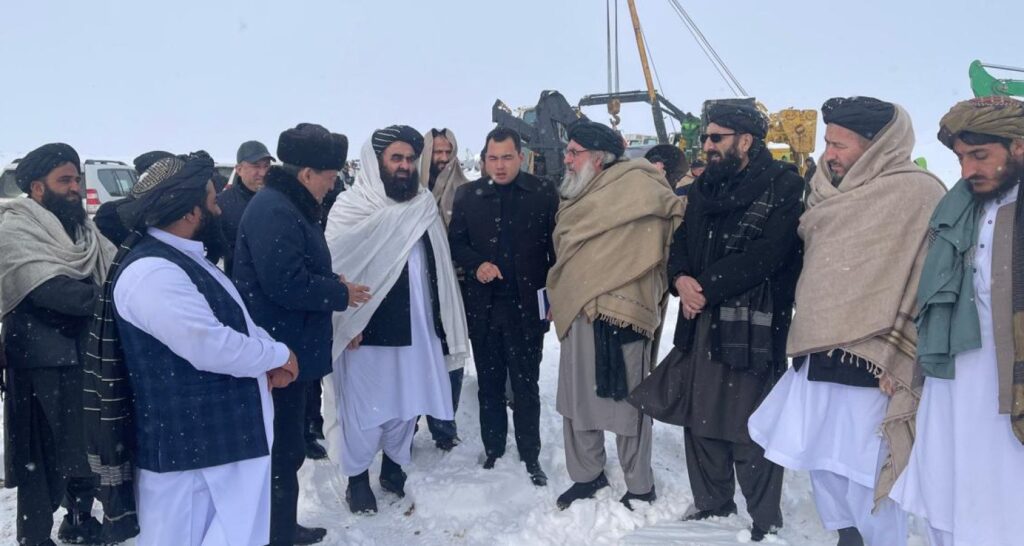
During a working visit to Afghanistan on December 15, Turkmenistan’s Minister of Foreign Affairs, Rashid Meredov, met with Afghanistan’s Acting Foreign Minister, Amir Khan Muttaqi, to review the progress of major energy, transport, and infrastructure projects involving Turkmenistan in Afghanistan, the Turkmen Foreign Ministry reported.

The ministers inspected the ongoing construction of the Afghan section of the Turkmenistan-Afghanistan-Pakistan-India (TAPI) natural gas pipeline and agreed to accelerate its implementation, according to TOLOnews​.

Turkmenistan has already completed its section of the TAPI pipeline, designed to transport 33 billion cubic meters of Turkmen natural gas annually to Afghanistan, Pakistan, and India.

The $10 billion TAPI project will span 1,814 kilometers, with 816 kilometers crossing Afghanistan. The pipeline will help meet Afghanistan’s domestic gas needs while generating approximately $450 million annually in transit fees. The pipeline will extend from Afghanistan to Quetta and Multan in Pakistan before reaching Fazilka in India.

As part of the visit, the Turkmen foreign minister also inspected the construction of a fiber-optic communication line and a warehouse complex at the dry port of Turgundi railway station, located in Afghanistan’s northern Herat Province. Meredov further assessed progress on the Turgundi-Sanabar section of the Turgundi-Herat railroad.

The Times of Central Asia previously reported that construction of the Afghan section of the TAPI pipeline officially began on September 11, 2024.

Once operational, the TAPI pipeline will enable Turkmenistan — currently exporting natural gas primarily to China — to diversify its export routes. The project aligns with Turkmenistan’s broader plans to deliver gas across the Caspian Sea to Azerbaijan, Turkey, and Europe.

AIIB Approves $250 Million to Support Uzbekistan’s Climate Transition

The Asian Infrastructure Investment Bank (AIIB) has approved a $250 million program to support Uzbekistan’s transition to a green and sustainable economy. The funding will help Uzbekistan achieve its goal of reducing greenhouse gas emissions per unit of GDP by 35% by 2030, compared to 2010 levels, and foster sustainable economic growth.

The program focuses on three key areas. First, it aims to strengthen governance by improving climate policies and integrating climate goals into national decision-making processes. Second, it addresses better management of water and land resources, reduces climate risks, and supports economic development. Finally, the program promotes low-carbon solutions in energy, transportation, and e-mobility, with a strong emphasis on energy efficiency and sustainable practices.

The initiative encourages state-owned enterprises to adopt climate risk disclosure practices and expand renewable energy projects.

AIIB Vice President Konstantin Limitovskiy emphasized the importance of the collaboration between AIIB, the Asian Development Bank (ADB), and Uzbekistan. “By integrating climate priorities into economic planning, enhancing adaptation measures, and driving decarbonization in critical sectors like energy and transport, this program plays a key role in supporting Uzbekistan’s efforts to implement its 2030 national strategy and fulfill its Nationally Determined Contribution under the Paris Agreement,” he said.

Kanokpan Lao-Araya, the ADB Country Director for Uzbekistan, highlighted that climate change presents a substantial challenge to the country’s long-term economic stability. She emphasized that the Asian Development Bank (ADB) and the Asian Infrastructure Investment Bank (AIIB) are collaborating to support Uzbekistan in achieving resilient, inclusive, and low-carbon economic growth.

Uzbekistan’s Ministry of Economy and Finance will lead the program, with support from other government agencies. AIIB and ADB will oversee its implementation to ensure it aligns with Uzbekistan’s broader development goals.

Kyrgyzstan Faces Electricity Deficit of 3.9 Billion Kilowatt-Hours

Kyrgyzstan is grappling with an electricity deficit of 3.9 billion kilowatt-hours as authorities struggle to resolve recurring winter energy shortages despite the construction of new hydroelectric power plants and electricity imports from neighboring countries. President Sadyr Japarov addressed the issue in a recent interview with the state news agency.

Japarov acknowledged that the electricity shortfall remains unresolved, attributing it to the growing demand driven by an increasing number of social and infrastructure projects.

“Our electricity is cheap. At a production cost of 2.7 Kyrgyz som (KGS) [approximately $0.031] per kilowatt-hour, consumers purchase it for 1.1 KGS. Additionally, under the Family Assistance program, we supply electricity to 69,000 families at a subsidized rate of 0.5 KGS per kilowatt-hour. Moreover, 186,000 consumers in mountainous areas receive electricity at 1.1 KGS without restrictions,” Japarov explained.

The president also criticized wasteful electricity consumption in both public and private sectors, citing a lack of awareness and accountability.

“Employees and heads of public institutions, schools, and kindergartens irresponsibly leave lights on in workspaces, assuming the state will pay for it. Similarly, street lighting remains on unnecessarily,” Japarov said.

For the past 30 years, Kyrgyz citizens have endured periodic electricity blackouts. Japarov urged them to remain patient for another three to four years, assuring that the energy deficit would be resolved with the completion of the Kambarata Hydroelectric Power Plant-1 project, which is expected to stabilize the country’s power supply.

Kazakhstan Offers Neutral Ground for Peace Talks, Says Deputy Minister Vassilenko

Kazakhstan’s Deputy Minister of Foreign Affairs, Roman Vassilenko, has expressed hope for ending global conflicts, reiterating Kazakhstan’s readiness to provide a platform for dialogue. Vasilenko made the remarks at the World Policy Conference held in Abu Dhabi.

“I am an optimist by nature and hope that wars will stop. This applies to the ongoing conflicts in Ukraine and the Middle East,” Vasilenko said in an interview.

The Deputy Minister underscored Kazakhstan’s neutral stance, highlighting the country’s balanced diplomatic relations with Russia and Western nations. “We hope that by the end of this year or possibly next year, Armenia and Azerbaijan will sign a peace treaty. We have offered to host this event in Kazakhstan,” Vasilenko stated.

Vasilenko also emphasized the European Union’s significance in Kazakhstan’s economic development and international partnerships.

“The EU is our largest trade partner and investor. It is the largest market for Kazakhstani oil and a vital source of technology and investment. We are collaborating with the EU to develop the Middle Corridor, a trade route connecting Central Asia with Europe via the Caspian Sea and the South Caucasus. Progress has already been made. For instance, over the next three years, we aim to quadruple the volume of cargo transported along this route,” he noted.

Kazakhstan continues to position itself as a bridge between dialogue and cooperation, leveraging its strategic geographic location and balanced foreign policy.

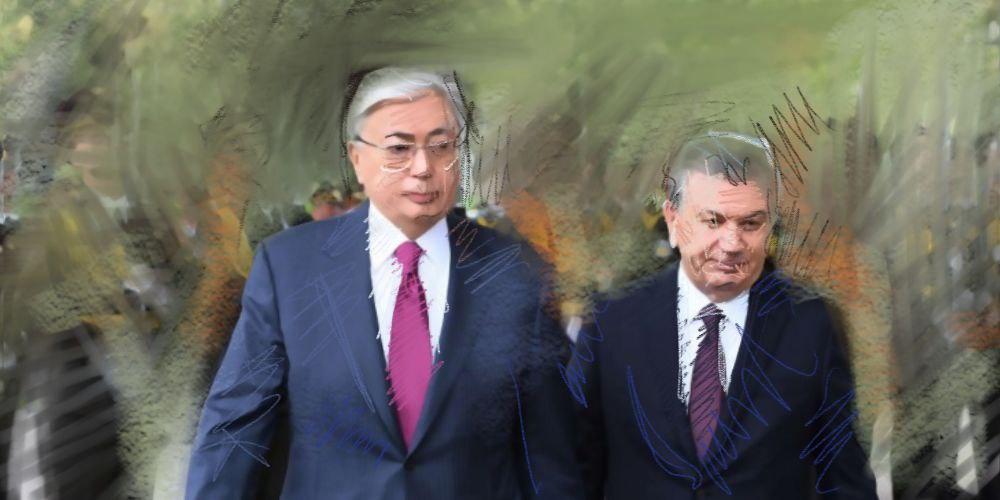
How Kazakhstan and Uzbekistan Anchor a Strategic Middle-Power Hub in Central Asia

Kazakhstan and Uzbekistan are driving Central Asia’s global significance. Together, they are turning Central Asia into a strategic middle-power hub. The two countries increasingly act as central nodes in a region key to global supply chains and, inevitably, geopolitical competition. However, they are not merely reactive to changes around them, but are highly dynamic.

What does it mean to say that the region is emerging as a strategic middle-power “hub”? The notion of a hub extends beyond the national profiles of the two principals, Kazakhstan and Uzbekistan, to include the aggregation of collective influence. Central Asia is recognized as a cohesive entity in global forums. Kazakhstan’s energy wealth combines with Uzbekistan’s demographic strength, creating an influential synergy beneficial to the entire region.

The interplay between their respective strengths allows them to amplify Central Asia’s voice in international institutions and negotiations collectively. By integrating their regional strategies within global frameworks — such as the Organization of Turkic States (OTS), the Shanghai Cooperation Organization (SCO), and the Conference on Interaction and Confidence Building Measures in Asia (CICA) — Kazakhstan and Uzbekistan enhance the region’s geopolitical relevance.

Kazakhstan, for example, has successfully advocated for the Trans-Caspian International Transport Route (TITR, also called the “Middle Corridor”). This transcontinental trade route is emerging as a lynchpin in Eurasian logistics, connecting China to Europe via the Caspian Sea. Uzbekistan, for its part, has emphasized the integration of transport and energy infrastructure. These initiatives align with the broader vision of a unified Central Asia.

The leadership of Kazakhstan and Uzbekistan has reinforced the region’s collective identity as the “C5” group, also including Kyrgyzstan, Tajikistan, and Turkmenistan. This regional bloc has become a diplomatic focal point for major powers like the United States, China, Germany, and Japan. All of them engage with Central Asia through structured consultations within the C5 framework. These meetings have given the region traction in international diplomacy.

The elevation of the C5 group reflects the region’s new prominence. The United States engages with the C5 on issues ranging from regional security to sustainable development, emphasizing its commitment to a secure and prosperous Central Asia. China’s cooperation under the C5+1 mechanism complements its transcontinental infrastructure initiatives. Germany focuses on sustainable energy and governance, while Japan prioritizes infrastructure and technology transfers.

Kazakhstan and Uzbekistan together have over two-thirds of the region’s gross domestic product and two-thirds of its population. Kazakhstan’s vast natural resources undergird its economic influence, while its geographic expanse (as the ninth-largest country in the world) makes it central to major connectivity initiatives. Through President Kassym-Jomart Tokayev’s nuanced foreign policy, Kazakhstan has adeptly balanced relationships with major powers, ensuring that it remains a key partner for Russia, China, and the European Union.

Uzbekistan has surged to prominence through its ambitious domestic reforms and proactive engagement for regional cooperation under the leadership of President Shavkat Mirziyoyev, who has implemented market liberalization measures attracting foreign investment and reinvigorating its economy. As the most populous country in Central Asia, Uzbekistan is an indispensable actor in regional affairs. Uzbekistan’s strategic geographic position between Central and South Asia also enables it to play a key role in emerging connectivity projects linking Central Asia’s resources to South Asia’s burgeoning markets.

The challenges to this strategic middle-power hub are multifaceted. Coordination between Kazakhstan and Uzbekistan is essential but not always straightforward, as national interests and priorities occasionally diverge. Moreover, the region remains subject to external pressures from major external powers, each of which seeks to shape Central Asia in alignment with its own strategic goals. Gaps in infrastructure connectivity among the Central Asian states and economic disparities between them also pose obstacles to realizing the region’s full potential.

Despite these challenges, there are immense opportunities for Kazakhstan and Uzbekistan to consolidate Central Asia’s role as a strategic middle-power hub. Their collaboration, coupled with the broader C5 framework, is starting to transform the region into a key player in global geopolitics. This development holds the potential for influencing economic and political outcomes far beyond the borders of Central Asia. If Kazakhstan and Uzbekistan continue to act together as stabilizers and connectors, they can ensure that Central Asia will not only survive as a collective project but, moreover, thrive as one.

Central Asia, under the joint leadership of Tokayev and Mirziyoyev is evolving into a geostrategic bridge, a critical interface among larger powers and regions, not on the periphery but central to the intersections of global geopolitical and economic currents. Kazakhstan’s infrastructure and energy exports link Russia, China, and Europe, while Uzbekistan’s outreach to South Asia and the Middle East broadens the region’s connectivity.

That bridging function is not simply geographic, but also political and economic. As nonaligned actors in an increasingly polarized world, Kazakhstan and Uzbekistan provide platforms for dialogue and cooperation, serving as intermediaries that facilitate interaction among competing global interests.