• KGS/USD = 0.01144 0%
  • KZT/USD = 0.00196 -0%
  • TJS/USD = 0.10904 0%
  • UZS/USD = 0.00008 0%
  • TMT/USD = 0.28490 0%
  • KGS/USD = 0.01144 0%
  • KZT/USD = 0.00196 -0%
  • TJS/USD = 0.10904 0%
  • UZS/USD = 0.00008 0%
  • TMT/USD = 0.28490 0%
  • KGS/USD = 0.01144 0%
  • KZT/USD = 0.00196 -0%
  • TJS/USD = 0.10904 0%
  • UZS/USD = 0.00008 0%
  • TMT/USD = 0.28490 0%
  • KGS/USD = 0.01144 0%
  • KZT/USD = 0.00196 -0%
  • TJS/USD = 0.10904 0%
  • UZS/USD = 0.00008 0%
  • TMT/USD = 0.28490 0%
  • KGS/USD = 0.01144 0%
  • KZT/USD = 0.00196 -0%
  • TJS/USD = 0.10904 0%
  • UZS/USD = 0.00008 0%
  • TMT/USD = 0.28490 0%
  • KGS/USD = 0.01144 0%
  • KZT/USD = 0.00196 -0%
  • TJS/USD = 0.10904 0%
  • UZS/USD = 0.00008 0%
  • TMT/USD = 0.28490 0%
  • KGS/USD = 0.01144 0%
  • KZT/USD = 0.00196 -0%
  • TJS/USD = 0.10904 0%
  • UZS/USD = 0.00008 0%
  • TMT/USD = 0.28490 0%
  • KGS/USD = 0.01144 0%
  • KZT/USD = 0.00196 -0%
  • TJS/USD = 0.10904 0%
  • UZS/USD = 0.00008 0%
  • TMT/USD = 0.28490 0%
08 December 2025

Kazakhstan Charity Head Investigated for Embezzling Flood Relief Donations

Kazakhstan is investigating Perizat Kairat, founder of the Biz Birgemiz Qazaqstan charity fund and a prominent volunteer activist, for allegedly embezzling over 1.5 billion KZT (approximately $3.1 million) intended for victims of spring floods.

According to the Financial Monitoring Agency, a significant portion of the funds raised was reportedly used to purchase luxury items and real estate. Investigators allege that Kairat acquired several high-end vehicles, including a Mercedes-Benz S450, Lexus LX-600, and Haval, as well as luxury properties in Astana’s elite residential complexes, such as “Akbulak Riviera,” “Highvill Ishim Gold,” and “Kөk Zhailau,” along with a cottage in “Vela Village.” The total value of these purchases is estimated at 600 million KZT ($1.2 million).

The agency further claims that the charity’s funds financed frequent trips to Dubai, Doha, London, and Istanbul, where Kairat reportedly stayed in five-star hotels. During these trips, she is accused of purchasing expensive accessories from luxury brands, dining at elite restaurants, and organizing lavish boat trips.

Relatives and associates of Kairat are also implicated, accused of cashing out the charity’s funds for a fee of 8%. These alleged actions have reportedly eroded public trust in charitable and volunteer organizations, raising concerns about their transparency and integrity. Kairat has been detained pending further investigation.

The Biz Birgemiz Qazaqstan charity fund, established in 2021, began as a nationwide volunteer movement with 15,000 members. The fund organized aid collections for flood victims in the West Kazakhstan, Aktobe, Kostanay, Abay, Akmola, and Ulytau regions. Donations from individuals and major companies were channeled through banking applications to support the fund’s efforts.

Kairat, who also runs a family business exporting meat to Arab countries and owns a chain of flower shops, claimed in a social media post that she headed the foundation without financial compensation. She is also a member of the Public Council of the Agency for Strategic Planning and Reforms.

Kairat’s detention comes as Kazakhstan’s Ministry of Culture and Information works on proposed legislative changes to regulate charitable activities. These amendments aim to grant state bodies greater control over fundraising efforts. However, experts warn that such measures could significantly hinder charity work in the country.

For example, proposed restrictions on independent fundraising have sparked concerns among activists and organizations, with critics arguing that these changes may stifle grassroots initiatives and reduce public participation in charitable causes.

ADB Launches ‘Glaciers to Farms’ Initiative to Combat Climate Change in Central Asia

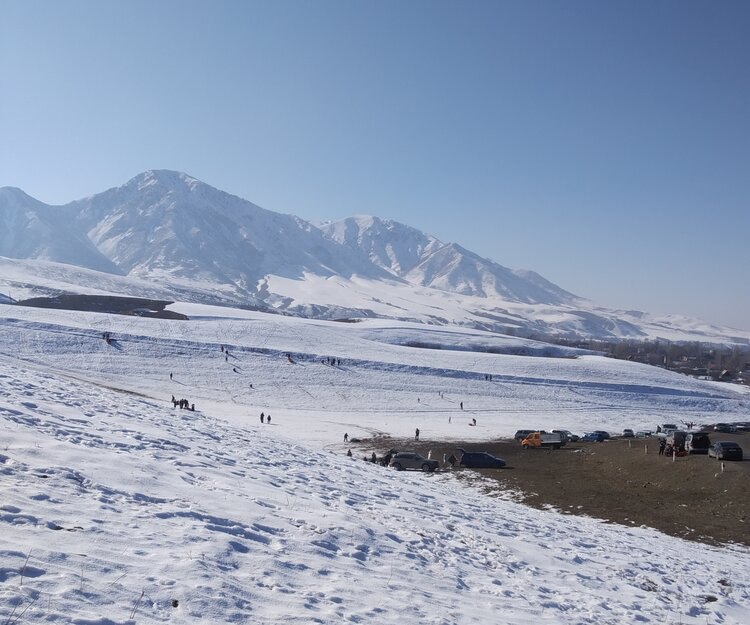
The Asian Development Bank (ADB) has unveiled a new regional initiative, Glaciers to Farms, aimed at promoting sustainable water management and food security in Central Asia, the South Caucasus, and Pakistan. The program addresses the severe effects of accelerated glacial melt caused by climate change.

Backed by the Green Climate Fund (GCF), ADB will conduct risk assessments of glacial melt in Azerbaijan, Kyrgyzstan, Tajikistan, and Uzbekistan to establish a scientific and technical foundation for the program.

Regional Cooperation for Glacier Preservation

On November 14 in Baku, Azerbaijan, a declaration of support for glacier preservation was signed by several regional leaders: Azerbaijan’s Minister of Ecology and Natural Resources Mukhtar Babayev, Kazakhstan’s Minister of Ecology and Natural Resources Yerlan Nyssanbayev, Kyrgyzstan’s Minister of Natural Resources, Ecology and Technical Supervision Meder Mashiev, Tajikistan’s Committee on Environmental Protection Chairman Bahodur Sheralizoda, and Uzbekistan’s Minister of Ecology, Environmental Protection, and Climate Change Aziz Abdukhakimov. They were joined by ADB President Masatsugu Asakawa and GCF Chief Investment Officer Henry Gonzalez.
“As melting glaciers change water flows, disrupt lives, and destroy ecosystems, we must act now,” said Asakawa. “As Asia and the Pacific’s climate bank, we are pleased to be joined by key partners to launch this program to drive international collaboration and deliver results where they matter most—on the ground, in communities at risk.”

The Urgent Need for Action

Temperatures in the region are expected to rise by up to 6 degrees Celsius by 2100. The resulting loss of glacial mass poses a dire threat to ecosystems, jeopardizing water supplies for agriculture and hydropower and endangering the livelihoods of over 380 million people.
The Glaciers to Farms program aims to mobilize up to $3.5 billion in funding from ADB, GCF, governments, development partners, and the private sector. Beyond investments in water and agriculture, the program will prioritize vulnerable communities in fragile mountain regions that are most threatened by glacial melt.

Global and Regional Efforts

The United Nations General Assembly has declared 2025 the International Year of Glacier Preservation, with Tajikistan set to host the International Conference on Glaciers’ Preservation in Dushanbe next year.

At a high-level event in Baku on November 12, Tajikistan’s President Emomali Rahmon underscored the importance of preventing further glacier melt and preserving fragile ecosystems.

Rahmon highlighted the establishment of the International Trust Fund for the Preservation of Glaciers under the United Nations’ auspices and noted the UN’s recent adoption of a resolution—initiated by Tajikistan and France—declaring 2025-2034 the Decade of Action for Cryospheric Sciences. This resolution calls for enhanced efforts to safeguard glaciers globally.

Rahmon also proposed creating a Regional Coordination Center for Glaciology in Dushanbe under the World Meteorological Organization’s guidance. The center would study the impact of climate change on glaciers in collaboration with development partners.

Uzbekistan and Germany Partner on Green Industrialization with €3 Million Grant

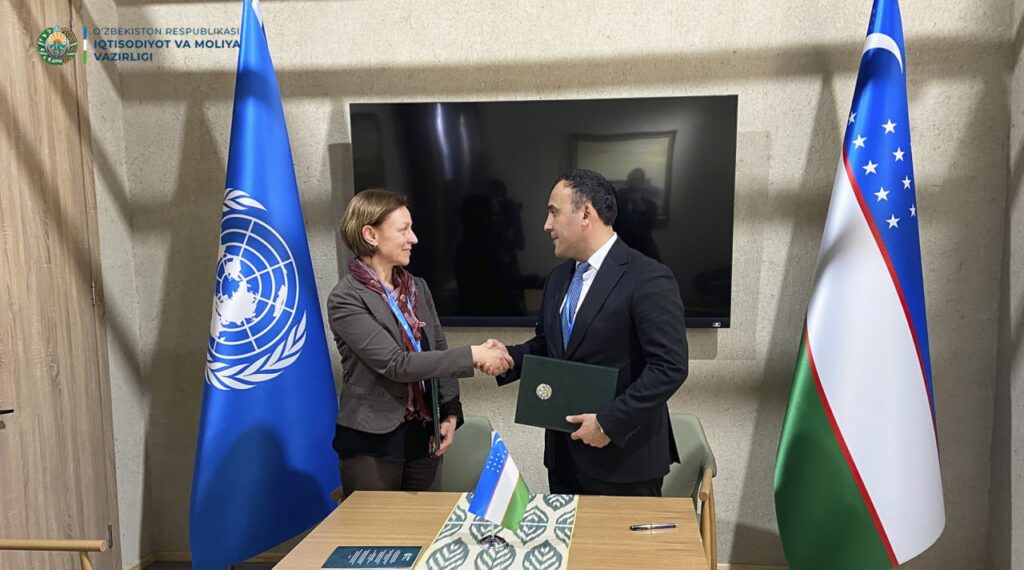
On November 13, at the 29th UN Climate Change Conference (COP29) in Azerbaijan’s capital Baku, Uzbekistan’s Ministry of Economy and Finance signed a memorandum with the German International Cooperation Society (GIZ) to secure additional funding for a project aimed at supporting the private sector in green industrialization.

As part of the initiative, Germany has allocated €9 million to help Uzbekistan’s private sector transition to a green economy. The project is designed to assist the Uzbek government in implementing economic reforms and fostering sustainable economic development, focusing on enhancing the capacity of both the public and private sectors to adopt green industrialization practices.

The initiative will also provide technical expertise in measuring and certifying greenhouse gas emissions, supporting Uzbekistan’s participation in international carbon trading mechanisms, and aligning with the European Union’s Cross-Border Adjustment Mechanism (CBAM). Additionally, it aims to promote resource-saving and sustainable production by encouraging the private sector to adopt green technologies, including circular economy practices and green industrial park models.

To further bolster the project, a €3 million grant was approved during the conference. This funding will complement the ongoing initiative, titled “Support to the Private Sector and Advice on Economic Policy in Uzbekistan.”

Strategic Partnership Dialogue: U.S. Allocates $500,000 for Registan Square Preservation

On November 13, the latest meeting of the U.S.-Uzbekistan Strategic Partnership Dialogue took place in Washington, D.C. Key participants included U.S. Assistant Secretary of State for South and Central Asia, Donald Lu, Uzbekistan’s Deputy Foreign Minister, Muzaffar Madrahimov, and the ambassadors of both countries. The delegations discussed the expanding partnership between Uzbekistan and the United States, focusing on economic development, human rights, security, and cultural ties. The United States reaffirmed its steadfast support for Uzbekistan’s independence, sovereignty, and territorial integrity.

At the meeting, both sides emphasized the importance of maintaining close consultations and celebrated new areas of collaboration. Notable progress was highlighted in critical minerals production and efforts to modernize Uzbekistan’s natural gas infrastructure. This follows the signing of a Critical Minerals Memorandum of Understanding (MOU) in September and Uzbekistan’s entry into the Minerals Security Partnership.

The delegations also underscored their commitment to diversifying trade and investment, advancing agricultural reforms in Uzbekistan, empowering women economically, addressing the climate crisis, and supporting the transition to clean energy.

The United States commended Uzbekistan for adopting USAID-supported English language textbooks and teachers’ manuals for public schools. Efforts to expand sustainable economic opportunities for women in Uzbekistan were similarly praised. Both nations highlighted the strength of their cultural ties, with the U.S. expressing gratitude for Uzbekistan’s leadership in archaeology and cultural preservation.
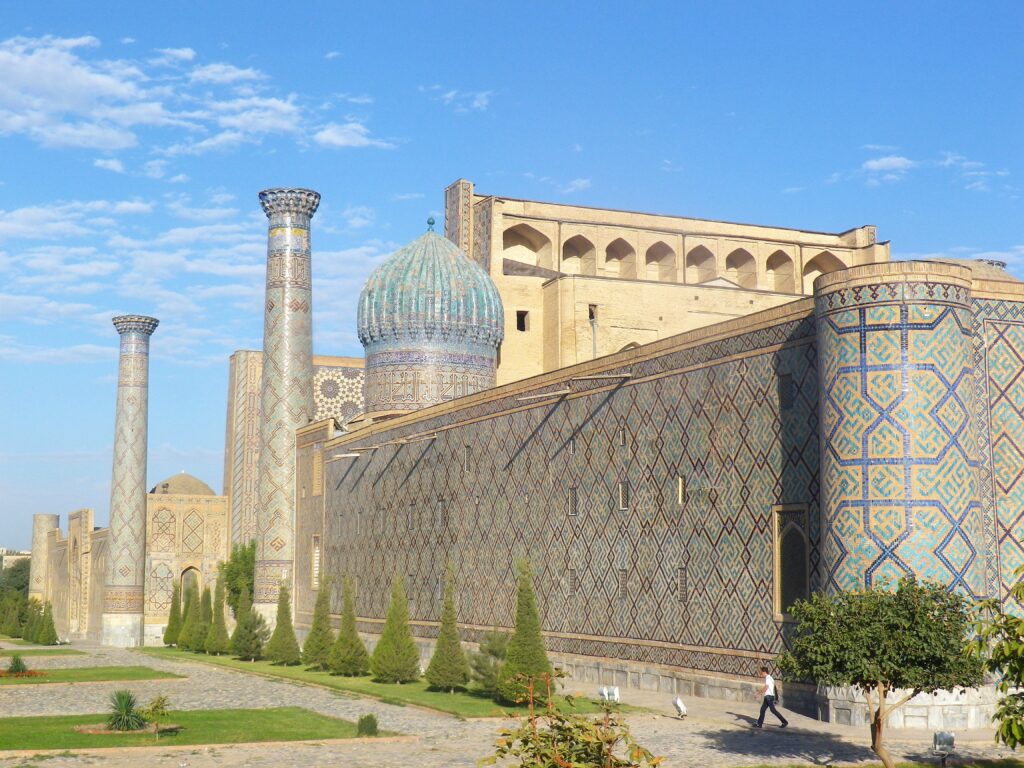
As part of these efforts, the U.S. State Department announced a $500,000 allocation from the U.S. Ambassador’s Fund for the Preservation of Cultural Heritage. The funding will support conservation efforts at Registan Square, a UNESCO World Heritage site in Samarkand.

Kyrgyzstan Opens New Village for People Resettled from Barak Exclave

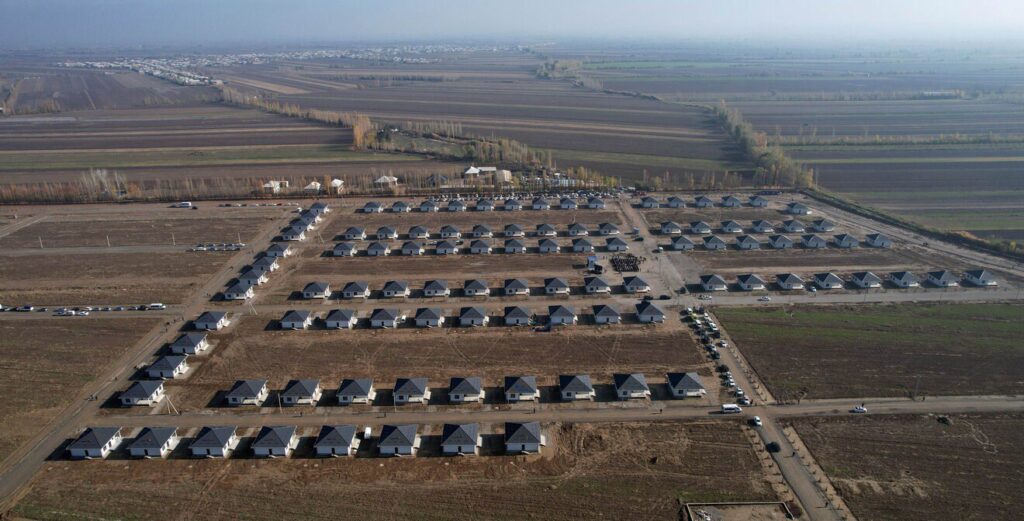
On November 15, Kyrgyzstan President Sadyr Japarov attended the opening of a new village, Jany-Barak, in the country’s southern Osh region. The village was constructed for Kyrgyz citizens resettled from the Barak exclave, previously Kyrgyzstan’s largest exclave, located in Uzbekistan’s Andijan region. For many years, the residents of the exclave experienced severe difficulties due to their partial isolation and the difficulty of traveling between the exclave and the Kyrgyz mainland.

After signing a border delimitation agreement with Kyrgyzstan, Uzbekistan ceded a portion of its land to Kyrgyzstan in exchange for control of the Barak exclave. Construction of Jany-Barak (New Barak) was launched in May 2024 and is now complete. Speaking at the opening ceremony, Japarov emphasized that the construction of the new village marked a significant milestone. He highlighted that residents, who had relocated from the exclave, can now live and work in Kyrgyzstan, on their native land, in new homes, with renewed confidence in their future.

Japarov highlighted the extensive work completed to establish infrastructure in the new village: 101 residential houses have been built, roads have been laid, electricity has been connected, and wells for clean drinking water have been drilled. The new village will have social amenities, including a school, a kindergarten, a park, a mosque, and a football (soccer) field.

Plots have been allocated to residents for agricultural use.

Turkmenistan and UK Strengthen Cooperation in Education

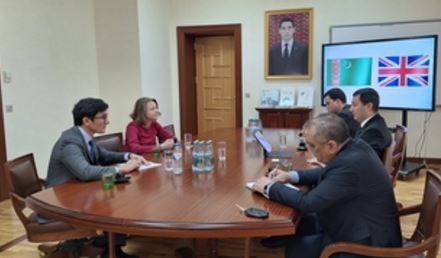
The Ministry of Education of Turkmenistan hosted a meeting between Deputy Minister Azat Ataev and Sarah Chidgey, Regional Export Director for Eastern Europe and Central Asia, to discuss prospects for educational cooperation between Turkmenistan and the UK.

Ms. Chidgey shared insights into the UK’s experience in delivering quality education, citing successful examples in Kazakhstan and Uzbekistan, where British universities, such as the University of Westminster, have actively sought to expand partnerships. During the meeting, the participants explored opportunities for British universities to offer educational services in Turkmenistan, including the accreditation of academic institutions to enhance secondary and higher education.

Chidgey announced plans to hold the Turkmen-British Trade and Industry Council early next year, with educational cooperation set to be a key topic. The British delegation also expressed its readiness for more in-depth discussions at the World Education Forum, held annually in London.

Ataev expressed interest in implementing the proposed initiatives and supported organizing webinars for Turkmen specialists. These webinars will focus on introducing Turkmen specialists to British educational standards and accreditation procedures and enhancing education quality. He emphasized that particular attention would be given to studying critical aspects of the British educational system to facilitate their successful adaptation and implementation in Turkmenistan.

Both sides expressed confidence that this partnership would contribute to developing Turkmenistan’s education system and creating new opportunities for students and teachers. In the long term, it is expected to support their integration into the global educational community.

Great Britain actively cooperates with Central Asian countries in the field of education: Kazakhstan has the Kazakh-British Technical University, founded in 2001, which offers programs in partnership with British universities, and British universities are opening branches in Uzbekistan, giving local students access to British education. The British Council also runs the region’s English language training and teacher development programs. In 2024, the British Foreign Secretary announced a new initiative to promote English in Central Asia by giving teachers access to online resources with local content.