The end of the first president of Kazakhstan, Nursultan Nazarbayev’s era coincided with a wave of mass protests across the country. The widely-accepted cause was the death of five children in a fire in a dilapidated annex to a private house, the like of which there are many in the suburbs of Astana. This tragedy occurred on the night of February 4, 2019, when the girls, with ages ranging from a baby to twelve years old, were left home alone. The event sparked furious complaints from mothers of children across the country, and on March 19 of the same year, Nazarbayev resigned, handing power to the next in the constitutional hierarchy, Kassym-Jomart Tokayev, the speaker of the Senate (Kazakhstan’s upper house of parliament).
High-profile cases of the transition period
From that moment until the events of January 2022, the country went through a transitional period, which is often spoken of as having been a time of dual power. By analogy with the “Kremlin Towers” (a popular theory about clans in Vladimir Putin’s Russia being engaged in an irreconcilable struggle for resources and influence), the new president’s entourage began to be called “Akorda” – after the head of state’s residence in Astana. Supporters of Nazarbayev and the idea of his return to the presidency, meanwhile, were known as the “Library” – a reference to the Library of the First President. It was believed that the officials Tokayev inherited from his predecessor were more likely to run reports to the Library than to the Akorda.
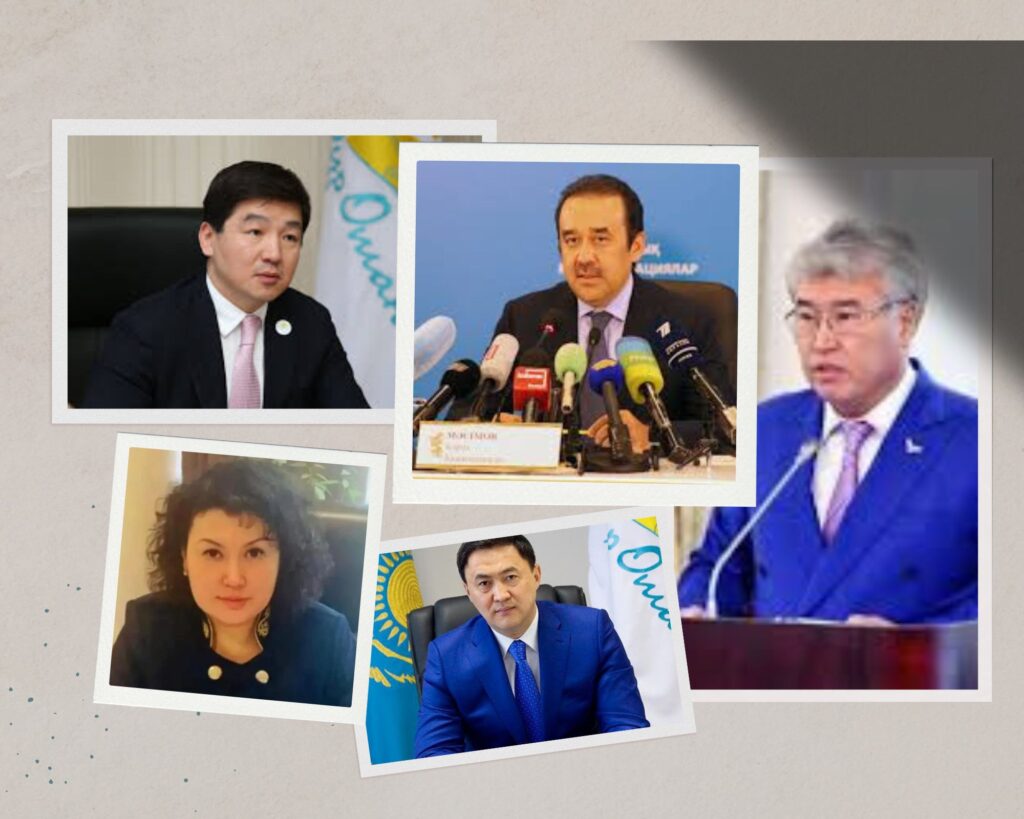
This division serves to explain how the new president was bound in his ability to implement changes. Tokayev initially announced a course of political, economic and social reforms, but only the latter were implemented, while the rest were sabotaged. Even support from the general public, which Tokayev managed to garner in the National Council of Public Trust, did not help matters.Even under such constraints, however, it was possible to begin a purge of the establishment. For example, in 2020, the country was shaken by the first high-profile criminal case under Tokayev, when Bulat Bakauov, akim of the Pavlodar region and a bellwether of high-profile scandals under Nazarbayev, was accused of abusing his authority and arrested.
However, the influence of Nazarbayev’s entourage remained strong, so the sentence handed down to the former Akim turned out to be a meagre restriction of freedom for 3.5 years. The court obliged Bakauov to refrain from leaving his residence and regularly report to the probation service. In addition, Bakauov was obliged to engage in a hundred hours of public labor, ordered to return $10,000, and banned from holding public office.
In the same year, there was a glimmer of hope that the former Akim of Almaty, Bauyrzhan Baibek – who was elevated to the height of political power by his father’s childhood friendship with Nursultan Nazarbayev – would be held to account. Urban legends still circulate about the illegal earnings of Baibek and his team from the reconstruction of the center of Almaty, with many believing he left his post as a U.S. dollar millionaire. Baibek fled the country after the events of January 2022; his current location is unknown. Only in September 2022 was a criminal case against Baibek finally initiated.
Other high-profile cases from 2020 include the ex-akim of Almaty’s Alatau district, Shakhmerden Ryspayev and his deputy Sayat Agibayev, who were both detained in January of that year suspected of large-scale embezzlement of funds allocated under the state program for the development of regions. Ryspayev was found guilty and fined 40 million tenge ($84,000), whilst Agibayev was sentenced to two years in prison. The court banned both of them from holding office for the rest of their lives.In 2021, Almaty residents experienced a sense of déjà vu when the city’s Medeu district judge, Svetlana Zholamanova, was detained. Rumors connected her with Baibek, and developments in her case seemed to confirm such stories.
The reason for Zholamanova’s arrest was an accusation she had engaged in fraudulent actions, with $10,000 being found in her office during a search. The criminal case against Zholamanova was shortly terminated, however, with the only action being her dismissal from the judiciary.
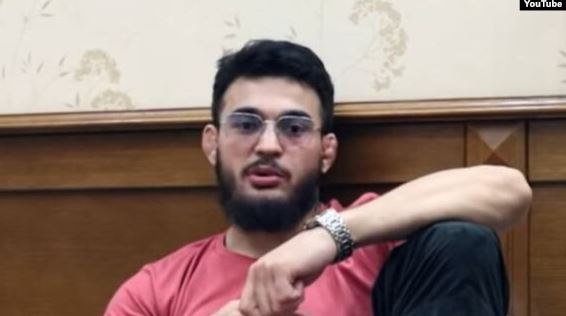
With her alleged patron, Baibek, in hiding, in October 2024 the fraud case against Zholamanova was reopened, and she was placed in detention for two months.Former Health Minister Yelzhan Birtanov also endured two years of house arrest during this period, facing charges of misusing air medical services and implementing a faulty digital platform for the Ministry of Health. Birtanov was acquitted on the first charge, but received five years of restricted liberty on the second. His trial, conducted online due to COVID-19 measures, allowed many to notice the luxuriant beard he had grown during his prolonged isolation.
Cleansing the “Old Kazakhstan”
The protests that erupted in the restive city of Zhanaozen in western Kazakhstan in the first week of January 2022 quickly spread to other regions of the country, with the southern cities, primarily Almaty, becoming the epicenters of the most violent occurrences. Municipal buildings and shopping centers were torched, and dozens of stores and restaurants were looted. In this moment of chaos, however, President Kassym-Jomart Tokayev demonstrated his resilience. Constitutional order was quickly restored, and the coup attempt served to untie the president’s hands. The cleansing of “Old Kazakhstan” began in earnest. This euphemism was born after Tokayev’s speech in Almaty, where he announced that he intended to build a “New,” “Just and Fair Kazakhstan.”
The first to be arrested was the former head of the National Security Committee, Karim Massimov, who was taken into custody during the days of “Bloody January” along with other high-ranking leaders of the security services. Massimov was indicted on a series of charges: state treason, the attempted forcible seizure of power, and abuse of power. The case was considered by the court under the category “Top Secret.” On April 24, 2023, Massimov was sentenced to 18 years.On March 13, 2022, Nazarbayev’s eldest nephew, businessman Kairat Satybaldy was detained at Almaty airport whilst attempting to flee the country. Satybaldy was accused of embezzlement on a large scale through Kazakhtelecom JSC and Transport Service Center JSC (CTC JSC). In court, Satybaldy reached a settlement agreement with Kazakhtelecom JSC and reimbursed damages in the amount of 12 billion tenge – approximately $24 million dollars. The company asked the court to drop the case, as the damage had been compensated in full. A similar agreement was reached with CTC JSC, which was reimbursed 28 billion tenge in damages.
Nevertheless, on September 26, 2022, Kairat Satybaldy was sentenced to six years in prison, replete with the confiscation of property and deprivation of the right to hold office for ten years. In addition, he was relieved of the title of Major General of the National Security Committee (KNB) and other state awards.On October 13, 2023, it became known that Satybaldy had returned assets worth $300 million to the state. Additionally, in December 2023, as a result of measures taken by the Anti-Corruption Service, a further $120 million was returned by the convict.
In total, Satybaldy returned assets worth 783 billion tenge (more than $1.5 billion dollars) to the state in a two and a half year period, and the remainder of his sentence was replaced with restriction of liberty.
Notably, Satybaldy’s sibling, Samat Abish, who was first deputy head of the KNB at the time of the coup attempt, received a suspended sentence without spending even a day under house arrest. In March of this year, he was tried in a closed session and sentenced to eight years’ probation.
Another oligarch close to the Nazarbayev family, Kairat Boranbayev, was arrested on March 17, 2022. He and other defendants were suspected of embezzling 14.5 billion tenge (approximately $31 million) through the purchase of natural gas imports and money laundering. Boranbayev pled not guilty, but the court found otherwise and sentenced him to six years.
Boranbayev’s assets were confiscated by the state, including commercial premises in Almaty worth 686 million tenge ($1.4 million) and funds amounting to 5.3 billion KZT (approximately $10.8 million) which were placed in different accounts in Halyk Bank.
On appeal, Boranbayev changed tactics and entered into a plea agreement, reimbursing 14.6 billion KZT in damages and voluntarily returning assets worth more than 90 billion KZT (approximately $183 million) to the state, including an oil field, a gas distribution company, a service company, shopping malls, a chain of fitness centers, office space, and a hotel complex in Astana. Boranbayev also transferred 30 billion tenge (approximately $61m) to the Education Infrastructure Support Fund.
The court took into consideration that Boranbayev had fully reimbursed the damage caused to the state, actively cooperated with the investigation, and repented; hence his initial sentence was replaced with restriction of liberty.
A fight against corruption or continuation of purges?
The defeat of the group of conspirators in the security services and the exsanguination of two possible sponsors of future attempts to overthrow Tokayev left the old guard in Kazakhstan effectively sidelined, while other members of Nazarbayev’s family and inner circle managed to leave Kazakhstan without facing any run-ins with the law. The Committee for the Return of Illegally Withdrawn or Acquired Assets continues to work within the country, but only reports on amounts received by the state budget; the names of those who returned the assets and the circumstances that influenced their “voluntary” decisions are not reported.
Of the high-profile names that were subject to criminal prosecution and had the most direct relation to “Old Kazakhstan,” the former Minister of Culture, Arystanbek Mukhamediuly, is also of note. Mukhamediuly was arrested on May 29, 2022, on suspicion of embezzling more than 221 million tenge ($490,000) allocated for international exhibitions. A month later, the case revealed another incident related to the overestimation of the cost of works which were carried out.
Mukhamediuly did not admit his guilt. Insistently complaining that he had recently undergone surgery, Mukhamediuly’s lawyer asked the court to change the conditions of his confinement to house arrest. The petition failed to find favor, however, and he was condemned to eight years in prison, a sentence later extended to eleven years.
It seems that in Kazakhstan, these days corrupt officials are arrested on an extremely frequent basis, the news about them becoming almost background noise. Such cases, however, serve to highlight ongoing issues of governance and accountability in the country.
This is the second installment of a two-part story. For part one, click here.