• KGS/USD = 0.01144 0%
  • KZT/USD = 0.00213 0%
  • TJS/USD = 0.10607 0.57%
  • UZS/USD = 0.00008 0%
  • TMT/USD = 0.28530 0%
  • KGS/USD = 0.01144 0%
  • KZT/USD = 0.00213 0%
  • TJS/USD = 0.10607 0.57%
  • UZS/USD = 0.00008 0%
  • TMT/USD = 0.28530 0%
  • KGS/USD = 0.01144 0%
  • KZT/USD = 0.00213 0%
  • TJS/USD = 0.10607 0.57%
  • UZS/USD = 0.00008 0%
  • TMT/USD = 0.28530 0%
  • KGS/USD = 0.01144 0%
  • KZT/USD = 0.00213 0%
  • TJS/USD = 0.10607 0.57%
  • UZS/USD = 0.00008 0%
  • TMT/USD = 0.28530 0%
  • KGS/USD = 0.01144 0%
  • KZT/USD = 0.00213 0%
  • TJS/USD = 0.10607 0.57%
  • UZS/USD = 0.00008 0%
  • TMT/USD = 0.28530 0%
  • KGS/USD = 0.01144 0%
  • KZT/USD = 0.00213 0%
  • TJS/USD = 0.10607 0.57%
  • UZS/USD = 0.00008 0%
  • TMT/USD = 0.28530 0%
  • KGS/USD = 0.01144 0%
  • KZT/USD = 0.00213 0%
  • TJS/USD = 0.10607 0.57%
  • UZS/USD = 0.00008 0%
  • TMT/USD = 0.28530 0%
  • KGS/USD = 0.01144 0%
  • KZT/USD = 0.00213 0%
  • TJS/USD = 0.10607 0.57%
  • UZS/USD = 0.00008 0%
  • TMT/USD = 0.28530 0%

Kazakhstan Moves to Launch National Credit Ratings Agency to Cut Reliance on Foreign Firms

Kazakhstan plans to establish its own credit ratings agency, a move that would give authorities greater control over how companies are assessed by investors and reduce reliance on foreign firms that dominate global markets.

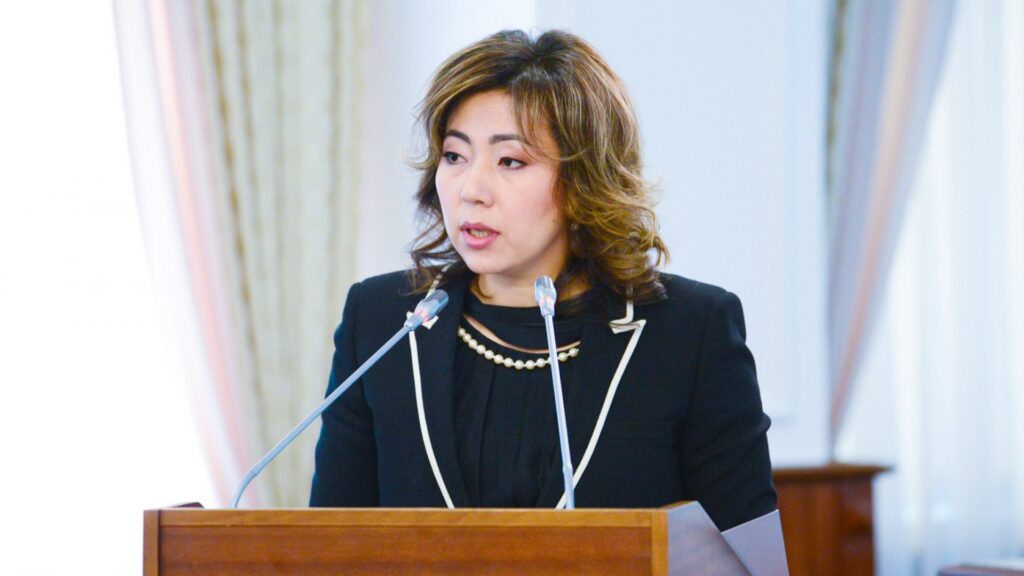
Madina Abylkassymova, chair of the Agency for Regulation and Development of the Financial Market (ARDFM), said the proposed agency would be set up with participation from the National Bank of Kazakhstan, an international ratings firm, and local financial institutions.

At present, Kazakhstan does not have a fully domestic ratings system. Creditworthiness is assessed primarily by the “big three” global agencies — Standard & Poor’s, Moody’s, and Fitch — as well as by Expert RA and ACRA, which are accredited for prudential regulation.

The ARDFM has drafted legislation to create a national ratings framework and regulate agencies operating in the market. The Mazhilis, the lower house of parliament, approved the bill in its first reading on April 15.

“It is planned to establish a Kazakh rating agency as an independent institution for national credit assessment,” Abylkassymova said. “Its shareholders will include the National Bank, an international rating agency, and financial institutions.”

Officials say the National Bank’s involvement will help underpin financial stability and build confidence among market participants. At the same time, the draft law introduces safeguards intended to preserve independence. Analysts’ remuneration will not be tied to clients’ financial performance, and restrictions will be placed on affiliations, including a ban on holding financial instruments issued by rated entities.

The legislation also limits any single shareholder’s stake in the agency to 10% and requires at least half of the board of directors to be independent.

The agency’s authorized capital is expected to reach about $21 million. Authorities say the new system should make it easier for companies — particularly small and medium-sized enterprises — to access capital markets.

Abylkassymova said the reform would help reduce borrowing costs, improve transparency, and expand investment opportunities for institutional investors such as banks, pension funds, and insurers.

Alongside the new agency, both domestic and foreign rating firms will be allowed to operate in Kazakhstan, subject to regulatory oversight. The ARDFM will have the authority to recognize agencies, monitor their activities, conduct inspections, and revoke their status if necessary.

To enter the market, international and foreign agencies will need to meet qualification standards, including at least five years of operational experience, sufficient capital, a verified methodology, and institutional independence. All agencies will also be required to publish their methodologies, pricing policies, and any potential conflicts of interest.

The Times of Central Asia previously reported that S&P Global Ratings confirmed Kazakhstan’s long-term sovereign rating in March while forecasting a slowdown in GDP growth in 2026.

Russia, Azerbaijan Settle Over Airliner Crash in Kazakhstan in 2024

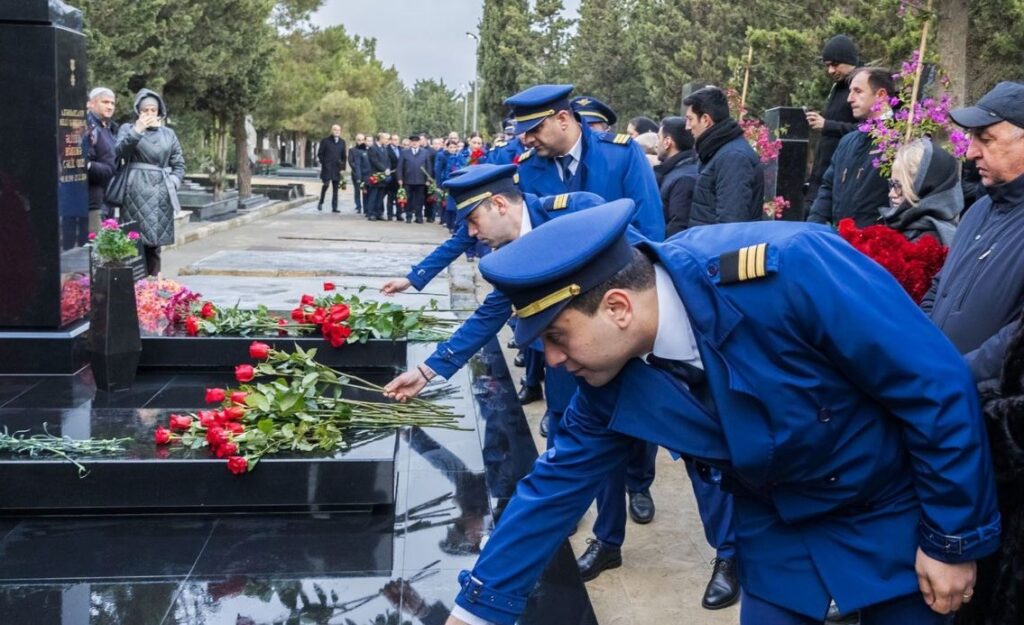
Russia and Azerbaijan said on Wednesday that they have reached “an appropriate settlement” that includes compensation payments in the case of an Azerbaijan Airlines plane that crashed in Kazakhstan after being damaged by a Russian military strike on Dec. 25, 2024.

The agreement reflected efforts by the two countries to resolve a long-running dispute over the crash, which killed 38 of the 67 people on board. The Embraer 190 airliner crashed near the Kazakh city of Aktau after it was struck while trying to land in Grozny, Chechnya, and then diverted across the Caspian Sea.

“The steps undertaken confirm the mutual intention to build further mutually beneficial cooperation,” the foreign ministries of Russia and Azerbaijan said in a joint statement.

The statement said the settlement was based on an accord reached in October 2025, when Russian President Vladimir Putin acknowledged in a meeting with Azerbaijani President Ilham Aliyev that Russian missile fire had damaged the plane. Putin indicated that the strike was accidental as it occurred while the Russian military was dealing with a Ukrainian drone attack. His comments went some way toward easing Azerbaijan’s anger over what it viewed as Russian attempts to avoid responsibility for the disaster.

The two sides “agreed to appropriately resolve the issues arising from the accident,” which occurred “as a result of the involuntary operation of the air defense system in the airspace of the Russian Federation,” the joint statement said. It expressed condolences to relatives and friends of those who died.

The two foreign ministries did not release details of the compensation payments. Kazakhstan is still leading an investigation of the crash.

Russia Seeks Transfer of 200 Tajik Women Prisoners After Dushanbe Approval

Russia’s human rights commissioner Tatyana Moskalkova has received a positive response from Emomali Rahmon regarding the possible transfer of around 200 Tajik women currently serving sentences in Russian prisons, according to TASS.

Moskalkova said she had written to the Tajik president requesting that the women be allowed to continue serving their sentences in Tajikistan on humanitarian grounds.

“In each case, we must carefully weigh issues of justice, mercy, and humanism,” she said in an interview with TASS.

She noted that while most cases confirm that crimes were committed, the severity of punishment should not always be maximal.

“Sometimes leniency helps a person reform, repent, and change for the better. That is why we try in each case to find arguments that could support leniency, especially for women,” she said.

According to Moskalkova, foreign women prisoners face additional challenges, including limited access to family visits and difficulties receiving parcels from relatives. These factors were among the reasons behind her appeal to Tajik authorities.

She also pointed to broader policy developments in Russia’s penal system, citing improvements in detention conditions under the country’s penal reform strategy through 2030. Moskalkova highlighted recent legislation limiting pretrial detention for women with young children who have committed non-violent offenses.

In addition, she said she has repeatedly asked courts to grant deferrals of sentences for women with children under the age of 14, thanking the judiciary for what she described as “understanding and positive decisions” in such cases.

Earlier this month, Moskalkova said Russia was prepared to facilitate the transfer of more than 3,000 Uzbek nationals convicted in Russia to serve their sentences in Uzbekistan. However, she noted that the process remains stalled due to legal constraints, including Uzbekistan’s failure to ratify the 1998 Convention on the Transfer of Sentenced Persons.

Why Strong Economic Growth in Central Asia Masks Underlying Risks

Central Asian countries are significantly outperforming the global average in GDP growth, largely due to differing economic models across the region. However, rapid expansion does not remove deep structural vulnerabilities.

As early as March, data showed that the combined economies of Central Asian countries grew by nearly 7% in 2025 compared to the previous year. The World Bank estimates regional growth at 6.2%, while the Eurasian Development Bank (EDB) places it at 6.6%. These calculations include Kazakhstan, Uzbekistan, Kyrgyzstan, and Tajikistan; Turkmenistan is excluded due to limited statistical transparency.

By comparison, growth rates in advanced economies are much lower. The EDB expects around 1.6% growth in the U.S. and approximately 1.1% in the eurozone in 2026, while China’s economy is projected to expand by about 4.6%. Nevertheless, experts note that the region’s economic outlook remains complicated by high inflation, income inequality, and continued dependence on external factors.

Investment activity and domestic demand have been the key drivers of growth, according to the EDB. Kazakhstan recorded its highest growth in 13 years (6.5%), with industry leading the expansion: mining grew by 9.4% and manufacturing by 6.4%. In 2026, the non-resource sector is expected to play a greater role.

Kyrgyzstan has led the region in GDP growth for the third consecutive year: GDP grew by 11.1% in 2025 and by 9% in January 2026. In Uzbekistan, GDP increased by 7.7% in 2025 (up from 6.7% a year earlier), supported by investment, trade, services, and construction. Tajikistan’s GDP rose by 8.4% in 2025, matching the previous year’s performance. Growth continues to be driven by expanding industrial production and strong domestic demand. Early 2026 data suggest this momentum is holding.

Uzbekistan’s Record

In April, the World Bank highlighted Uzbekistan’s resilience to external challenges and strong growth dynamics. According to its updated report, the country’s 2025 GDP growth was revised upward by 1.5 percentage points to 7.7%. The outlook is 6.4% for 2026 and 6.7% for 2027.

Key drivers include high global gold prices, investment inflows, expanded lending, and ongoing structural reforms. Rising household incomes have also played an important role, supported by remittances, which increased by 37% last year to reach $18.9 billion.

By the end of 2025, Uzbekistan ranked among the fastest-growing economies in developing countries in Europe and Central Asia, alongside Kyrgyzstan and Tajikistan. The region as a whole is experiencing its highest growth rates in 14 years.

At the same time, analysts point to persistent structural constraints, including a large public sector and the dominance of state-owned enterprises, which hinder private sector development. External risks, including geopolitical instability and potential disruptions in energy and fertilizer supplies, remain significant.

In 2025, Uzbekistan’s GDP exceeded €133 billion, compared to approximately €56 billion nine years earlier. Over the same period, GDP per capita rose from about €1,750 to around €3,220, nearly doubling average income levels.

Investment in fixed capital increased by more than 15% year-on-year in 2025, while export value grew by over 33%. Persistently high global gold prices played a major role: export revenues from gold sales rose by more than 70%.

According to President Shavkat Mirziyoyev, around five million people gained a stable source of income in 2025, and 1.5 million were lifted out of poverty. Consumer indicators also improved, with annual housing purchases reaching approximately 270,000 units and car sales hitting one million units.

However, the World Bank warns that the next stage of growth may prove more challenging.

“Since 2017, Uzbekistan has been considered one of the global leaders in economic reform. Future growth should be based on a strong private sector, accession to the World Trade Organization, and genuinely level playing conditions. Reducing state involvement where private companies can operate more efficiently will help attract investment and create better-quality jobs,” said World Bank economist Pinar Yasar.

Inflation Holds Kazakhstan Back

Kazakhstan remains the largest economy in Central Asia. The oil sector continues to drive growth, while manufacturing, particularly machinery and metallurgy, is gaining momentum, with new plants opening across the country.

“This is primarily due to the stronger-than-expected impact of unlocking investment potential. In addition, industrial production is growing rapidly this year, largely thanks to government measures aimed at economic diversification,” said Aigul Berdigulova, senior analyst at the EDB’s Macroeconomic Analysis Center.

However, inflation stood at around 12.3% last year, eroding purchasing power. Elevated interest rates continue to constrain household consumption.

Kazakhstan’s economy remains heavily dependent on oil and gas, which account for up to 20-25% of GDP, more than 50% of exports, and a significant share of budget revenues. While this structure supports stability during periods of high commodity prices, it leaves the economy vulnerable to external shocks.

According to Qazaq Expert Club analyst Saida Tleuleyeva, diversification potential lies primarily in developing processing industries, particularly petrochemicals. Even partial progress could increase value added by two to three times. Raising manufacturing’s share from 13-14% to 18-20% of GDP could significantly boost output and nearly double non-resource exports from $10-12 billion to over $20 billion.

Transport and logistics are another key area. Development of the Trans-Caspian corridor is already increasing cargo volumes, with capacity nearing 5 million tons and plans to expand to 10 million. With sufficient investment, this route could become a stable source of foreign currency earnings.

Significant potential also remains in the agro-industrial sector, given Kazakhstan’s vast land resources. Mechanical engineering is another underdeveloped area, as much of the equipment used in the extractive sector is still imported.

Kyrgyzstan: Construction Boom and Mortgages

In Kyrgyzstan, construction has been a major growth driver, expanding by 29%. This was fueled by a state mortgage program (“My Home 2021-2026”), which enabled large-scale housing development in Bishkek and other regions. This, in turn, stimulated related industries such as cement, brick, and finishing materials production.

Investment in fixed capital rose by 18.2%, driven largely by domestic investors and public spending on infrastructure, including hydropower, roads, mining, and processing industries. Foreign investment increased by 17.5%.

Amid economic growth, the average monthly nominal wage rose by 19.2%. Even after accounting for inflation, real incomes increased by 12% over six months, supporting strong consumer demand. Inflation remains above 8%.

Analysts note that part of the economic upswing is linked to the reorientation of trade and logistics flows following Russia’s full-scale invasion of Ukraine.

“For economies with chronic underinvestment, high growth rates often reflect a catch-up phase rather than a structural breakthrough. In such economies, growth of around 6% typically indicates convergence, whereas in developed countries, 1.5-2% is already considered high,” said Kubat Rakhimov, an infrastructure development expert.

He added that GDP growth alone is not sufficient to assess living standards; more meaningful indicators include real disposable income and labor productivity.

Tajikistan: Growth Across Key Sectors

Tajikistan’s GDP grew by 8.4% in 2025, driven in part by high gold prices, its main export commodity. Significant investments were made in infrastructure, particularly the Rogun hydropower plant. Rising remittances from labor migrants have further supported domestic demand.

For the second consecutive year, the economy expanded by 8.4%, reaching nearly $18 billion by the end of 2025.

All three key sectors, accounting for about 70% of the economy, are growing: agriculture (23% of GDP), industry (22%), and trade (14%).

Agricultural output increased by 9.5% year-on-year in 2025, with growth across major segments. Crop production, which generates two-thirds of sector revenue, recorded higher yields for all major crops.

Turkmenistan: Limited Transparency

Turkmenistan remains one of the most closed economies in the world, and available data is largely based on official statements and indirect estimates.

In February, President Serdar Berdimuhamedov reported GDP growth of 6.3% in 2025. According to official figures, industrial output grew by 1.8%, trade by 9.6%, and agriculture by 7%. Investment increased by 6%, and around 7,000 jobs were created.

Earlier, the country’s minister of finance and economy reported that GDP exceeded $68.7 billion in 2024.

Persistent Risks Behind Strong Growth

Despite strong headline growth, World Bank data highlights significant income disparities across the region. GDP per capita in Kazakhstan stands at around $14,154, compared to approximately $3,162 in Uzbekistan and about $2,420 in Kyrgyzstan. In the U.S., that figure exceeds $84,000.

Experts warn that the current levels of Central Asian economic growth remain vulnerable to external shocks, including a slowdown in China, shifts in global demand for hydrocarbons and metals, and geopolitical instability.

Analysts also forecast a cooling period as early as 2027, with GDP growth potentially slowing to 4-5%.

For now, the region faces a critical challenge: converting rapid growth into sustainable productivity gains, rising real incomes, and stronger institutions. Only then can strong GDP figures translate into lasting improvements in living standards.

Rosatom to Neutralize Hazardous Chemical Waste at Plant in Kyrgyzstan

Rosatom is set to begin work to eliminate hazardous chemicals stockpiled at the Kristall plant in Tash-Kumyr, in Kyrgyzstan’s Jalal-Abad region.

The Kristall plant, built in 1989 as a key facility of the Soviet electronics industry to produce polycrystalline silicon, has since become a high-risk environmental site. Hazardous chemical waste accumulated on its premises poses a threat to both the environment and public health. The plant has been bankrupt since 2010.

The site contains 49 tanks holding a total of 155 tons of hazardous chemical residues, including trichlorosilane and silicon tetrachloride.

In October 2024, Rosatom conducted a technical audit of the facility, revealing the deteriorated condition of the storage tanks. Prolonged inactivity has left the aging infrastructure in poor shape, increasing the risk of structural failure and depressurization.

On April 14, in Bishkek, Rosatom and the Kyrgyz Ministry of Emergency Situations discussed technological solutions for neutralizing the chemicals.

According to Rosatom, the first phase of the cleanup is scheduled for completion by the end of 2026. This stage will focus on bringing the chemical storage tanks to a safe condition. It also involves the installation of a dual emergency protection system and the introduction of independent environmental monitoring.

The proposed neutralization methods have been approved by the Kyrgyz Ministry of Natural Resources, Ecology, and Technical Supervision.

By the end of 2026, Rosatom aims to eliminate the risk of leaks and uncontrolled emissions by stabilizing the tanks and ensuring safe conditions for further handling of the hazardous substances.

In 2027, the project will enter its second phase, focusing on the on-site neutralization of the chemicals as the preferred solution.

Kyrgyz Emergency Situations Minister Kanatbek Chynybayev said the situation at the Kristall plant remains environmentally challenging and requires a comprehensive response.

“Our primary objective is to eliminate potential health risks to residents of Tash-Kumyr and lift the state of emergency in the area. Rosatom’s expertise has been engaged to address this issue. As part of this collaboration, a technological strategy has been developed that will allow the threats to be neutralized within the specified timeframe and return the site to a safe condition,” he said.

Kazakhstan Climbs 13 Positions in the World Bank Human Capital Ranking

Kazakhstan has significantly improved its position in the World Bank’s Human Capital Index Plus (HCI+), rising by 13 places to rank 42nd out of 161 countries by the end of 2025. The index evaluates human capital development, including health, education, and workforce skills, all of which directly influence economic growth and investment attractiveness.

Charles McLean, founder of Borderless Consulting Group, shared his assessment of the factors behind this progress in an interview with Inbusiness.kz.

According to McLean, Kazakhstan’s rise reflects not only quantitative improvements but also qualitative changes in the country’s socio-economic landscape.

“Kazakhstan’s rise by 13 positions is a highly positive and significant signal for the country’s socio-economic development, primarily driven by reforms implemented by President Kassym-Jomart Tokayev,” he said.

He noted that improved indicators point to the emergence of a healthier, better-educated, and more skilled workforce, contributing to higher productivity and supporting sustainable long-term growth. Stronger positions in international rankings also enhance investor confidence and reinforce economic resilience.

McLean identified two main drivers of progress: education and healthcare.

In education, investment has increased at all levels from preschool to higher education. Improvements in teacher training, the quality of school education, and the alignment of national testing systems with international standards have contributed to higher skill levels across the population.

Positive changes are also evident in the healthcare system. Enhanced medical infrastructure, expanded preventive programs, and improved access to healthcare services have contributed to rising life expectancy and lower infant mortality.

McLean also highlighted Kazakhstan’s shift toward a more integrated approach to human capital development. This includes the digitalization of educational institutions and the expansion of vocational training programs.

Additional emphasis is being placed on developing professional skills, delivering both short-term employment gains and long-term improvements in labor productivity.

“If the current course is maintained, Kazakhstan can not only strengthen its position but also become one of the leaders among emerging markets in terms of human capital development,” McLean said.

Given current trends, he assessed further improvements in Kazakhstan’s position in the HCI+ ranking to be realistic. Continued investment in human capital is expected to drive productivity growth, improve living standards, and enhance the country’s global competitiveness.