• KGS/USD = 0.01144 0%
  • KZT/USD = 0.00196 -0%
  • TJS/USD = 0.10899 -0%
  • UZS/USD = 0.00008 -0%
  • TMT/USD = 0.28490 0%
  • KGS/USD = 0.01144 0%
  • KZT/USD = 0.00196 -0%
  • TJS/USD = 0.10899 -0%
  • UZS/USD = 0.00008 -0%
  • TMT/USD = 0.28490 0%
  • KGS/USD = 0.01144 0%
  • KZT/USD = 0.00196 -0%
  • TJS/USD = 0.10899 -0%
  • UZS/USD = 0.00008 -0%
  • TMT/USD = 0.28490 0%
  • KGS/USD = 0.01144 0%
  • KZT/USD = 0.00196 -0%
  • TJS/USD = 0.10899 -0%
  • UZS/USD = 0.00008 -0%
  • TMT/USD = 0.28490 0%
  • KGS/USD = 0.01144 0%
  • KZT/USD = 0.00196 -0%
  • TJS/USD = 0.10899 -0%
  • UZS/USD = 0.00008 -0%
  • TMT/USD = 0.28490 0%
  • KGS/USD = 0.01144 0%
  • KZT/USD = 0.00196 -0%
  • TJS/USD = 0.10899 -0%
  • UZS/USD = 0.00008 -0%
  • TMT/USD = 0.28490 0%
  • KGS/USD = 0.01144 0%
  • KZT/USD = 0.00196 -0%
  • TJS/USD = 0.10899 -0%
  • UZS/USD = 0.00008 -0%
  • TMT/USD = 0.28490 0%
  • KGS/USD = 0.01144 0%
  • KZT/USD = 0.00196 -0%
  • TJS/USD = 0.10899 -0%
  • UZS/USD = 0.00008 -0%
  • TMT/USD = 0.28490 0%
08 December 2025

GTA and Counter-Strike Banned in Tajikistan

Residents of Tajikistan have been ordered to refrain from playing popular computer games such as Grand Theft Auto and Counter-Strike, and owners of computer game clubs have been banned from distributing them.

According to information published by the Dushanbe police press service on Telegram, these games can influence young people and make them more prone to criminal behavior.

“According to the results of the historical and cultural expertise of the Tajik Ministry of Culture, the games Counter-Strike and Grand Theft Auto contain scenes of violence, murder, and robbery,” police said.

Game club owners and parents of children were told to comply with national laws prohibiting violent and unethical video games, and said raids would be conducted at game clubs to detect violations.

A similar initiative has been discussed in Russia. In 2022, the State Duma proposed banning video games containing violent scenes, pornography, and profanity.

Counter-Strike is a multiplayer shooter in which teams of special forces and terrorists perform missions to rescue hostages, clear bombs, or protect VIPs. Grand Theft Auto (GTA) is an adventure game in which the player performs missions in fictional American cities, participating in criminal activities, driving vehicles, and committing robberies to advance the story.

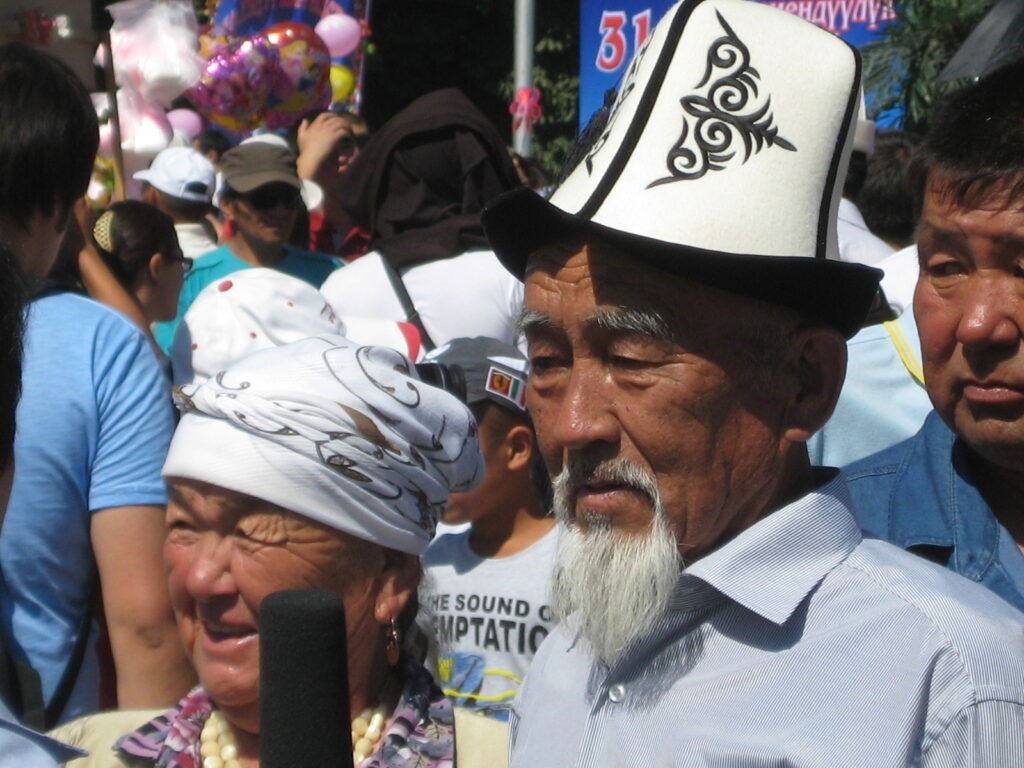
Aging Kyrgyzstan: Economic Challenges and Empowering Seniors

According to the National Statistical Committee of the Kyrgyz Republic, the country’s population is aging quickly. Based on UN data, the agency predicts that the proportion of elderly people (65 and over) in Kyrgyzstan will significantly increase by 2030. According to the analysis, currently, 5.7% of the total population is elderly, and this figure may reach 8% by 2030.

Speaking about the processes associated with an aging population, experts have highlighted social funds related to the payment of pensions, benefits, and other contributions to people who have finished their careers. Additionally, an aging population will produce fewer materials and public goods, and state tax revenues will decrease, which could lead to a decline in the country’s standard of living.

However, economist Kubanychbek Idinov sees this as a manageable problem. The 61-year-old believes that the increase in the average age is indicative of an improvement in Kyrgyzstan’s standard of living.

“The country’s GDP is growing, and state budget spending on social projects is increasing. But we need to give pensioners more opportunities to work. This will be a great help to the revenue side of the budget. People who retire can work elsewhere. This allows them not to rely on their pensions alone, to have additional income,” Idinov told The Times of Central Asia.

Most retirees in Kyrgyzstan continue to work. Idinov said they start small businesses or enterprises and pass on their experience to young people. According to official data, the country currently has about 150,000 working pensioners.

“It is necessary at the state level to support trade unions’ work in attracting retirees to work. It is possible to work at the level of local authorities. Then the issue of small pension growth will not be acute for people and the state,” Idinov said.

On a related matter, Kyrgyz sociologists say that despite a slowdown, the country’s population grew by almost half a million people (+7.8%) over the year. Kyrgyzstan remains the second-largest Central Asian country in terms of population growth after Tajikistan.

“The increase in population, despite a slight decrease in the growth rate, is provided by the excess of births over deaths with a negative balance of external migration,” the report of the National Statistical Committee states. The large number of labor migrants returning home is also helping to combat the decrease in the number of able-bodied people.

In 2007, experts from the UN Demography Department suggested evaluating countries as those with an old population if more than 7% of its citizens are over 65 years old.

U.S. Sanctions Uzbek Companies Supplying Russia with Equipment

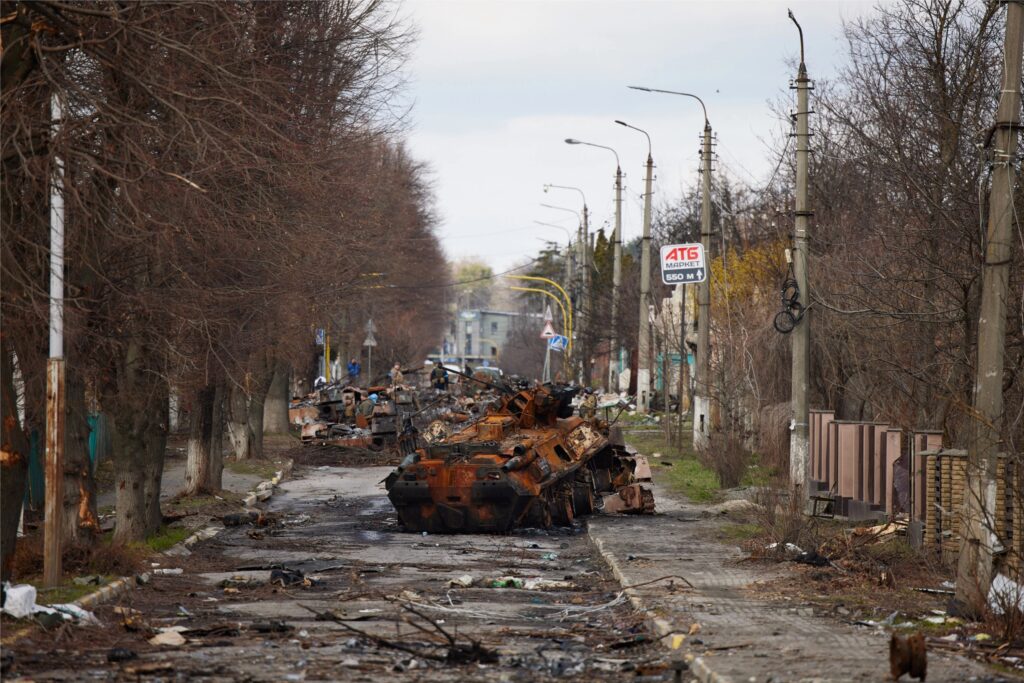
The U.S. Department of the Treasury has sanctioned 275 individuals and entities involved in supplying Russia with advanced technology and equipment that it desperately needs to support its war machine. The Uzbek companies Uzstanex and The Elite Investment Group are among the sanctioned entities.

Deputy Secretary of the Treasury Wally Adeyemo emphasized that the U.S. and its allies are committed to halting the flow of essential tools and technologies that enable Russia to pursue its unlawful war against Ukraine. “As demonstrated by today’s actions, we are unwavering in our resolve to weaken Russia’s military capabilities and to penalize those attempting to circumvent or evade our sanctions and export controls,” Adeyemo stated.

Uzstanex is part of the StanexGroup holding. The company sells and adjusts machine tools in Uzbekistan, Kazakhstan, Kyrgyzstan, Tajikistan, and Turkmenistan.

According to the U.S. Treasury Department, the machine tools purchased by Uzstanex were delivered to Russia through the Chinese company Shanghai Winsun Imp and Exp Co Ltd (Shanghai Winsun), which is why sanctions were imposed against it.

The Elite Investment Group is a non-specialized wholesaler. It is noted that from mid-March to May 2024, using GUCLU GLOBAL as a carrier agent, the company delivered approximately $190,000 worth of high-priority goods, including electrical transformers, to companies in Russia, including the GS Group.

Tajik-Born Russian Citizen Sentenced for High Treason in Moscow

The Moscow City Court has sentenced Firuz Dadoboev, a Tajikistan-born Russian citizen, to 13.5 years in a strict regime penal colony on charges of high treason (under Article 275 of Russia’s Criminal Code) for actions benefitting the United States.

According to reports, Dadoboev, an IT specialist at a Moscow-based company, allegedly obtained classified information unlawfully. Investigators claim he intended to pass this information to a U.S. intelligence representative, having reportedly contacted the CIA. The Federal Security Service (FSB) stated that Dadoboev confessed and expressed remorse. Along with the prison term, he was fined 300,000 rubles (about $3,000).

On October 29, TASS released a video showing his arrest and sentencing. His detention was initially reported in December 2022, when he was held in the Lefortovo detention center.

Previously, The Times of Central Asia has reported that Russia is recruiting immigrants to the war with Ukraine. Central Asian migrants say that Russia threatens those who refuse to participate in the war with imprisonment.

IFC Increases Investments in Central Asia

The International Finance Corporation (IFC), a member of the World Bank Group, says it committed $1.04 billion in Central Asia in the fiscal year 2024, which started on July 1, 2023, and ended on June 30, 2024. The funds comprised over $400 million in long-term financing from IFC’s account, $600 million in mobilization, and $35 million in short-term trade and supply-chain finance to facilitate trade flows.

The funds, coupled with advisory support, aimed to increase private sector participation, create jobs, boost financial inclusion, bolster infrastructure, and support the region’s green transition.

Priority sectors included finance, capital markets, renewable energy, agriculture, and infrastructure.

Over the last fiscal year, IFC-supported projects in the Central Asian region created about 35,000 jobs, including more than 13,000 for women.

Strengthening local financial markets is among its key objectives. To that end, the IFC invested $228 million in 10 financial institutions in Kazakhstan, Kyrgyzstan, Tajikistan, and Uzbekistan, with up to half earmarked for women entrepreneurs and rural enterprises. The IFC also supported local financial institutions in growing their micro, small, and medium enterprises (MSME) businesses, advancing climate finance and digital transformation, and issuing the first-ever sustainability, social, and green bonds.

The IFC and the World Bank financed a new solar plant with the country’s first battery energy storage system to support Uzbekistan’s green transition and climate action. The plant is expected to provide electricity access to approximately 75,000 households in the Bukhara region.

In Tajikistan, the IFC invested in the country’s first green bond, issued by Eskhata Bank. The bond will support climate-smart projects and MSMEs undertaking environmental projects.

In Kazakhstan and Kyrgyzstan, in addition to investments to increase financial inclusion, the IFC has been evaluating new advisory and investment opportunities, including PPPs in areas such as drinking water supply, renewable energy (including geothermal solutions for heating and cooling), railway projects as part of the Middle Corridor, and the first municipal green bonds in Central Asia. The IFC also supports Kazakhstan’s accelerated methane mitigation efforts, which align with the Global Methane Pledge.

Wiebke Schloemer, the IFC’s Director for Türkiye and Central Asia, reiterated its commitment to the region: “Over the past 20 years, the region has seen substantial development, with an average annual growth rate of 6.2 percent. Central Asia must leverage the green transition to boost private investment, strengthen connectivity, and reduce resource dependency to continue this growth. The IFC aims to address these goals and continue to deliver solutions where we are needed most — from increasing access to finance for farmers and women entrepreneurs to creating jobs to continue to help countries transition to net zero.”

EBRD Supports Healthcare and Municipal Transport Projects in Kazakhstan

The European Bank for Reconstruction and Development (EBRD) has supported Kazakhstan’s first healthcare sector public-private partnership (PPP) project, and provided finance for a tram fleet renewal program in the Kazakh city of Pavlodar.

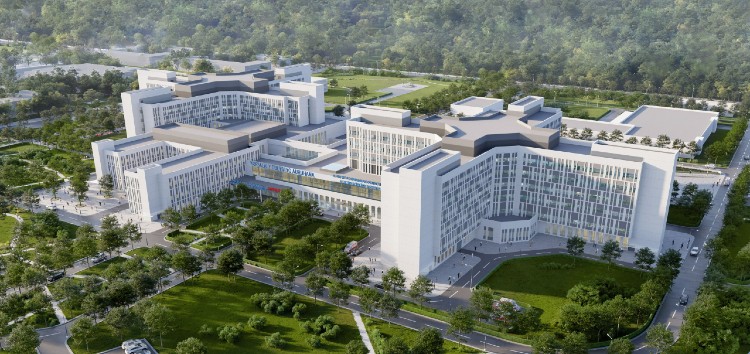
The EBRD arranged a €365 million financing package provided by six financial institutions to construct and operate a 630-bed multidisciplinary hospital in Kokshetau, northern Kazakhstan.

The financing, including the EBRD’s €105 million loan, will be provided to a Kazakhstan-based subsidiary of Rönesans Holding of Turkey.
The project will be co-financed through parallel loans totaling up to €260 million provided by the Asian Infrastructure Investment Bank (AIIB), the German investment corporation DEG, the Islamic Corporation for the Development of the Private Sector (ICD), Proparco, a subsidiary of Agence Française de Développement, and the Development Bank of Kazakhstan (DBK).

This first PPP in the healthcare sector of Kazakhstan and Central Asia will be a greenfield development of a 110,000 m2 facility, which will provide services to more than 730,000 people living in the city of Kokshetau and the broader region of Akmola.

According to the PPP agreement, the private partner will be responsible for maintaining the facility and running a digital hospital information management system. At the same time, Turar Healthcare, a state-owned, non-profit national healthcare operator, will provide medical services.

EBRD President Odile Renaud-Basso, who was visiting Kazakhstan, commented: “The EBRD is pleased to join forces with our longstanding client Rönesans Holding to launch the first healthcare sector PPP in Kazakhstan and the region. PPPs are recognized as one of the most effective forms of long-term contractual relationships between the public and private sectors. They will help provide sustainable healthcare solutions, introduce new technologies, and improve the quality of medical services.”

The EBRD has also announced support for a tram fleet modernization program in the north-eastern Kazakh city of Pavlodar.
The EBRD’s loan of up to €10 million to Pavlodar tram management company will help the company acquire up to 25 energy-efficient trams. A €4 million loan from the Clean Technology Fund will co-finance the project.

The tram company handles almost 40 percent of passenger traffic in the city, with a population of more than 360,000. Yet nearly 60 percent of the company’s fleet was commissioned in the 1970s and 1980s and requires urgent renewal.

New battery-powered trams will have an autonomous driving range of up to 20 km, which means they can continue operating during electricity outages.

The EBRD has invested €10 billion in 328 projects in Kazakhstan, most of which support private entrepreneurship.