• KGS/USD = 0.01144 0%
  • KZT/USD = 0.00194 0%
  • TJS/USD = 0.10879 -0.18%
  • UZS/USD = 0.00008 0%
  • TMT/USD = 0.28490 0%
  • KGS/USD = 0.01144 0%
  • KZT/USD = 0.00194 0%
  • TJS/USD = 0.10879 -0.18%
  • UZS/USD = 0.00008 0%
  • TMT/USD = 0.28490 0%
  • KGS/USD = 0.01144 0%
  • KZT/USD = 0.00194 0%
  • TJS/USD = 0.10879 -0.18%
  • UZS/USD = 0.00008 0%
  • TMT/USD = 0.28490 0%
  • KGS/USD = 0.01144 0%
  • KZT/USD = 0.00194 0%
  • TJS/USD = 0.10879 -0.18%
  • UZS/USD = 0.00008 0%
  • TMT/USD = 0.28490 0%
  • KGS/USD = 0.01144 0%
  • KZT/USD = 0.00194 0%
  • TJS/USD = 0.10879 -0.18%
  • UZS/USD = 0.00008 0%
  • TMT/USD = 0.28490 0%
  • KGS/USD = 0.01144 0%
  • KZT/USD = 0.00194 0%
  • TJS/USD = 0.10879 -0.18%
  • UZS/USD = 0.00008 0%
  • TMT/USD = 0.28490 0%
  • KGS/USD = 0.01144 0%
  • KZT/USD = 0.00194 0%
  • TJS/USD = 0.10879 -0.18%
  • UZS/USD = 0.00008 0%
  • TMT/USD = 0.28490 0%
  • KGS/USD = 0.01144 0%
  • KZT/USD = 0.00194 0%
  • TJS/USD = 0.10879 -0.18%
  • UZS/USD = 0.00008 0%
  • TMT/USD = 0.28490 0%
15 December 2025

Kazakhstan Develops Program to Revive Famous Aport Apple Variety

Kazakhstan’s Ministry of Agriculture in cooperation with the National Agrarian Scientific and Educational Center have launched a program to revive the legendary Kazakh apple variety – aport.

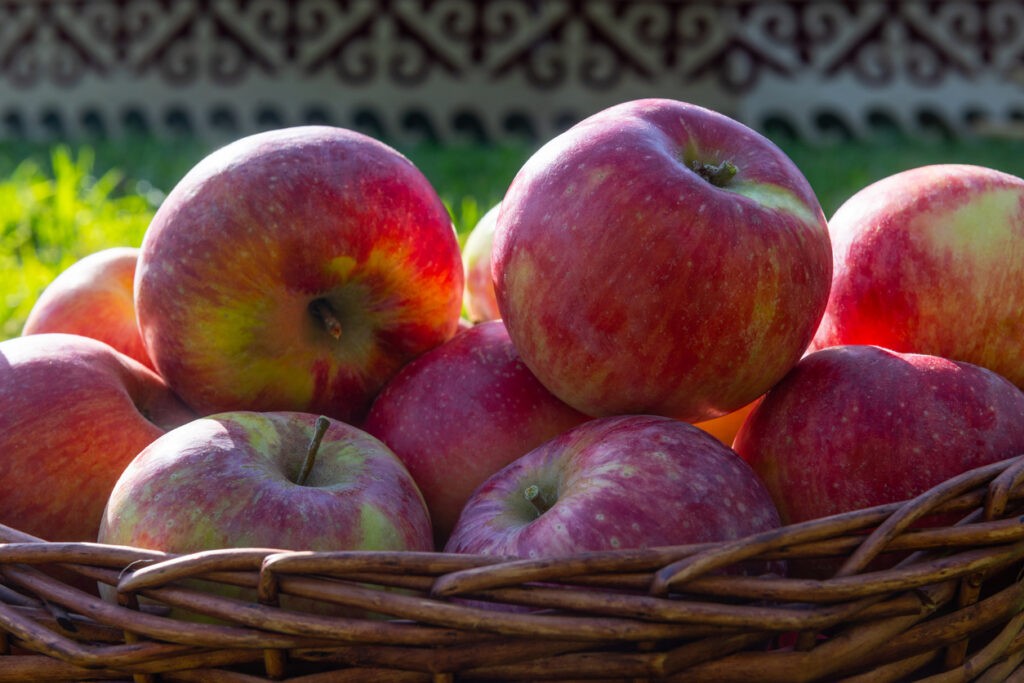
Aport is a capricious variety that requires special cultivation conditions. Quality apples can only be produced in orchards growing 850-1,250 meters above sea level. There are few such areas in the foothills of Almaty and the nearby region. Unlike other apple varieties, which begin to bear fruit in 4-6 years, aport needs 8-9 years to give a first harvest. Nevertheless, aport apples, distinguished by their large size, distinct smell, and succulent nature, are in great demand.

The aport revival program, designed for 2024-2028, involves private investors and specialized nurseries. The program will grow the required number of saplings to begin the full-scale commercial cultivation of apple orchards. In the first stage, in 2024, the seeds of the Sievers apple tree were collected, and the development of national standards for growing Kazakhstan’s aport began. In 2025, seedlings will be planted on ten hectares to become a mother garden supplying saplings for nurseries. During the next two years, it is planned to grow a sufficient number of saplings to plant an orchard on 100 hectares. Later, aport saplings will be offered to private gardeners for commercial cultivation.

In 1970, there were 3.8 million aport trees in Kazakhstan, but by 1984, only 1.4 million remained. In 2012, scientific research began on the revival and rejuvenation of the variety, including establishing an experimental garden of aport grafted onto Sievers apple trees. In 2023, Kazakh scholars harvested the first large fruits weighing 400-500 g.

Kazakhstan is the birthplace of apples — particularly the famous aport apples, which grow in the Almaty region. Translated from Kazakh, Almaty roughly means “place of abundance of apples.”

One of Almaty’s main landmarks, the first sight to greet visitors to Mount Kok-Tobe, which looms over the city, is a granite statue of an apple with water gushing from its core.

Kyrgyzstan Hosts Summit of Organization of Turkic States

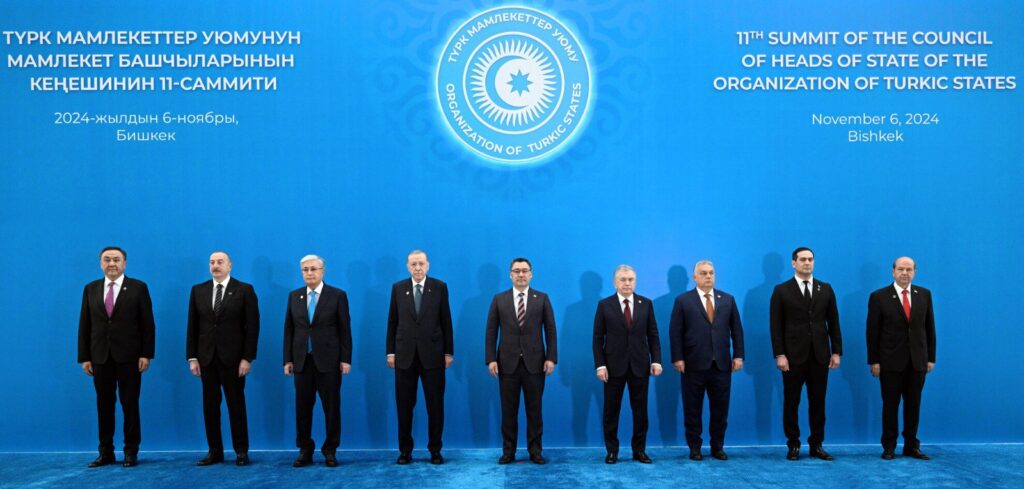
On November 6, Bishkek hosted the 11th Summit of the Council of Heads of State of the Organization of Turkic States (OTS).

Chaired by Kyrgyzstan’s President Sadyr Japarov and themed “Empowering the Turkic World: Economic Integration, Sustainable Development, Digital Future, and Security for All,” the summit was attended by President of Azerbaijan Ilham Aliyev, President of Kazakhstan Kassym-Jomart Tokayev, President of Turkey Recep Tayyip Erdoğan, President of Uzbekistan Shavkat Mirziyoyev, and Viktor Orbán, the Prime Minister of Hungary (observer state of the OTS).

At the summit, the OTS chairmanship passed from Kazakhstan to Kyrgyzstan.

In his speech, Kazakhstan’s Tokayev summarized the results of his country’s chairmanship of the OTS.

Tokayev noted that Kazakhstan’s chairmanship of the Organization of Turkic States was held under the motto “TURKTIME!” with special attention paid to strengthening the unity of the Turkic world and expanding comprehensive cooperation.

Tokayev said that over the past 10 years, economic ties between the OTS members have strengthened significantly, and their trade volume exceeded $45 billion in 2024.

According to Tokayev, strengthening transport and logistics ties within the OTS is a priority task. “It is necessary to fully utilize the potential of the Middle Corridor, which is strategically important for the further economic development of the Turkic world. Therefore, it seems necessary to agree to ensure the sustainable development of cargo transportation along this route.”

Addressing the summit as the new chairman of the OTS, Japarov emphasized that the Organization has the unique potential to achieve high goals, strengthen its position in the international arena, intensify mutually beneficial cooperation, and create favorable conditions for the prosperity of its people.

According to Japarov, during its chairmanship of the OTS, Kyrgyzstan will make every effort to develop economic partnership, sustainable development, digital integration, and strengthening common security.

To expand trade and economic cooperation, negotiations will be initiated on intergovernmental agreements in services, finance, the creation and support of common labor markets, digital and e-commerce, intellectual property, agriculture, technology, innovation, tourism, and education.

Japarov supported signing the Agreement on Partnership in the Field of Digital Economy, which will facilitate digital trade between the Turkic states.

Joint measures to combat the challenges associated with climate change and environmental pollution will be one key area of Kyrgyzstan’s chairmanship.

According to Japarov, over the past 70 years, the area of glaciers in Kyrgyzstan has decreased by 16%. These glaciers are a source of drinking water for Kyrgyzstan and the entire Central Asian region. “Considering that our region is among the most vulnerable to global warming, by 2100, we may lose more than half of the glaciers,” the Kyrgyz president warned, adding that “we will develop cooperation in the implementation of joint green projects in the field of renewable energy, forest restoration, the introduction of resource-saving and energy-efficient technologies, the protection of glaciers and biological species, as well as the fight against land degradation and desertification.”

Addressing the summit, Turkey’s Erdoğan said: “I wholeheartedly believe that the decisions we will make today to achieve the targets we have set with the Turkic World Vision 2040 will once again prove to the whole world the advanced level the unity of ideals among us has reached. We will continue to work with all our strength to make the upcoming period the Century of the Turkic World.”

Kazakhstan and France – Key Take-Aways From Tokayev’s Trip to Paris

As The Times of Central Asia has reported, President Kassym-Jomart Tokayev paid a state visit to Paris, during which he met with his French counterpart and held fruitful talks with representatives of major European companies.

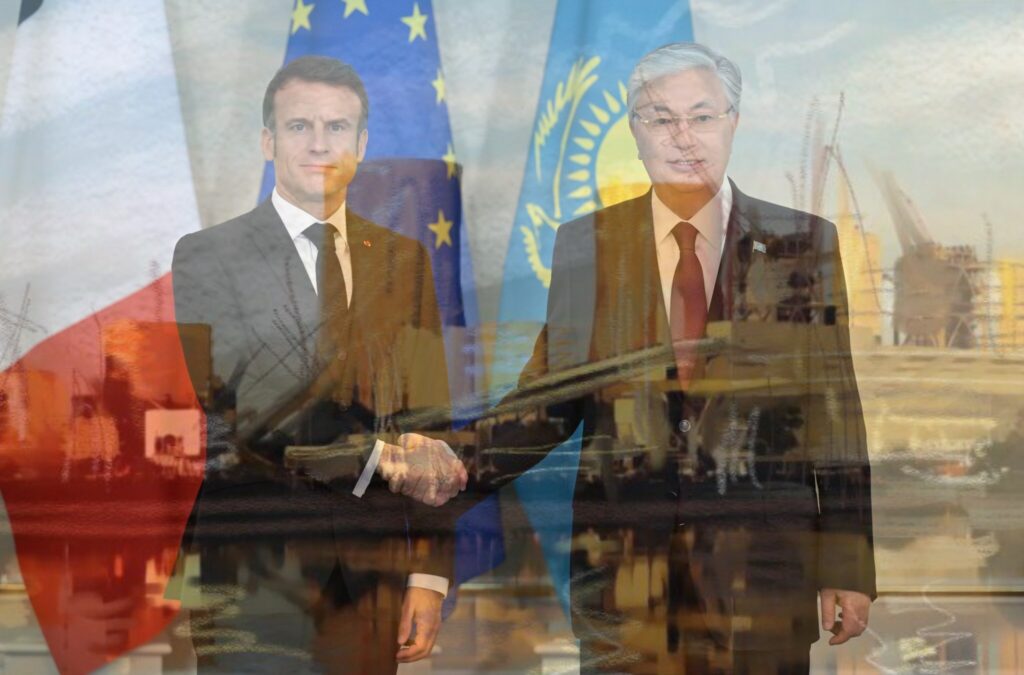
After the bilateral talks, Tokayev and French President Emmanuel Macron issued a joint statement.

“This visit is significant for us. France is a close and reliable partner of Kazakhstan in the European Union. For 34 years, our relations have acquired a strategic character. Astana and Paris have established a political dialog based on mutual understanding at all levels. Ties in trade and economic, investment, cultural, and humanitarian spheres have been strengthened; a clear legal framework has been formed. Interaction within the framework of international organizations has expanded. I am confident that our partnership, based on unshakable friendship and mutual support, will be successful in the future,” Tokayev said.

Both parties stated that they consider it necessary to develop trade and economic cooperation.

“Last year, the two countries’ trade turnover amounted to $4.2 billion. And this year, we reached this figure in 9 months. France ranks sixth in terms of investment in our country. French companies, including Alstom, Total Energies, Air Liquide, Orano, Vicat, Danone, and Lactalis, have invested heavily in Kazakhstan, reaching about $19.5 billion. Cooperation in the oil and gas, mining, industrial, construction, aviation, engineering, and health care sectors is being strengthened,” the Kazakh president said.

In addition, Tokayev met in Paris with a potential supplier of nuclear technology for the construction of nuclear power plants, the CEO of Électricité de France (EDF), Luc Remona.

According to the official website of the President of Kazakhstan, Akorda, “The French company is on the short list of potential suppliers of nuclear technology for constructing nuclear power plants. The country is considering the establishment of an international consortium as one of the potential models for the realization of this crucial project.”

President Tokayev also participated in an investment roundtable attended by the heads of France’s largest companies. “We are pleased to be one of France’s main trade, economic, and investment partners in Central Asia. Kazakhstan now accounts for more than 80% of France’s trade with the region. This year, bilateral trade volume has increased by 45%,” Tokayev said.

The President also outlined promising areas of economic ties for the two countries.

“Energy has always been a key sector of our cooperation. Astana is a major supplier of oil and uranium to the European Union and is ready to support France’s energy sovereignty further. We expect an intensified presence of French industry in Kazakhstan, with which we associate the introduction of advanced technologies in our production sphere. Given that our country is the largest uranium producer in the world, and France has extensive experience in the nuclear industry, we could cooperate in civilian nuclear energy,” Tokayev stated.

Tokayev emphasized that massive international companies are interested in implementing large-scale wind, solar, and hydropower projects in Kazakhstan. For example, Total Energies plans to invest $1.1 billion in a one-gigawatt wind farm.

According to the Kazakh president, cooperation between the republic and EU countries is gaining momentum. “As global demand for critical raw materials will quadruple by 2040, Kazakhstan can become a reliable supplier for French and European industry. We currently mine 19 of the 34 critical raw materials vital to the EU economy, including titanium, copper, magnesium, and scandium. According to forecasts, Kazakhstan’s subsoil also contains rich deposits of such rare-earth minerals as lithium, beryllium, and tantalum, which are in demand in virtually all high-tech and environmentally friendly industries,” Tokayev said.

The president also believes that developing the agro-industrial complex and cooperation in this area is extremely important in ensuring global food security.

Kazakhstan is among the ten largest grain exporters, supplying more than 80 countries with eight million tons of wheat and two million tons of flour. Thanks to a rich harvest this year, its grain export potential has increased to 12 million tons. Tokayev invited French partners to realize joint investment and technological projects in livestock breeding and seeds of grain crops. He also invited Macron to pay a state visit to Kazakhstan next year, and invited French entrepreneurs to participate in the International Forum in Astana, which will be held in May 2025. Following the meeting, the two countries’ leaders adopted a joint declaration on a strategic partnership.

Other documents were also signed, including a partnership agreement on strategic cooperation between Samruk-Kazyna JSC and Société Generale S.A. and an agreement on strategic cooperation on 6-axle electric locomotives between the Kazakhstan’s Temir Zholy JSC and Alstom Transport SA. In Paris, delegation representatives signed 36 documents, including 14 commercial ventures worth $2.2 billion.

On the eve of his visit to Paris, Tokayev published an article for the French newspaper Le Figaro, in which he explained the country’s position on global challenges and prospects for cooperation with France and the EU. In Tokayev’s opinion, one of the critical aspects of the new reality is recognition of the growing role of the group of middle powers, which includes Kazakhstan.

In the article, Tokayev recalled that Kazakhstan has long had an active foreign policy, promoting initiatives worldwide. In particular, the republic has promoted interstate negotiations, providing a platform for peaceful dialogue between Azerbaijan and Armenia and discussing the Syrian crisis and the Iranian nuclear program. Kazakhstan regularly organizes congresses of leaders of world religions, supporting interfaith dialogue. These initiatives, Tokayev said, unite the values of peace and solidarity that Kazakhstan shares with France.

The president also highlighted the Middle Corridor project, which links Europe and Asia through Kazakhstan and the Caspian Sea. This transportation route will strengthen economic ties between the regions and increase the energy security of Europe, including France.

New Guzor to Beinau Highway Brings Uzbekistan Closer to Europe

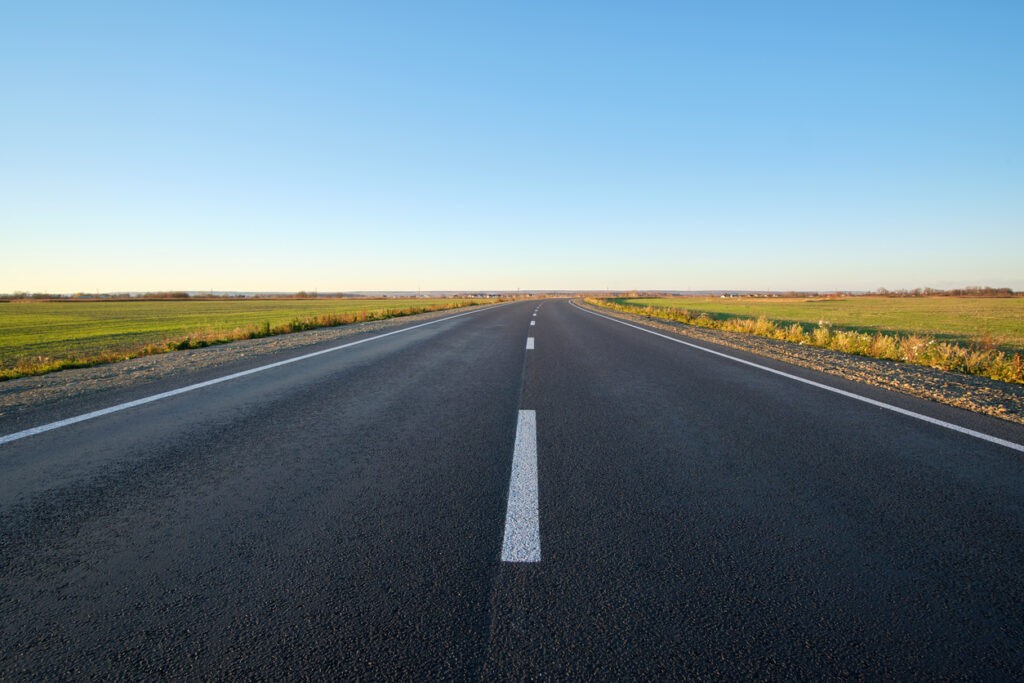
Uzbekistan has completed a new 240-kilometer section of the A380 highway connecting the cities of Guzor, Bukhara, Nukus, and Beineu, passing through the Kungirot district of Karakalpakstan. The road, built with a cement-concrete coating, is a strategic road connecting Uzbekistan with Europe.

The Asian Development Bank allocated $274.9 million to the construction, while Uzbekistan contributed $108.5 million. Turkish and Azerbaijani companies managed the first 120 kilometers of the road, with Chinese companies managing the rest.

The highway aims to boost the capacity and quality of international and national highways, cutting road maintenance costs by 2.5 times. This new road will reduce travel time by 2.2 times, double transit traffic, cut fatal accidents by half, and contribute to regional GDP growth. It will also reduce Uzbekistan’s international transport distance to 1,000 kilometers, lowering shipping costs by 25%.

New trade and service centers are planned alongside the highway, initially creating 2,000 jobs and an additional 5,000 expected. This development is projected to boost Karakalpakstan’s annual transit and service revenue by $200 million and exports by at least $300 million.

Kazakhstan’s Tokayev in France: It’s All About Nuclear Energy

For France – a country that gets around 70% of its electricity from nuclear energy – Kazakhstan’s decision to build its first nuclear power plant presents an ideal opportunity to strengthen economic ties with the Central Asian state. For Astana, potential cooperation with French nuclear corporations could help reduce dependence on Russia and its State Nuclear Energy Corporation, Rosatom. But will things really go that smoothly?

In November 2023, following the meeting between Kazakh President Kassym-Jomart Tokayev and his French counterpart Emmanuel Macron, in Astana, it became clear that, for Paris, establishing a strong nuclear partnership with the largest Central Asian nation was the top priority with regard to Kazakhstan. The following year, Tokayev flew to Paris for another round of talks with Macron. Reports suggest that nuclear cooperation was once again one of the key topics the two leaders discussed.

On November 4, a day prior to the Macron-Tokayev summit, French and Kazakh officials signed 24 documents on cooperation worth $2 billion. Unsurprisingly, energy was a central focus. Kazakhstan agreed to establish closer ties with two French nuclear giants: Orano and Électricité de France (EDF).

According to Gabidulla Osspankulov, Chairman of the Investment Committee of the Kazakh Foreign Ministry, Orano’s great experience in uranium extraction makes it a key partner for Astana. That is why the former Soviet republic aims to use the company’s technologies and experience in uranium production in Kazakhstan. Ospankulov also expects both Orano and EDF to be part of a consortium that will build the nuclear power plant in the Central Asian country.

Paris, on the other hand, is likely seeks to not only be involved in the construction of the nuclear facility, but also to get Kazakhstan’s spent nuclear fuel for reprocessing. In exchange, Astana – possibly the world’s largest uranium producer – can increase its uranium exports to France. From the French perspective, such an arrangement would be very beneficial, especially after Niger’s military government revoked Orano’s permit to operate at its Imouraren uranium mine – one of the biggest in the world. The problem, however, lies in geography and logistics.

On the eve of the Macron-Tokayev summit, the French train manufacturer Alotom and the Kazakhstan Temir Zholy Electric Locomotive Assembly Plant signed a deal on the supply of 117 French-made freight electric locomotives, weighing up to 9,000 tons, to the former Soviet republic. Will they be used for the transport of Kazakh uranium to France?

Russia and China, as the Central Asian nation’s giant neighbors, could easily, under any pretext, block the transport of Kazakh nuclear materials through their territories to Europe. Rail remains the dominant mode of transport for Kazakhstan’s uranium exports, but its reliance on Russian and Chinese routes poses a strategic challenge for Astana.

To avoid using the two nations’ railways, Astana would have to boost uranium and potentially also spent nuclear fuel exports via the Caspian Sea Route, primarily through the Middle Corridor. It is, therefore, no surprise that modernization of this network remains Kazakhstan’s primary objective. But without reaching a “nuclear deal” with Russia and China, this route could also become problematic, as Kazakhstan risks worsening relations with Moscow and Beijing.

Quite aware of that, Tokayev stated before his trip to France that the first Kazakh nuclear power plant “must be built by an international consortium.” In other words, he likely aims to apply his well-known “multi-vector” foreign policy to the construction of the nuclear facility in Kazakhstan. That, however, does not mean that Astana will hesitate from strengthening economic and energy cooperation with Paris.

As Tokayev wrote in his article for the French Le Figaro newspaper, “after it decided to build the first nuclear power plant, Kazakhstan can support the French nuclear industry while retaining its status as a reliable partner.” That is exactly what France, which recently reached similar arrangements with Serbia – another country Tokayev is expected to visit in the near future – hopes to achieve.

While in Kazakhstan France eyes uranium, in the Balkan nation it aims to get lithium and other raw materials, and potentially to build small modular nuclear reactors. More importantly, Belgrade has recently signed a deal with Paris for the purchase of twelve French-made Rafale jets, although without the Meteor missiles. Interestingly enough, in November 2023, following the summit between Macron and Tokayev in Astana, French media reported that Kazakhstan also eyed Rafale jets.

Indeed, there are similarities between the deals France reached with Serbia and those it hopes to sign with Kazakhstan. But there are significant differences, too. Serbia, unlike Kazakhstan, is not Russia’s ally in the Collective Security Treaty Organization (CSTO), and it does not share a border with the Russian Federation. Also, the Southeast European nation is firmly in the Western geopolitical orbit, which gives Moscow very little room for maneuver there.

Kazakhstan’s proximity to both Russia and China forces the authorities in Astana to maintain a delicate balance, avoiding confrontation with its neighbors while developing closer economic and energy ties with the West. But will Moscow and Beijing view Astana’s nuclear ambitions favorably?

Germany Deports Tajik Political Activist Dilmurod Ergashev

Germany has decided to deport Dilmurod Ergashev, a political activist and member of the Movement for Reforms and Development of Tajikistan, who had applied for asylum in Germany. This is despite requests from international human rights organizations such as Human Rights Watch and the Helsinki Committee not to deport Ergashev because of the risk of him being tortured in Tajikistan.

Friends of the activist said Ergashev was told to report to the deportation center and prepare to leave. The activist, who has lived in Germany for the past 13 years, was detained in the town of Kleve on October 28 and taken to the administrative court, where his deportation was ordered.

According to associates, the court should have considered that another administrative court was still considering Ergashev’s application for political asylum. Sharofiddin Gadoev, leader of the Movement for Reforms and Development, confirmed that the deportation process has already begun. Ergashev is likely to be sent back to Tajikistan on November 6.

“The decision to deport Ergashev strengthens the authoritarian system in Tajikistan and increases fear among political activists,” Gadoev said.

He said there may be an agreement between Germany and Tajikistan to deport activists forcibly. Ergashev’s lawyer has filed an appeal with the Supreme Court but is unavailable for comment.

Dozens of Tajik citizens have moved to Europe in recent years, many of whom disagree with their country’s policies. Germany has previously deported activists such as Abdullo Shamsiddin and Bilol Kurbonaliev, who were sentenced to long prison terms upon their return home. Also extradited from Austria to Tajikistan in 2020 was Hizbullo Shovalizoda, a member of the banned Islamic Renaissance Party of Tajikistan. He has been sentenced to 20 years in prison.