• KGS/USD = 0.01144 0%
  • KZT/USD = 0.00194 -0%
  • TJS/USD = 0.10877 -0%
  • UZS/USD = 0.00008 0%
  • TMT/USD = 0.28571 0%
  • KGS/USD = 0.01144 0%
  • KZT/USD = 0.00194 -0%
  • TJS/USD = 0.10877 -0%
  • UZS/USD = 0.00008 0%
  • TMT/USD = 0.28571 0%
  • KGS/USD = 0.01144 0%
  • KZT/USD = 0.00194 -0%
  • TJS/USD = 0.10877 -0%
  • UZS/USD = 0.00008 0%
  • TMT/USD = 0.28571 0%
  • KGS/USD = 0.01144 0%
  • KZT/USD = 0.00194 -0%
  • TJS/USD = 0.10877 -0%
  • UZS/USD = 0.00008 0%
  • TMT/USD = 0.28571 0%
  • KGS/USD = 0.01144 0%
  • KZT/USD = 0.00194 -0%
  • TJS/USD = 0.10877 -0%
  • UZS/USD = 0.00008 0%
  • TMT/USD = 0.28571 0%
  • KGS/USD = 0.01144 0%
  • KZT/USD = 0.00194 -0%
  • TJS/USD = 0.10877 -0%
  • UZS/USD = 0.00008 0%
  • TMT/USD = 0.28571 0%
  • KGS/USD = 0.01144 0%
  • KZT/USD = 0.00194 -0%
  • TJS/USD = 0.10877 -0%
  • UZS/USD = 0.00008 0%
  • TMT/USD = 0.28571 0%
  • KGS/USD = 0.01144 0%
  • KZT/USD = 0.00194 -0%
  • TJS/USD = 0.10877 -0%
  • UZS/USD = 0.00008 0%
  • TMT/USD = 0.28571 0%
16 December 2025

Tajikistan Court Issues Harsh Sentences to Opposition Group 24 Leader and Associate

A Dushanbe court has handed down sentences to two opposition activists: Sukhrob Zafar, leader of the banned Group 24 (G24), and his associate Nasimjon Sharifov. Zafar was sentenced to 30 years and Sharifov to 20 years in prison. The verdict was announced on October 10 behind closed doors in the Dushanbe pre-trial detention center, and according to Radio Ozodi sources, it fully complies with the state prosecution’s request. Official structures still need to confirm this information.

Representatives of G24 say the sentences relate to the charges of “calls for violent change of the constitutional order” spread through the Internet. They consider these accusations unfounded and call the case politically motivated. In their opinion, the trial was conducted under pressure from the authorities and was a manifestation of Emomali Rahmon’s government’s repressive policy.

Both activists previously lived in Turkey, where they were hiding from the Tajik authorities. Suhrob Zafar had been there since 2014 and had received repeated threats. He was detained several times at Tajikistan’s request but was soon released. Sharifov had also been living in Turkey since 2015 and was detained three times but released each time. In March 2024, they mysteriously disappeared, and only in August it became known that they were taken to Dushanbe, where an investigation against them began.

The trial, according to G24 representatives, was yet another example of human rights violations and political repression. The organization claims that the trial was held under tremendous pressure and calls the authorities’ actions an act of suppression of dissent. Supporters believe that the repression of activists continues as part of the anti-opposition policy that the Tajik authorities have been pursuing for years.

G24 is an opposition organization founded in 2012 by businessman Umarali Kuwwatov, who left Tajikistan after conflicts with the authorities. The movement opposes President Emomali Rahmon’s policies, accusing him of corruption and authoritarianism. In 2014, Tajikistan’s Supreme Court declared the organization extremist after calls for protests and banned its activities, including websites and publications. The group’s founder was killed in 2015 in Turkey, raising suspicions of involvement by Tajik authorities.

Kyrgyzstan Removes Restrictions on Sale of Gold

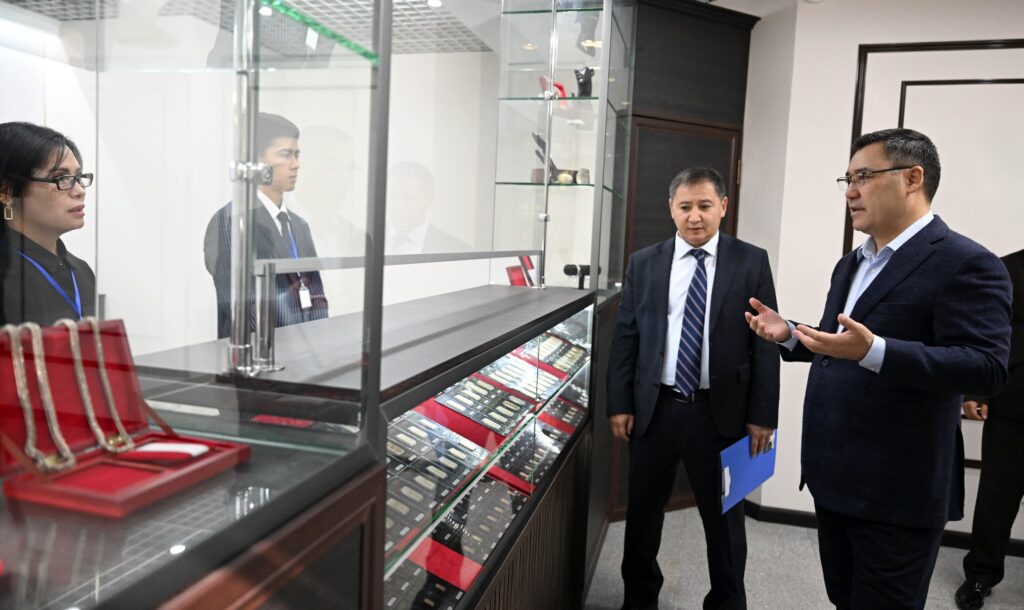
In early September, a state-owned store selling gold bars opened in Bishkek where gold can be bought without the presentation of a passport.

Kyrgyzaltyn OJSC has already reported record sales, topping 50 million KGS ($585 thousand), and providing the store with a net income of 3 million KGS ($35 thousand).

Changes in the law which previously allowed gold bars to only be bought in limited amounts through the National Bank of Kyrgyzstan, were instigated by President Sadyr Japarov of Kyrgyz, who explained:

“The National Bank does not sell bullion without a passport. Businessmen and rich people approached me –  worried that if they started showing their documents – the whole of Kyrgyzstan would know about it, including robbers. Businessmen said they would have to stay in their houses and guard the gold,”

Having lifted restrictions, Sadyr Japarov called on citizens to buy domestic gold, recommending it as a reliable and profitable investment.

The Kyrgyzaltyn store sells gold bars weighing from 1 to 100 grams, each carrying an individual QR code confirming the gold’s origin. Prices for the sale and repurchase of gold are set daily, based on London Bullion Exchange quotations.

Kyrgyz economists believe that the growth of investment in gold indicates an increase in confidence in this asset.

“In Kyrgyzstan, this trend is influenced by several factors. Global instability and fluctuations in currency markets make people look for more reliable assets. Declining yields on bank deposits are also pushing for alternatives. In addition, inflation expectations encourage people to convert their savings into gold,” economist Nurgul Akimova told The Times of Central Asia.

Kyrgyzstan has about 380 gold deposits, the largest of which is Kumtor in Issyk-Kul Oblast. The republic’s mining sector produced over 20 tons of gold in 2023.

Kuwaiti Companies Invited to Participate in Privatization of State-Owned Companies in Uzbekistan

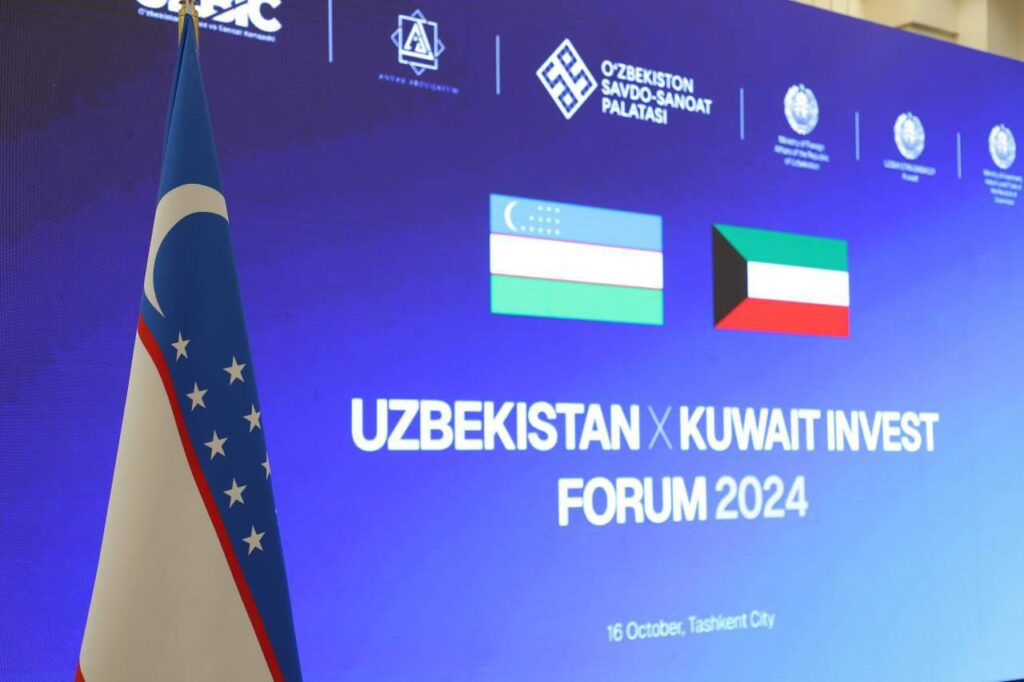
At a business forum dedicated to strengthening ties between Uzbekistan and Kuwait, in Tashkent on October 16, Deputy Minister of Investment, Industry, and Trade of Uzbekistan Akram Aliyev noted the importance of partnership with Kuwaiti businessmen, especially in healthcare, agriculture, and tourism.

The forum focused on prospects for joint projects mining, energy, textile industry, and logistics. Proposals were also mooted for Kuwaiti investors to participate in the privatization program of over 1,000 state-owned companies in Uzbekistan and improve logistics infrastructure to turn Central Asia into an international trade hub.

Over recent years, there have been several developments in cooperation between Uzbekistan and Kuwait. At an investment and trade forum hosted by Kuwait in August and attended by business and ministry representatives from both countries, Uzbek Foreign Minister Bakhtiyor Saidov encouraged Kuwaiti investors to explore prospects for partnership in agriculture, light industry, medical products, and renewable energy. The foreign ministers then met again, in New York in September 2024, to discuss further steps to strengthen bilateral cooperation, including the establishment of joint trade committees and new initiatives in logistics and infrastructure.

Archaeologists unlock Secrets of Ancient Civilization in Turkmenistan

Large-scale archaeological research continues in the Karakum desert at the ancient site of Gonur-Depe. This unique monument, discovered in 1972, is the key to unlocking the mysteries of the ancient civilization Margush, which flourished in the delta of the Murghab River about four millennia ago.

The Turkmen-Russian Margush Archaeological Expedition, operating under the international agreement, is nearing the end of another field season. The scientists uniting specialists from the Institute of Ethnology and Anthropology of the Russian Academy of Sciences, the Institute of History of Material Culture of the Russian Academy of Sciences, and Turkmen researchers continue painstaking work to study and describe numerous artifacts found at this ancient settlement.

The excavation season brought some interesting findings. Among them, a miniature cylindrical seal made of talc-agalmatolite, a fragment of a clay bulla with imprints of a snake-shaped seal, and a unique clay lid from a vessel with imprints of a rope and a cloisonné seal stands out.

Of particular interest are sets of semi-precious stone beads found in five burials. The skill of ancient jewelers has astonished modern researchers—some lapis lazuli beads have a diameter of only 1 millimeter.

Archaeologists have also conducted research aimed at studying the technologies of ancient builders. For the first time, a gypsum kiln was described in detail, making it possible to reconstruct the technological process of producing building materials in ancient Gonur-Depe.

The results of these studies will be presented at an international scientific conference in Ashgabat, where scientists from different countries will discuss the discoveries and their significance as regards understanding the history of the ancient civilization of Margiana.

The discoveries made in Gonur-Depe not only shed light on the life of the ancient inhabitants of these places but also emphasize the importance of international cooperation in archaeology and history. Each discovery brings us closer to understanding the rich cultural heritage left by an ancient civilization in the heart of the Karakum desert.

Decrease Expected in Central Asia’s Economic Growth

According to the World Bank, economic growth in Europe and Central Asia (ECA) is expected to slow to 3.3% this year, down from 3.5% in 2023. This is much lower than the average growth of 4.1% seen between 2000 and 2019, and is not enough for many of the region’s middle-income countries to become high-income.

Growth in the region has mainly been driven by an increase in people’s spending, rising wages, and government policies, while demand from outside the area, especially from the EU, remains weak.

Although the average yearly inflation rate had dropped to 3.6% by August 2024, from 4.6% at the end of last year, it is still higher than the 2.7% average seen in 2018-2019. Prices of goods have grown more slowly in most countries, but prices for services remain high because of rising labor costs. Some central banks have lowered interest rates as inflation has slowed, but are cautious. Government spending has not been reduced in most of the region’s countries and indeed, has dramatically increased, especially on public wages, pensions, social benefits, and defense.

The economies of Central Asia are expected to grow by 4.3% in 2024; slower than the 5.6% growth seen last year. In Kazakhstan, growth is predicted to slow to 3.4%, down from 5.1% in 2023, mainly because the expansion of the Tengiz oil field is taking longer, and the government is spending less. For other Central Asian countries, growth estimates have been raised by an average of nearly one percentage due to increased consumer spending, more government spending, and ongoing support from money sent home by workers in Russia and trade with Russia. However, despite these improvements, the growth per capita GDP (the average income per person) in Central Asia is only expected to be 2.7% this year, making it the slowest in the region, apart fromTurkey.

The Central Asian sub region, with growth expected at 5%, will outpace all other sub regions in 2025. This is driven primarily by renewed strong growth in Kazakhstan amid rising oil production. However, growth in the rest of Central Asia is projected to slow as trading and remittance flows from Russia normalize.

The lowest median consumer price growth rate was recorded in the South Caucasus, at 1.5% year-on-year in August 2024. In contrast, Central Asia had the highest median consumer price inflation rate, at 6.1%. This rate reflects 10% inflation in Uzbekistan, driven by removing energy subsidies in May 2024.

Russia Floats Idea of Help from Kazakh Airlines

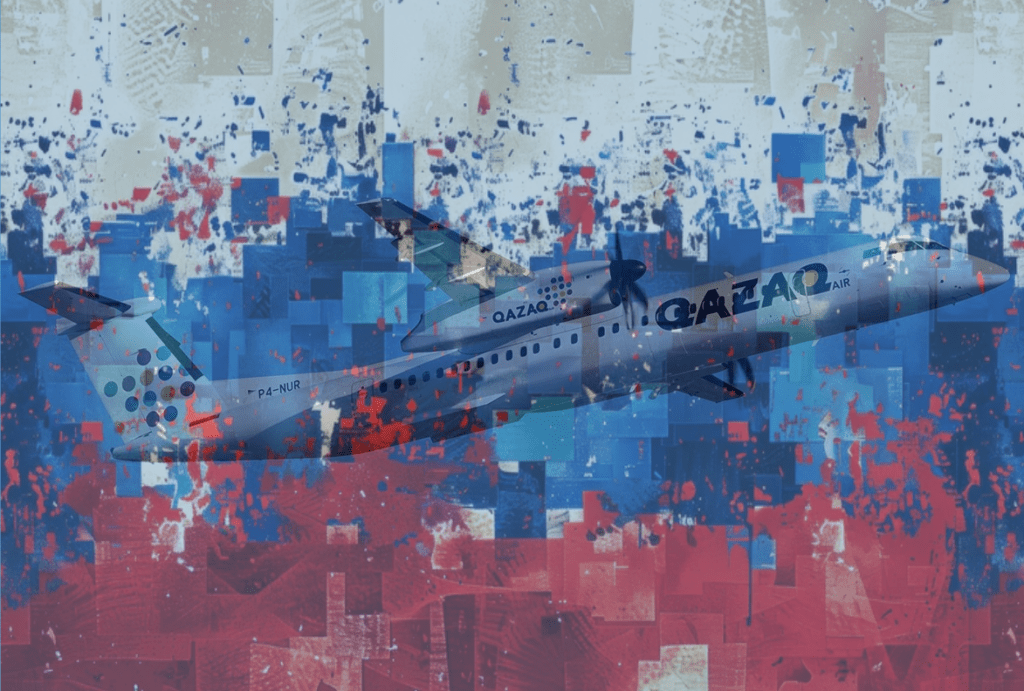
Russia is talking to Kazakhstan and other “friendly countries” about the possibility of foreign airlines flying domestic routes inside Russia, according to Russian state news agency Tass.

The report comes as Russia’s civil aviation industry struggles under the impact of Western sanctions that were implemented after Russia’s full-scale invasion of Ukraine in early 2022. Russian Transport Minister Roman Starovoit did not mention the sanctions in comments that were reported by Tass this week, but he referred generally to a global shortage of aircraft.

“We are negotiating with friendly countries,” Starovoit said to journalists at a forum in Yekaterinburg, Russia. “For example, we are negotiating with Kazakhstan.”

The minister, who took office this year, said Kazakhstan had experienced a 35% increase in “aviation mobility” this year.

“The fact is that there is currently a shortage of aircraft all over the world,” Sarovoit said, according to Tass. “And we see that against the backdrop of growth in transportation in foreign countries, the shortage of aircraft leads to a deficit of them, and it is difficult for other countries to solve these problems.”

He was referring to a process called cabotage, under which an aircraft registered in one country is used for transportation from one point to another within another country. It is unusual in the case of commercial aircraft because countries want to boost their domestic airlines and markets, though the rules can be more relaxed for some private or business aircraft.

Russian airlines have traditionally relied on Western aircraft and were vulnerable to sanctions aimed at depriving them of spare parts and supplies. Western companies had demanded that Russia return hundreds of leased aircraft because of the war, but Russia refused. The industry is heavily reliant on state support to keep it going.

“Russian aviation, disconnected from suppliers and from experience and knowledge transfer networks, will likely survive, but increasingly as a stand-alone operation,” Anastasia Dagaeva wrote in a March blog post for the Kennan Institute, a research center on Eurasia affiliated with the Washington-based Wilson Center.

In contrast, civil aviation in Kazakhstan has been experiencing considerable growth and the Central Asian country is a more popular destination for transit flights because of restrictions affecting Russian airspace. Though the Kazakh industry faces its own challenges, including a shortage of staff.