• KGS/USD = 0.01144 0%
  • KZT/USD = 0.00215 0%
  • TJS/USD = 0.10456 0%
  • UZS/USD = 0.00008 0%
  • TMT/USD = 0.28490 0%
  • KGS/USD = 0.01144 0%
  • KZT/USD = 0.00215 0%
  • TJS/USD = 0.10456 0%
  • UZS/USD = 0.00008 0%
  • TMT/USD = 0.28490 0%
  • KGS/USD = 0.01144 0%
  • KZT/USD = 0.00215 0%
  • TJS/USD = 0.10456 0%
  • UZS/USD = 0.00008 0%
  • TMT/USD = 0.28490 0%
  • KGS/USD = 0.01144 0%
  • KZT/USD = 0.00215 0%
  • TJS/USD = 0.10456 0%
  • UZS/USD = 0.00008 0%
  • TMT/USD = 0.28490 0%
  • KGS/USD = 0.01144 0%
  • KZT/USD = 0.00215 0%
  • TJS/USD = 0.10456 0%
  • UZS/USD = 0.00008 0%
  • TMT/USD = 0.28490 0%
  • KGS/USD = 0.01144 0%
  • KZT/USD = 0.00215 0%
  • TJS/USD = 0.10456 0%
  • UZS/USD = 0.00008 0%
  • TMT/USD = 0.28490 0%
  • KGS/USD = 0.01144 0%
  • KZT/USD = 0.00215 0%
  • TJS/USD = 0.10456 0%
  • UZS/USD = 0.00008 0%
  • TMT/USD = 0.28490 0%
  • KGS/USD = 0.01144 0%
  • KZT/USD = 0.00215 0%
  • TJS/USD = 0.10456 0%
  • UZS/USD = 0.00008 0%
  • TMT/USD = 0.28490 0%

Does the European Parliament Judge Central Asia Fairly?

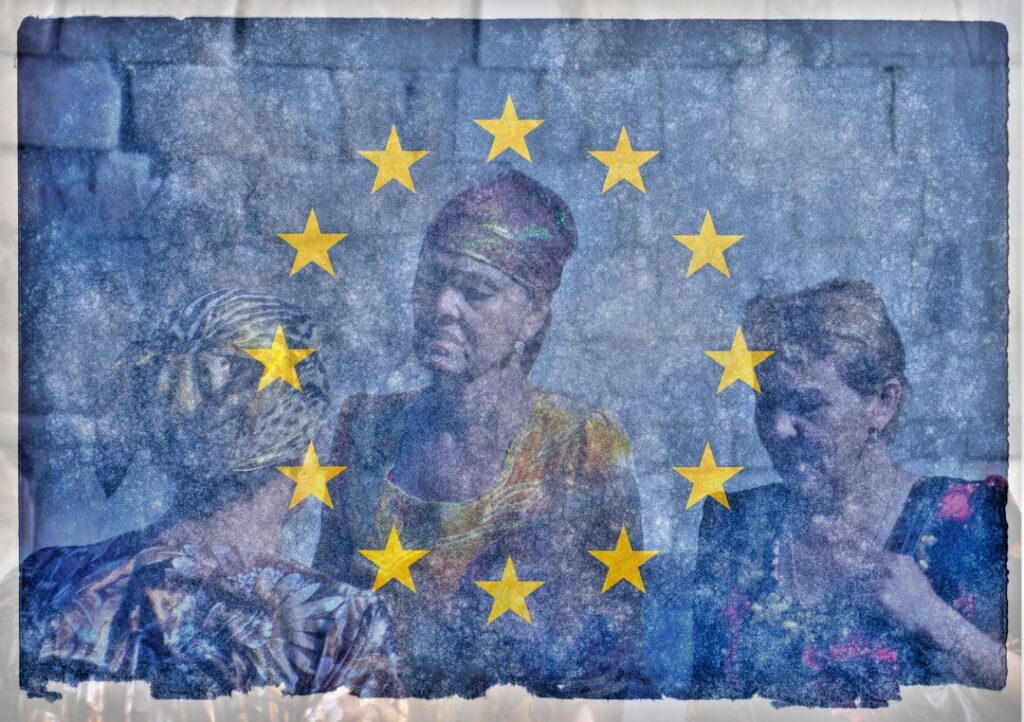
In 2024, European Parliament (EP) resolutions on Central Asia emphasized its increasing significance in a world that is being reshaped by Russia’s war on Ukraine and China’s growing assertiveness. They focused on strengthening the EU’s partnerships with Central Asia while seeking to advance democratic values and human rights. These Enhanced Partnership and Cooperation Agreements aim to support economic reforms, foster sustainable development, and encourage regional cooperation. At the same time, reflecting the EU’s strategic focus on stability and resilience in the region, the EP’s resolutions urged the Central Asian states to decrease their dependency on Russian energy and avoid facilitating sanctions evasion.

For the Central Asian countries, all these initiatives present opportunities to address pressing challenges and pave the way for growth. Advancing democratic governance and protecting fundamental rights, for example, can foster more inclusive and stable societies. Deeper engagement with the EU also offers access to advanced technologies and investments (as well as global markets), which are necessary for innovation and infrastructure upgrades. Likewise, the diversification of energy sources enhances regional self-reliance, reducing vulnerabilities that are tied to over-dependence on a single partner. Alignment with EU priorities, including resistance to autocratic pressures, gives Central Asia a better chance to develop its resilience and interconnected future.

Some voices in the region, however — particularly among government officials and more traditionally-minded citizens — view the European Parliament’s 2024 resolutions as overly critical, indeed influenced by special interests that fail to take into account the region’s unique challenges and priorities. From a Central Asian perspective, the criticisms contained in the EP’s resolutions lack essential context, focus narrowly on perceived shortcomings, and fail to give adequate consideration to the complex situation underlying governmental decisions. Such a one-sided approach, they suggest, overlooks essential cultural, historical, socio-political, and geopolitical factors.

The result is a significant gap between the EU’s expectations on the one hand, and, on the other, what is reasonable to expect given the realities on the ground. The drafters of these documents often focus excessively on identifying deficiencies in democratic processes. They report violations without contextualizing the governments’ choices and often omit any mention of the views of the general public. The unfortunate consequence is that such criticisms vitiate good-faith attempts to build cooperation and partnership. The ideal becomes the enemy of the possible.

Most Europeans still have a poor understanding of Central Asia. Many MEPs lack the time or resources to grasp the region’s complexity. Instead, their decisions are too often informed by resolutions that are drafted by a small group of “experts”. The language of these resolutions often reflects the drafters’ personal biases, which in turn risk deforming Europe’s strategic relationships with the region.

A lack of proper scrutiny is all the more alarming in light of the Qatargate scandal, which exposed how state-funded lobbyists can distort human rights narratives to advance specific agendas. Maria Arena, the former head of the European Parliament’s Subcommittee on Human Rights (DROI), played a central role in shaping judgments on democratic practices in Central Asia, steering resolutions that serve as important points of reference for elaborating international policy. Her recent legal woes raise troubling questions about the impartiality and integrity of the decisions made under her leadership.

One example comes from Uzbekistan, which has faced understandable criticism from the European Parliament for not advancing LGBTQ+ rights, but which is a value that clashes with the country’s traditional values rooted in Islamic customs and strong family structures. Reforms like decriminalization could improve Uzbekistan’s international standing; however, they risk sparking a domestic backlash where resistance within public opinion remains high. Balancing global human rights demands with cultural identity requires culturally sensitive approaches that foster change whilst protecting traditions.

Another example is a recent resolution on Kazakhstan that criticizes the country for suppressing civil activists. Such criticism might be justified in certain cases, but the resolution neglects to mention that some of these activists are reported to have ties to a criminal organization responsible for embezzling over $8 billion from a Kazakhstani bank. Kazakhstan has repeatedly raised the point that political activism should not shield individuals from scrutiny over criminal allegations, but the EP has mainly ignored this. To say that this failure highlights a lack of nuanced understanding is an understatement.

Or take Kyrgyzstan‘s call for transparency in the foreign funding of social movements. This legitimately reflects concerns in Bishkek about external influence in domestic politics. It is true that this could be a pretext for targeting political opponents and democratic backsliding, but critics ignore the need for accountability of foreign involvement in internal affairs. Balancing these concerns involves ensuring transparency, but it should not negate informed concerns about the possible foreign funding of civil society activities.

In Tajikistan, the EP’s criticism of restrictions on religious freedoms arises from a genuine desire to promote democracy and safeguard human rights. This one-sided approach, however, overlooks the significant threat of religious extremism that looms over the entire region, and which is particularly pronounced in Tajikistan because of its proximity to Afghanistan. The EP may mean well, but the practical effect of its deliberations is reduced by its failure to recognize the very real security challenges the government in Dushanbe faces. Again, it is essential to be informed by a nuanced understanding of this balance, failing which the EP limits its possibilities for constructive engagement and sustainable reforms.

The votes of parliamentarians become predictable when they are presented with a binary choice between supporting or opposing democracy and human rights in Central Asia; yet superficial arguments — however well-meaning they may be — condition their choices. Disregarding the region’s unique challenges and distinct perspectives gives rise to an oversimplified approach that risks alienating crucial partners.

Forsaking one-sided narratives and developing a deeper understanding of regional complexities will enhance Europe’s effectiveness and constructive contribution to security and prosperity. If the EP truly wishes to support progress in Central Asia, it must avoid generalized cookie-cutter critiques. With the development of the Middle Corridor, Europe has the chance to become a trusted partner for the region. The EU has the capacity to foster genuine reform in the region while building robust cooperation, but it is not there yet. A more empathetic and tailored approach would assist this transformation.

With Russia Visit, Kazakh Team Wraps Up Study Tour For Nuclear Project

A Kazakh delegation has toured one of Russia’s main nuclear energy facilities, inspecting the turbine hall, laboratories and cooling systems of power units as it rates possible suppliers for the construction of Kazakhstan’s first nuclear power plant. Similar trips were made late last year to the other countries on Kazakhstan’s short list: South Korea, France and China. 

Kazakhstan will make a final decision on a supplier or consortium for the nuclear power plant project this year, the Ministry of Energy said, reflecting momentum since Kazakhstan approved the government-backed plan in a national referendum in October. Kazakhstan, the world’s top producer of uranium, wants to reduce reliance on coal, a major source of pollutants, and address electricity shortages as demand grows.  

Kazakh Energy Minister Almassadam Satkaliyev led a team that visited the Leningrad nuclear power plant near St. Petersburg on Tuesday, showing particular interest in VVER-1200 reactor technology, the flagship project of Rosatom, Russia’s state nuclear agency. 

“Today, we have completed our series of working visits aimed at studying the world’s best practices in nuclear energy,” Satkaliyev said, according to the ministry statement. He said the visit “provided us with an in-depth understanding of the technologies and safety measures that ensure environmental protection and the well-being of local residents.” 

The VVER-1200 reactor, a pressurized water reactor that uses so-called Generation III+ power units, is said to have high safety standards and its technology is being exported to countries including China, India, Egypt and Turkey. The technology incorporates lessons learned from the Fukushima nuclear accident in Japan in 2011, in which an earthquake and ensuing tsunami knocked out the plant’s energy supply. 

According to Rosatom, VVER-1200 safety systems allow the nuclear plant to operate in situations such as “earthquakes, floods, storm winds, hurricanes, snowfalls, tornadoes, low and high extremes of temperature, as well as such man induced events as aircraft crash (or impact from aircraft parts), air shock wave, fire, and flooding caused by water pipe breaks.”

The Leningrad plant has two VVER-1200 reactors and several older RBMK reactors, which have a graphite-moderated design that was upgraded after the RBMK reactor disaster at Chernobyl in 1986. Those older reactors are gradually being phased out at Leningrad.

Many Kazakh people are uneasy about nuclear power because of the legacy of the Semipalatinsk site, where decades of Soviet-era nuclear weapons tests led to health and environmental problems because of radioactive contamination. Ahead of last year’s “yes” vote in the referendum, the government argued that nuclear power would be a relatively clean, cheap – and safe – alternative to coal-fired plants.

Some analysts have warned of geopolitical complications for Kazakhstan in choosing foreign partners for its nuclear industry, including concerns about dependence on Russia, which is at war with Ukraine and currently under Western sanctions. But a Carnegie Politika commentary in October said Kazakhstan “has more agency today than at any previous point in negotiations” and could demand favorable terms for nuclear technology transfer, allowing it to build up the “localization” of its industry. 

By some estimates, if the nuclear plant construction goes ahead as scheduled, it could start operating in the early 2030s. Kazakh President Kassym-Jomart Tokayev has also suggested that more than one plant could be built. 

Silk Roads Exhibition: Beating Heart of the Ancient World

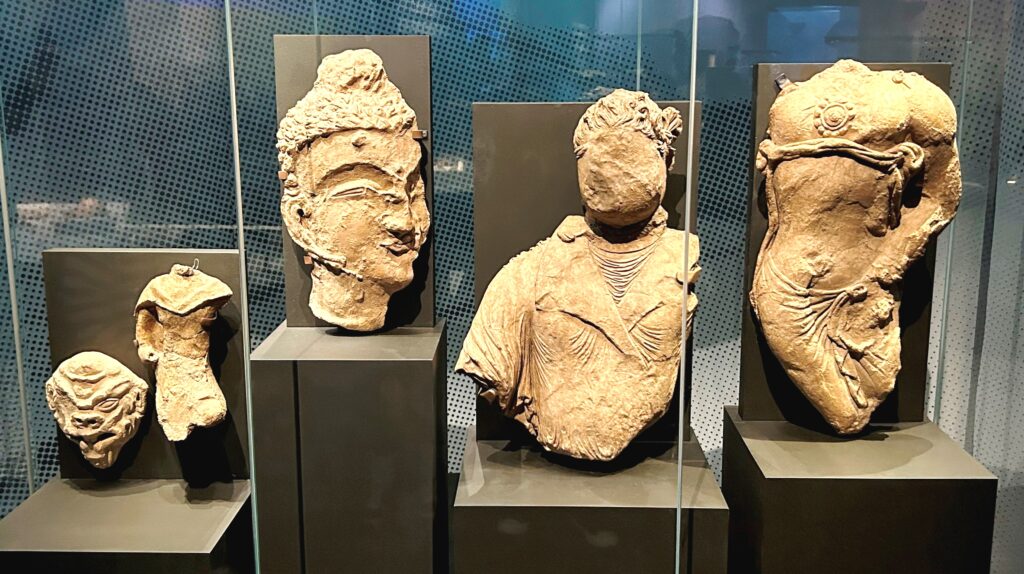
On a gloomy winter’s day, The Times of Central Asia visited the Silk Roads Exhibition at the British Museum. The sight of a significant queue wrapped around the museum for entry was startling. Once inside, the exhibit thronged with visitors snaking their way to peruse artifacts arranged by region and era. Concerned about blocking display views as you read descriptions? No need to worry — thick guidebooks with full narratives greeted you at the entrance to borrow during your visit.

The exhibition envisions the Silk Road as the beating heart of the ancient world, with arteries stretching across seas, mountains, and deserts. With over 300 artifacts spread across five geographical zones, it can be hard to know where to start. I observed a nearby gentleman in tweed who offered a simple tip: start with a place that interests you and go from there. Then I overheard that he was going to Cairo.

New partnerships with Uzbekistan’s Art and Culture Development Foundation (ACDF) and Tajikistan’s museums had seen fresh items loaned to the exhibit. These collaborations highlight Central Asia’s important role in this sweeping narrative, helping to connect the dots in this continent-spanning story.

Immersed in the culture and history, I couldn’t help but wonder — what did the audience think? After a few unsuccessful attempts, I spoke with an English visitor named Georgie Bennett.

Georgie Bennett visiting the Silk Roads Exhibition; image: TCA, Stephen M. Bland

TCA: What drew you here today?

I think the thing for me is I have a really poor knowledge and understanding of this bit of history. So, I heard the exhibition was on and some of my friends already booked tickets, I said yes, I’ll absolutely come along because… I wanted to learn more.

TCA: What’s the one item that’s caught your eye the most?

I really like the story of the silk princess; it was a very humanizing story about this lady who’s newly married and brings the knowledge of how to make silk to her husband’s kingdom… I feel like I’ve learned so much. I’m enjoying it, though I almost wish I had a notebook and pen because I’m getting a general impression without knowing any of the details.

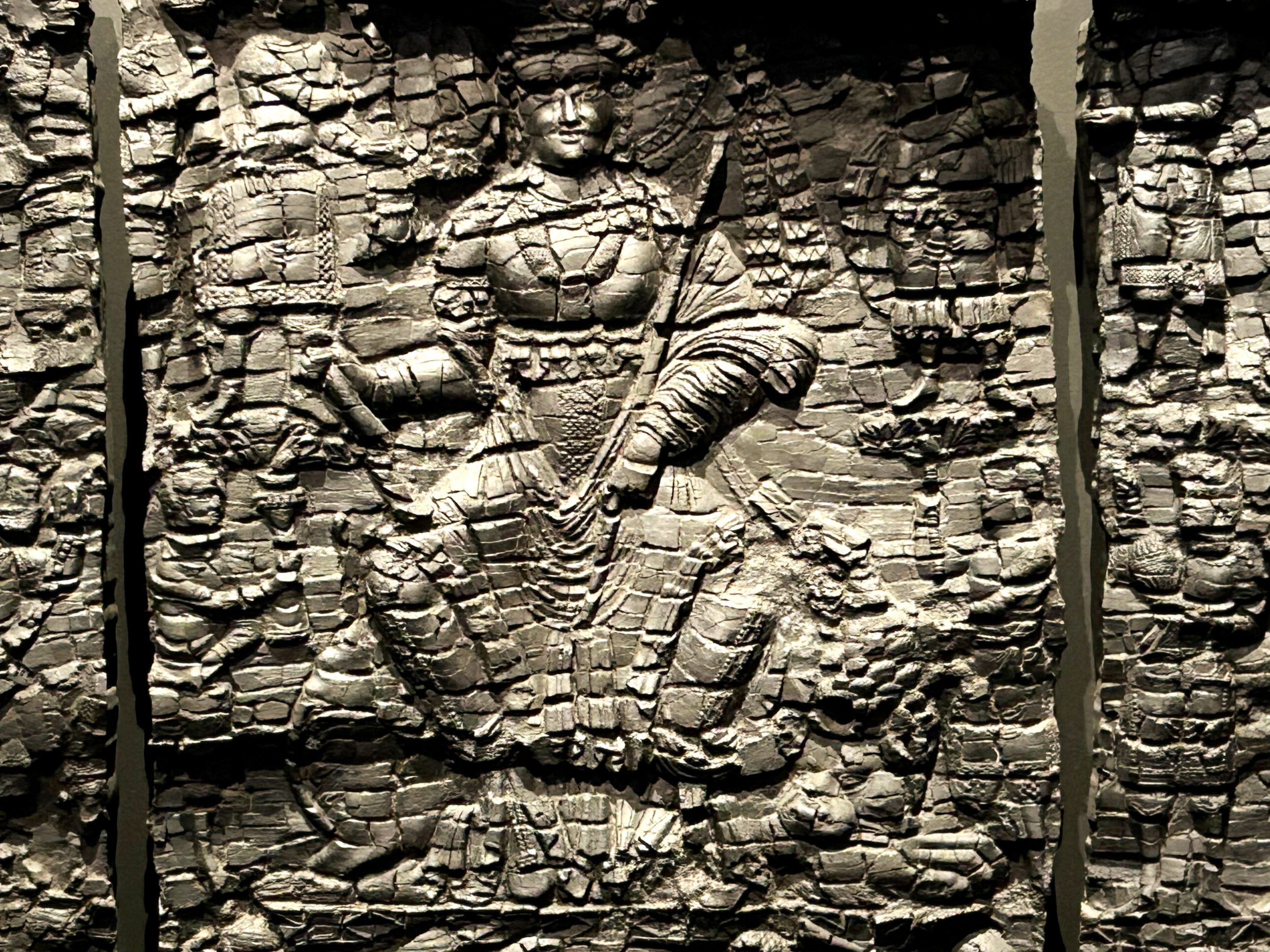
Charred wooden door panel from Kafir Kala, near Samarkand, Uzbekistan, circa AD 500, on loan from the State Museum reserve

The Times of Central Asia also spoke to one of the curators, Luk Yu-Ping to delve deeper into the Silk Road experience.

TCA: Globalism is considered a modern concept of interconnectivity, but looking at the vast connections and influence within the Silk Road Exhibition it’s implied that this concept may have been prevalent in the past along these trade routes. Could you expand on this?

This exhibition highlights the movement of people, objects, and ideas across Asia, Africa, and Europe during the period 500 to 1000 CE. The focus is not only on trade but also other ways of contact and exchange. Audiences might be surprised by how connected Afro-Eurasia was already during this period, centuries before the globalized world we live in today. It reminds us that humanity has a long history of making connections across different boundaries. While the span, speeds, and methods have changed, the act of connecting will continue to shape our present and future.

TCA: A highlight of the exhibition was its focus on how cultures mixed and exchanged ideas — that diversity and tolerance encouraged innovation. Which particular artifacts embody this concept?

A good example is ceramic production in Tang China and the Islamic world. The exhibition displays a rare blue-and-white dish, one of three from a 9th-century shipwreck found off the coast of Indonesia. It is believed that the ship was on its return journey from the ports of southern China to the Arabian Peninsula or Persian Gulf. The color palette and decoration on the dish are unusual for Tang Chinese ceramics. It shows potters in China experimenting with cobalt blue, probably imported from Iran, to cater to an export market.

At the same time, as more Chinese ceramics reached the Islamic world, local potters started to imitate the shapes and glazed white surfaces of these imported wares. This led to the development of an opaque white coating, which may be decorated with designs in cobalt blue pigment, also probably sourced from Iran, as seen in an example from Basra, Iraq. These wares demonstrate the two-way exchange between Chinese and Islamic ceramics.

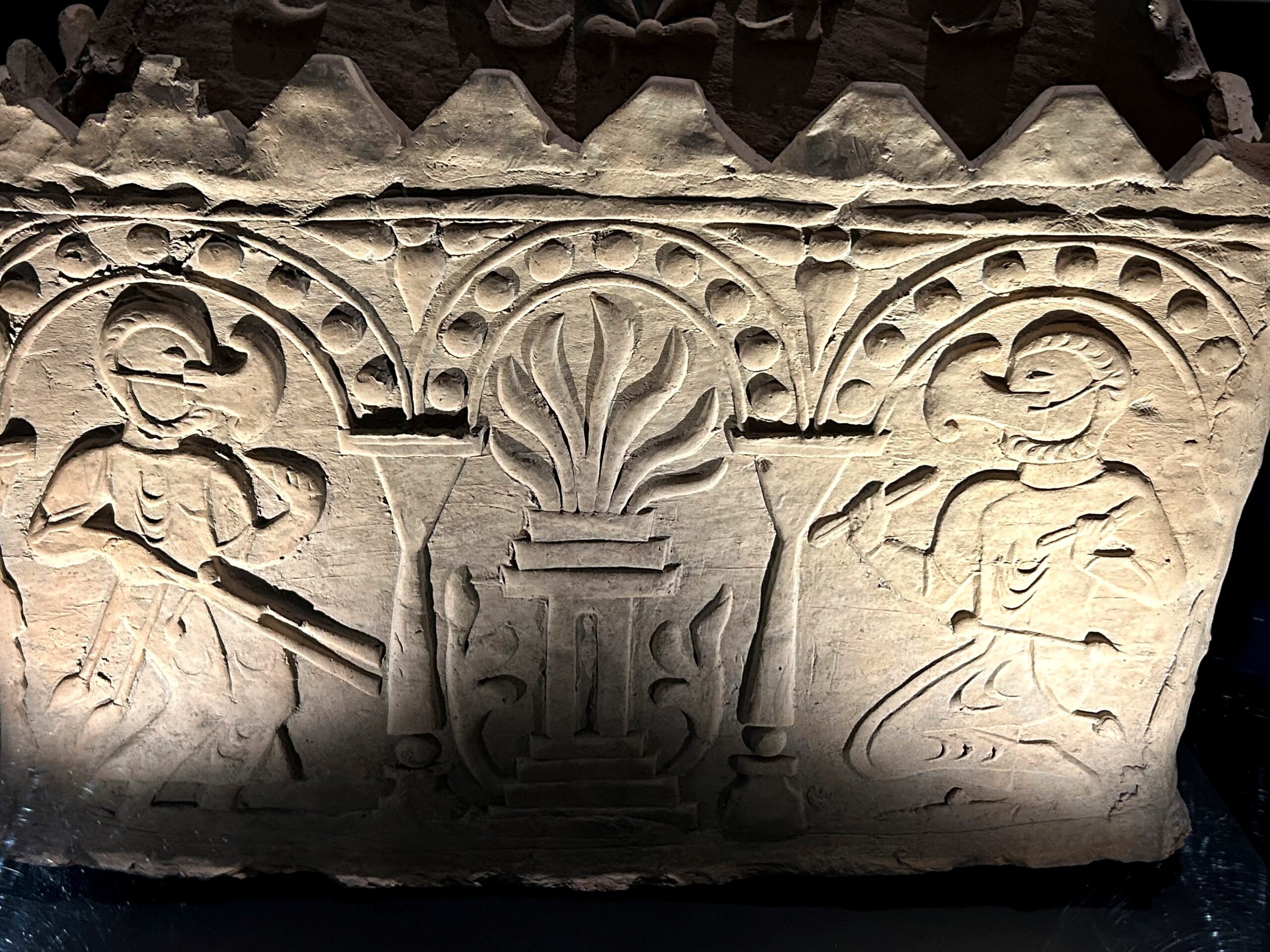
Zoroastrian clay ossuary, Mullah Kurgan, Samarkand region, Uzbekistan, circa AD 600-700, on loan from the State Museum reserve; image: TCA, Stephen M. Bland

TCA: The Silk Roads were not only about trade but also about cultural transformation. Religion was another product that was imported and carried along these routes. When it comes to Central Asia, is there a particular golden era or area linked with a religion or religious change?

The Sogdians, whose homeland was in present-day Uzbekistan and Tajikistan, practiced a local form of Zoroastrianism. The Zoroastrian religious iconography in Sogdiana was particularly rich and imaginative. The exhibition features a well-preserved ossuary from the Samarkand region, depicting Zoroastrian priests facing a fire altar. In the early 8th century, Sogdiana was conquered by Arab forces, and Islam spread to Central Asia.

New forms of visual and material culture subsequently developed. For instance, the exhibition shows an architectural stucco panel from Samarkand during the Samanid period, decorated with a medallion. This form of abstract, geometric design derived from vegetal motifs became a distinctive feature in Islamic art and can be found in many sites across the Islamic world, suggesting the movement of artisans and model designs.

Gift shop treasures; image: TCA, Stephen M. Bland

I love visiting museum stores for unique finds as there’s always something fun to grab, and the Silk Roads was no exception, I found funky socks, fridge magnets, and keychains. They also offer stunning replicas of exhibition pieces — perfect for collectors or as standout gifts for loved ones – and fitting for an Exhibition devoted to a route that was the heartbeat of trade in the ancient world.

The exhibition runs till February 23rd, 2025, in The Sainsbury Exhibitions Gallery at the British Museum. Grab your tickets to an unforgettable cultural adventure and find out more here.

Kazakhstan Continues Afforestation Efforts on the Aral Sea

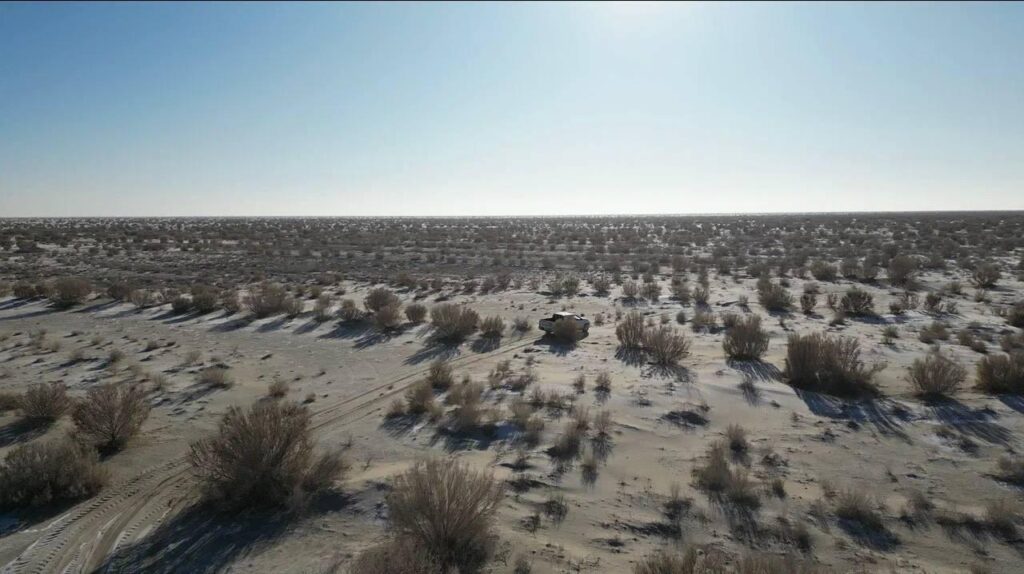
Kazakhstan is pressing ahead with a large-scale afforestation project aimed at restoring the ecosystem on the dried bed of the Aral Sea. The initiative brings together KATCO – a joint venture between the French state-owned company Orano and Kazakhstan’s national atomic company Kazatomprom – and other state and private entities to create artificial forests, combat land degradation, and improve environmental conditions in the Aral region.

The Decline of the Aral Sea

Once the world’s fourth-largest inland body of water, the Aral Sea spanned 68,000 square kilometers, straddling Kazakhstan and Uzbekistan. However, starting in the 1960s, extensive water diversion from its feeder rivers – the Amu Darya and Syr Darya – for cotton irrigation caused the sea to dry up rapidly. By 2007, the Aral had shrunk to just 10% of its original size.

The environmental fallout has been catastrophic. Over 100 million tons of salt, sand, and dust are carried annually by winds from the exposed seabed, damaging nearby ecosystems and posing significant health risks to residents of the surrounding areas.

Progress in Afforestation

According to Kazakhstan’s Ministry of Ecology and Natural Resources, significant strides have been made in afforestation efforts. Between December 16 and 30, 2024, sowing was completed on 12,000 hectares of the former seabed. Efforts are continuing, with plans to sow seeds across 108,000 hectares in January and February 2025. By March 2025, an additional 16,492 hectares will be planted with saxaul shrubs, a hardy plant well-suited to the region’s arid conditions.

The ultimate goal is to plant saxaul shrubs on 1.1 million hectares of the dried-up Aral Seabed. Between 2021 and 2024, afforestation was completed on 475,000 hectares, including 127,000 hectares in 2024 alone. For 2025, Kazakhstan plans to plant saxaul on an ambitious 428,000 hectares.

Nationwide Tree-Planting Initiative

Kazakhstan’s efforts to restore the Aral Sea ecosystem are part of a broader national afforestation program. The country aims to plant 2 billion trees by 2027. From 2021 to 2024, 1.1 billion seedlings were planted over a total of 736,800 hectares, including 306 million seedlings planted in 2024 on 205,200 hectares.

For 2025, the goal is to plant 336.5 million seedlings across 494,000 hectares. Beyond rural afforestation, 15 million trees are planned for urban and village areas, with more than 12 million already planted between 2021 and 2024.

A Step Toward Environmental Recovery

Kazakhstan’s afforestation efforts represent a critical step toward mitigating the environmental damage caused by the desiccation of the Aral Sea. By stabilizing the exposed seabed with saxaul shrubs and increasing tree cover nationwide, the country aims to reduce airborne pollutants, improve regional biodiversity, and enhance the quality of life for affected communities.

The project is not only an environmental undertaking but also a testament to Kazakhstan’s commitment to sustainable development and ecological restoration on a massive scale.

Kazakhstan Modernizes Civil Aviation Infrastructure to Boost Tourism and Investment

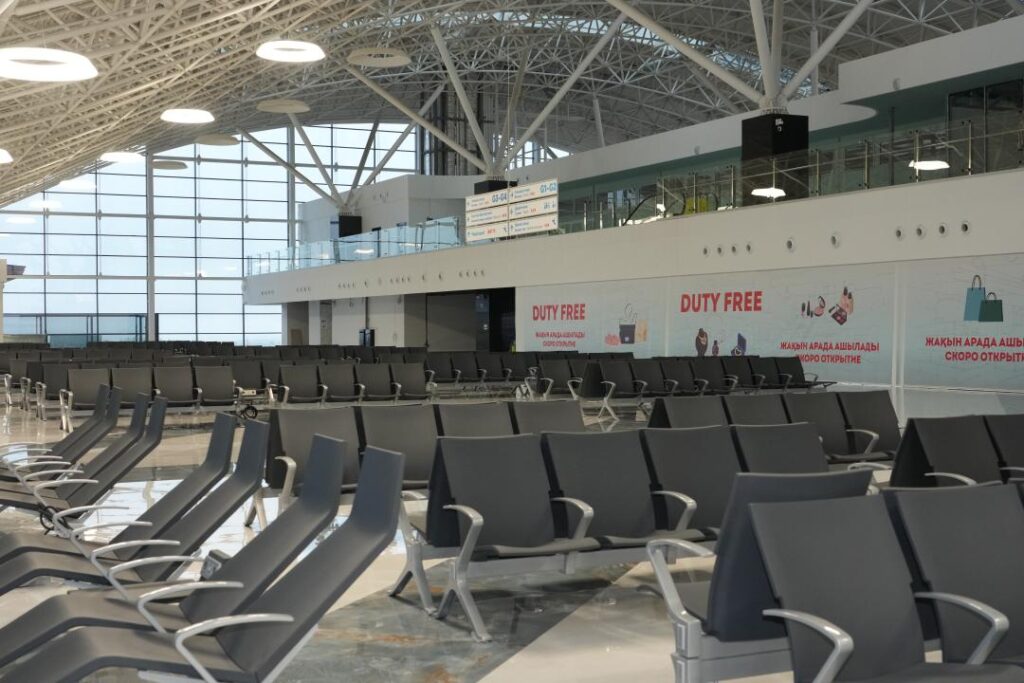
In 2024, Kazakhstan made significant strides in modernizing its air transport infrastructure, opening three new passenger terminals at the airports of Almaty, Shymkent, and Kyzylorda. The upgrades are expected to expand the capacity of these airports, increase the number of air routes, and stimulate growth in passenger traffic. According to the Ministry of Transport, these developments will enhance domestic and international tourism while boosting the investment appeal of Kazakhstan’s regions.

The Role of Air Transport

As the world’s 9th-largest country, Kazakhstan relies heavily on air transport to complement its extensive railway network. Fast and efficient air travel is crucial for connecting the nation’s vast territories and integrating its economy into global markets.

New Terminals and Capacity Expansion:

Almaty International Airport

The new terminal at Almaty International Airport, which opened on June 1, has increased the airport’s capacity from 2.5 million to 14 million passengers annually. Almaty Airport serves as a hub for domestic airlines such as Air Astana, SCAT, Qazaq Air, and Fly Arystan. It operates regular flights to 19 cities across Kazakhstan and offers international connections on 50 routes to 26 countries through 30 foreign airlines.

Shymkent Airport

In southern Kazakhstan, the new terminal at Shymkent Airport expanded the facility’s capacity from 800,000 to 6 million passengers per year. The airport now offers international flights to 10 destinations, including Jeddah and Medina (Saudi Arabia), Doha (Qatar), Phu Quoc (Vietnam), and Phuket (Thailand). The frequency of flights has also increased to 24 per week.

Kyzylorda International Airport

The new terminal at Kyzylorda International Airport in south-central Kazakhstan has raised its capacity from 300,000 to 2 million passengers per year. The airport now operates 25 domestic flights, significantly enhancing connectivity for the region.

Strategic Projects: Khorgos-Eastern Gate

Beyond passenger terminals, a $500 million project to construct a cargo-passenger airport at the Khorgos-Eastern Gate Special Economic Zone (SEZ) is underway. The project, led by the Kazakh-German consortium SKYHANSA, will position Kazakhstan as a critical link on the Western Europe–Western China highway and the Trans-Caspian International Transport Route (TITR), which connects China and Europe.

The new airport will include:

  • A passenger terminal capable of handling up to 500 passengers per hour.
  • A cargo terminal with an annual capacity of 250,000 tons.
  • A fuel storage facility with a capacity of 550,000 tons.
  • A technical center for aircraft servicing.
  • Tourism, shopping, and entertainment facilities.

This project underscores Kazakhstan’s commitment to expanding its role as a logistics and trade hub in Central Asia.

Growth in Air Transportation

The air transport sector in Kazakhstan continues to grow at a rate of 10-15% annually. In 2024, Kazakh airlines transported approximately 15 million passengers, while the nation’s airports served 30 million passengers. Cargo transportation also saw significant growth, with 28,000 tons transported in the same period.

Kazakhstan’s domestic airlines add 10-15 aircraft to their fleets each year, bringing the total fleet to 102 aircraft as of 2024.

Expanding International Connectivity

Kazakhstan operates 582 flights per week to 31 countries, including Russia, Kyrgyzstan, Uzbekistan, Tajikistan, Georgia, Belarus, Azerbaijan, the UAE, Saudi Arabia, Qatar, South Korea, China, India, and several European nations such as Germany, Italy, and the Netherlands. Other destinations include countries in Southeast Asia, the Middle East, and South Asia, as well as Turkey and the Maldives.

The Ministry of Transport reports that Kazakhstan’s compliance with international flight safety standards is at 82%, the highest among CIS countries and comparable to European Union nations like Denmark and Poland.

Kazakhstan’s ongoing modernization of its civil aviation infrastructure is transforming the country into a major regional hub for air travel and logistics. By expanding airport capacity, developing new routes, and investing in strategic projects such as the Khorgos-Eastern Gate SEZ, Kazakhstan is not only improving connectivity but also enhancing its competitiveness as a destination for tourism and investment. These developments are poised to strengthen the country’s position as a key player in Central Asia’s economic and transportation networks.

Kazakhstan Introduces New Reserve Military Service

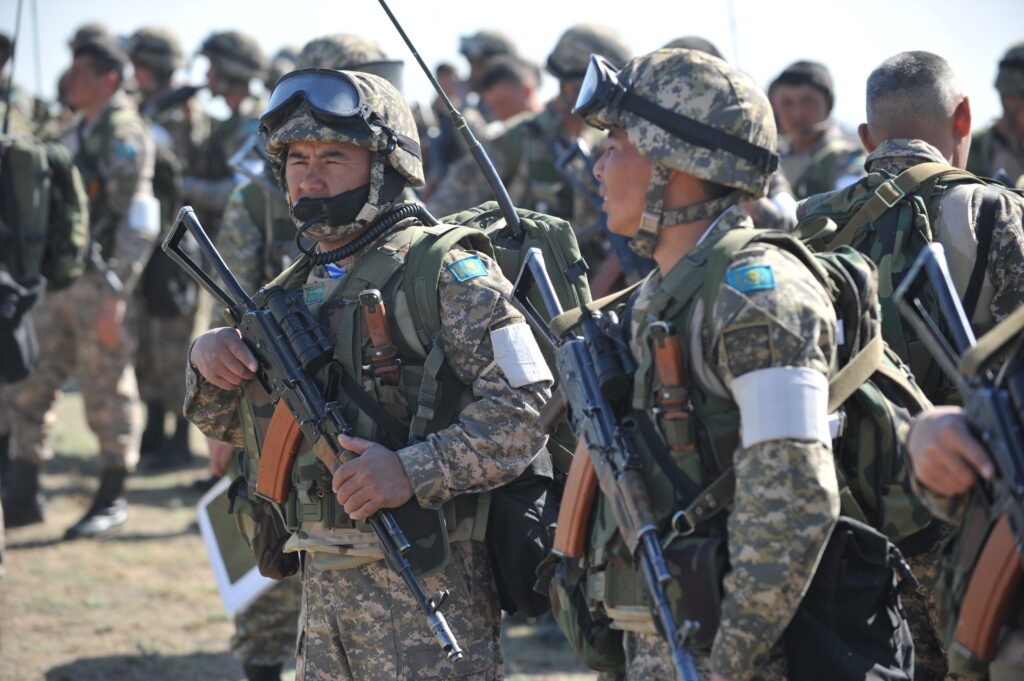
Kazakhstan’s parliament has approved a bill introducing a new type of military service in the form of reserve duty, aimed at enhancing the country’s defense capabilities. This initiative is expected to bolster the military’s readiness by training specialists in key areas, expediting mobilization processes, and increasing overall combat efficiency.

The new legislation introduces a status for “military reservists,” who will be equated with active servicemen during training camps and exercises. The recruitment of reserve forces is set to begin in 2025, marking the start of a program modeled on successful practices implemented in other Commonwealth of Independent States (CIS) countries and beyond. The move aligns with Kazakhstan’s defensive strategy to maintain an army capable of safeguarding the nation’s sovereignty and territorial integrity.

Reserve Force Details

In the initial phase, the Ministry of Defense plans to enlist approximately 2,000 reservists from across the country, with future adjustments based on military needs. The service will be voluntary, requiring recruits to meet medical and age criteria: officers may serve up to the age of 60, while sergeants and soldiers can serve up to 50.

Reservists will undergo training at military units in their local areas. The training program will be funded by the state budget. During 30-day training camps, participants will receive payments equivalent to their average monthly salary, while routine training sessions will guarantee them at least the minimum wage.

Comprehensive Legal Reforms

To accommodate the introduction of reserve service, the new bill includes about 100 amendments across six legal codes and 14 laws. A new chapter on reserve service will be added to the law “On Military Service and Status of Servicemen” to regulate the selection process, rights, duties, and specific conditions of reservists’ service.

Under the new framework, reservists will be classified as servicemen and will be subject to military criminal law, similar to active-duty personnel. Amendments to the Criminal Code and the Code of Criminal Procedure will incorporate the unified term “serviceman” for both active and reserve military personnel.

Social Support for Reservists

The law also outlines measures for the social support of reservists, including provisions for payments, insurance contributions, and pensions. These benefits are designed to incentivize participation in the reserve service while ensuring financial security for those who enlist.

A Voluntary System for National Defense

The new reserve service will be exclusively voluntary, open to adult citizens of Kazakhstan who meet the necessary requirements. By offering training opportunities close to home and guaranteeing compensation for participants, the program seeks to attract skilled and motivated individuals to contribute to national defense.

Strengthening Defense Readiness

Kazakhstan’s decision to introduce reserve military service reflects a strategic commitment to bolstering its armed forces while remaining consistent with its defensive posture. By creating a robust pool of trained reservists, the nation is taking a proactive step toward ensuring its sovereignty and readiness in the face of potential challenges.

The program’s success will depend on careful implementation and sustained support, but it represents a significant milestone in Kazakhstan’s approach to modernizing its military.