• KGS/USD = 0.01144 0%
  • KZT/USD = 0.00210 0%
  • TJS/USD = 0.10438 0%
  • UZS/USD = 0.00008 0%
  • TMT/USD = 0.28490 0%
  • KGS/USD = 0.01144 0%
  • KZT/USD = 0.00210 0%
  • TJS/USD = 0.10438 0%
  • UZS/USD = 0.00008 0%
  • TMT/USD = 0.28490 0%
  • KGS/USD = 0.01144 0%
  • KZT/USD = 0.00210 0%
  • TJS/USD = 0.10438 0%
  • UZS/USD = 0.00008 0%
  • TMT/USD = 0.28490 0%
  • KGS/USD = 0.01144 0%
  • KZT/USD = 0.00210 0%
  • TJS/USD = 0.10438 0%
  • UZS/USD = 0.00008 0%
  • TMT/USD = 0.28490 0%
  • KGS/USD = 0.01144 0%
  • KZT/USD = 0.00210 0%
  • TJS/USD = 0.10438 0%
  • UZS/USD = 0.00008 0%
  • TMT/USD = 0.28490 0%
  • KGS/USD = 0.01144 0%
  • KZT/USD = 0.00210 0%
  • TJS/USD = 0.10438 0%
  • UZS/USD = 0.00008 0%
  • TMT/USD = 0.28490 0%
  • KGS/USD = 0.01144 0%
  • KZT/USD = 0.00210 0%
  • TJS/USD = 0.10438 0%
  • UZS/USD = 0.00008 0%
  • TMT/USD = 0.28490 0%
  • KGS/USD = 0.01144 0%
  • KZT/USD = 0.00210 0%
  • TJS/USD = 0.10438 0%
  • UZS/USD = 0.00008 0%
  • TMT/USD = 0.28490 0%

Germany Builds a Z5+1 in Central Asia

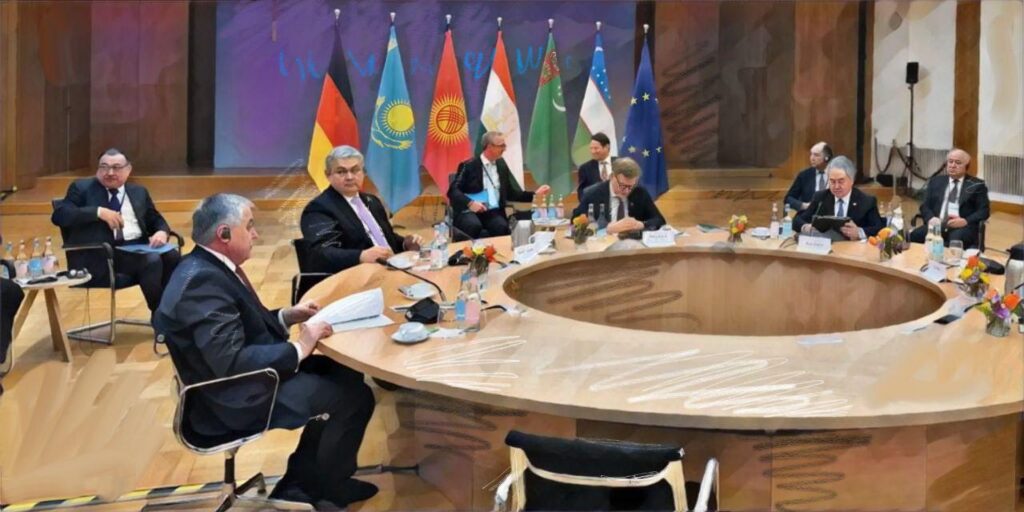
Germany’s meeting on February 11 with the five Central Asian foreign ministers in Berlin formalized the Z5+1 (“Z” for “Zentralasien”) format as a standing work channel. It joins other “plus-one” formats now crowding Central Asia that function as instruments of influence. The United States is using C5+1 to push a more deliverables-oriented agenda, including critical raw materials, and China has institutionalized leader-level summitry with accompanying treaties, grants, and transport-centered integration. The EU has elevated its relationship to a strategic partnership and is putting Global Gateway branding behind connectivity and investment.

Germany’s Z5+1 is best understood as Europe’s effort to add a practical, tool-driven channel that can move faster than EU consensus in some domains while still feeding EU programming rather than competing with it. The concluding Berlin Declaration reads like a program sheet with named instruments, sector priorities, and established a direct link to the EU’s broader “Team Europe” posture through the participation of EU Special Representative Eduards Stiprais. Germany’s Z5+1 fits this competitive field as a European execution lane that can move projects forward with German instruments while staying aligned with EU programs.

Berlin Defines the Tools

The Z5+1 meeting in Berlin drew on a sequence that Germany has been building since its 2023 “Strategic Regional Partnership” and subsequent summits in Berlin (2023) and Astana (2024), with an explicit emphasis on Central Asian regional cooperation as a counterpart to bilateral ties. The Berlin meeting, therefore, did not attempt to invent a new regional architecture but rather added a stable ministerial format for pushing forward project lists, regulatory expectations, and finance conditions between higher-level meetings.

In Berlin, Germany committed €2.7 million to a cooperation platform for the Trans-Caspian Transport Corridor: a small sum by infrastructure standards, but targeted at unglamorous coordination like data-sharing, planning discipline, and institutional continuity, i.e., standards and transborder management regimes where corridor initiatives often stall. This profile complements the EU-backed Trans-Caspian Coordination Platform track, which is explicitly tied to a wider €10 billion commitment announced at the January 2024 Global Gateway investors forum for EU–Central Asia transport connectivity. and which has addressed the corridor less as a construction problem than as a finance-and-sequencing problem.

Berlin also explicitly supported the commercial participation of German rail and logistics firms in transport and consulting projects, aligning with the intent to keep firm-level engagement attached to ministerial diplomacy. The declaration references export credits and investment guarantees, and links them to business-environment expectations. On the same day, the German Eastern Business Association convened a “Wirtschaftsgespräch” (economics talk) in the Foreign Office with the Central Asian delegations. There, the region was framed as strategically significant for Germany’s diversification agenda, and it was signaled that an autumn leaders’ summit is already in view. Germany’s public accounting of its regional engagement in Central Asia stresses its already-deep base of activity in Kazakhstan and Uzbekistan in particular, including dozens of projects and multi-billion-euro volumes.

The energy transition was mentioned, as the Berlin Declaration points to renewables, hydrogen, and climate programming that Germany is already funding and can expand through existing channels. These include the “Green Central Asia” initiative backed by a €250 million commitment and additional regional development cooperation portfolios. Reporting by The Times of Central Asia on green-energy export ideas from Kazakhstan, and on the domestic controversy around the Hyrasia One hydrogen project, illustrates why Berlin’s approach is structured as a portfolio of smaller pilots, grid work, and efficiency projects, rather than as one mega-plan that can fail on permitting, water stress, or local opposition.

Z5+1 in the Competitive “Plus-One” Ecosystem

Berlin also treated sanctions compliance as a practical agenda item by including language on the prevention of circumvention and on coordination on sanctions-related risks. EU deliberations and reporting on possible anti-circumvention measures already include scrutiny of re-export channels. This creates direct exposure for Central Asian economies that have benefited from gray-zone trade since 2022. As a gatekeeper for specific industrial goods and finance tools, Germany is positioned to translate this into concrete expectations of sanctions compliance.

One lever is programming under the “security” rubric that often functions as infrastructure and services in border regions. Berlin has dedicated more than €13 million in financial support for OSCE regional projects since 2022, with a €3 million contribution in 2025 to the OSCE fund responding to Afghanistan-related issues, including water and conflict management. It also reiterates cross-border stabilization programming that has direct local effects in border regions, where hard infrastructure, services, and administrative capacity are often inseparable from “security” labels.

The U.S. channel provides a useful comparison. A more deliverables-oriented U.S. C5+1 track has elevated critical raw materials, and the associated dialogue mechanisms have been presented as a concrete area for practical cooperation, including the launch of the C5+1 Critical Minerals Dialogue. Germany’s Z5+1 is not seeking to replicate the U.S. working-group architecture.

Likewise, Germany will not outspend China, which has used leader-level summitry to consolidate a long-horizon political umbrella for infrastructure and trade integration, including treaty-level upgrading of ties and grant commitments alongside transport projects. China used its first China–Central Asia summit in 2023 to define a new platform and embed security and capacity-building language alongside economics.

Operational Implications

Germany’s Z5+1 is a standing work channel that links German export credits and investment guarantees to corridor governance, critical minerals, and energy-transition project pipelines. It treats sanctions-circumvention risk as a structuring constraint, bringing compliance management into project selection, financing terms, and due diligence rather than leaving it as ambient exposure. For the Central Asian five, this creates an additional diversification venue with more explicit discipline costs than many other “plus-one” tracks.

As “C5+1” formats proliferate, Central Asian bargaining leverage increases, and demands on regional coordination and sanctions-risk management increase as well. Germany competes in that environment without creating a separate EU track, signaling Team Europe alignment through the EU Special Representative’s participation and by linking the channel to EU program pipelines shaped by Global Gateway financing and regulatory expectations. By design, Z5+1 makes corridor sequencing, financing terms, and sanctions-risk practices the locus of operational negotiation. Its practical effects will accumulate in corridor governance capacity, project bankability, and partner diversification under pressure from larger neighbors.
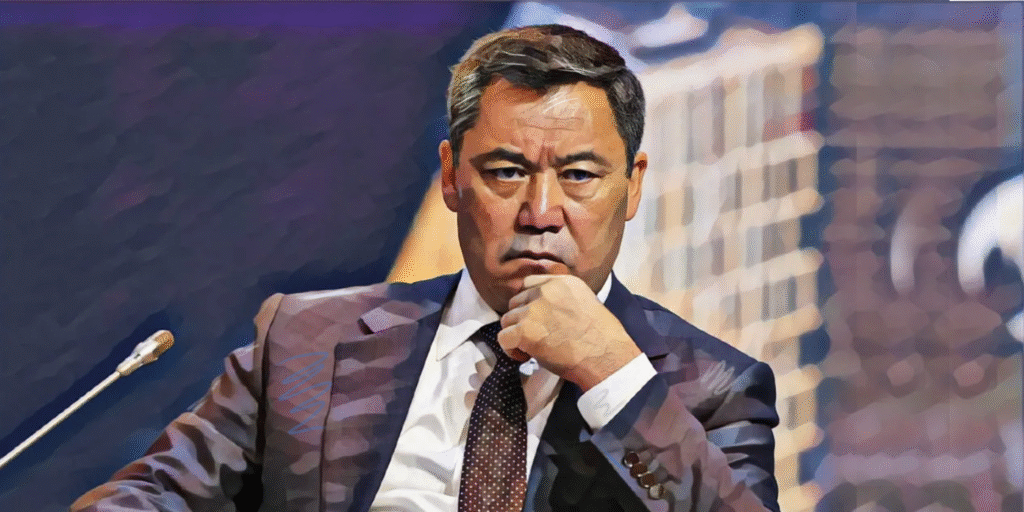
After Firing Close Ally Tashiyev, Japarov Says Goal for Kyrgyzstan is Unity

Kyrgyzstan’s President Sadyr Japarov, who fired his powerful security chief Kamchybek Tashiyev last week, says he plans to wipe out the “disease” of division between northern and southern groups in the country.

In an interview published on Monday by the state Kabar news agency, Japarov spoke about his broader vision for Kyrgyzstan in some of his most detailed comments since the dismissal of Tashiyev, the head of the State Committee for National Security who campaigned effectively against organized crime and was a close confidant of the president. 

Some criticism of Japarov suggests he made the move to amass more power as part of an authoritarian project for Kyrgyzstan. But the president said he wants to repair traditional rifts that he blamed for political unrest in the country over the years. His government has accused some political figures of trying to exploit Tashiyev’s stature and undermine Japarov’s government, though the former security chief said he accepted the president’s decision to remove him. 

Japarov is from northern Kyrgyzstan, while Tashiyev is from the south. For a time, their tight alliance appeared to be a way of smoothing over divisions between factions in the two regions. Japarov was sworn in as president in early 2021 after a tumultuous period that included his imprisonment, protests and victory in a landslide election. 

Tashiyev has been a supporter of Japarov all along, including during moves against the media that opponents described as democratic backsliding in a country once known for relative freedom of expression.

“Since independence, politicians have been dividing the country into north and south,” Japarov said. “I saw this with my own eyes when I first entered politics in 2005. They divided the government so that half of it would be north, half south, or something like that in some ministry. And I was very sad.”

Japarov said the divisions had been “disappearing” since he took office, thanks to a policy of rotating district chiefs, prosecutors, governors, judges and the heads of other institutions around the country. People from the south hold leadership jobs in the north, and vice versa, he said. 

“I will eventually eradicate the disease of North-South divide. It will take time,” Japarov said in the Kabar interview.

After Absence, Tajikistan’s Rahmon Highlights a Daily Schedule

He’s back.

President Emomali Rahmon of Tajikistan met Kazakhstan’s foreign minister on Monday, two days after welcoming the head of the Asian Infrastructure Investment Bank to Dushanbe.

It might seem like routine business for the leader of a country. But the meetings, during which Rahmon was photographed and shown in video, followed more than two weeks during which Tajikistan’s president hadn’t been seen in public. The absence prompted some media and other online questions about his whereabouts and health, possibly prompting the presidency to issue a statement last week that said Rahmon had upcoming meetings.

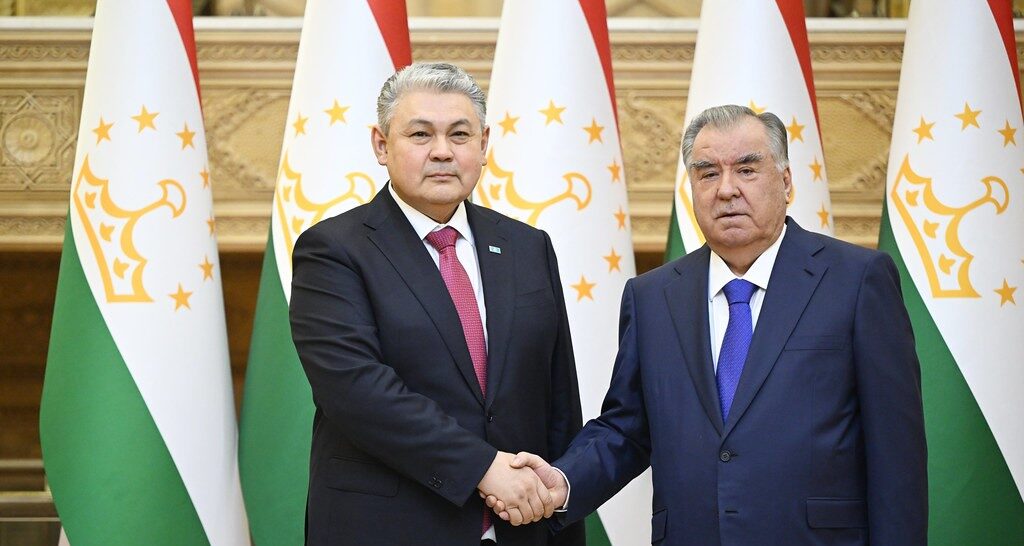
The 73-year-old president, who has held the post since 1994, posed for a photographed handshake with Kazakh Foreign Minister Yermek Kosherbayev that was posted on the website of Tajikistan’s presidential office. Rahmon’s account on X also showed a video of a meeting between him and Zou Jiayi of the Asian Infrastructure Investment Bank on Saturday.

In addition, on Sunday, the presidential office posted a video of Rahmon congratulating Chinese President Xi Jinping on the beginning of the Chinese New Year. Speaking in a deep voice, Rahmon sat in front of an image of tree blossoms that are associated with the Spring Festival, which runs into early March.

Rahmon´s son, Rustam Emomali, is chairman of the National Assembly and would take over as interim president if his father is unable to serve.

Kazakhstan Intends to Triple Its Hydropower Capacity by 2030

Kazakhstan plans to significantly expand its hydropower capacity over the next five years. By the end of 2030, the country intends to commission new hydropower plants with a combined capacity of approximately 660 MW, nearly tripling the sector’s current installed capacity, according to the Ministry of Energy.

At present, 43 hydropower facilities operate in Kazakhstan with a total installed capacity of 313 MW. The implementation of agreements already concluded is expected to raise this figure to nearly 1 GW, substantially increasing the contribution of hydropower to the national energy mix.

In 2025, an additional project was added to the portfolio: the 26 MW Korinskaya HPP-2 was commissioned in the Jetisu Region. By the end of the year, total electricity generation from renewable energy sources reached 8.621 billion kWh, of which 1.196 billion kWh was produced by small and medium-sized hydropower plants.

Kazakhstan continues to rely on an auction mechanism to attract investment and enhance transparency in the renewable energy sector. In 2025, 500 MW of capacity designated specifically for hydropower projects was offered through competitive auctions. According to the Ministry of Energy, this approach helps reduce project costs and foster a stable investment environment.

The highest concentration of renewable energy facilities, including hydropower plants, is located in the southern and southeastern regions, Zhambyl, Almaty, and Jetisu regions. These areas benefit from significant river potential and established infrastructure capable of supporting further generation growth.

The ministry states that implementation of the planned projects will diversify Kazakhstan’s energy mix, supply remote areas with stable green electricity, reduce pressure on the main transmission grids, and enhance overall system reliability.

As previously reported by The Times of Central Asia, renewable energy accounted for 7% of Kazakhstan’s national energy mix by the end of 2025.

More Than 20 Promising Oil and Gas Fields Identified in Kazakhstan’s Aral Basin

A large-scale state geological exploration program in Kazakhstan has identified more than 20 promising hydrocarbon sites in the Aral Basin. The announcement was made by Kanat Yerubaev, Acting Chairman of the Geology Committee of the Ministry of Industry and Construction.

According to Yerubaev, by the end of last year 29 promising exploration areas had been identified as part of the state geological study program, covering a range of minerals from gold and copper to lead, zinc, and tungsten. Particular attention was given to oil and gas. Work in the Aral Basin enabled specialists to specify the geological structure of the region, identify new structural elements, and assess forecast hydrocarbon resources. More than 20 sites have been classified as promising, and the Ministry of Energy intends to auction subsoil use rights for these areas later this year.

The Geology Committee estimates forecast hydrocarbon resources at one Aral Basin site at approximately 800 million tons. An even larger potential, exceeding 1 billion tons of oil and gas, has been identified in the Syr Darya Basin in the southwest of the country. Exploration activities there began in 2024 and are scheduled for completion in 2026. If these forecasts are confirmed, Kazakhstan’s proven oil reserves could increase by more than 25%. The current state balance sheet records more than 4 billion tons of proven oil reserves, sufficient for over 50 years at current production levels.

In 2026, new seismic exploration projects are scheduled to begin in other relatively underexplored sedimentary basins, including North Turgai, Shu-Sarysu, and Priirtysh. Yerubaev noted that Kazakhstan is moving away from geological surveys conducted at a 1:200,000 scale, which provide only a general overview, and transitioning to more detailed 1:50,000 scale surveys. He compared the shift to “getting a navigator instead of a world map, where you can see every step,” emphasizing that such precision aligns with international standards and supports informed investment decisions.

At the same time, the sector’s digital infrastructure continues to develop. Kazakhstan operates a unified subsoil use platform that provides 22 government services and access to more than 66,000 geological reports. By the end of 2025, 97.5% of primary geological data,  approximately 4.7 million records, is expected to be digitized, with full digitization scheduled for completion this year.

Approximately $485.5 million has been allocated for state-funded geological research projects over the next three years.

Under current legislation, 50% of subscription bonuses collected from auctions for subsoil use rights are to be reinvested in the sector to support geological development and infrastructure modernization. This framework is designed to create a sustainable model in which revenues from subsoil licensing are directed back into further exploration.

The Times of Central Asia previously reported that Kazakhstan had become one of the global leaders in proven rare earth metal reserves.

Tajikistan Plans Over $1 Billion for Rogun Hydropower Project in 2026

The government of Tajikistan plans to allocate at least 10 billion TJS (more than $1 billion) to finance the Rogun hydropower project in 2026, Finance Minister Faiziddin Qahhorzoda said on February 13 at a press conference in Dushanbe. The statement was later released by the Ministry of Finance and reported by Asia-Plus.

Qahhorzoda specified that 8.2 billion TJS has already been earmarked in the state budget for completion of the Rogun hydropower plant. He added that additional financing could be mobilized through development partners, as agreements have been signed and the required domestic procedures and partner conditions have been fulfilled.

“Certain conditions had to be met by the government of Tajikistan to access these funds. All conditions have been completed, and financing under the first tranche of $350 million has begun,” the minister said, referring to grant funding from the World Bank. He added that negotiations for an additional $300 million from the institution have been concluded successfully, with the funds expected to become available by mid-year.

The minister also stated that domestic procedures are being finalized to attract $150 million from the Islamic Development Bank, as well as $100 million each from the Saudi Fund for Development, the Kuwait Fund for Arab Economic Development, and the OPEC Fund for International Development. According to Qahhorzoda, the remaining step is the completion of tender procedures.

In addition, all procedures have reportedly been completed to secure $500 million from the Asian Infrastructure Investment Bank, of which $270 million is expected to be disbursed in the first tranche.

According to the Finance Ministry, approximately 11 billion TJS was allocated in 2025 for the completion of Rogun, including 2 billion TJS designated for servicing Eurobonds issued to support the project.

Earlier, at the end of January, the Energy Ministry stated during a separate press conference that several financing agreements signed with international partners in 2024-2025 had already entered into force. Officials noted that activating these agreements required fulfilling a number of technical and procedural conditions.

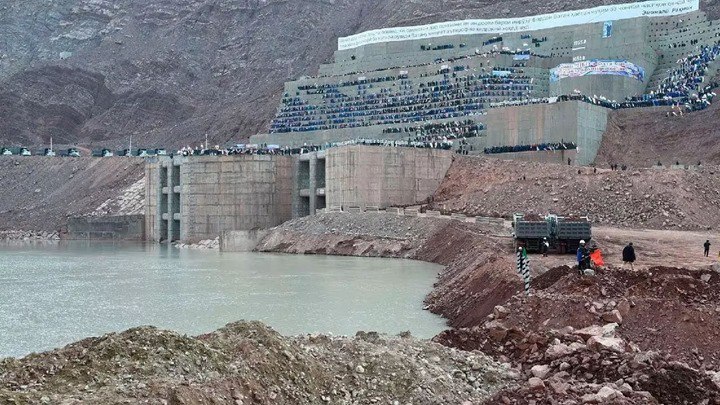
The Rogun hydropower plant, located 110 kilometers from Dushanbe on the Vakhsh River, is the largest energy project in Tajikistan. Construction began in 1976 but was suspended following the collapse of the Soviet Union. Work resumed after independence. Of the six planned generating units, each with a capacity of 600 MW, two are currently operational and had produced 9.9 billion kWh of electricity by the end of last year.

In December 2025, President Emomali Rahmon announced that the third unit is scheduled to be commissioned in September 2027. Once all six units are operational, the plant’s total installed capacity will reach 3.78 GW, and its 335-meter dam is projected to become the tallest in the world. The total cost of construction has been estimated at $6.2 billion.